Pokémon Trading Card Game Pocket hit the ground running after its global launch on October 30, 2023. The mobile card game crossed 10 million downloads in three days and pulled in $23.2 million in gross revenue during its first five days. The numbers show what happens when you combine Pokémon's staying power with a monetization structure that actually works.
Global Success
AppMagic data shows Japan driving nearly half the spending at 45% of total revenue during launch week. The United States came in second at 26.4%, with Taiwan taking third at 4.5%. The revenue curve stayed steep, which points to high engagement and a monetization model that players are willing to pay into.
Over 10 Million People Worldwide
Monetization Model Focused on Card Packs
The game's revenue comes almost entirely from digital card pack openings. You get two free packs per day, or you can pay to crack more packs and buy various in-game items. It's the same rush as opening physical card packs, just faster and with no cardboard to store.
Pack Hourglasses control the economy. You get one free card pack every 12 hours, but hourglasses let you skip the wait. You can earn them through missions or buy them outright.
The Premium Pass adds another layer. It unlocks exclusive missions that drop more Pack Hourglasses and gives you access to Premium Tickets, a secondary currency. Those tickets buy special items like card binders, which are paywalled and not available any other way.
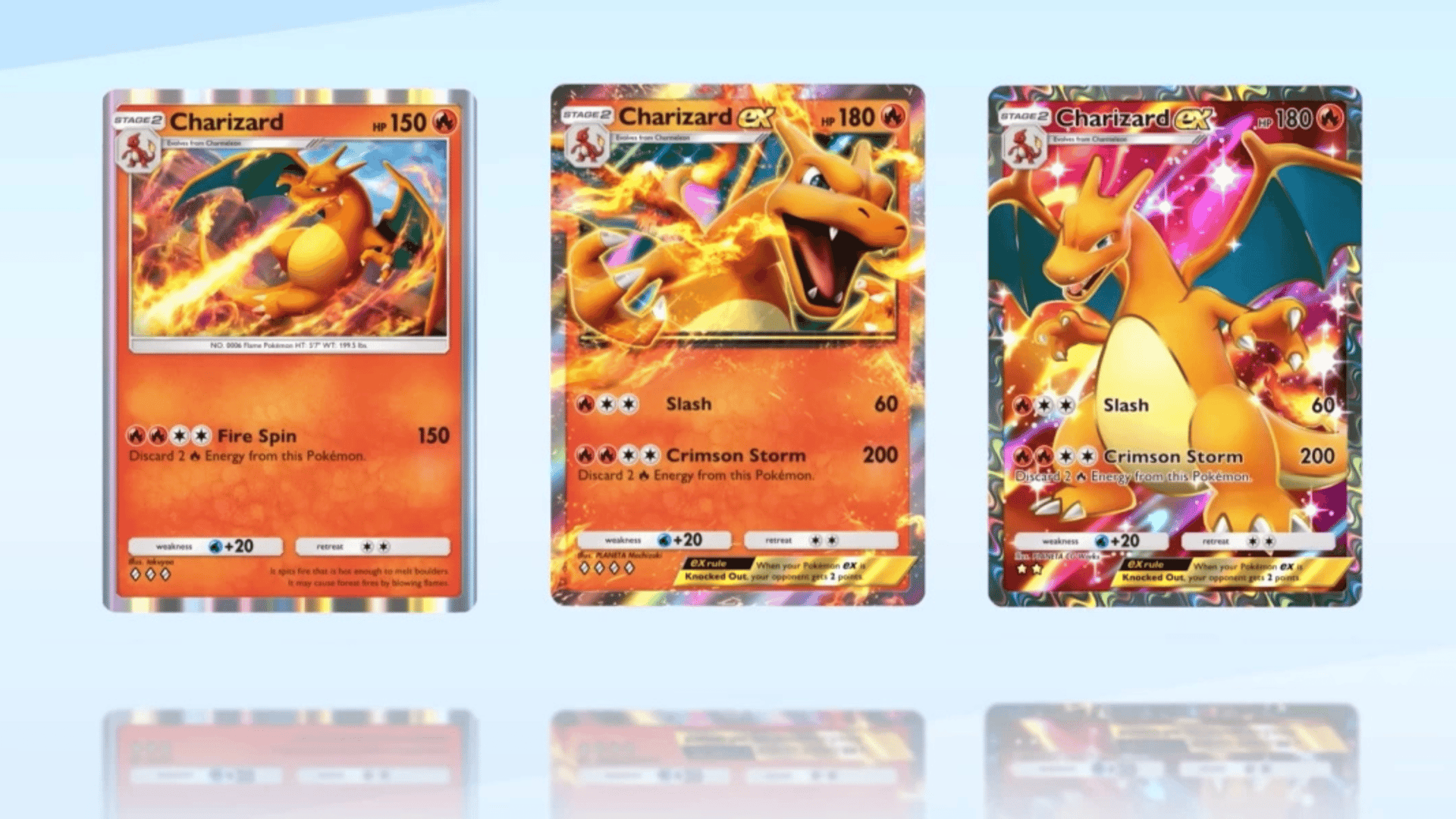
Pokémon TCG Pocket Screenshots
Additional In-Game Features and Player Engagement
The game leans into community features and nostalgia. The Wonder Hourglass lets you pull a random card that a friend recently got, which adds a social hook. Like Pack Hourglasses, you can earn Wonder Hourglasses over time or by completing in-game quests.
Pokémon TCG Pocket focuses on the original 151 Pokémon, the same nostalgia play that made Pokémon Go explode in 2016. That choice pulls in longtime fans who grew up with Red and Blue while still being accessible enough for new players.
Sustained Financial Success and Player Base Growth
Since launch, the game has cleared $2 million in daily revenue consistently, averaging $4.6 million per day. November 2 saw a peak of $5.6 million, which signals that players are sticking around and spending.
The early numbers look strong. With plans to expand features and add more incentives, Pokémon TCG Pocket has positioned itself well in a crowded mobile market.
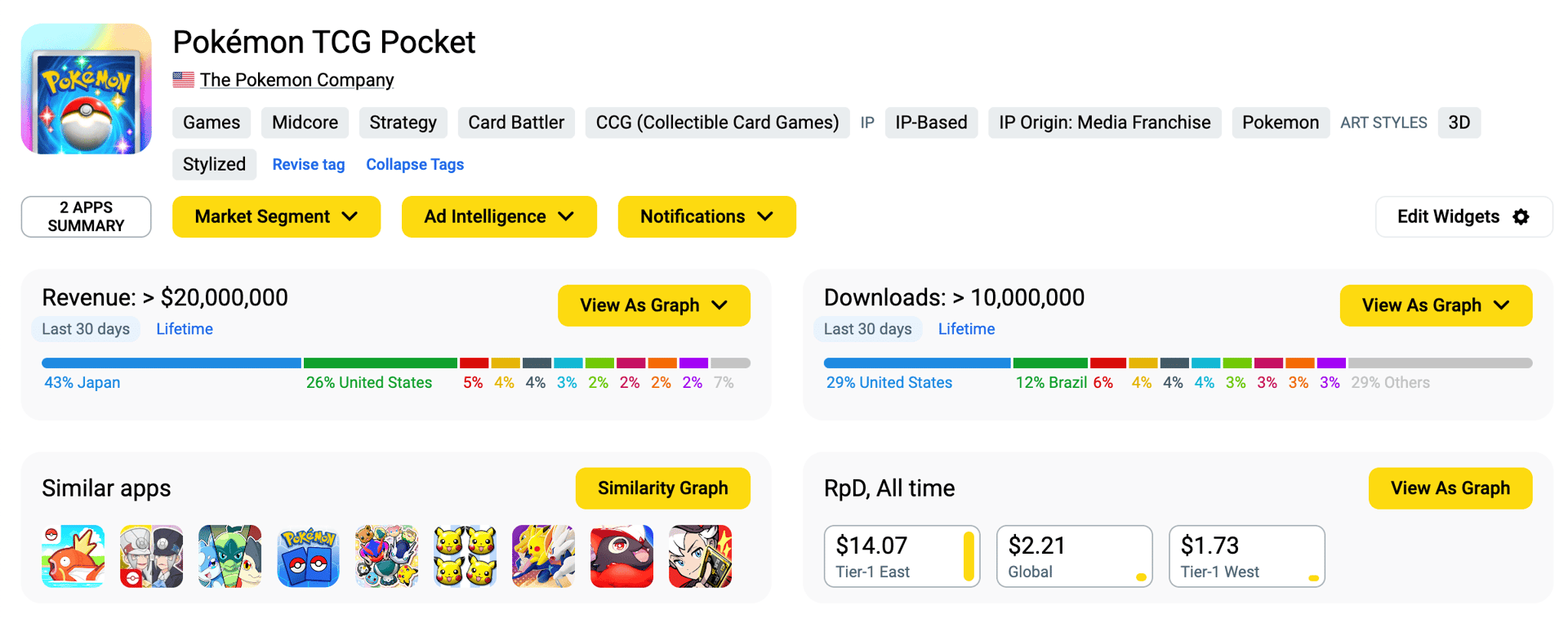
Pokémon TCG Pocket Generates $23 Million in One Week
Final Thoughts
Pokémon Trading Card Game Pocket's fast start highlights trends that matter for the future of web3 gaming. The monetization model centers on digital asset ownership, collectible scarcity, and community engagement, which aligns with what web3 developers are trying to build: tokenized assets, player ownership, and peer-to-peer trading. Players acquire, collect, and exchange virtual items, which shows how traditional mobile games can tap into demand for virtual collectibles, a core piece of web3.
As blockchain technology matures, games like Pokémon TCG Pocket demonstrate the potential for web3 titles to use collectible mechanics that let players truly own, trade, and potentially monetize in-game assets. This model validates monetization strategies that work for modern gamers and hints at how these dynamics could evolve in a web3 environment, where digital ownership and decentralized communities might redefine player engagement.