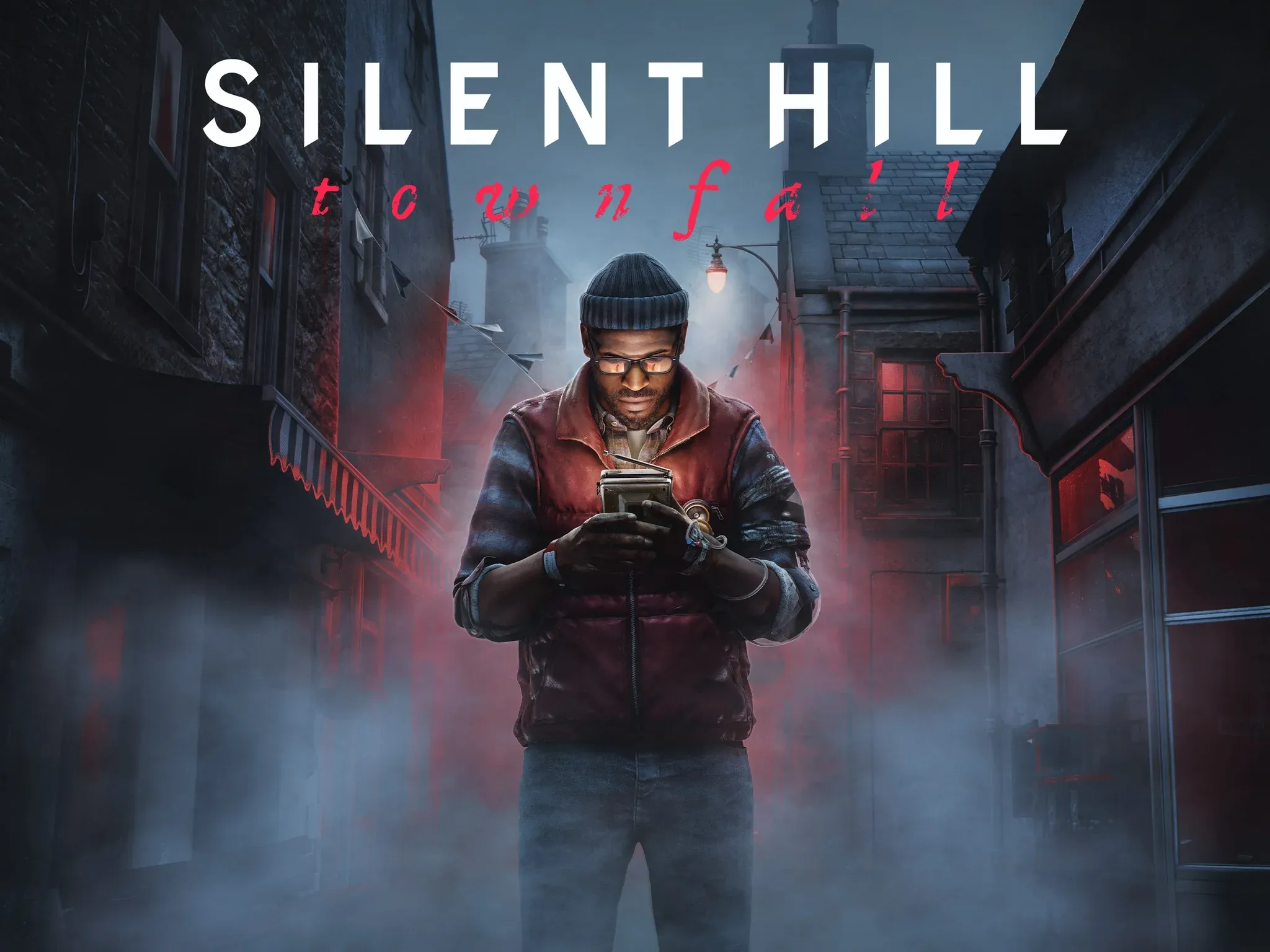


Four hours into Silent Hill: Townfall and the hairs on your arms will not settle down. That is not a guarantee most horror games can make in 2026, but developer Screen Burn has done something genuinely surprising with Konami's annual horror series: it has changed the camera angle, and the whole game feels different because of it.
Silent Hill f set a high bar last year with its unsettling 1960s Japanese setting, handled by NeoBards to wide acclaim. Townfall follows a similar outsourcing model, this time handing the reins to Screen Burn, whose background in titles like Observation is written all over this game's DNA.

Use code TRYHARD33 at checkout to redeem this offer before code expires again.
Get 33% Off GAMES+ Subscription
A Scottish town that earns its dread
You play as Simon Ordell, dragged back to the fictional Scottish island town of St. Amelia to confront something unresolved from his past. The town is blanketed in protest signs, medical imagery, and an oppressive quiet that the series has always done well. Even without the classic American setting, St. Amelia captures that dreamlike, macabre quality that defines Silent Hill at its best. Environmental storytelling does the heavy lifting here, with scattered files and visual cues building the picture without holding your hand.
Simon is searching for Zoe Ellis, a nurse from his past who appears to have summoned him back. He spends the entire game with an IV needle and tube in his arm, which ties directly into a revival mechanic: if you have the right items on hand, you get one second chance after death. It is a small detail, but it is the kind of thing that makes the world feel considered rather than assembled.
The CRTV changes everything
Here is the thing that makes Townfall stand apart from its predecessors. Early in the game, Simon picks up a CRTV, a handheld television that detects unstable signals in the environment. Bring it up with L1 on PS5 and you can tune between frequencies, with yellow indicating nearby enemies and blue marking narrative points of interest. It is the game's central tool, and it is used constantly.
In a third-person game, this mechanic would be useful. In first-person, it becomes essential. You have less situational awareness by design, so pre-scanning a room before entering it shifts from a nice option to a survival habit. The CRTV also drives almost every puzzle in the game. One early standout has you tuning into a frequency of repeating images, matching what you see on the screen to in-world locations to crack a keypad code. No quest markers, no hints. Writer and director Jon McKellan described this approach as analog horror, and that framing fits perfectly.
Combat that rewards patience over aggression
Melee combat is deliberately clunky. Weapons degrade with use and blocking, and the game is clearly designed around avoidance rather than confrontation. The CRTV lets you route around most enemies entirely if you are patient enough. But the level design does push you into unavoidable encounters, and when your melee weapon breaks mid-fight, your only real option is to run.
A revolver turns up after a couple of hours and hits hard. Spare ammo is scarce, though, and one maze-like section in the demo made that scarcity count. Getting trigger-happy with six bullets against two enemies left nothing for the group that appeared around the next corner. The game makes those moments feel earned rather than cheap.
For players coming from the Silent Hill 2 remake or Silent Hill f, the combat rhythm will feel familiar. Townfall does not reinvent it, but the first-person perspective makes every enemy encounter land with more immediate tension than the third-person entries managed.
The fog question and what Konami confirmed
Long-time fans will notice that the trademark dense fog is dialed back here. Silent Hill series producer Motoi Okamoto confirmed this was a deliberate call: fog that works as atmosphere in third person becomes a vision-blocking wall in first person. The trade-off is a more playable experience that still delivers on claustrophobia through tight corridors, sound design, and the CRTV's limited range.
On the sound side, composer Pilotpriest delivers a haunting score that sits in uncomfortable contrast with the ambient noise of St. Amelia. Simon's inner monologue is also kept minimal, with most of his thoughts presented as on-screen text rather than voiced dialogue. It keeps the pacing tight.
Okamoto also confirmed that the series will continue releasing annually, with each entry outsourced to a different studio. Townfall is the third full-length Silent Hill game in three years, and the goal is to keep each entry feeling distinct through new settings and development teams. Whether that strategy holds up over time is a real question, but Townfall at least demonstrates the model can work.
Silent Hill: Townfall launches September 24, 2026 for PlayStation 5 and PC. If you are planning to go in prepared, the Silent Hill f guides collection covers the mechanics and systems from last year's entry that carry thematic and mechanical parallels worth understanding before St. Amelia swallows you whole.