Matthew Ball, CEO of Epyllion and author of The Metaverse, recently delivered an in-depth analysis of the gaming industry's recent downturn following its unprecedented growth during the pandemic. Speaking at the Hollywood and Games event in December, Ball outlined the factors behind the rise and fall of gaming's modern era and explored possibilities for future growth.
The State of Video Gaming in 2025
The Peak of Gaming During the Pandemic
Gaming hit its all-time high in 2021 as COVID-19 lockdowns pushed millions indoors and toward screens. The surge was powered by mobile platforms, live service games, free-to-play models, cross-platform play, and the popularity of genres like battle royales. Social gaming services and user-generated content exploded during this window. These forces converged to push gaming past other entertainment markets and into rapid expansion.
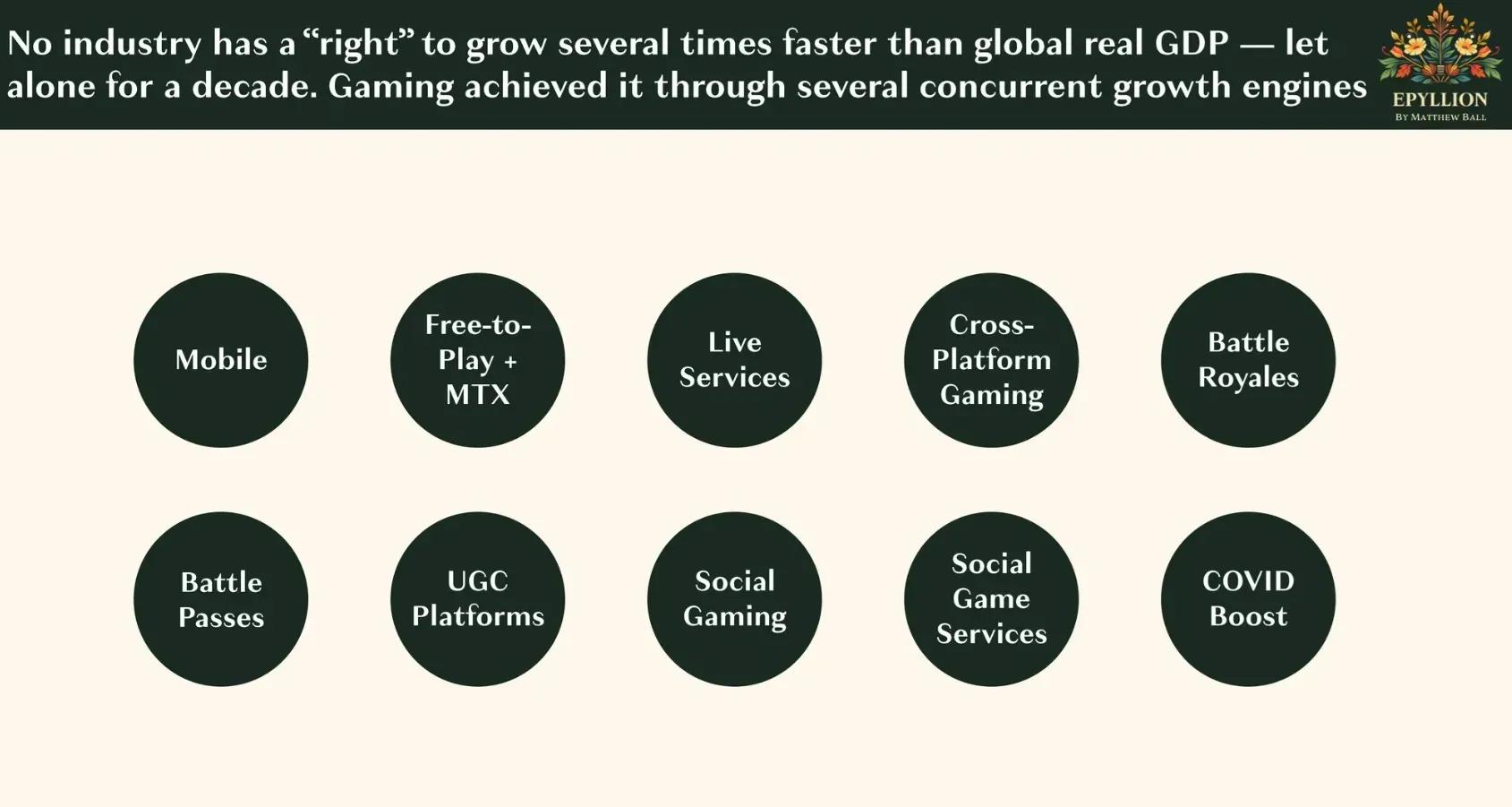
Peak Gaming Drivers


The Decline Following the Boom
Then came the crash. Over the next two and a half years, the industry contracted sharply. Ball pointed to the exhaustion of growth drivers that had carried gaming for over a decade. User behavior shifted, monetization models changed, and competition intensified. Macroeconomic pressure, platform policy changes, and the rise of TikTok as a competitor for attention made things worse. The damage was severe: over 34,000 layoffs and a collapse in investment capital for new studios. Cloud gaming, esports, and web3 all failed to deliver on their hype, leaving the industry stalled.
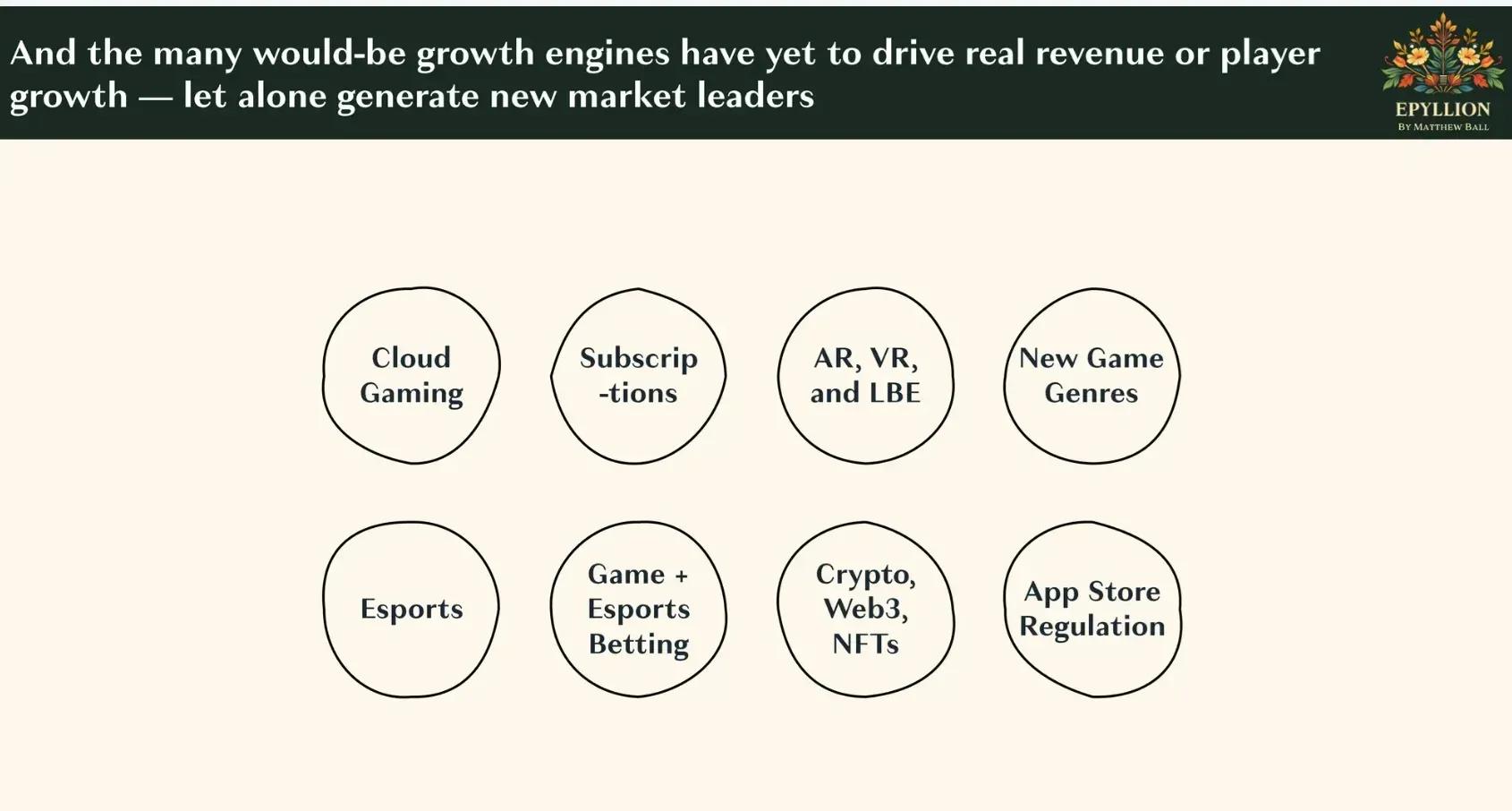
Growth Engines That Failed
Key Challenges Facing the Gaming Industry
Ball highlighted several structural problems holding the industry back. Console install bases have flatlined. Production timelines and budgets keep climbing. App store policies and user acquisition costs squeeze developers. Players stick with established live-service games, making it harder for new titles to break through. This creates a vicious cycle: fewer risks, less innovation, declining revenues, shrinking profits.
Emerging Opportunities for Renewal
Ball sees reasons for cautious optimism. New hardware is coming: the Switch 2 and devices from Valve, Sony, and Microsoft could reignite interest. Mobile gaming has proven that high-quality titles like Genshin Impact can succeed. Non-core markets, especially the Middle East, are growing fast.
User-generated content platforms like Roblox, Minecraft, and Fortnite continue to expand and offer new creative opportunities. AI could transform game development by cutting costs and enabling new gameplay experiences. Regulatory changes targeting app store fees might ease pressure on developers. New genres could pull in audiences that traditional games have missed.
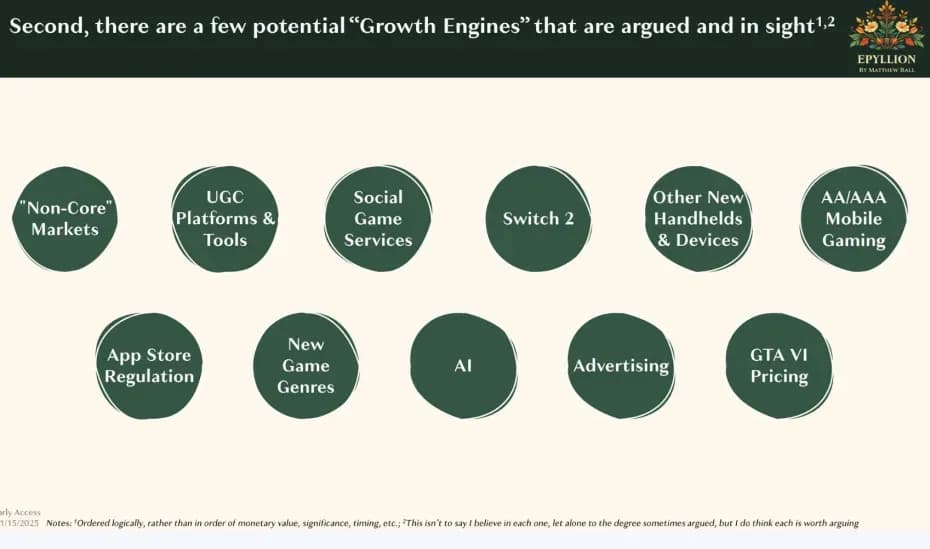
Future Growth Engines
A Balanced Outlook for the Industry's Future
Ball's analysis makes clear that while gaming faces real structural challenges, paths to recovery exist. Success depends on adapting to market shifts, embracing innovation, and fixing broken systems. As new technologies and platforms emerge, the gaming landscape will keep evolving, with clear winners and losers shaping what comes next.
The gaming industry's post-pandemic contraction reveals how market dynamics, consumer behavior, and technological trends collide. Ball's framework offers a way to understand these shifts and navigate toward potential recovery.