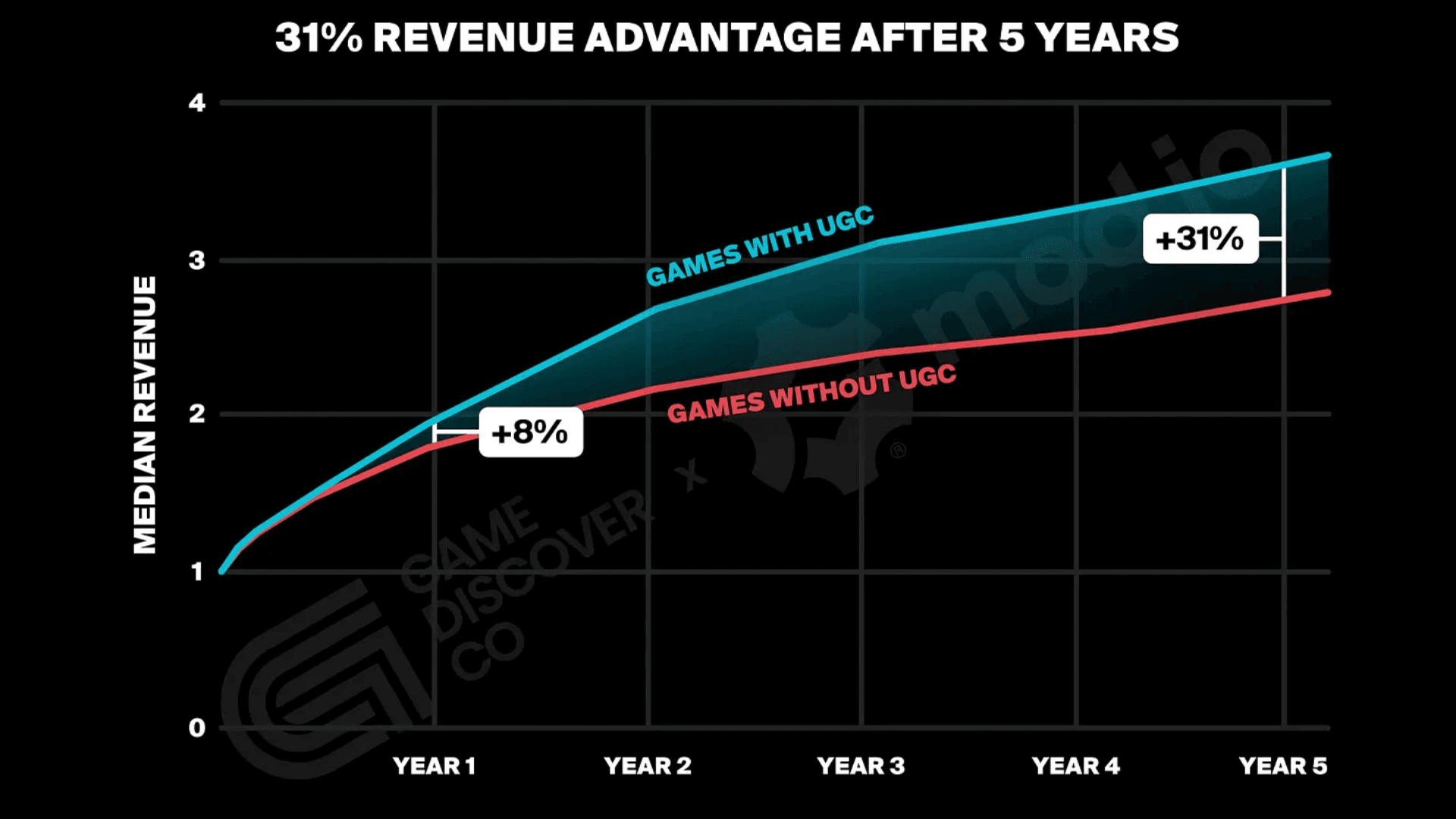


New research from GameDiscoverCo, working with Mod.io, shows that user-generated content (UGC) continues to drive stronger performance in video games. The updated analysis builds on a 2024 study and tracks revenue, player retention, and DLC sales across PC, console, and VR. Games that support mods and player-created content consistently outperform those that don't, both at launch and years later.
UGC Remains a Key Driver in Games
Long-Term Revenue Benefits
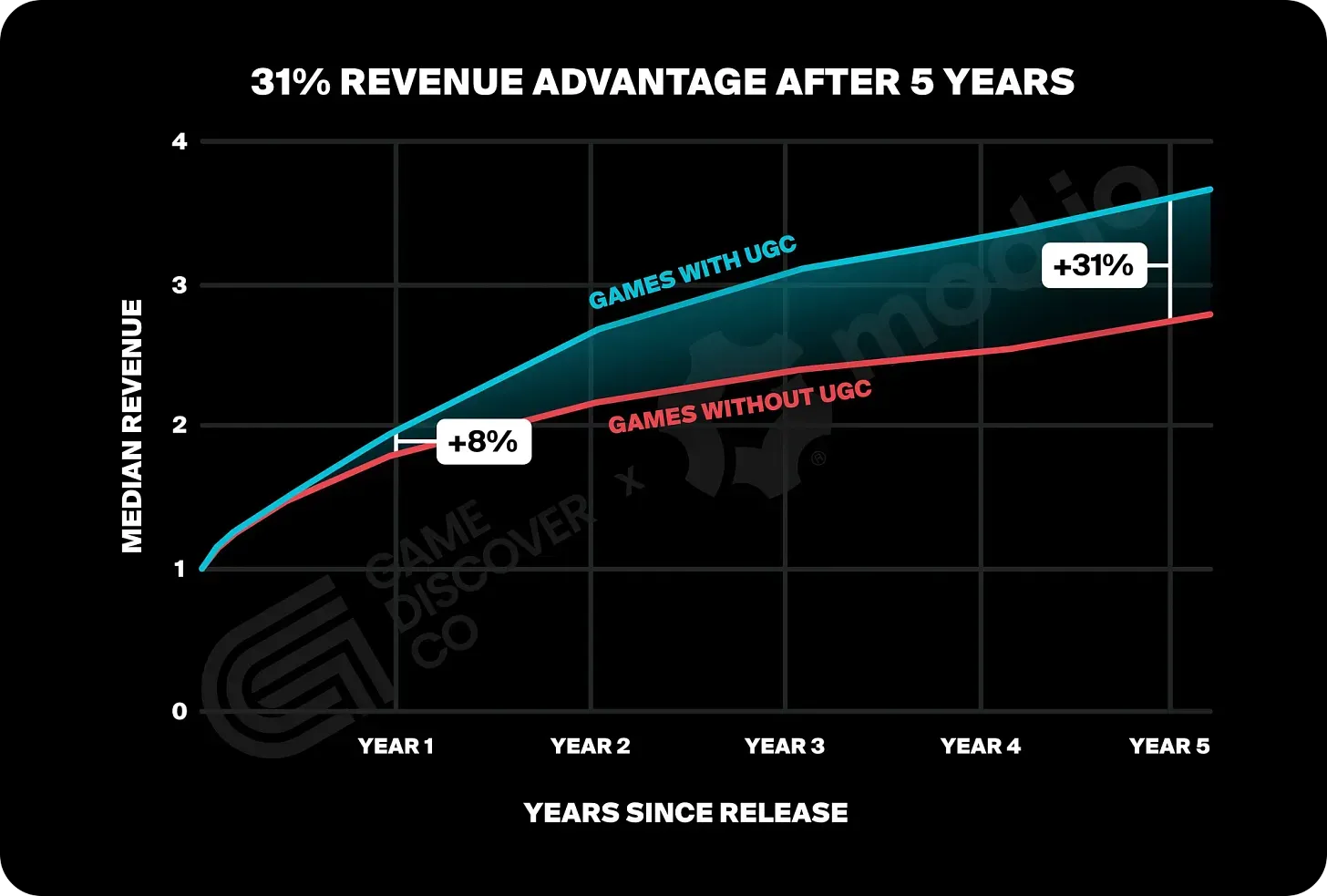
The dataset covers around 1,200 Steam games that launched over five years and earned at least $1 million in their first month. Roughly 20% of these titles offered official UGC support through Steam Workshop, Mod.io, CurseForge, or publisher platforms like Paradox Mods and Bethesda Game Studios Creations. UGC-enabled games pulled in 8% more revenue in year one and 31% more over five years. That's a modest uptick from the 2024 findings, driven by more UGC titles entering the dataset and more games hitting the five-year mark.
UGC Remains a Key Driver in Games
Retention Gains Across Years
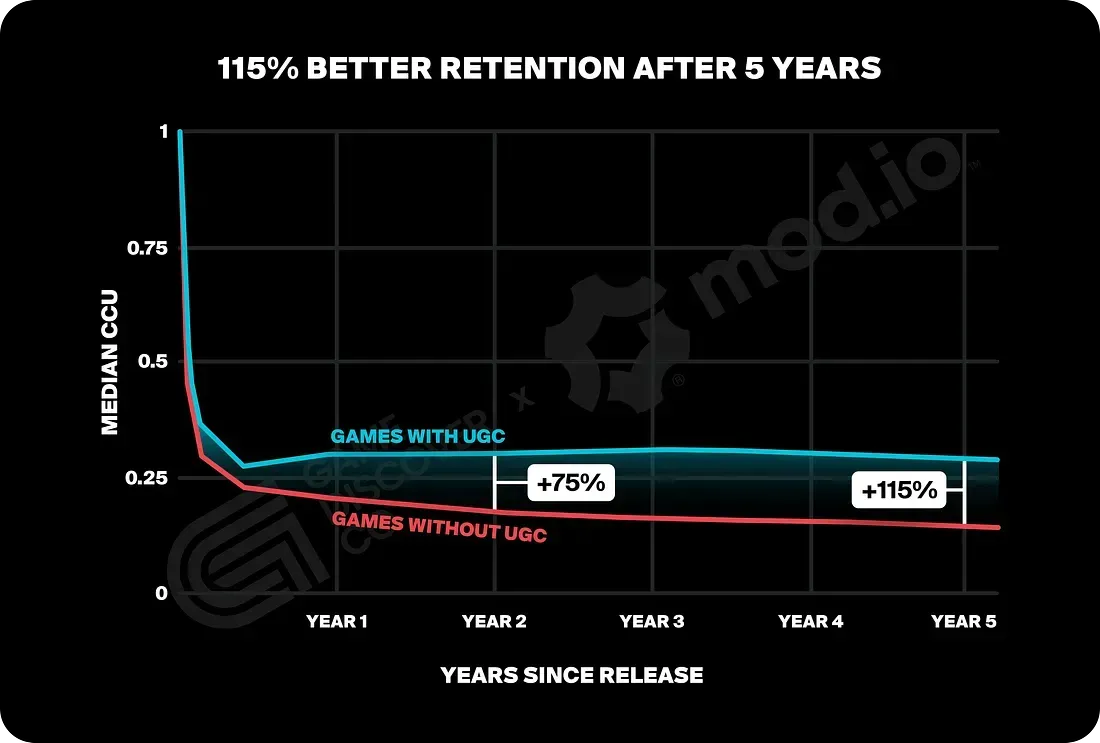
UGC doesn't just boost sales — it keeps players around. Games with mod support held 75% higher concurrent player counts two years post-launch, climbing to 115% after five years. Genre plays a role, but the effect is clear in specific cases. Larian Studios saw a 20% jump in daily active users for Baldur's Gate 3 after rolling out official mod tools in 2024.
UGC Remains a Key Driver in Games
UGC and DLC Engagement
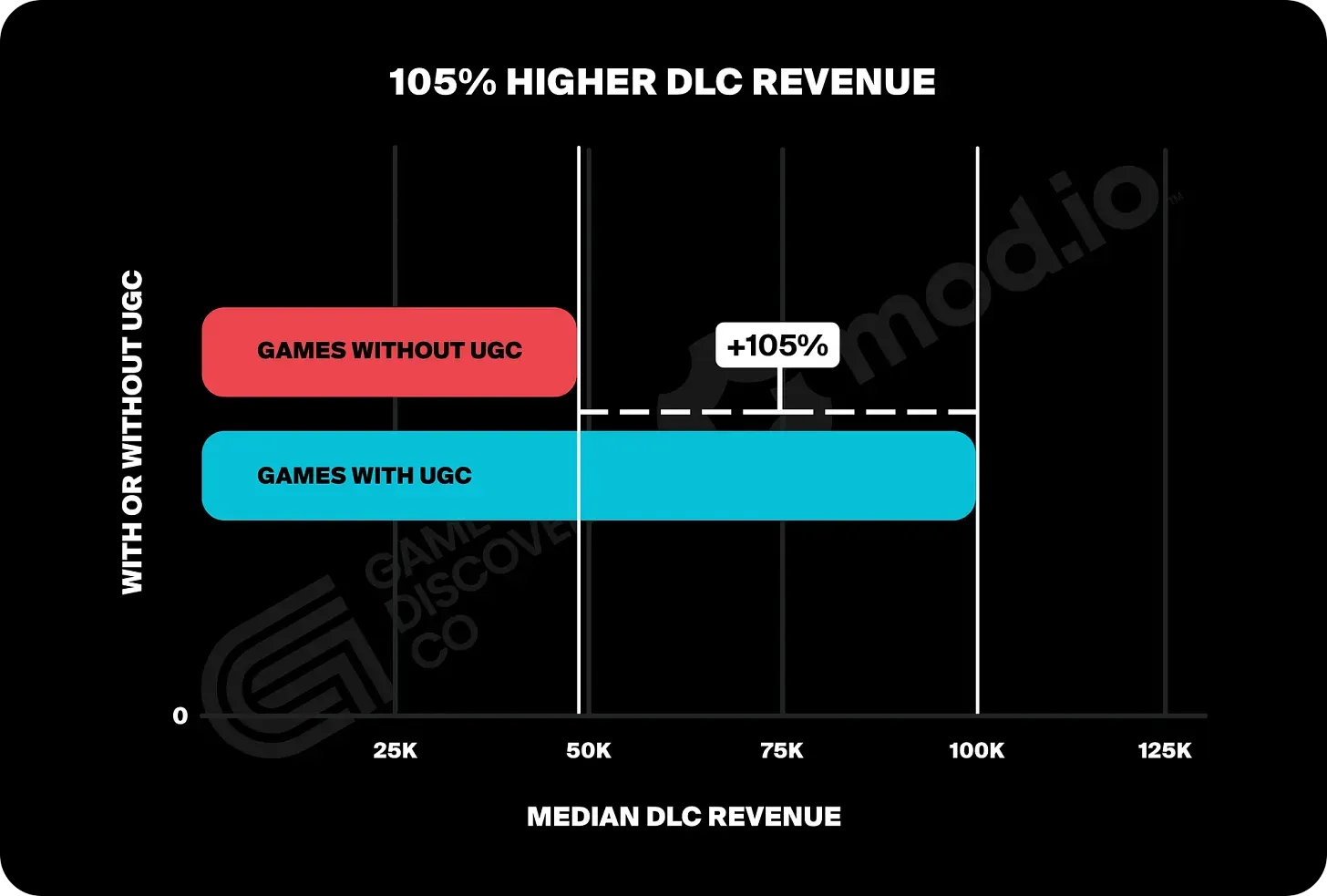
There's a lingering fear that free mods eat into paid DLC sales. The numbers say otherwise. Games supporting mods generated 105% more DLC revenue than those without. SnowRunner is a standout example: Saber Interactive found that players who used mods were 2.4 times more likely to buy official expansions. UGC seems to amplify interest in paid content, not replace it.
Expanding Analysis to Consoles and VR
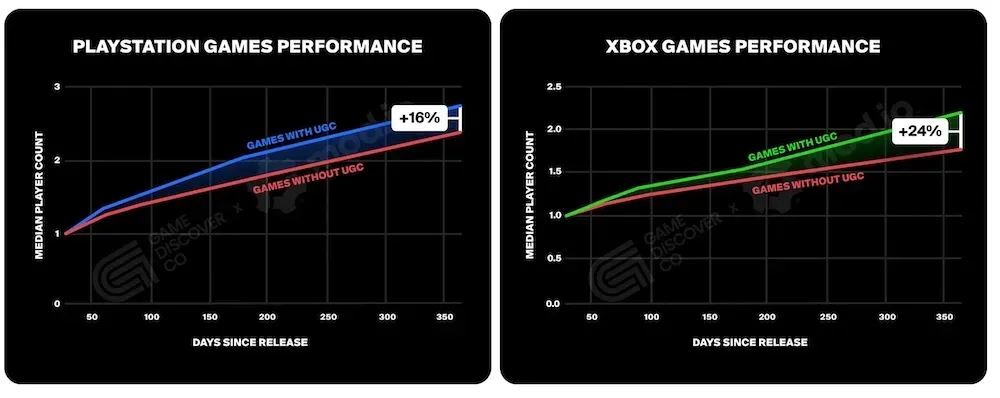
This round of research expanded beyond PC for the first time. On PlayStation, games with mod support held a 16% player advantage one year after launch. On Xbox, that advantage jumped to 24%. In VR, titles on the Meta Quest Store with UGC support saw roughly 30% median growth in player counts over the past year compared to games without official mod frameworks.
UGC Remains a Key Driver in Games
Why Developers Should Consider UGC
Supporting UGC stretches a game's lifespan, keeps players engaged longer, and drives more revenue through both base sales and DLC. The pattern holds across PC, consoles, and VR. Correlation doesn't prove causation, but the data consistently points in one direction: games that let players create and share content perform better over time.
Frequently Asked Questions (FAQs)
What is UGC in video games?
User-generated content (UGC) refers to mods, levels, characters, and other content created by players rather than the game's developers.
Do games with UGC make more money?
Yes. Games with UGC support earn roughly 8% more in their first year and 31% more over five years compared to games without mods.
Does UGC reduce DLC sales?
No. Games with UGC recorded 105% higher DLC revenue, indicating that mod engagement drives additional purchases rather than replacing them.
Is UGC effective on consoles and VR?
Yes. Games with mod support show a 16% player advantage on PlayStation, 24% on Xbox, and about 30% median growth in VR titles on the Meta Quest Store.
Why should developers include UGC support?
UGC extends a game's lifespan, improves retention, and boosts revenue through DLC while building active, creative player communities.