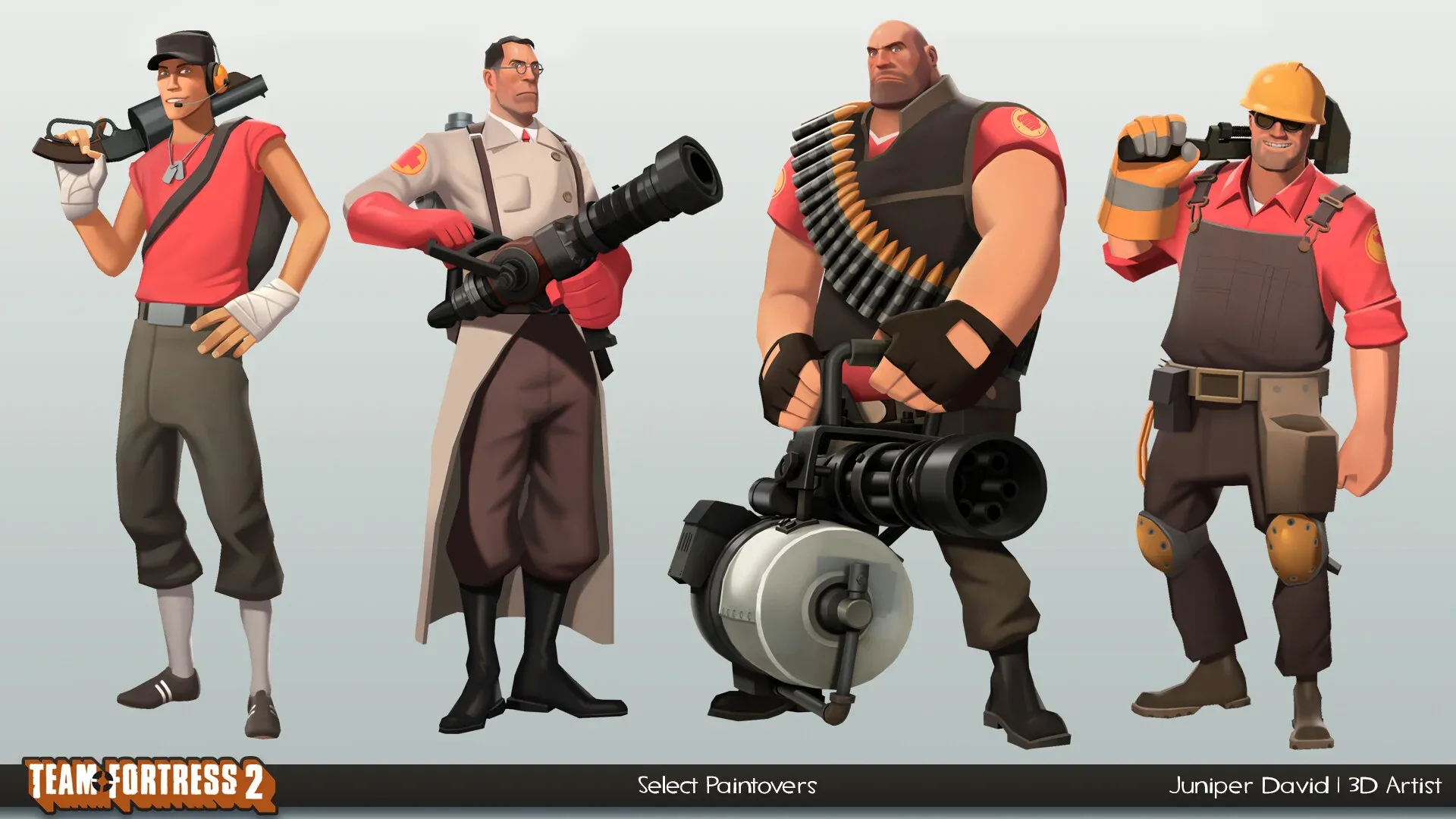


Five skins. Two thumbs up. A room full of developers laughing in disbelief.
That's the picture Chet Faliszek paints when describing the internal reaction at Valve every time Team Fortress 2 dropped a bare-bones update and the community responded with genuine enthusiasm. Faliszek, who spent 13 years at Valve as a writer and co-project lead on Left 4 Dead before departing in 2017, recently shared the candid anecdote in a video responding to a question about the historically slim update cadence for both TF2 and Counter-Strike.
What Faliszek actually said
His words are worth quoting directly, because they're pretty telling. "Even at Valve, we'd be like, 'I can't believe we get away with this'," Faliszek said. He was quick to clarify the intent behind that reaction: "We're not getting away with it like we're trying to hoodwink you, but these other teams have a thousand people working on a gajillion different things and all these different features, and Valve's like, 'here's five skins'." He then mimicked giving two enthusiastic thumbs up, laughing at the memory.
The punchline? Players responded positively anyway. "And people are like, 'cool'," he said, visibly incredulous. "So, even people at Valve have an understanding that they're just lucky."
Here's the thing: that's not a dig at TF2 players. If anything, it reads as genuine bewilderment that a community could be so loyal and so easily satisfied at the same time, especially when held up against the content pipelines of studios deploying hundreds of developers on live-service titles.
The gap between Valve and everyone else
For context, Faliszek's tenure at Valve ran from 2004 to 2017, which means his observations about Counter-Strike almost certainly refer to CS:GO rather than Counter-Strike 2, which launched in 2023. That's worth keeping in mind, because Valve's update philosophy for these games has shifted somewhat since then, even if the pace still rarely matches competitors.
What makes the comment land is the comparison he draws. Other studios were running thousand-person teams shipping constant feature updates, seasonal content, and battle passes. Valve's Counter-Strike and TF2 teams, by contrast, were operating with far smaller headcounts and pushing updates that would barely register as patch notes at a studio like Riot or Blizzard. The surprise wasn't that Valve shipped small updates. The surprise was that nobody seemed to mind.
Why TF2 players took it in stride
The TF2 community has always had a complicated relationship with Valve's update frequency. The game went years between meaningful content drops, and players built an entire culture around that scarcity, including fan-made comics, community servers, and a persistent push for official attention. The fact that even a cosmetic update could generate genuine excitement says something about how deeply the community is invested in the game itself rather than the content surrounding it.
That loyalty is a double-edged sword. On one hand, it means Valve's TF2 team could ship something modest and still generate goodwill. On the other, it also meant the community spent years feeling underserved, with vocal portions of the playerbase running campaigns like "Fix TF2" to draw attention to bot problems and the lack of developer communication.
Faliszek's comments don't resolve that tension, but they do confirm something many players suspected: the small update size wasn't always a strategic choice. Sometimes it was just the reality of a small team, and the reaction from players was as much a surprise inside Valve as it was a relief.
What this means for how Valve operates
Valve's flat organizational structure means developers self-select onto projects, which has historically resulted in uneven staffing across its titles. A game like Dota 2 might attract a larger internal team at any given moment, while TF2 operates with a skeleton crew. That's not unique to Valve, but the company's scale and resources make it a more pointed observation.
Faliszek's video is a small window into that reality. The people working on these games weren't indifferent to the size of their updates. They were aware of the disparity, and they were, by his account, genuinely surprised every time the community absorbed a minimal drop without revolt.
Nine years have passed since Faliszek left, and Valve's internal structure hasn't changed dramatically at the leadership level. Whether the TF2 team's resourcing has shifted is harder to know from the outside. For players who want to sharpen their skills while waiting for the next update, the Team Fortress 2 strategy guides cover class mechanics and competitive tips worth checking out. For a broader look at what's happening across the gaming world, the full gaming guides hub has you covered.