

ZA/UM's follow-up to Disco Elysium arrives May 21, 2026, and early reviews confirm that Zero Parades: For Dead Spies is a genuinely compelling RPG, even if it can't fully escape its predecessor's shadow.
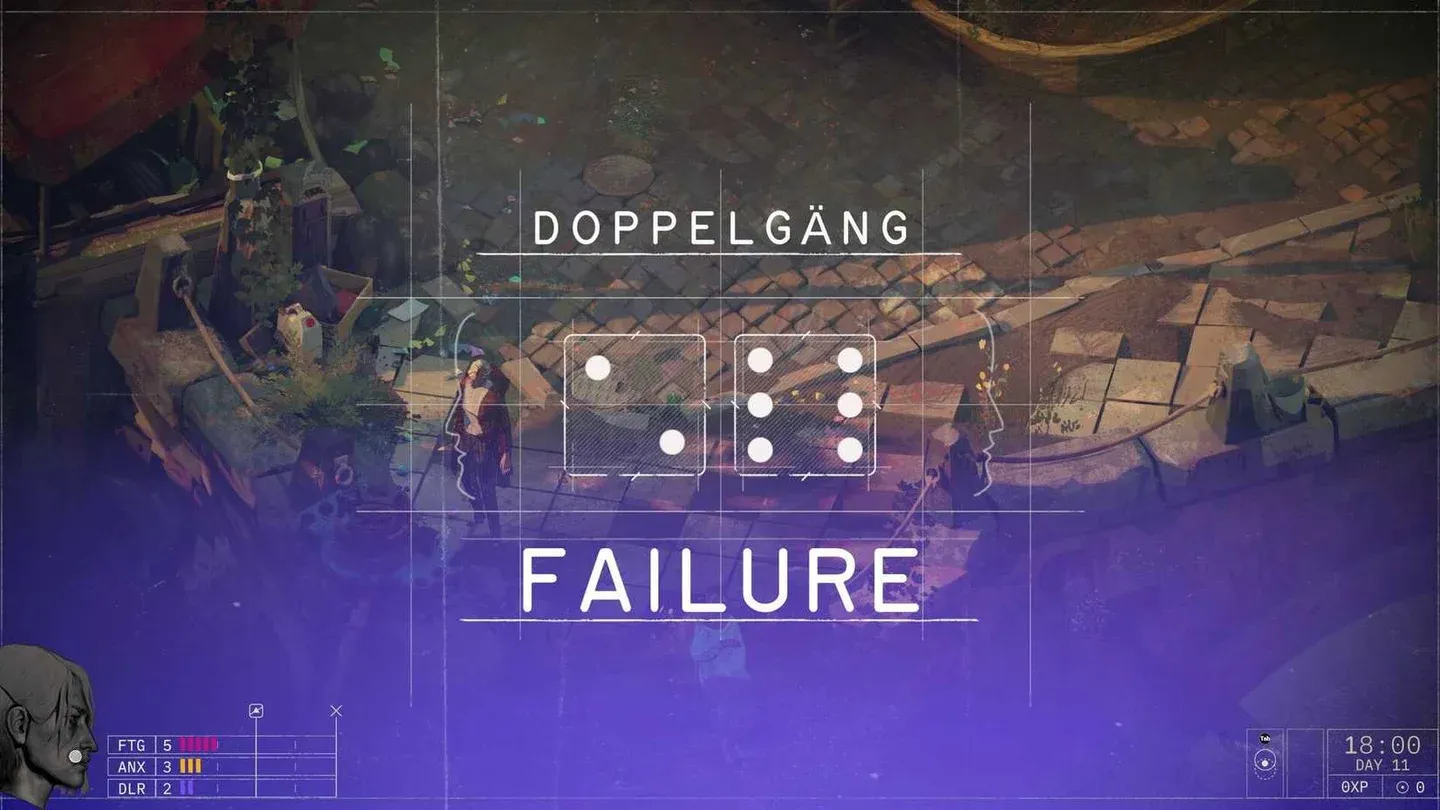
Skill check system in action

Use code TRYHARD33 at checkout to redeem this offer before code expires again.
Get 33% Off GAMES+ Subscription
What ZA/UM built after the fallout
The backstory here matters. After a highly public legal dispute separated many of Disco Elysium's key creative minds from ZA/UM, the studio faced a genuinely difficult question: what comes next? Zero Parades is the answer, and the context shapes how you read every design decision in it.
The game follows Hershel Wilk, codename Cascade, a spy for an intelligence outfit called the Operant Bureau, waking up on the floor of a grimy apartment in the city of Portofiro. Her mission partner, codenamed Pseudopod, is dead in a chair. An invoice for socks and a business card reading "All you need is a miracle" are the only clues. Sound familiar? Yes, the opening beats echo Disco Elysium closely, and that's both Zero Parades' greatest strength and its most persistent problem.
A spy system that rewards failure
Here's the thing: where Zero Parades actually separates itself from its predecessor is in the mechanics. The skill system uses three main faculties, Action, Relation, and Intellect, each split into five upgradeable skills. Shadowplay governs sneaking and theft. Grey Matter handles logic and pattern recognition. The setup is familiar, but what ZA/UM layered on top of it is genuinely interesting.
Each faculty is tied to an ailment. Action links to Fatigue, Relation to Anxiety, Intellect to Delirium. These pseudo health bars rise and fall based on what you do and witness. Finding your dead partner spikes your anxiety. Consuming cigarettes, alcohol, or soft drinks can regulate these stressors, but pushing one down often means pushing another up. If any ailment crosses its threshold, one of your faculty skills gets reduced.
The key here is that you can deliberately push an ailment higher to gain a third die on a skill check roll, trading long-term stability for short-term advantage. It's more gamified than anything in Disco Elysium, and it fits the fantasy of playing a trained operative who can push past their limits.
Failure, though, is the real design philosophy. Missed skill checks don't dead-end quests; they redirect them. A botched interaction opens a completely different path through the same problem. Quests overlap and intersect in ways that feel organic rather than engineered, with characters you met for one reason resurfacing unexpectedly for another.
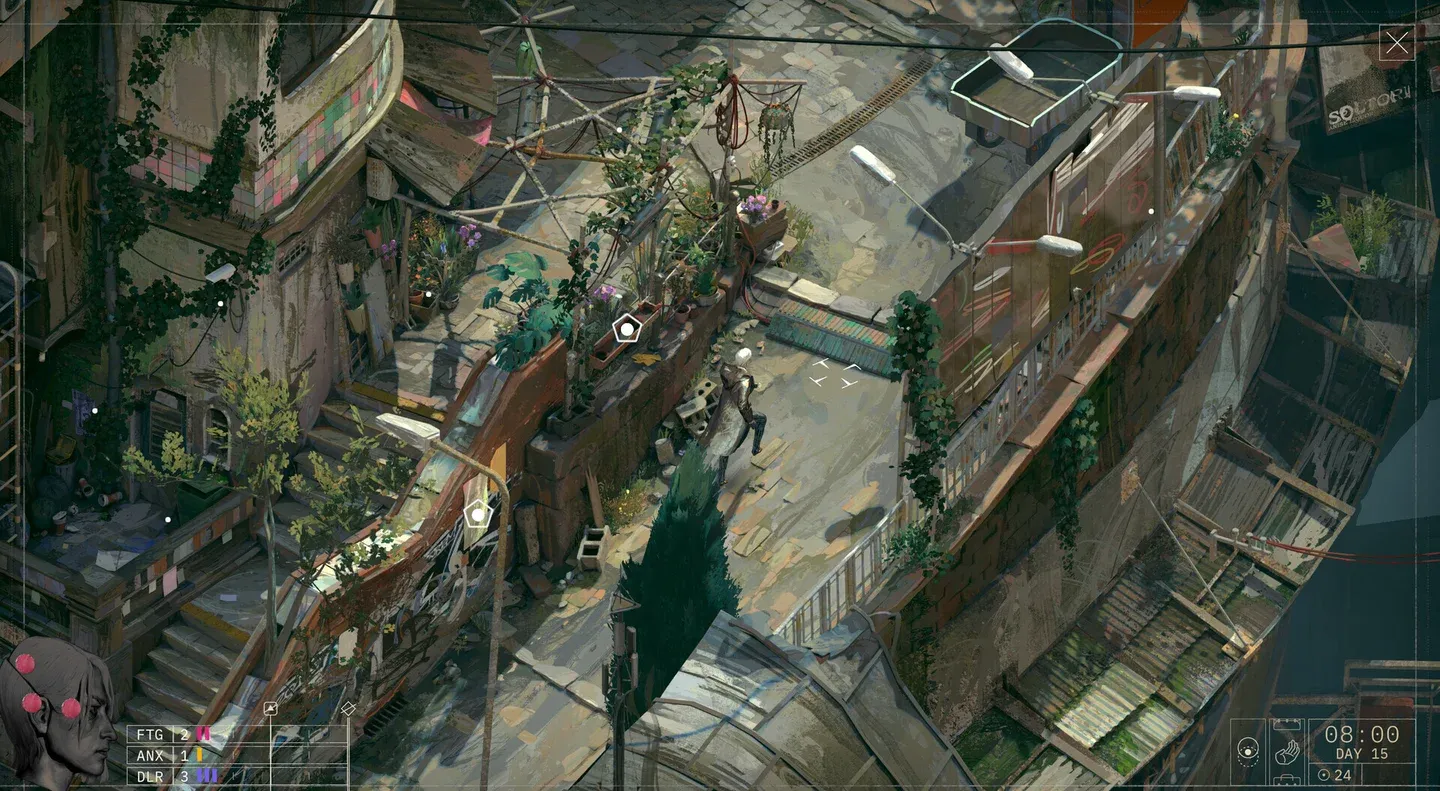
Portofiro's Bootleg Bazaar
Portofiro as a living political arena
The city of Portofiro is where Zero Parades earns its most consistent praise. It sits at the intersection of three competing ideological forces: the communist Superbloc (Hershel's home), the techno-fascist Illuminated Empire (La Luz), and whatever space exists between them. That tension isn't abstract. You see it in a marketplace where children watch a Luzian cartoon loaded with subtle propaganda. You see it in a clothes vendor whose father disappeared after falling into conspiracy theories, and a man buried in debt chasing imported fashion trends from La Luz.
The writing draws clear comparisons to John le Carré's morally ambiguous spy fiction, but it doesn't lock itself into that register. It's sharp, occasionally very funny, and willing to mix geopolitics with surrealism, though the surrealist moments sometimes feel like they were included because they worked in Disco Elysium rather than because they fit Zero Parades' tone. A sequence involving a fax machine described in the style of a demonic possession ritual is the clearest example of the game straining against its own identity.
The skill voices share too much of the same register, which is the other notable weakness. In Disco Elysium, each skill felt like a distinct character. Here, they're largely interchangeable, partly because voice actor Boo Miller's delivery doesn't differentiate much between Hershel's inner thoughts, and partly because the writing doesn't push those distinctions far enough.
The Disco Elysium comparison is real, but it's not the whole story
Zero Parades stumbles into imitation at times, but it's still an excellent and richly detailed RPG. The game's opening, its isometric perspective, its combatless design, its verbose dialogue-driven structure, all of it signals where ZA/UM came from. The studio isn't hiding that lineage.
What many players miss in early impressions is how much the ailment system and the branching failure design actually change the feel of play. Disco Elysium was more freeform and poetic. Zero Parades is more structured and systemic. Neither approach is wrong, but they produce meaningfully different experiences.
Hershel herself is a compelling protagonist, haunted by a past mission gone wrong that left her crew stranded and sent her to desk duty in the Freezer. The personal stakes feel real, and the cast surrounding her in Portofiro is largely well-drawn.
For players who want to get the most out of Portofiro's branching quest design, the Zero Parades: For Dead Spies guides collection is the place to start once the game drops on May 21.