
The best Rob Run co-op loadouts pair a TAG-12K entry player with RC 5.56 street cover, then add specialists for longer engagements.
Choose who enters, who moves the loot, and who watches the exit before buying another gun. Those are jobs you assign, not character classes. A crew carrying only short-range weapons can threaten an interior but struggle once the escape crosses a street. Your main weapons should support different jobs, while backups cover the distances each player cannot comfortably handle. Start with the robbery and its exit route, then build the team around both.
How to build complementary team loadouts
Assign weapons by responsibility
Use these pairings as role-based recommendations. The entry player needs immediate close-range pressure, while the covering player needs to reach opponents outside the building. Territory fights justify sustained-fire and overwatch specialists that a small robbery crew may not need.
| Team role | Main weapon | Complementary backup | Assigned job |
|---|---|---|---|
| Heist entry | TAG-12K | RC 5.56 | Handle tight entrances and retain reach outside |
| Street cover | RC 5.56 | AP Scalar | Watch approaches and protect nearby teammates |
| Sustained-fire support | LM 249 | AP Scalar | Hold a line during territory fighting |
| Ranged support | SR Reaper | AP Scalar | Cover distant angles with fast follow-up shots |
| Dedicated long-range overwatch | Vulture 50 | RC 5.56 | Watch long approaches without relying on the sniper up close |
For a duo, use entry and street cover as the starting roles. With a third teammate, separate loot hauling from covering so the rifle player does not need to abandon an approach whenever someone collects cargo. Add dedicated overwatch when the route presents a useful long sightline and another teammate can still protect the close approaches.
Avoid choosing specialists simply because another player already has the basics covered. A sniper contributes little if the entire fight happens inside the room your shotgun player is entering.
Close-range weapon setup
Choose between shotgun burst and automatic pressure
TAG-12K is the strongest recommendation for a dedicated interior entry role. Its shotgun output depends on the pellet spread connecting, so choose it for tight entrances where you can keep the engagement close. ORDR-12 is another hard-hitting shotgun option, with a slower firing cadence.
AP Scalar is the alternative for sustained close-range pressure. Its high fire rate supports rapid follow-up shots, but missed bursts consume ammunition quickly. Choose it when you prefer automatic fire to a shotgun's spread-dependent damage.
The weapon figures below are community-tracked Early Access values. Paper DPS is damage × RPM ÷ 60. It excludes reload time, armor, recoil, and missed shots, so it is not a time-to-kill ranking.
| Close-range weapon | Damage | RPM | Paper DPS |
|---|---|---|---|
| TAG-12K | 9 × 8 pellets | 240 | 288.0 |
| AP Scalar | 14 | 1000 | 233.3 |
| ORDR-12 | 9 × 8 pellets | 171 | 205.2 |
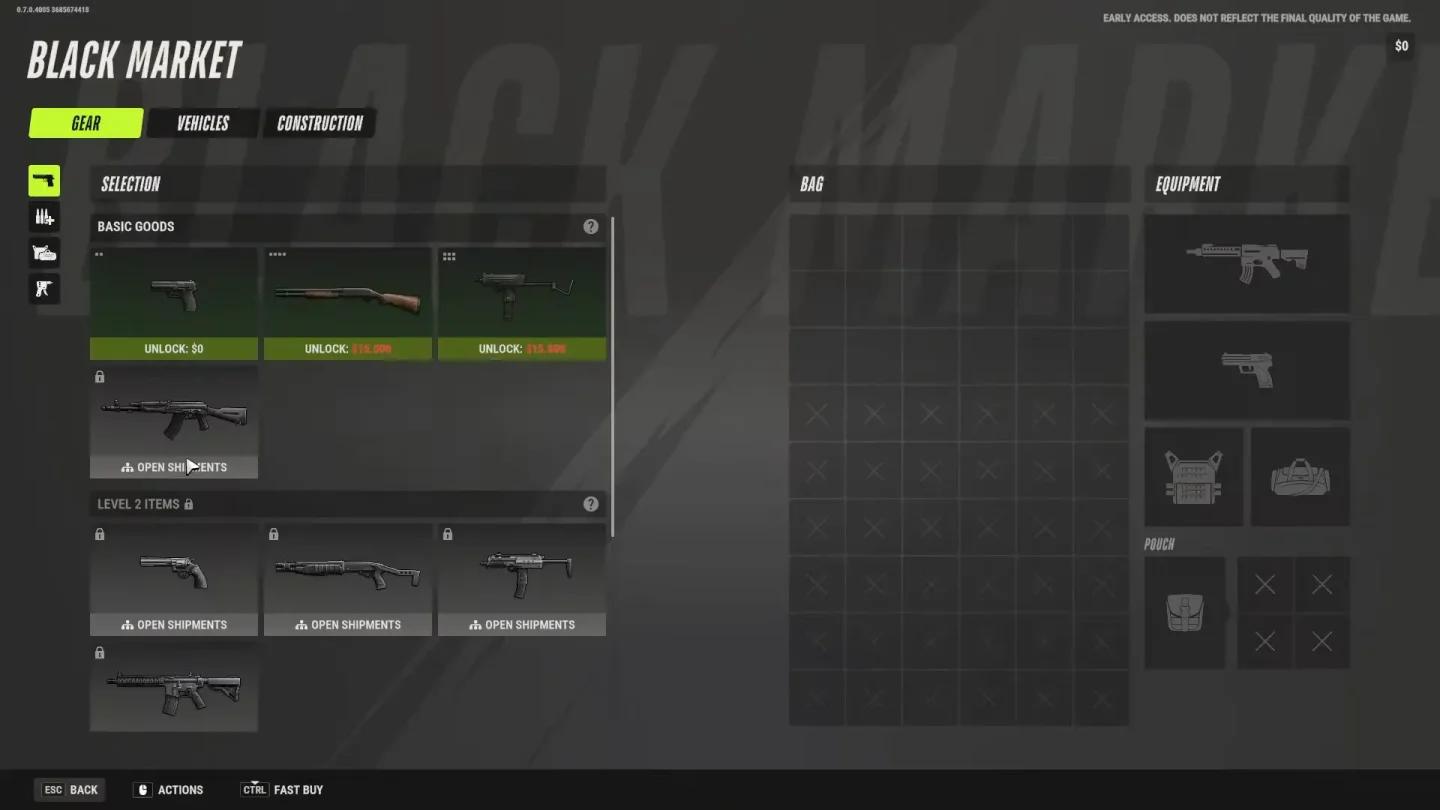
Choose burst for tight entrances
Keep the backup useful outside
A second close-range weapon does not solve the entry player's main weakness. Take the rifle backup when the escape requires crossing a street or covering a teammate beyond the doorway.
Your close-range player should also resist chasing a retreating opponent into an angle the covering teammate cannot see. The loadout is built to win the entrance, not to make every distance equally comfortable.
Longer-range weapon setup
Start with street cover, then add specialists
RC 5.56 is the default covering rifle because it is a forgiving mid-range choice. It suits the player who must watch the road, respond to changing angles, and help the entry player leave the building. Give this job a dependable rifle before filling the crew with specialist weapons.
| Cover weapon | Damage | RPM | Paper DPS | Best fit |
|---|---|---|---|---|
| RC 5.56 | 16 | 667 | 177.9 | General street cover |
| SR Reaper | 17 | 750 | 212.5 | Ranged follow-up fire |
| Vulture 50 | 36 | 240 | 144.0 | Deliberate long-range overwatch |
| LM 249 | 18 | 706 | 211.8 | Sustained-fire support |
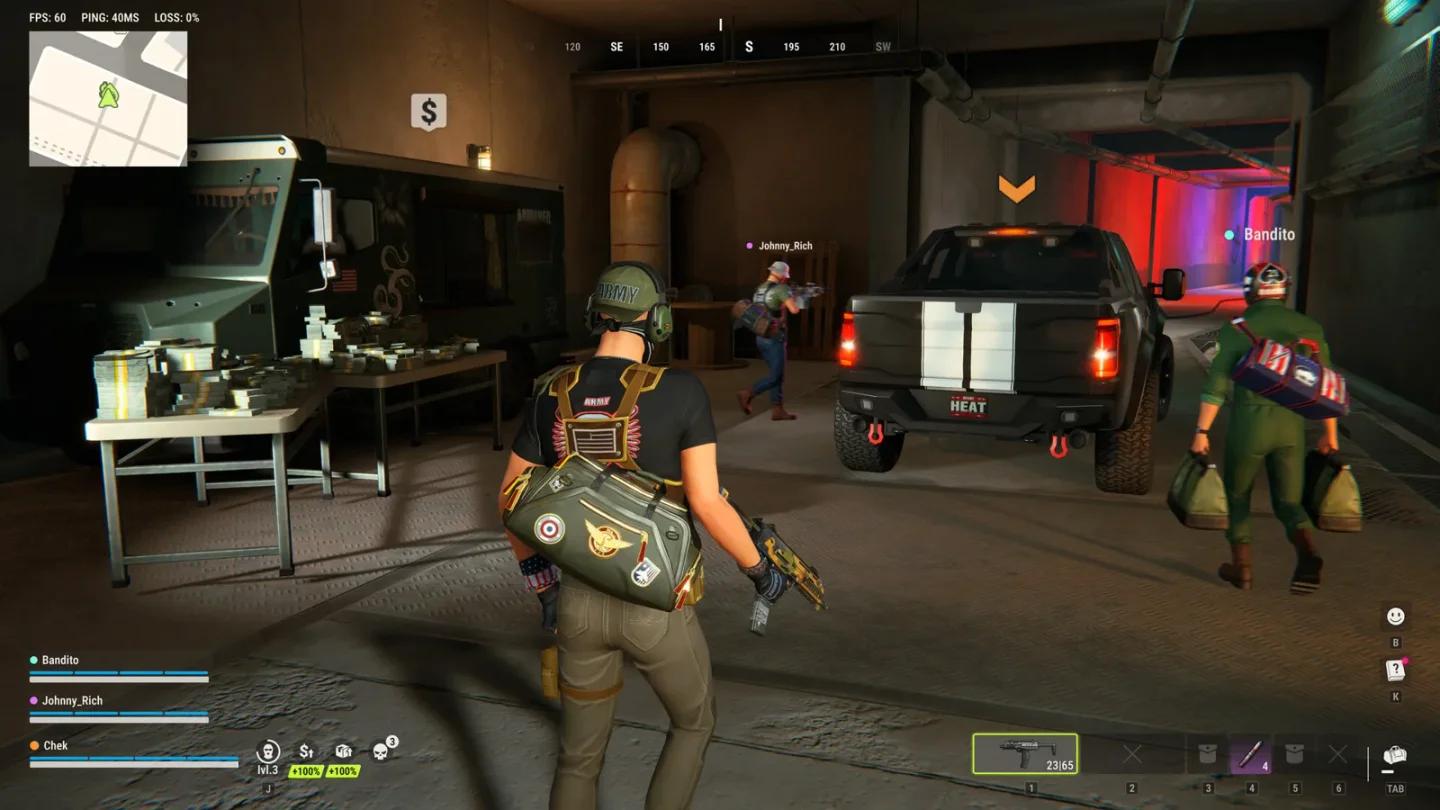
Keep a rifle on the exit
SR Reaper suits a covering player who wants quick follow-up shots at range. Vulture 50 is more specialized: choose it when your assigned position genuinely lets you maintain distance. Its higher damage per shot does not make its lower paper DPS a reason to reject it, because its purpose is different from an SMG's.
Reserve the LM 249 for holding ground
LM 249 fits territory fighting, where sustained fire can support teammates holding a line or preparing to push. It is not a required purchase for every heist crew.
Choose between sustained-fire support and long-range overwatch based on the position you need to defend. One watches an extended approach; the other supplies continued fire while teammates move. Do not assign both players to watch the same angle while leaving the nearby entrance uncovered.
Equipment priorities for group play
Pack for the job, not an imaginary class
Rob Run's current builds center on equipment and routes, not skill-tree allocations. For a criminal heist setup, the mask is the essential item alongside your weapon pairing because wearing one lets you rob locations in Looty Bay.
Set these priorities before spending on another specialist gun:
- Check the weapon's Mark. Higher Marks improve the same weapon family. A Mark 3 version of a mid-tier weapon can outperform a Mark 1 version of a stronger family, so compare the actual items you own.
- Arrange getaway access. Assign a driver and agree where the vehicle will wait. If you have no active vehicle, a free rental is available from a Parking Terminal.
- Keep a replacement budget. Criminal deaths in Looty Bay cost inventory. Bank money between runs so the next loss does not leave the crew unable to replace its kit. Banked cash is protected from theft until the weekly Federal Raid reset.
- Agree on the leave condition. Name the point at which the crew stops collecting and moves, such as police blocking the planned route or another group arriving.
Keep your equipment plan specific. A weapon for your assigned range, a complementary backup, and an agreed exit are more useful than giving everyone a different gun without changing their responsibilities.
Accessible alternatives for new players
Build an early kit from what you can replace
Weapons can be found as city loot or bought through the Black Market, either from Lenny or through the laptop at your base. Use those routes to fill a missing team role, not automatically replace every serviceable weapon.
These alternatives can keep the crew functional while you work toward the recommended setups:
| Available weapon | Early role | Limitation to plan around |
|---|---|---|
| CB45 | Starter sidearm for initial robberies | Does not replace dedicated rifle cover |
| MC-10 | Budget close-range pressure | Struggles against armor |
| KL-545 | Stable all-round rifle substitute | Lower tracked paper DPS than RC 5.56 |
Upgrade the team's missing range first
If both players already have close-range weapons, prioritize a mid-range option when you next buy a combat upgrade. A better second SMG still leaves the same street-cover problem unsolved.
Once the crew covers both interior and exterior fights, improve the weapon used for the hardest job on your route. Add a Vulture 50 or LM 249 only after assigning the position that makes it useful. Ownership alone is not a reason to bring a specialist weapon.
Coordinate positioning and engagement ranges
Run the setup as a shared plan
Clear range calls help in team-based [action games]; in Rob Run, make those calls about the route your loot carrier needs to cross. “Street covered” is more actionable than several teammates announcing the same opponent.
Use this sequence for a coordinated robbery:
- Scout unmasked. Check the target and escape route before starting the robbery.
- Give entry a defined angle. Keep employees at gunpoint so they cannot trigger the alarm, while another player handles loot.
- Keep cover separate from collection. The covering player watches approaches instead of joining everyone around the valuables.
- Call reloads before moving. Avoid starting a push while the teammate responsible for covering it is reloading.
- Move the carrier through covered space. Position the rifle player to watch the next crossing, not only the doorway you just left.
- Break contact when the exit deteriorates. Reroute or leave instead of extending the fight to chase another opponent.
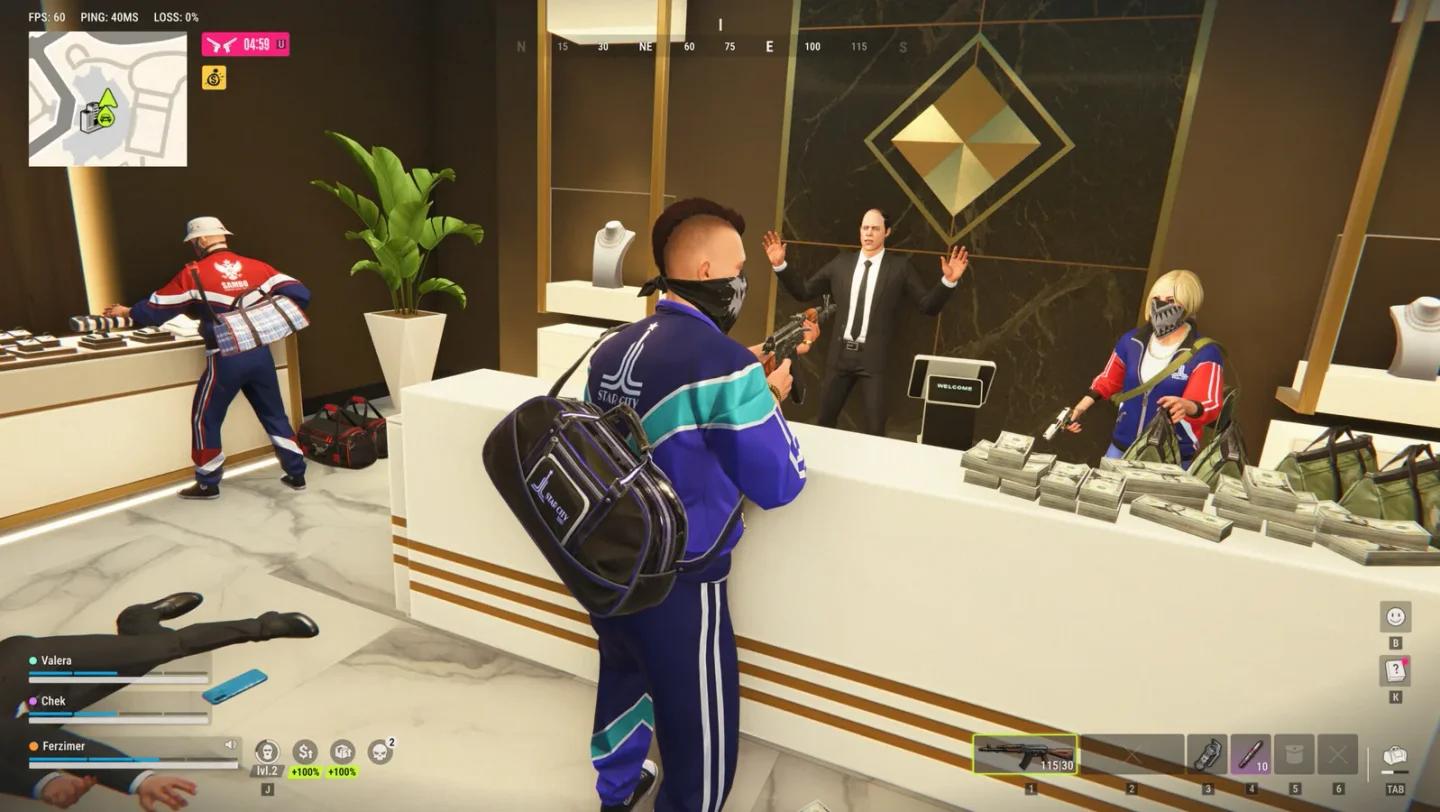
Split entry and covering duties
If the carrier is loaded and a second crew appears, protect the escape. The long-range weapon is there to help your team cross the street, not turn every profitable robbery into a fight for the entire block.