Overview
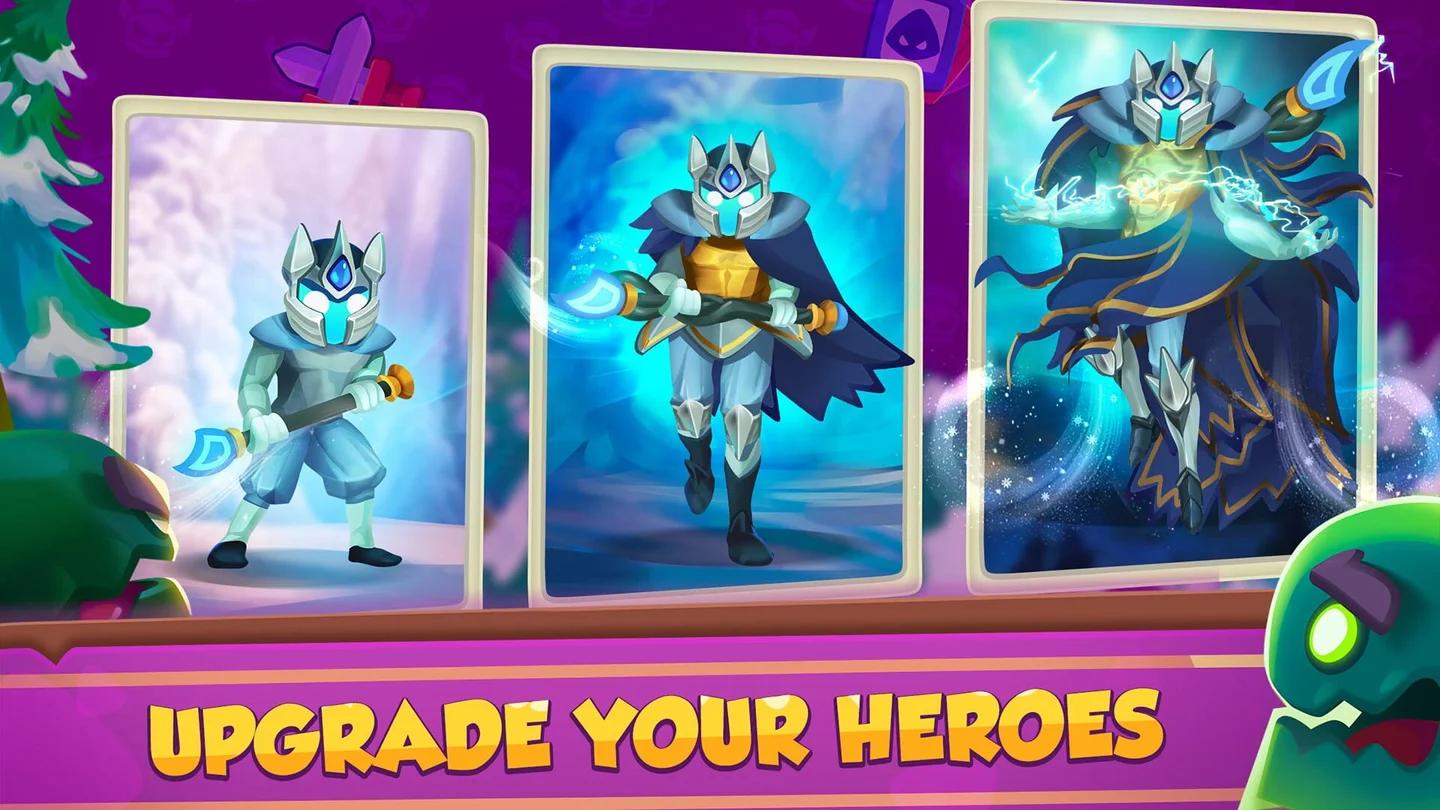
Rush Royale is a fantasy tower defense game published by MY.GAMES for Android and iOS. Warriors and wizards take the place of conventional towers, turning castle protection into a battle fought by a collected roster of heroes. Its strategy combines preparation before combat with resource decisions under pressure.
The game brings collectible-card mechanics into a genre usually associated with fixed defensive structures. Choosing a fighting lineup becomes part of the challenge, while luck adds uncertainty to the action. A strong plan matters, but it does not remove the need to respond as a battle develops.
How does Rush Royale's tower defense work?
Rush Royale centers on defending against enemy hordes with a deck of combat units, managing resources, and surviving encounters with powerful bosses. The objective stays easy to understand even as threats put the defense under strain.
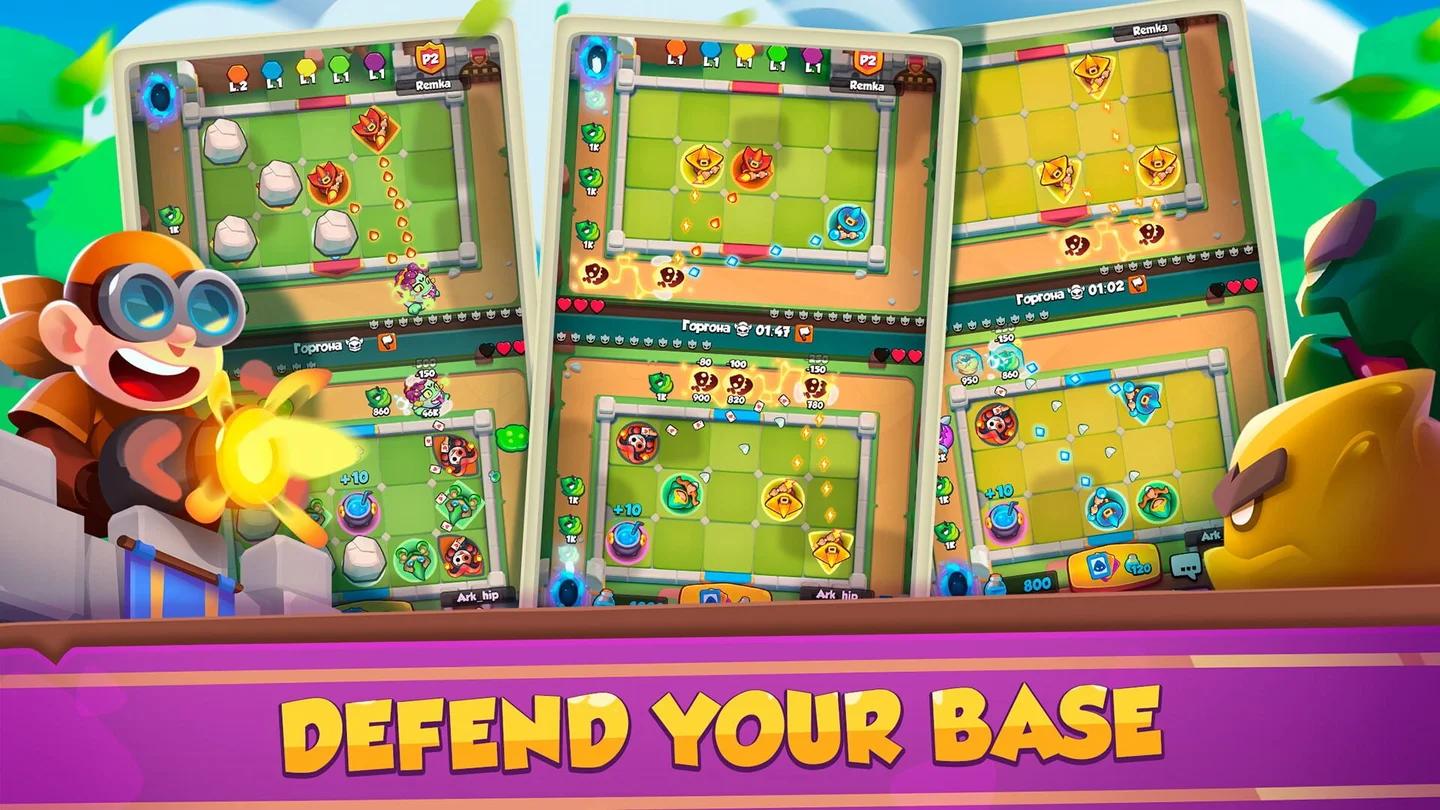
Its core combat elements include:
- Hero-based castle defense
- Enemy waves and bosses
- Defensive resource management
- Card-based army building
Resource management gives the action its tactical foundation. Spending decisions need to serve the defense, keeping attention on what the current battle demands. The challenge comes from making those choices while enemies continue their advance.
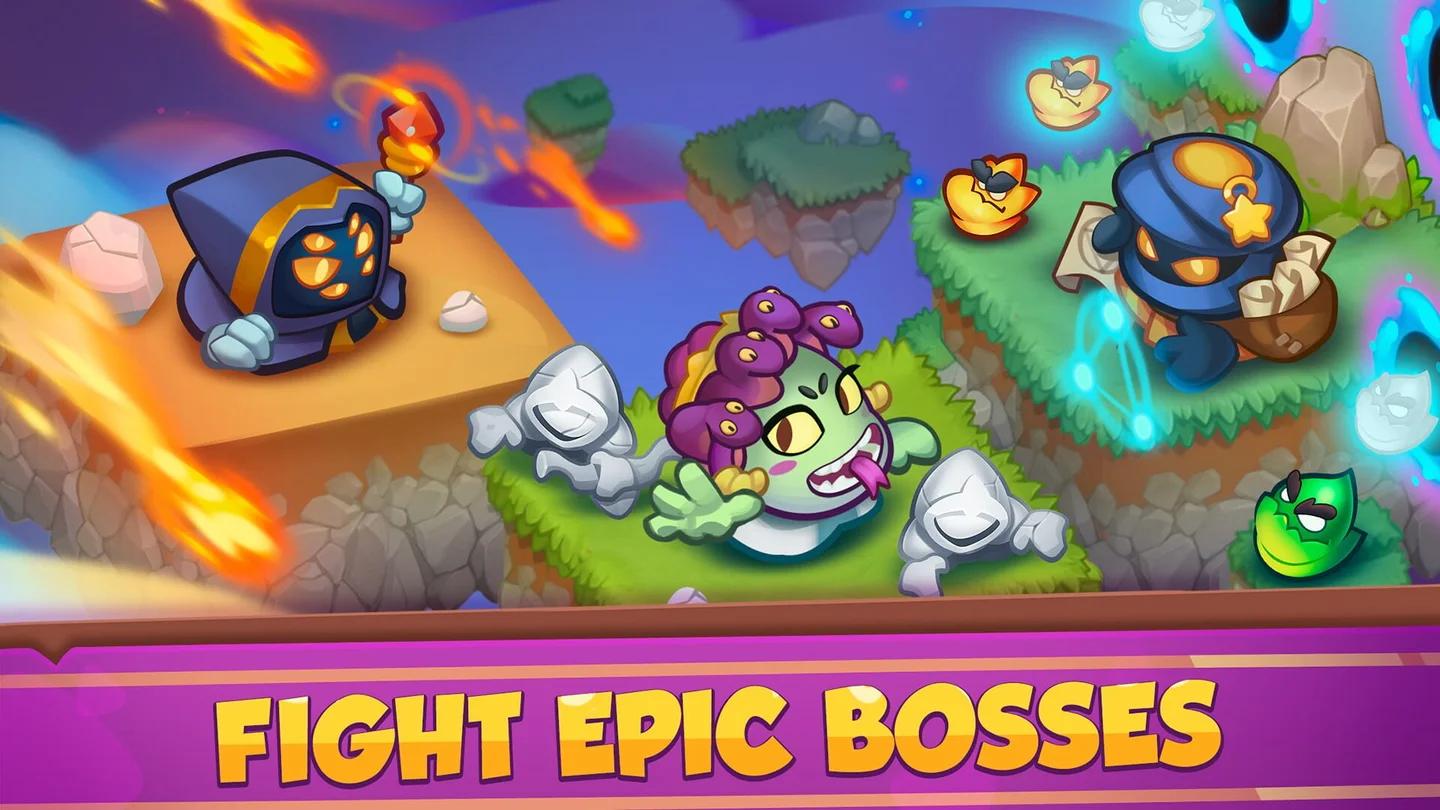
Boss encounters add a different threat to the massed attackers. The defense must contend with both the pressure of a horde and a formidable individual enemy, giving battles more to consider than the number of opponents approaching the castle.
Card collection and chance
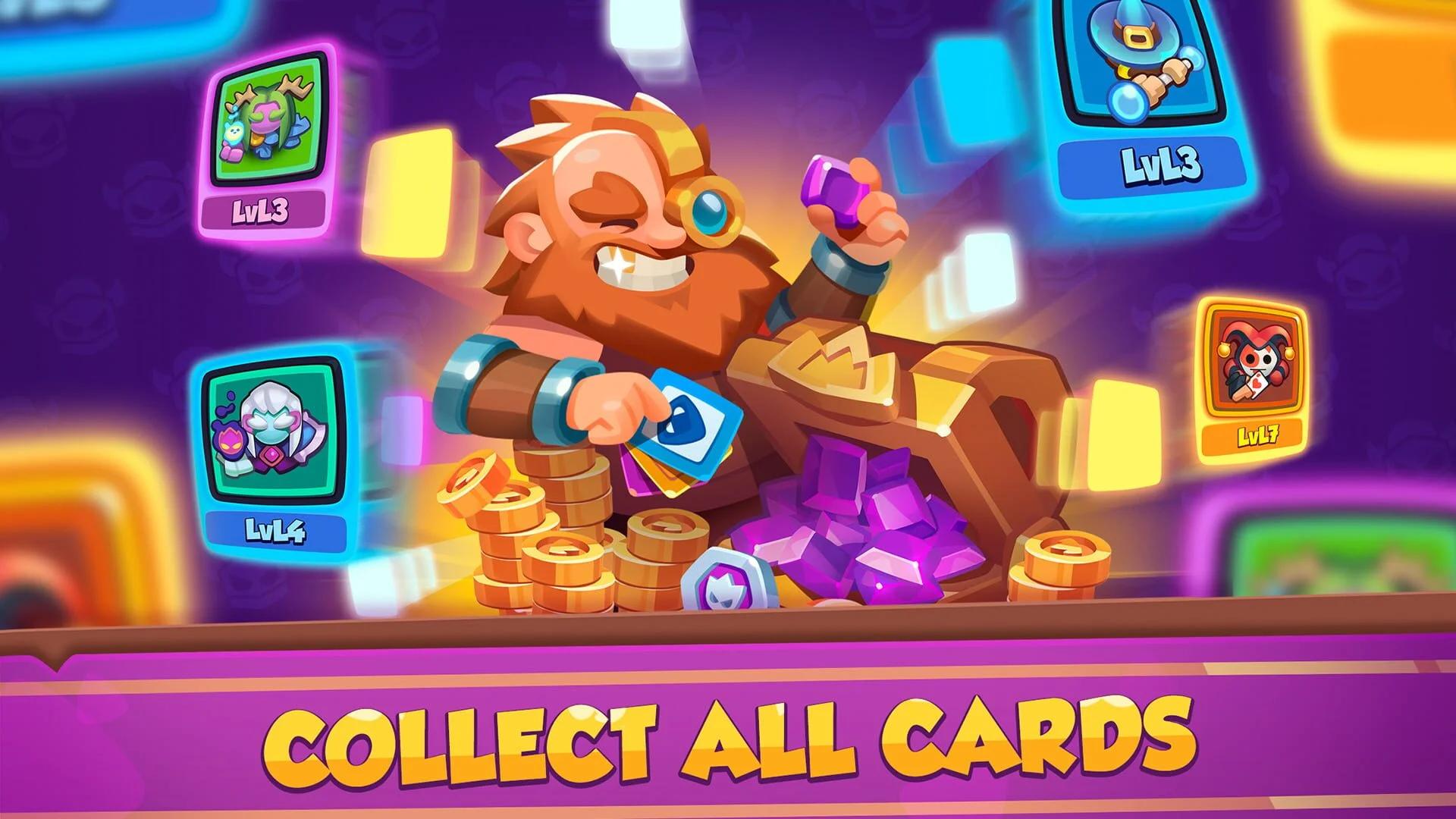
The collectible-card layer makes army selection a separate strategic task. Heroes become options for constructing a deck, so collecting and choosing serve different purposes: one expands the roster, while the other determines which defenders enter battle.
That structure connects long-term collection with immediate combat decisions. The important question is how a selected group supports the intended defense. A larger collection offers more choices, but choosing a lineup remains the step that turns those options into a plan.
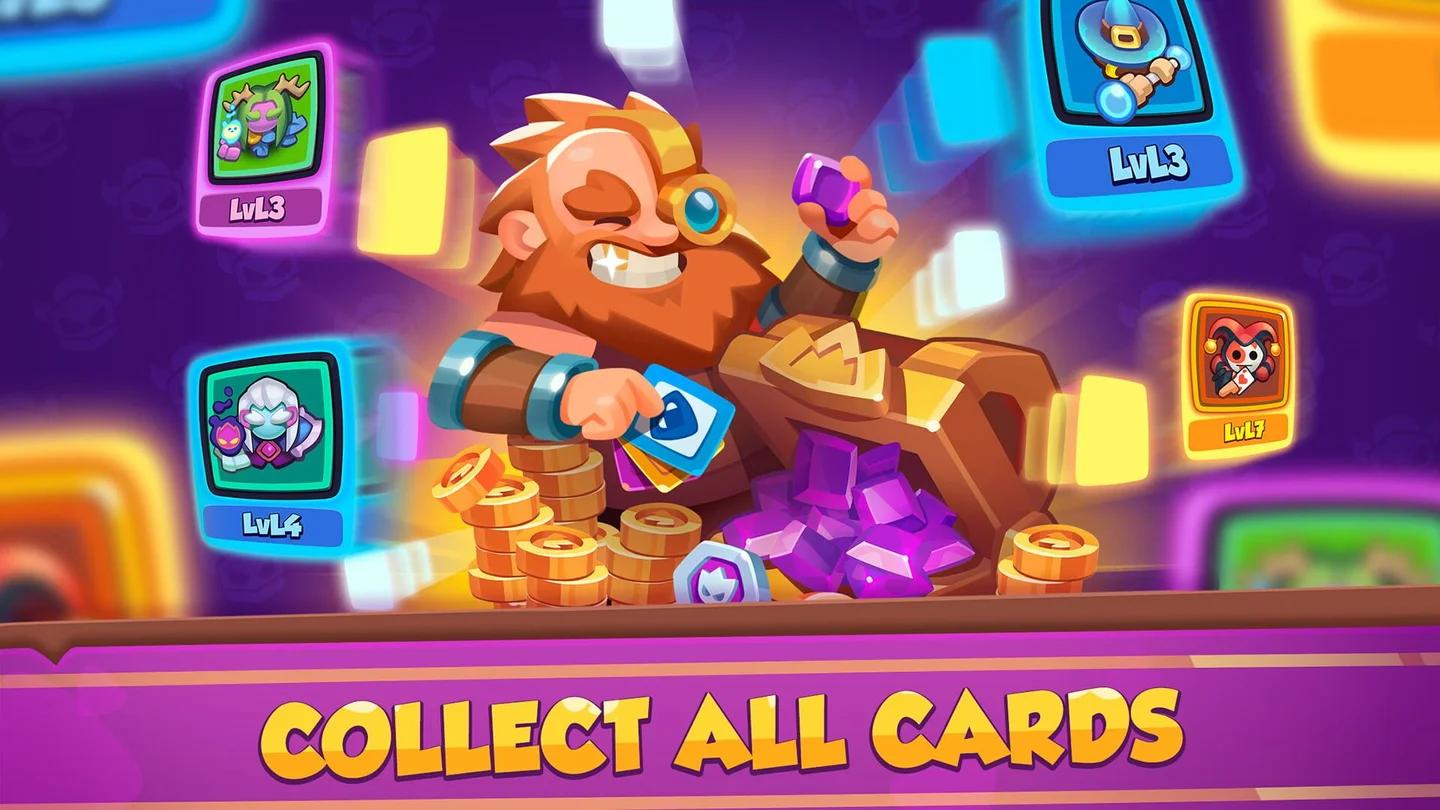
Chance complicates that preparation. Rush Royale explicitly builds luck into its strategy, preventing deck selection from guaranteeing success. The appeal lies in working with uncertainty while still making deliberate choices about the resources and fighters supporting the castle.
PvP and cooperative defense
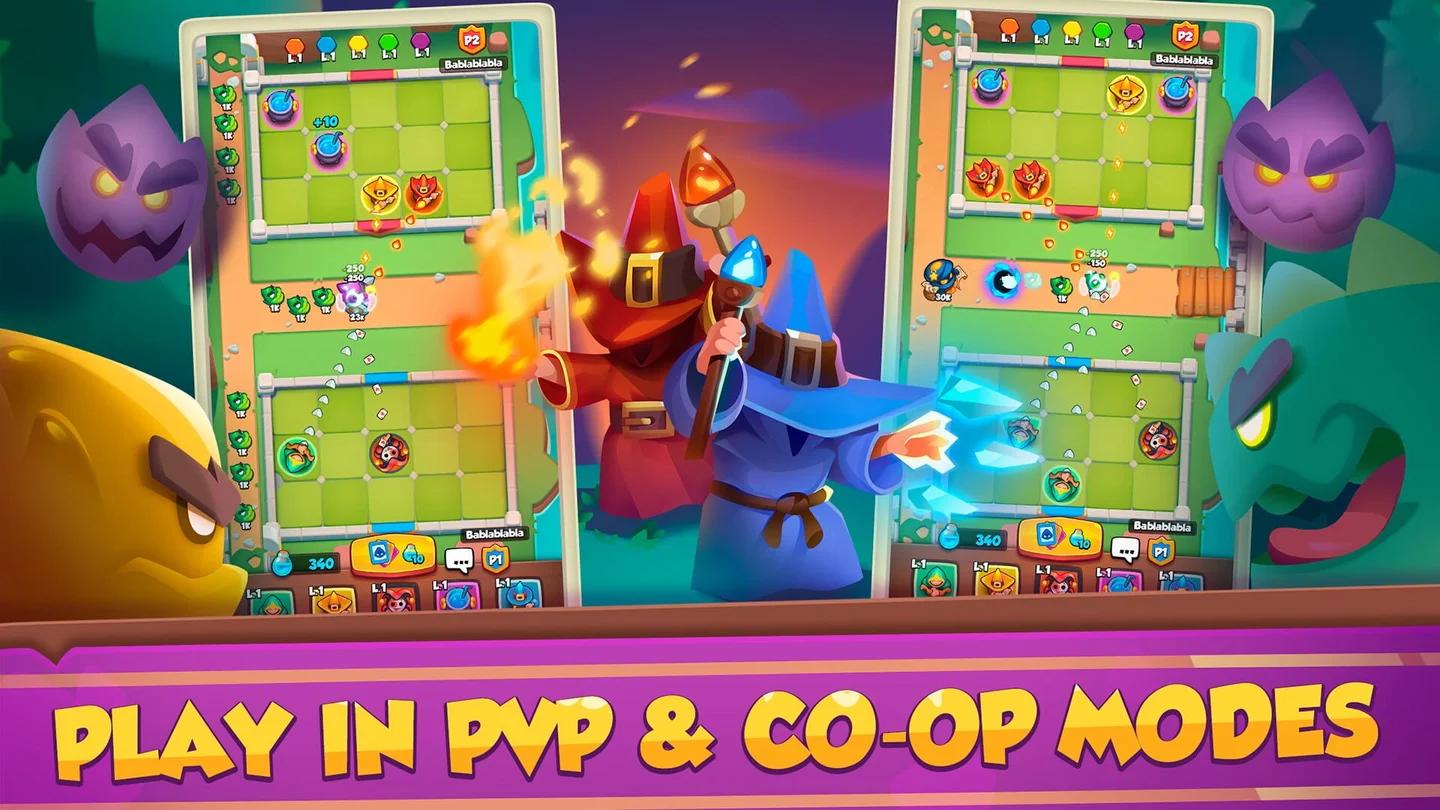
Rush Royale supports both real-time PvP and co-op. Competitive play puts castle defense into a contest against another player, making survival part of a direct rivalry. The familiar task of holding back enemies gains an opposing human presence.
Co-op changes that relationship by placing players on the same side. Cooperation offers a shared defensive challenge alongside the competitive mode, giving the game two distinct social contexts for its central combat system.
These modes connect the deck-building layer to different reasons to play: testing a strategy against an opponent or tackling a defense together. Rush Royale keeps tower defense at the center of both, with card collection and chance shaping the forces brought into each battle.