
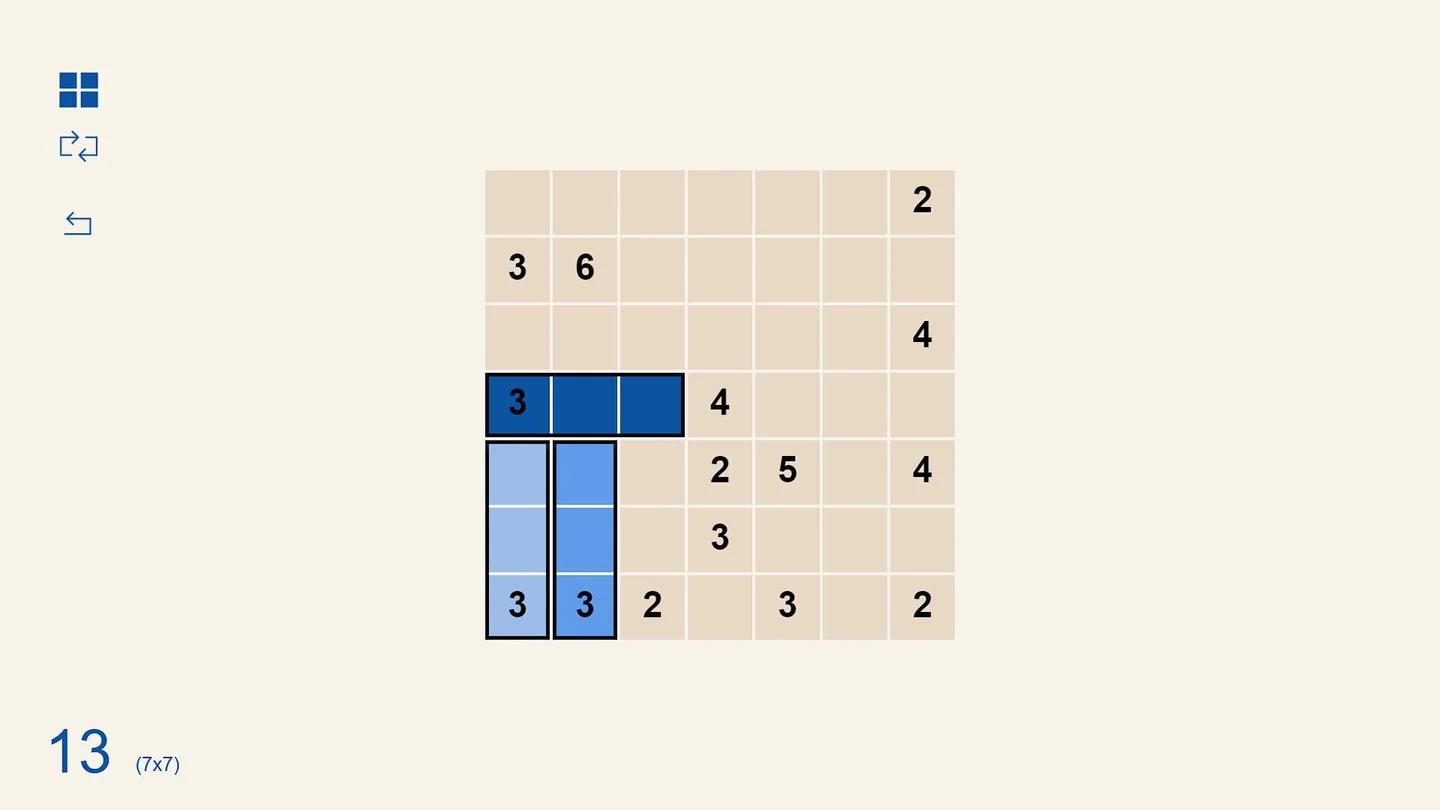
Overview
Square Logic makes the shape of an answer as important as the number behind it. Developed and published by Climbing Goat Games, this Japanese-inspired logic puzzle game asks players to partition a grid into squares and rectangles until every cell belongs to a valid region.
With no score or timer, Square Logic puts the emphasis on finishing boards rather than solving them quickly. Its strategy comes from fitting individually valid shapes into one complete solution: a rectangle that satisfies its own clue still has to leave workable space for everything beside it.
How does Square Logic work?
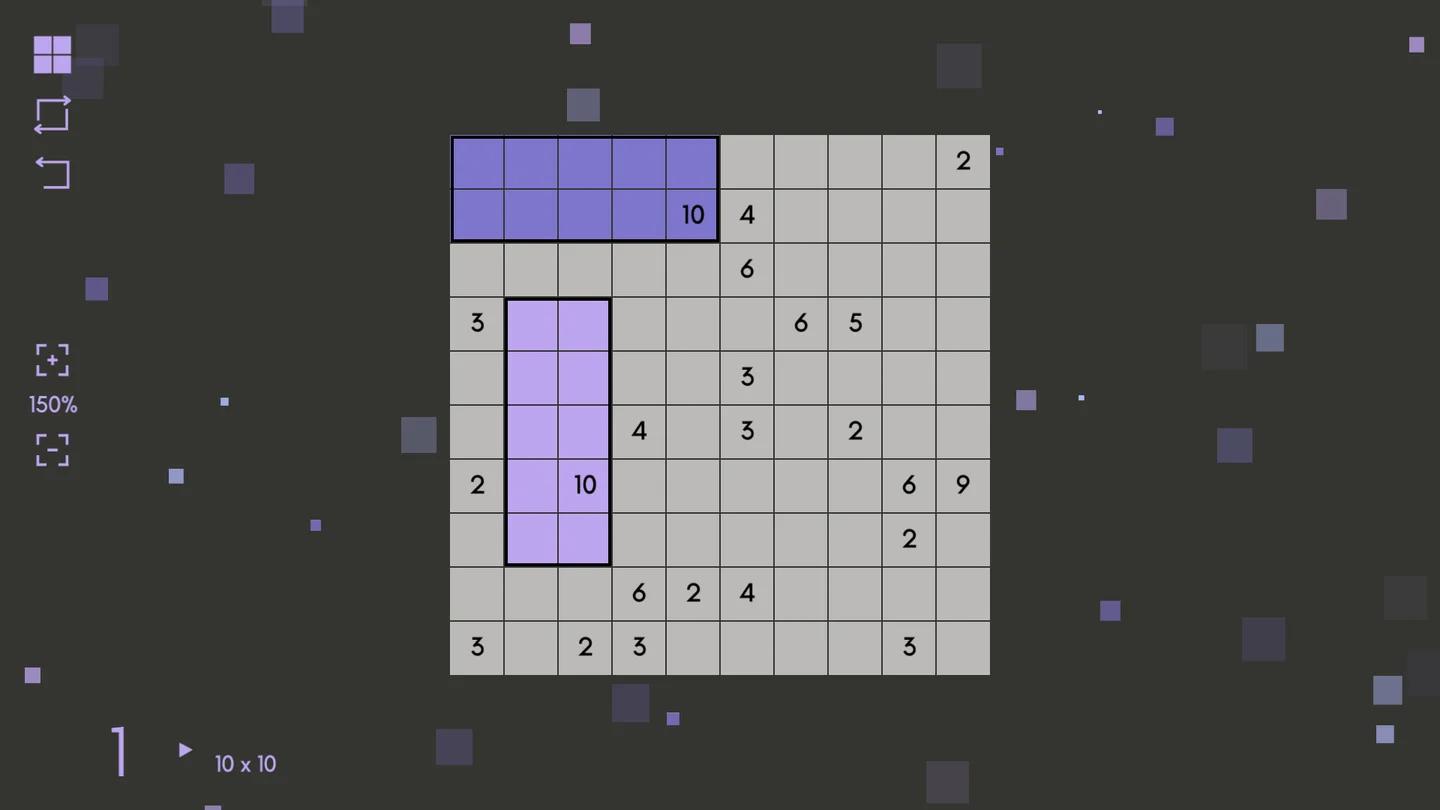
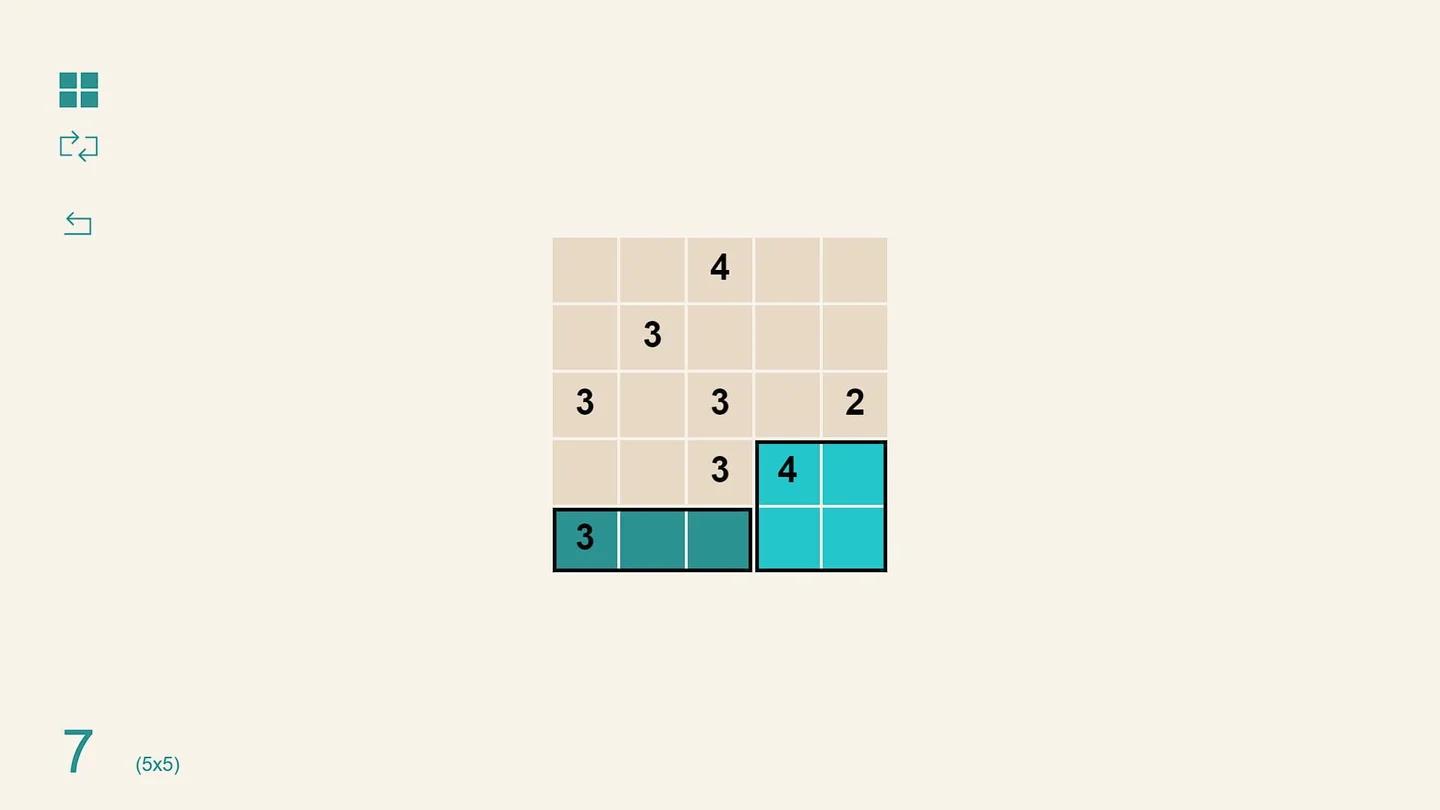
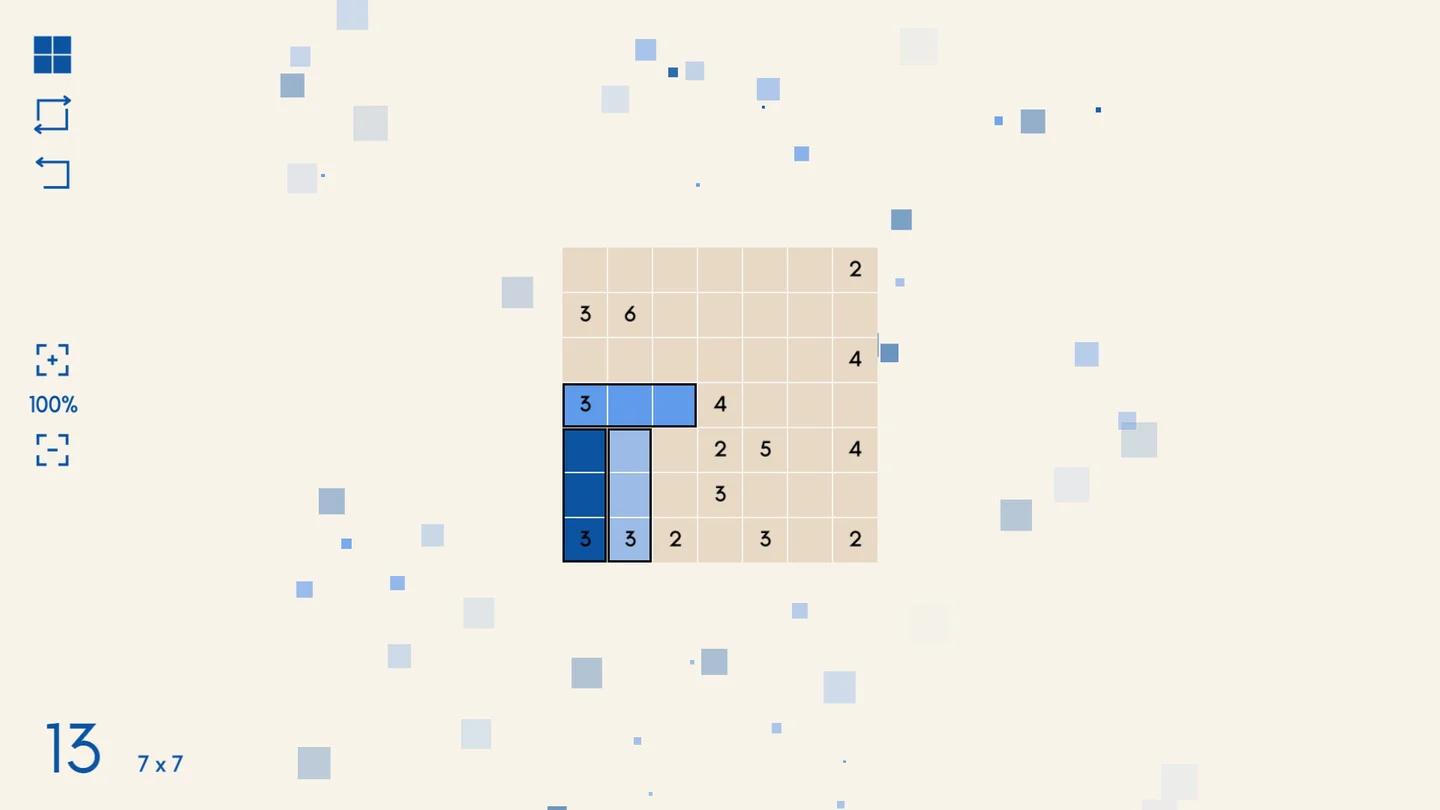
Square Logic is solved by covering the board with squares and rectangles, each containing exactly one number that matches its area. The number describes how many cells a region occupies, rather than the length of an edge.
- Cover every grid cell
- Use squares and rectangles
- Include exactly one number
- Match area to number
A clue marked 6 needs a region covering 6 cells. A 2×3 rectangle and a 1×6 strip both meet that area requirement, but nearby clues and the board edges restrict which placements actually fit. Arithmetic supplies the possible shapes; spatial deduction determines where they belong.
200 puzzles across four grid sizes
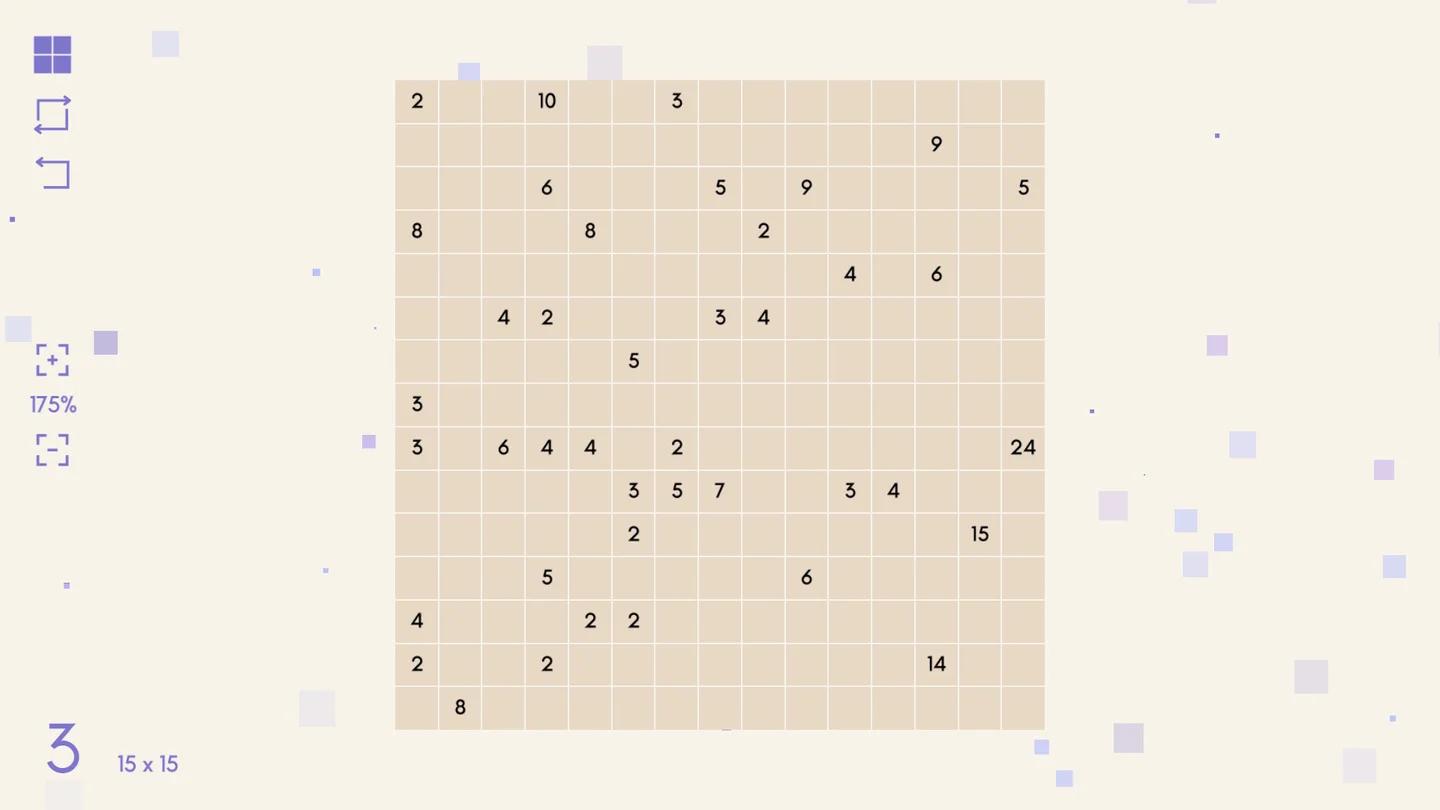
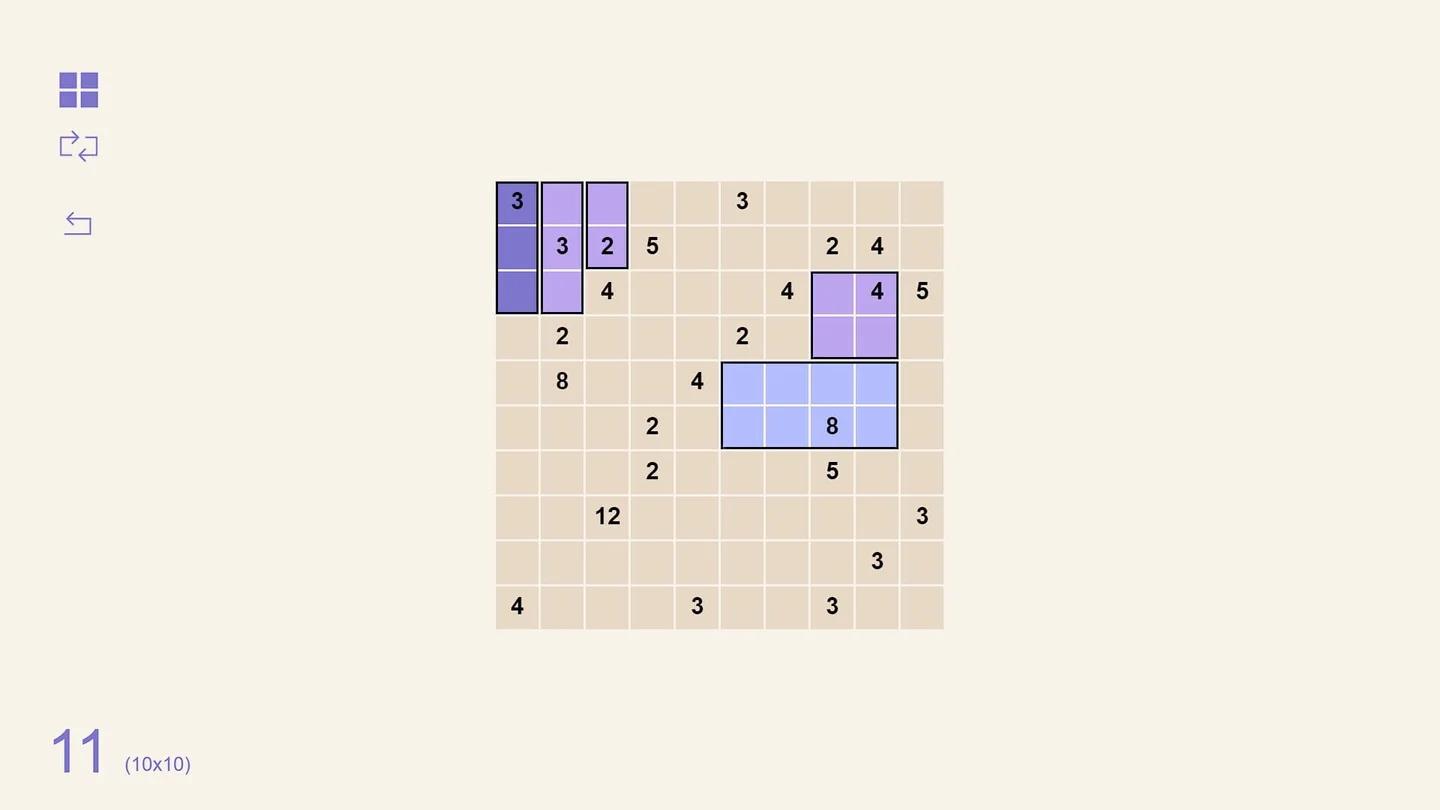
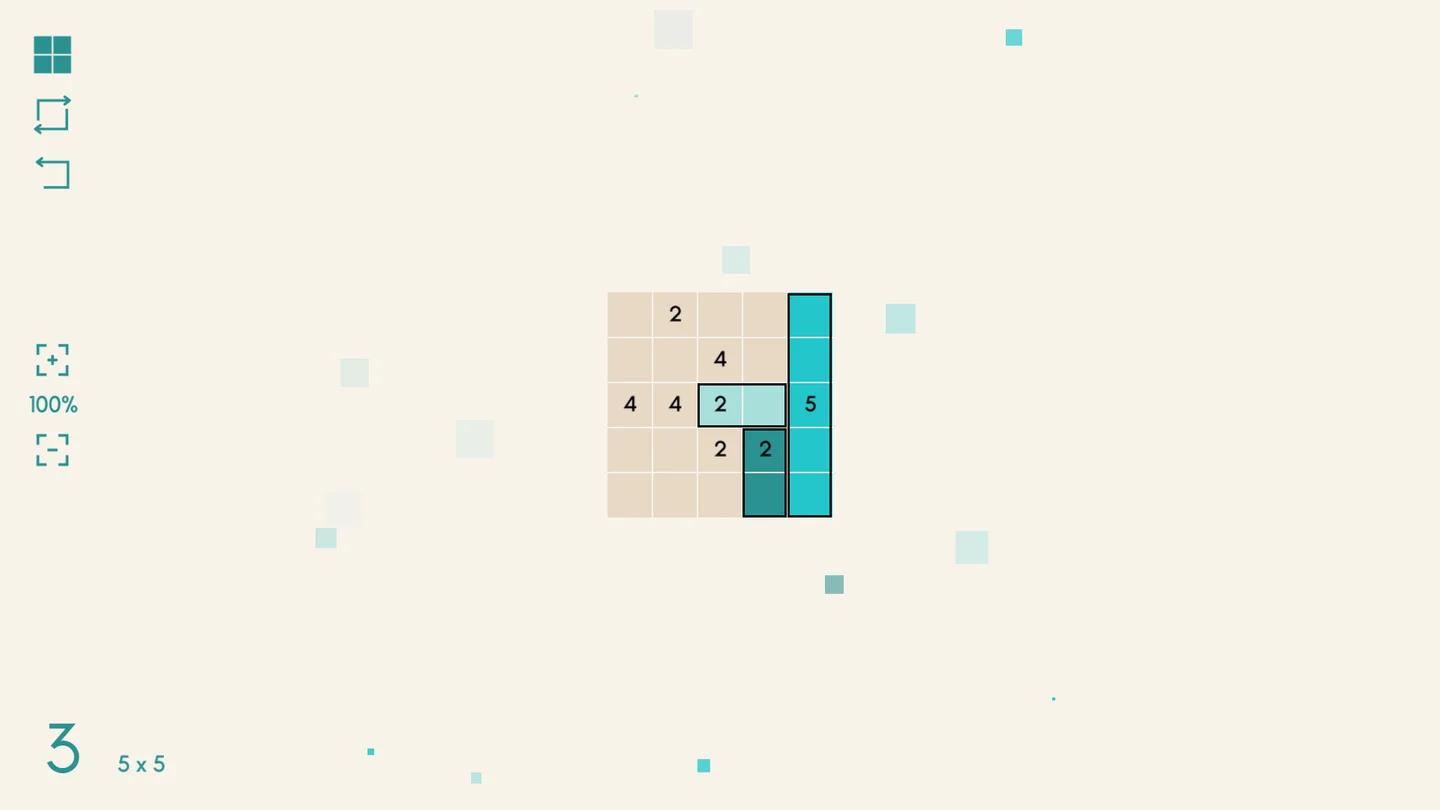
Square Logic contains 200 puzzles across 5×5, 7×7, 10×10, and 15×15 grids. The smallest boards contain 25 cells, while the largest contain 225, giving the same rules substantially more space to work with. The larger formats expand the task of tracking how each rectangle constrains the regions around it.
Optional error highlighting changes how much feedback accompanies that reasoning. With highlighting enabled, mistakes receive visual flags; switching it off leaves players responsible for checking their placements. Square Logic therefore offers a way to make deduction less assisted without changing the objective or adding time pressure. The challenge remains finding a complete arrangement that satisfies every clue.

Minimalist design and practical comforts
Square Logic offers three color palettes plus dark mode, keeping its presentation centered on the grid. Color fills distinguish the regions drawn around numbered cells, making the developing solution part of the visual design. The customization concerns the board players spend their time examining, rather than decoration separate from the puzzle.
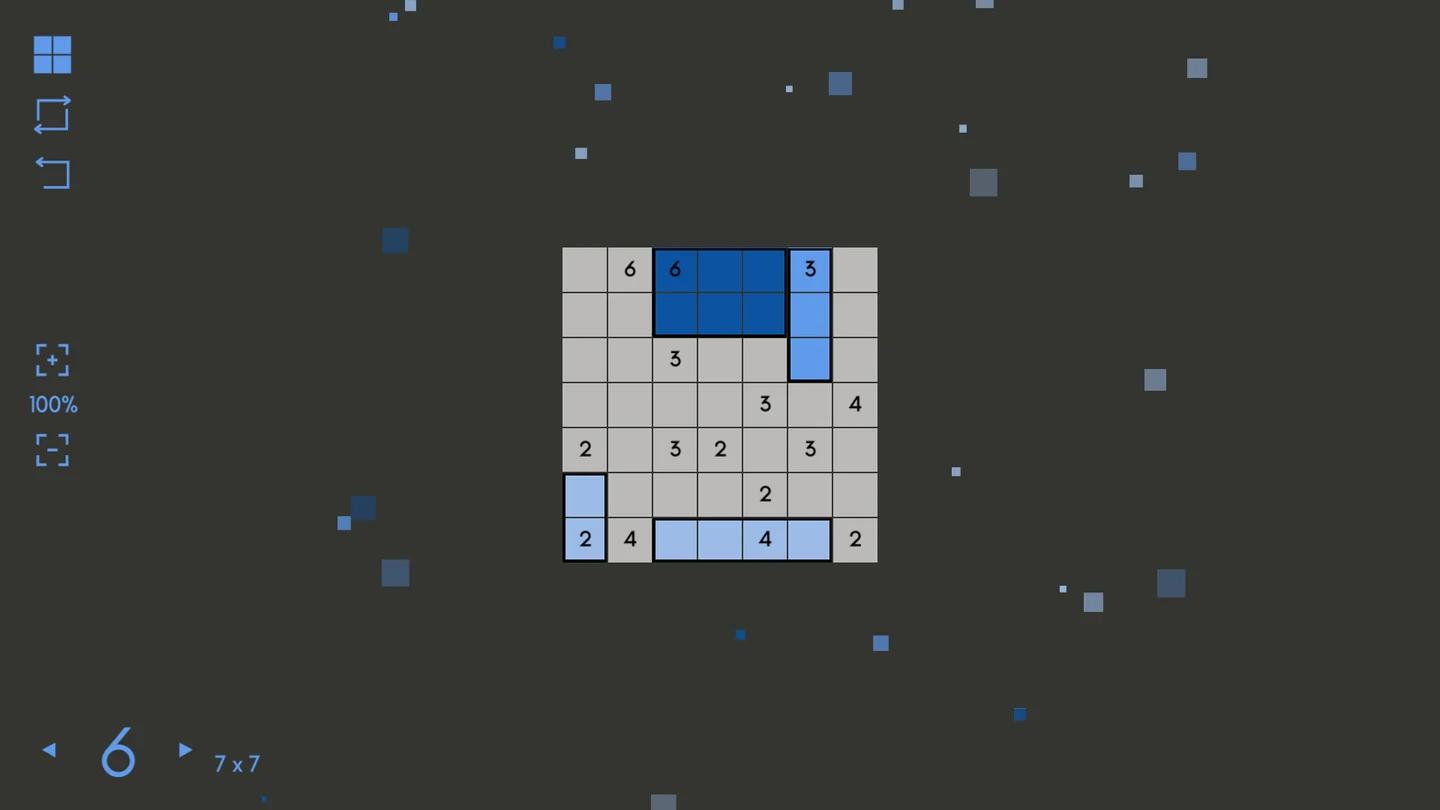
Keyboard, mouse, and controller support give Square Logic several input options, while Steam Cloud provides cloud-save support on Steam. Autosave preserves progress between sessions, so an unfinished board does not demand an immediate solution. That is a useful fit for a logic puzzle game whose 15×15 grids leave plenty of room for careful deductions: taking a break remains compatible with making steady progress.