Overview
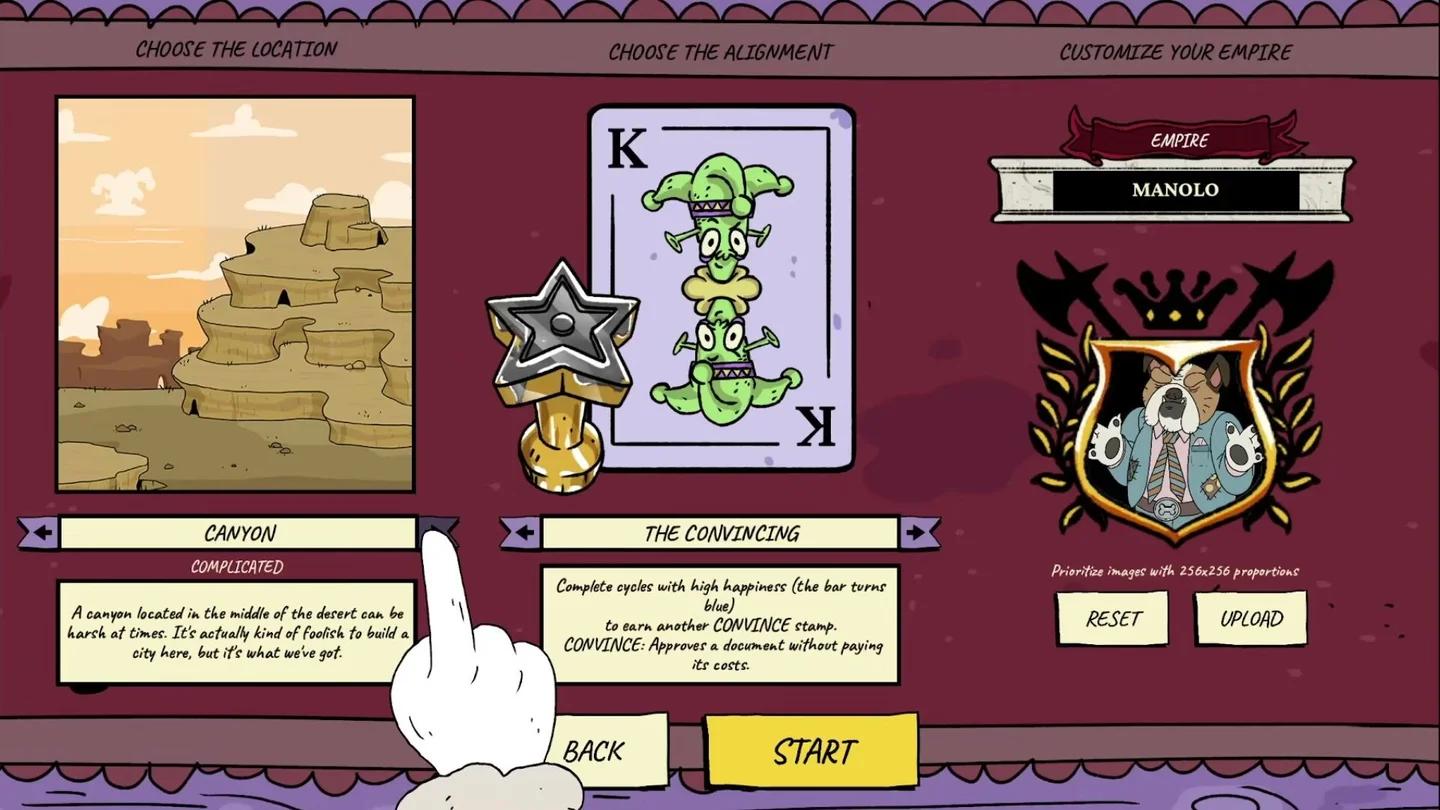
Stamperor! The Jester's Decree is a decision-driven city builder from developer and publisher Moon Mind Studio, available on Windows through Steam. An alien jester takes temporary control of an empire, becoming responsible for its survival while occupying a throne far removed from the character's usual role.
The game combines strategy, simulation, and role-playing across individual runs that can end in collapse. Expansion remains part of the task, but unexpected events can interrupt progress and force the ruler to address problems beyond the next building project.
How do stamps change decisions?
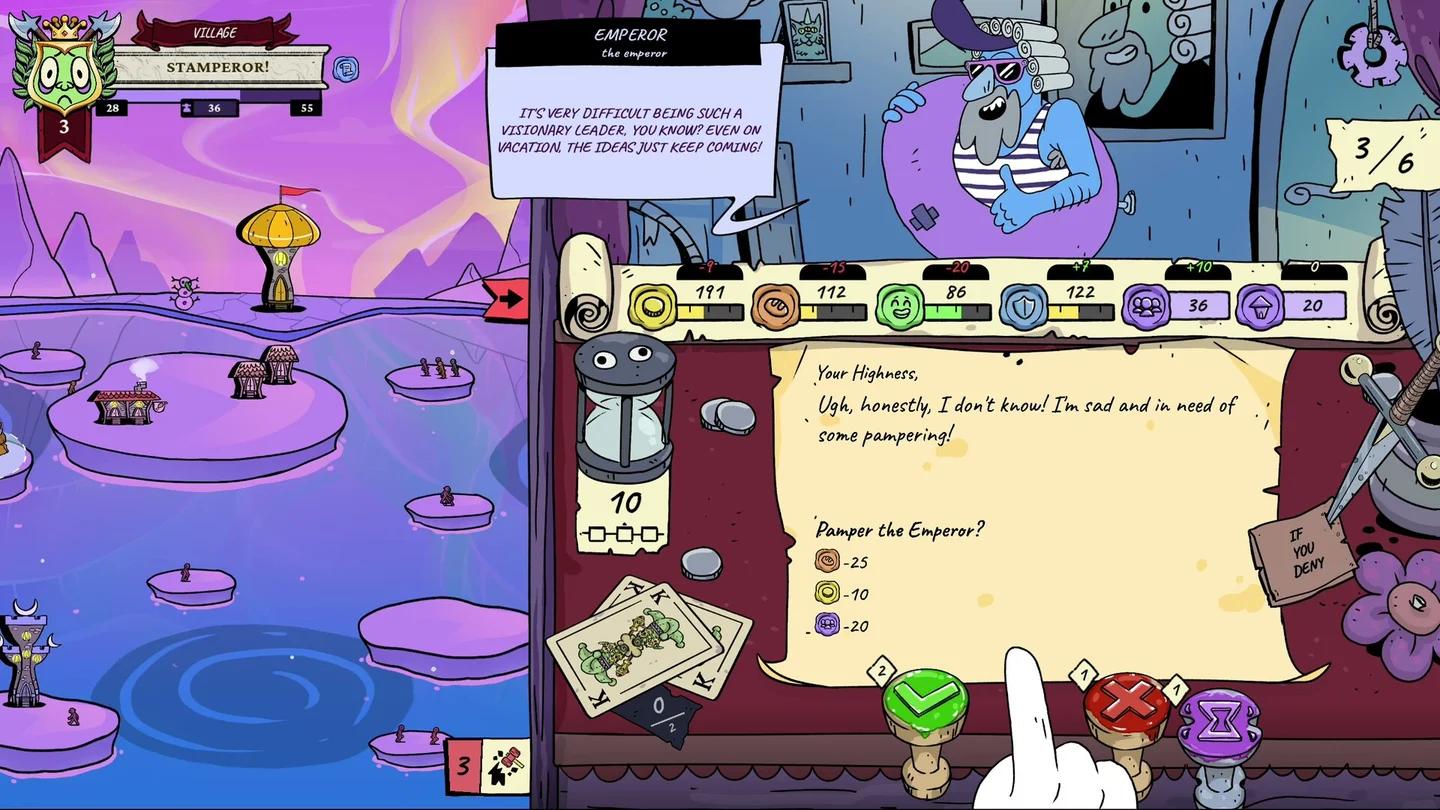
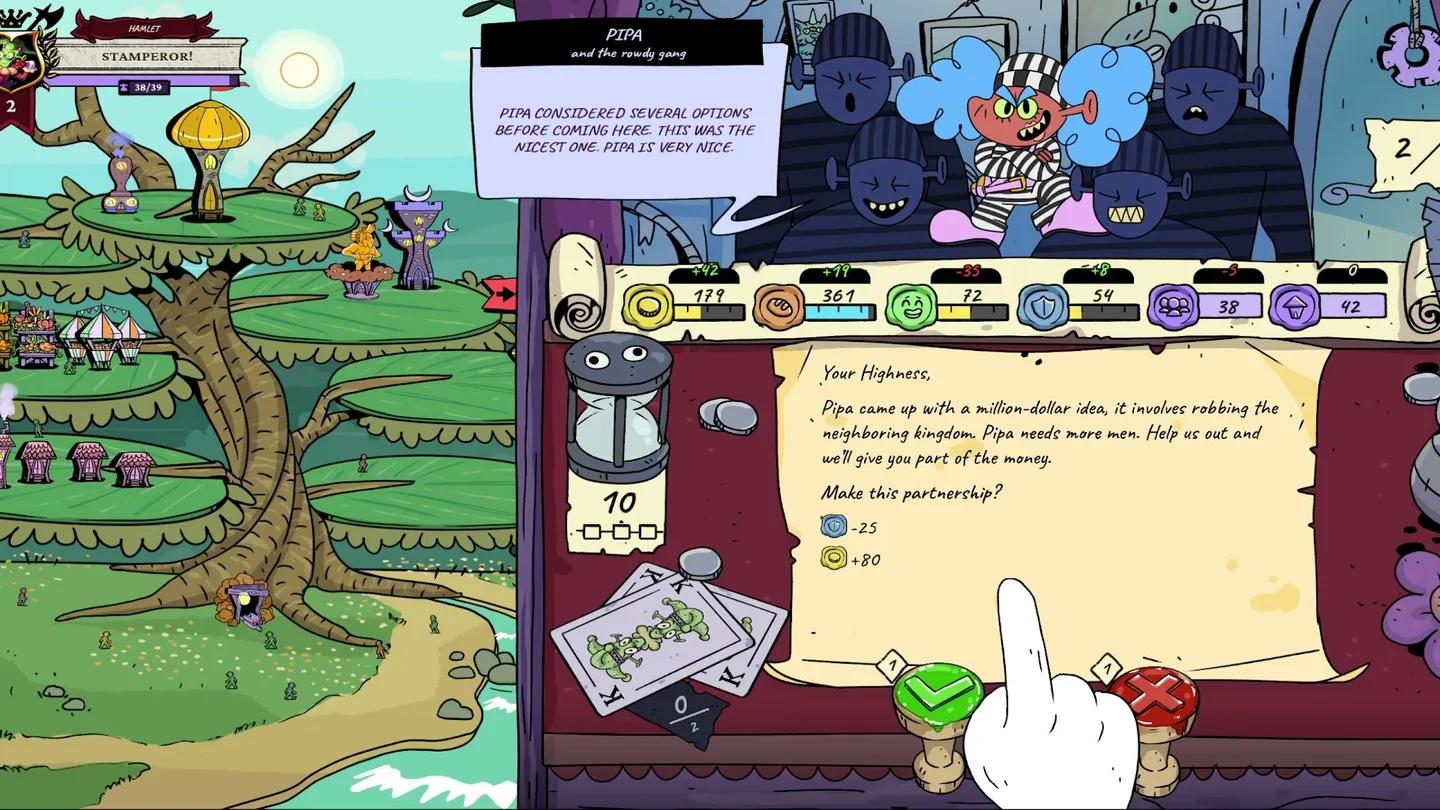
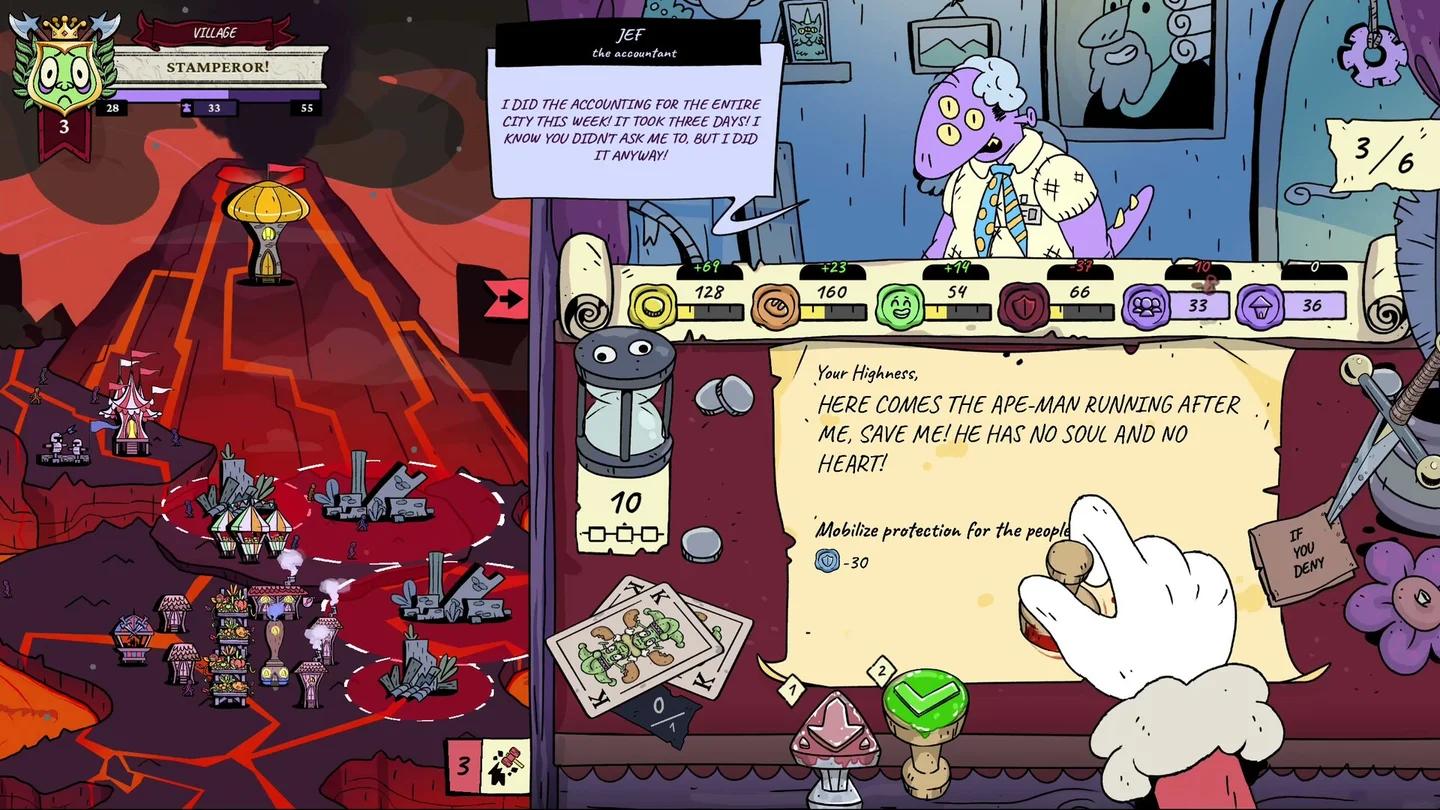
Stamps change the effects of decisions, so a response involves more than accepting or rejecting a request. Each cycle brings citizens to the ruler, who uses these tools to handle their proposals.
The central mechanics include:
- Cycle-based citizen requests
- Stamps with distinct effects
- Decisions with cascading consequences
Fast rulings operate within a longer run, where a single error can trigger several problems. An apparently sensible decision can also produce an unwelcome outcome, making immediate benefits an uncertain measure of success.
Stamp selection adds a strategic choice to the act of issuing a decree. Players must consider both the proposal itself and the effect attached to their response. The decision concerns what the ruler permits, as well as how that ruling takes effect.
Building around five resources
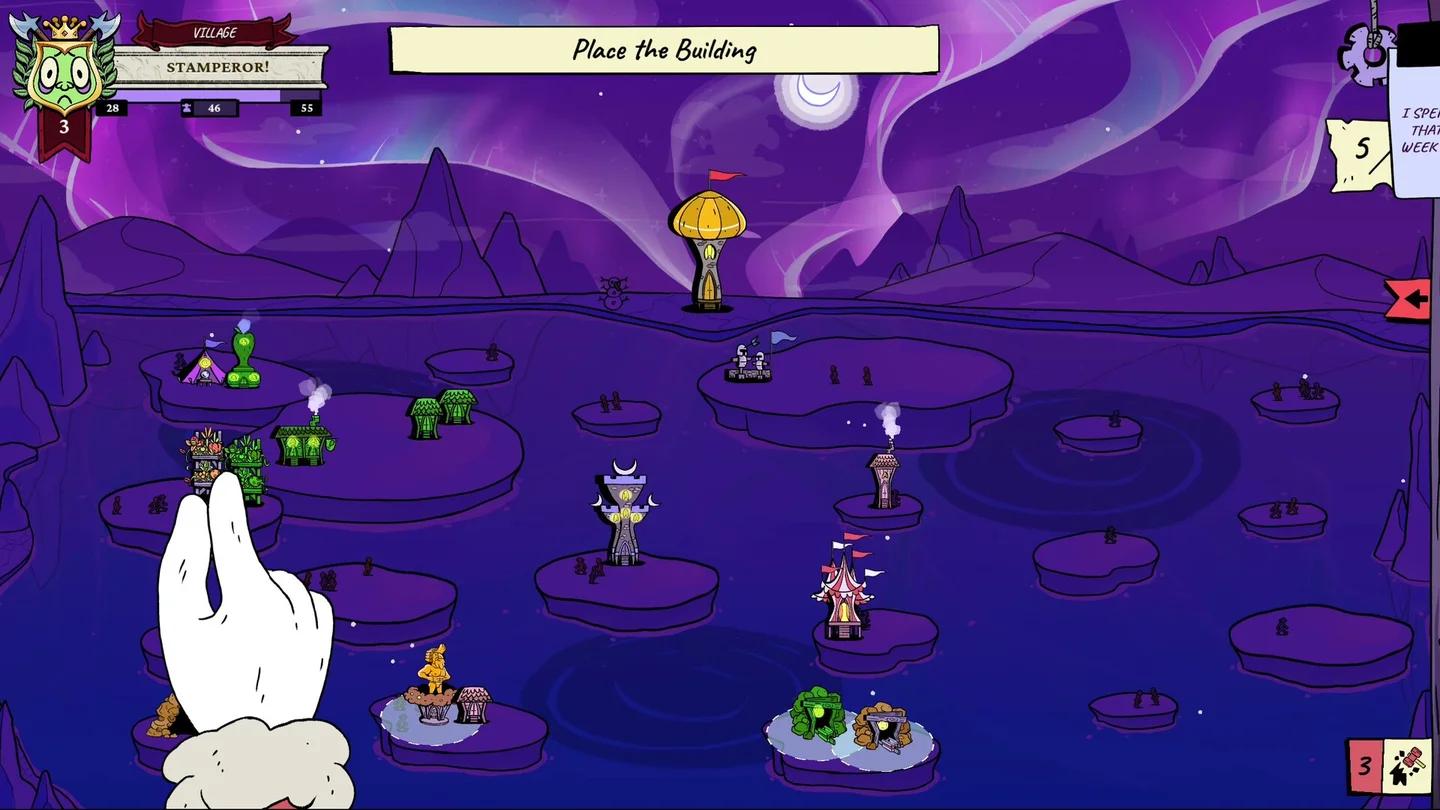
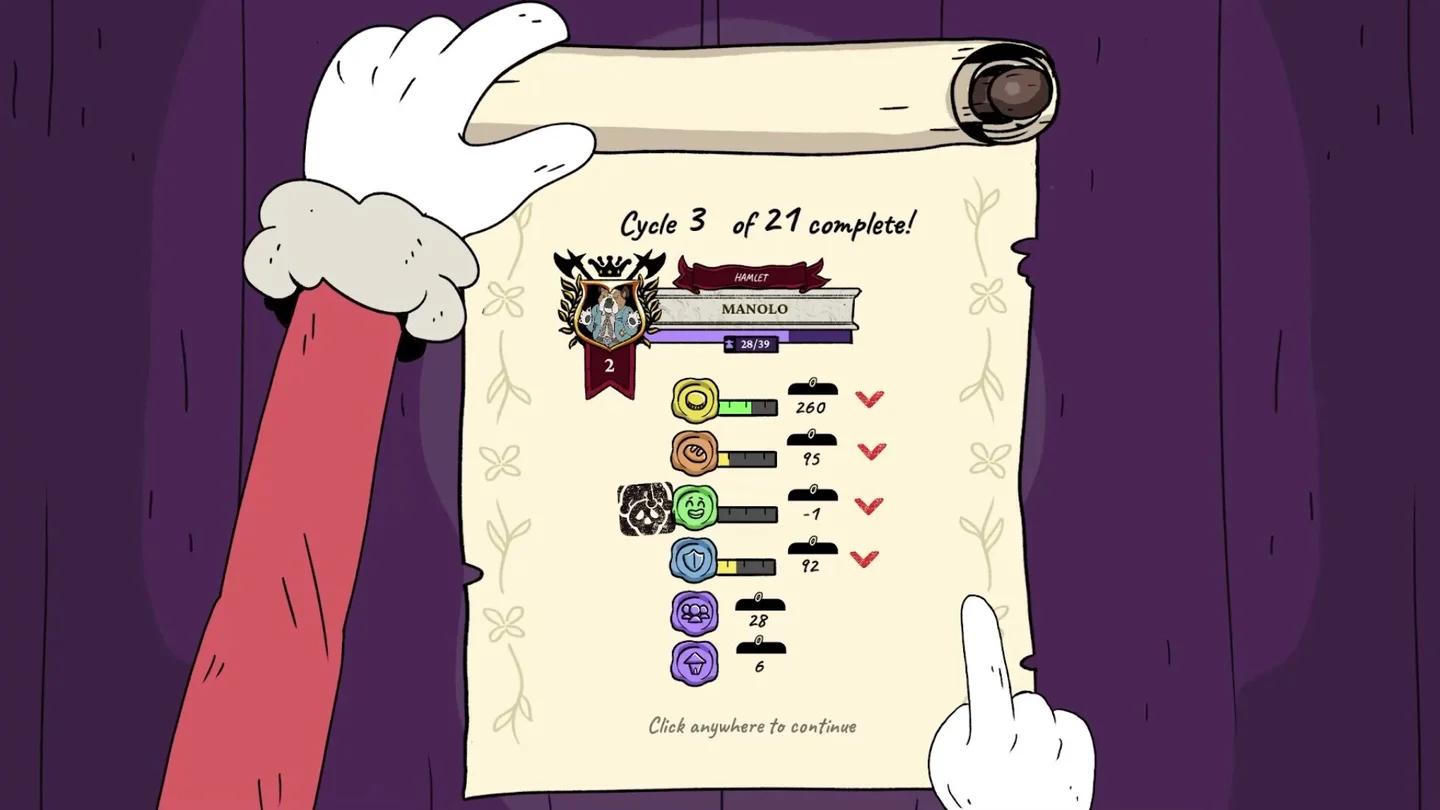
Empire management tracks Money, Food, Happiness, Security, and Population. Structures change the balance of these resources, connecting construction directly to the condition of the realm.
A building can help sustain the empire or worsen its problems. Expansion therefore demands attention to the current situation; adding structures does not automatically make a reign more secure.
Unpredictable proposals place further demands on that planning. The management challenge involves assessing requests against the empire's needs while maintaining several measures of its condition. The size of the settlement is only one consideration within a broader resource management task.
A jester among competing interests
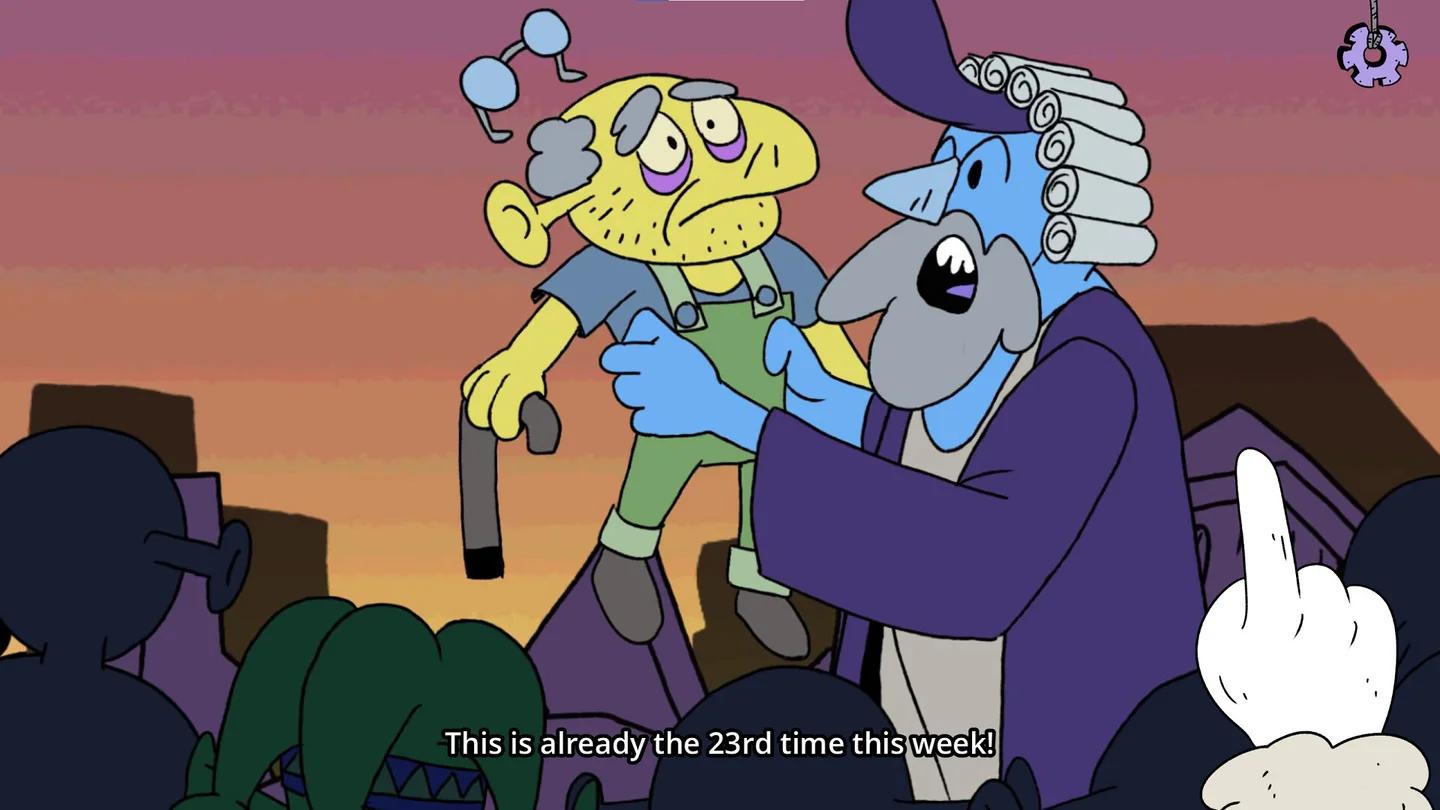
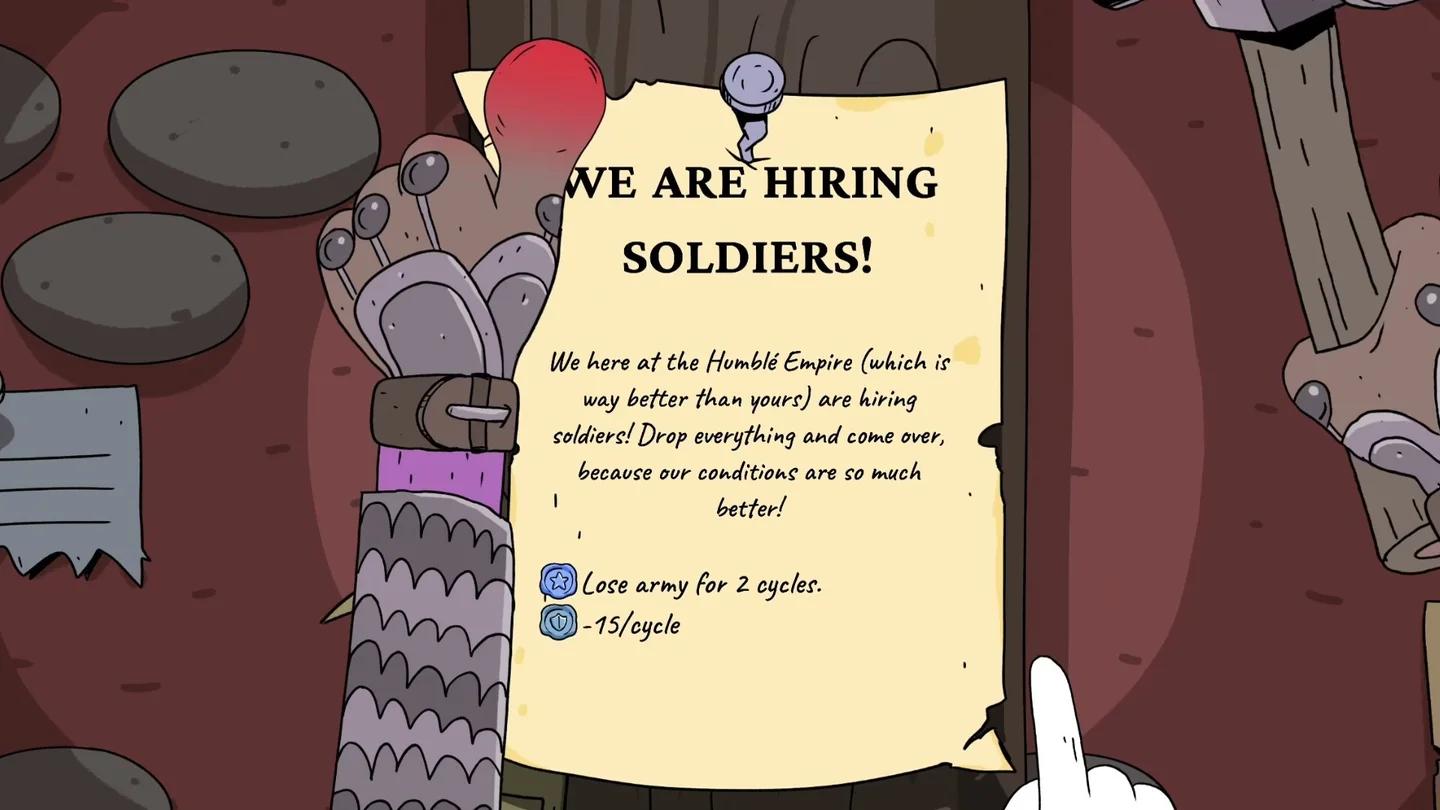
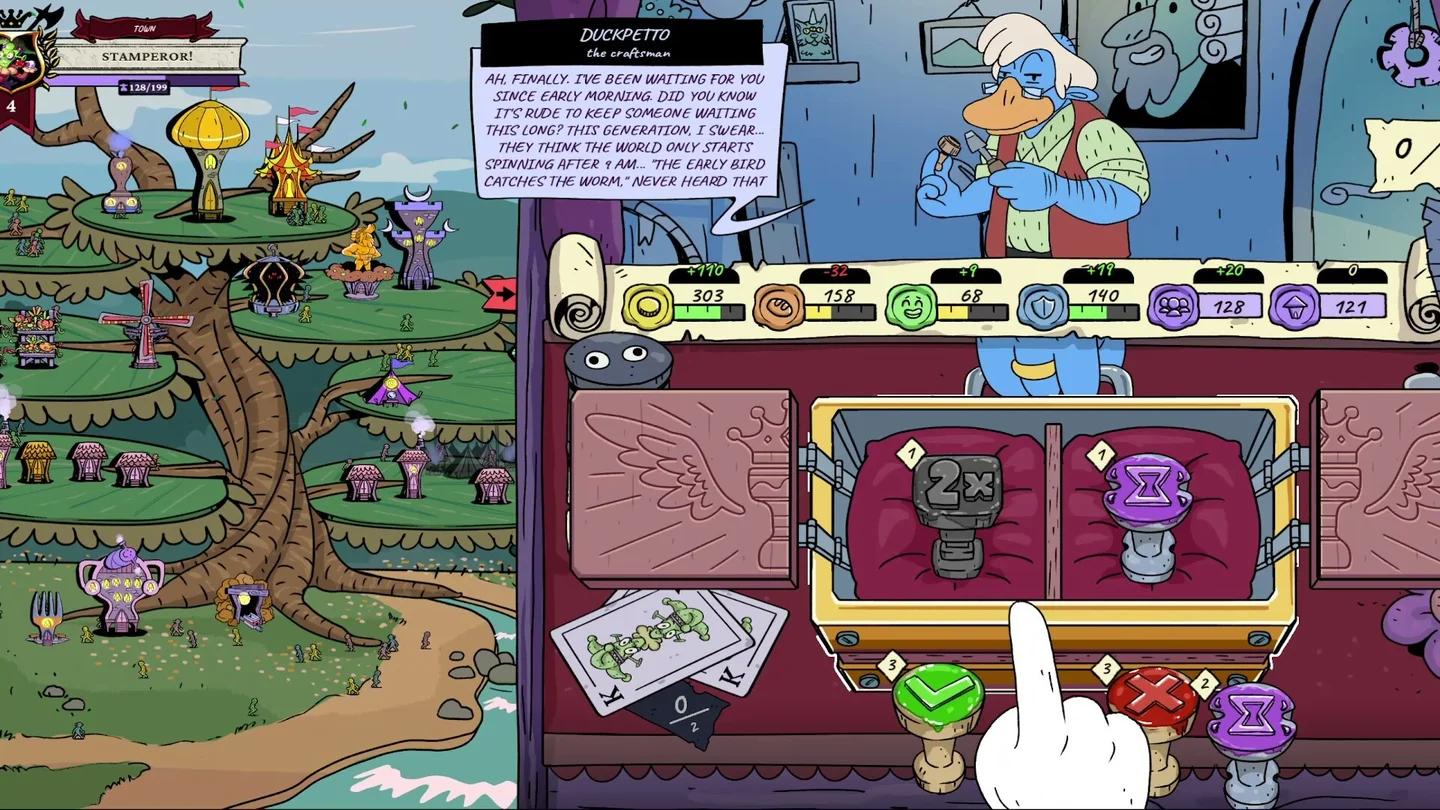
Characters have distinct personalities, personal interests, and their own stories. Some bring useful proposals, while others make absurd threats. Their demands place the temporary emperor between the needs of the realm and the ambitions of the people seeking a ruling.
Storylines develop throughout a run, with decisions capable of changing their direction. The comedy comes from unusual requests and confrontations, while the consequences remain tied to the survival of the empire.
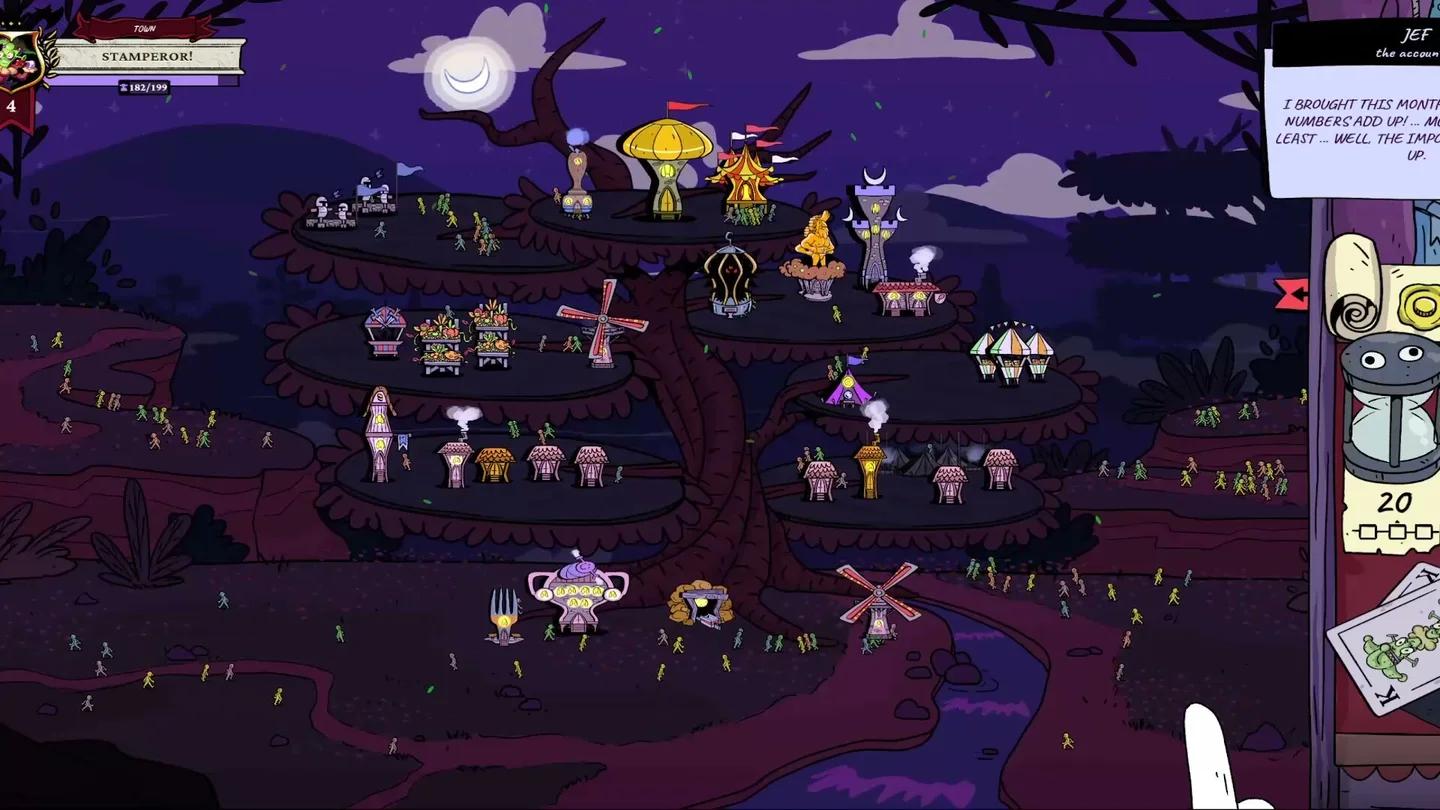
The role-playing element centers on the manner of ruling. Decisions allow the jester to act thoughtfully, impulsively, tyrannically, or foolishly. Those approaches emerge through the handling of requests and crises, placing the ruler's character within the same decision-driven gameplay as the empire's management.