Overview
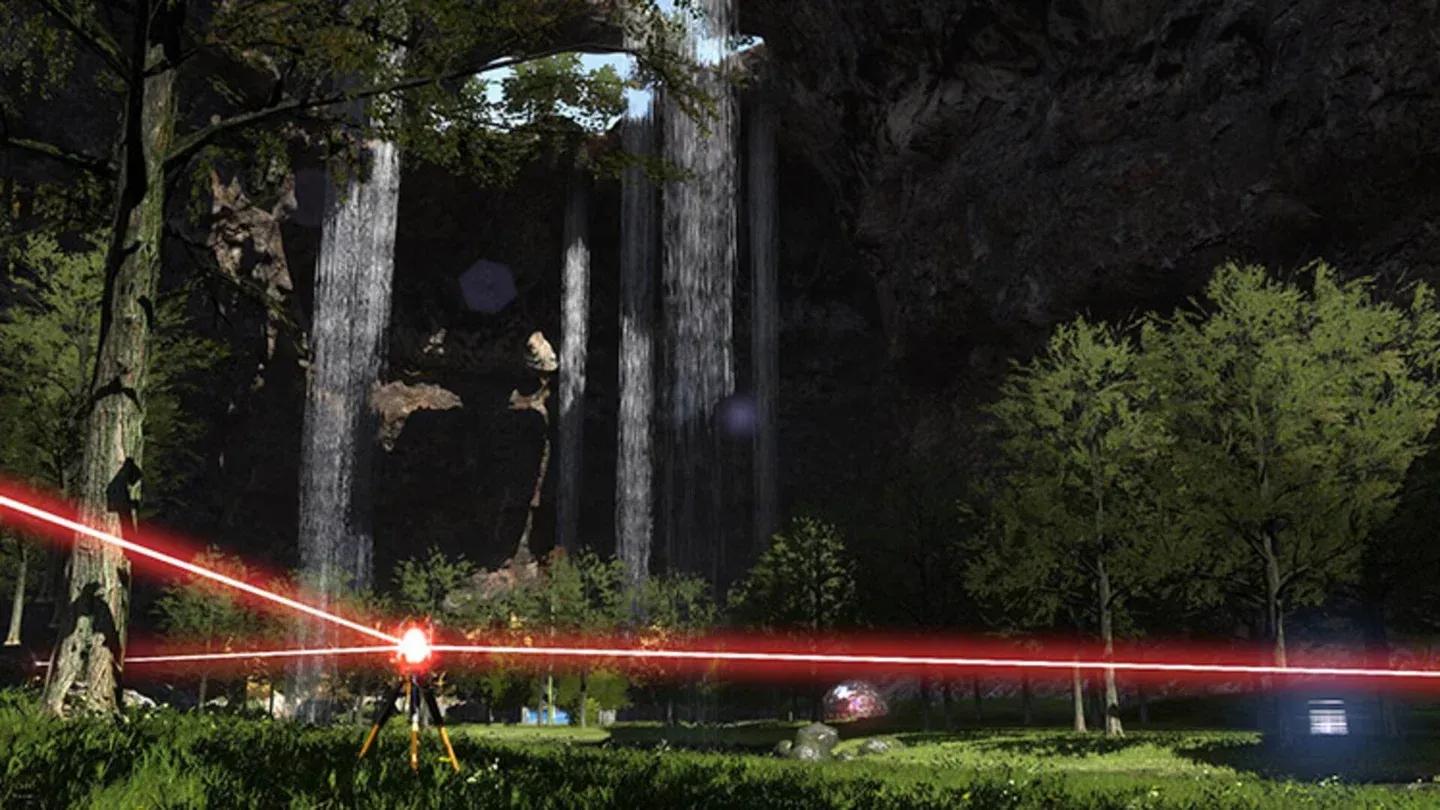
The Talos Principle drops you into a world without explanation. Ancient ruins sit alongside sleek technological structures, and a disembodied voice claiming to be your creator tasks you with solving an ever-expanding series of puzzles. There are no tutorials beyond what the environment teaches you. The game trusts you to figure things out, and that trust is the foundation of everything it does well.
Croteam released The Talos Principle on December 11, 2014, and it has since landed on Windows, macOS, PlayStation, Android, iOS, Xbox, Nintendo Switch, and Steam. The Deluxe Edition holds a 4.7 out of 5 rating from nearly 3,900 PlayStation players, which speaks to how well the game holds up across platforms and audiences.
Gameplay and mechanics
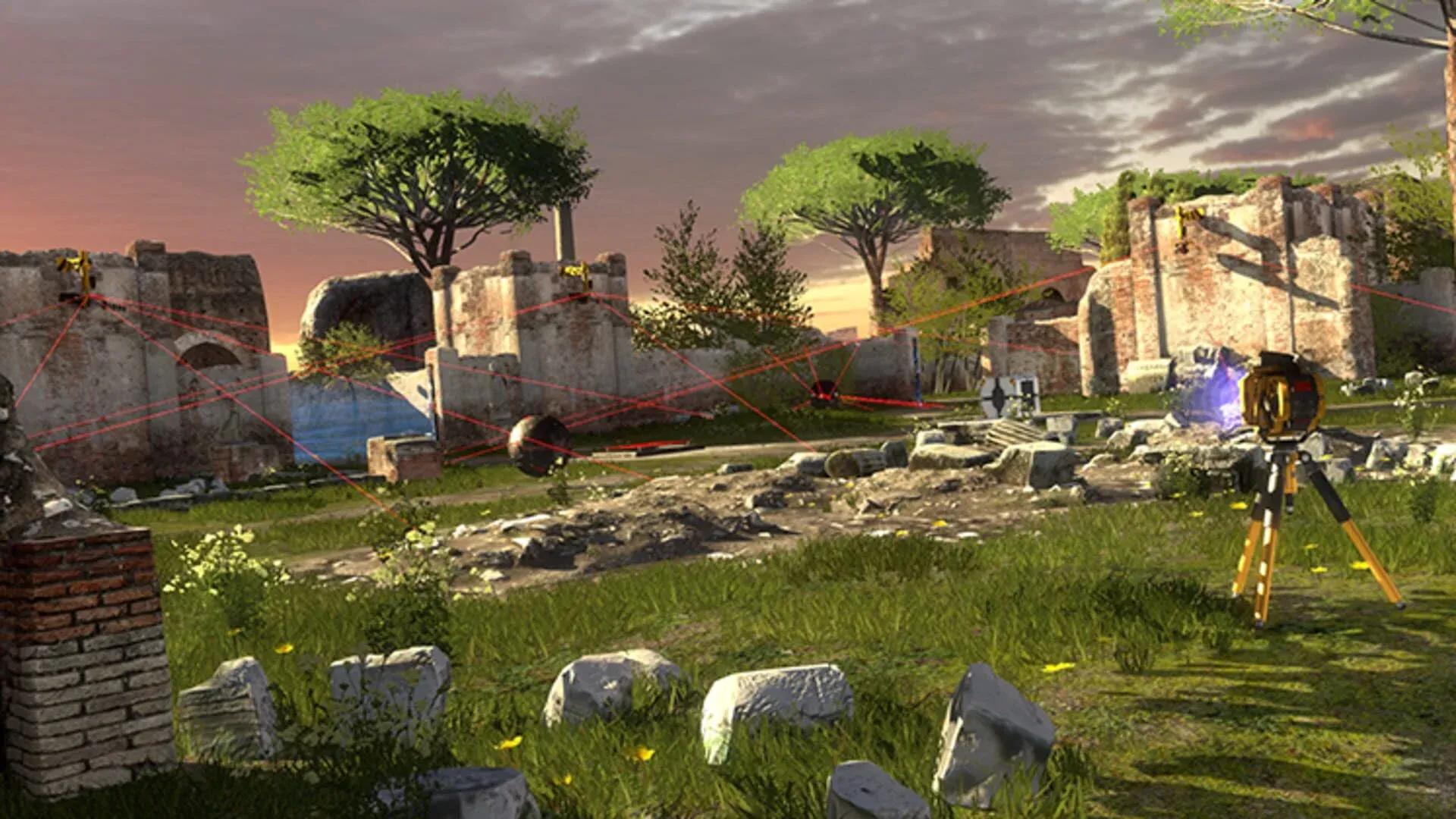
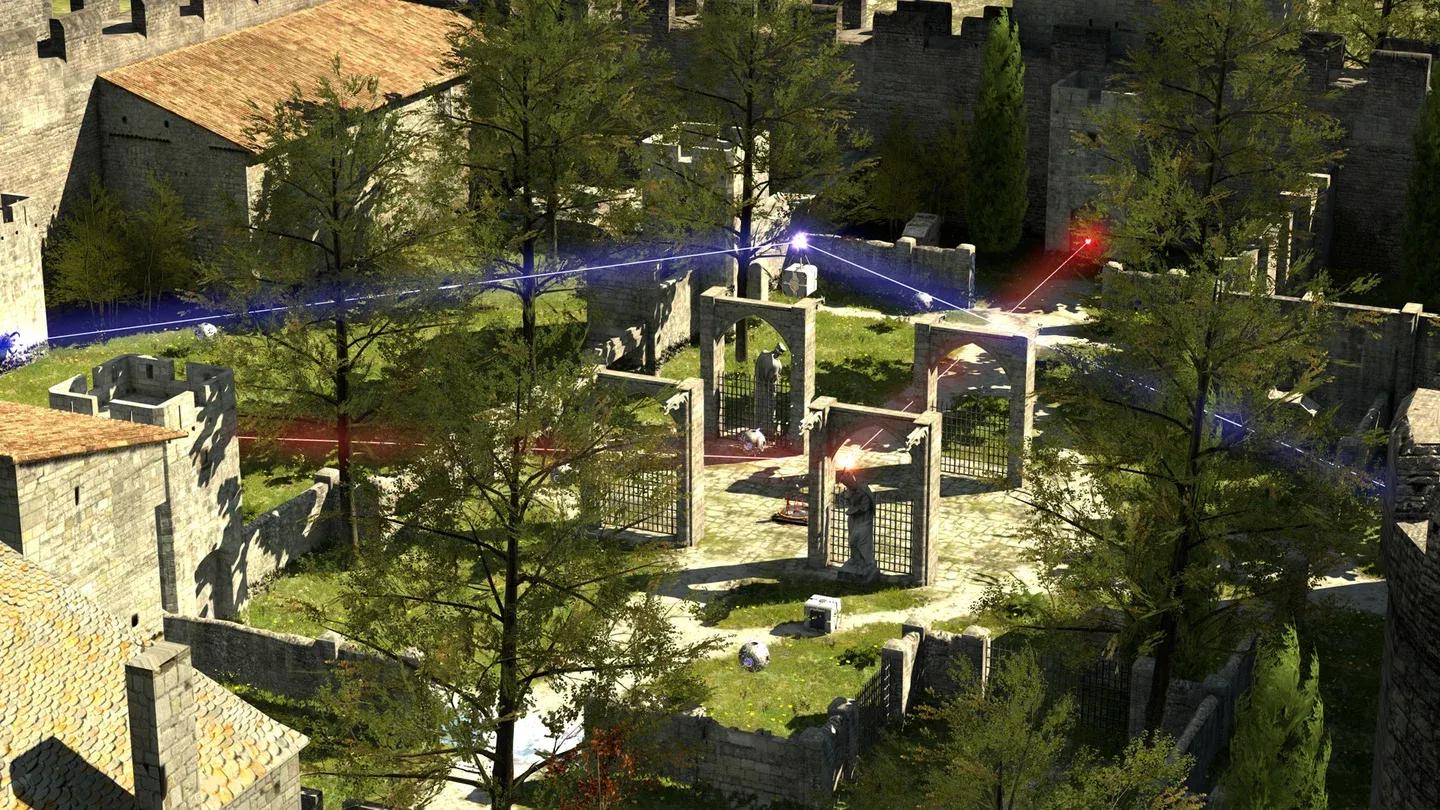
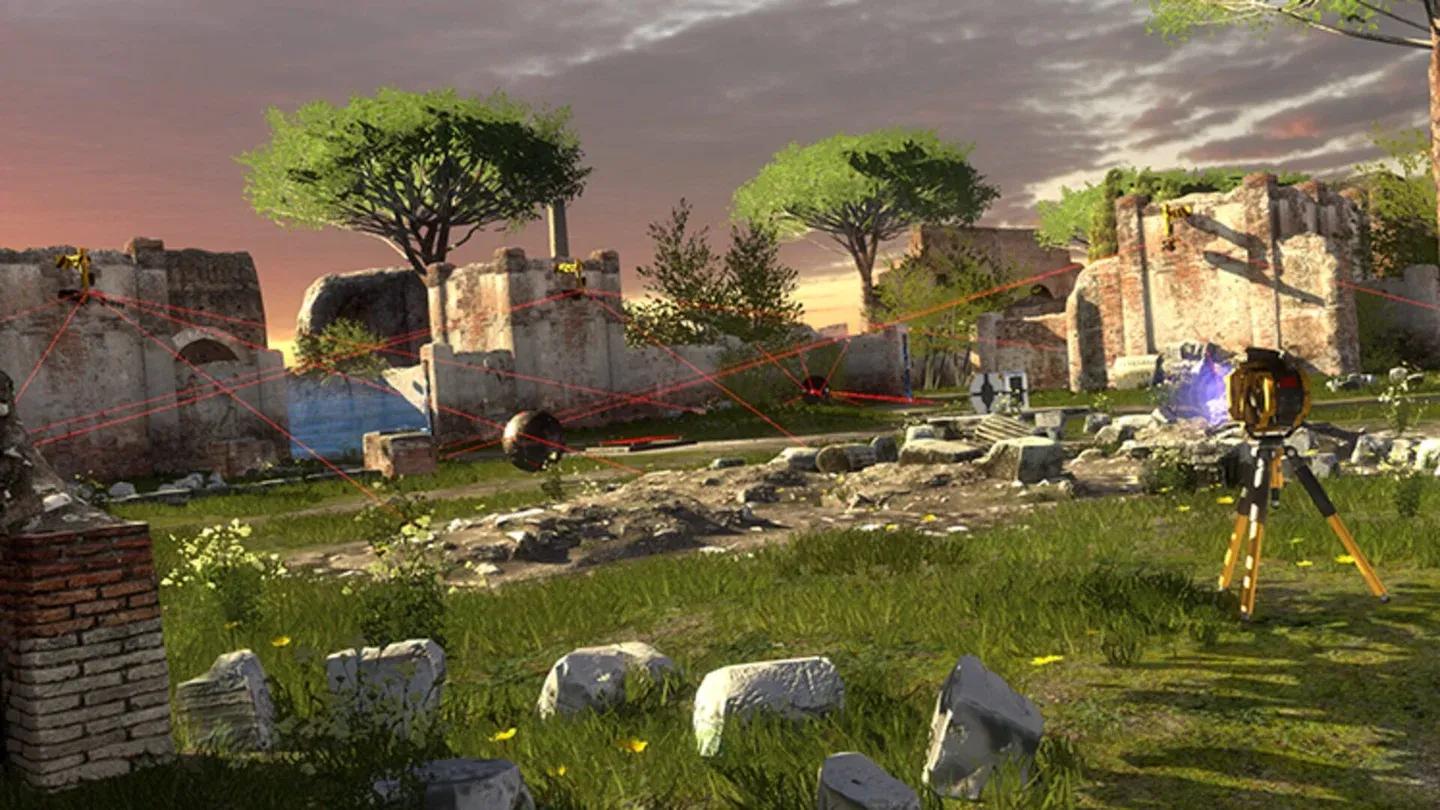
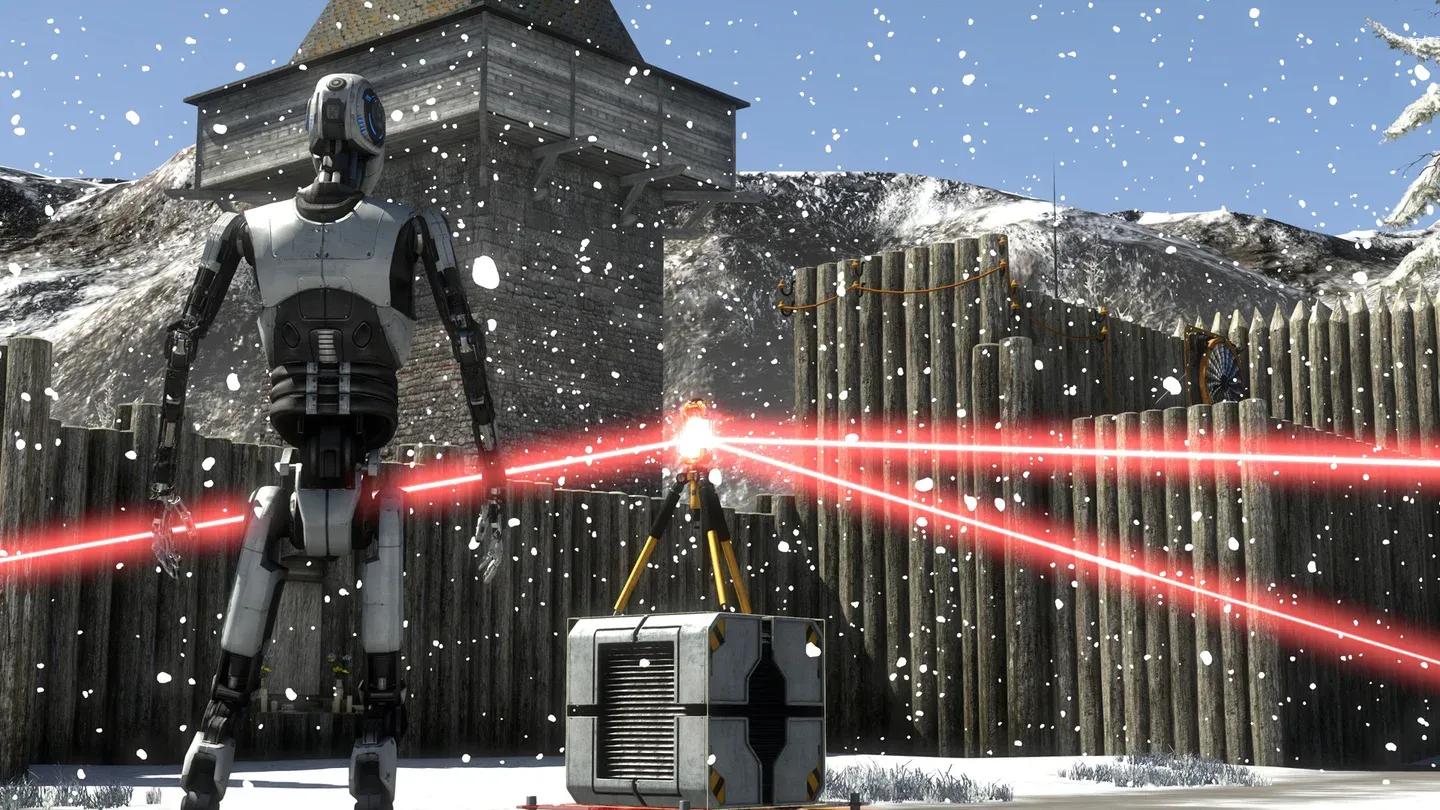
The core puzzle loop revolves around collecting sigils scattered across open garden-like worlds. Each puzzle chamber isolates a specific mechanic, then the game starts combining them. Key tools include:
The Talos Principle content image
- Jammers that disable barriers and turrets
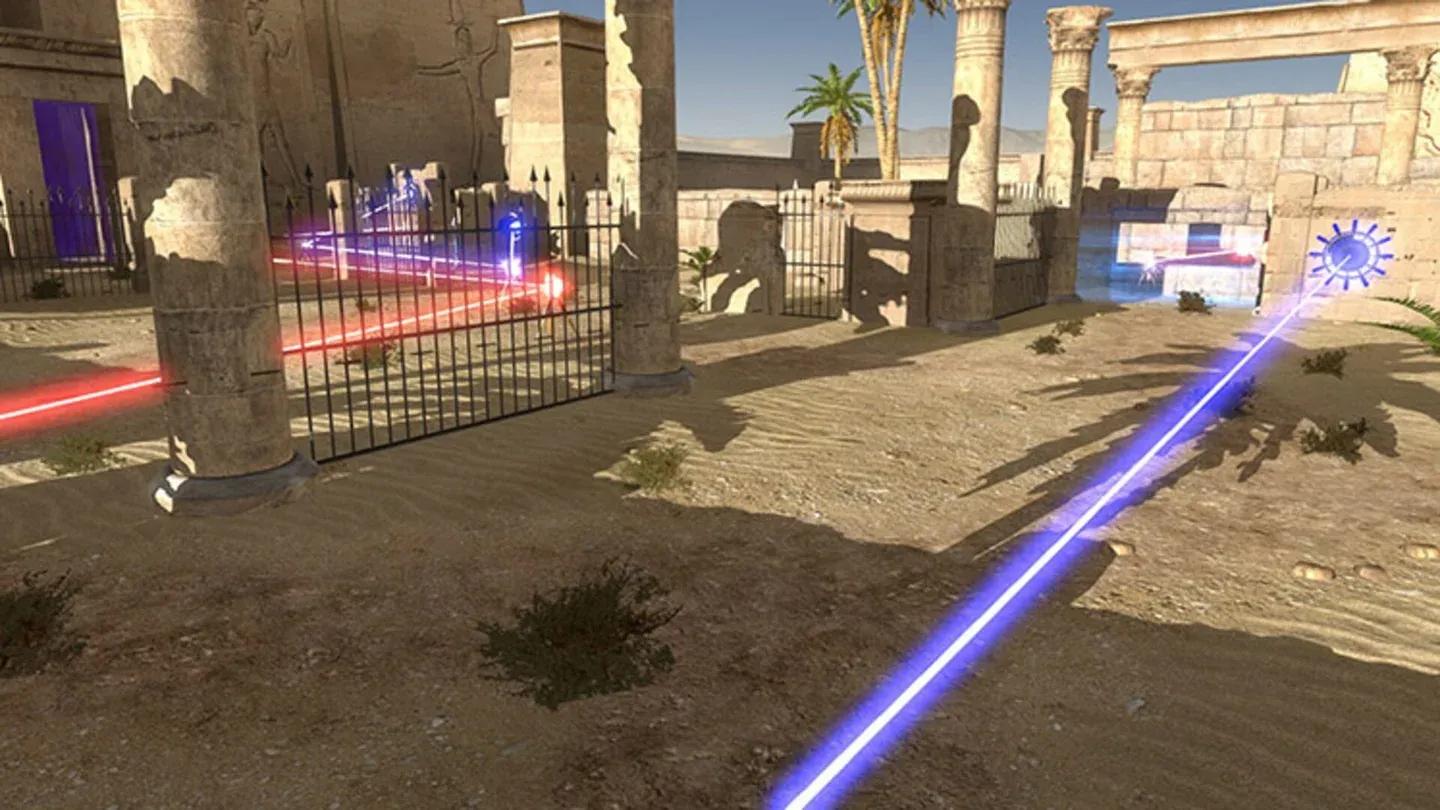
- Connectors that redirect laser beams
- Fans that move objects or the player
- Boxes for basic platforming solutions
- Recorders that let you create a ghost of your past movements
The Talos Principle content image
The recorder mechanic deserves particular attention. You record yourself performing one action, then replay that recording as a ghost while your current self performs a second action simultaneously. It sounds simple until the game starts layering three or four recordings on top of each other, requiring you to plan a sequence of movements that only makes sense when executed in reverse order. Few puzzle games manage to make you feel that specific kind of satisfaction.
World and setting
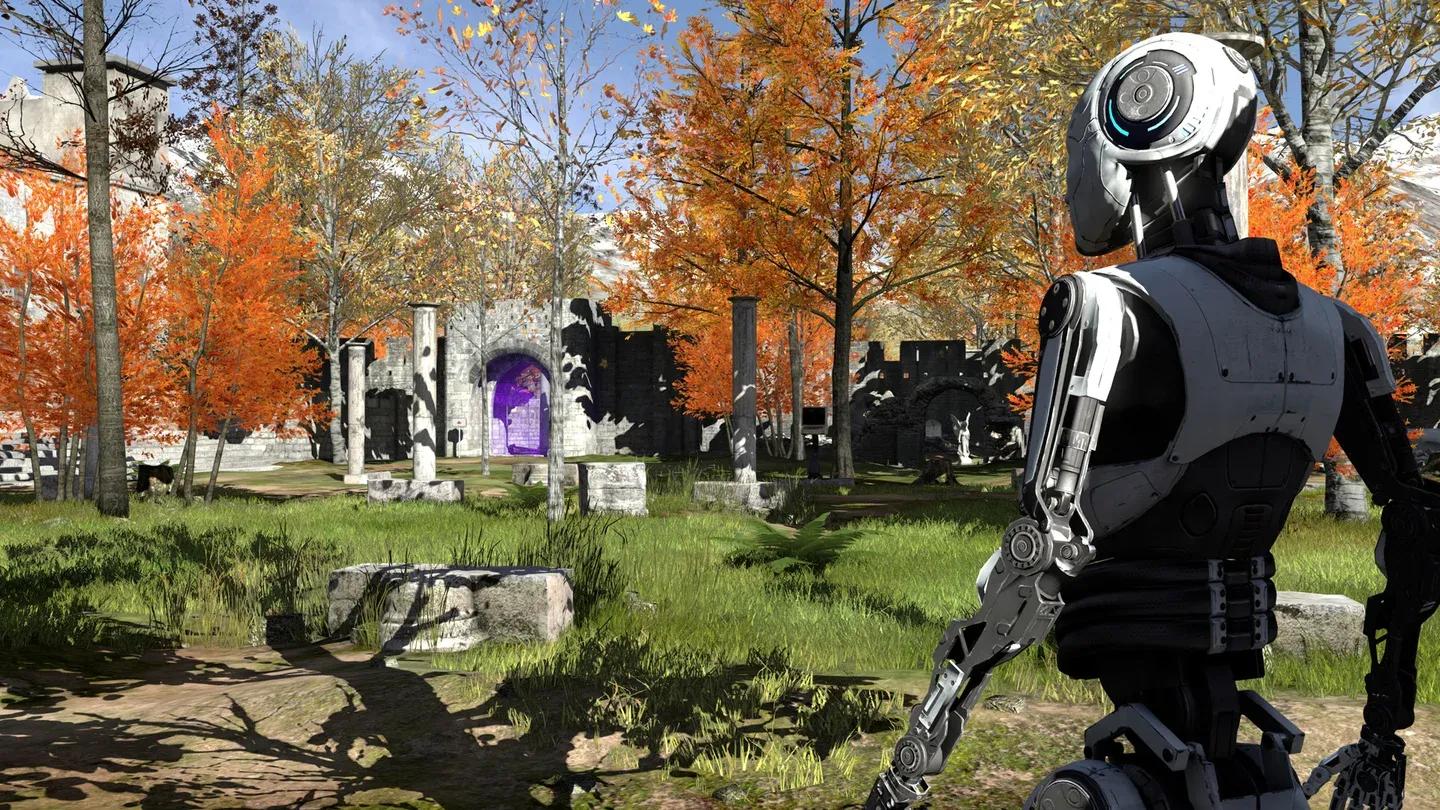
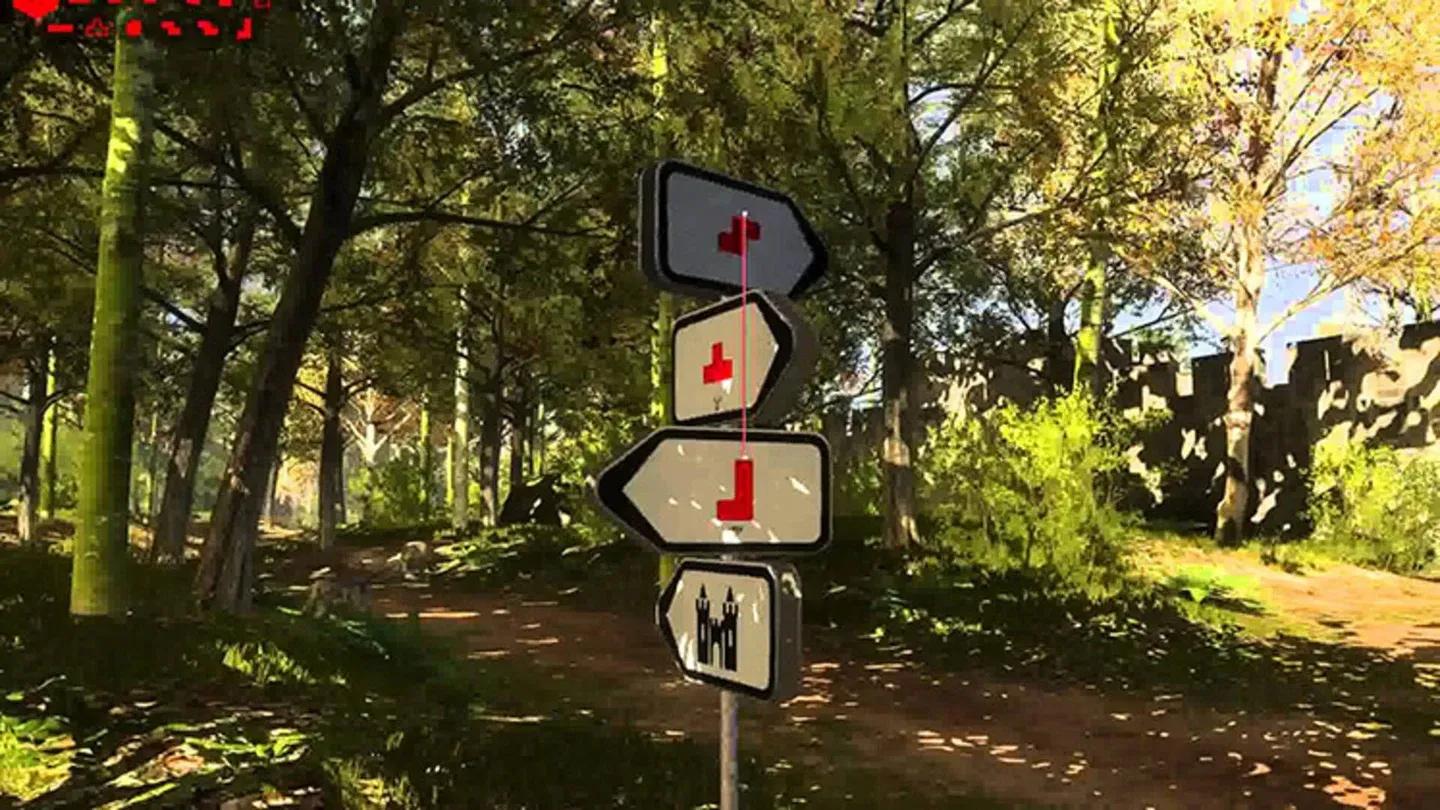
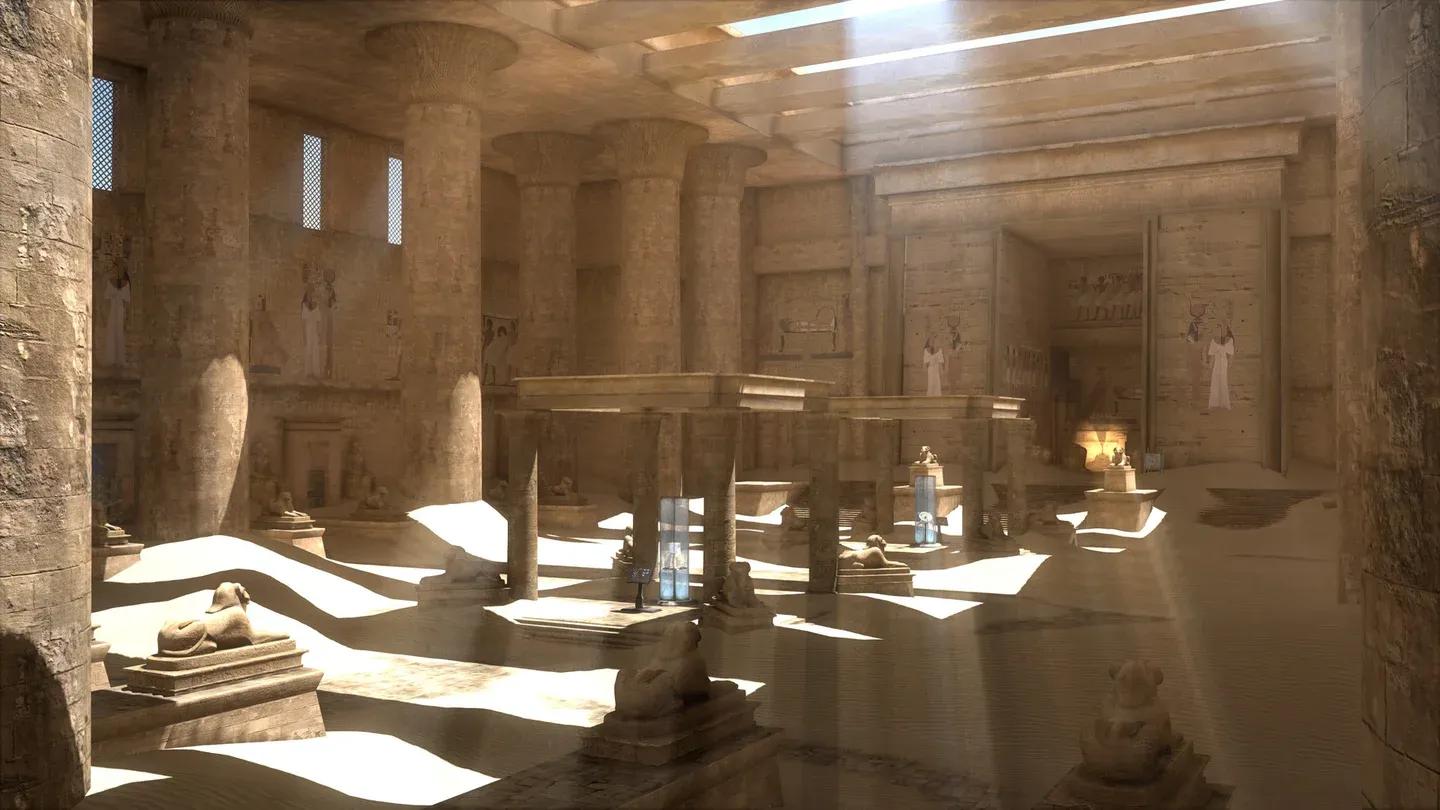
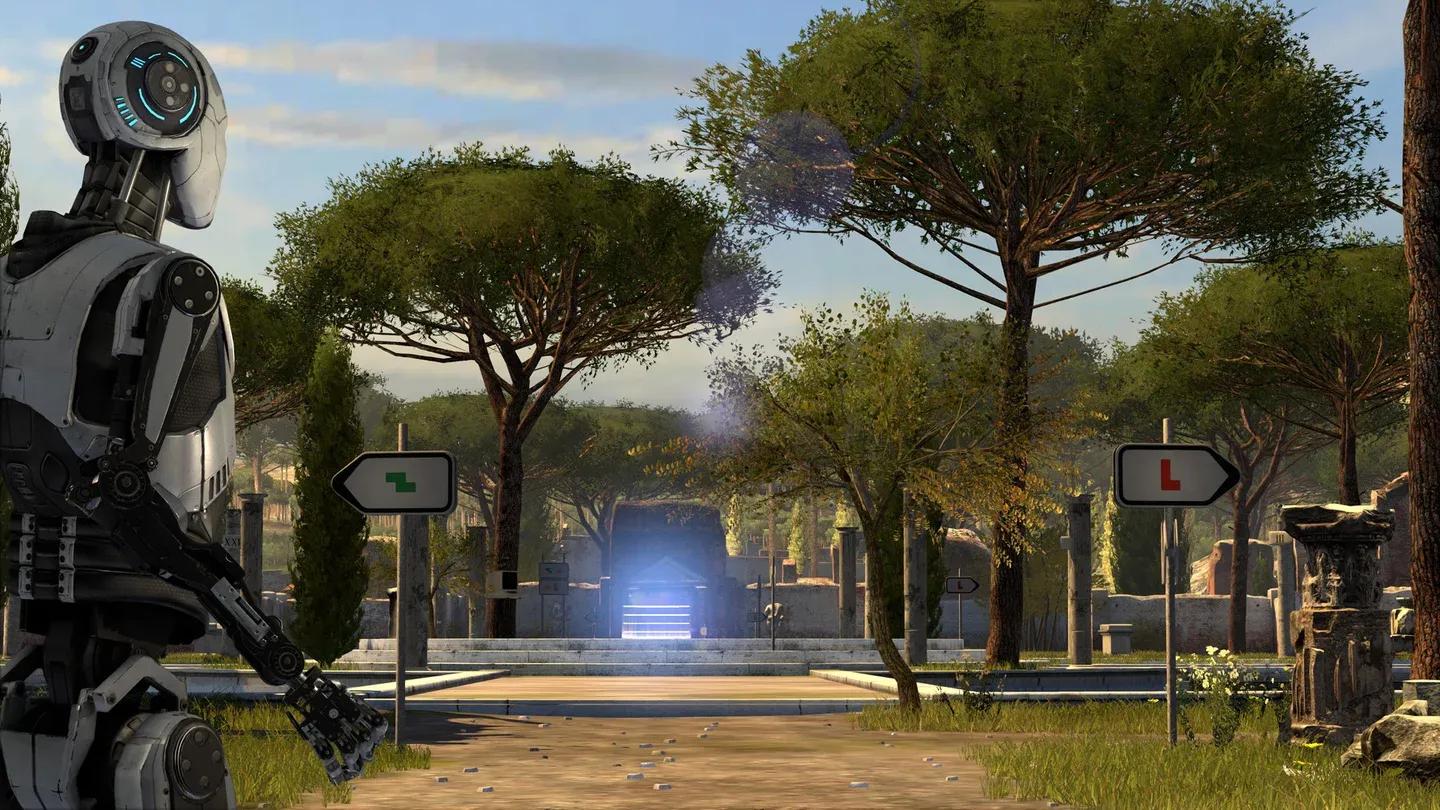
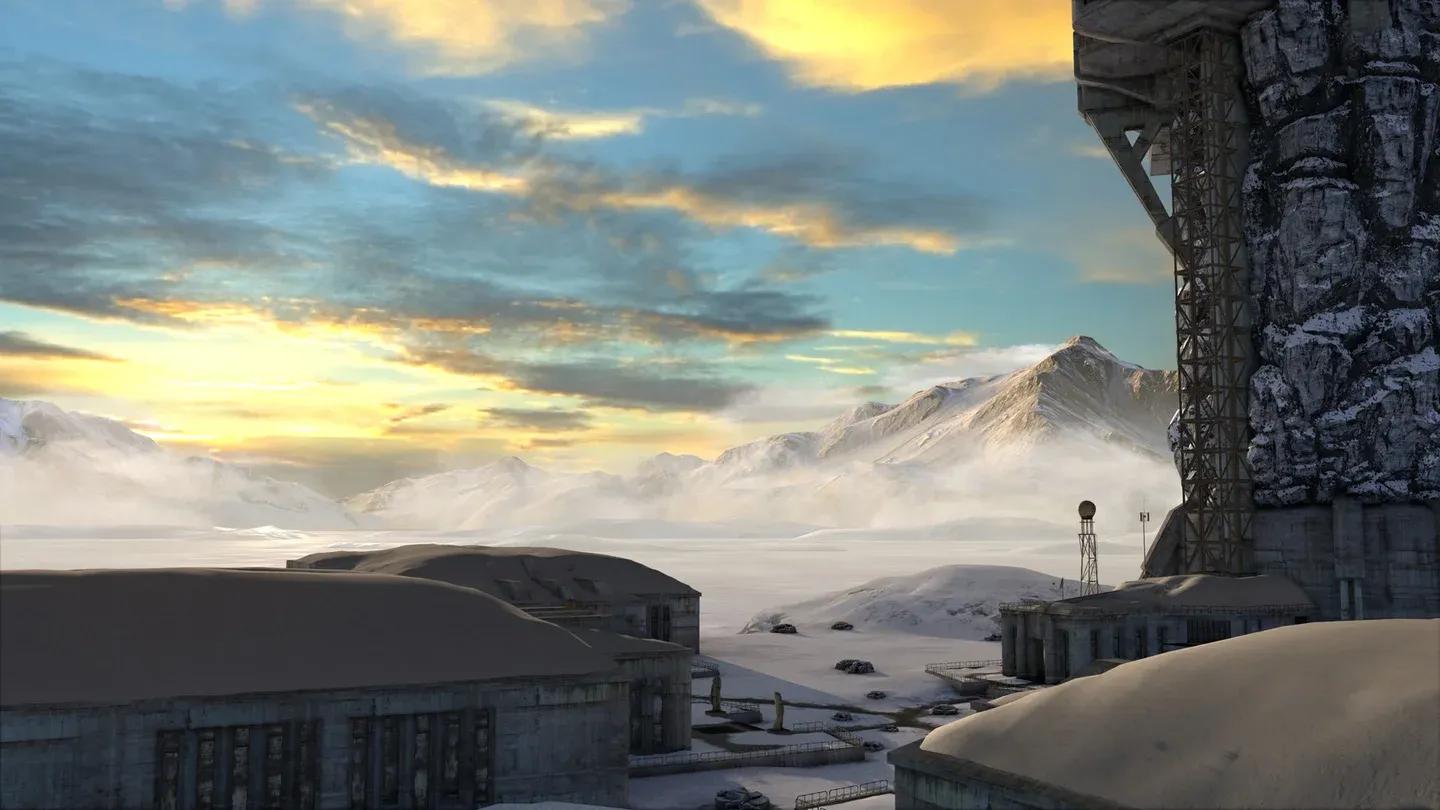
The environment is deliberately contradictory. Classical architecture, blooming gardens, and crumbling stone sit next to QR codes, computer terminals, and surveillance drones. That visual dissonance is not accidental. The world is asking the same questions the narrative is: what does it mean to be human, and what happens when something artificial starts to wonder the same thing?
The Talos Principle content image
Terminals scattered throughout the world contain text logs, philosophical arguments, and fragments of a larger story. Reading them is optional, but skipping them means missing the actual game. The puzzles test your spatial reasoning; the terminals test something harder to name.
Is The Talos Principle worth playing for its story?
Yes, and that answer requires some unpacking. Most puzzle games treat narrative as decoration. The Talos Principle treats the puzzles as an argument. Every locked door you open, every sigil you collect, feeds into a central question about free will and the nature of consciousness. The writing by Tom Jubert and Jonas Kyratzes does not offer easy answers, and the game has multiple endings that reflect the choices you make throughout.
The philosophical content never feels forced because the game earns it through structure. You are not just told you are an artificial being questioning your existence. You experience the conditions that make that question unavoidable.
Impact and legacy
The Talos Principle sits in a short list of puzzle games that changed what the genre was understood to be capable of. Croteam followed it with The Talos Principle 2 and eventually The Talos Principle: Reawakened, an updated version built on a decade of community feedback. The existence of those follow-ups reflects how seriously players took the original. For a first-person puzzle game built on logic and philosophy, that kind of staying power is the clearest signal of what it actually achieved.
The Talos Principle content image
System Requirements
| Requirement | Minimum | Recommended |
|---|---|---|
| Processor | Dual-core 2.0 GHz | Quad-core 3.0 GHz |
| Memory | 2 GB RAM | 4 GB RAM |
| Graphics | DirectX 11 class GPU with 1GB VRAM (nVidia GeForce 480 GTX, AMD Radeon HD 5870) | AMD RX 480 or NVIDIA GTX 970 |
| DirectX | Version 9.0c | Version 9.0c |