


Advertisement


GAMES.GG Deals
Biggest discounts, free games, and limited-time offers across every major gaming store.
Never pay full price again.
Overview
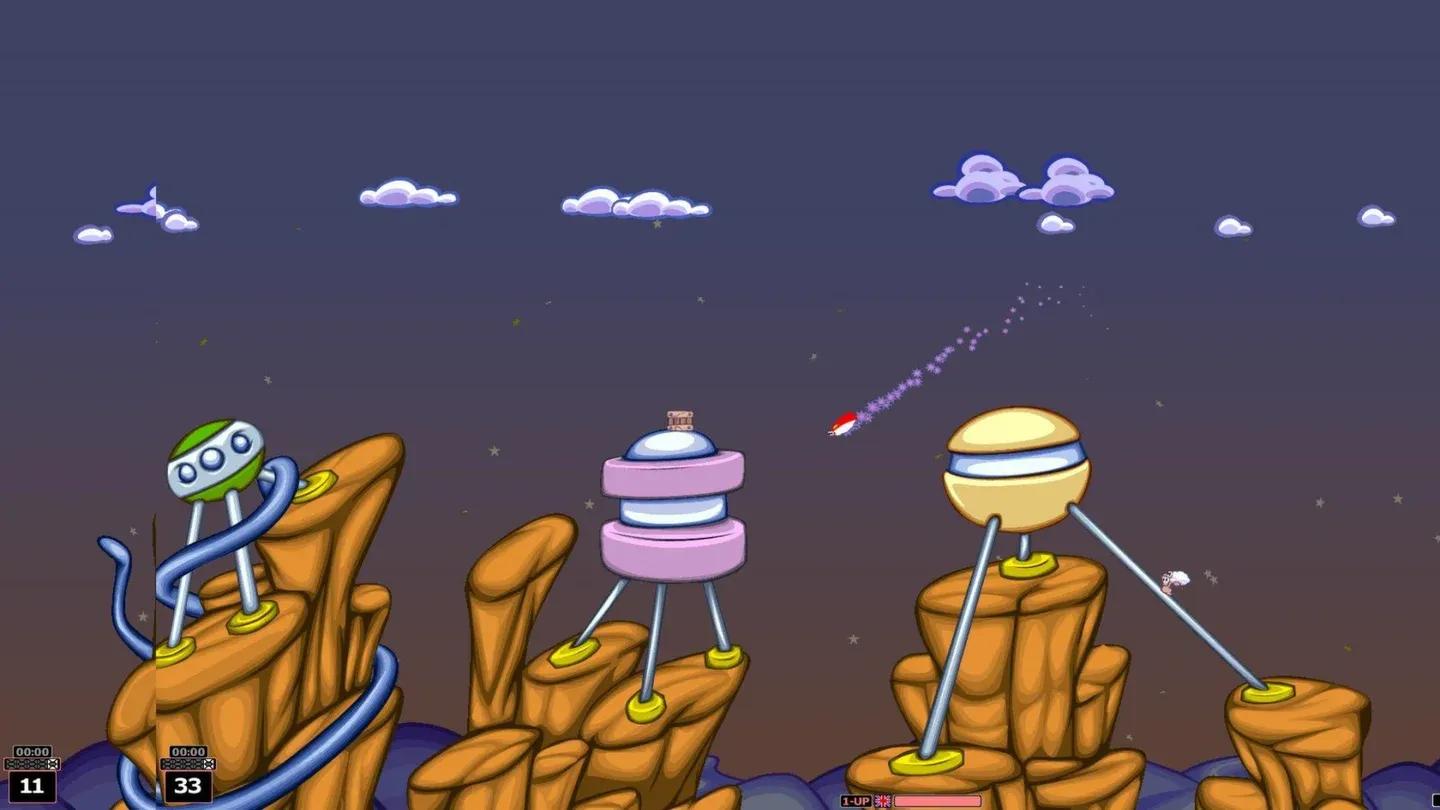
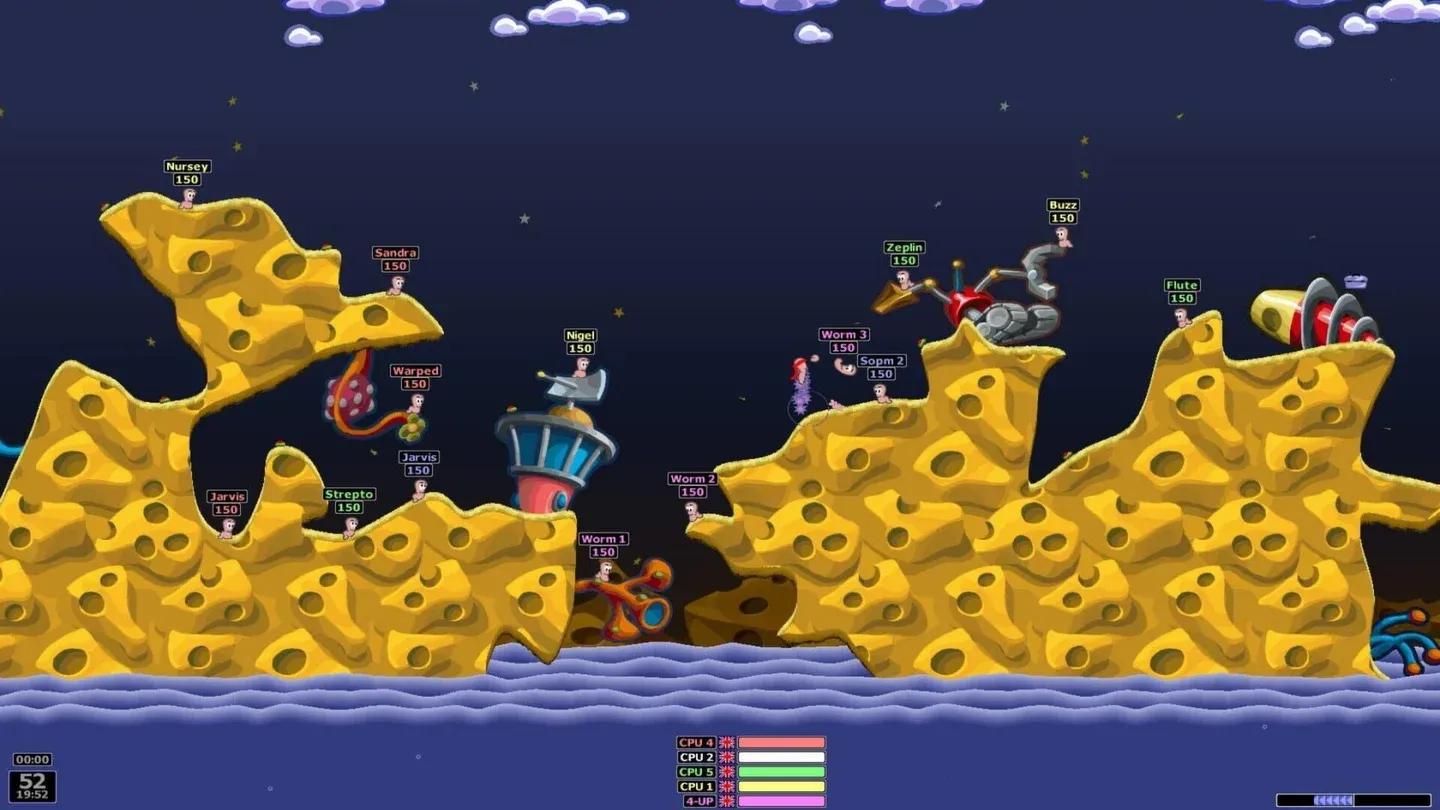
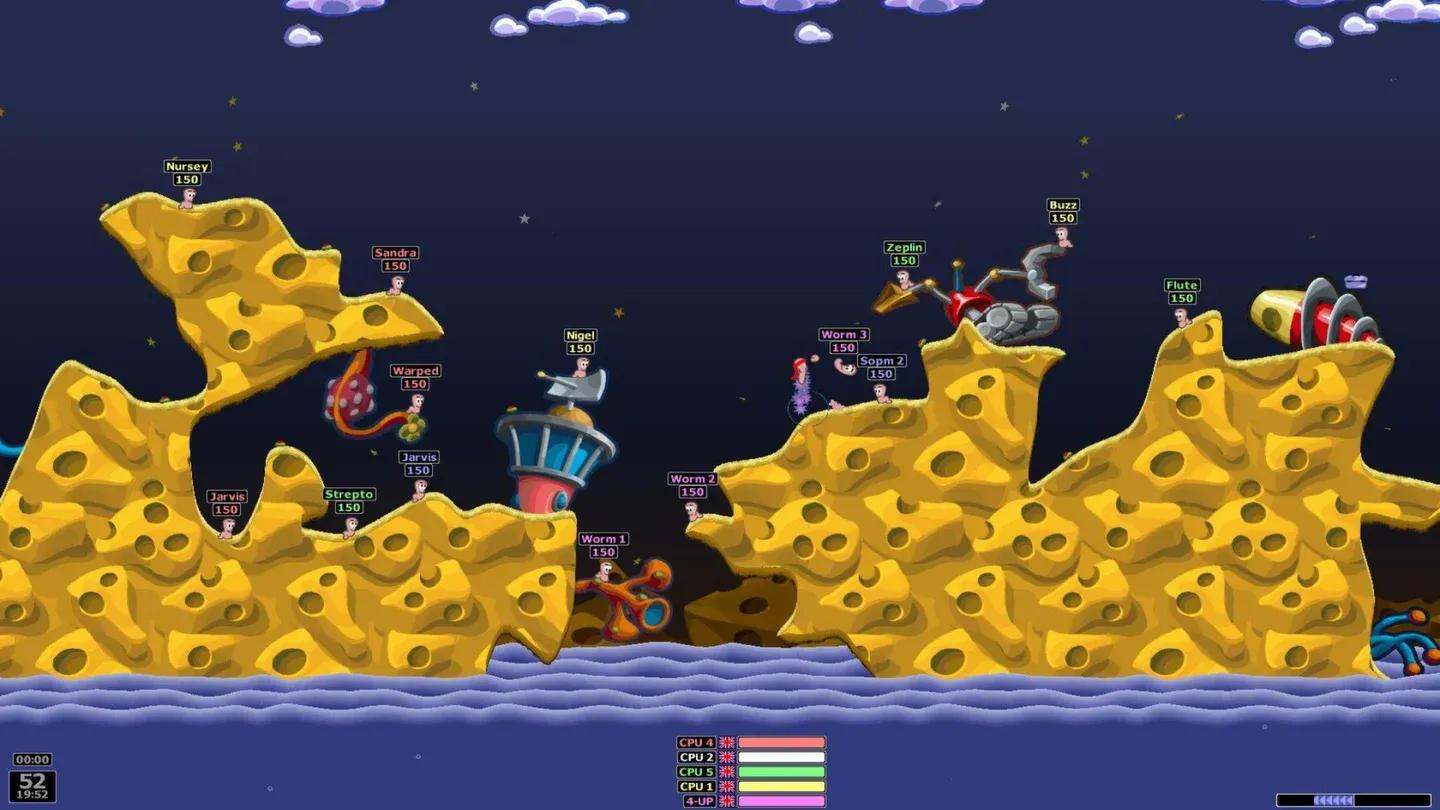
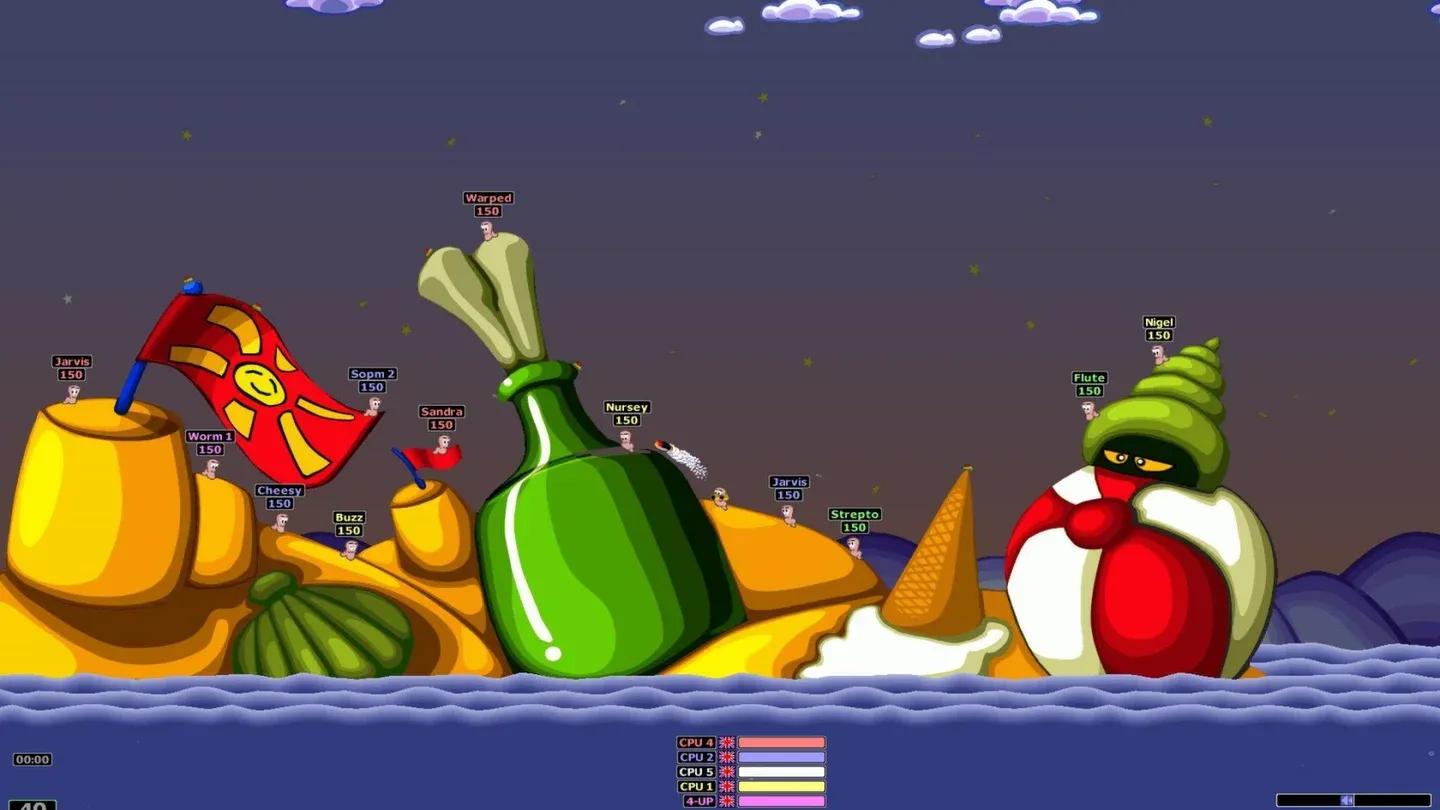
Worms Armageddon started life as an expansion pack for Worms 2 before Team17 recognized it had grown into something bigger. Released as a standalone game and later arriving on Steam in 2013, it remains one of the most refined entries in the long-running Worms series. The formula is straightforward: two or more teams of worms take turns blasting each other across fully destructible 2D terrain until only one squad survives. The execution, though, is anything but simple.
The game's staying power comes from how much it rewards careful thinking. Wind direction affects projectile arcs. Terrain can be carved apart to expose enemies or create defensive positions. Every weapon in the arsenal behaves differently, and mastering them takes real time. This is turn-based strategy with a chaotic edge, where a perfectly aimed Banana Bomb can flip an entire match in seconds.
Worms Armageddon content image
Weapons, tools, and tactical depth
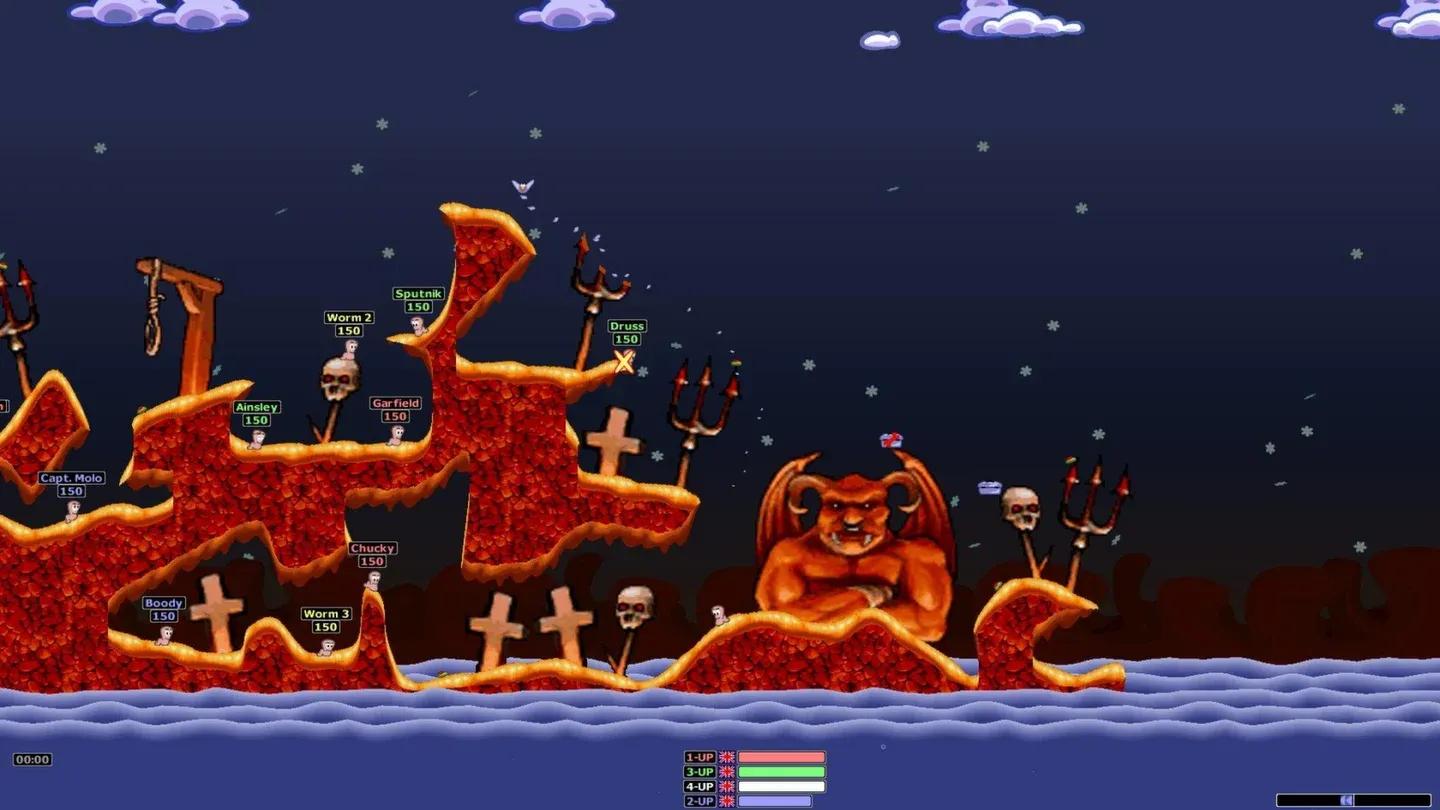
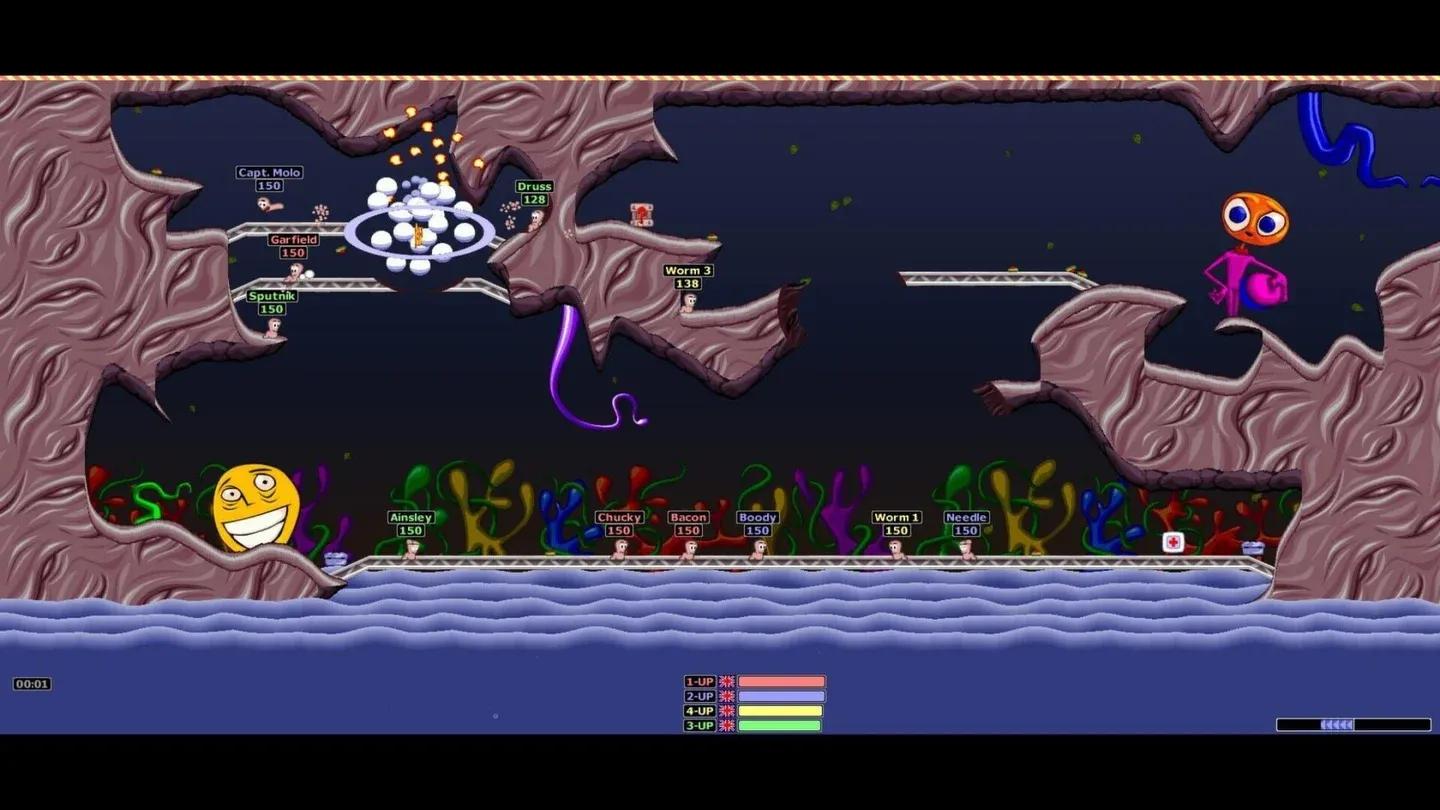
The arsenal in Worms Armageddon is one of the most creative in any strategy game. With over 55 weapons and tools available, the options range from the practical to the genuinely bizarre:
Worms Armageddon content image
- Holy Hand Grenade for wide-area destruction
- Ninja Rope for repositioning across any terrain
- French Sheep Strike for aerial bombardment
- Earthquake to destabilize enemy footholds
- Freeze to lock opponents in place
Learning when to use each weapon is half the game. The Ninja Rope alone has an entire skill ceiling attached to it, letting expert players swing across maps with speed that catches opponents completely off guard. Five dedicated training modes, including Advanced Weapon Training and Sheep Racing, exist specifically to teach these tools before you take them into a real match.
How does single-player hold up?
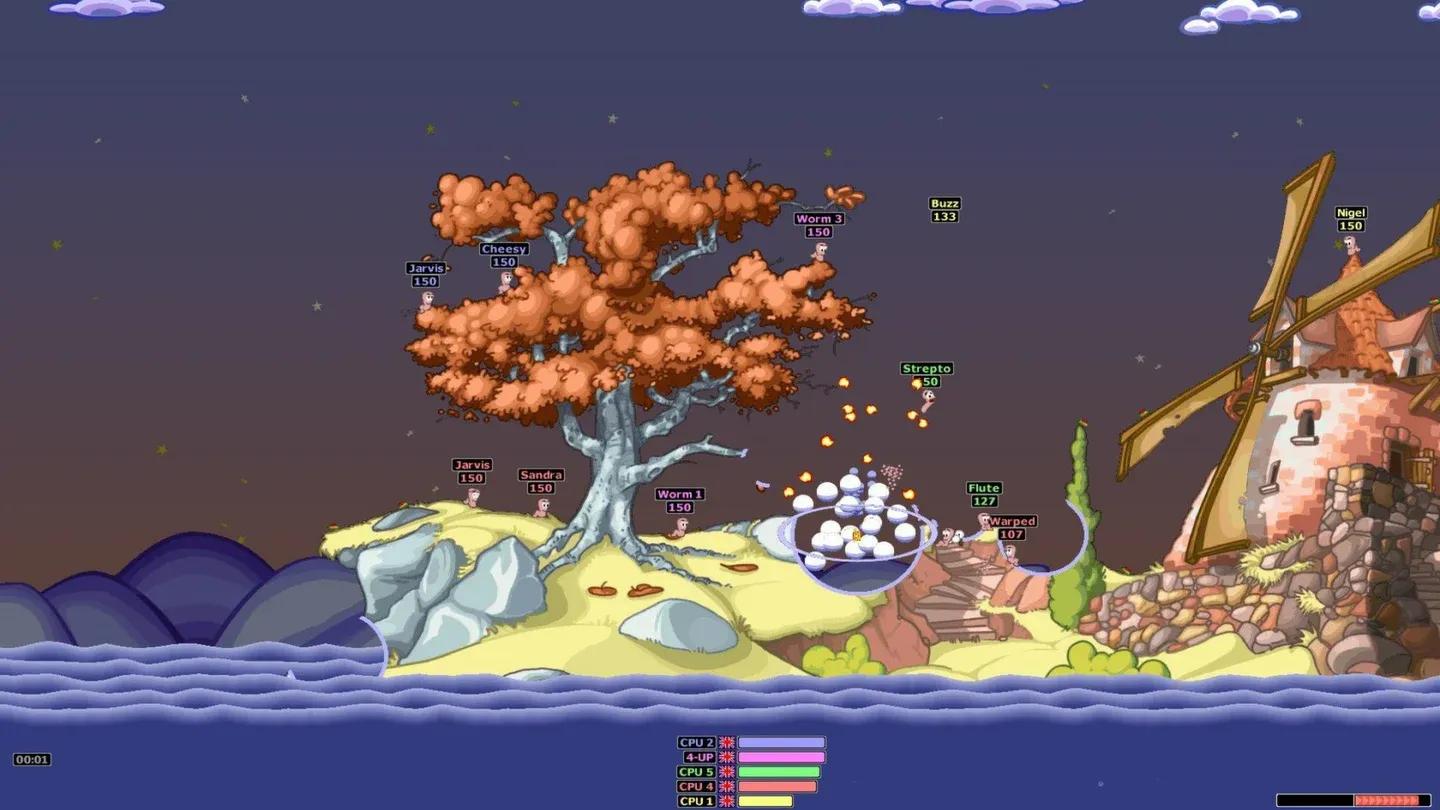
The single-player content is more substantial than most people expect from a game famous for its multiplayer. A 40-plus mission campaign puts players through increasingly demanding scenarios that force creative use of the weapon set rather than just brute-force approaches. Deathmatch mode offers a more freeform alternative for players who want to practice without the pressure of a structured mission. The difficulty curve is honest: early missions teach fundamentals, later ones expect you to have actually internalized them.
Worms Armageddon content image
Multiplayer and what makes it last
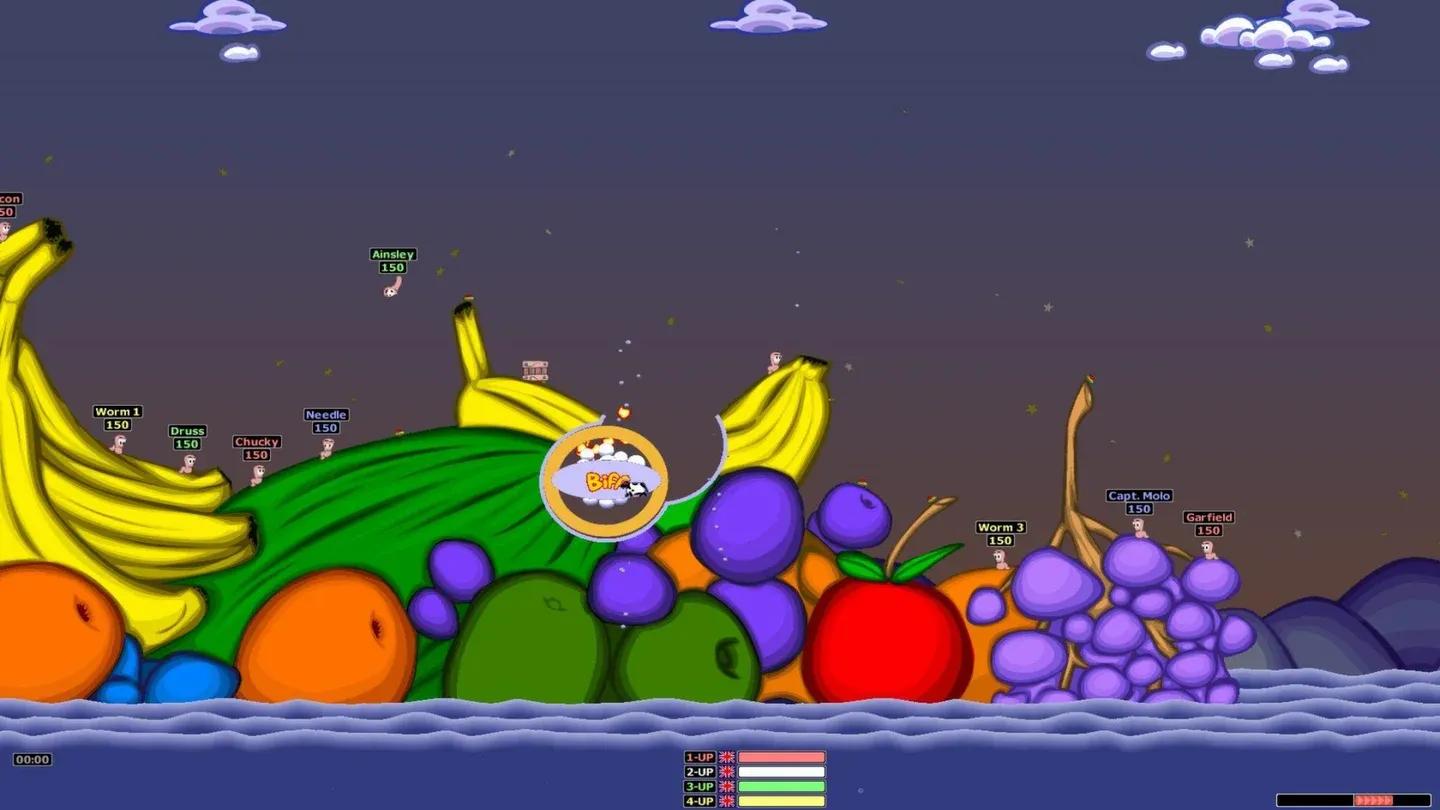
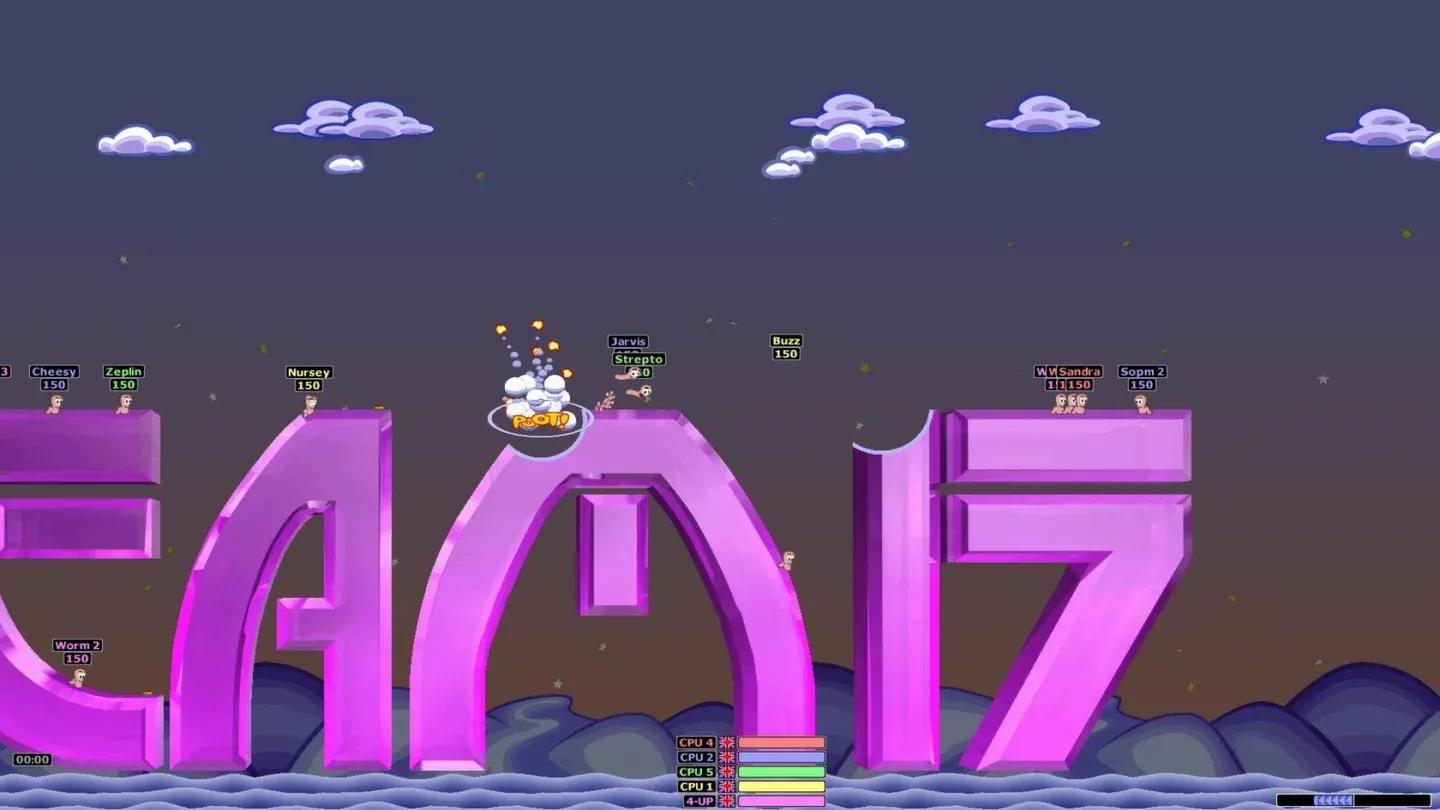
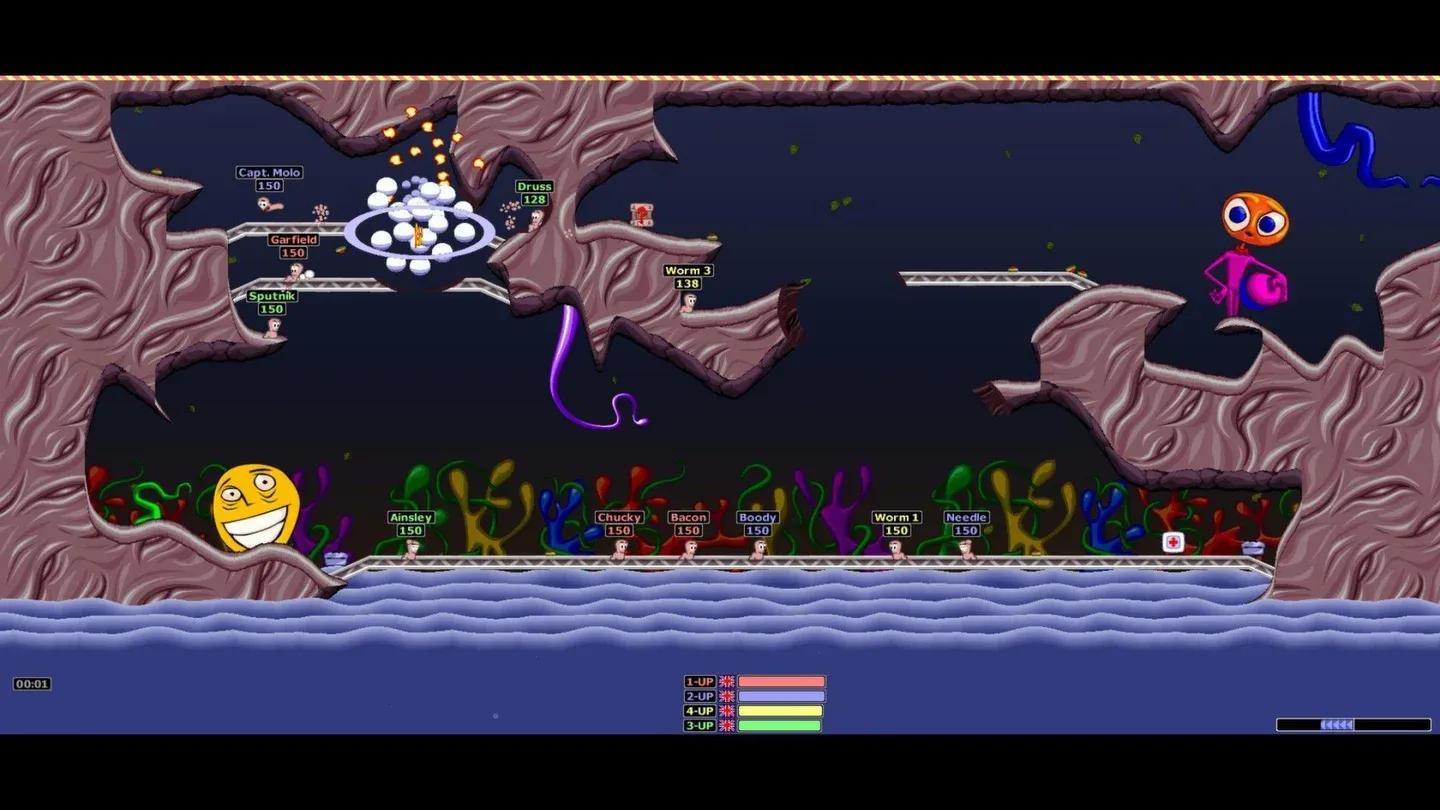
The multiplayer suite is where Worms Armageddon earns its reputation. Hot-seat play on a single machine has always been the classic setup, turning any session into a social event. The game added several features specifically to keep multiplayer interesting across many sessions: Handicapping lets players adjust team health values to level the playing field, Allied Teams mode creates temporary alliances that shift mid-game, and modes like Worms Disease and Home Runs add variety that prevents any single strategy from dominating.
Over 30 custom and comedy sound banks, including Cyberworms and Stiff Upper Lip, let teams personalize their worms with distinct personalities. It sounds like a minor detail, but those audio choices become part of the experience when you've heard the same taunt land at exactly the right moment.
Impact and legacy
Few games from the late 1990s have maintained an active player base this long. Worms Armageddon received periodic updates as recently as 2020, with the developer community continuing to patch and refine a game that was already considered complete by most standards. Critics placed it on multiple greatest-games-of-all-time lists, and that recognition holds up. The combination of destructible terrain, turn-based artillery mechanics, and genuinely funny presentation created a template that dozens of games have tried to copy without quite matching the original's balance.
Worms Armageddon content image