Search games, articles, guides...CtrlK
Sign InGet Started

Get your PC ready for the Modern Warfare 4 beta by enabling TPM 2.0 and Secure Boot to power RICOCHET Anti-Cheat.

Written by Larc
Content Writer
See more GAMES.GG guides on Google
Add us as a preferred source and our guides show up first in your results.

Call of Duty: Modern Warfare 4 Release Date, Times & Platforms
MW4 launches October 23, 2026. Here's every release time by region, platform, Game Pass status, and early access detail.
Modern Warfare 4 Guide: How To Get The Inner Circuit XBOX M4 Blueprint
Get the Inner Circuit M4 blueprint in Modern Warfare 4. Two versions exist, and which one you receive depends entirely on your platform.

Modern Warfare 4 Beta Not Working? Fix Server Issues & Get Playing Fast
Stuck outside the MW4 beta? Here are the exact reasons you can't connect and what to do about each one right now.
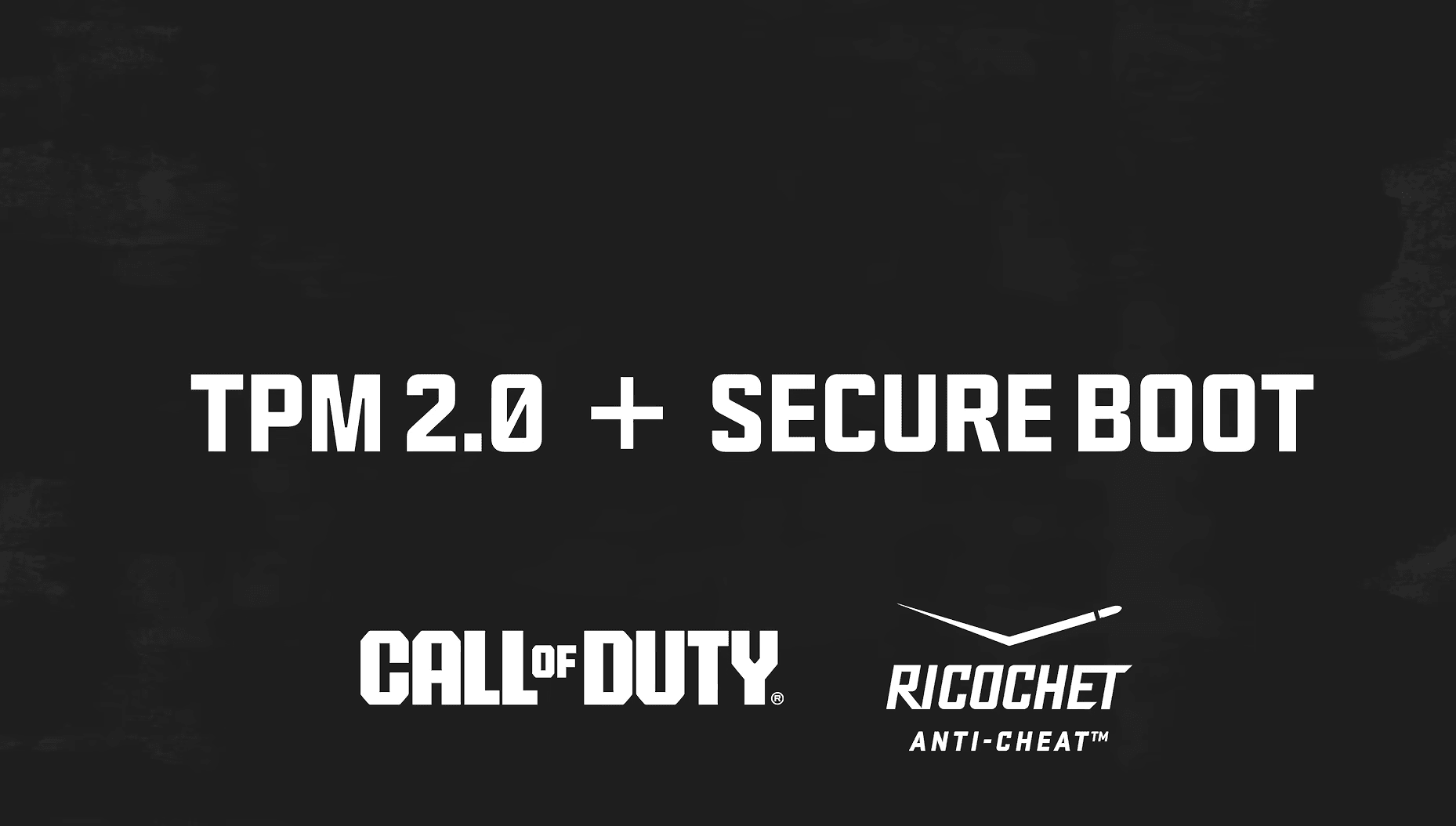
Call of Duty: Modern Warfare 4 is almost here, and if you're planning to jump into the beta on PC, there's one setup step that catches a lot of players off guard: TPM 2.0 and Secure Boot. These two Windows security features are required to run the game's RICOCHET Anti-Cheat system, and if they aren't active on your machine, you won't be able to play online. Most modern PCs have them enabled by default, but if yours doesn't, a quick trip into your BIOS settings will sort it out.
TPM 2.0 (Trusted Platform Module 2.0) and Secure Boot are Windows security features built into your PC's firmware. They work together to verify that your system hasn't been tampered with before the operating system loads. For MW4, they form the hardware-level foundation that RICOCHET Anti-Cheat relies on to detect and block cheating software.
Cheating has been a persistent problem in online shooters, and Activision's RICOCHET system tackles it at the system level rather than just monitoring in-game behavior. By requiring TPM 2.0 and Secure Boot, RICOCHET can make it significantly harder for cheat developers to inject malicious software without detection. This is especially relevant for the beta period, where maintaining match integrity matters from day one.
Before touching your BIOS, check whether TPM 2.0 is already running. Press Windows + R, type tpm.msc, and hit Enter. If the TPM Management window opens and shows "TPM is ready to use" with a specification version of 2.0, you're already set. If it shows version 1.2 or says no TPM is found, you'll need to enable or upgrade it in your BIOS.
For Secure Boot, open System Information by searching for it in the Start menu. Look for the Secure Boot State line under System Summary. If it reads "On," you're good. If it reads "Off" or "Unsupported," keep reading.
The exact steps vary slightly depending on your motherboard manufacturer, but the general process is the same across AMD and Intel systems.
| Manufacturer | BIOS Key | TPM Setting Name |
|---|---|---|
| ASUS | Delete or F2 | fTPM (AMD) / PTT (Intel) |
| MSI | Delete | fTPM / Intel PTT |
| Gigabyte | Delete or F2 | AMD CPU fTPM / Intel PTT |
| ASRock | F2 or Delete | AMD fTPM switch / Intel PTT |
| Dell | F2 | TPM On |
| HP | F10 or Escape | TPM Device |
Some older motherboards ship with TPM 1.2 enabled but support upgrading to 2.0 through a firmware or BIOS update. Check your motherboard manufacturer's website for the latest BIOS update, install it, then return to the BIOS and switch the TPM version to 2.0 if the option appears. If your hardware genuinely doesn't support TPM 2.0, the beta won't be accessible on that machine.
Requiring these features during the beta specifically makes sense from Activision's perspective. Beta periods are when cheat developers tend to probe for vulnerabilities, since the anti-cheat system hasn't been battle-tested yet. By enforcing RICOCHET's hardware requirements from the first session, the beta data becomes more reliable and the player experience stays cleaner.
This also aligns with the broader direction of PC anti-cheat across the industry. Kernel-level solutions backed by hardware security features are now standard for competitive shooters, and MW4 is following that path from launch rather than retrofitting it later.
For everything else you need before launch, check out the full Call of Duty: Modern Warfare 4 guides collection covering beta access, pre-order bonuses, and more. If you haven't secured your spot yet, the MW4 beta access and early entry guide breaks down exactly how to get in, and the Modern Warfare 4 beta code redemption guide walks you through claiming and activating your key on every platform.