
Biggest discounts, free games, and limited-time offers across every major gaming store.
Never pay full price again.
Overview
Dimraeth is a hybrid action RPG from indie developer Mudtek that launched into Early Access on September 15, 2026. The game sits at an unusual crossroads: Souls-lite combat mechanics paired with base-building, crafting, and relationship systems more commonly found in life-sim RPGs. The result is a game that punishes recklessness in combat while rewarding the time you invest back at home between runs into the world.
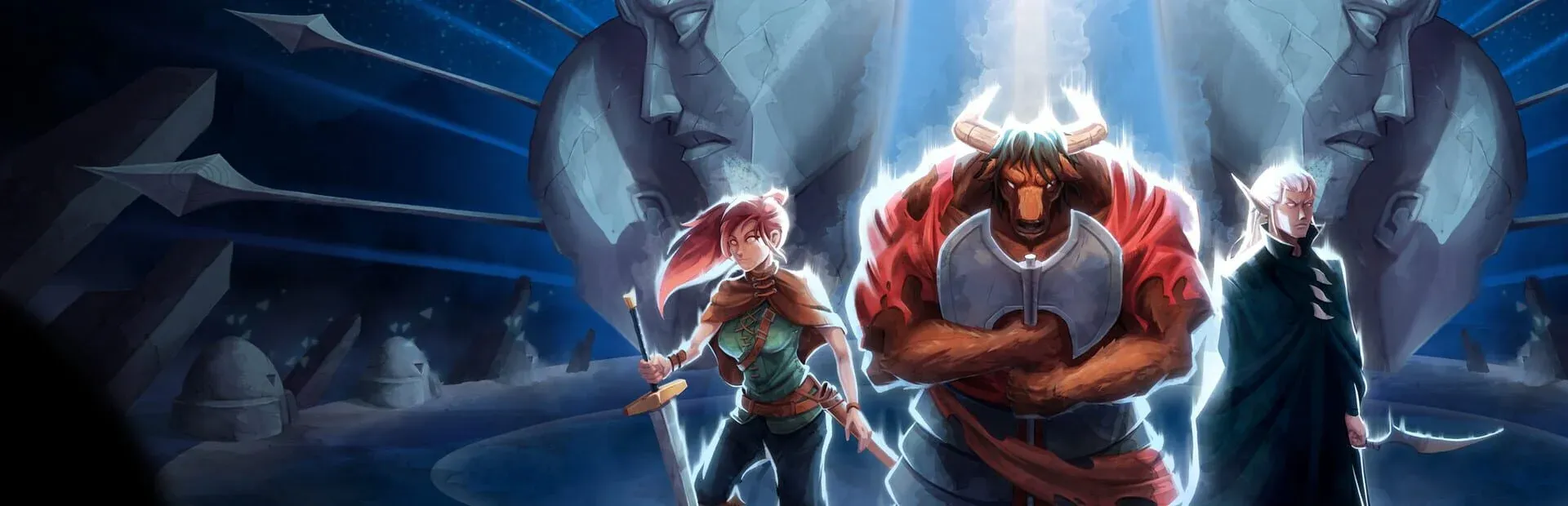
The setting is Mirkea, a handcrafted pixel-art fantasy world under threat from Sylbos, Last of the Ogre Magi, who seeks to claim the power of Dimraeth itself. Wizard Faustas pulls your hero into the conflict after a twist of fate grants them an ancient, poorly understood power. The story is classic high fantasy, but the systems layered on top of it give the world genuine depth.
How does character building work in Dimraeth?
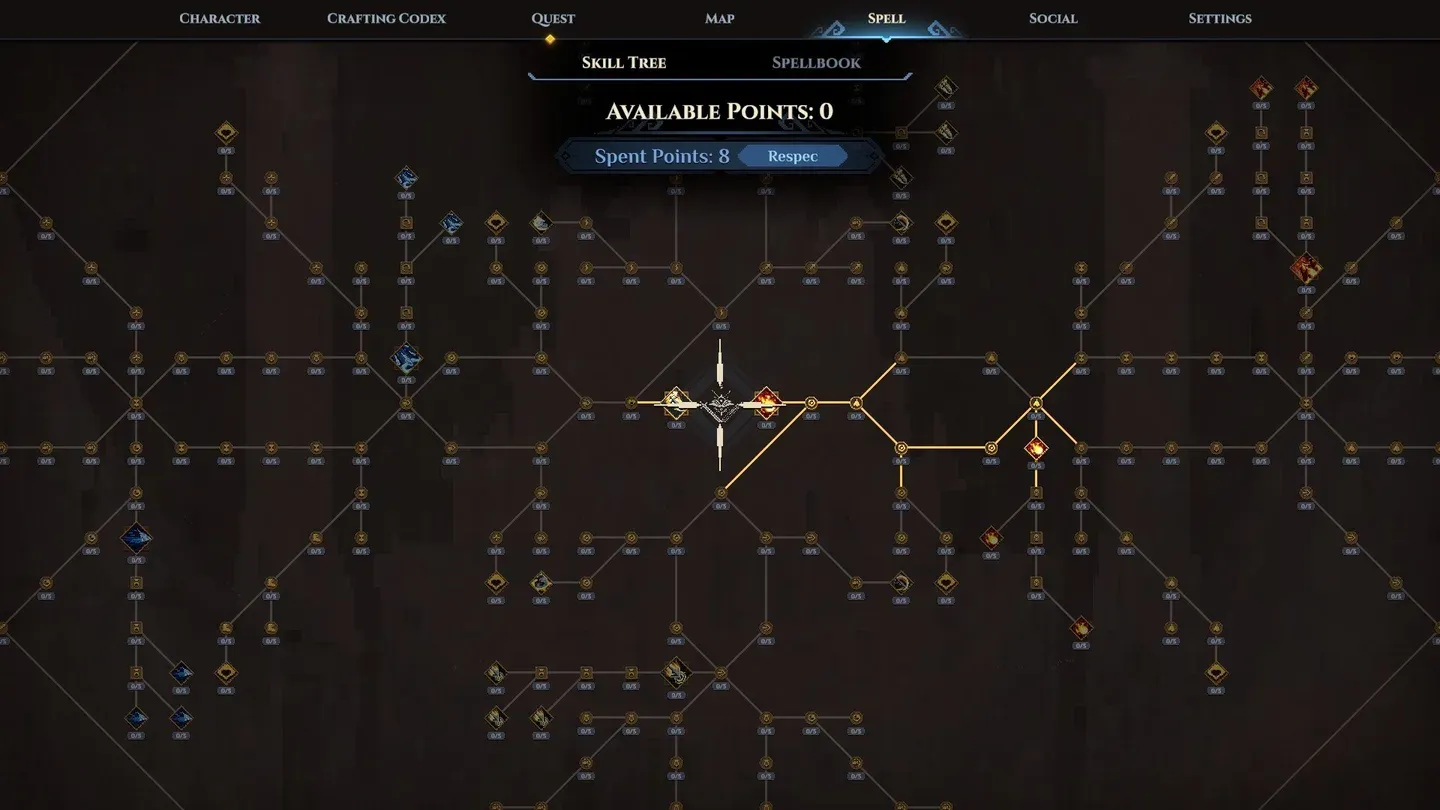
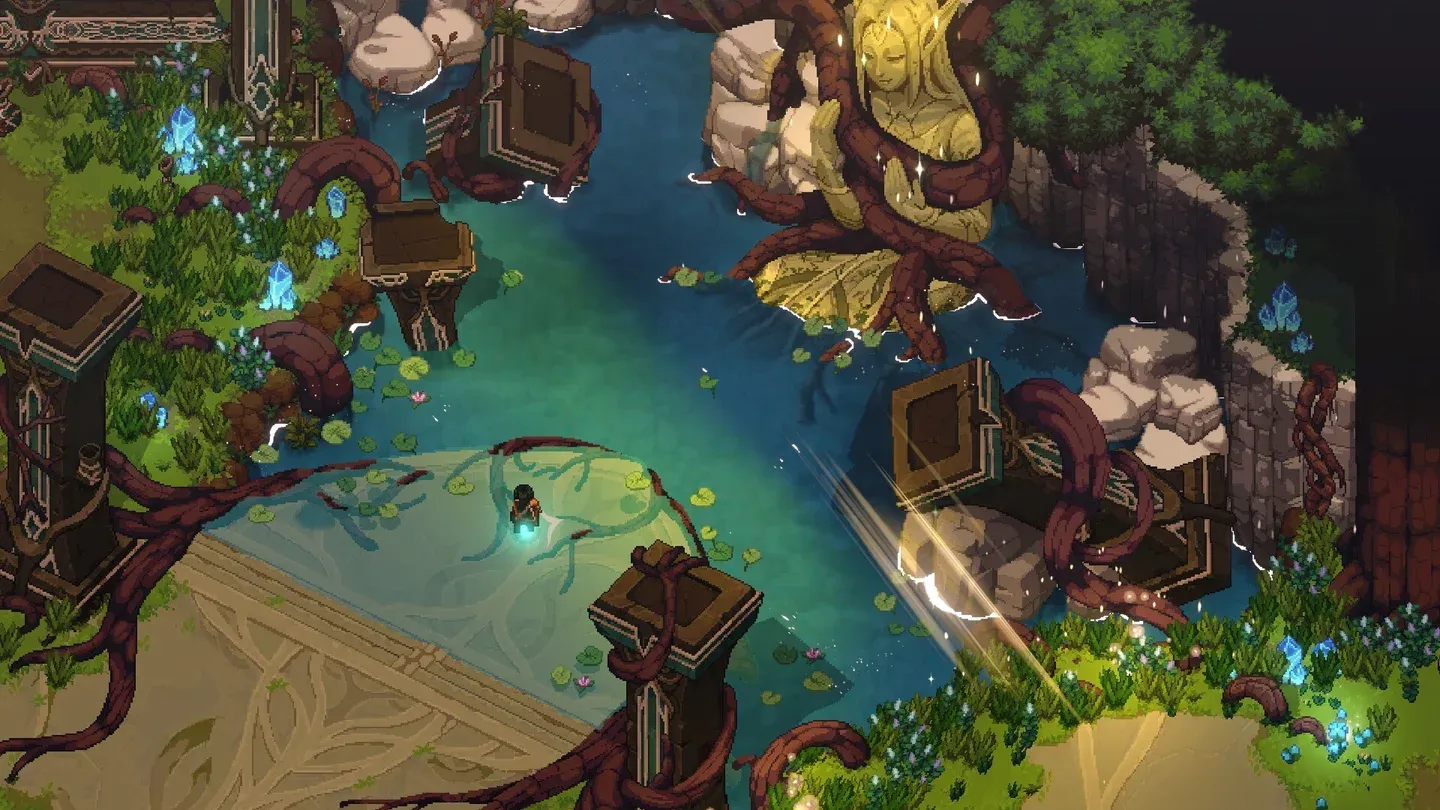
Dimraeth's archetype system is one of its most distinctive features. Players choose from 8 races and 6 classes, generating 48 distinct archetypes, each with its own skill tree and playstyle. An Elf Rogue plays meaningfully differently from a Dwarf Rogue, not just in stat distribution but in the spells and abilities available to them.
Key character-building features include:
- 48 unique race-and-class archetypes
- 300+ spells accessible via race, class, or crafted spellbooks
- 5 spell slots for tactical loadout building
- Attribute requirements gate universal magic access
- Skill trees unique to each archetype pairing
Dimraeth content image
The spell system deserves particular attention. Equipping 5 spells at a time and building rotations around attribute thresholds adds a min-maxing layer that RPG fans will find satisfying. Crafted spellbooks open up universal magic options, provided your character meets the stat requirements, which creates a natural incentive to specialize rather than spread points thin.
Combat and progression
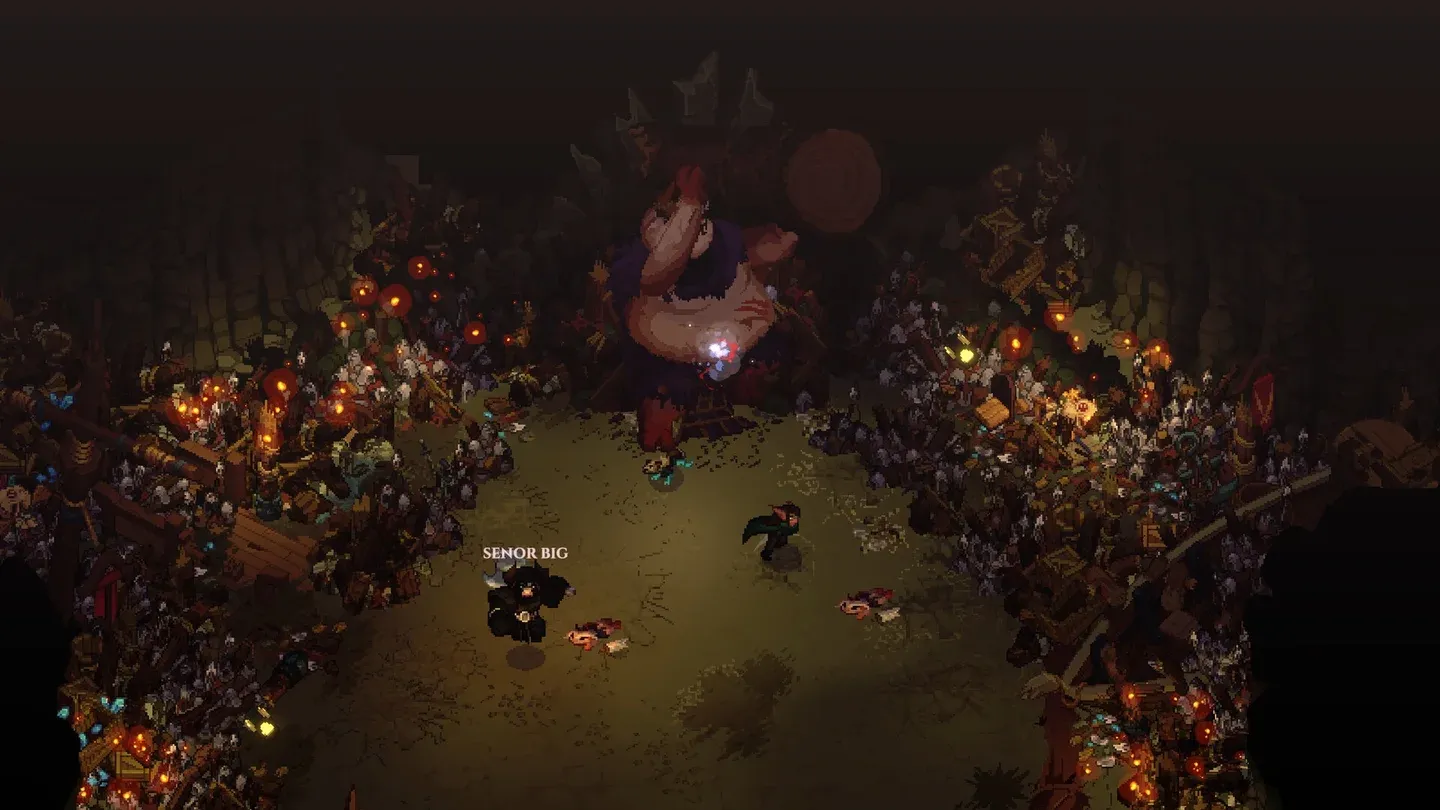
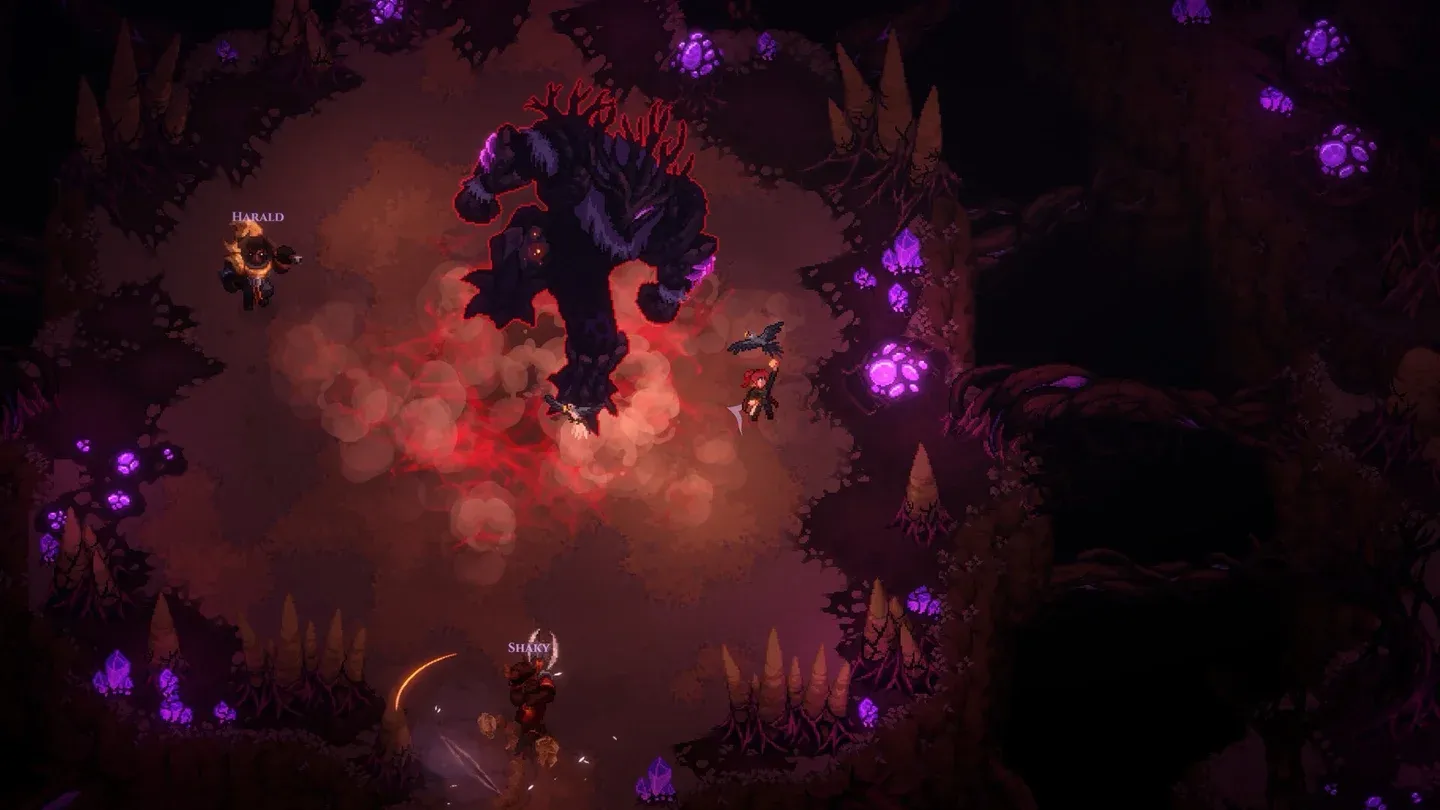
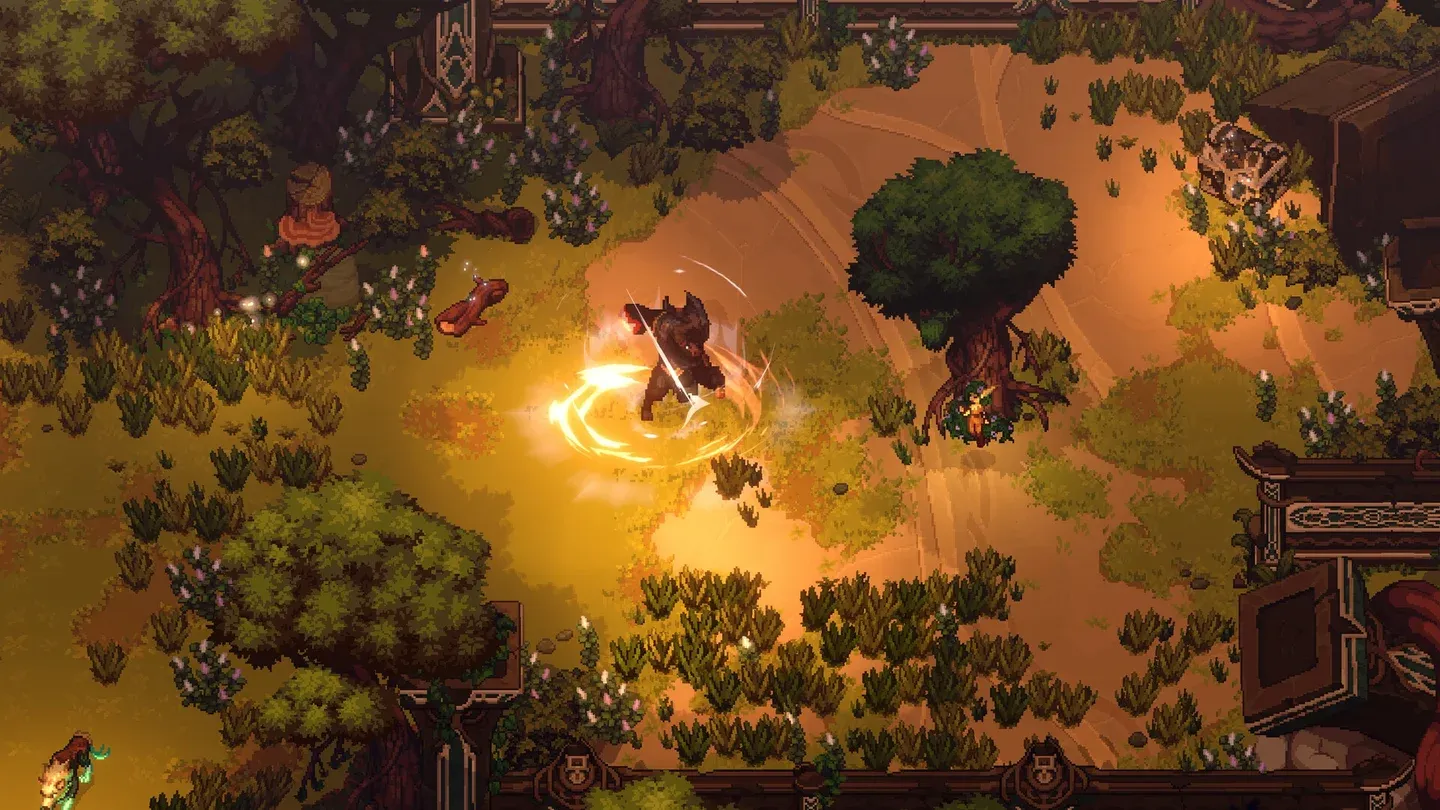
Combat in Dimraeth is deliberate. Stamina management, enemy telegraphs, positioning, and the choice between striking, dodging, blocking, or parrying all matter. Attacks are commitments in the truest Souls-lite sense: swing recklessly and you will get punished. The pixel-art presentation might soften expectations, but the mechanical demands are genuine.
Bosses and demanding enemy encounters serve as checkpoints for build viability. If a rotation isn't working, the game pushes you back to the crafting table and the spellbook to iterate. That feedback loop between combat failure and character refinement is where Dimraeth's progression system earns its depth.
Dimraeth content image
Base-building and the world of Mirkea
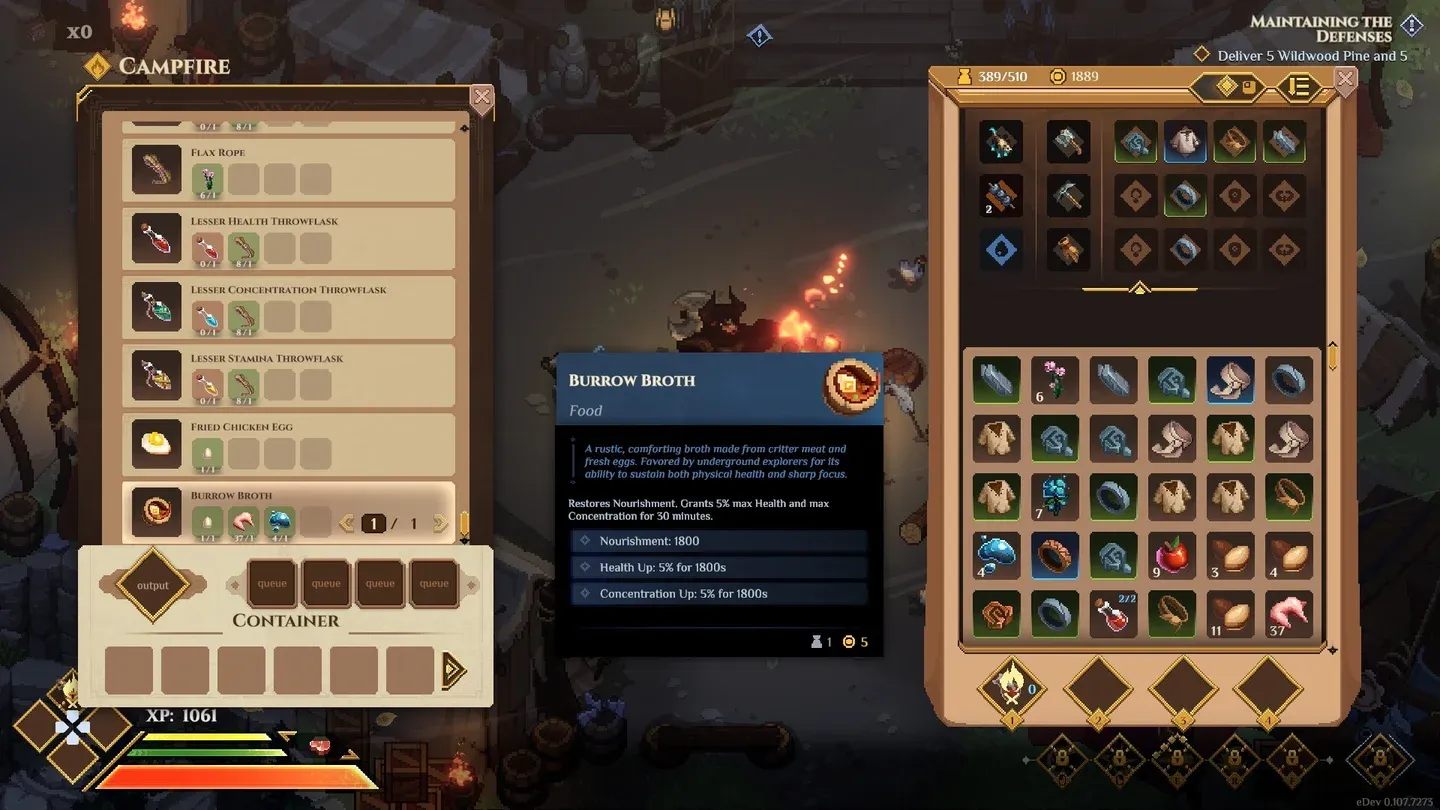
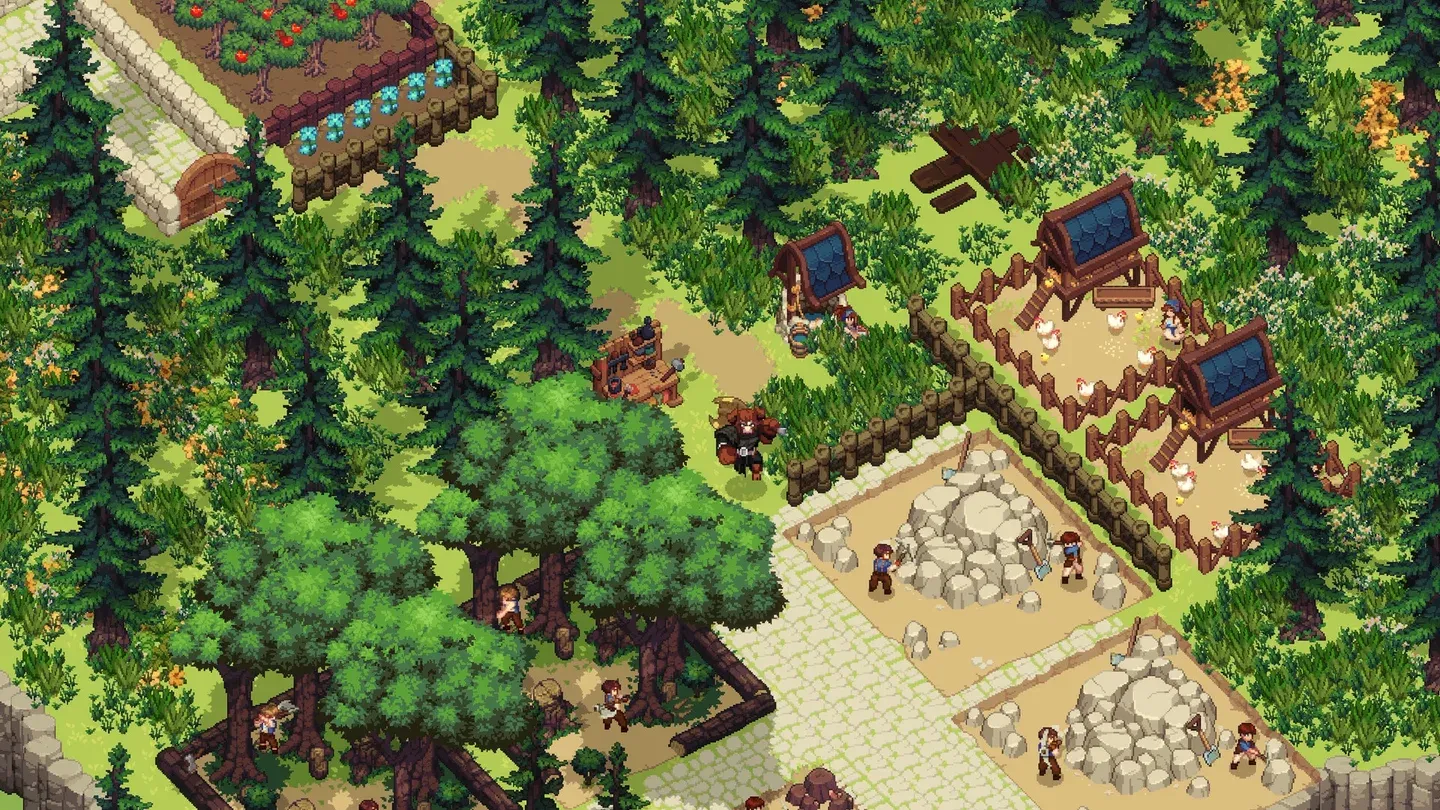
Between expeditions, players return to a home base where crafting, cooking, and construction take center stage. Farms, quarries, and other structures provide steady resource income. Brewing potions and cooking meals that increase vitality adds a tangible preparation layer before heading back into danger.
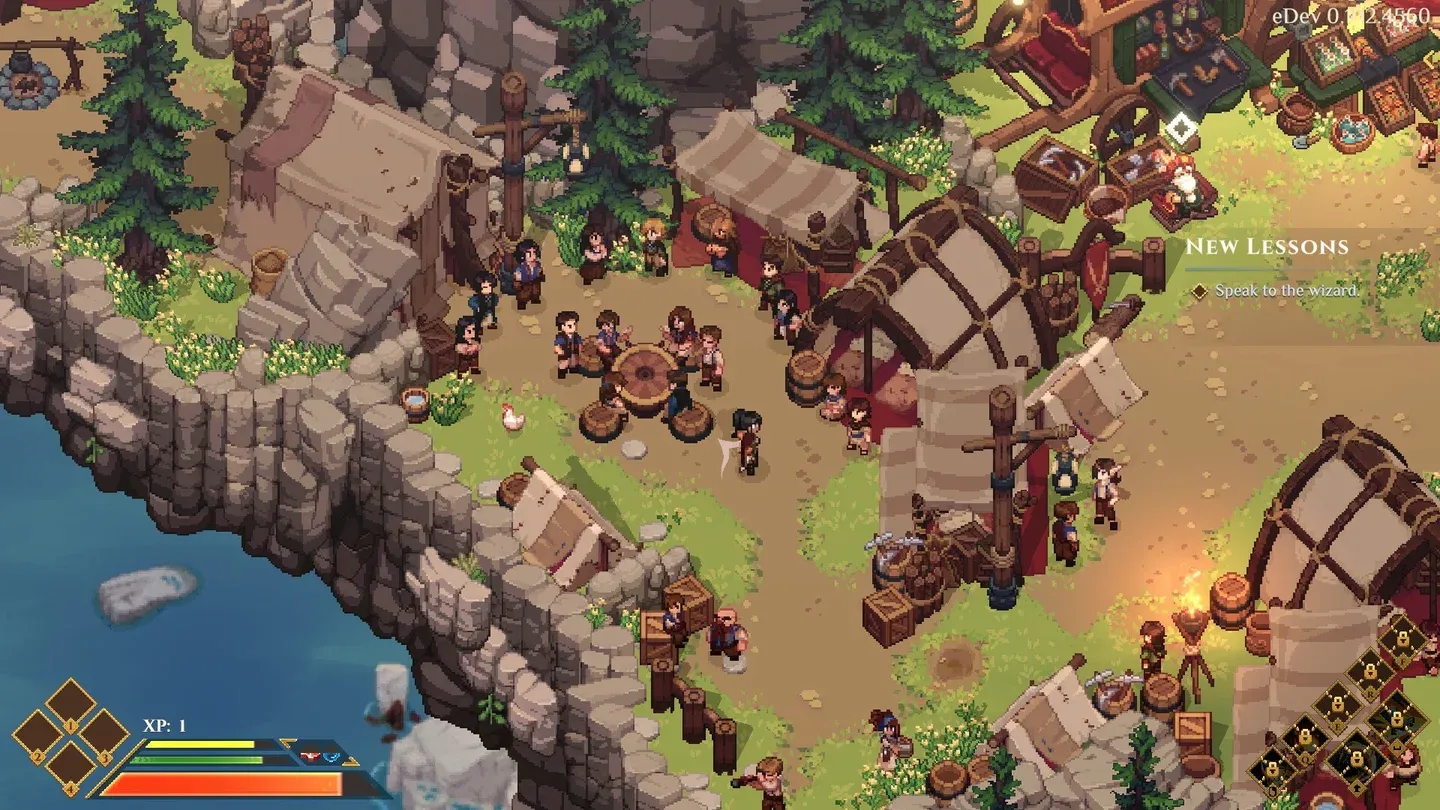
The relationship system goes further than most RPGs in this space. Deeper ally bonds unlock personal quests, new conversations, and potential romances. Investing materials into allies' facilities expands shop inventories and unlocks additional crafting options, meaning social progression has direct mechanical payoffs rather than existing purely as flavor.
Dimraeth content image
Multiplayer and co-op flexibility
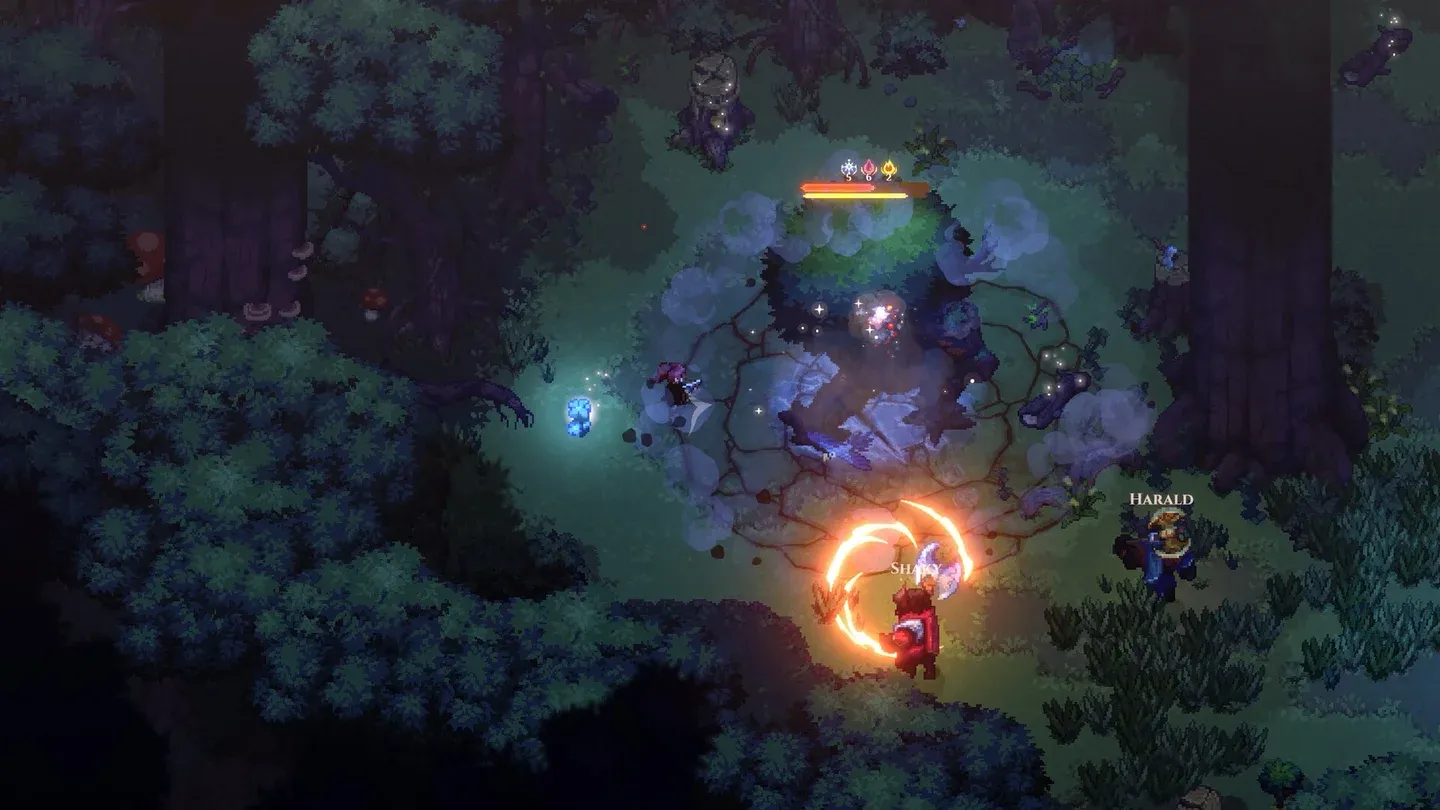
Dimraeth supports drop-in/drop-out co-op for up to 8 players. The progression structure handles this thoughtfully: your hero's level, equipment, inventory, and spells carry between worlds, but story progress, recruited allies, and buildings stay tied to the host world. Players can contribute to a friend's campaign without sacrificing their own character development, and that portability makes co-op feel genuinely flexible rather than a tacked-on feature. For fans of co-op action RPGs with real mechanical weight, Dimraeth offers a compelling Early Access foundation to build on.