

Advertisement

Overview
Gato Roboto drops you into the role of Kiki, a cat whose owner crash-lands his spaceship on a hostile alien planet. With the captain trapped and injured inside the wreckage, Kiki suits up in a compact armored mech and sets off through a labyrinthine alien base filled with aggressive creatures and environmental hazards. The premise sounds like a one-note joke, but doinksoft plays it straight enough that the game genuinely works as a Metroidvania, not just a novelty.
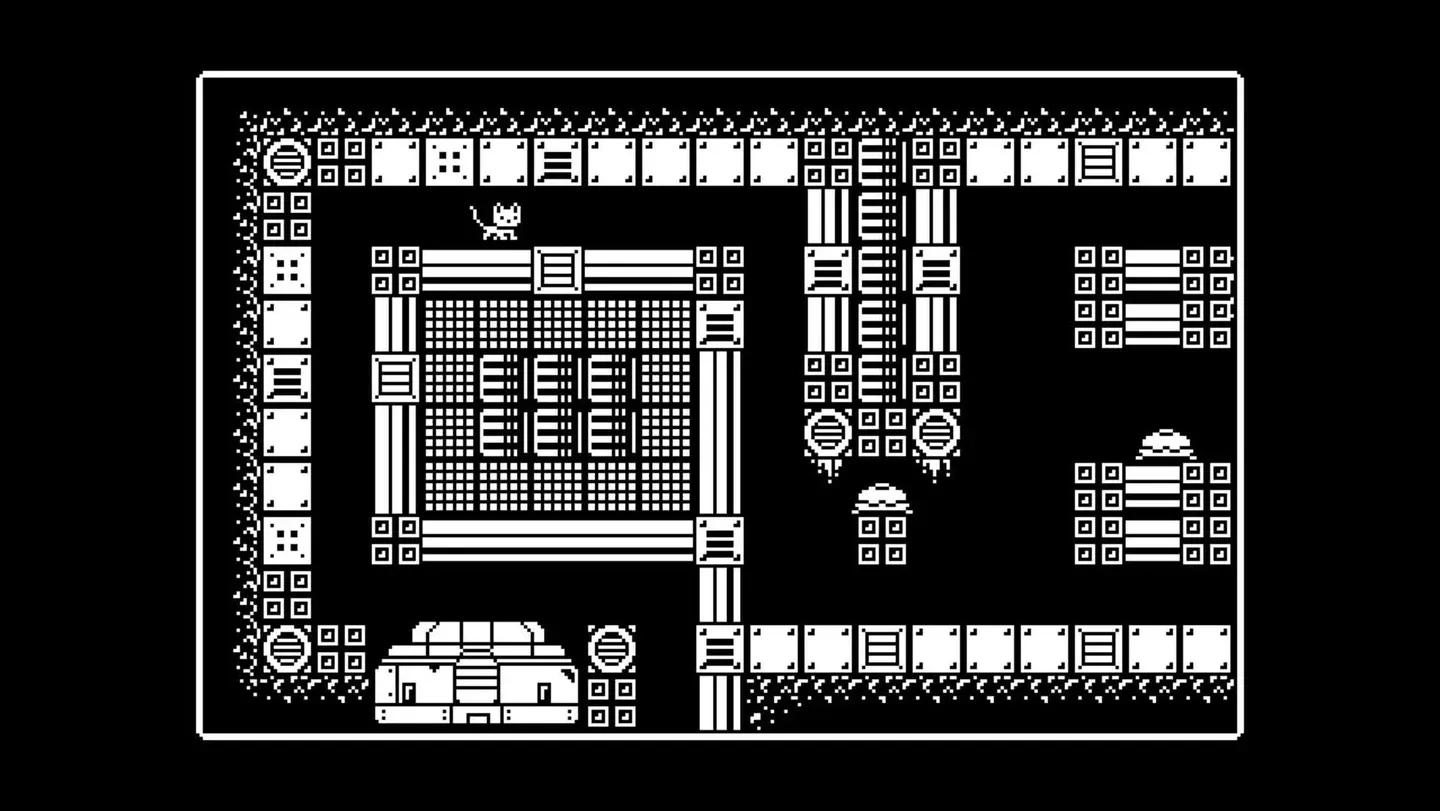
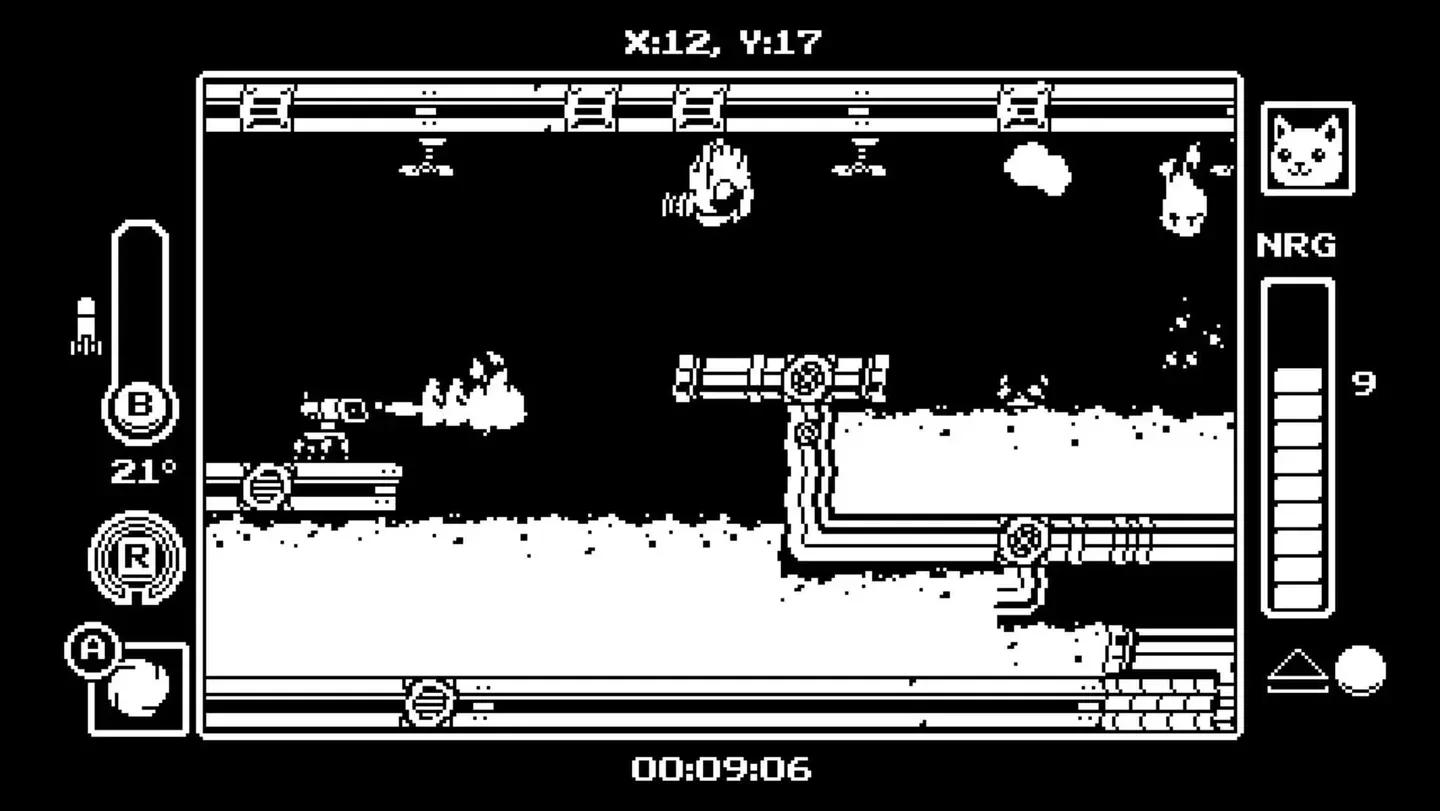
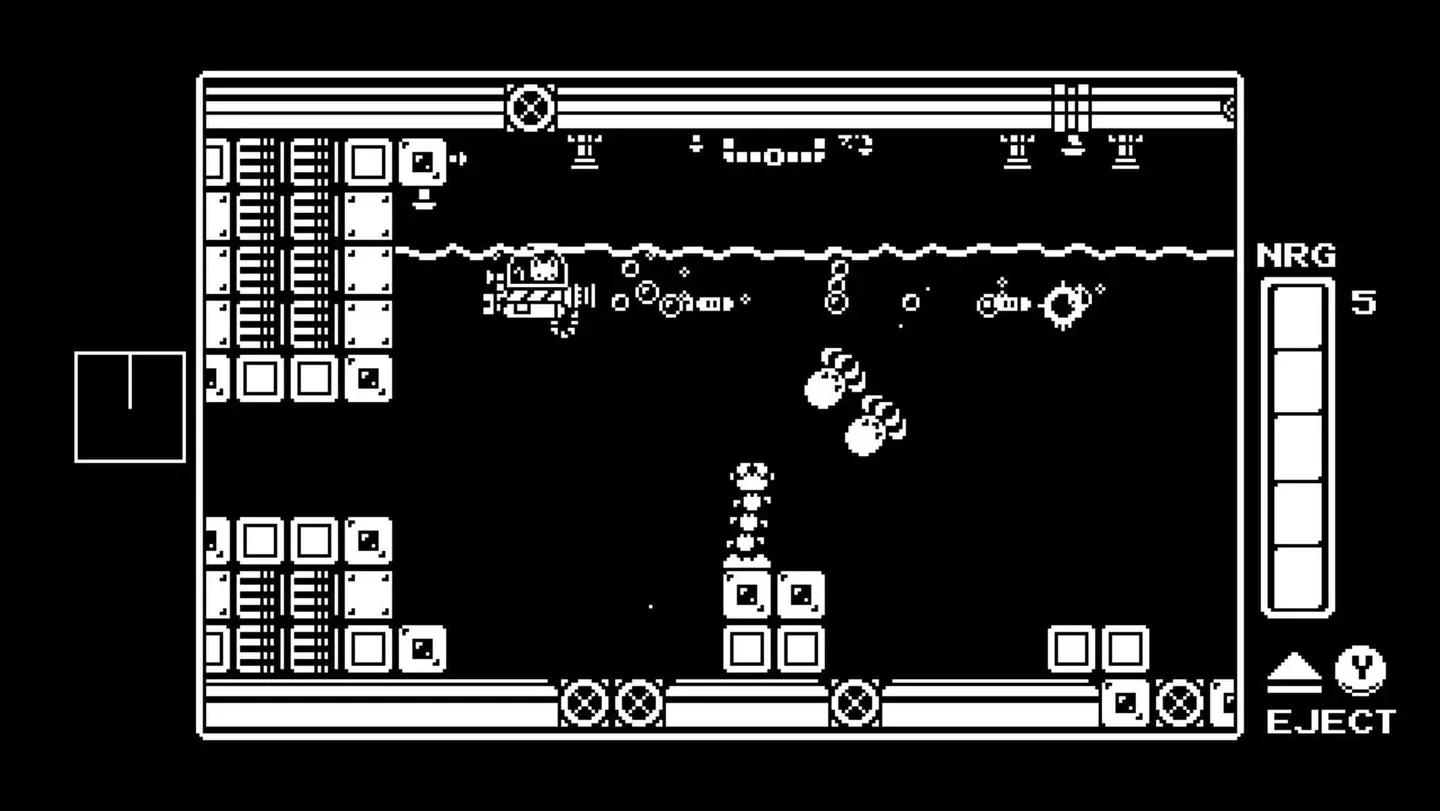
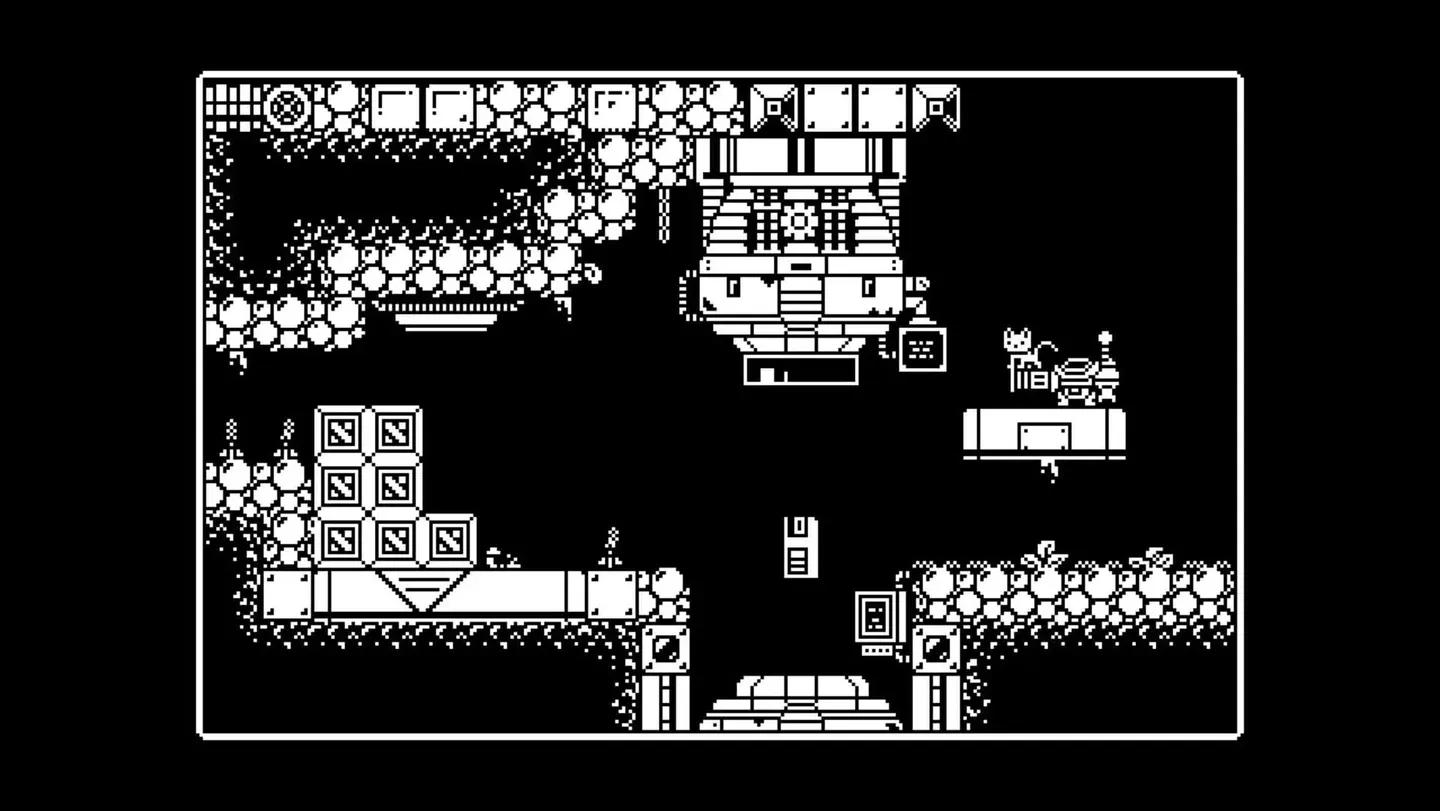
The game runs in a stark black-and-white pixel art style that immediately sets it apart from the sea of colorful indie platformers. Every environment reads clearly, enemy telegraphs are easy to parse, and the whole thing has a retro Game Boy aesthetic that feels deliberate rather than lazy. The audio design matches the visuals: chiptune music that shifts in tone as Kiki moves between zones, each area getting its own sonic identity.
Gato Roboto content image
Gameplay and mechanics
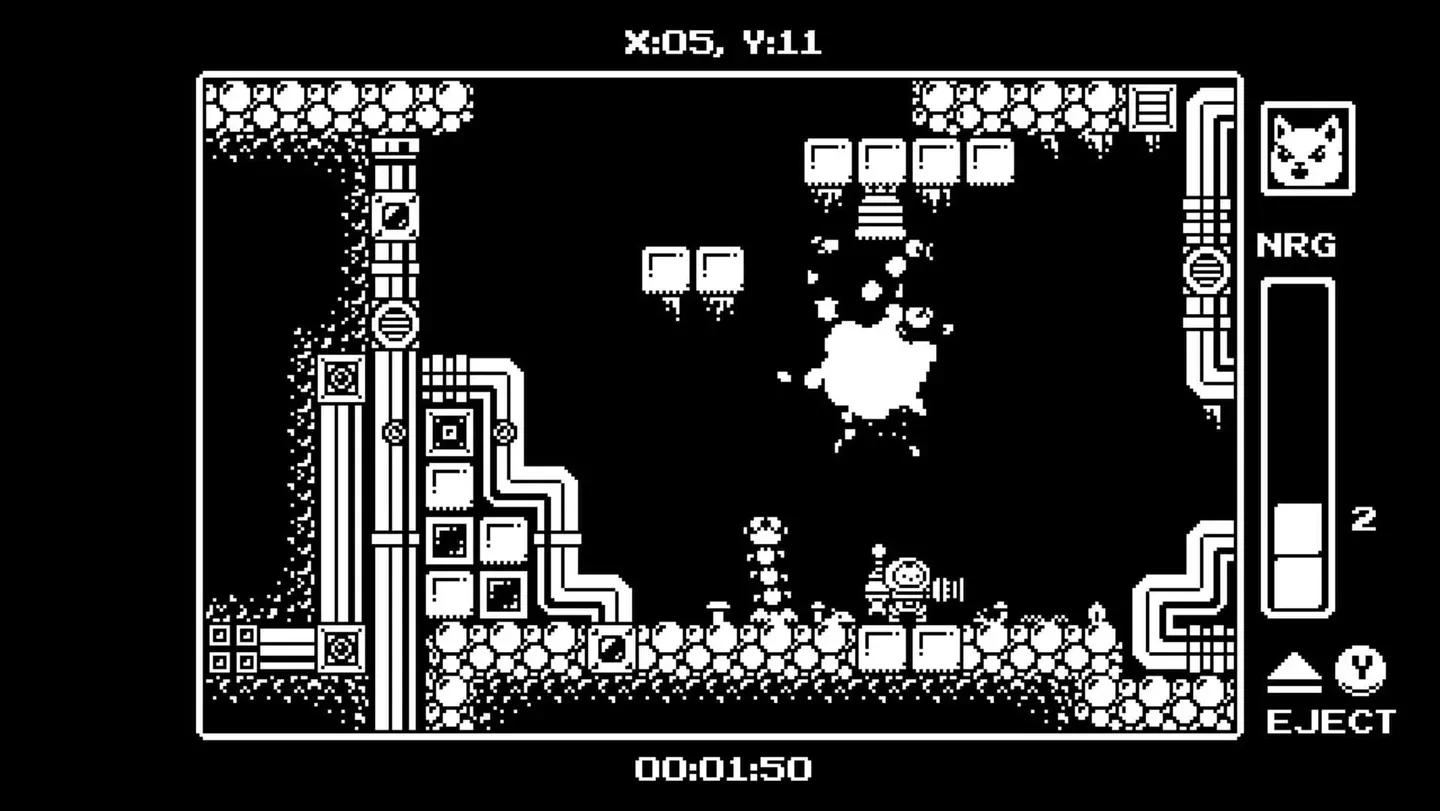
The core loop splits neatly between two modes of play. Inside the mech, Kiki has access to a cannon, the ability to take hits, and the mobility tools needed to navigate most of the base. The mech handles like a classic Metroid suit, with responsive movement and shooting that feels punchy even at the game's small scale.
Gato Roboto content image
Key mechanics include:
- Mech combat with upgradeable weapons
- On-foot exploration through tight tunnels
- Backtracking to previously inaccessible areas
- Boss encounters gating zone progression
- Hidden upgrades rewarding thorough exploration
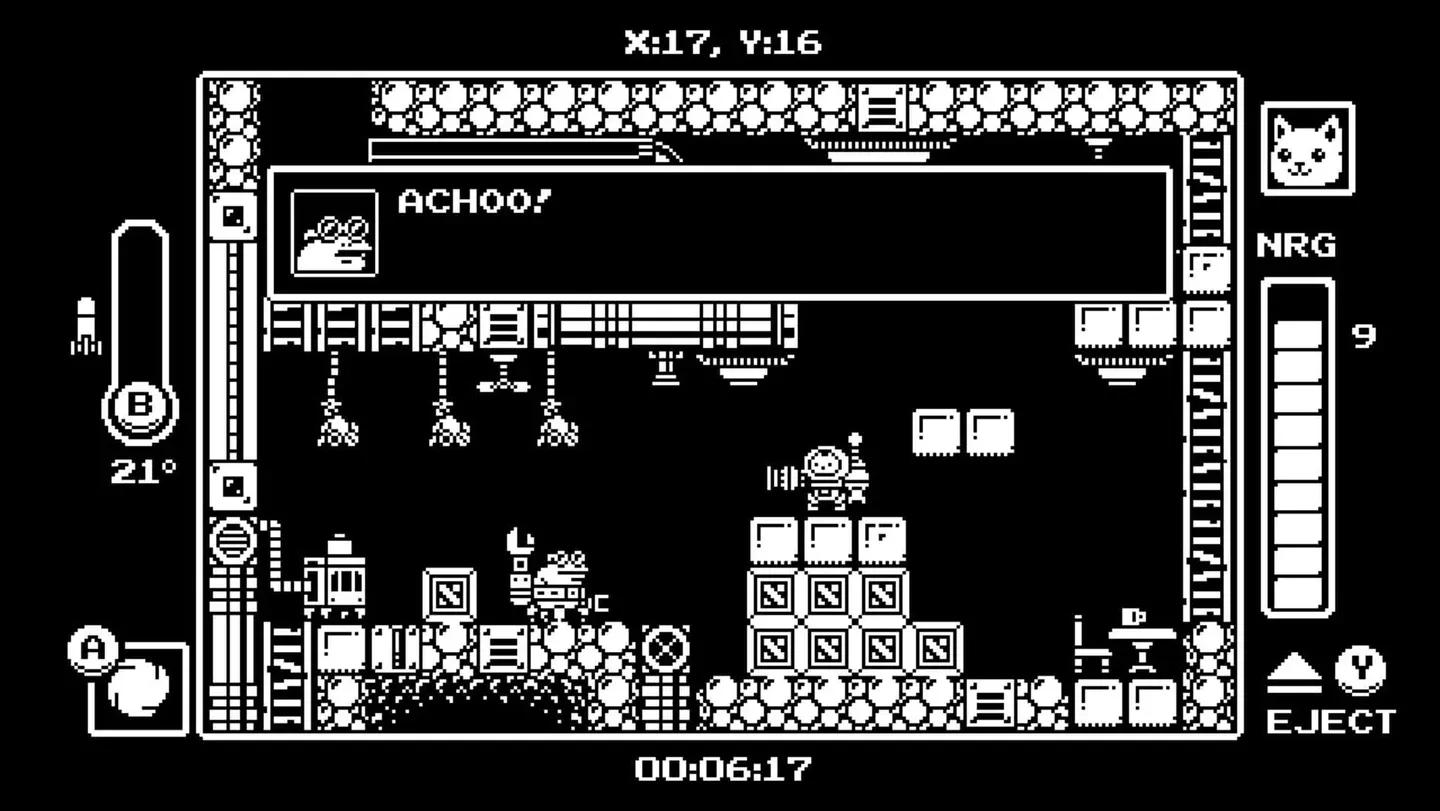
The twist is that Kiki can exit the mech entirely. On foot, she's fragile but small enough to slip through passages the mech can't reach. These sections introduce a stealth-adjacent tension where a single hit means death, pushing players to move carefully and read enemy patterns before committing.
Gato Roboto content image
World and setting
The alien base is structured as a classic interconnected map, with new abilities unlocking access to previously blocked paths. Each zone has a distinct visual theme and enemy type, keeping the short runtime from feeling repetitive. The world is light on explicit story, letting environmental design do most of the narrative work. A crashed spaceship, alien machinery, and the occasional cryptic terminal paint a picture without stopping to explain everything.
The game is intentionally compact. Most players complete a full run in three to four hours, which makes it one of the more honest value propositions in the genre. There's no padding, no filler zones added to inflate the clock.
Impact and legacy
Gato Roboto landed in 2019 as a textbook example of how to execute a focused indie concept. It doesn't try to reinvent the Metroidvania formula or add systems for the sake of depth. What it does is take the genre's best-feeling moments, the satisfying backtrack reveal, the tense boss fight, the quiet exploration of a strange world, and deliver them cleanly in a package that respects the player's time.
Gato Roboto content image
The black-and-white presentation remains one of its most recognizable traits, giving the game a visual identity that screenshots and trailers communicate instantly. For players who want a tight, well-crafted Metroidvania without a 20-hour commitment, Gato Roboto still holds up as one of the genre's sharpest short-form entries.