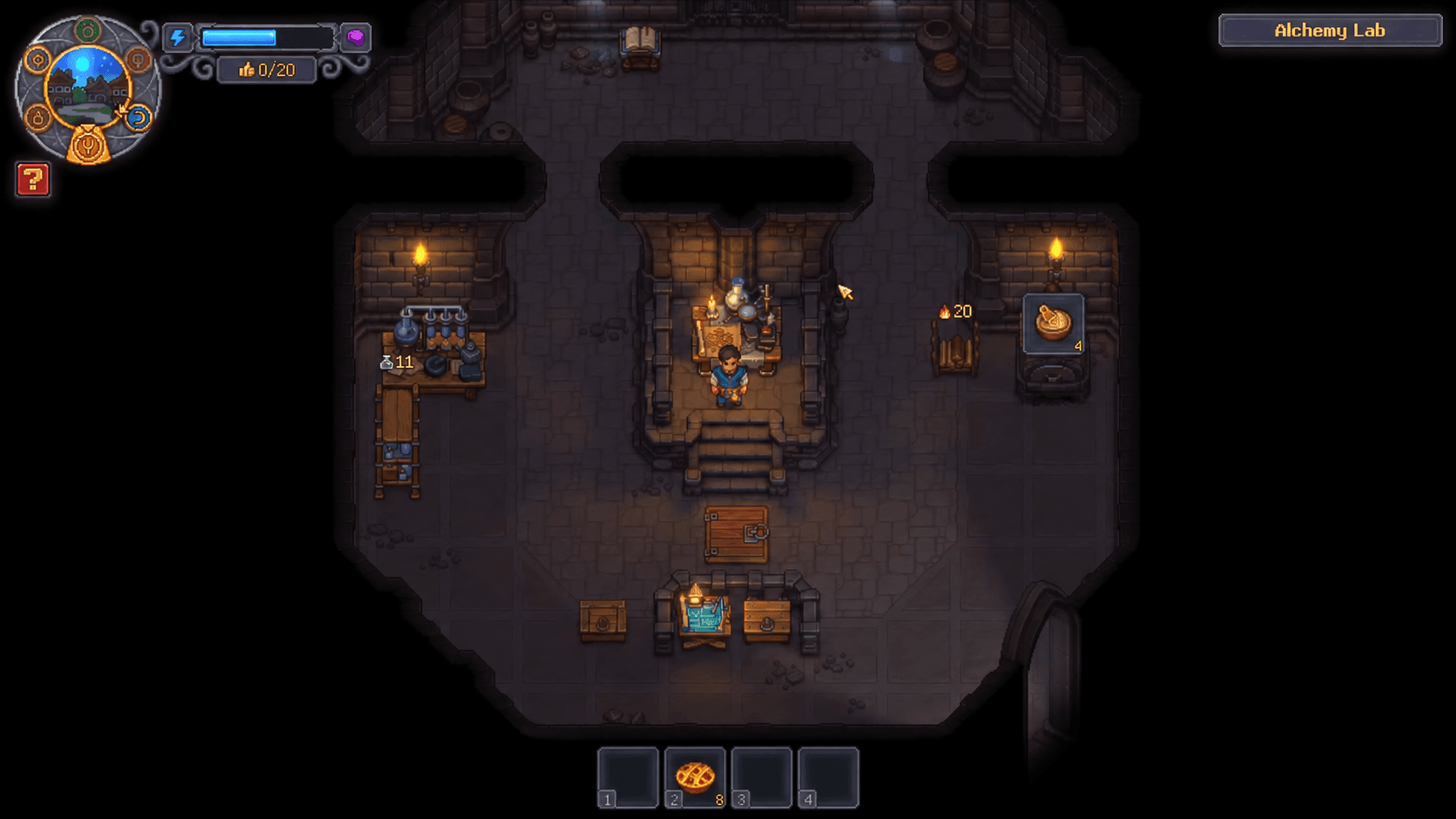


The Study Table sits at the heart of Graveyard Keeper 2's progression system, and most players walk right past its full potential during the early hours. Get this one station working efficiently and the tech tree stops feeling like a grind. Miss it, and you'll spend hours doing menial tasks for trickles of Tech Points that a single well-chosen study session could have handed you in minutes.
How do you unlock the Study Table?
The Study Table becomes available after you complete the Plague Doctor's first quest in the dungeon. That quest unlocks the Inquisition Base's tower, which houses both the Study Table and the Laboratory. The same questline also teaches you to make Dream Dust, the material needed to summon fairies, so it's a dense chunk of early-game progress worth prioritizing.
The Study Table is not something you craft or place yourself. There is exactly one of them in the tower, and you genuinely don't need more than that.
What does the Study Table actually do?
The Study Table has two distinct functions that feed into each other:
- Decompose items to generate Science
- Spend Science to study items and earn Tech Points
Think of Science as the fuel and studying as the engine. You can't study anything without first decomposing something to build up your Science reserves. The two actions are separate button presses at the same station.
Studying an item does three things at once. It awards Tech Points (the amount and type vary by item), it reveals the item's alchemical Compounds (red, green, or blue), and it makes that item eligible for use in the Laboratory for alchemy recipes. You can see which Tech Points a specific item will yield by hovering over it before committing your Science.
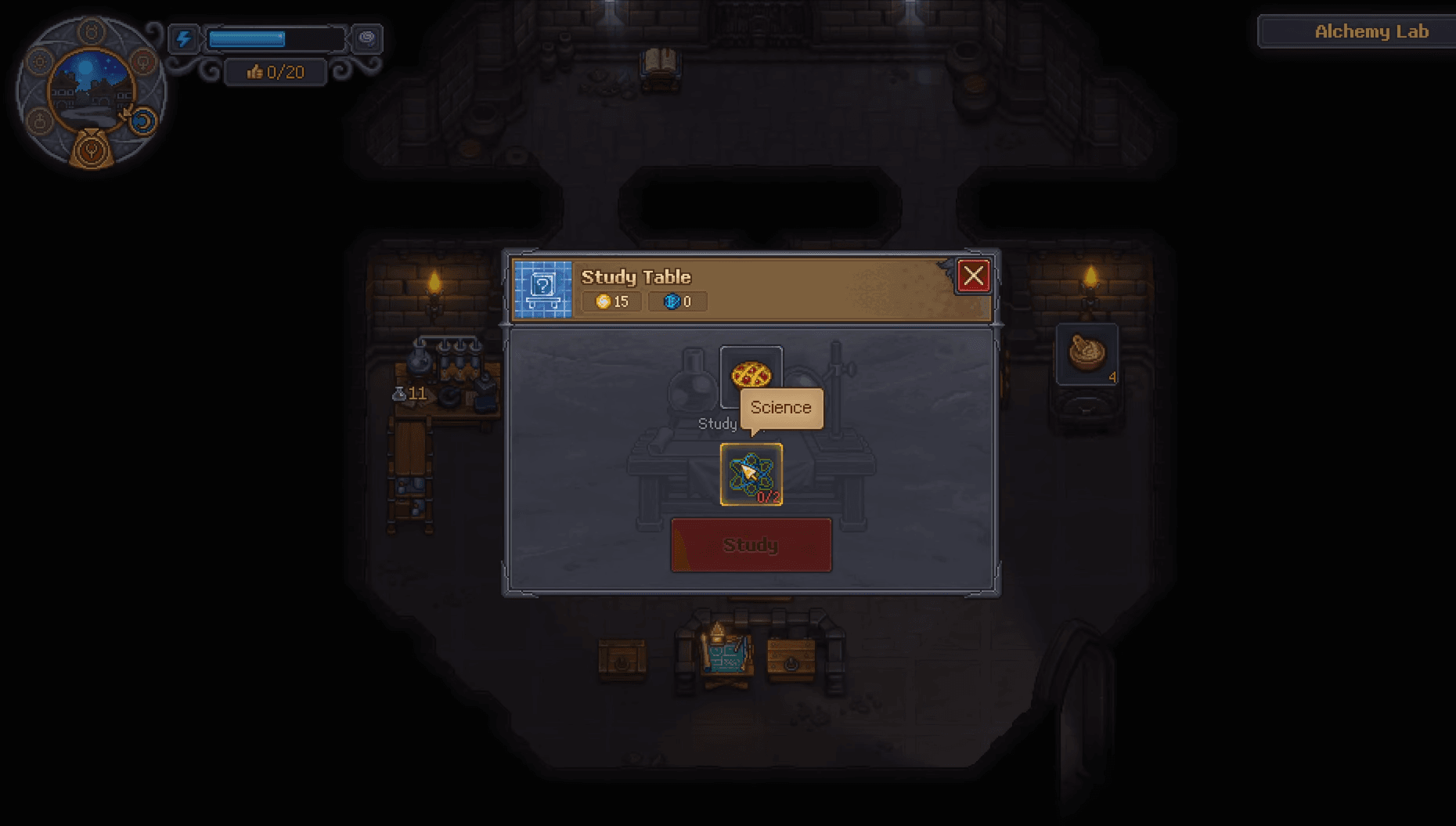
Graveyard Keeper 2 Guide: How to Use Study Table & Farm Science
How to farm Science fast
This is where most guides undersell the system. You can decompose Clean Paper for 1 Science per sheet, but that's an inefficient use of materials. The correct approach is to craft Science Kits and decompose those instead.
Each Science Kit yields 30 Science when decomposed, and a single crafting batch produces 3 of them, giving you 90 Science per craft run. The ingredients for one Science Kit are:
- 1 Alchemy Flask
- 5 Clean Paper
- 1 Ink
All three components require some setup, but the supply chain is manageable once you understand where each material comes from.
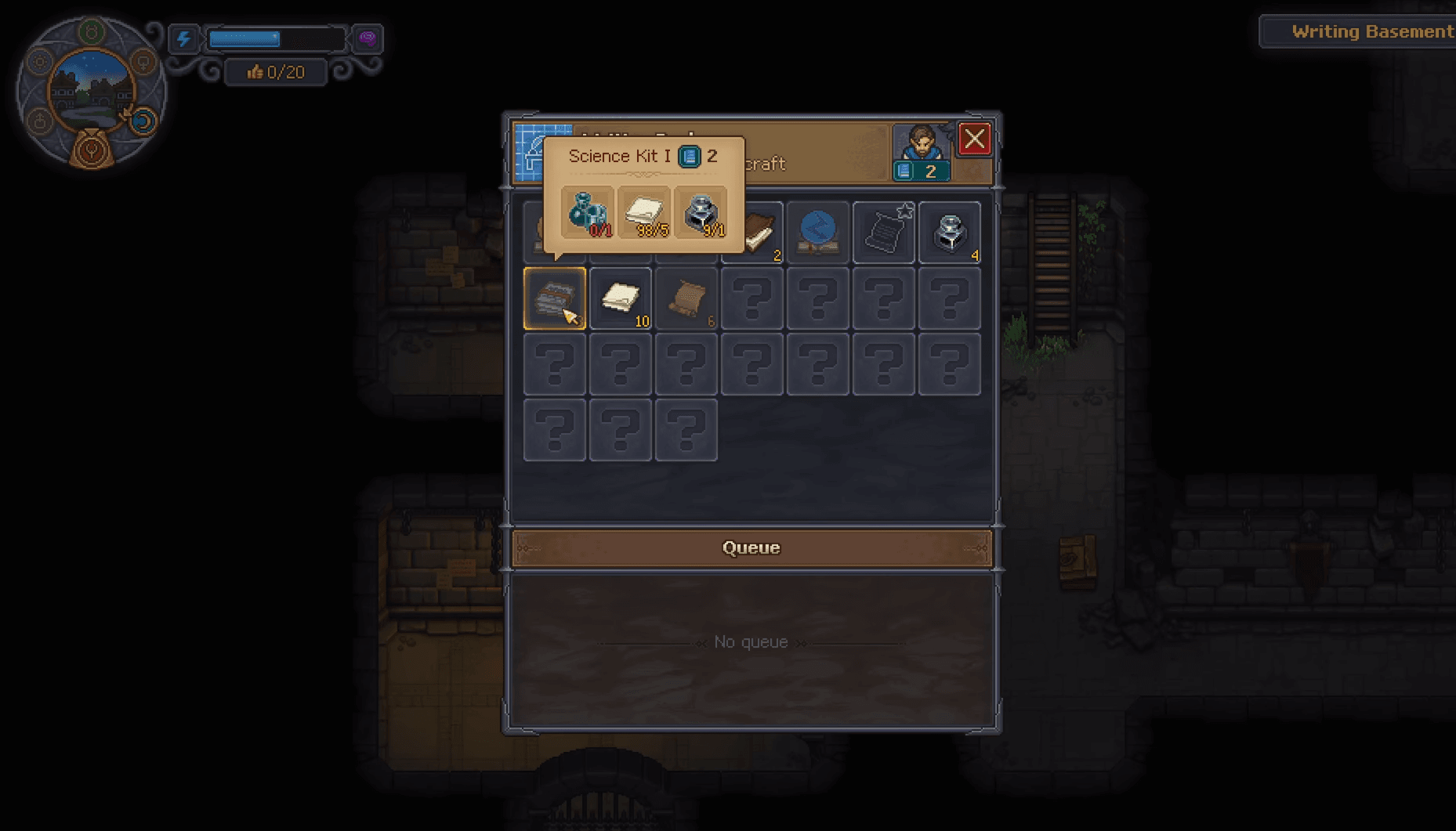
Graveyard Keeper 2 Guide: How to Use Study Table & Farm Science
Breaking down the Science Kit supply chain
Skin and Fat both come from corpses delivered to the morgue, so make a habit of processing every body before burial. Corpses with too many red skulls are better fed into a Cremator to produce Ash, which feeds directly into your Ink supply. Nothing goes to waste once this loop is running.
For more on keeping your crafting stations running without fuel shortages, the Graveyard Keeper 2 fuel guide covers exactly how to keep your Furnace and Kiln stocked.
What should you study for Tech Points?
The type of Tech Points an item rewards is fixed to that item, not randomized. Before spending Science, hover over the item to confirm it will produce the Tech Point color you actually need for your next unlock.
Studying items is dramatically more efficient than earning Tech Points through standard work tasks. A single study session on the right item can yield dozens of points in the time it would take regular crafting to produce a handful. If you're stuck waiting on a specific tech tree node, this is the fastest path through.
Studying also unlocks alchemy potential. Once an item's Compounds are revealed, you can combine it with other studied items in the Laboratory. Compounds come in red, green, and blue varieties, and matching the right types and quantities produces entirely new items through alchemy. This is a separate system from the tech tree but shares the same Science economy.
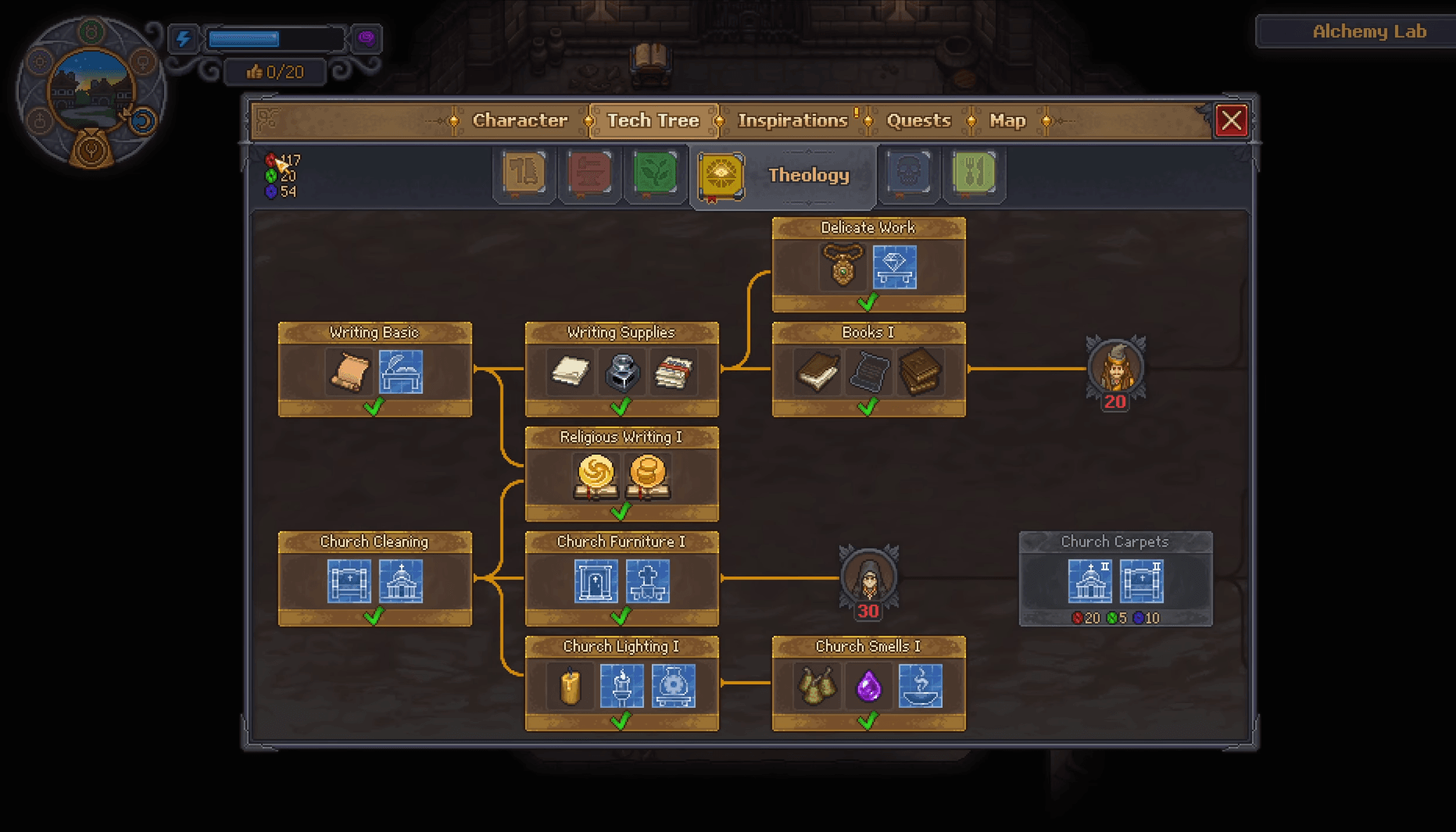
Graveyard Keeper 2 Guide: How to Use Study Table & Farm Science
For players working through the alchemy side of the game, the Dream Dust crafting guide walks through the Blood and Water recipe and the full Alchemy Lab setup in detail.
What comes next after the Study Table?
Once you have the Study Table loop running, the rest of the game opens up fast. Tech Points feed into every crafting and building branch, so a consistent Science supply means you're never waiting on unlocks. Pair the Study Table grind with your corpse processing routine (harvesting Skin, Fat, and Ash from every delivery) and the two systems reinforce each other naturally.
If you want to expand your workforce while the Science loop runs in the background, the guide on how to get zombies and put them to work explains how to build an automated undead labor force that handles repetitive tasks while you focus on research. For a full breakdown of every system in the game, the complete Graveyard Keeper 2 guides collection has you covered.