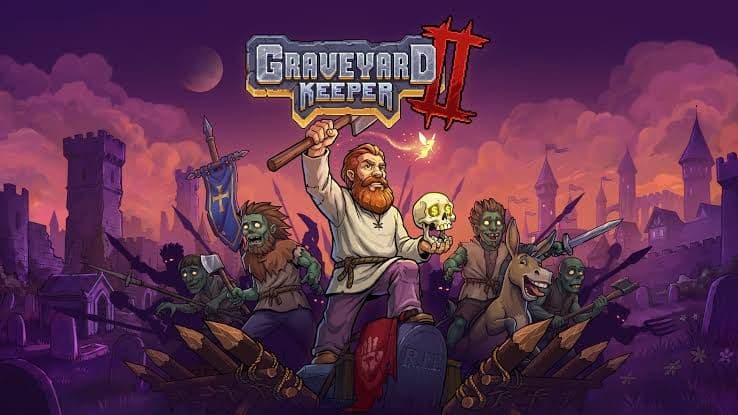


Graveyard Keeper 2 drops you into a collapsing district with a sword, a dead guard, and more systems than any tutorial can reasonably explain at once. The trick is not mastering everything immediately. It is knowing which four systems demand your attention and in what order to feed them. Get that sequence right and the opening hours feel purposeful. Get it wrong and you will spend an hour gathering wood for a workstation you cannot build yet.
What are the four systems you are actually managing?
Every task in the early game connects back to one of four interlocking systems. Ignore any one of them and progress stalls, because they share resources and labour.
The connective tissue between all four is labour. Your zombie workers eventually handle the repetitive parts, freeing your time for quests, exploration, and the next blocker. That is why getting your first zombie online is one of the highest-value moves in the game, not a mid-game luxury.
Graveyard Keeper 2 Ultimate Beginner's Guide
How do you escape the Ruined District without wasting time?
The opening streets have mushrooms, debris, and side paths that look worth searching. Most of them are not worth the delay.
The workshop hands you a sword and armor before the first serious zombie encounter, so there is no reason to hunt for a combat upgrade before it. Stay close to the surviving guards during the fight rather than chasing enemies into the ruined area. Reaching the gate is the only objective that matters here.
After the retreat, the guards need their dead buried. That sends you west.
Claiming the Inquisitor base and setting up your home
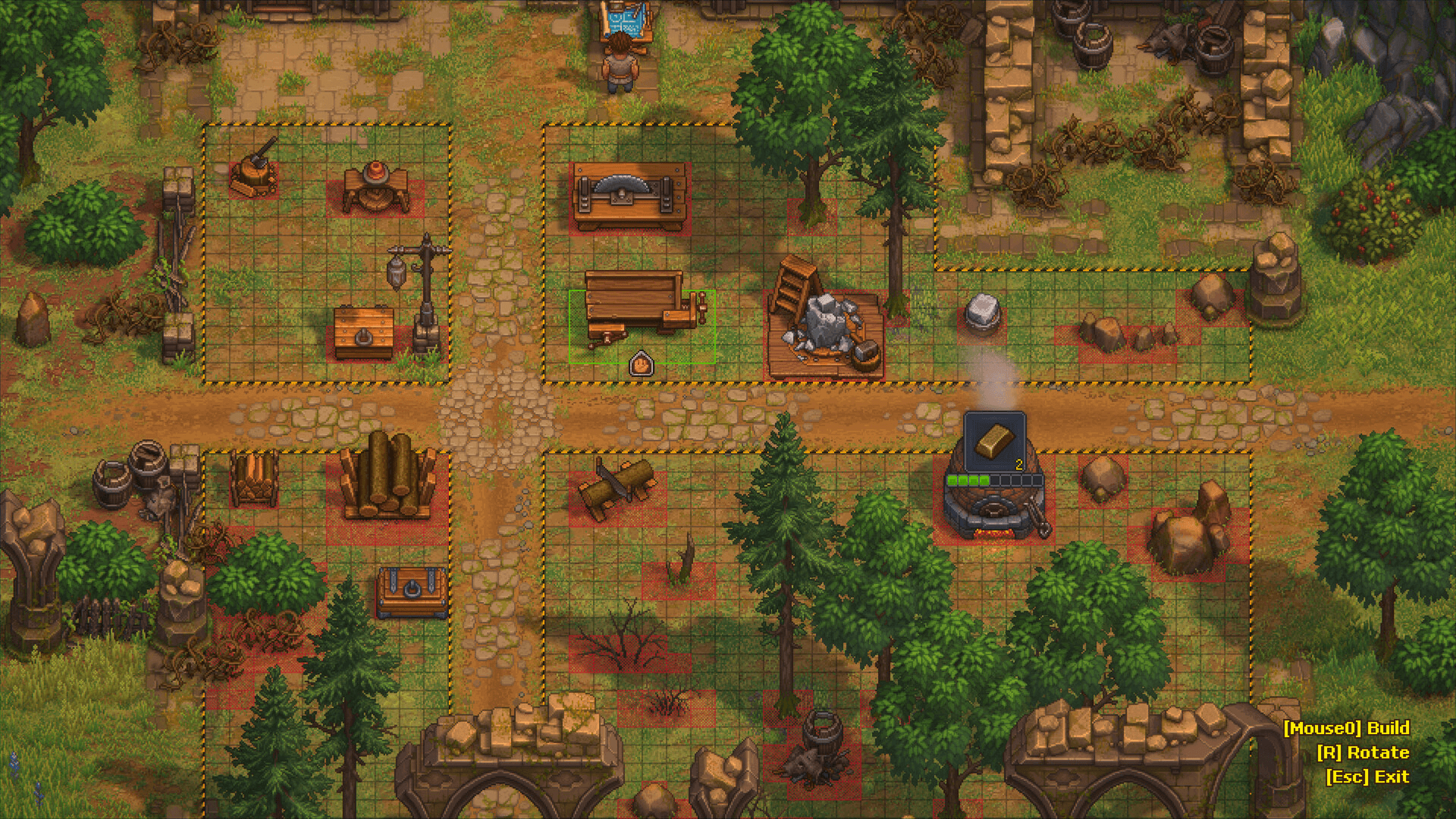
The guard gives you access to an abandoned Inquisitor base west of the gate and arranges a body delivery for the following morning. This location becomes the center of your first several hours: your bed, morg, graveyard, and early production space are all within a short walk of each other.
Do not try to rebuild the whole property on arrival. Clear enough space to move around, make the bed usable, and prepare the morg for the first corpse. Early wood and stone have several competing uses, and cosmetic cleanup can wait until a structure is physically blocking something you need.
Graveyard Keeper 2 Ultimate Beginner's Guide
How does the first autopsy work, and why do skulls matter?
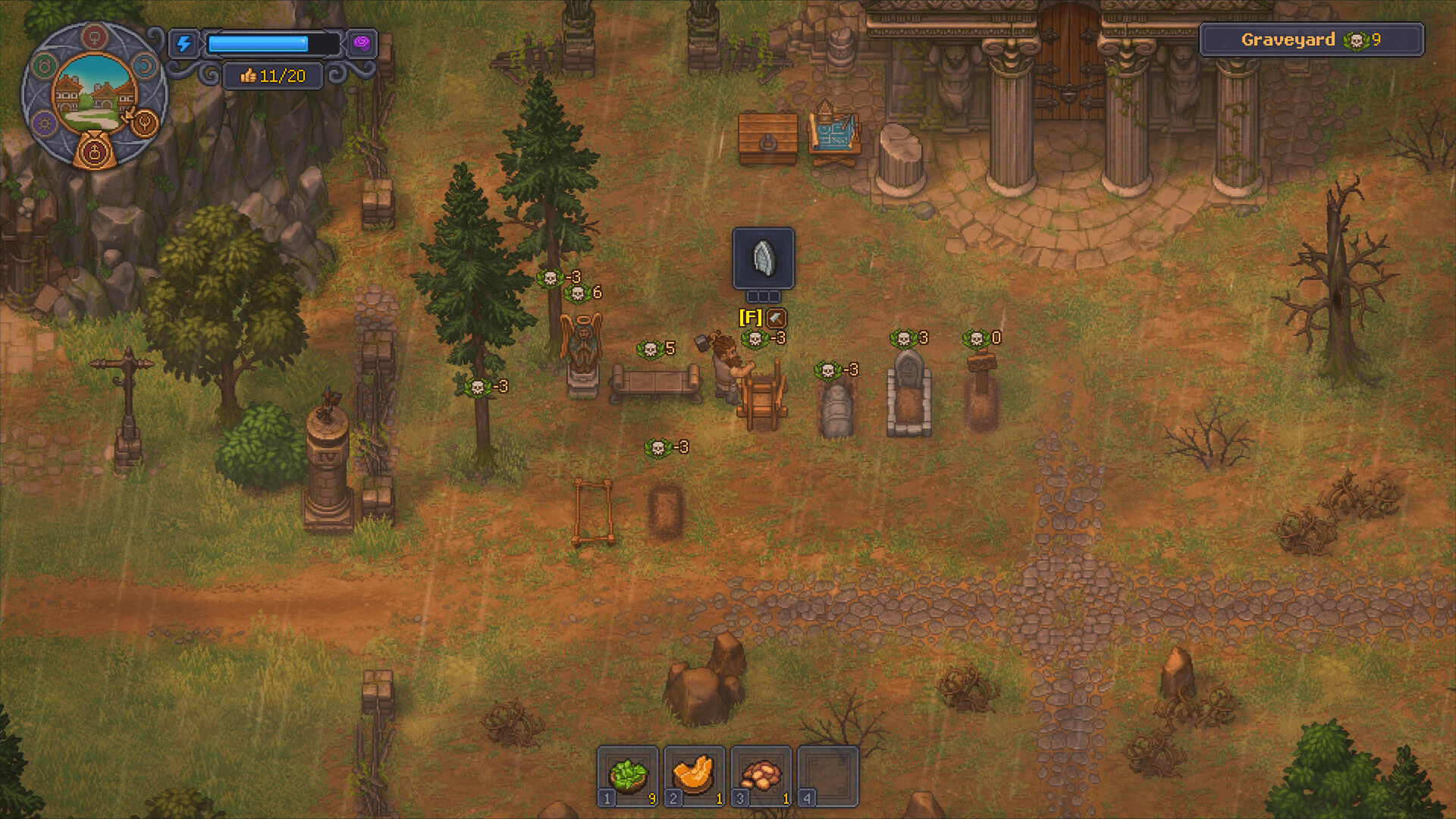
Place the corpse on the autopsy table before moving it outside. The opening tutorial introduces the rule that shapes every burial from here on: White Skulls improve a burial's quality, while Red Skulls reduce it.
There is a wrinkle worth knowing early. In Graveyard Keeper 2, a more prosperous and more sinful Town produces more corrupted corpses with more Red Skulls. That corruption is actually what helps zombie workers develop better skills over time. So Red Skulls are not purely bad news; they just serve a different purpose than White Skulls do.
For the first burial, learn the skull display, complete the simple extraction the tutorial asks for, and move the body to the graveyard. A completed burial is the goal here, not a perfect autopsy score.
Completing the grave and getting your first Burial Certificate
Use the Blueprint Desk to place the grave site, dig it, lower the body, fill the grave, and add the required marker. The marker is not optional. Leave it out and the burial is incomplete.
Once the grave is finished, you receive a Burial Certificate. Take it back to the guard at the crossroads rather than staying at the base to decorate every available plot. From this point, burials have an economic function as well as a quality value. The village can pay for certificates, and better graves push your Graveyard Quality score higher.
Graveyard Keeper 2 Ultimate Beginner's Guide
What is the first Graveyard Quality target?
The first meaningful goal is 10 Graveyard Quality. That number gives early cemetery spending a clear stopping point so you are not pouring resources into a much larger yard before the current objective needs it.
Improve the graves that already exist as better materials become available. Expanding aggressively is less useful when the quality score is what the objective actually checks. Poor corpses make that target harder, which is exactly why the White Skull and Red Skull distinction from the first autopsy already matters.
Once the graveyard hits 10, let the village determine the next priority rather than continuing to build.
How do Energy and Insanity actually work?
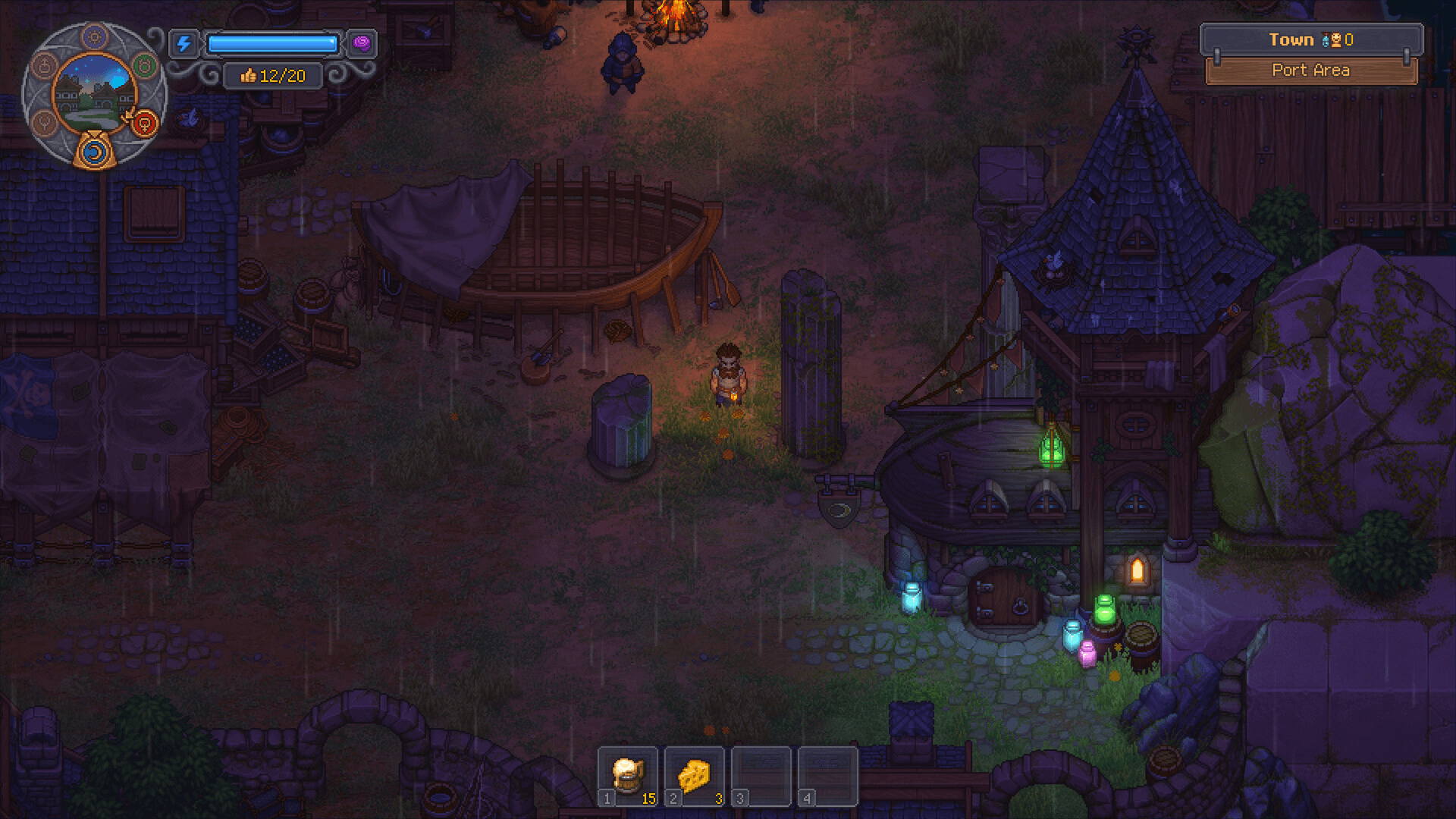
Energy returns from the first game, but there is an additional layer now. Insanity can reduce your maximum Energy, which means a partially compressed Energy bar is not always fixed by eating more food.
Food still lets you keep working without ending the day early, while sleeping restores you at the cost of advancing time. If several daytime objectives are still active and your remaining Energy can be topped up with food, staying awake is often the better call. When Insanity has compressed the usable bar enough that work becomes inefficient, sleep makes more sense.
This also makes basic food production more valuable than it first appears. It is not only a village supply requirement; it directly controls how often work gets interrupted by the need to rest.
What should you actually buy from the Merchant?
The Merchant's prices are dynamic. Increasing his stock of an item reduces what he will pay for additional copies, so bulk selling is not as automatic as it looks. His inventory also refreshes over time, and later progress expands what he sells.
For seeds, buy with a specific purpose rather than trying to establish every crop at once. Wheat is a useful early example because one harvest can return enough seed to keep the cycle going while still leaving produce for active requests. Once a crop is reproducing itself, continuing it costs far less money than repeatedly buying another full batch.
Keep materials already committed to graves, village requests, tools, or a workstation you are about to build. Sell genuine surplus when money is the thing currently blocking your next move.
Graveyard Keeper 2 Ultimate Beginner's Guide
What are the most common beginner mistakes in Graveyard Keeper 2?
- Waiting for a Teleportstone. There is not one in the sequel. Fast travel is handled by Milestones between unlocked locations. Unlock them early and use them.
- Treating every seed as immediately plantable. Some farming actions have Mastery requirements. An early onion option can show a requirement of 10 Mastery while your Keeper is sitting around 4. The problem is not soil or fertilizer; keep the seed and return later.
- Assuming Energy and Insanity are the same problem. They are not. Insanity compresses your maximum Energy bar, and food alone cannot fix that.
- Chasing every system at once. The graveyard, farming, and village shortages are the right early focus. Fishing, for example, only becomes worth pursuing once the Merchant specifically brings up his missing Fishing Rod and creates a clear chain involving the twins.
- Making separate trips for everything. Batch base work before walking back to the village. Finish nearby jobs, check crops, process wood, work on graves, then make one village trip with certificates, requested materials, and anything you plan to sell.
How does the Technology Tree fit into the opening hours?
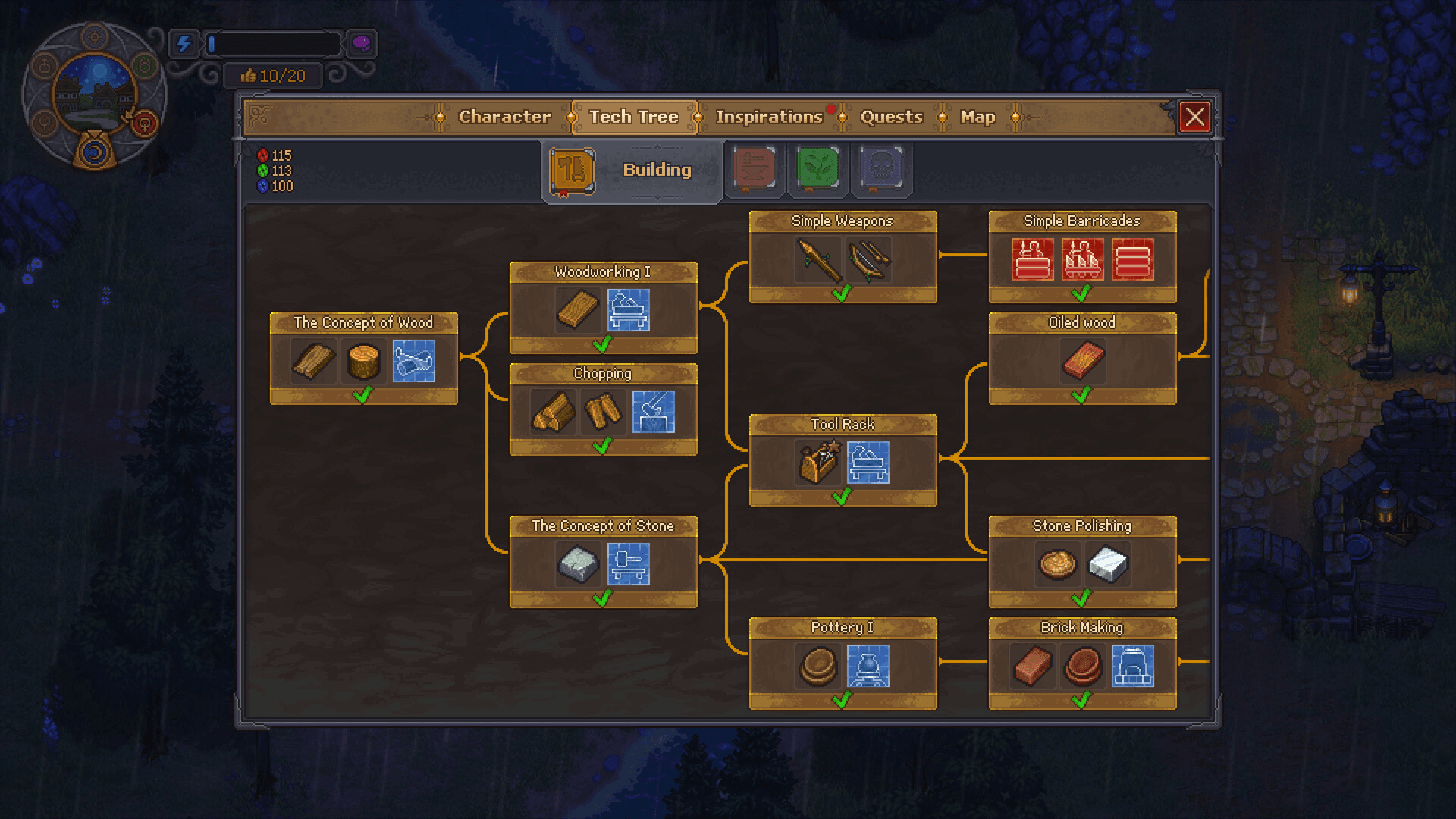
The Technology Tree gates almost everything that matters. Before gathering more materials, check whether a missing craft is blocked by a missing recipe, an unbuilt workstation, or a Mastery threshold. Only after ruling those out should another resource run be the default answer.
Early Tech Tree spending is most valuable when it removes manual work: anything that unlocks or improves zombie labour, anything that opens new graveyard modules, and anything that feeds production automation. Cosmetic grave designs exist in large numbers and are confirmed Tech Tree unlocks, but they are a mid-game investment rather than an opening priority.
A new talent system sits alongside the Technology Tree in the sequel, and Lazy Bear Games have said there will be less grinding than in the original game, so early unlocks should feel more generous.
Graveyard Keeper 2 Ultimate Beginner's Guide
Getting your first zombie worker
Zombies in Graveyard Keeper 2 do significantly more than they did in the original. They can run semi-automatic machines in underground factories, and each zombie has its own skill progression. A zombie is not a small upgrade; it changes how you play entirely. Once a station is staffed, your own time opens up for quests, exploration, and combat.
If the game offers a choice between one more decoration and one more worker early on, the worker is the better long-term pick. Repetitive crafting can be handed off once a zombie is assigned, although doing everything automatically too early is not always optimal while you still need Technology Tree progress from manual work.
For everything else in the game, the Graveyard Keeper 2 strategy guides cover zombie automation, fishing, the full walkthrough, and progression systems in detail.
Do I need to play the first Graveyard Keeper?
No. Lazy Bear Games wrote the sequel to be understandable for players starting with this entry, while still rewarding returning fans. Eight years have passed in the story since the original game, so the setting and context are reintroduced rather than assumed.
Graveyard Keeper 2 is single-player only, with Steam Achievements, Steam Cloud, and Family Sharing. The world is built in full 3D with a dynamic day and night cycle; the sun genuinely moves with proper dynamic shadows, so lighting changes actively as the day progresses. Fast travel through Milestones replaces the Teleportstone from the first game entirely.
If you enjoy adventure games with deep management loops, Graveyard Keeper 2 is one of the more demanding entries in the genre right now. The opening hours reward patience and a clear sense of priority over raw speed. Keep the graveyard functional, keep food and wood moving, and spend resources on the next blocker rather than trying to finish every system at once.