

Last Epoch Season 4, Shattered Omens, is the biggest systems update the game has seen since launch. Eleventh Hour Games has woven together a new combat loop, a high-risk crafting layer, a reworked idol system, and two brand-new Rogue skills into a single interconnected progression path. Whether you're a returning veteran or a fresh Traveler stepping into Eterra for the first time, Season 4 changes enough of the game's core loop that you'll want to understand every piece before diving in.
Omen Window encounter UI
What Are Omen Windows and How Do They Work?
Omen Windows are the centerpiece of Shattered Omens. These horde-based encounters appear randomly throughout both the Campaign (starting as early as Chapter 2) and the Monolith of Fate. Stepping into the glowing ring triggers the encounter automatically, so stay alert.
Each window plays out across two distinct phases:
- Phase 1: The Omen is invincible. You must defeat waves of Fractured enemies while staying inside the ring. A progress bar at the bottom of the screen fills as enemies fall.
- Phase 2: Once the bar fills, the Omen consumes any remaining Fractured enemies to empower itself, then becomes vulnerable. Defeat it to claim your rewards.
Successfully completing an Omen Window drops a mix of the following:
- Timeglass Fragments (new season currency)
- Runes of Corruption
- Corrupted items
- Omen Idols
- Idol Altars
Omen Windows come in multiple difficulty tiers that scale as you progress through Eterra. Higher tiers drop more Timeglass Fragments and increase the odds of rare Idol Altar drops. Greater Omen Windows appear at the end of Omen Window Echo Chains and pit you against two Omens simultaneously, using the full Echo as the battlefield rather than a confined ring. These encounters represent a significant step up in both difficulty and reward potential.
What Are the Five Echo Chain Types?
Echo Chains are sequences of linked Echoes in the Monolith web, each sharing a common mechanical theme. Season 4 launches with five types:
After completing any Echo in a chain (except the final one), a portal appears next to the Monolith rock that takes you directly to the next Echo, removing the need to navigate the web between runs. Timeglass Fragments spent with Apophis at the center of the Monolith of Fate can also be used to spawn specific Echo Chains of your choosing.
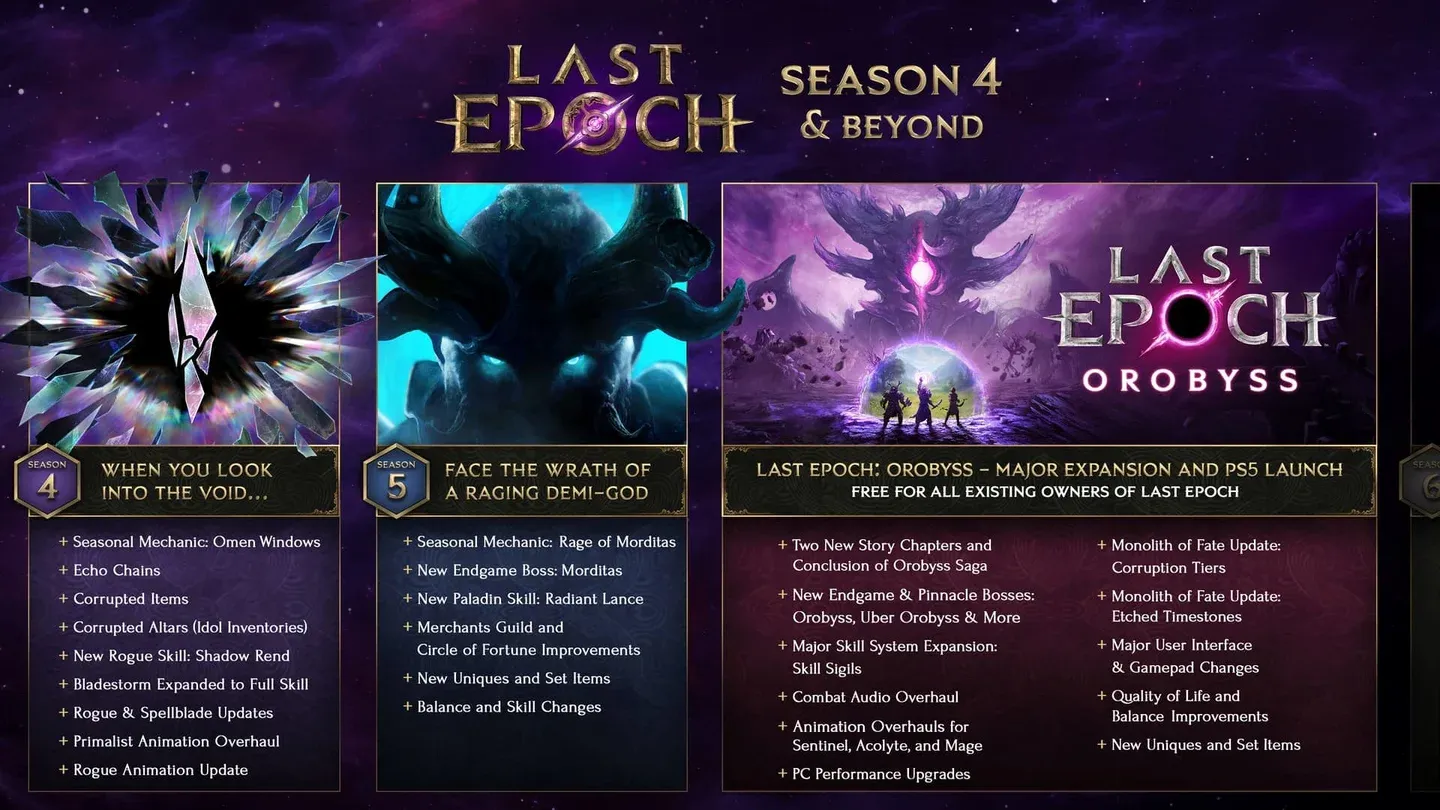
Echo Chain Monolith web view
How Does the Fractured Prison and New Pinnacle Boss Work?
The seasonal progression ladder leads to a new pinnacle encounter through two Woven Echoes.
Omen's Veil (minimum 100 Corruption, purchasable from Apophis with Timeglass Fragments) contains three simultaneous Omen Windows. Activate all three at once and clear them successfully to earn a Fractured Prison Woven Echo as a drop.
Fractured Prison (minimum 400 Corruption) is where the new pinnacle boss lives. Vision of the Observer is a multi-phase fight against an empowered Shade of Orobyss, supported by each of the different Omens one at a time. This boss sits in difficulty between Aberroth and Uber Aberroth, making it the hardest new challenge Season 4 has to offer. Corruption and Echo modifiers have no effect inside the Fractured Prison.
What Is the Rune of Corruption and Should You Use It?
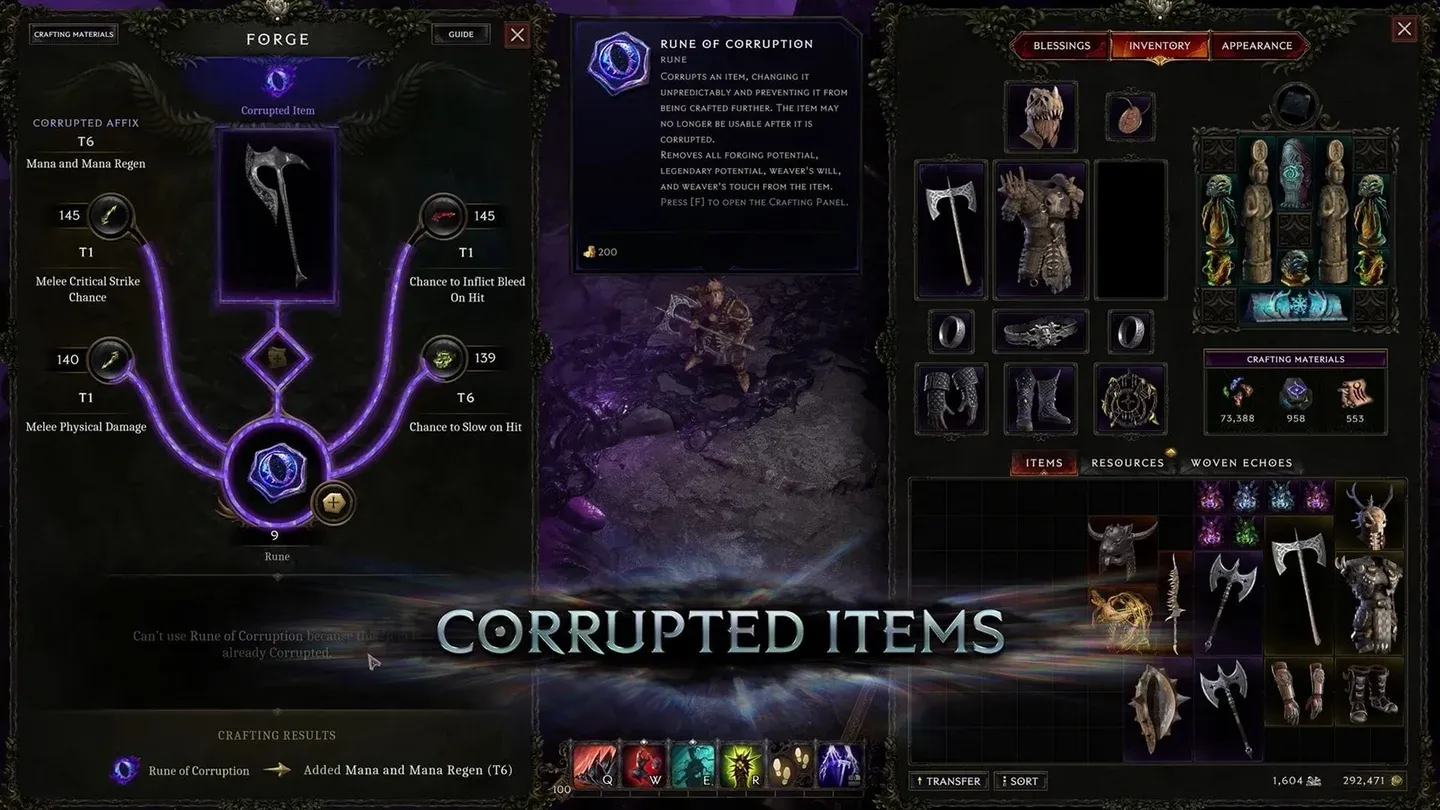
Corruption crafting is the season's biggest risk-reward system. The Rune of Corruption drops from defeated Omens and can be exchanged via Timeglass Fragments. Like other Runes, you apply it in the Forge, but the consequences are permanent and unpredictable.
Here's what can happen when you corrupt an item:
- Affix tiers or values change (up or down)
- Affixes are added or removed entirely
- Item rarity shifts
- The item subtype changes to a corruption-exclusive variant
- The item becomes unequippable
Corrupted amulets carry an extra layer of complexity. They can convert your base attributes into entirely new stat types, each with a powerful upside and a meaningful downside:
Note that the Brutality value was adjusted during the preview period. The original showcase displayed 0.05% more damage per Mana cost, but the developers confirmed the final value is 0.02% because the earlier number proved too strong relative to its downside.
Corruption crafting in the Forge
How Do Idol Altars and Omen Idols Change Your Build?
Idol Altars slot into a brand-new equipment slot positioned above your Idol Grid. Equipping one immediately reshapes the layout of the grid within its fixed 5x5 space. There are 13 possible Idol Grid layouts introduced in Season 4, giving you far more control over which idol shapes you can fit.
When an Idol Altar is equipped, Refracted Slots appear on the grid as glowing purple squares. Any idol that touches a Refracted Slot gains extra bonuses tied to that Altar's affixes, adding a placement puzzle element to idol optimization.
Omen Idols are a companion addition. These pre-corrupted idols come in 1x3 or 3x1 shapes and can roll affixes normally reserved for larger idol types, making them punch well above their size. By default, you can only equip one Omen Idol at a time, though certain Idol Altars can raise that limit. Both Idol Altars and Omen Idols drop exclusively from Omen Window encounters.
What Are the Two New Rogue Skills?
The Rogue mastery receives the most attention in Season 4, with two entirely new skills added to the class.
Bladestorm
Bladestorm was previously a subskill inside Umbral Blades. Eleventh Hour Games promoted it to a standalone skill with its own full Skill Tree because of how popular it was. The base behavior creates spinning blades at a target location that hit nearby enemies 3 times per second for 4 seconds, with a maximum of 3 Bladestorms active simultaneously. Each enemy can only take damage from one Bladestorm at a time.
Key base stats:
- Mana cost: 18
- Added damage effectiveness: 150% per hit
- Ailment application: 40% less chance on hit
The Skill Tree includes nodes for seeking movement (Magnetic Grip at 3 meters per second), collision detonation (Blade Detonation), cold conversion (Frostblade), and weapon-specific bonuses through Open the Armory. The Alloy Animation node is particularly notable: it gives Bladestorms 100% more movement speed and allows multiple Bladestorms to hit the same target simultaneously, at the cost of one maximum Bladestorm and 50% increased Mana cost.
Shadow Rend
Shadow Rend is a dash-based attack that manifests a Shadow at your previous position. That Shadow then performs a sweeping melee or piercing bow attack after a short delay. Unlike most Shadow-generating abilities, Shadow Rend works with both melee weapons and bows, making it unusually flexible.
Key base stats:
- Mana cost: 20
- Unlocks at: Level 3
- Initial attack effectiveness: 100%
- Shadow's attack effectiveness: 500%
- Maximum active Shadows: 3
- Shadow duration: up to 5 seconds
The Shadow will imitate your next direct use of Shadow Cascade, Shurikens, Umbral Blades, Explosive Trap, or Acid Flask. Modifiers to those skills carry over to the Shadow's imitated attack. Notable tree nodes include Shadow Rush (converts Shadow Rend into a traversal skill with a 3-second cooldown and 50% more damage), Hidden Strength (consume Shadows for stacking damage bonuses), and Dusklight (converts base Physical damage to Lightning).
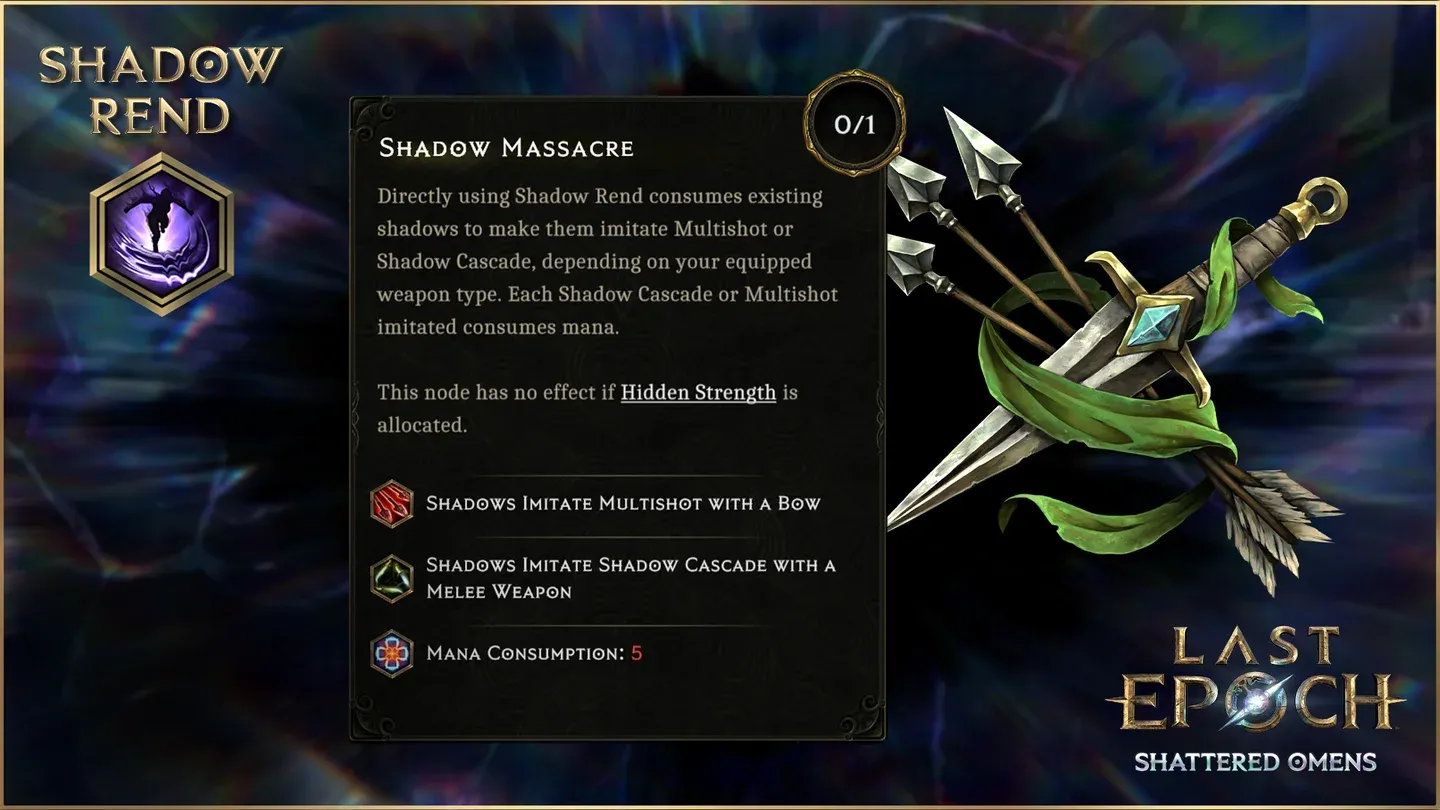
Shadow Rend full skill tree
What Quality-of-Life Changes Matter Most?
Beyond the new systems, Season 4 delivers a substantial set of improvements that affect day-to-day play.
Loot Filters now support up to 200 rules (up from 75). New filter conditions include dedicated entries for Runes, Glyphs, Shards, and a new Potential condition covering Forging Potential, Legendary Potential, Weaver's Will, and Weaver's Touch. Item beams and map icons can now be customized independently, and new audio cues signal the rarity tier of drops as they land.
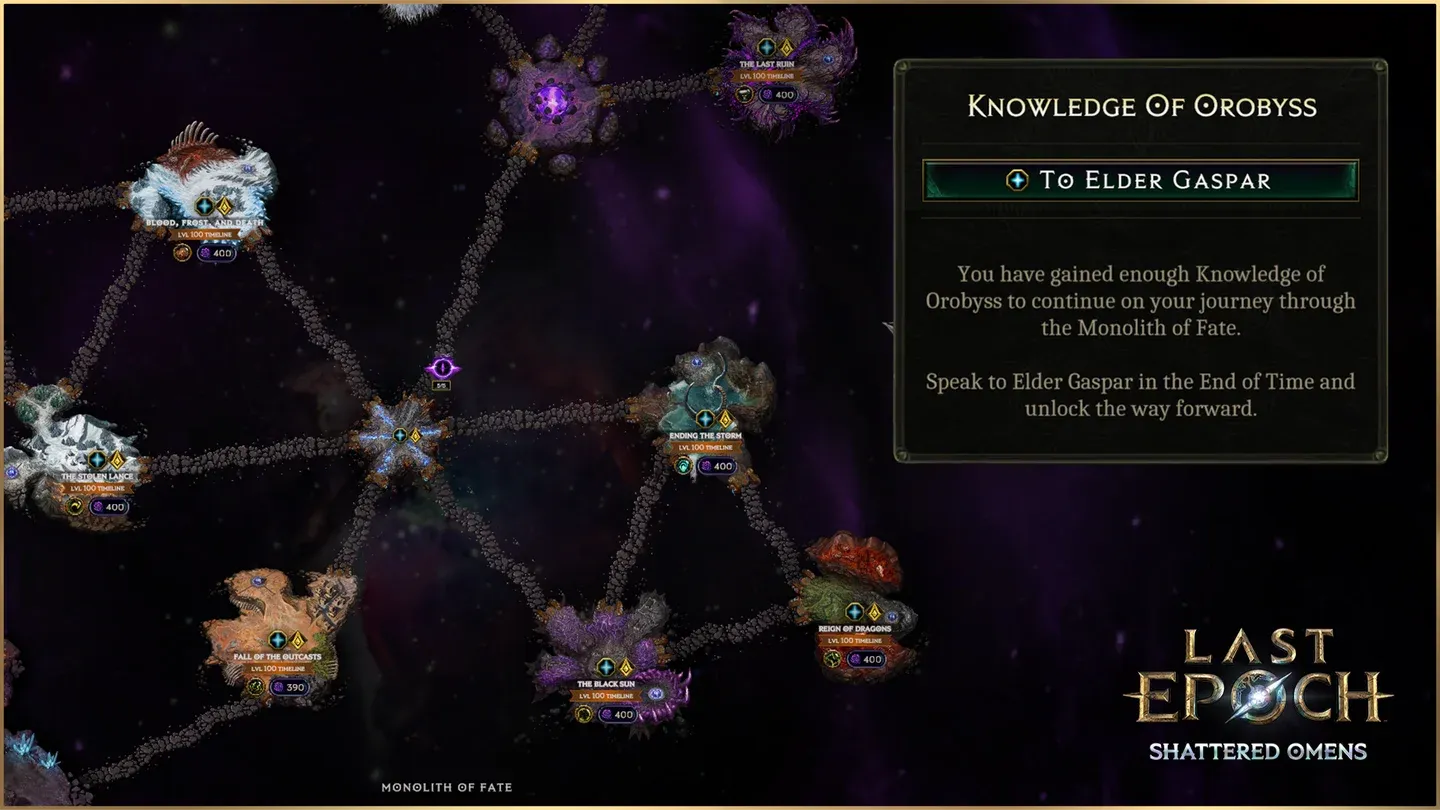
Monolith of Fate receives a reworked progression structure. The new Knowledge of Orobyss quest requires 5 Knowledge Points to unlock level 90+ Timelines. You earn points by completing specific Campaign chapters and Monolith Timelines, and the points are shared across all characters connected to the same stash. The first Harbinger encounter now triggers during the Boss Quest Echo of your first completed level 90+ Timeline rather than the third, accelerating early endgame access.
Enemy flinching animations have been added across every enemy in the game, making combat feel noticeably more responsive. Enemies also have 10% more health from level 32 onwards and deal 5% more damage from level 10 onwards, so builds that previously coasted through mid-tier content will feel the difference.
The Primalist received a complete animation overhaul covering running, walking, evades, attacks, skills, and idle states. The Rogue received significant animation updates including a dynamic upper/lower body split and fully animated bow strings.
For the full technical breakdown of every skill change, passive tree adjustment, and bug fix, the Season 4 patch notes on Maxroll cover every class in detail.
Updated loot filter system
Key Class Changes Worth Knowing
Beyond the two new Rogue skills, several classes received meaningful adjustments.
Rogue existing skills were rebalanced so that weapon attack-style abilities now have a base damage of 2, matching other melee skills. This makes your equipped weapon matter more at all stages of the game. Shadow Cascade, Synchronized Strike, and Lethal Mirage all received this treatment alongside increased damage effectiveness to compensate.
Mage Spellblade saw the most passive tree work of any mastery. The second mastery bonus now grants 40% of added melee damage on weapons as added Spell Damage of the same type, replacing the old ward conversion. Multiple nodes were reworked to create more meaningful choices between offense and defense.
Primalist Shapeshifting was adjusted so that returning to human form no longer resets your Mana to full. Instead, your Mana returns to the amount you had before shifting, plus any Mana regenerated while shapeshifted.
Meteor received a significant damage increase, moving from 180 base damage and 950% effectiveness to 240 base damage and 1,200% effectiveness.
Volcanic Orb now costs 50 Mana (down from 70) and no longer gets destroyed by terrain collisions, both meaningful quality-of-life wins for Mage players.
For players preparing builds ahead of the season, the complete official Shattered Omens patch notes contain every node value, passive change, and bug fix in full.
What Should You Focus on First in Season 4?
Given how interconnected the systems are, here's a practical priority order for new characters entering Shattered Omens:
- Complete the Knowledge of Orobyss quest to unlock level 90+ Timelines. You need 5 points from Campaign chapters and Monolith Timelines.
- Engage with Omen Windows as soon as they appear. Early tiers are manageable and start building your Timeglass Fragment stockpile.
- Hold your Runes of Corruption until you have a near-perfect base item. The irreversibility makes early corruption a waste of a good item.
- Prioritize an Idol Altar once you hit endgame. The grid reshaping can unlock idol combinations that weren't possible before.
- Push toward 400 Corruption before attempting Fractured Prison. Vision of the Observer is positioned above Aberroth in difficulty, so underprepared attempts will be painful.
For build guides, tier lists, and deeper class breakdowns to support your Season 4 run, browse more guides on GAMES.GG to find the right starting point for your playstyle.