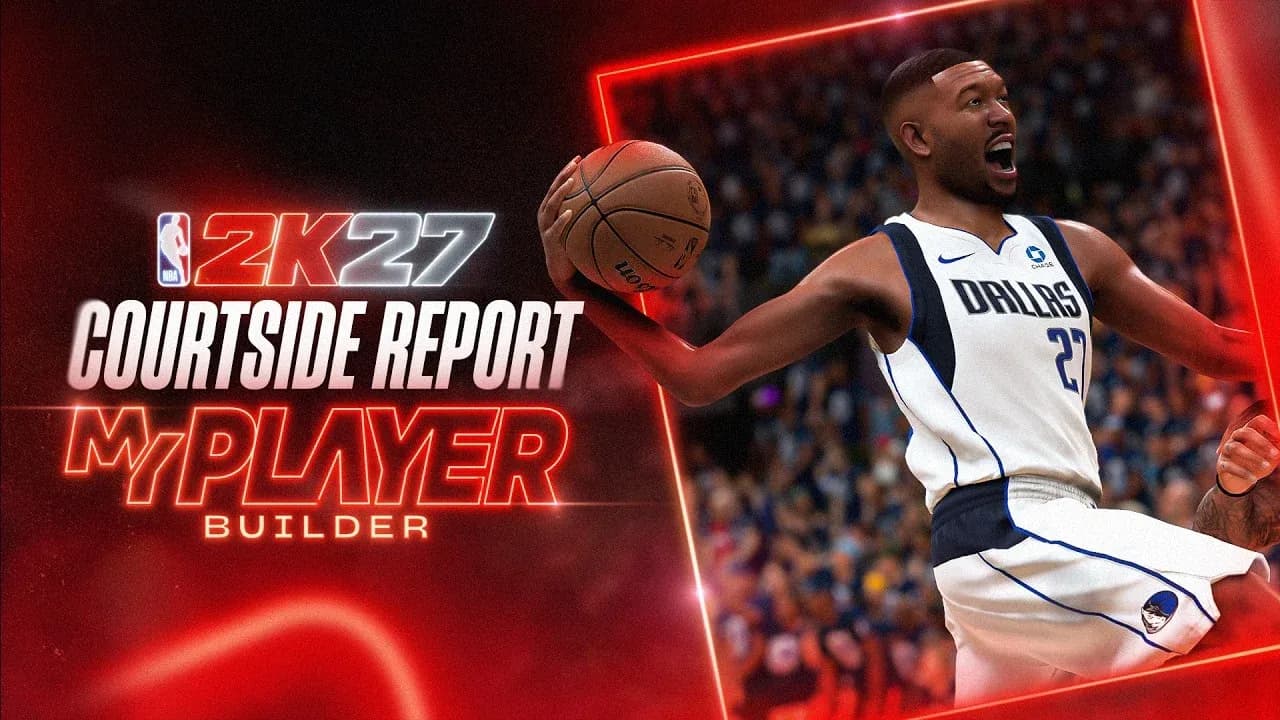

Planning a MyPLAYER build in NBA 2K27 without knowing the badge requirements is like drafting a team without checking the salary cap. Miss a threshold by a single point and you lose a Gold badge entirely. Nail it, and your build punches well above its attribute total. There are 53 badges across six categories this year, 19 of which are brand new, and each one has Bronze, Silver, Gold, and Hall of Fame tiers tied to specific attribute numbers and, in several cases, height restrictions that can lock you out entirely.
How does the badge system work in NBA 2K27?
Badges no longer unlock automatically as you spend VC. You start with 20 badge slots and fill them using Badge Tokens, which you earn by filling six discipline meters tied to your in-game performance. Tokens also come from completing Team Practice drills, Gatorade workouts, Build Specialization paths, and seasonal or Crew rewards.
Eligibility is the first hurdle. A badge only appears in your selection pool if your attributes meet the minimum threshold for at least Bronze. From there, you can spend tokens to upgrade through Silver, Gold, and Hall of Fame. There is also a Legend tier above Hall of Fame, reachable through Synergy boosts and seasonal progression, though the base four tiers are what matter for build planning.
Two logical operators govern the requirements: AND means your player must hit both listed attributes to qualify; OR means either one will do. Reading these correctly before finalising your build will save you a lot of wasted VC.
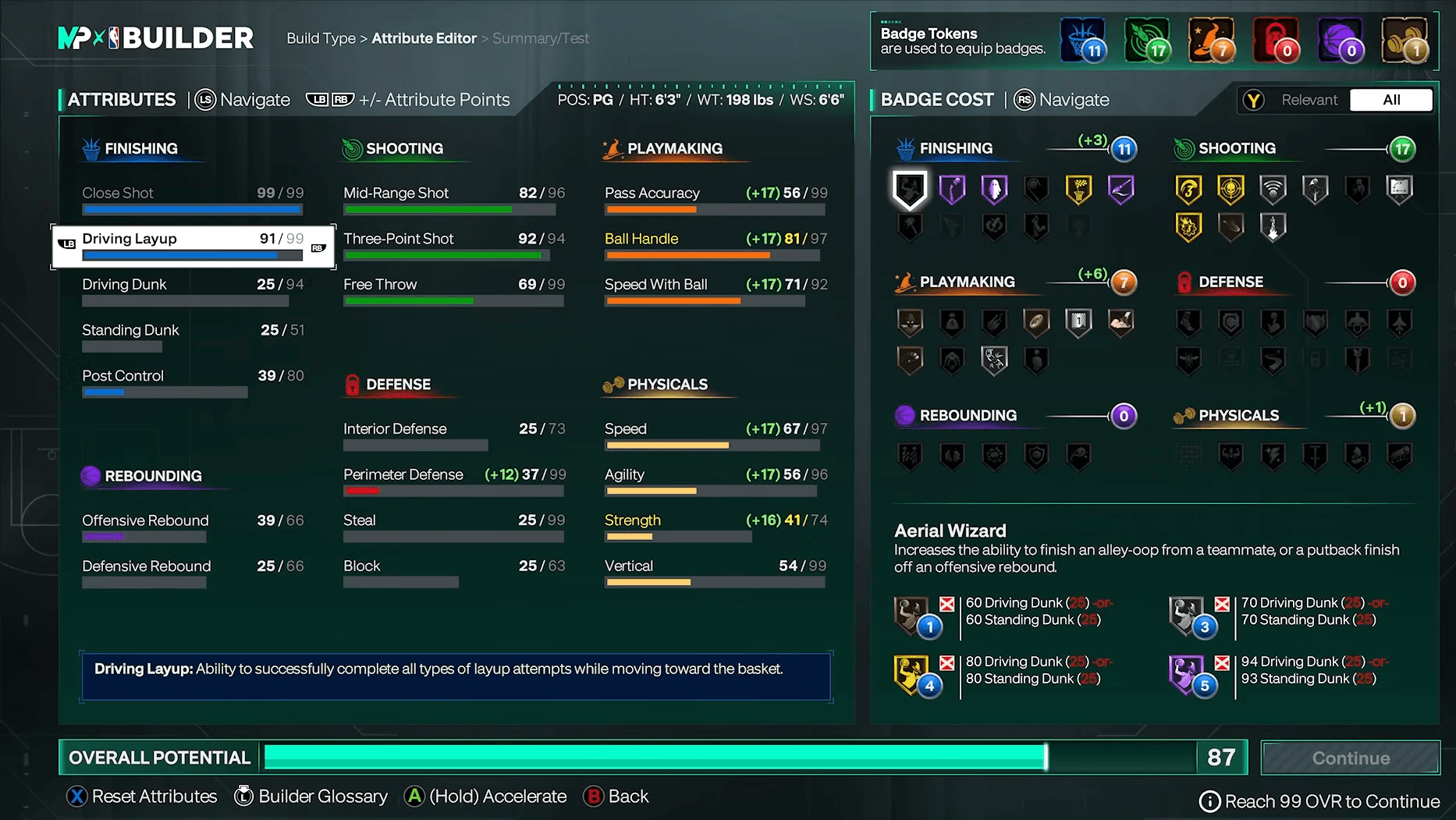

Finishing badge requirements
| Badge | Bronze | Silver | Gold | Hall of Fame | Height |
|---|---|---|---|---|---|
| Aerial Wizard | 60 Driving OR Standing Dunk | 70 | 80 | 94 / 93 | No restriction |
| Float Game | 65 Close OR Driving Layup | 80 / 85 | 90 / 93 | 96 / 95 | No restriction |
| Ghost Stepper | 55 Close OR Post Control | 77 | 86 | 94 | No restriction |
| Hook Specialist | 60 Close AND 55 Post Control | 75 / 65 | 87 / 80 | 94 / 90 | No restriction |
| Layup Mixmaster | 70 Driving Layup | 83 | 90 | 99 | Max 7'0" |
| Paint Prodigy | 60 Close Shot | 85 | 90 | 96 | Min 6'3" |
| Physical Finisher | 60 Layup AND 60 Strength | 80 / 70 | 90 / 80 | 96 / 90 | No restriction |
| Post Powerhouse | 60 Post Control AND 65 Strength | 75 / 79 | 85 / 86 | 95 / 95 | Min 6'5" |
| Post Spin Catalyst | 65 Post Control | 83 | 91 | 99 | Min 6'1" |
| Posterizer | 73 Driving Dunk AND 65 Vertical | 87 / 75 | 93 / 80 | 99 / 90 | No restriction |
| Rise Up | 60 Standing Dunk AND 55 Vertical | 81 / 62 | 90 / 66 | 99 / 70 | Min 6'5" |
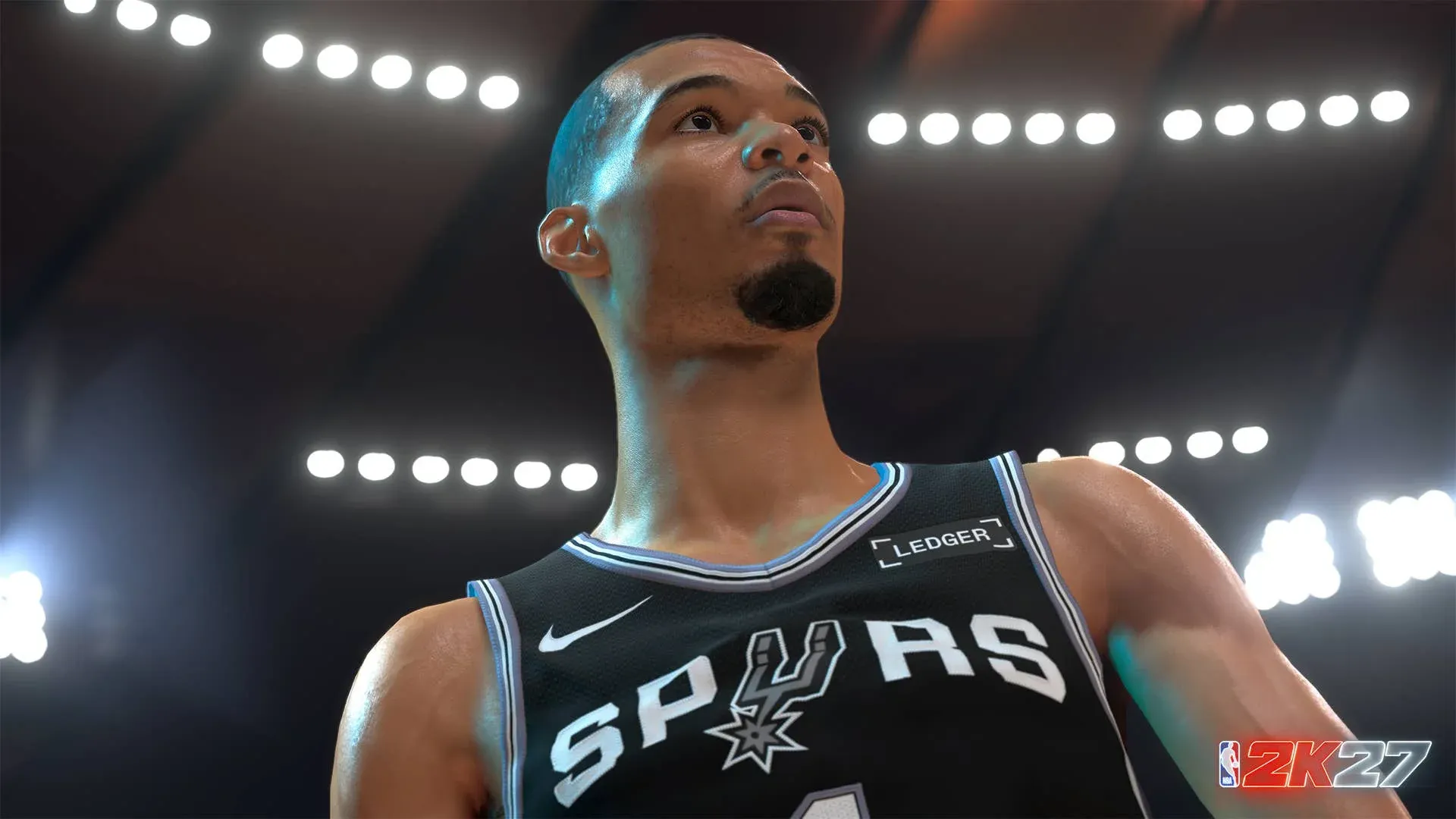
Posterizer is the badge that will define most slasher builds. Gold sits at 93 Driving Dunk and 80 Vertical, which is already demanding. Hall of Fame climbs to 99 Driving Dunk and 90 Vertical, making it a build-defining commitment rather than a casual pickup. Post Spin Catalyst and Ghost Stepper are two of the 19 new additions this year, giving post scorers more tools to work with than previous entries.
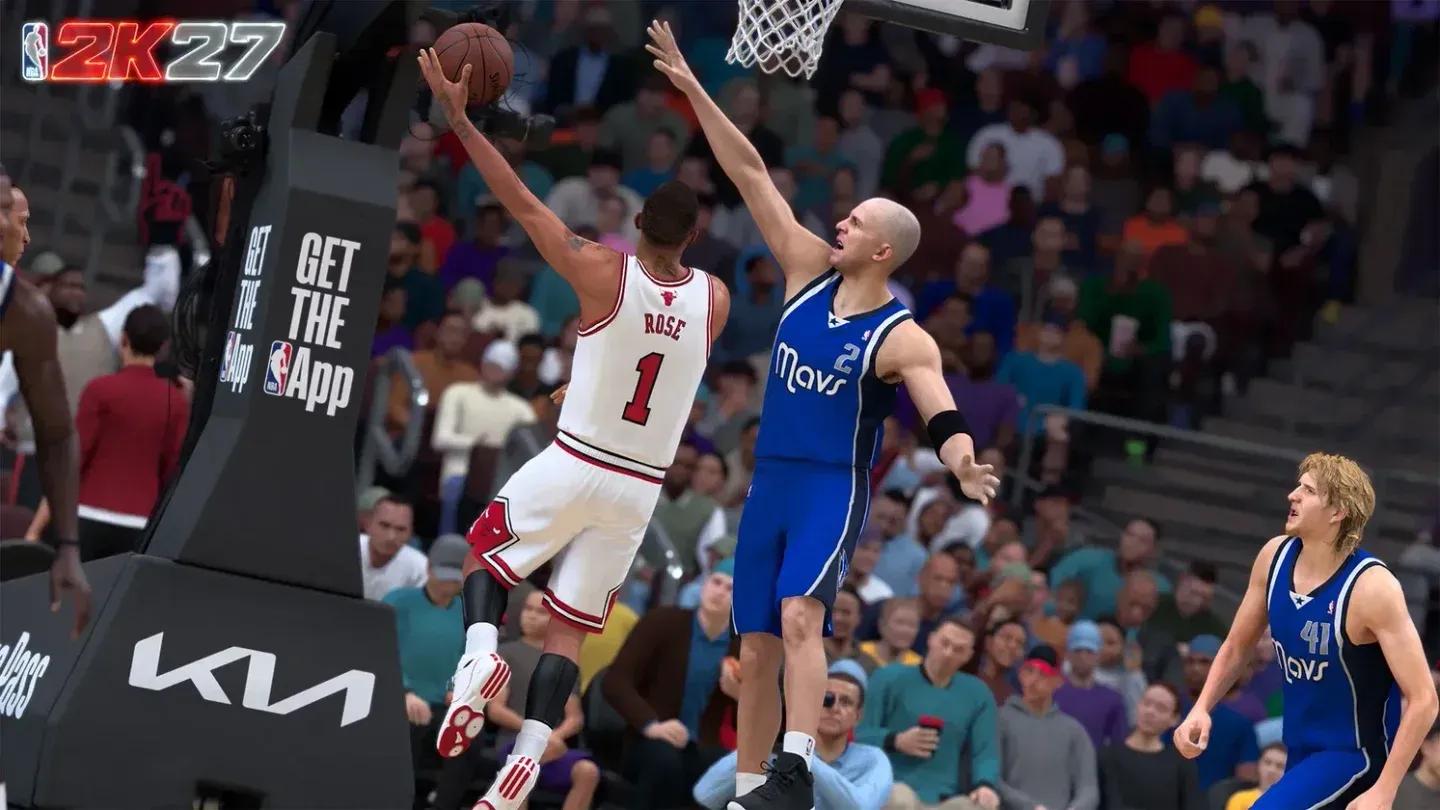
Posterizer Gold threshold: 93 Dunk
Shooting badge requirements
| Badge | Bronze | Silver | Gold | Hall of Fame | Height |
|---|---|---|---|---|---|
| Arc Cadence | 70 3PT | 86 | 91 | 98 | Max 6'11" |
| Deadeye | 65 Mid OR 3PT | 85 | 92 | 99 | No restriction |
| Limitless Range | 83 3PT | 89 | 93 | 99 | No restriction |
| Mini Marksman | 60 Mid OR 3PT | 79 | 94 | 99 | Max 6'4" |
| Post Fade Phenom | 60 Mid AND 55 Post Control | 71 / 74 | 84 / 84 | 91 / 93 | No restriction |
| Quick Trigger | 80 Mid OR 3PT | 88 | 95 | 99 | No restriction |
| Set and Fire | 60 3PT | 78 | 89 | 97 | No restriction |
| Smooth Operator | 70 Mid-Range | 87 | 93 | 99 | Max 6'11" |
| Static Middy | 55 Mid-Range | 75 | 85 | 95 | No restriction |
Four of the nine shooting badges are new this year: Set and Fire, Arc Cadence, Static Middy, and Smooth Operator. Together they split the shooting badge system more granularly than before, rewarding players who specialise in either stationary or on-the-move shooting rather than relying on a single catch-and-shoot badge.
The most important breakpoint for shooting builds is 93 Three-Point Shot, which unlocks Gold Limitless Range. Hall of Fame Limitless Range and Quick Trigger both require a 99 in the relevant attribute, so budget accordingly. Mini Marksman is height-locked at a maximum of 6'4", making it exclusively a guard badge.
For build planning tied to shooting roles, the NBA 2K27 best builds guide for every position has full attribute targets that align with these thresholds.
Playmaking badge requirements
| Badge | Bronze | Silver | Gold | Hall of Fame | Height |
|---|---|---|---|---|---|
| Ankle Assassin | 75 Ball Handle | 86 | 93 | 96 | Max 6'10" |
| Bail Out | 85 Pass Accuracy | 93 | 96 | 99 | No restriction |
| Break Starter | 65 Pass Accuracy | 77 | 89 | 97 | No restriction |
| Dimer | 50 Pass Accuracy | 70 | 86 | 95 | No restriction |
| Handles for Days | 71 Ball Handle | 81 | 90 | 95 | Max 7'0" |
| Lightning Launch | 68 Speed With Ball | 75 | 86 | 91 | Max 6'11" |
| Pace | 70 Speed With Ball | 80 | 88 | 93 | Max 6'10" |
| Strong Handle | 60 Ball Handle AND 75 Strength | 67 / 82 | 73 / 89 | 78 / 95 | Max 6'11" |
| Unpluckable | 65 Post Control OR 65 Ball Handle | 86 / 80 | 96 / 92 | — / 97 | No restriction |
| Versatile Visionary | 65 Pass Accuracy | 80 | 90 | 99 | No restriction |
Ball handlers should target 93 Ball Handle as a key milestone. That number unlocks Gold Ankle Assassin, and 90 Ball Handle gets you Gold Handles for Days. Pace is a new badge that raises sprint speed for ball handlers, and its Gold tier lands at a manageable 88 Speed With Ball.
Strong Handle deserves attention because it pairs Ball Handle with Strength in an unusual combination. Hall of Fame only requires 78 Ball Handle, but demands 95 Strength, which opens up some interesting heavier guard archetypes that would otherwise not invest in Strength at all.
If you're building a point guard specifically, the NBA 2K27 best point guard builds guide covers the exact attribute paths and cap breaker routes to hit these playmaking thresholds efficiently.
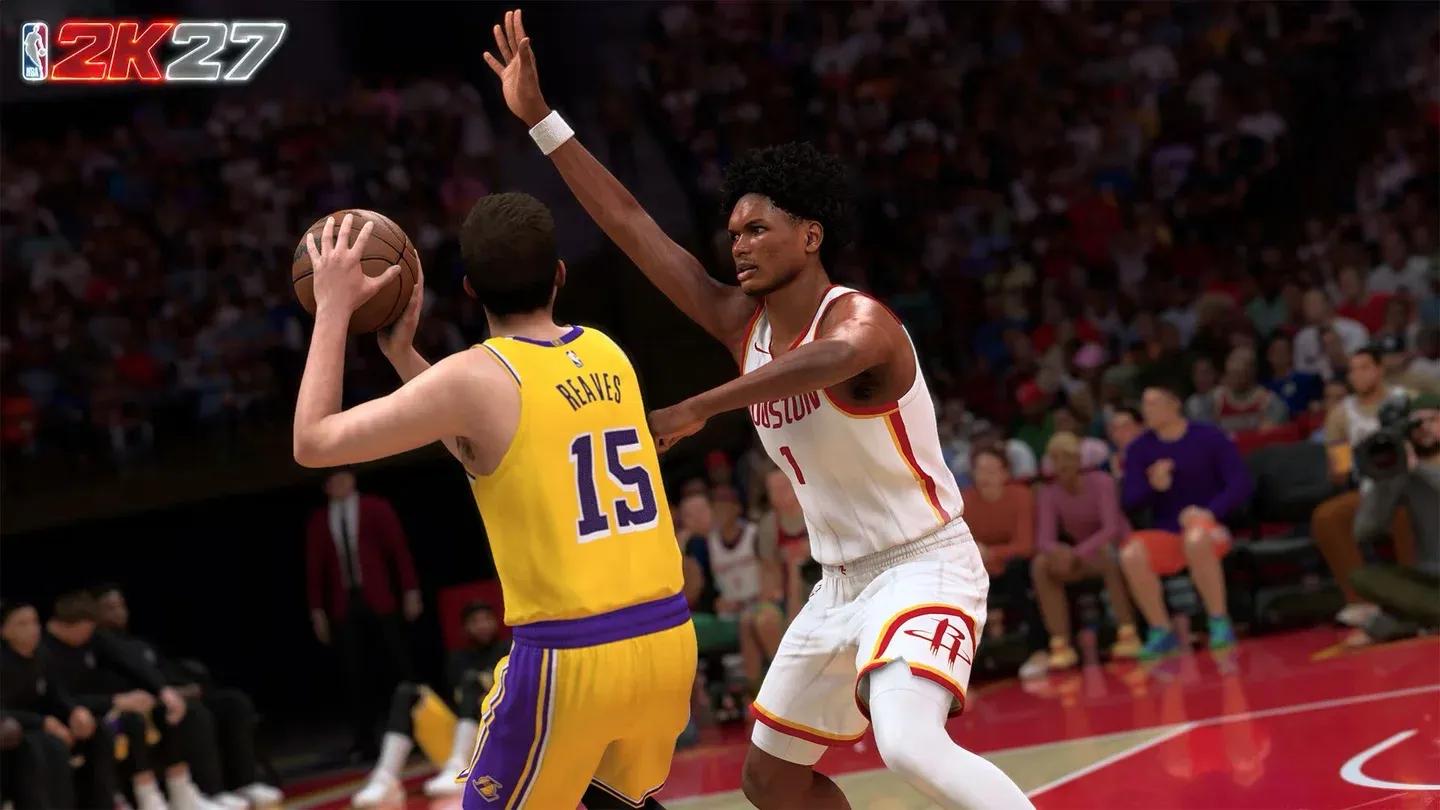
Ankle Assassin: 93 Ball Handle for Gold
Defensive badge requirements
| Badge | Bronze | Silver | Gold | Hall of Fame | Height |
|---|---|---|---|---|---|
| Ankle Braces | 60 Per Def AND 65 Agility | 86 / 82 | 93 / 89 | 95 / 92 | Max 6'9" |
| Challenger | 71 Perimeter Defense | 82 | 92 | 98 | Max 6'11" |
| Glove | 70 Steal | 83 | 93 | 99 | Max 7'0" |
| High-Flying Denier | 68 Block AND 60 Vertical | 78 / 74 | 88 / 80 | 92 / 83 | Min 6'3" |
| Immovable Enforcer | 62 Per Def AND 71 Strength | 72 / 82 | 84 / 85 | 91 / 92 | No restriction |
| Interceptor | 60 Steal | 77 | 90 | 97 | No restriction |
| Off-Ball Pest | 60 Int Def OR 55 Per Def | 76 / 68 | 85 / 80 | 93 / 89 | No restriction |
| Paint Patroller | 60 Int Def AND 70 Block | 71 / 84 | 77 / 93 | 84 / 99 | Min 6'5" |
| Pick Dodger | 73 Per Def AND 71 Agility | 83 / 81 | 90 / 88 | 97 / 91 | Max 6'10" |
| Post Lockdown | 65 Int Def AND 65 Strength | 82 / 74 | 88 / 80 | 93 / 88 | Min 6'5" |
| Seatbelt | 75 Per Def AND 70 Agility | 85 / 77 | 91 / 80 | 99 / 86 | Max 6'9" |
| Wall Up | 80 Int Def AND 75 Strength | 85 / 80 | 95 / 90 | 99 / 92 | Min 6'5" |
Defensive builds face the steepest multi-attribute demands in the game. Ankle Braces, Pick Dodger, and Seatbelt all require Perimeter Defense alongside Agility, meaning you cannot simply stack one stat. Hall of Fame Seatbelt needs 99 Perimeter Defense and 86 Agility, while Hall of Fame Wall Up demands 99 Interior Defense and 92 Strength.
For perimeter defenders, Gold Challenger lands at a reasonable 92 Perimeter Defense. Gold Glove requires 93 Steal, and Gold Interceptor sits at 90 Steal, making both achievable on a dedicated two-way build without sacrificing offensive attributes entirely.
Ankle Braces and Seatbelt are both new additions this year, and both cap out at a maximum height of 6'9". Taller lockdown builds will need to look elsewhere for their perimeter disruption.
Rebounding badge requirements
| Badge | Bronze | Silver | Gold | Hall of Fame | Height |
|---|---|---|---|---|---|
| Boxout Boss | 65 Def Reb AND 60 Strength | 75 / 76 | 90 / 88 | 98 / 94 | Min 6'3" |
| Breaker | 65 Off Reb AND 70 Strength | 82 / 79 | 92 / 90 | 98 / 96 | Min 6'3" |
| Crasher | 60 Off Reb AND 60 Vertical | 80 / 65 | 93 / 67 | 99 / 70 | No restriction |
| Possession Closer | 67 Def Reb AND 60 Vertical | 87 / 65 | 95 / 67 | 99 / 70 | No restriction |
| Sync Snatcher | 55 Off OR Def Reb | 70 | 82 | 90 | No restriction |
Rebounding badges split into two camps depending on your preferred secondary attribute. Boxout Boss and Breaker both pair rebounding ratings with Strength, while Crasher and Possession Closer pair them with Vertical instead. The Vertical route is more accessible for athletic bigs who are not investing heavily in Strength, but Gold Crasher still requires 93 Offensive Rebound alongside a 67 Vertical.
Physical and utility badge requirements
| Badge | Bronze | Silver | Gold | Hall of Fame | Height |
|---|---|---|---|---|---|
| Brick Wall | 75 Strength | 83 | 95 | 99 | Min 6'5" |
| Bruiser | 71 Strength | 84 | 93 | 99 | No restriction |
| Flash | 70 Speed AND 60 Agility | 82 / 78 | 87 / 81 | 95 / 91 | No restriction |
| Pogo Stick | 63 Vertical | 70 | 80 | 90 | No restriction |
| Slippery Off-Ball | 57 Speed AND 57 Agility | 73 / 65 | 85 / 77 | 94 / 90 | Max 6'9" |
| Work Horse | 60 Agility OR 60 Strength | 75 | 85 | 95 | No restriction |
Strength is the most recurring secondary attribute across the entire badge system. Hall of Fame Brick Wall and Bruiser both require 99 Strength, and Brick Wall is restricted to players 6'5" and taller. If you're building a screening-focused big, expect to commit most of your physical attribute budget to Strength alone.
What are the most important badge thresholds to hit?
After testing builds against these requirements, a handful of numbers stand out as the most efficient targets for common archetypes:
- 93 Driving Dunk + 80 Vertical unlocks Gold Posterizer
- 93 Three-Point Shot unlocks Gold Limitless Range
- 93 Ball Handle unlocks Gold Ankle Assassin
- 90 Ball Handle unlocks Gold Handles for Days
- 88 Speed With Ball unlocks Gold Pace
- 93 Steal unlocks Gold Glove
- 90 Steal unlocks Gold Interceptor
- 92 Perimeter Defense unlocks Gold Challenger
- 93 Block unlocks Gold Paint Patroller (paired with 77 Interior Defense)
- 90 Defensive Rebound + 88 Strength unlocks Gold Boxout Boss
- 95 Strength unlocks Gold Brick Wall
None of these thresholds exist in isolation. The actual cost of reaching each number depends on your chosen height, position, and archetype, so the same 93 Ball Handle will cost very different amounts of VC depending on whether you're building a 6'1" point guard or a 6'8" wing.
For players building centers and big men around these defensive and rebounding thresholds, the NBA 2K27 best center builds guide breaks down exactly which attribute combinations make the most sense for paint-dominant builds.
Height restrictions: the full list
Height gates are the most overlooked part of MyPLAYER planning. These are the badges with hard height requirements:
Minimum height restrictions:
- Paint Prodigy: 6'3"
- High-Flying Denier: 6'3"
- Boxout Boss: 6'3"
- Breaker: 6'3"
- Post Spin Catalyst: 6'1"
- Rise Up: 6'5"
- Post Powerhouse: 6'5"
- Paint Patroller: 6'5"
- Post Lockdown: 6'5"
- Wall Up: 6'5"
- Brick Wall: 6'5"
Maximum height restrictions:
- Mini Marksman: 6'4"
- Arc Cadence: 6'11"
- Smooth Operator: 6'11"
- Ankle Assassin: 6'10"
- Pace: 6'10"
- Lightning Launch: 6'11"
- Strong Handle: 6'11"
- Handles for Days: 7'0"
- Ankle Braces: 6'9"
- Seatbelt: 6'9"
- Pick Dodger: 6'10"
- Challenger: 6'11"
- Slippery Off-Ball: 6'9"
- Layup Mixmaster: 7'0"
The pattern is clear: guards and wings get locked out of interior badges, while tall bigs lose access to perimeter and ball-handling badges. A 7'0" center cannot equip Ankle Assassin, Pace, or Ankle Braces regardless of their attribute ratings.
For a broader look at how these badge requirements feed into specific positions and game modes, the full NBA 2K27 strategy guides collection covers everything from MyCAREER to MyTEAM build strategies in detail.