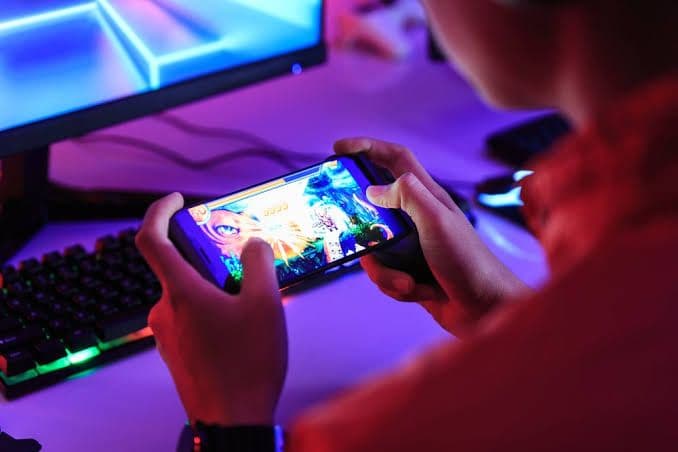

Here's the thing: the gap between mobile and console visuals has never been smaller. Flagship Android phones in 2026 are shipping with chips that rival last-gen console GPUs, and the games are finally starting to catch up. Whether you're running a Samsung Galaxy S25 or a mid-range tablet with a 2K display, there are titles right now that will genuinely make you stop and stare at your screen.
The question is knowing which ones are actually worth downloading.
Console-quality shooters that hold up on a small screen
Destiny: Rising is probably the most visually ambitious shooter on Android right now. The game pulls from the same art direction as its console counterpart, with detailed armor sets, particle-heavy ability effects, and environments that look genuinely impressive on a 6-inch display. The key here is that the game was built for mobile from the ground up rather than ported down, which means the visual budget goes toward what actually looks good on a phone screen rather than trying to replicate a 4K TV experience.
If you want to get the most out of it visually, the Destiny Rising best settings guide walks through exactly how to push frame rate and resolution without cooking your battery in a 20-minute session.
The lighting engine deserves special mention. Indoor areas use dynamic shadows that shift as you move, and outdoor zones have a depth-of-field effect that makes distant geometry feel genuinely far away rather than flat. On a tablet with a high-refresh display, combat feels closer to a polished PC experience than most players expect.
Open-world RPGs with genuine visual ambition
Open-world games on Android have historically been a mixed bag, with large environments masking low-quality textures and pop-in so aggressive it breaks immersion. That's changed. Mongil Star Dive is one of the better examples of a mobile RPG that actually commits to its visual identity.
The game uses a stylized rendering approach that prioritizes color and silhouette over raw polygon counts, which is a smart call for hardware that still has thermal limits. The result is a game that looks consistently good rather than impressive in cutscenes and muddy in gameplay. Character models hold up at close range, and the environment design has enough variety to keep things visually interesting across different zones.
Pro tip: if you're playing on a mid-range device and noticing frame drops during heavy particle effects, the Mongil Star Dive graphics and performance settings guide covers the exact adjustments that maintain visual quality while keeping performance stable.
Upcoming titles that are already turning heads
What most players miss when looking at the current Android library is how much is coming in the next few months. Aniimo is one of the more visually distinct games on the horizon, with an art style that leans into high-contrast animation aesthetics rather than trying to mimic photorealism. The pre-registration details and full device specs are covered in the Aniimo mobile release guide, which is worth checking before it drops to make sure your device can actually run it at the settings that make it look good.
The broader pattern here is that mobile developers are increasingly splitting into two camps: games chasing photorealism on flagship hardware, and games building distinctive visual styles that work across a wider range of devices. Both approaches are producing genuinely impressive results right now.
What separates good-looking from great-looking on Android
Resolution and texture quality get most of the attention, but the games that actually look best on Android in 2026 share a few less obvious traits.
- Consistent art direction: Games with a strong visual identity hold up better than technically impressive games with no coherent style.
- Optimized particle systems: Ability effects and environmental details that scale well across hardware tiers.
- Smart use of screen space: UI elements that don't crowd the visual experience, especially on smaller phone screens.
- Lighting that responds to gameplay: Dynamic shadows and ambient occlusion make environments feel three-dimensional rather than flat.
The hardware ceiling on Android keeps rising, and developers are starting to take that seriously. The games listed here represent what the platform can do right now, and the pipeline for the next 12 months looks even more interesting.