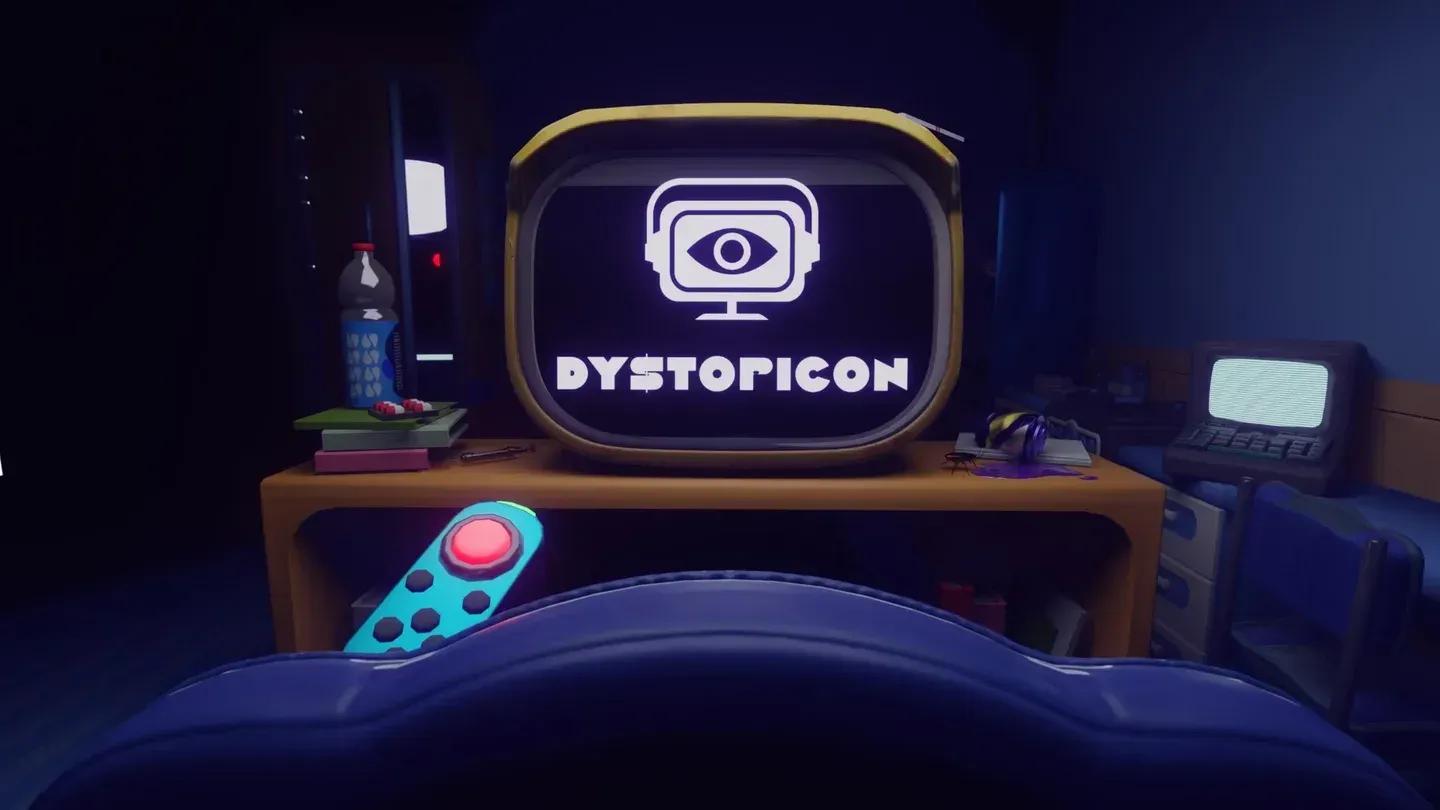

Dystopian games usually put players in the role of someone fighting against an oppressive government, but Dystopicon takes a much stranger approach. Instead of giving players a weapon or sending them into the streets, it puts them inside a small apartment and tells them to watch television. That is the job. The more television gets watched, the more money gets earned, and that money is then used to pay for food, comfort, health, and everything else needed to survive.
Developed by Palitroque, Dystopicon is a time-management and life simulation game set in a society where robots have replaced humans at work. The government, known as the Trinity, provides citizens with housing and basic services while monitoring their behavior. The game then gives players a choice: follow the rules and become a model citizen, or start digging into the things the government would rather keep hidden.
Watching TV Is the Job
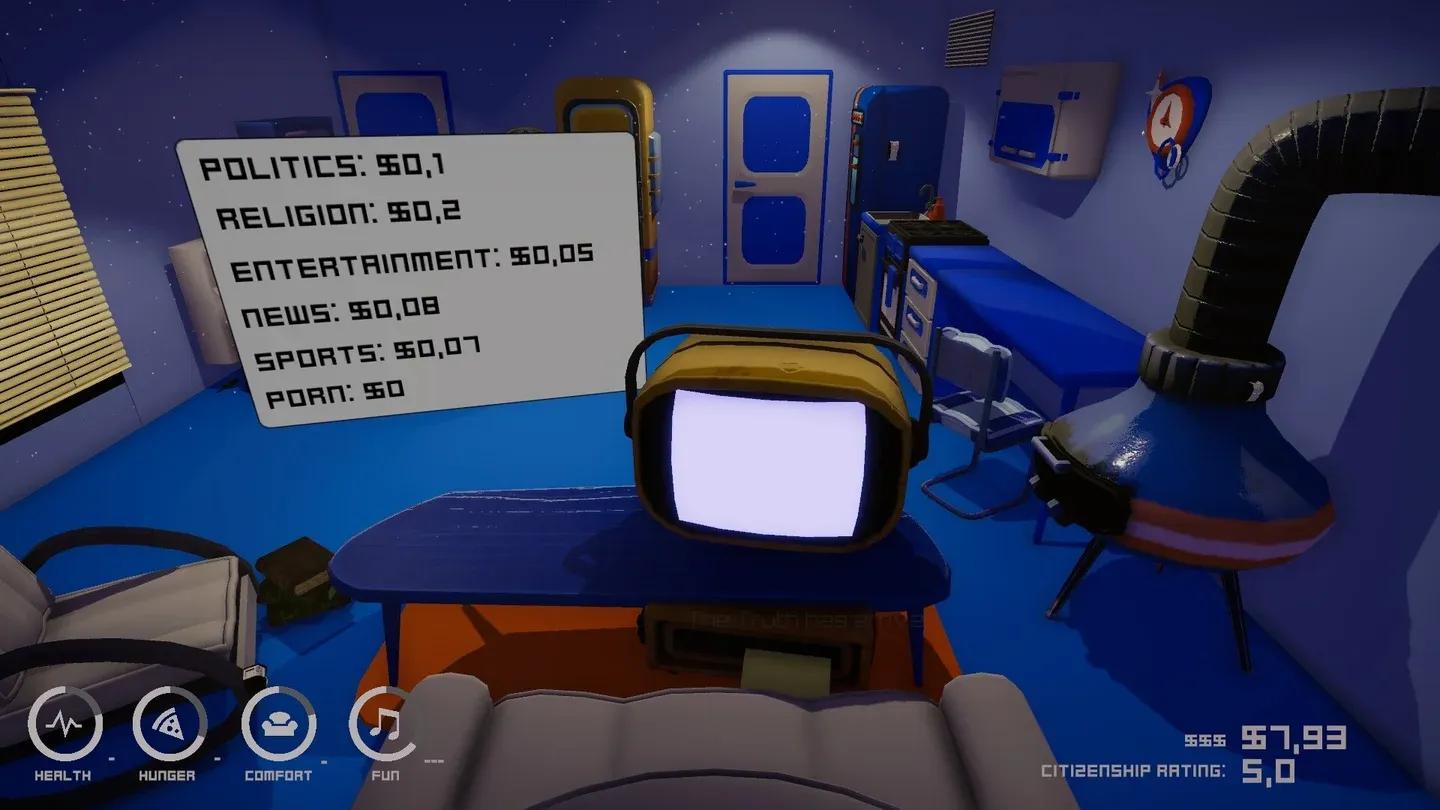
The basic gameplay loop is surprisingly simple. Players sit in front of the TV, choose a channel, and earn money while watching. Different channels provide different levels of income, while some can affect the character's needs. That money then gets spent on things around the apartment, including food, hygiene, entertainment, and comfort.
The problem is that the character still has to live. Spending too much time away from the TV means less money, but constantly watching it can leave other needs neglected. Dystopicon turns something as mundane as watching television into a constant balancing act, and that works better than expected. The apartment slowly starts feeling less like a comfortable reward and more like a cage that happens to have a TV in it.
The Apartment Isn't as Boring as It Looks
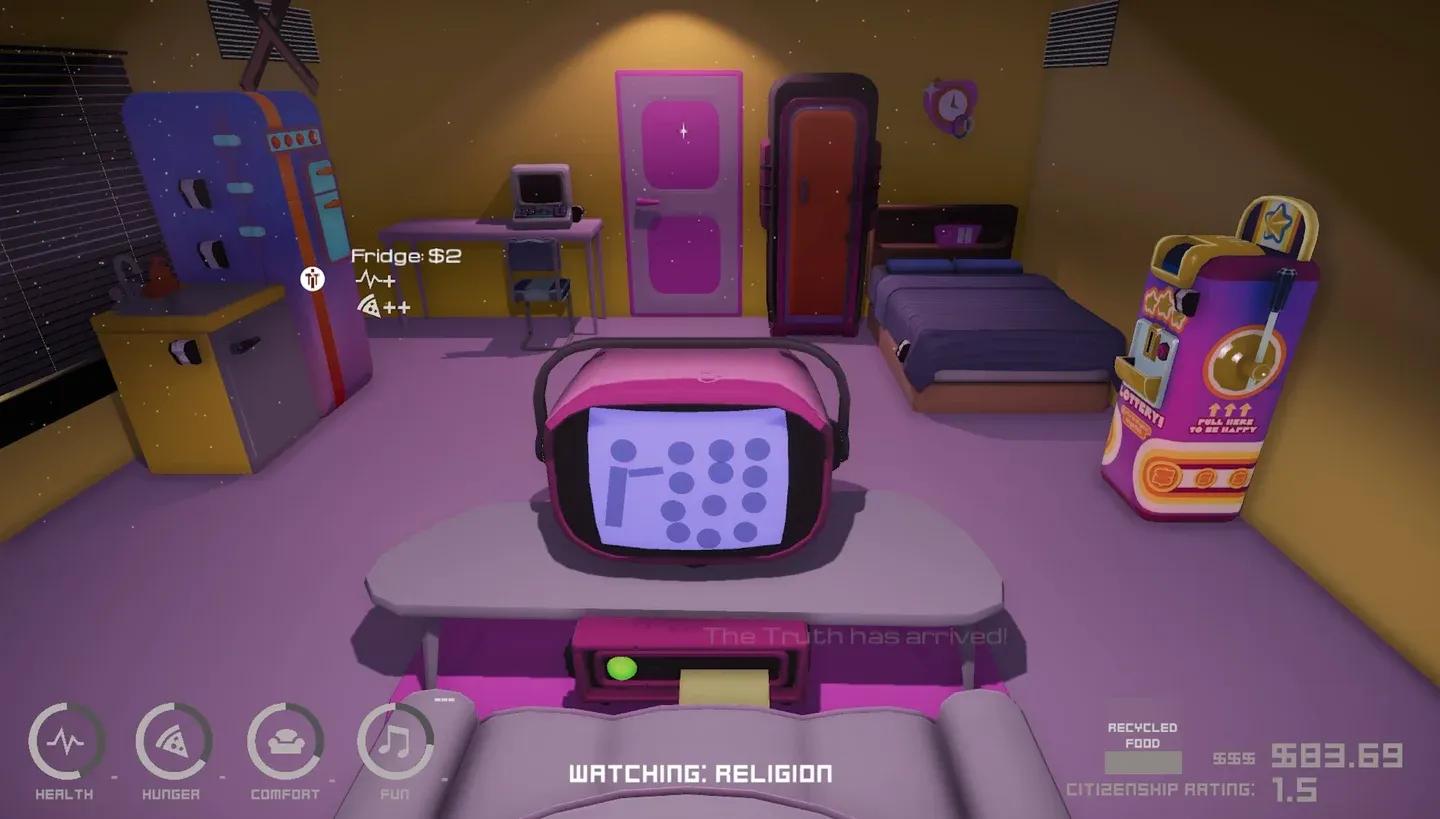
At first, the apartment seems like little more than a place to manage stats. There are objects to use, food to find, trash to clean, and the occasional rat running around. But looking around reveals that there is much more happening beneath the surface. Government messages, neighbors, strange events, hidden objects, and suspicious interactions gradually start pushing the player toward the game's bigger story.
That is where Dystopicon becomes much more interesting. The player isn't simply trying to keep hunger, health, and comfort high anymore. There are reasons to investigate the apartment and pay attention to what is happening outside. A computer can hide something it shouldn't, a government package can create a difficult decision, and even the mannequin left behind by a previous tenant can become part of the story. The game does a good job of turning ordinary objects into things worth questioning.
Being a Good Citizen Isn't Always the Best Choice
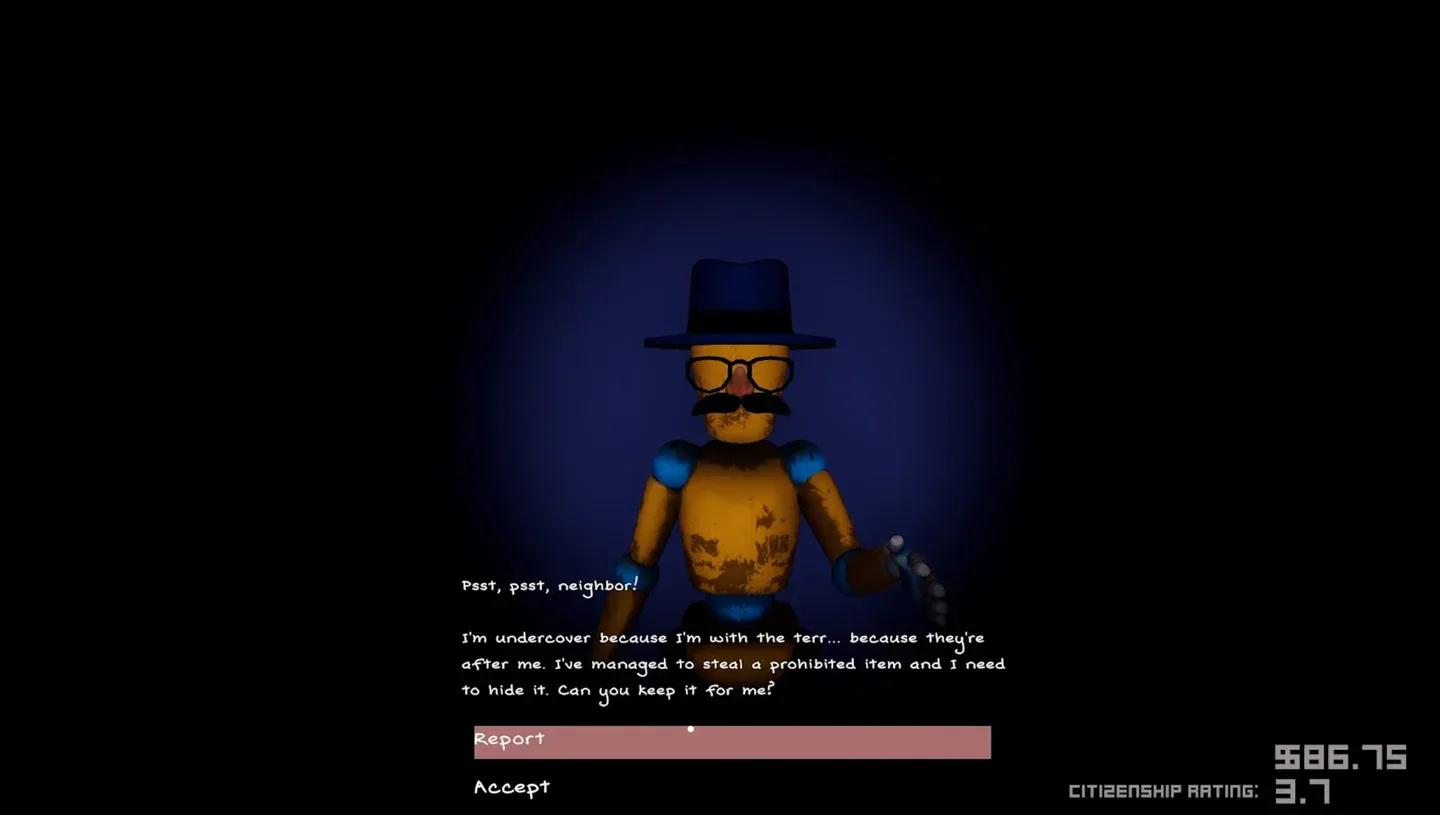
The citizen rating is one of the systems that makes Dystopicon's choices matter. The government wants citizens to behave, report suspicious activity, and follow its rules, and doing so can improve the player's standing. Higher ratings eventually lead to better citizenship categories and new opportunities, giving players a reason to play along with the system.
Of course, the more interesting option is to start breaking the rules. Dystopicon constantly gives players opportunities to investigate suspicious activity, help other people, or simply ask questions that a good citizen probably shouldn't. The problem is that curiosity can come with consequences, and the game doesn't always make those consequences obvious. That uncertainty makes each decision more interesting because there is no guarantee that doing the morally right thing will also be the safest option.
The 14 Endings Are the Real Hook
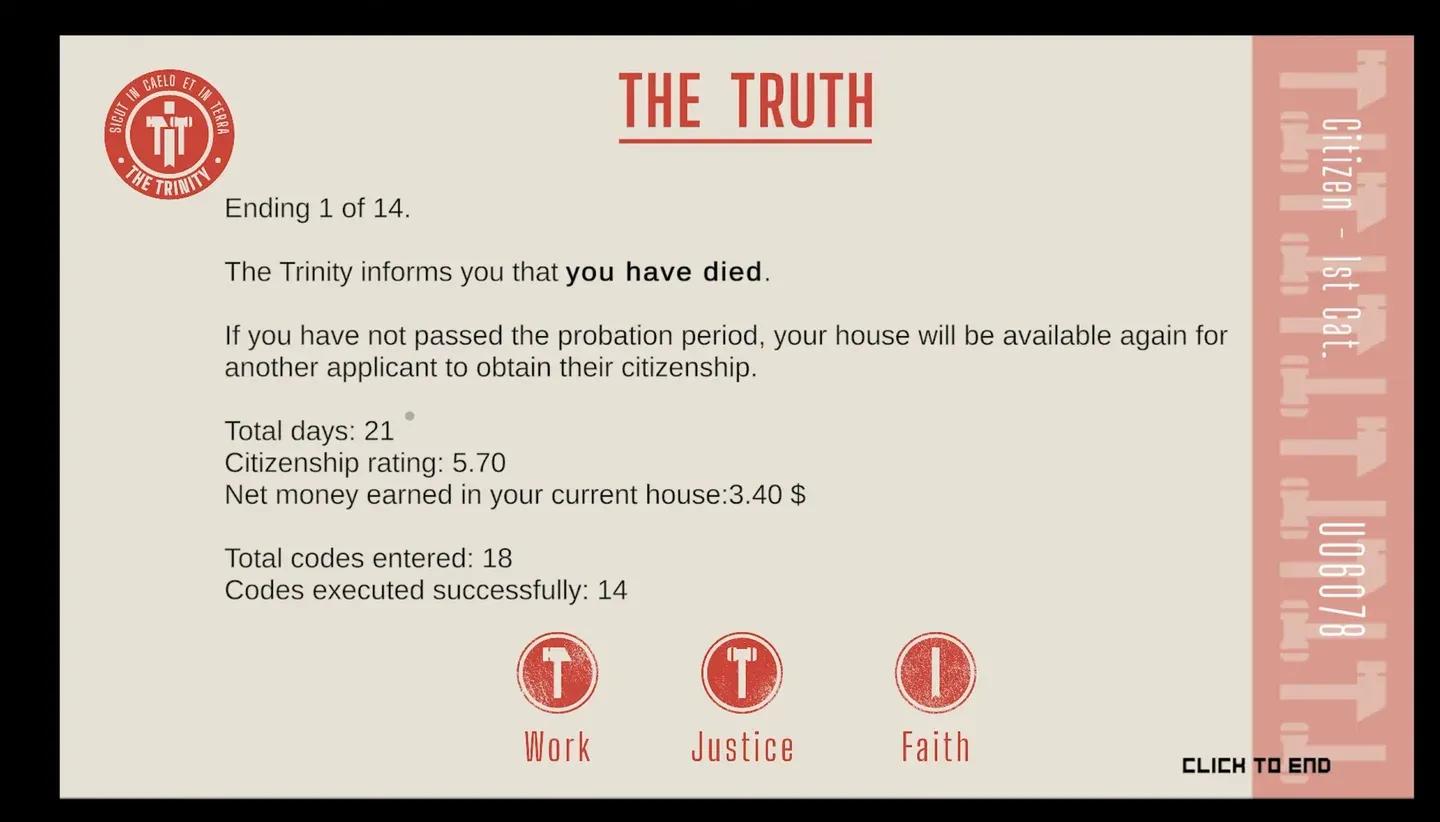
The first playthrough gives a good idea of why Dystopicon is designed around multiple runs. The game has 14 possible endings, and reaching one doesn't necessarily explain how the others can be unlocked. The first attempt can easily turn into a survival run where the main goal is simply to make it through the testing period, while later runs can focus on deliberately making different choices.
That replayability works particularly well because the game doesn't require another long campaign to try something different. Players can change how they approach the government, interact with their neighbors, investigate the apartment, or manage their resources and see where those choices lead. There is also a Challenge Mode that becomes available after progressing through the main story, giving players another reason to return after discovering some of the game's secrets.
Dystopicon Gets Weird, and That's a Good Thing
The best thing about Dystopicon is probably how unpredictable it can become. The game starts with a fairly mundane routine of watching television, eating, cleaning, and trying to maintain a citizen rating. Then the strange events start piling up, and suddenly the player is investigating computers, discovering hidden information, dealing with government interference, and wondering what happened to the people who lived in the apartment before.
There is also a decent amount of dark humor mixed into the uncomfortable setting. Some dialogue choices are deliberately ridiculous, which helps prevent the dystopian atmosphere from becoming too heavy. One moment the player can be dealing with government propaganda, and the next they are worrying about a rat or making a questionable decision involving the apartment's mannequin. That weird combination is a big part of Dystopicon's charm.
Final Thoughts
Dystopicon makes a good first impression because it takes a very ordinary routine and slowly turns it into something much more unsettling. Watching television to earn money sounds ridiculous, but once food, health, comfort, government surveillance, and citizen ratings are added to the mix, the simple routine starts making sense.
The strongest part of the game is the curiosity it creates. The player starts wondering what is behind the next door, what the government is hiding, what happened to the previous tenant, and what choices might lead to one of the other endings. Not every mystery is immediately clear, and some systems can take a little experimentation to understand, but that uncertainty fits a game built around discovering its secrets.
Dystopicon isn't a traditional dystopian adventure, and that is what makes it worth checking out. It is a strange little life sim about surviving inside a system that promises comfort while slowly taking away the player's freedom. With 14 endings and plenty of reasons to replay, there is clearly more going on behind that television screen than the government wants citizens to know.