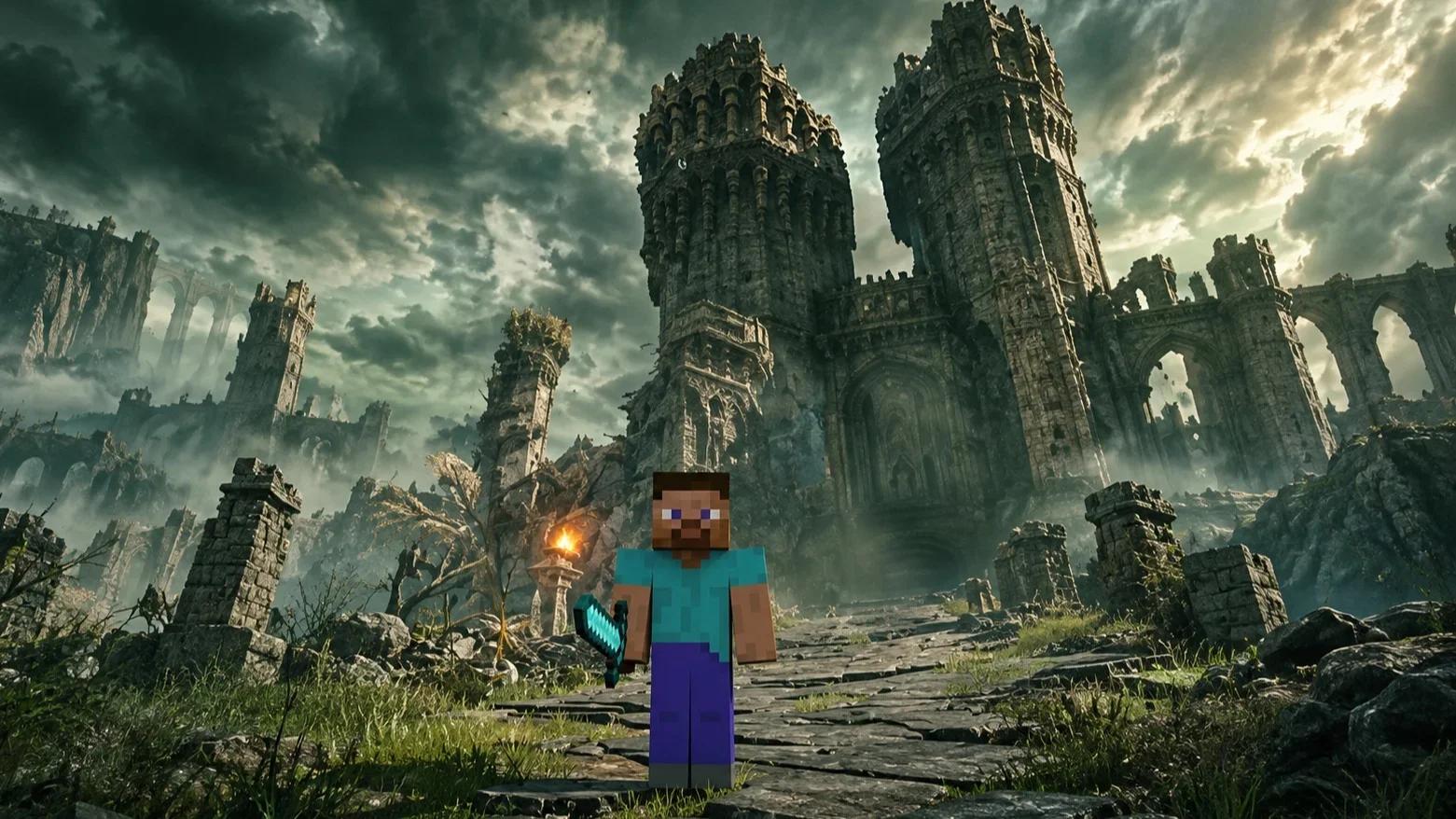

The AI game mash-up trend has been building for weeks. Clips of Elden Ring fused with Minecraft visuals, Skyrim worlds running FromSoftware combat, and other wild hybrids have been spreading across social feeds at an uncomfortable pace. Now someone has packaged all of that into a single Windows launcher called Melty, and the pitch is genuinely appealing on the surface: press Play once, and it downloads, configures, and launches whatever mash-up combination you want. No manual mod installs, no fiddling with file paths.
Here's the thing, though. The terms of service tell a very different story.
What Melty actually asks permission to do
The launcher's official description frames it as a frictionless tool that "joins two games you own into one hybrid experience." What the terms authorize goes considerably further. Melty's ToS grants the application permission to find games on your system, download new tools, copy files, modify folders, run programs, and push automatic updates without prompting you each time. That list alone would give most security-conscious players pause.
The bigger problem surfaced when a coder going by Wubbity online pulled apart the Melty installer (v1.0.33) and posted his findings publicly. His conclusion: Melty is a rebrand of LookLoot, an application built to record gameplay video and controller or keyboard inputs as AI training data. That entire recording pipeline ships inside Melty, and the launcher's privacy policy makes no mention of it.
Wubbity was careful to clarify it is "not malware, no password stealing." The concern is more specific than that: the app is "shipping a dormant gameplay-recording pipeline its website can trigger, and users weren't told." A dormant system that can be activated remotely, buried inside a free launcher with broad file-system permissions, is not something you want running on your PC.
Why this keeps happening
Melty is not an isolated case. The same week this surfaced, a vibe-coded Bloodborne PC port relying heavily on AI generation drew similar skepticism from the FromSoftware community. Epic Games made headlines for openly announcing it had "vibe coded" its own launcher, and a Soulslike on Steam with 25% positive reviews prompted its developer to publicly acknowledge that AI-generated assets were hurting the game's reception.
The pattern is consistent: AI tooling is moving faster than transparency norms can keep up with. Melty is a sharper version of that problem because it targets players who are already excited about something genuinely fun, those viral mash-ups are entertaining to watch, and the curiosity to play them is completely understandable. The key here is that the appeal of the product is real, which makes the buried terms more dangerous, not less.
For players who want to experiment with Minecraft mods and custom experiences through legitimate means, the best Minecraft mods guide covers 52 verified picks that don't require handing over your file system.
The broader context for launchers right now
Launcher trust is already a sensitive topic in PC gaming. Valve's Steam remains the default standard partly because its permissions model is well understood and its update behavior is predictable. Third-party launchers have a long history of overreaching, and players have become reasonably wary of anything that asks for elevated system access without a clear explanation.
Melty lands in that context at the worst possible time. The AI mash-up clips it is built around are genuinely viral, which means the launcher will reach people who don't typically scrutinize terms of service before clicking install. That is exactly the audience most at risk from a privacy policy that omits the recording pipeline entirely.
For anyone managing server-side software or launchers with update pipelines, the Hytale server update guide is a useful reference for understanding how legitimate launcher update systems are supposed to communicate changes to users.
Melty may update its privacy policy or address Wubbity's findings directly. Until that happens, the gap between what the launcher advertises and what its installer actually contains is too wide to ignore. If you want to keep up with how Minecraft itself is evolving through official channels, the Minecraft 26.4 winter update breakdown covers everything confirmed for the next major drop.