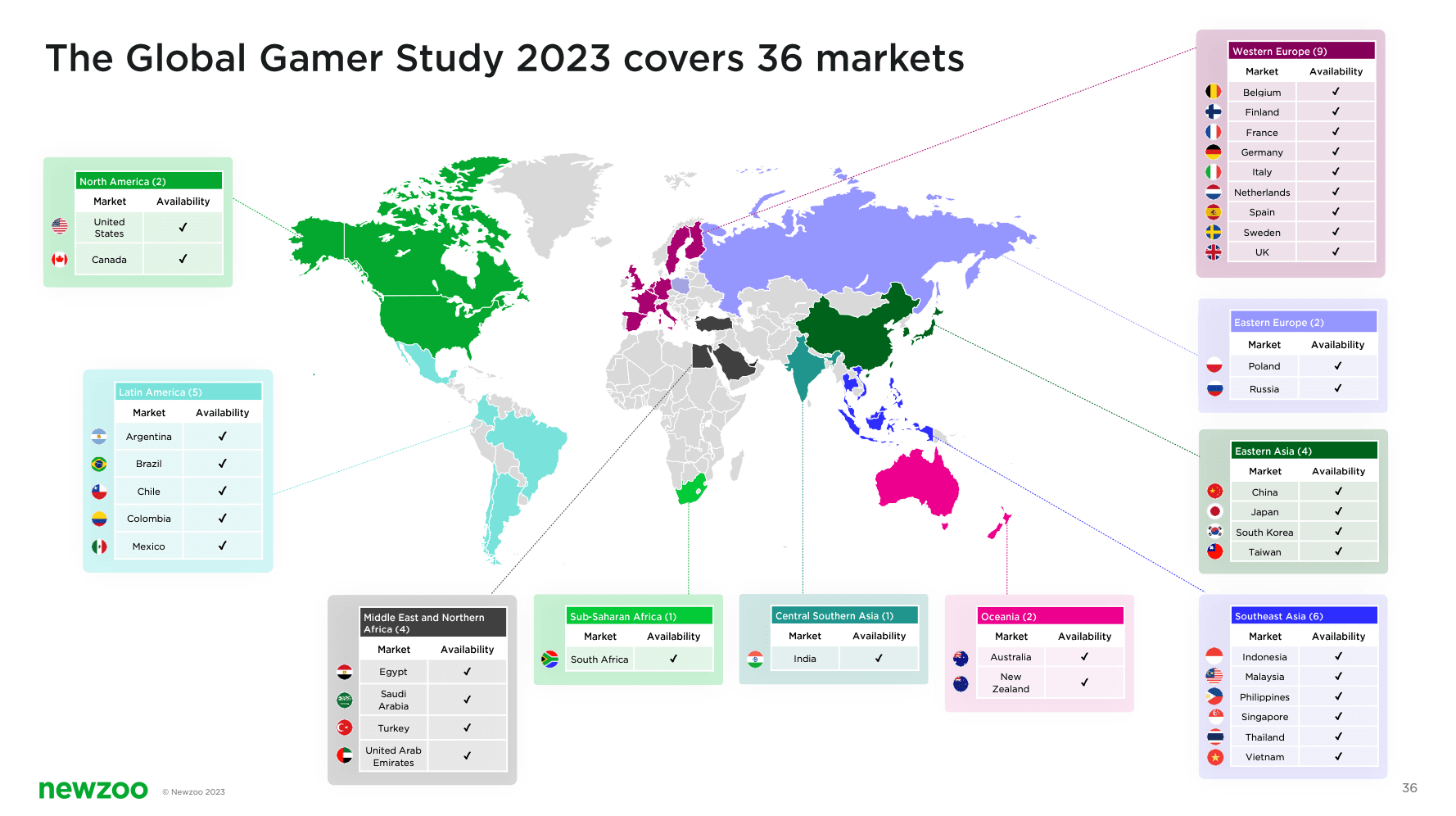
New data from a global survey of 73,000 participants across 36 countries shows gaming has become a dominant cultural force, with Generation Alpha now spending more time playing games than scrolling social media. The findings reveal how different age groups engage with games, what they play, and how much they spend across platforms.
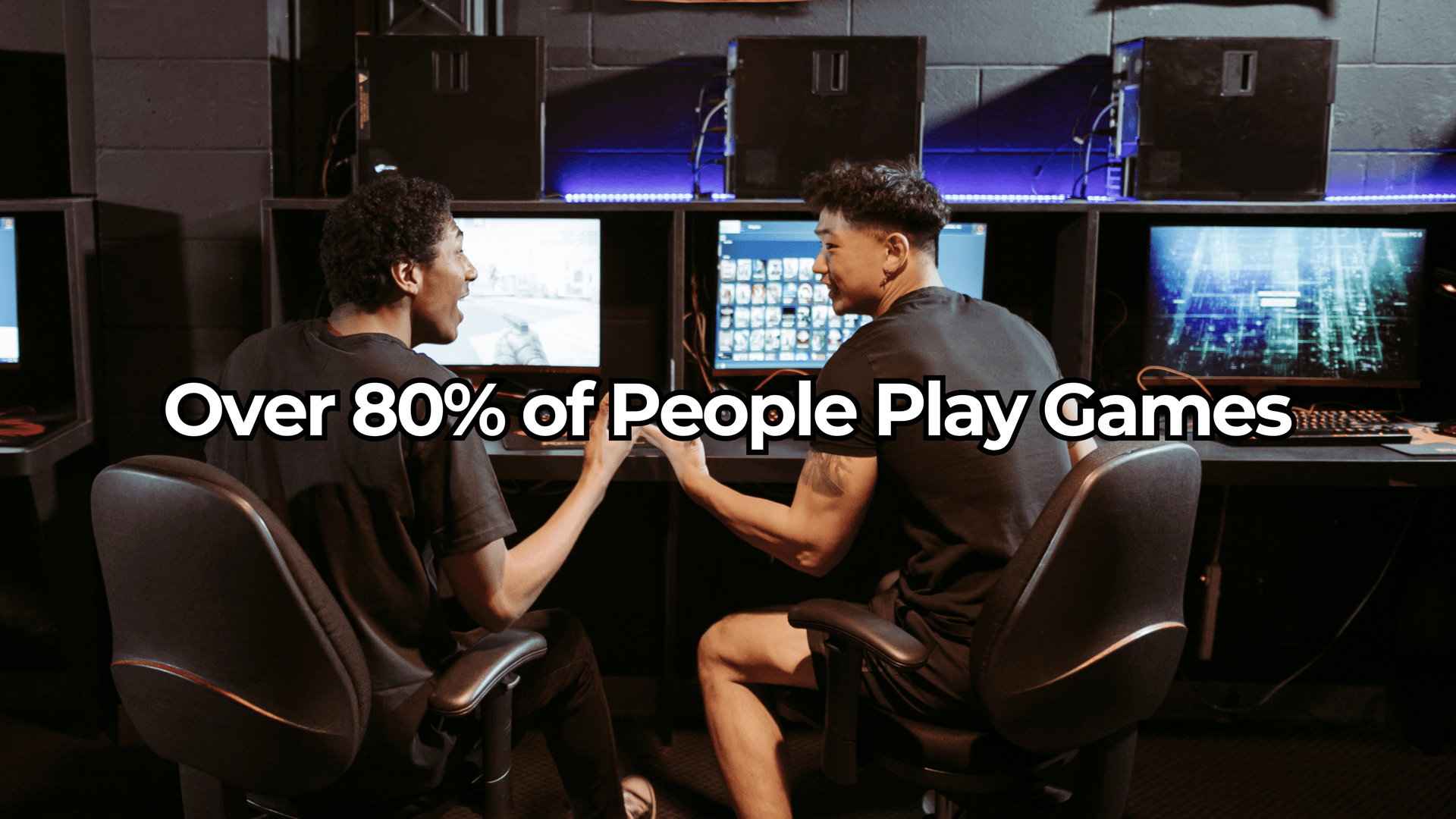
Over 80% of People Play Games Globally
Over 80% of People Play Games Globally
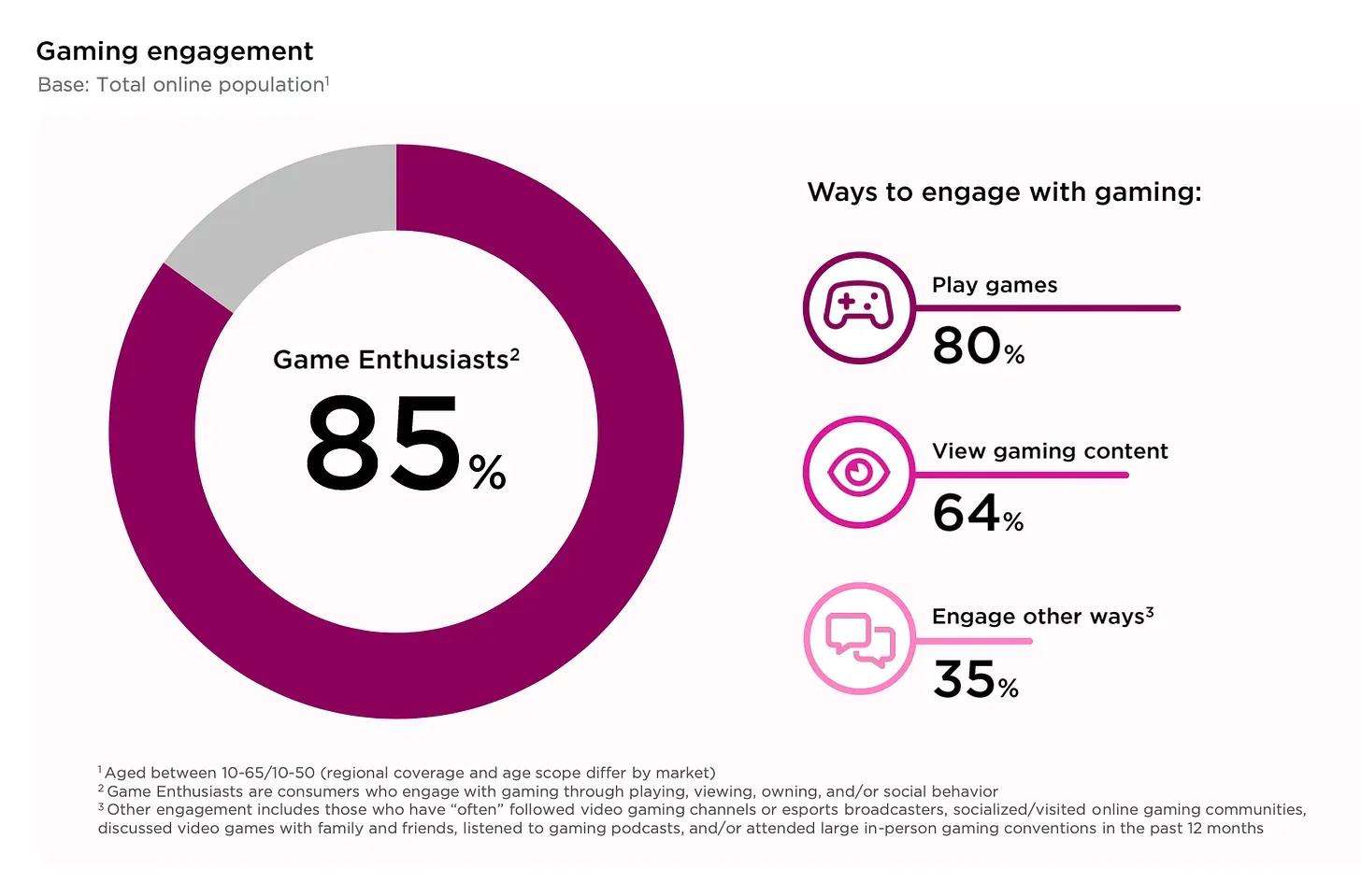
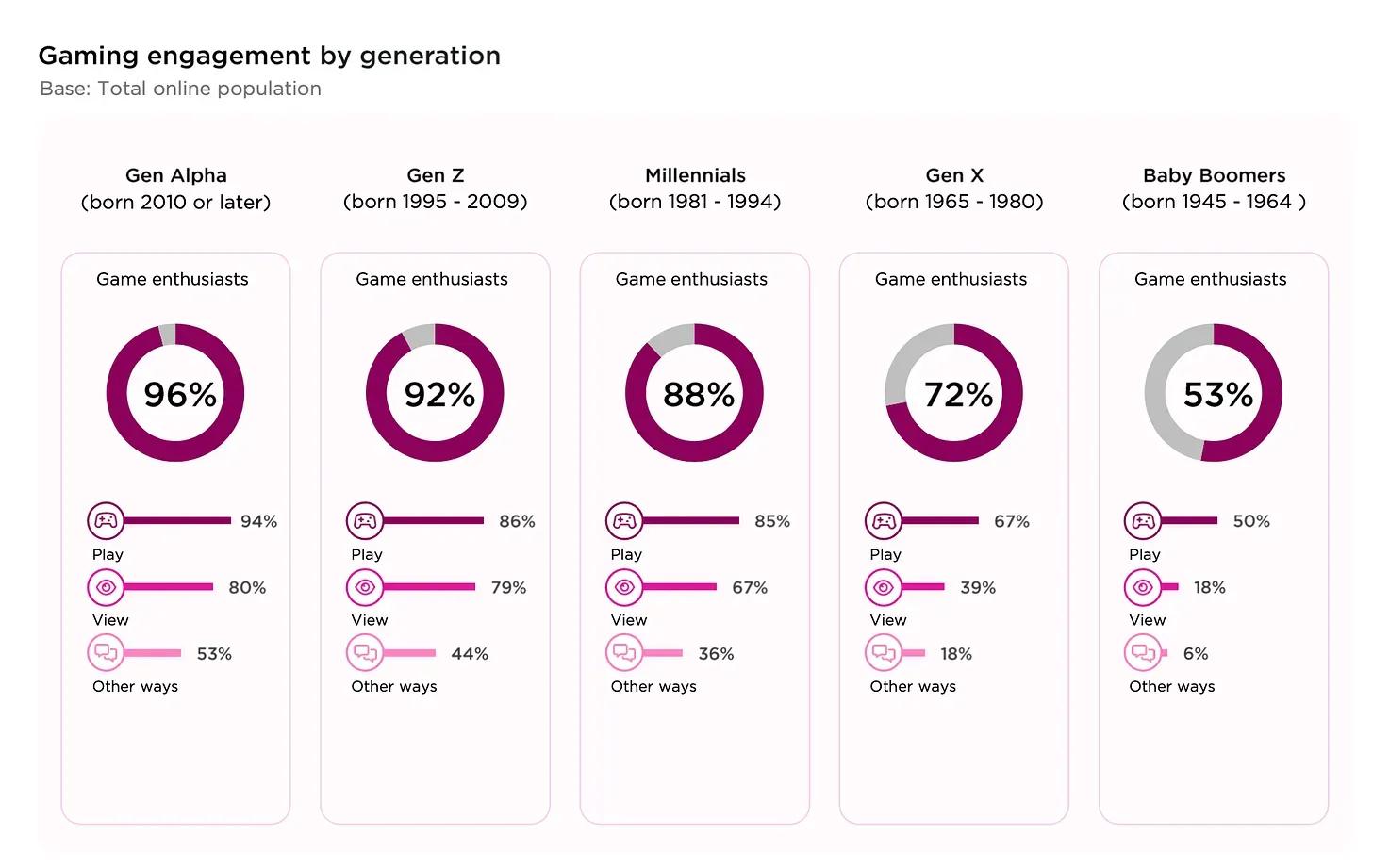
The 2024 survey data shows 80% of people globally play games, 64% watch gaming content, and 35% participate in gaming communities or discussions. Generations Alpha and Z lead engagement, with over 90% of both groups interacting with games in some form. Generation Alpha has crossed a threshold: they now spend 5.2 hours weekly playing games compared to 5.1 hours on social media, the first generation to flip that ratio.
- Gaming is firmly entrenched in global mainstream culture. Eighty percent of consumers play video games, and 85% engage with games in some form, including viewing and community activities.
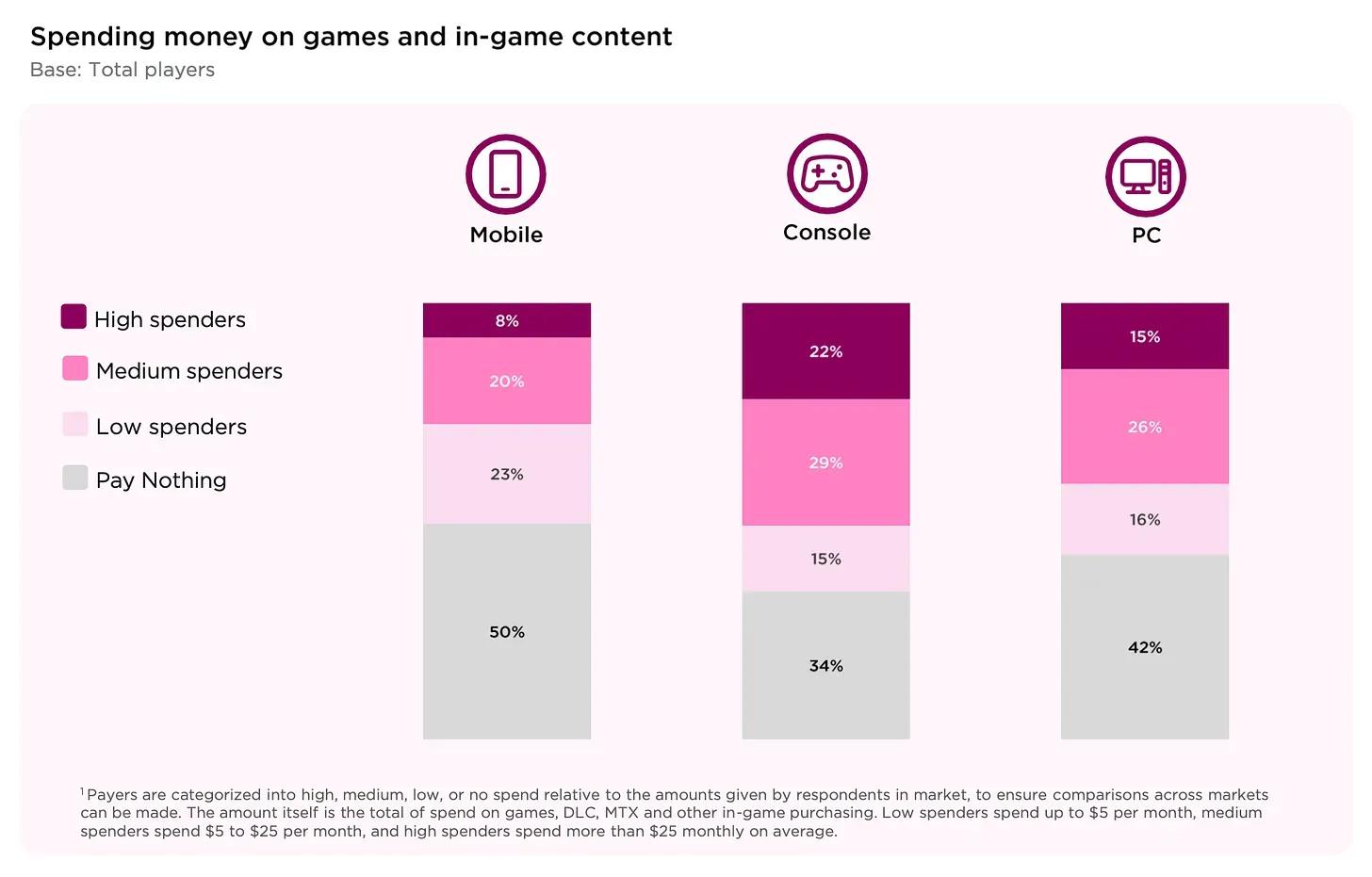
- Console and PC gamers exhibit high spending behavior. PC or console players spend more on average than their mobile gamer counterparts, with a solid share of players spending more than $25 per month on gaming.
- Players around the world are hungry for the next big thing. Thirty-one percent of PC or console players often seek out new or trending games, with some regions indexing higher on that statistic than others.
Over 80% of People Play Games Globally


Popular Gaming Genres Across Generations
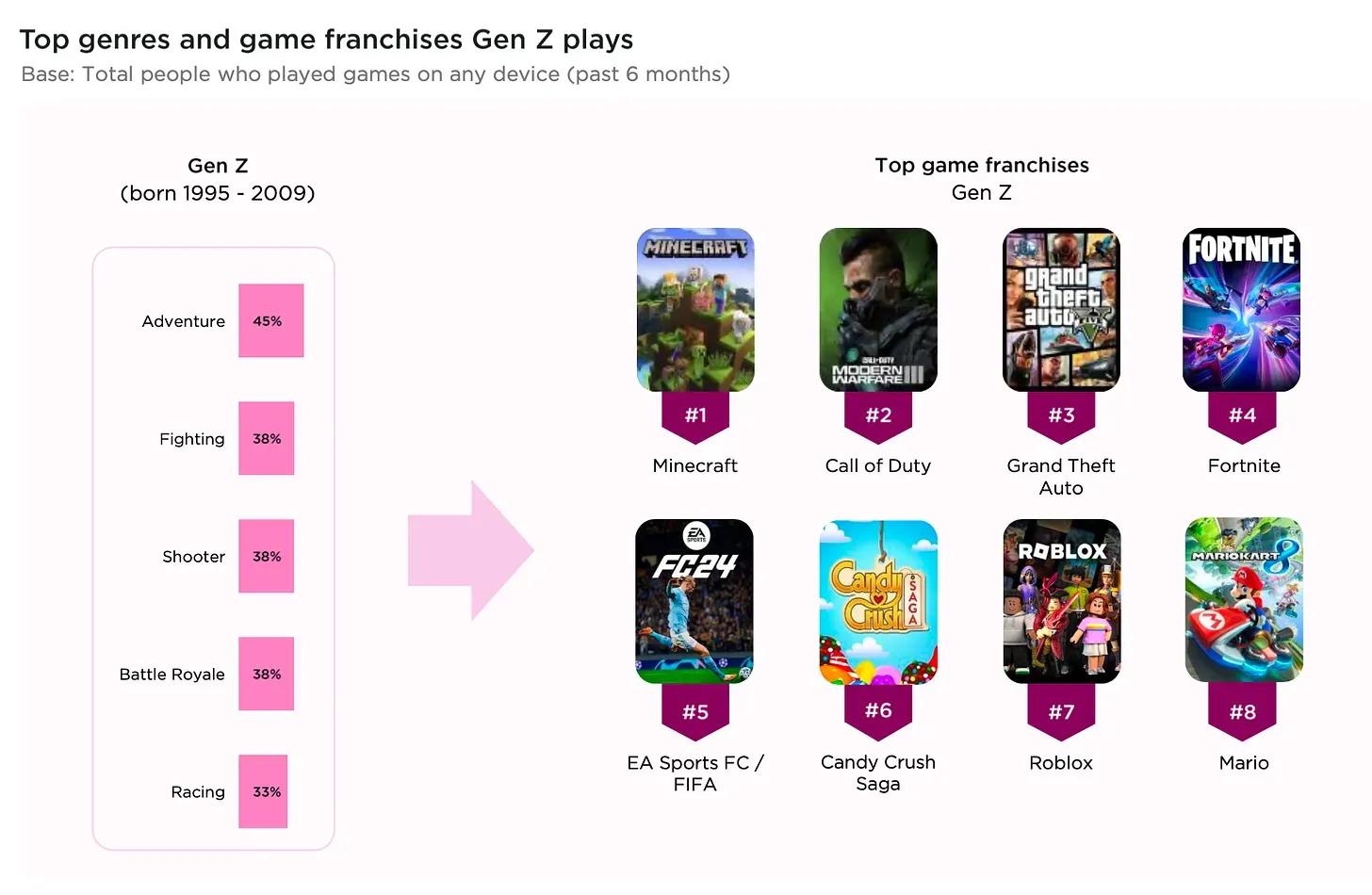
Adventure games rank as the most popular genre for Generation Alpha, Gen Z, and millennials. Older players lean toward puzzle games. Gen Z shows broader tastes, with strong interest in shooters and fighting games. Their top franchises: Minecraft, Call of Duty, and Grand Theft Auto.
Top Genres and Game Franchises Gen Z Plays
Platform Preferences and Social Engagement
PC and console players value open-world environments (66%) and strong narratives (65%). Younger players gravitate toward social features like task completion, collaborative combat, and general socialization.
PC and console users play longer sessions, averaging 2.1 hours per day, but mobile players game more frequently at 3.4 days per week versus 2.6 to 2.7 days for console or PC. Weekly totals end up similar across all platforms.
Gaming Engagement by Generation
Spending Habits for PC, Console, and Mobile
Console players spend the most, with 22% dropping over $25 monthly on games. PC players follow at 15%, mobile at 8%. Nearly half of mobile gamers spend nothing, with 71% sticking to free titles compared to 47% on PC and 36% on console. Female gamers across platforms are increasingly willing to pay for games, a shift that cuts across generations.
Spending Money on Games and In-Game Content
Audience Seeking New Games and Experiences
A subset of highly active players constantly hunts for new titles. This group skews late 20s, owns multiple platforms (45% have two, one-third have three), plays nearly twice as much as the average gamer, and is 62% male. Adventure games top their preferences. Graphics quality and survival mechanics matter to them.
Console dominates this high-spending segment: 82% paid for games in the past six months. Over 90% consume gaming content on social media, and 73% engage with gaming communities. Instagram, YouTube, and Facebook each reach over 65% of this audience.
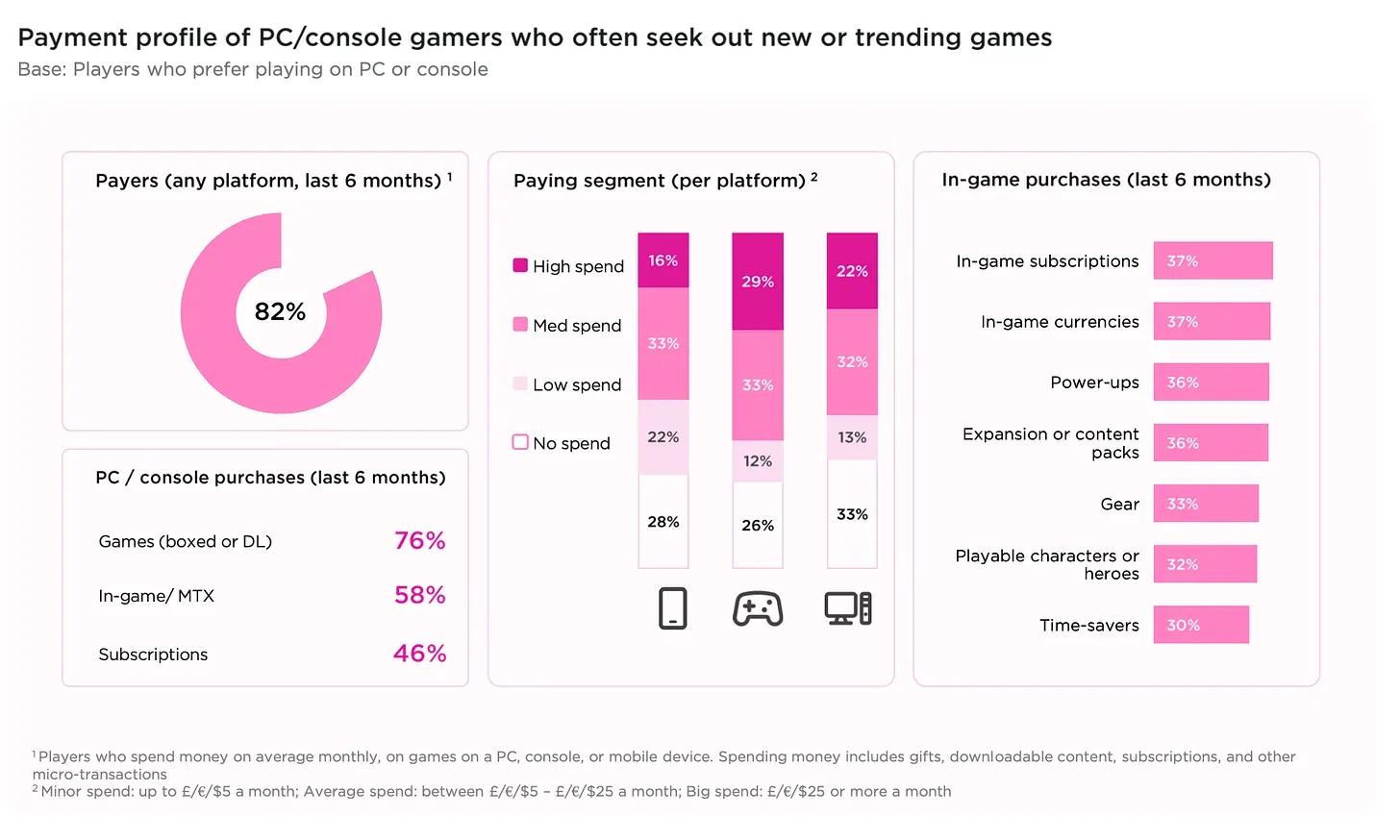
Payment Profile of PC / Console Gamers Who Often Seek Out New or Trending Games
Regional Trends and Emerging Markets
Players in Southeast Asia, the Middle East and North Africa, and Latin America show the strongest interest in new gaming projects. China, India, Thailand, Egypt, Saudi Arabia, and Vietnam lead the list. The UAE, Philippines, Brazil, Singapore, Indonesia, Taiwan, Mexico, and South Africa follow close behind.
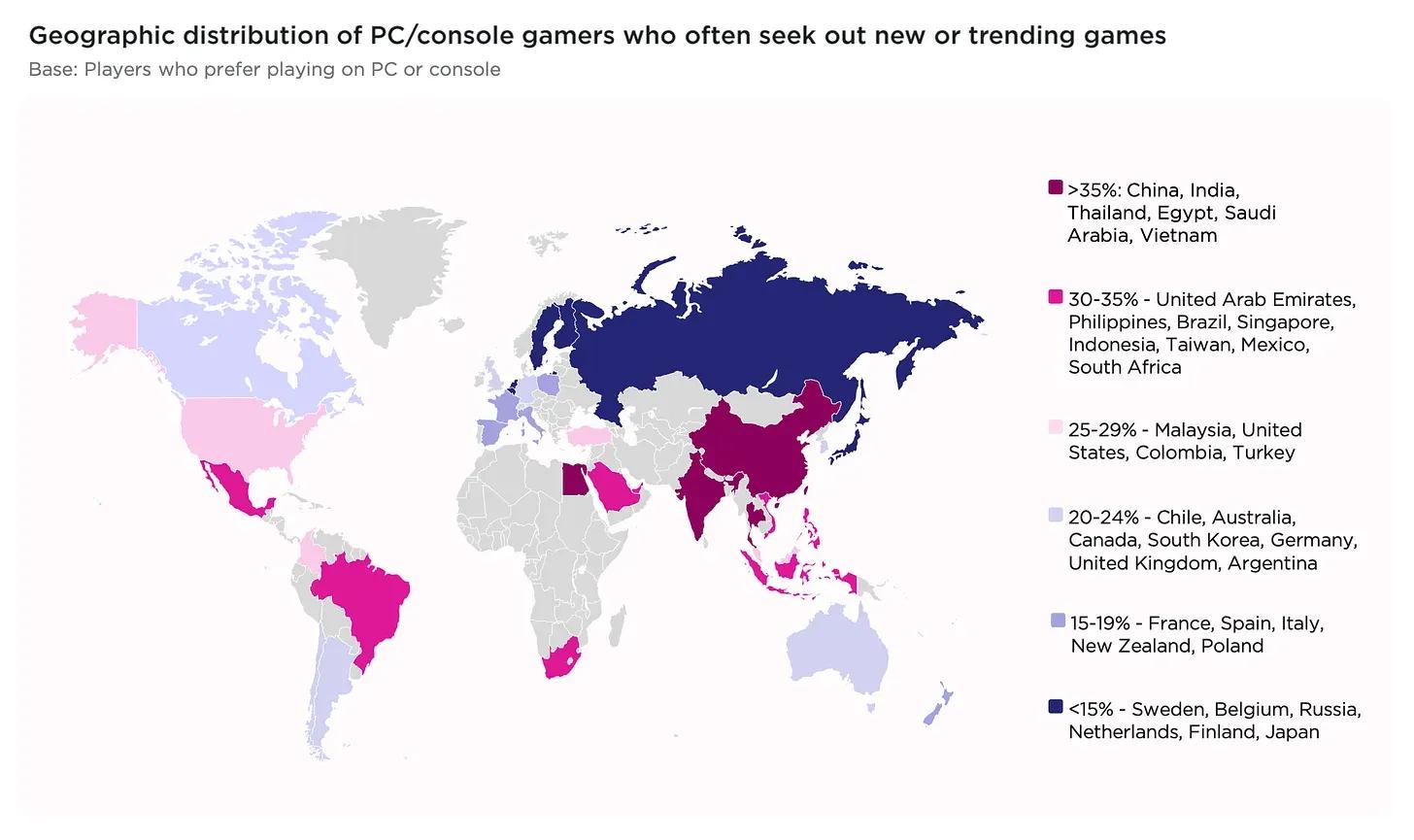
Geographic Distribution of PC/ Console Gamers
Relevance to Web3 Gaming
Generation Alpha's shift toward gaming over social media, combined with their appetite for immersive, community-driven experiences, aligns with the decentralized, player-focused vision of web3 gaming. Younger players favor open-world environments, social collaboration, and discovering new content — all areas where web3 can offer personalized, player-owned ecosystems.
Strong interest from emerging markets points to a global audience that may respond well to the financial inclusion, accessibility, and earning models web3 offers. As web3 evolves, these patterns suggest a path forward: blend entertainment, ownership, and community in ways traditional gaming hasn't. You can read the full report here.