
Co-op games usually fall under one of two groups: cosy experiences that improve friendships or modern torture devices that make you want to punch your friends through the computer screen. Funnily enough, Split Brain Samsara manages to do both. Developed by French indie studio Kusa Games, this co-op adventure puts communication and teamwork at the centre of its puzzle-solving experience by giving two players control over different aspects of the same character.
Having spent some time with its demo, I can see just how much potential it has. The puzzles are super entertaining, and its central mechanic makes for an engaging experience, even if the opening can feel just a bit too slow.
Seeing isn’t always believing
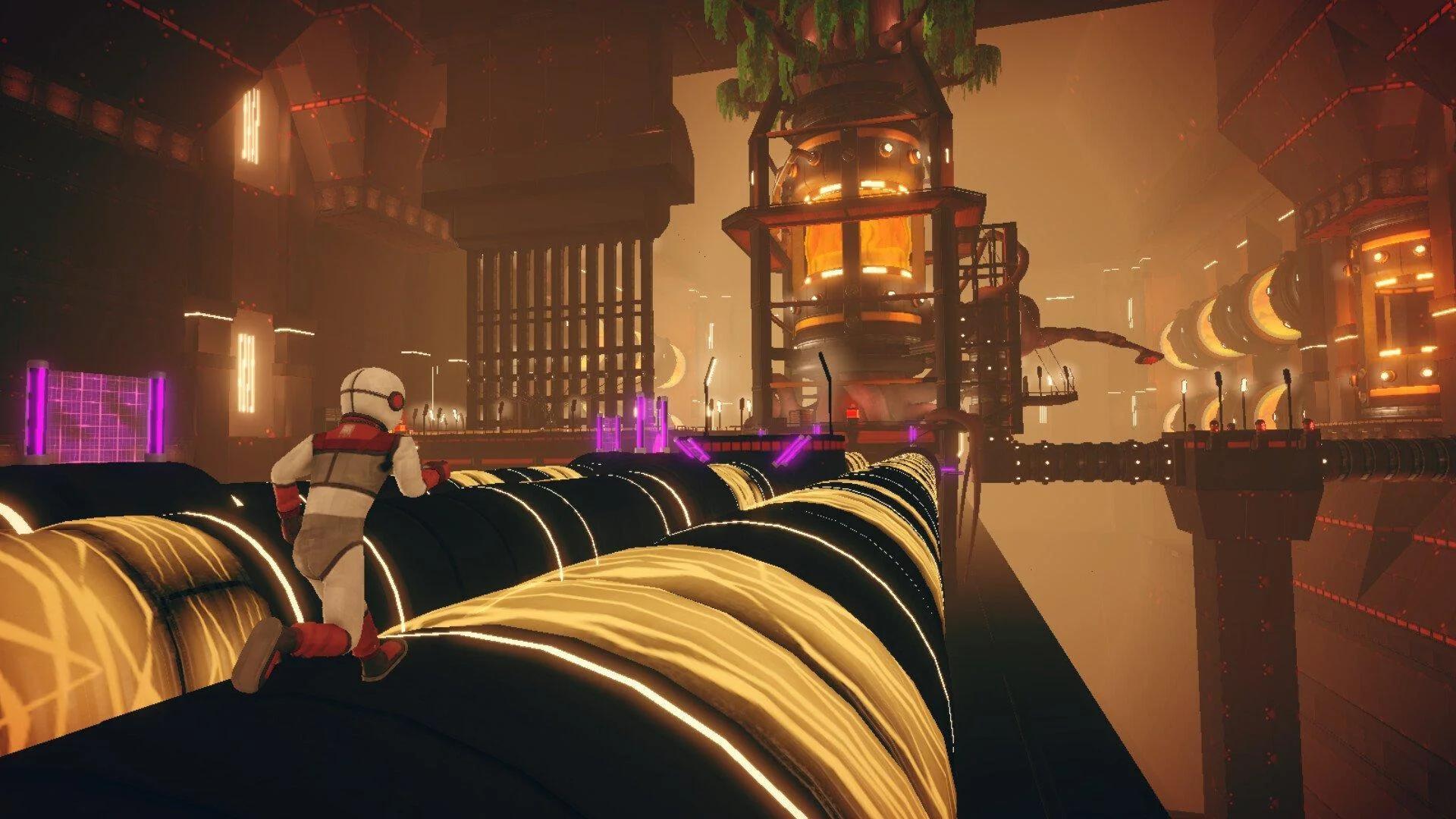
Obstacle Run puzzle
The entire experience in Split Brain Samsara takes place inside the Samsara megastructure, a massive facility with a quarantine zone, abandoned workspaces, and plenty of mysteries to uncover. As you explore its different areas and look for a way out, you’ll gradually learn more about the people who once inhabited the station and what happened to them.
At first glance, this sounds like the perfect setup for a pretty cool spooky game, but there’s no horror here. Unless having to explain something to your friend a million times counts.
The reason is that while one player controls the body and interacts with the physical environment, the other can observe things from the spiritual realm. This means you can often spot things that your partner cannot, whether that is a set of symbols on a wall or something outside their field of view.
I have to be honest, it took us a little while to understand just how important this was. After roughly 20 minutes of trying to figure out what we were supposed to do, my friend happened to mention a couple of symbols on a nearby wall. Suffice to say, I had no idea what he was talking about. That was when we realised: “Oh, we see different things.”
After that eureka moment, everything just clicked. We started describing every single detail in the environment, looking for differences and piecing together information. We got so used to doing this that we eventually reached a point where we would spend half an hour describing a random leaflet on a table, only to find out that we were both seeing exactly the same thing.
Putting two heads together
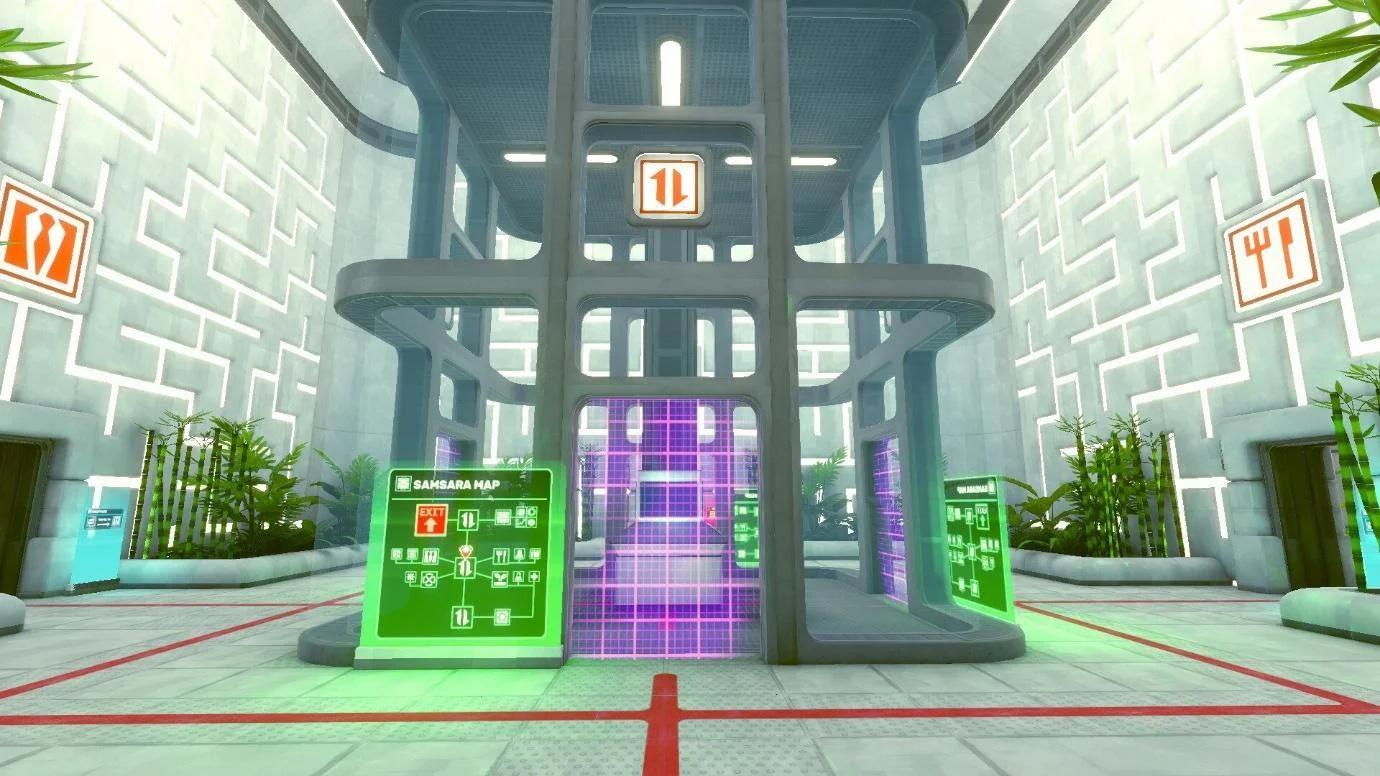
Main Hub
Fortunately, Split Brain Samsara doesn’t stop at making you compare notes with your friend. As you move from facility to facility, it gradually gives you more ways to interact with the world, turning those conversations into proper two-player puzzles.
One of the coolest additions comes in the form of strange cubes scattered throughout the facility, usually found on top of blue plants. By pressing Q, the player controlling the physical body can send their spiritual partner into one of these cubes. From there, they can interact with objects and mechanisms in the surrounding area, jump between nearby cubes, raise or lower walls, and open paths for the other player. It’s a pretty clever way of giving the spiritual player more to do than simply observe and point things out.
Puzzles are all well and good, but without a sense of accomplishment, it can be hard to stay motivated. Thankfully, the developers found a way to give us that much-desired dopamine hit: an upgradable bracelet that acts as your clearance pass throughout the megastructure. Upgrading it allows you to access different facilities, from kitchens and laboratories to server rooms and headquarters.
A slow start
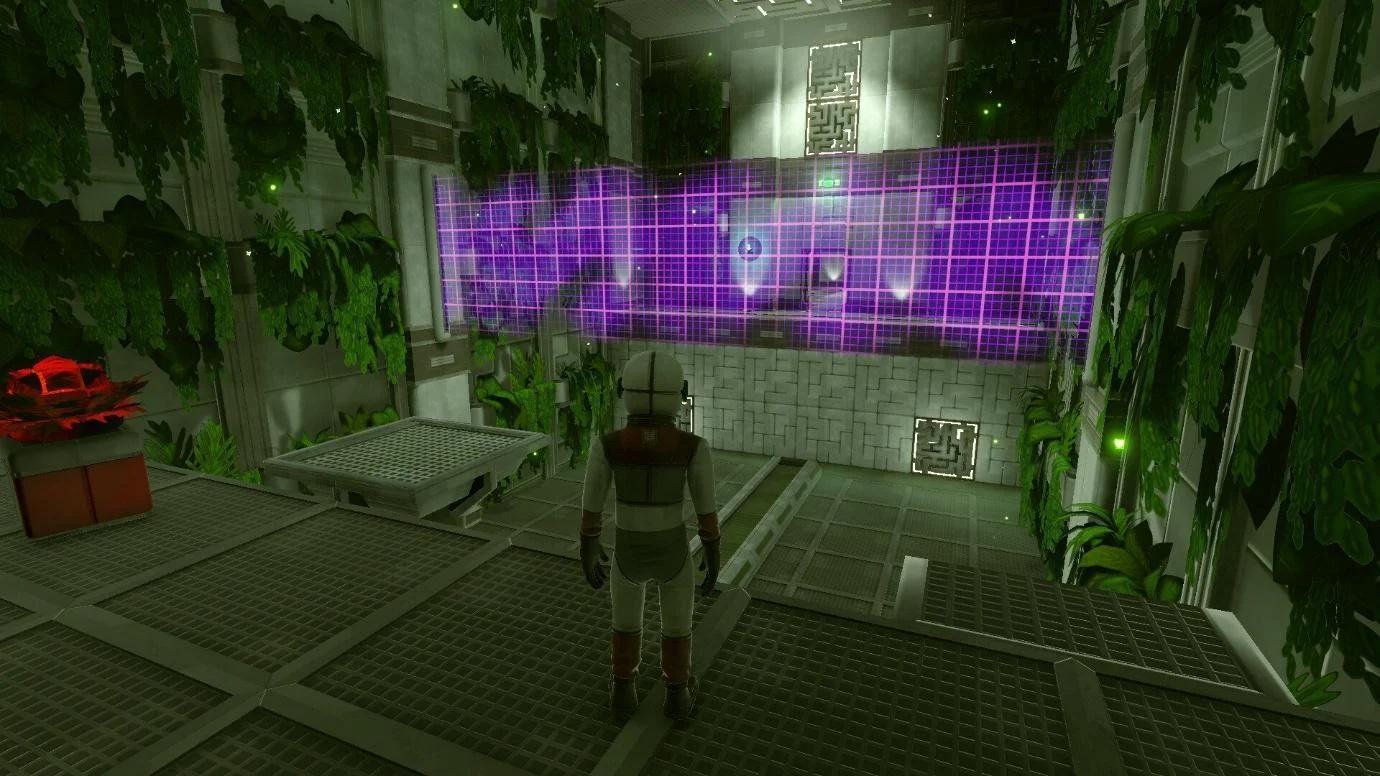
Platform puzzle
For all the things Split Brain Samsara gets right, its opening section takes far too long to show what makes the game interesting.
At first, the spiritual player has very little to do beyond observing the environment, reading information the physical player cannot see, and moving their camera around. It takes around 15 to 20 minutes before you start encountering the cubes that give you more things to do. On top of that, you can’t even swap roles yet, leaving one person to handle most of the gameplay while the other just watches.
It was a slog to get through, and we genuinely came close to quitting before we got to experience what the game actually had to offer. In the end, we were able to push through it, but others might not.
Final thoughts
Split Brain Samsara Main Menu
Despite the slow start, I had a great time playing Split Brain Samsara. The puzzles kept getting more interesting as we progressed, and I loved seeing how much we could get out of the game’s mechanics once we understood how the two perspectives worked.
Of course, this was only a taste of the full experience, and I’m looking forward to seeing how Kusa Games builds on these ideas when Split Brain Samsara launches on November 26, 2026, exclusively on Steam.