

There's a side-scrolling idle RPG sitting in Steam's top 5 right now, and it's quietly doing something that once triggered one of gaming's most dramatic public apologies. TBH: Task Bar Hero has normalized real money item trading so thoroughly that players aren't outraged by it. They're upset there isn't enough of it.
The idle RPG that climbed to Steam's top 5
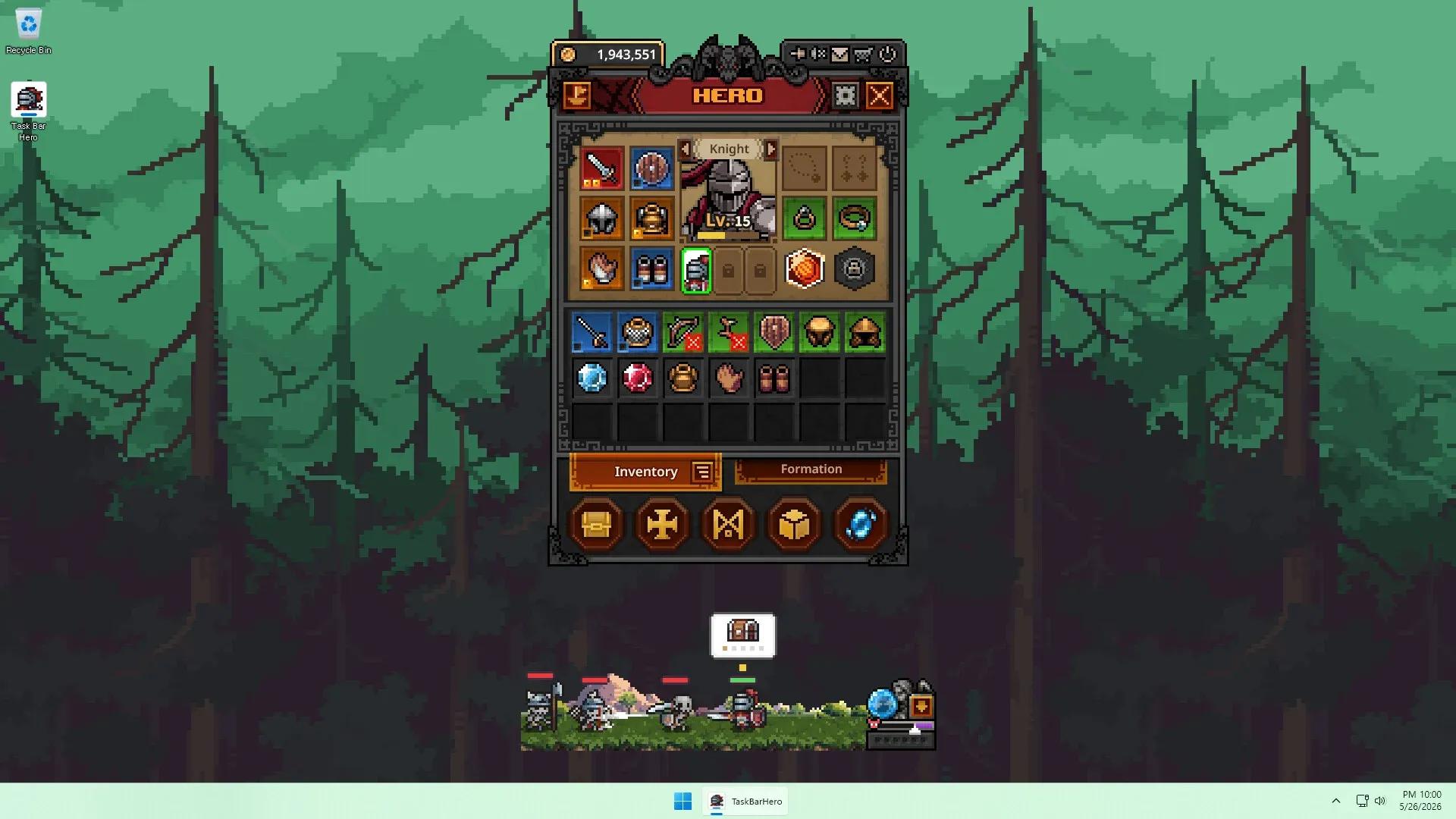
Task Bar Hero runs as a persistent desktop overlay. Your party fights dungeons automatically, collects loot, and earns gold while you're in meetings or pretending to be productive. Your actual job is managing the team, spending resources wisely, and building a lineup that can push through increasingly punishing content.
That sounds simple. Here's the thing: it isn't. Progress is deliberately slow, upgrade costs are steep, and certain choke points feel engineered to make you consider alternatives. The game is also openly unbalanced, with some classes outperforming others by a significant margin, and the developers are visibly racing to patch issues as the playerbase scales faster than anticipated.
Despite all of that, or maybe because of it, the game has reached fifth place on Steam's overall charts. That's not a niche curiosity. That's a genuine phenomenon.
Pennies for legendary gear, and nobody is panicking
Task Bar Hero has full Steam Marketplace integration. Players can list and buy gear freely, and because the game generates enormous quantities of items across its entire playerbase at any given moment, prices have stayed remarkably low. High-tier weapons and armor are available for literal cents. Players are cross-listing items from other Steam games, selling off trading cards and Dota 2 cosmetics, and funneling those funds into legendary TBH gear.
The entire transaction chain is real money. Steam Wallet funds come from actual purchases. Items sold on the Marketplace generate real wallet credit. And somehow, in mid-2026, this is just... fine. The community has accepted it without a second thought.
What most players miss is how historically strange that acceptance is.
What Diablo 3's auction house disaster actually looked like
Blizzard launched Diablo 3 with a real money auction house in 2012. The backlash was immediate and sustained. Players argued it undermined the core loot loop, that it made farming feel pointless, and that it turned a dungeon crawler into a storefront. The criticism was fierce enough that then-CEO Mike Morhaime issued a public apology, and Blizzard eventually removed the feature entirely in 2014 after years of work building and maintaining it.
That episode became a cautionary tale. Real money trading in games was treated as a third rail for years afterward.
The context that changed everything
The difference between 2012 and now isn't just time. A few things shifted the baseline.
- Steam's Marketplace has been operating since 2012 and has normalized item trading across hundreds of games with minimal controversy
- The idle and incremental game genre has trained players to think of progress in terms of time investment versus outcome, making purchased shortcuts feel like a natural exchange
- The broader gaming audience has spent over a decade buying cosmetics, battle passes, and premium currencies without the same moral friction that attached to loot trading
Task Bar Hero didn't invent any of this. It just landed at the exact moment when all those factors had already done their work on player attitudes. The infrastructure was there, the psychology had shifted, and the game plugged directly into both.
The community's current frustration that high-level item trading is restricted, rather than outrage that it exists at all, tells you everything about how completely the conversation has flipped.
What this actually means for players right now
If you're playing Task Bar Hero and hitting a wall, the Marketplace is a legitimate tool for the lower and mid-tier gear brackets. Prices are low enough that meaningful upgrades cost less than a cup of coffee. The alchemy guide for selling items fast is worth reading if you want to understand how to work the Cube's crafting system alongside marketplace purchases rather than treating them as separate systems.
The environmental angle is worth acknowledging too. Running a PC continuously for idle game progress has a real energy cost. The game works best as something that runs during hours your PC is already on, not as a reason to leave hardware running overnight.
For players who want to get ahead without spending real money, the TBH: Task Bar Hero tips and tricks guide covers Rune priorities and chest farming strategies that can accelerate progress through the early choke points without touching the Marketplace at all.
The developers are patching aggressively right now. The class balance issues are real, the high-level auction house restrictions are unpopular, and the game's trajectory over the next few weeks will determine whether it holds its top 5 position or fades once the novelty settles. Either way, the conversation it has restarted about real money item trading in games is not going away anytime soon.