


Biggest discounts, free games, and limited-time offers across every major gaming store.
Never pay full price again.
Overview
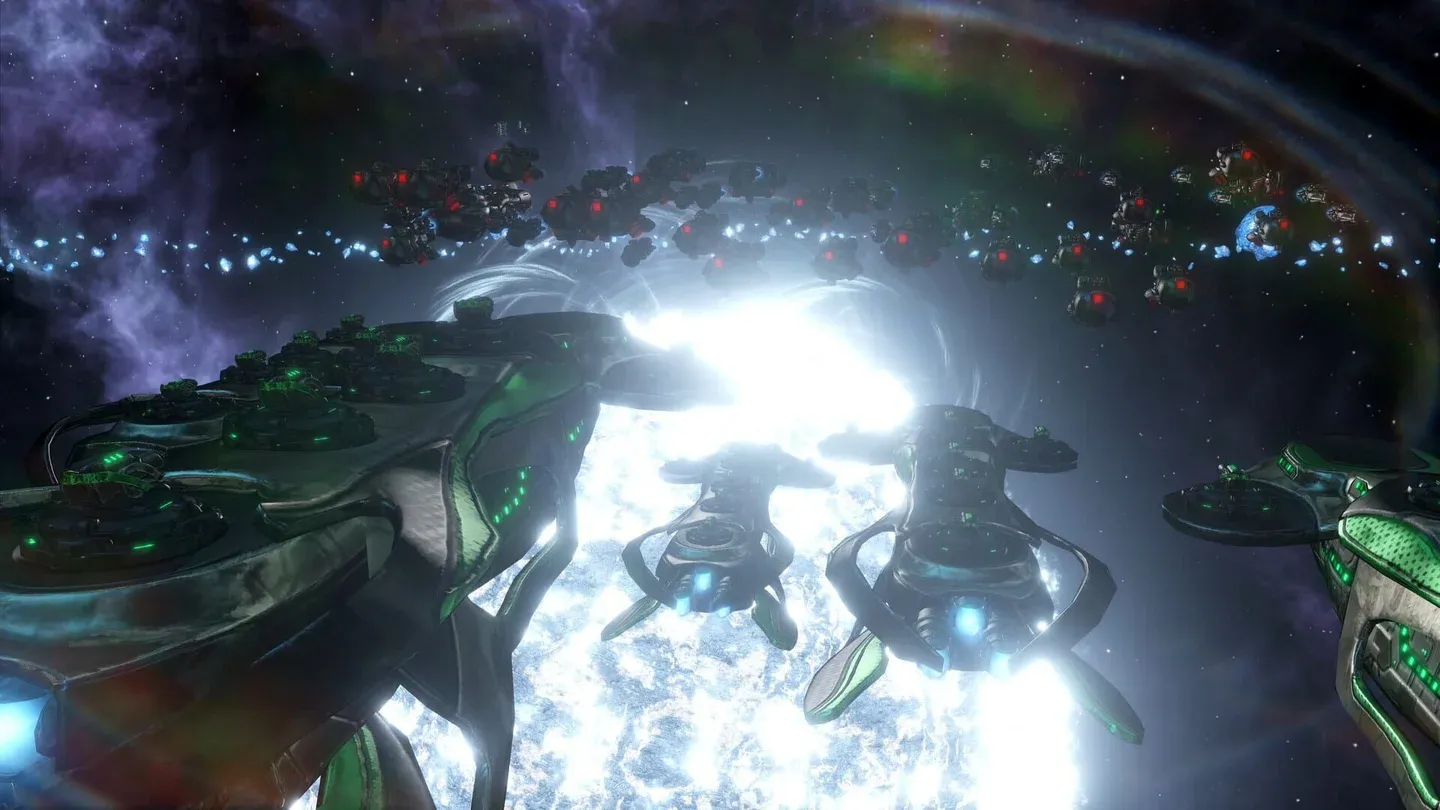
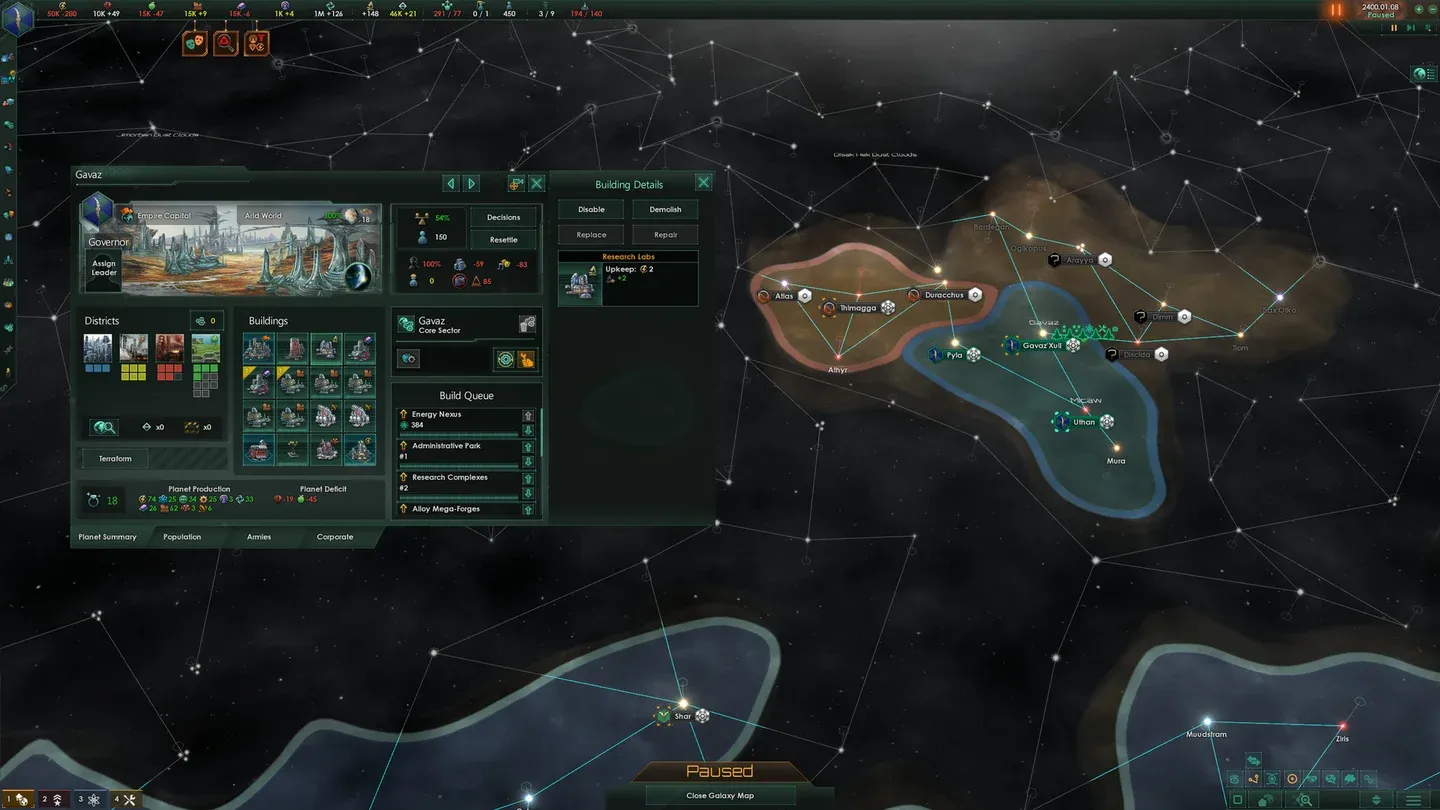
Stellaris launched on 9 May 2016 and has grown into one of the most content-rich grand strategy games on PC and console. Developed by Paradox Development Studio, it drops players into a procedurally generated galaxy where no two campaigns unfold the same way. Science ships survey uncharted star systems connected by hyperlane networks, construction ships establish resource stations, and the decisions made in those first few decades ripple across centuries of galactic history.
The game sits at a crossroads between real-time 4X strategy and traditional Paradox grand strategy. Time flows continuously but can be paused at any moment, giving players room to think through diplomacy, fleet positioning, or economic policy without the pressure of a ticking clock. That pacing is part of what makes Stellaris approachable for players new to the genre while still offering the depth that veteran grand strategy fans expect.
Stellaris content image
Empire building: where does Stellaris begin?
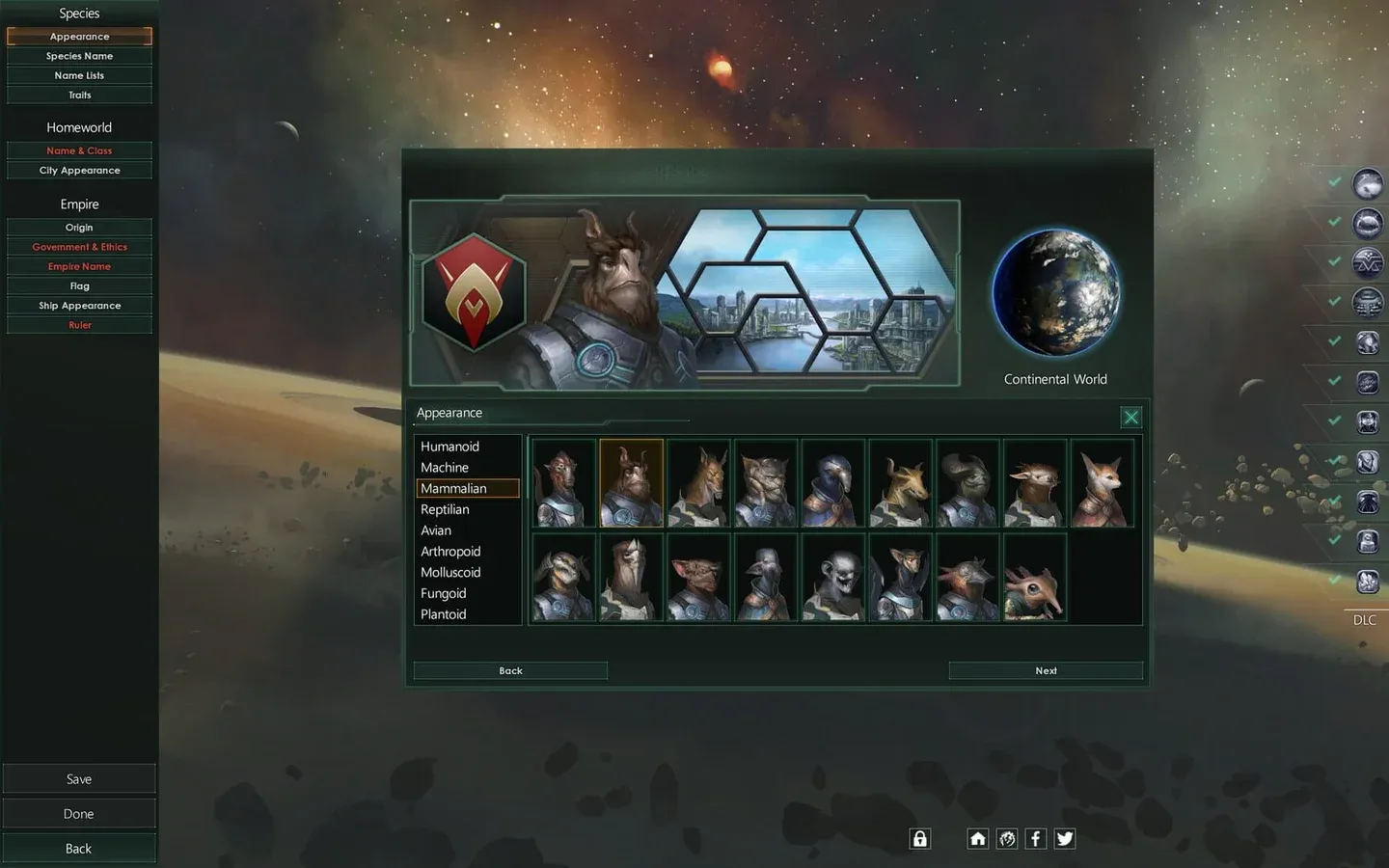
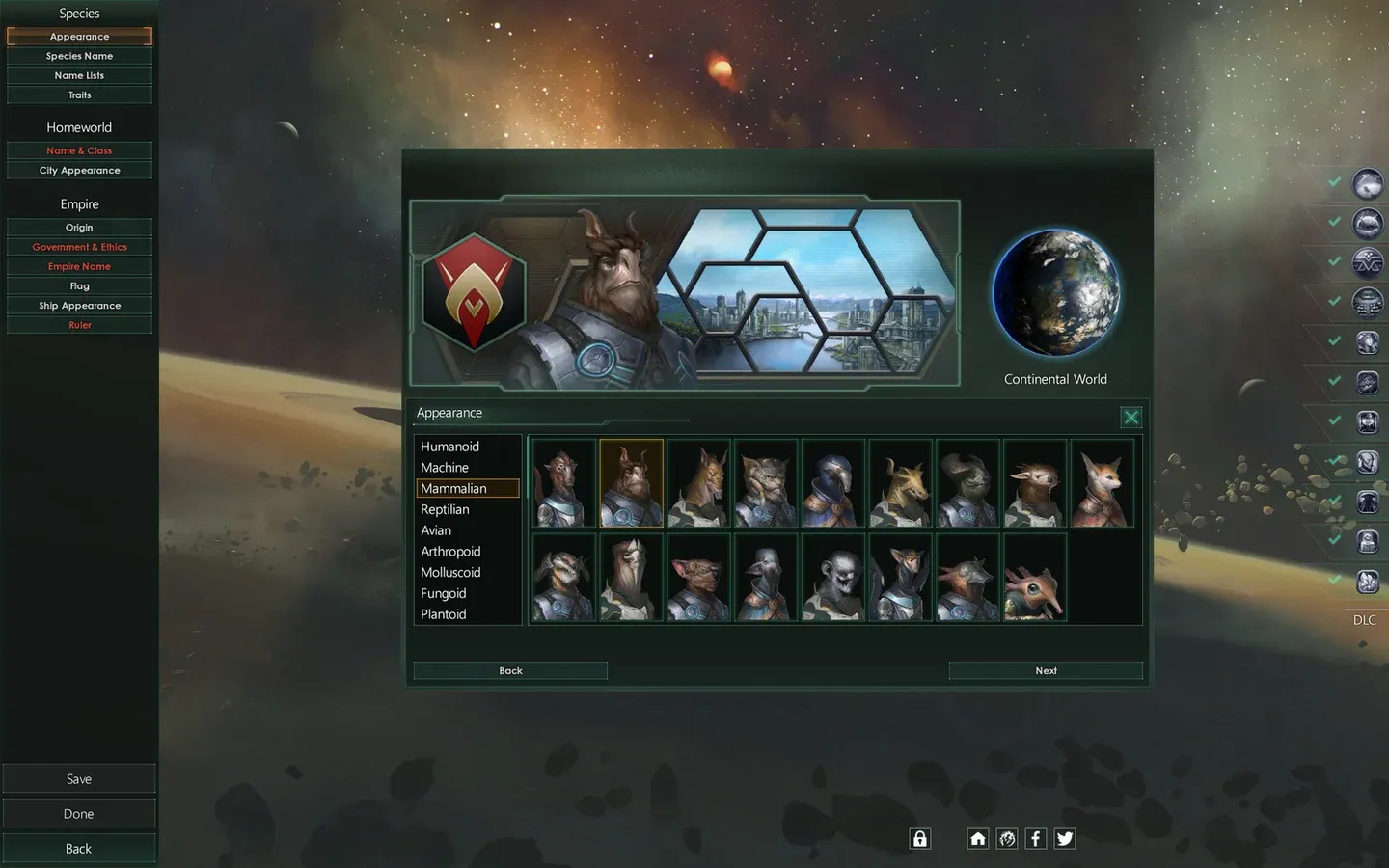
Every run starts at species creation, and this is where Stellaris earns its reputation for customization. Players define their civilization through a combination of species traits, ethics, government types, and civics. A militarist empire of reptilian warriors plays nothing like a pacifist fungal collective pursuing technological ascension. These choices affect more than aesthetics; they determine which policies are available, how pops on colonized worlds behave, and which diplomatic options open or close as the galaxy fills with rival powers.
Stellaris content image
Key mechanics that shape your empire:
- Species traits and ethics alignment
- Government type and civic selections
- Ascension paths (genetic, cybernetic, or psionic)
- Resource management across energy, minerals, and alloys
- Hyperlane exploration and colonization
Diplomacy, warfare, and galactic crises
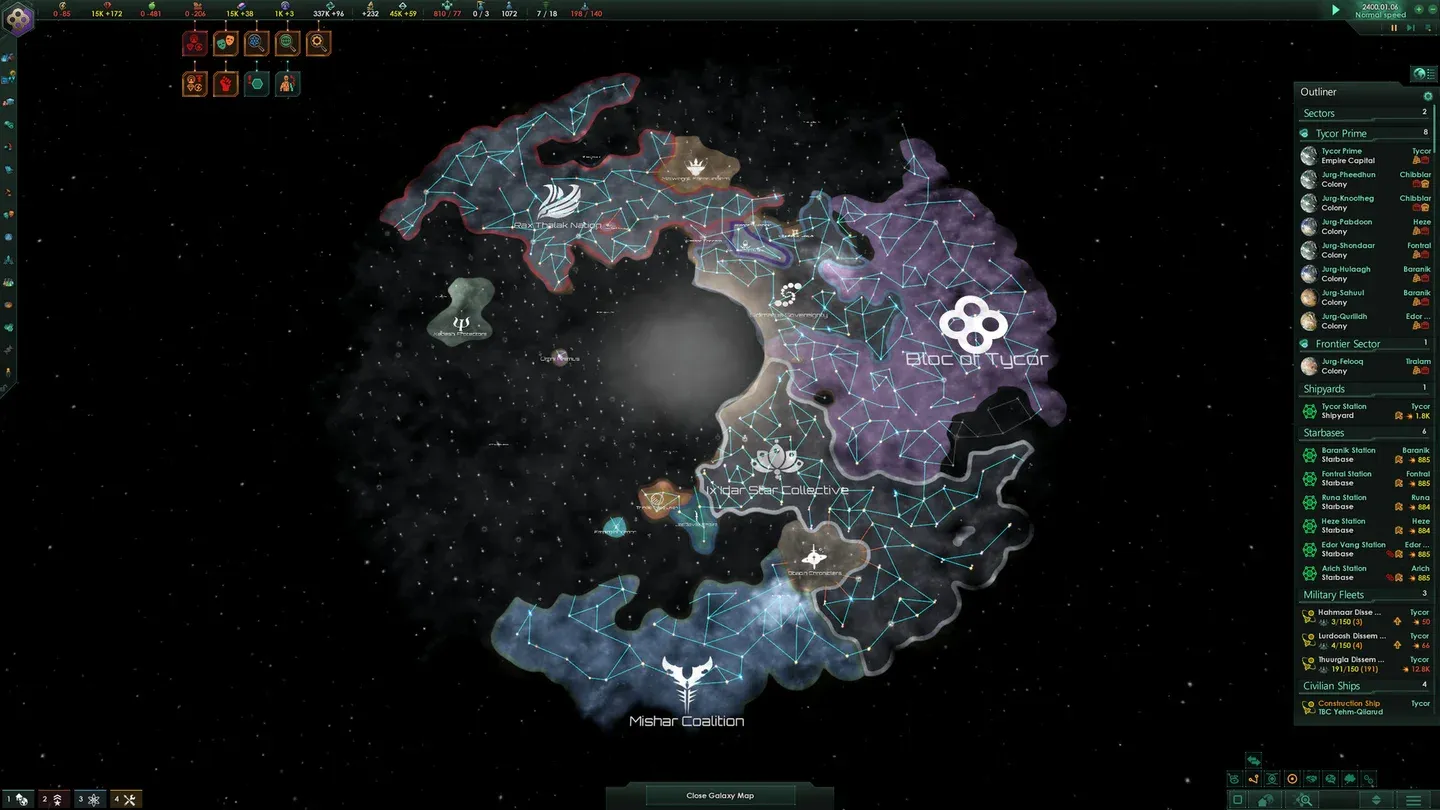
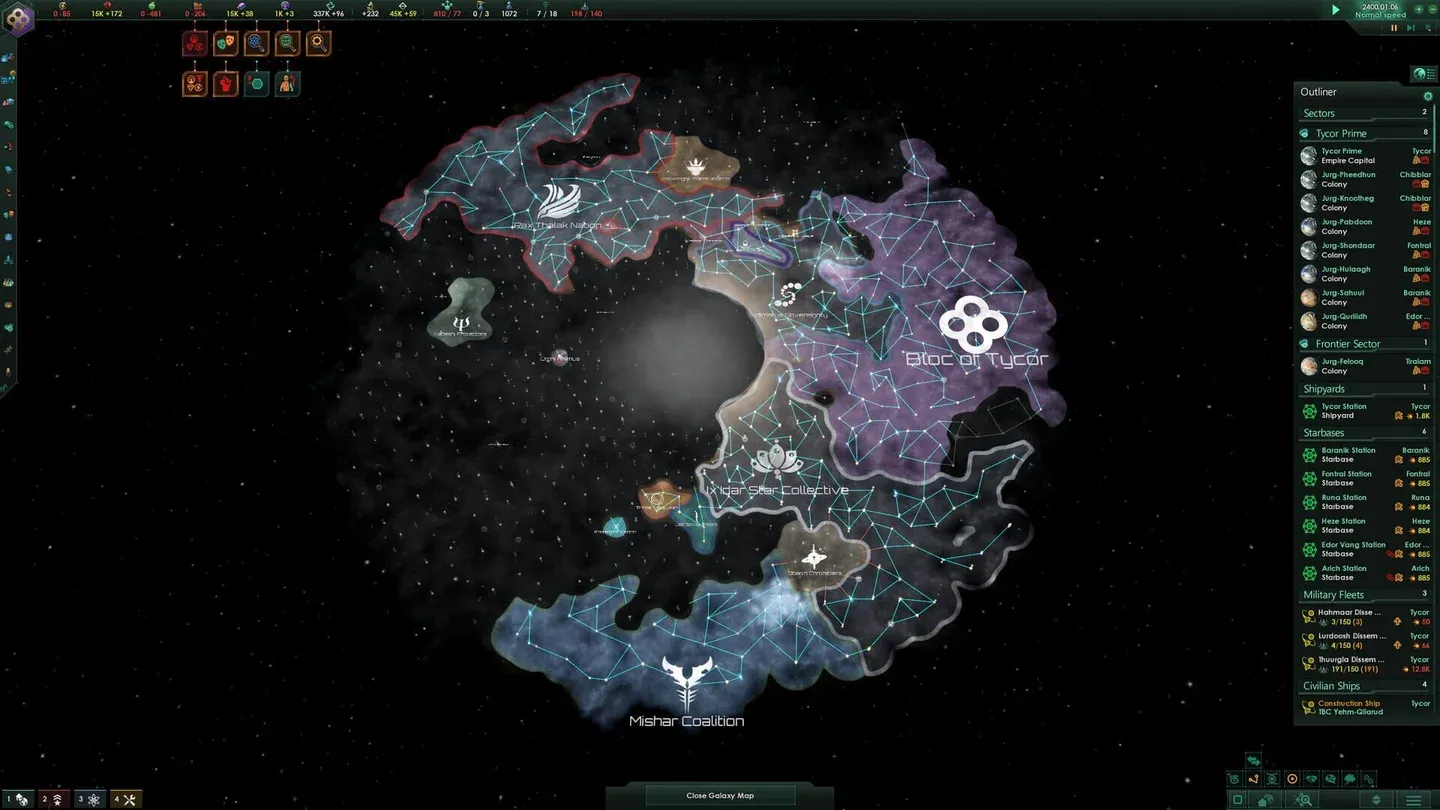
The mid-game is where Stellaris finds its tension. Alliances form, federations consolidate power, and the first major wars test whether an empire's economy can sustain prolonged conflict. Trade agreements and espionage mechanics added through expansions give players alternatives to outright conquest, though the game never pretends diplomacy is risk-free. Rival empires pursue their own agendas, and a neighbor that seemed friendly in the early decades can become a serious threat once they've had time to expand.

Stellaris content image
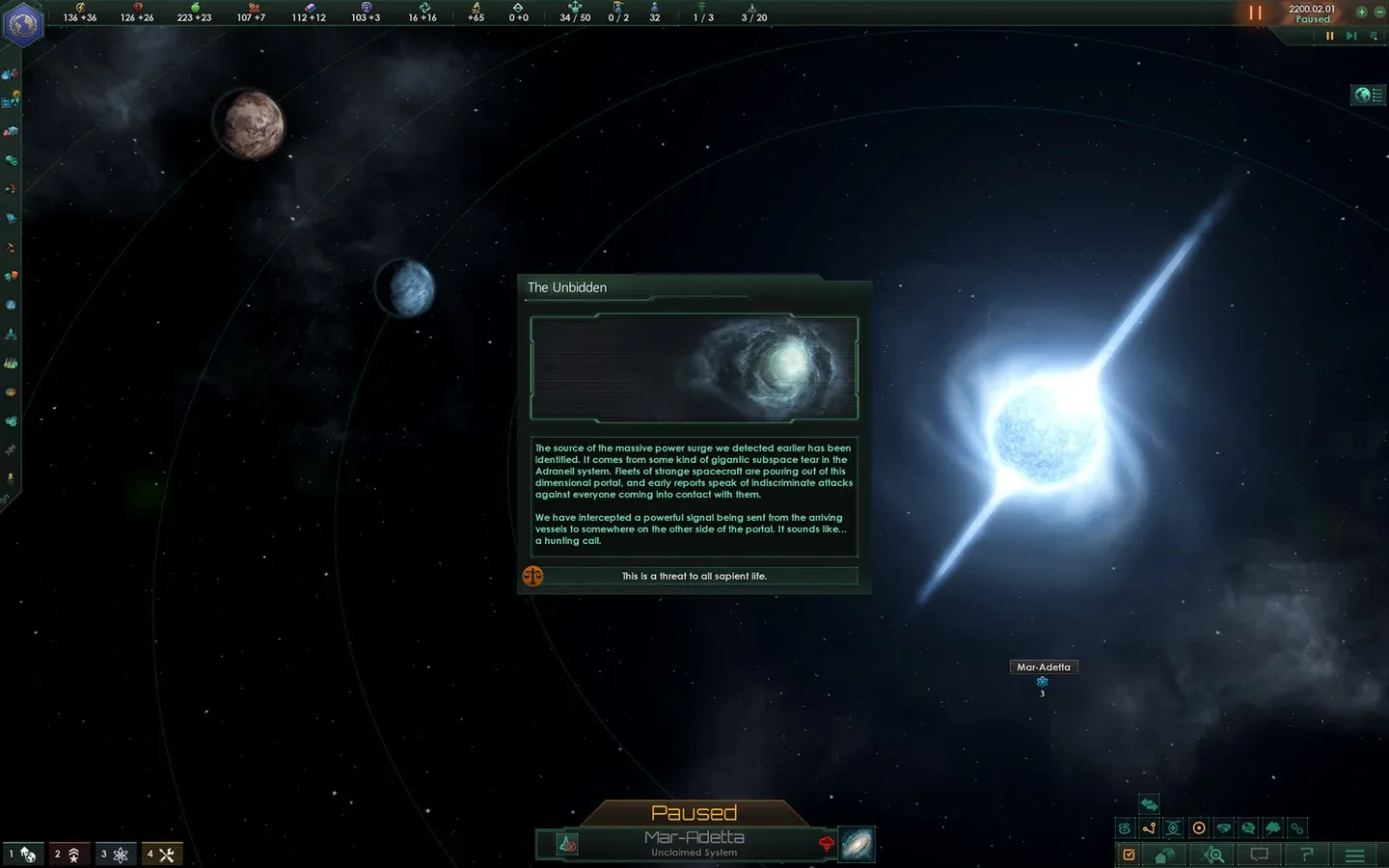
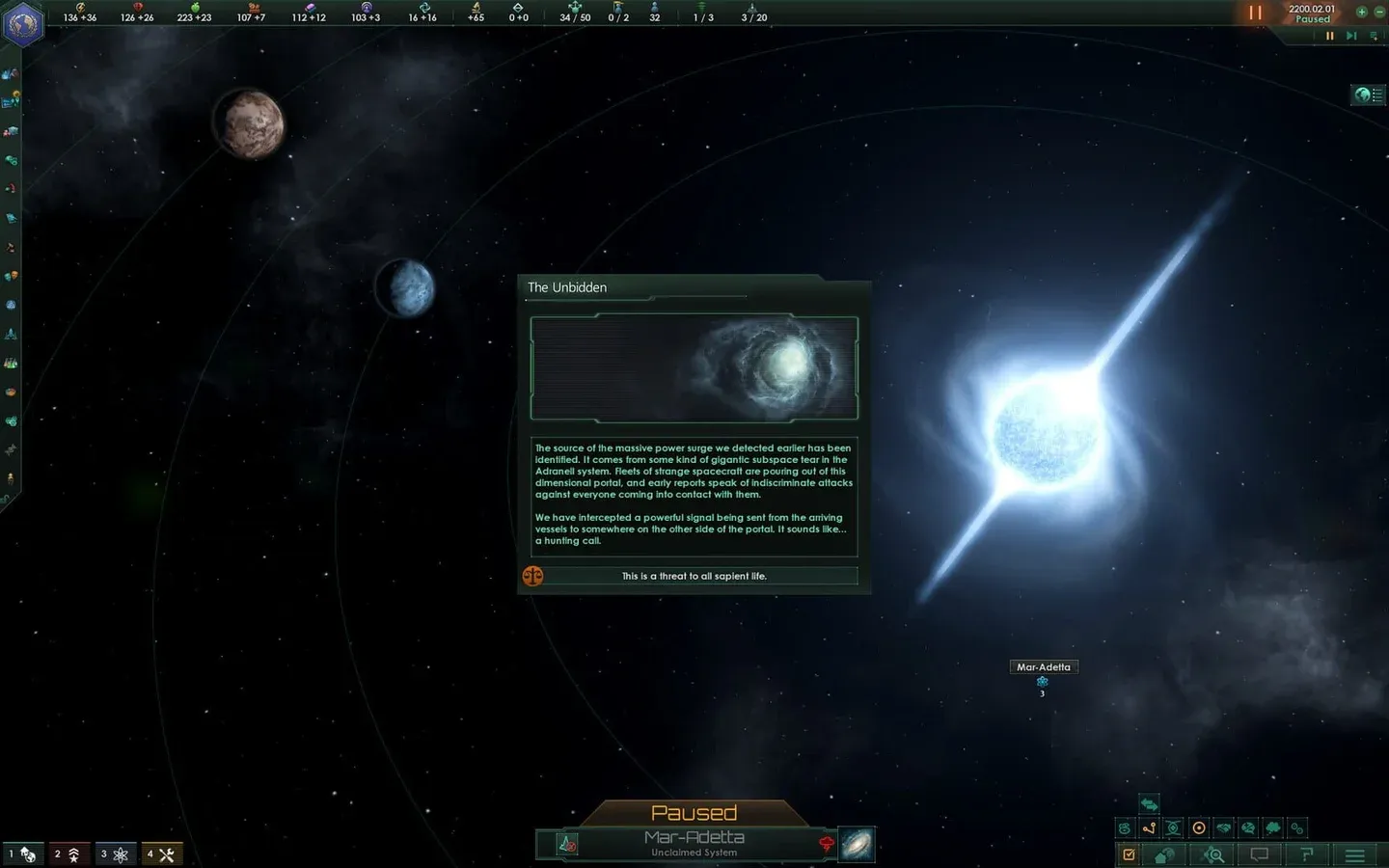
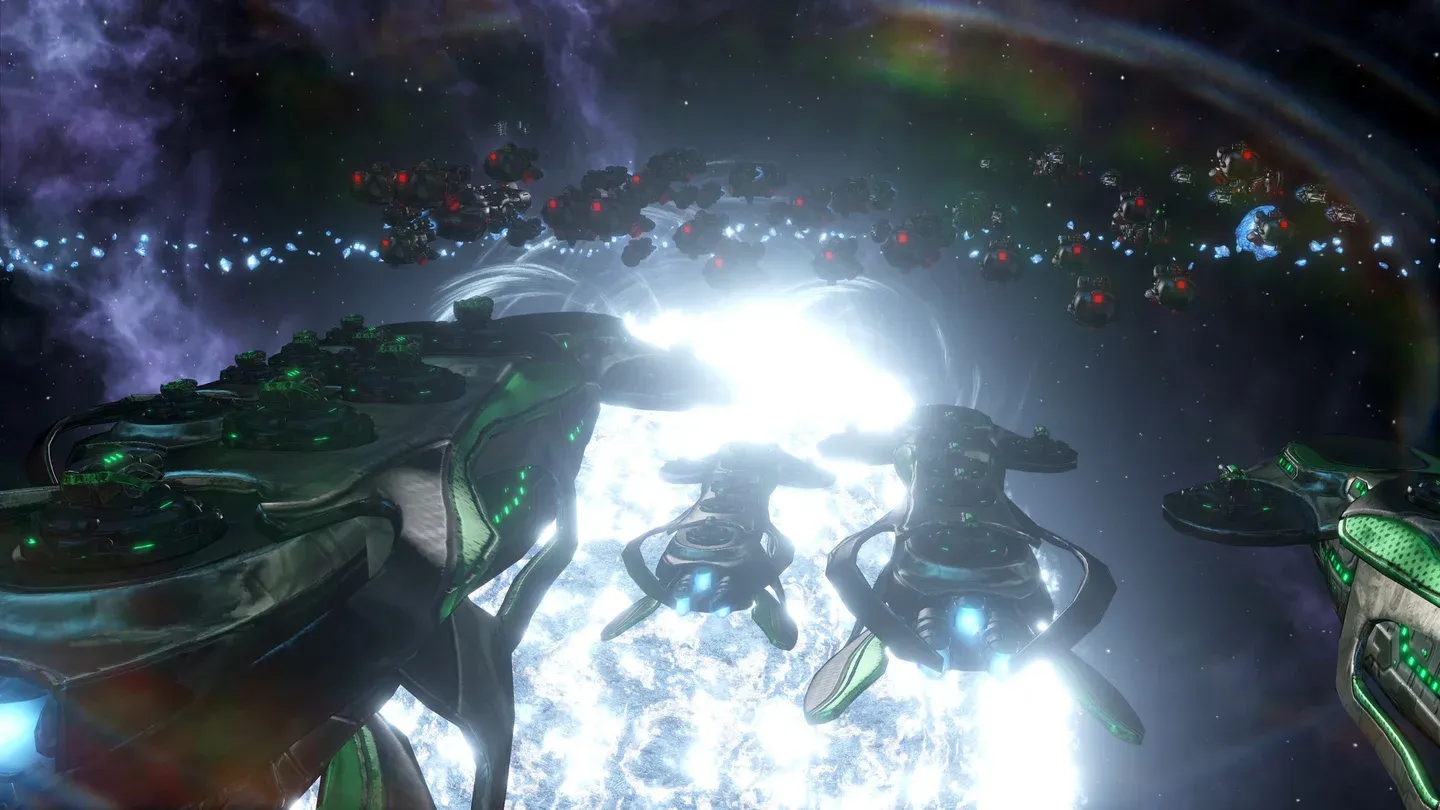
Late-game crises are the defining feature that separates Stellaris from most 4X competitors. Extragalactic invasions, rogue synthetic uprisings, and dimensional horrors force the entire galaxy to respond, often requiring former enemies to cooperate or face extinction. These events shift the tone dramatically, turning a measured empire-building game into a desperate survival scenario.
Content, replayability, and platform availability
Over nearly a decade of post-launch support, Paradox has released a substantial number of expansions adding megastructures, new empire archetypes, the Overlord vassal system, and additional crisis scenarios. The Steam Workshop extends replayability further with community-created mods ranging from total conversions to quality-of-life tweaks. The console edition brings the core experience to PlayStation and Xbox, including PS5 support with the Overlord expansion available separately at $19.99, making the game accessible to players who prefer a controller.
Stellaris content image
With cross-platform availability spanning Windows, macOS, iOS, Android, Xbox, and PlayStation, Stellaris reaches more players than most grand strategy games ever attempt. The combination of procedural generation, deep customization, and years of expansion content means a single purchase can absorb hundreds of hours before the galaxy starts to feel familiar.