

Biggest discounts, free games, and limited-time offers across every major gaming store.
Never pay full price again.
Overview
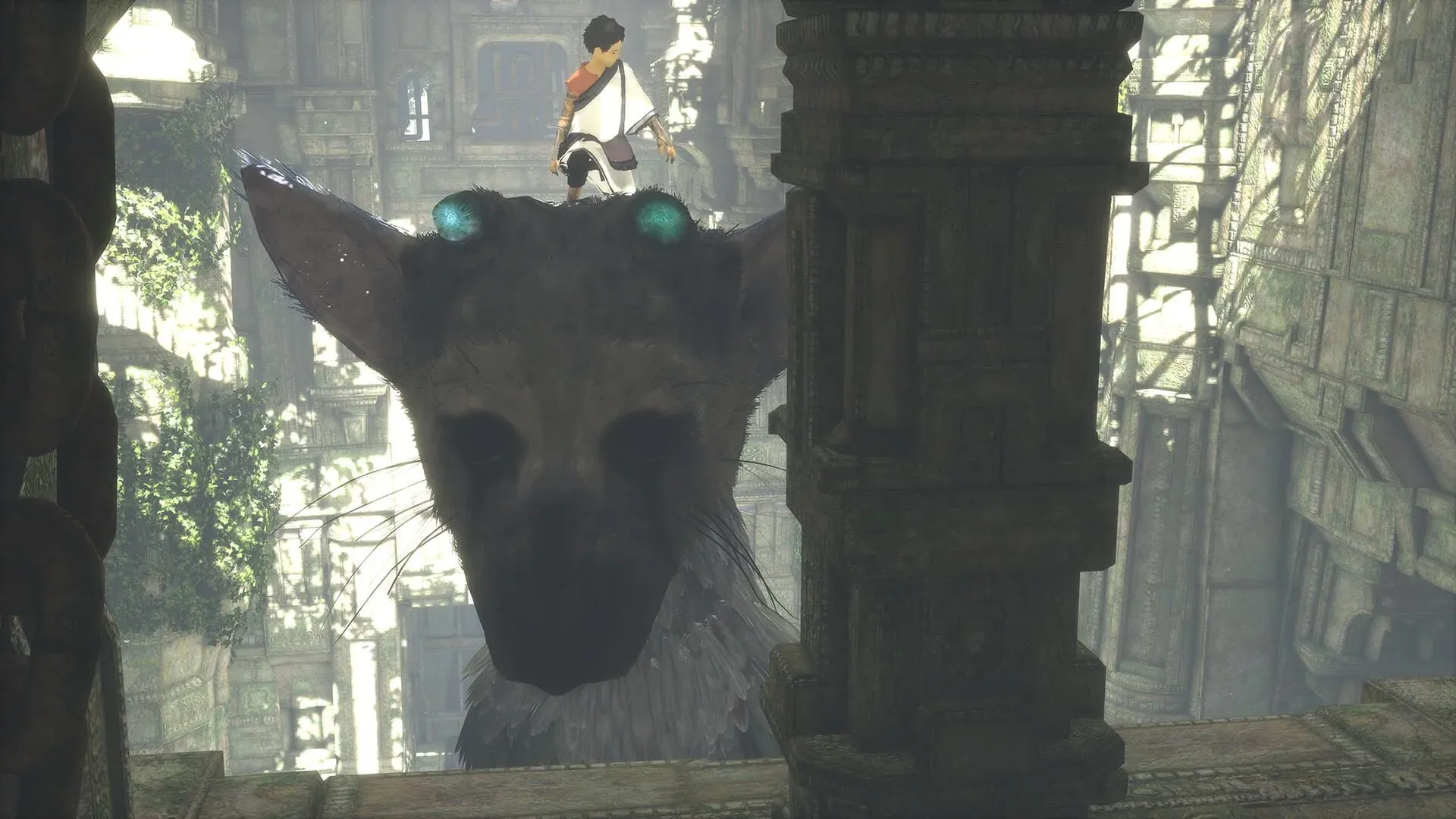
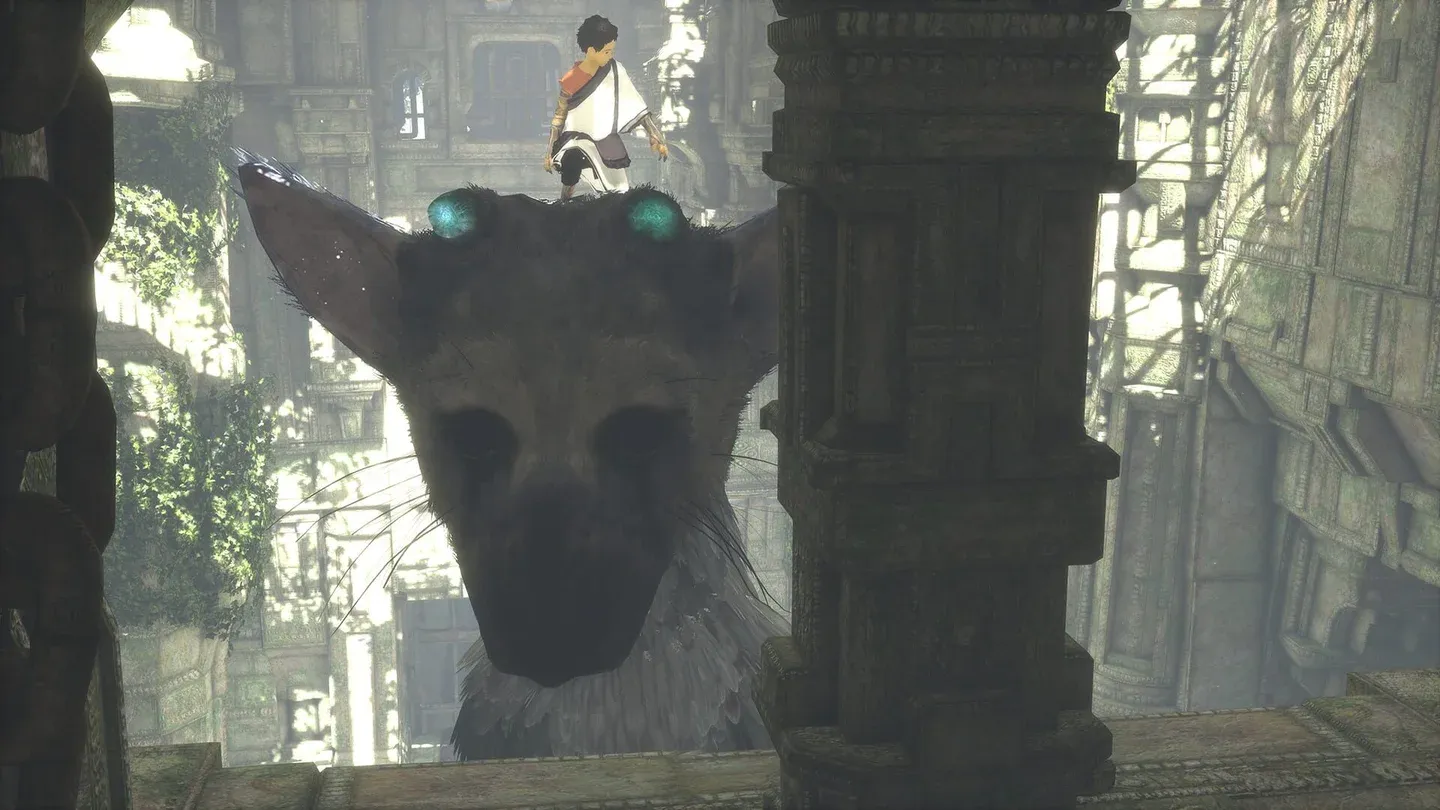
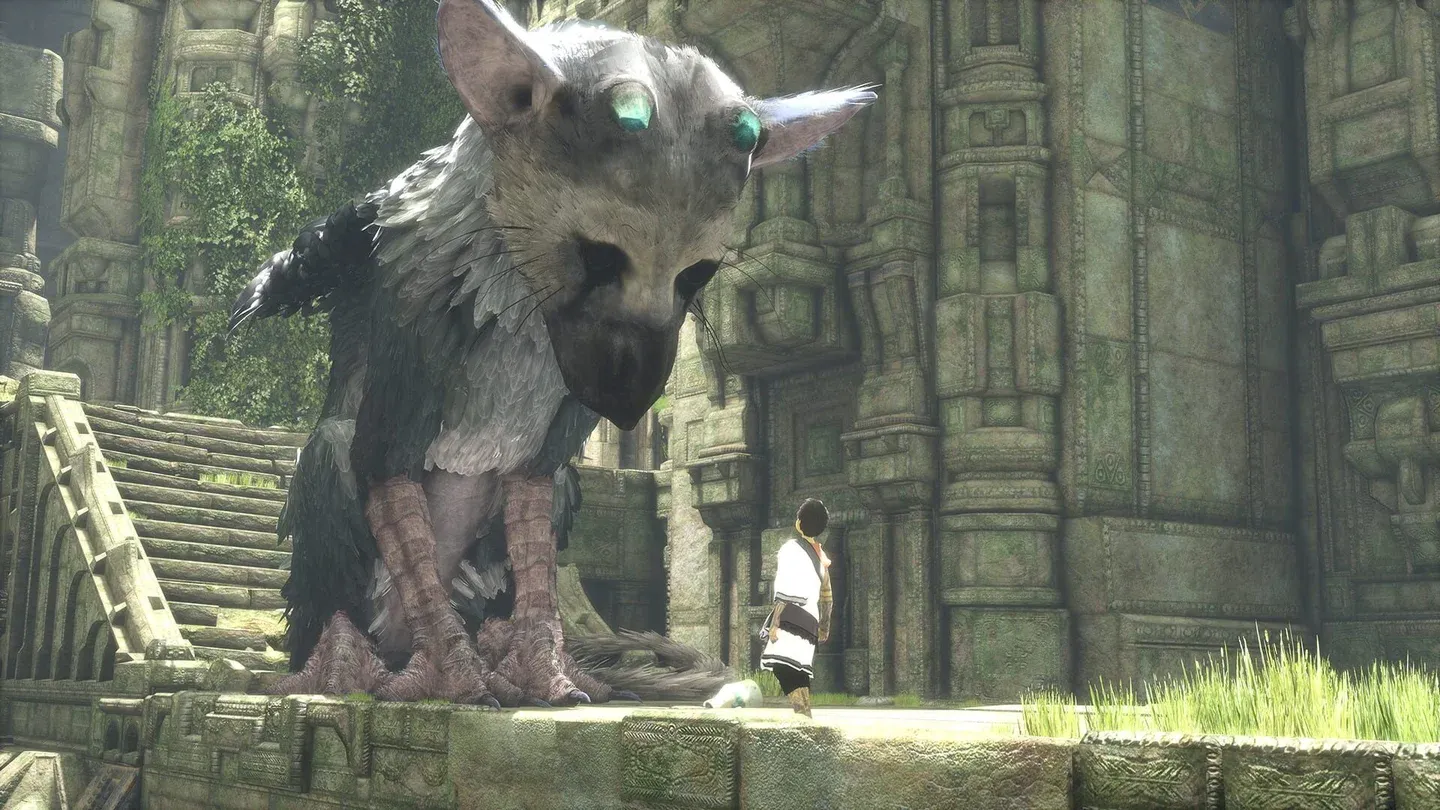
The Last Guardian is a third-person puzzle-adventure developed by Team Ico and published by Sony Interactive Entertainment, originally released on December 6, 2016 for PS4 and later arriving on PC via Steam. The game follows a nameless boy who wakes up in a ruined fortress alongside Trico, a massive creature that resembles a cross between a dog, a bird, and a cat. Together, they work through crumbling towers, ancient mechanisms, and vertical traversal challenges to find a way out.
Trico is not a tool. That distinction matters more than anything else in the game. He moves on his own schedule, reacts to his environment with genuine unpredictability, and sometimes ignores commands entirely. Players who approach this as a traditional puzzle game will find it frustrating. Players who treat Trico like an actual animal, one that needs coaxing, reassurance, and patience, will find something far more memorable.
The game carries a PlayStation Store rating of 4.42 out of 5 stars from nearly 20,000 players, a score that reflects how divisive and beloved it is in equal measure.
The Last Guardian content image
Gameplay and mechanics
Core interactions in The Last Guardian fall into a few distinct categories:
The Last Guardian content image
- Climbing and traversal across vertical ruins
- Directing Trico toward specific targets or paths
- Solving environmental puzzles that require both characters to act
- Removing obstacles that block or harm Trico
- Protecting the boy from armored enemy constructs
The boy controls with a physicality that feels deliberately imprecise. He stumbles, grabs ledges awkwardly, and hangs off Trico's feathers with visible effort. This is a deliberate design choice, not a technical shortcoming. The weight of every movement reinforces how small and vulnerable the boy is in this world.
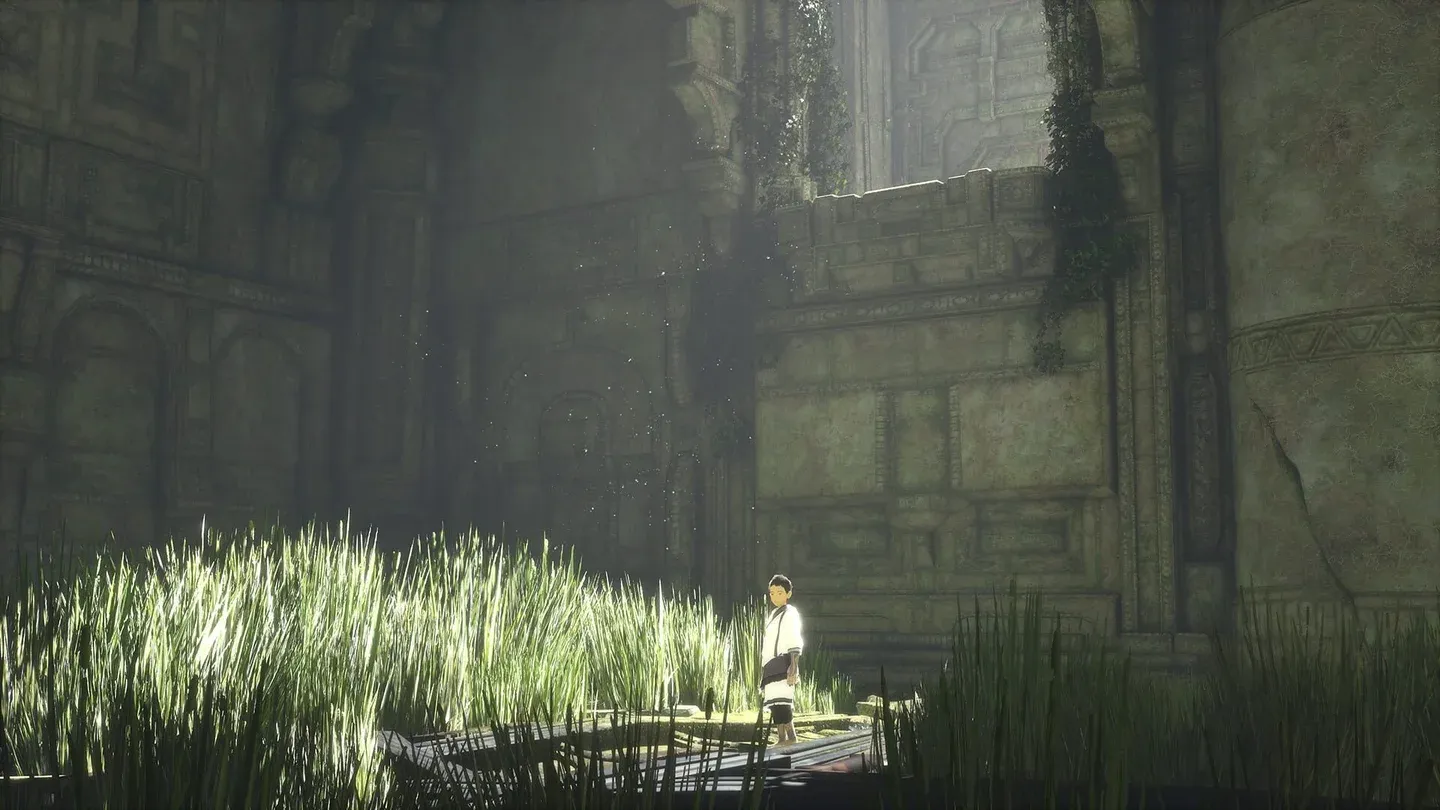
The Last Guardian content image
Puzzles rarely have a single obvious solution. Most require reading the environment, figuring out where Trico can reach, and then positioning the boy to trigger the creature's natural curiosity or instincts. The game trusts players to observe rather than follow explicit instructions, which keeps the experience feeling exploratory throughout.
World and setting
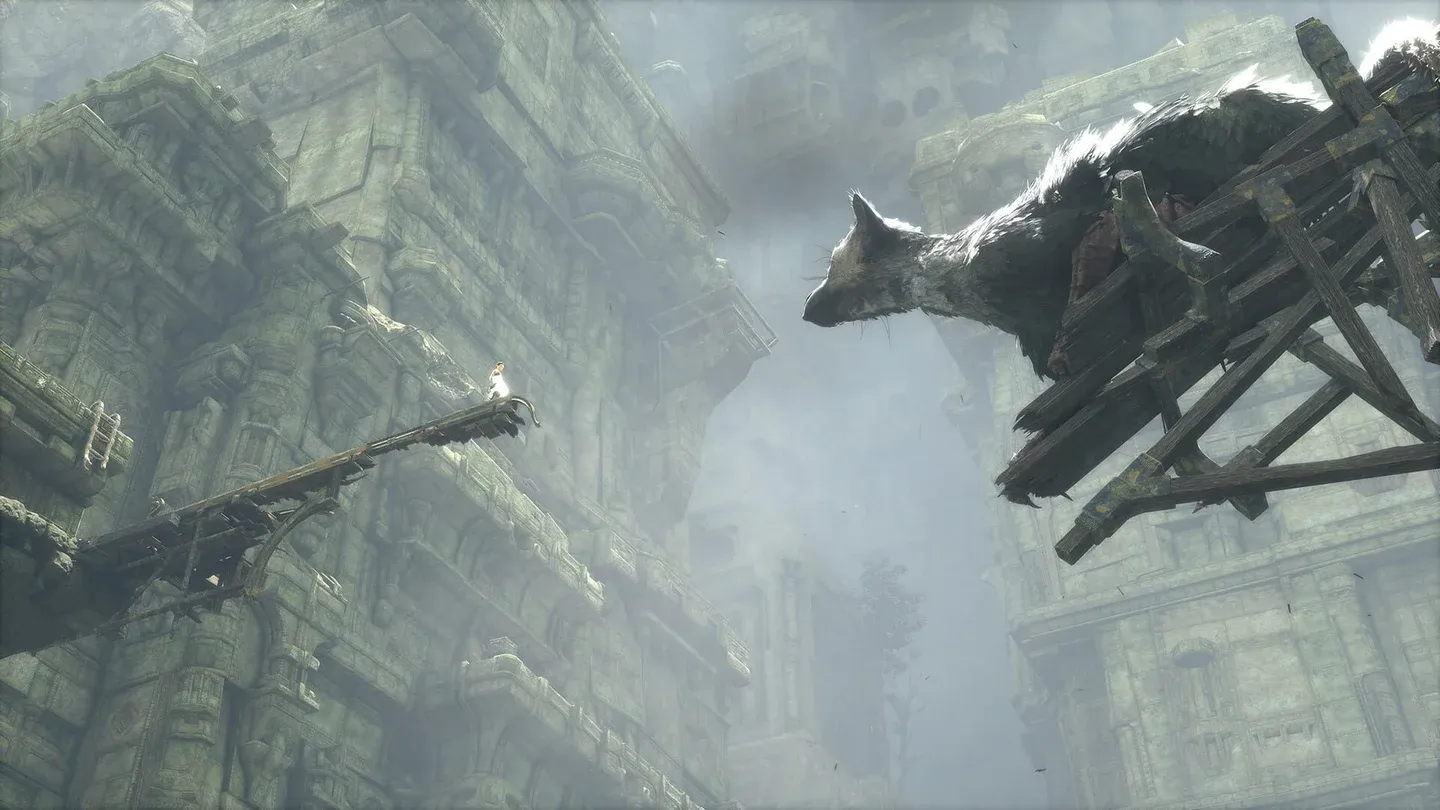
The fortress the boy and Trico navigate has no name and no clear history explained to the player. Ancient stone corridors give way to open-air cliffs, flooded chambers, and enormous mechanical structures that hint at a civilization built specifically around creatures like Trico. The scale is relentless. Every room feels like it was built for something much larger than a child.
Director Fumito Ueda, who previously made Ico and Shadow of the Colossus, applies the same philosophy here: tell the story through architecture and behavior rather than dialogue or cutscenes. Most of what players learn about this world comes from paying attention to how Trico reacts to specific rooms, symbols, and objects.
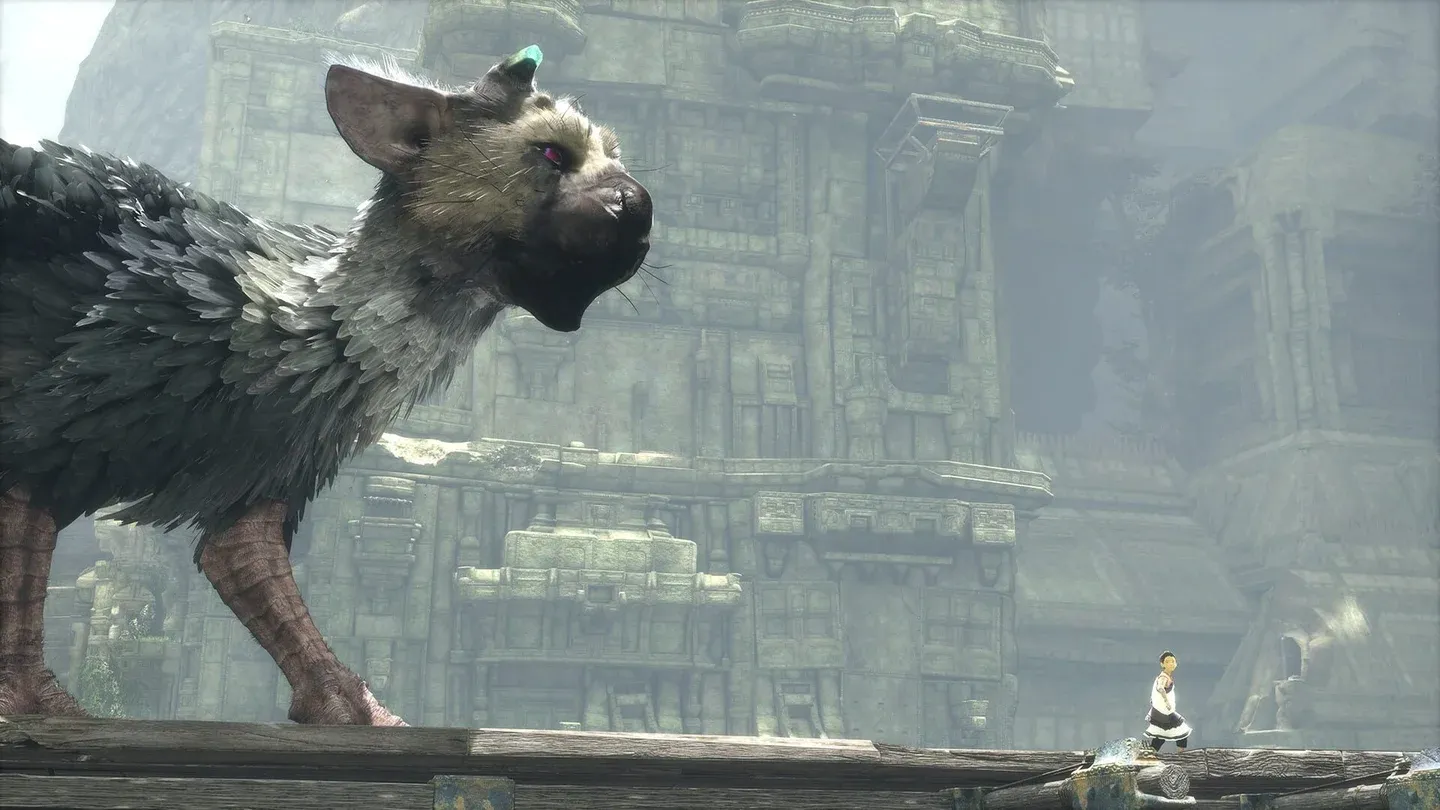
The Last Guardian content image
The lighting and environmental detail hold up well, particularly in sequences where late afternoon sun cuts through broken stone ceilings or water catches the glow of Trico's glowing tail. The audio design earns equal credit, with Trico's vocalizations doing significant emotional work throughout.
Impact and legacy
The Last Guardian spent nearly a decade in development, shifting from a PS3 project to a PS4 release that many assumed would never arrive. That history gives the finished game an unusual weight. It arrived not as a technical marvel but as proof that Ueda's specific, patient approach to game design still had an audience.
The relationship between the boy and Trico remains one of the most studied examples of AI companion design in the medium. The deliberate friction in Trico's behavior, the moments where he simply won't cooperate, creates an attachment that fully obedient companions never achieve. That friction is the game's core mechanic, and its most lasting contribution to the puzzle-adventure genre.