
Biggest discounts, free games, and limited-time offers across every major gaming store.
Never pay full price again.
Overview
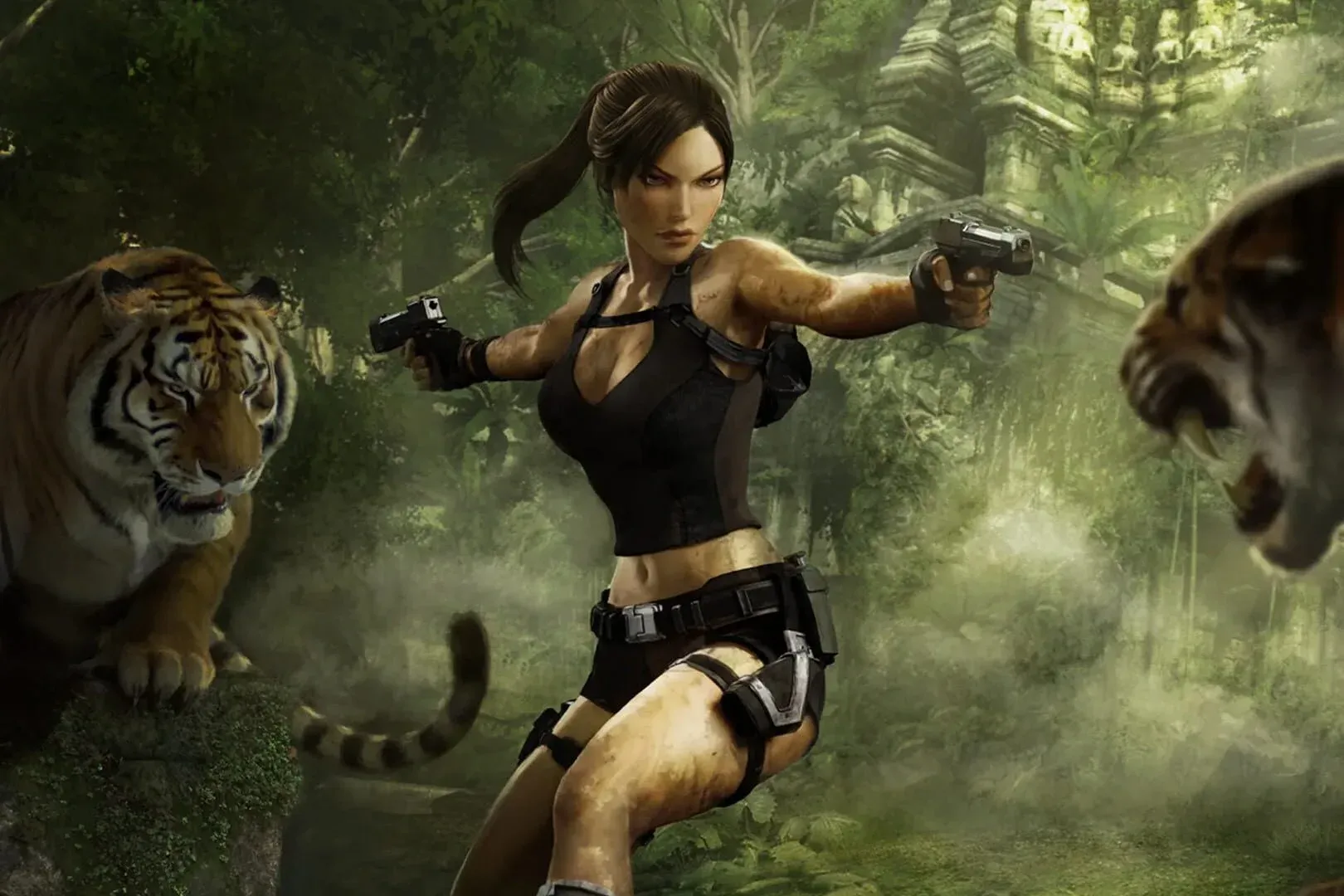
Tomb Raider: Underworld, released November 21, 2008 by Crystal Dynamics, is the third chapter in the Legend continuity following Tomb Raider: Legend and Tomb Raider: Anniversary. Lara's search for the Norse underworld of Helheim takes her through the Mediterranean Sea floor, the coast of Thailand, Arctic islands, and Mexican jungles. The story leans into monomyth structure, weaving Viking legend into a globe-trotting narrative that gives each location a mythological reason to exist.
The game runs on a physics engine that treats the environment as a genuine interactive system rather than a painted backdrop. Surfaces accumulate mud and water on Lara's model in real time, enemies react to the terrain, and objects retain physical properties that matter for puzzle solutions. That technical foundation shapes how every section of the game plays.
Tomb Raider: Underworld content image
Gameplay and mechanics
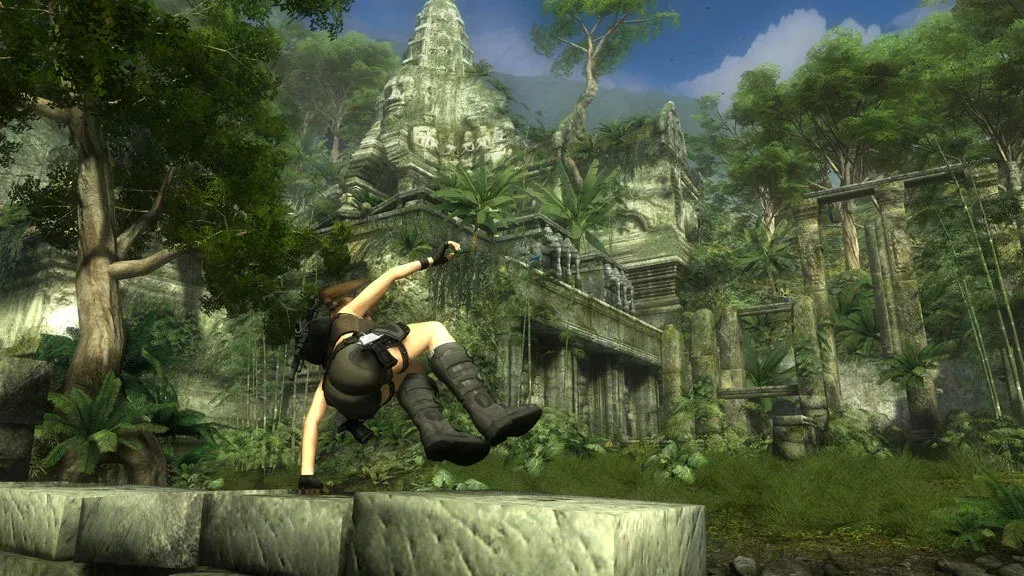
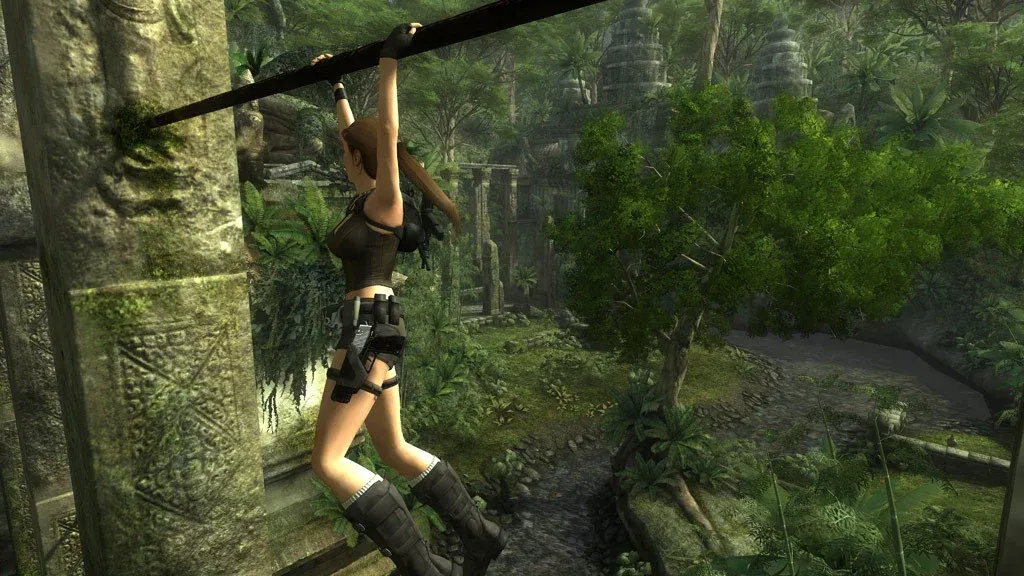
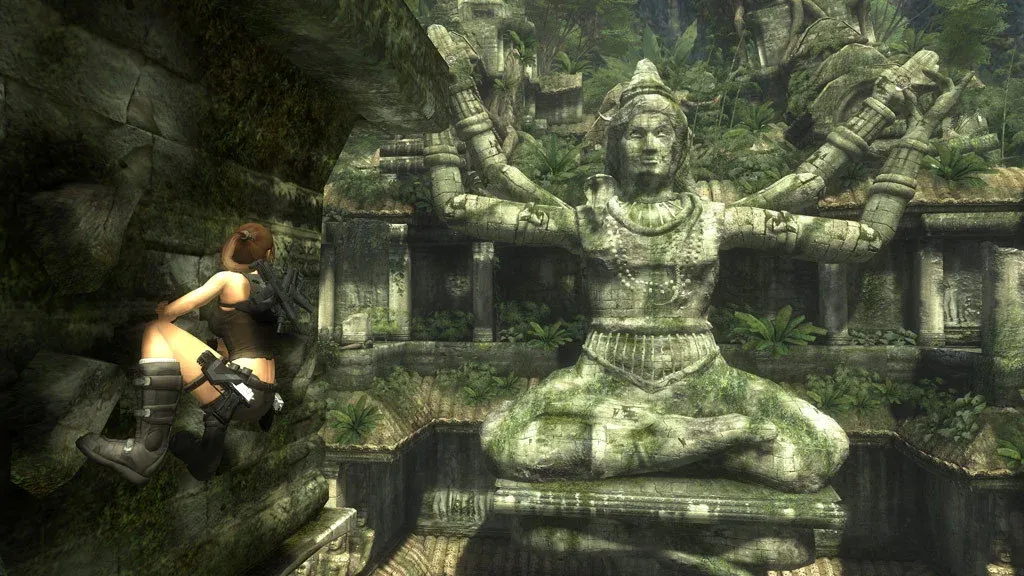
Exploration sits at the center of Underworld's design. Lara's acrobatic toolkit is the most expansive in the Crystal Dynamics trilogy at that point, covering wall runs, pole swings, beam traversal, and free-climbing across detailed geometry. The multi-purpose grapple handles climbing, rappelling, and object manipulation, making it the single most-used tool in the game.
Tomb Raider: Underworld content image
Key mechanics include:
- Active Sonar map that pings a 3D image of surroundings
- Dual-target combat system for engaging multiple enemies
- One-handed shooting while suspended from the grapple
- Pacify or lethal options for enemy encounters
- All-terrain hybrid motorbike for outdoor traversal sections
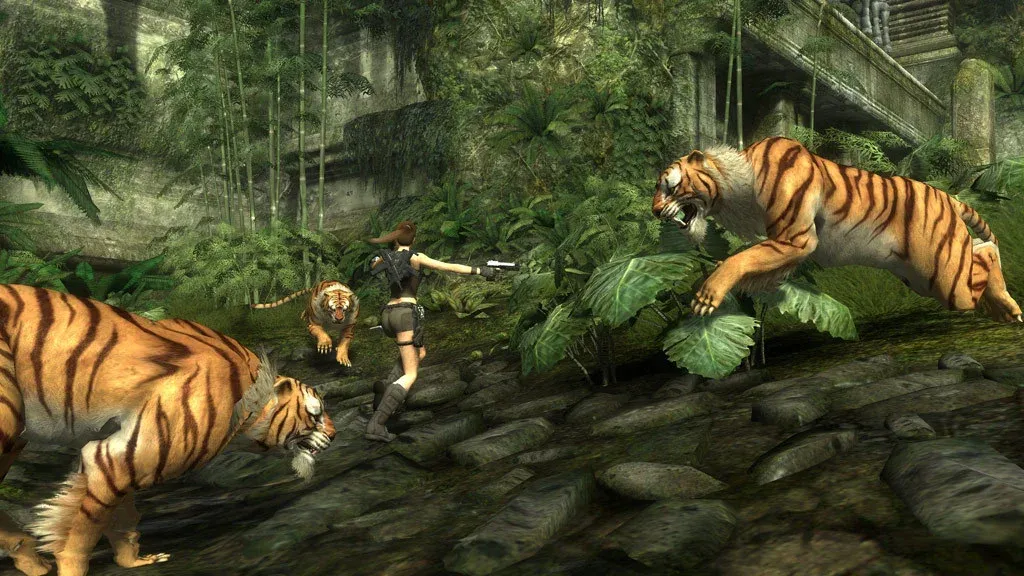
Combat gives players a choice between neutralizing enemies non-lethally or going loud, and the dual-target system lets Lara lock onto two opponents simultaneously. Shooting with one hand while hanging from a ledge or grapple cable adds a layer of verticality to encounters that earlier entries in the series didn't have.
World and setting
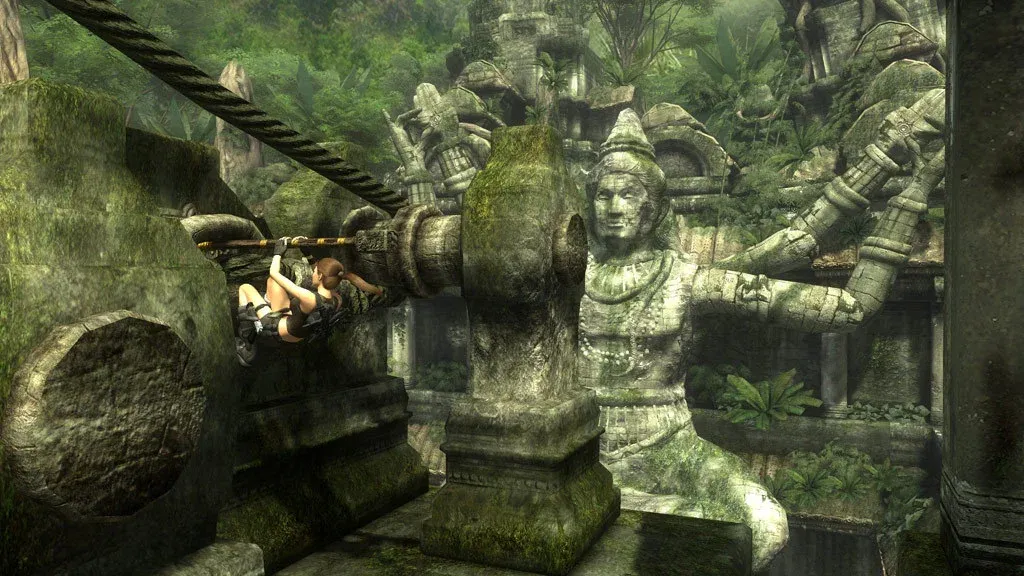
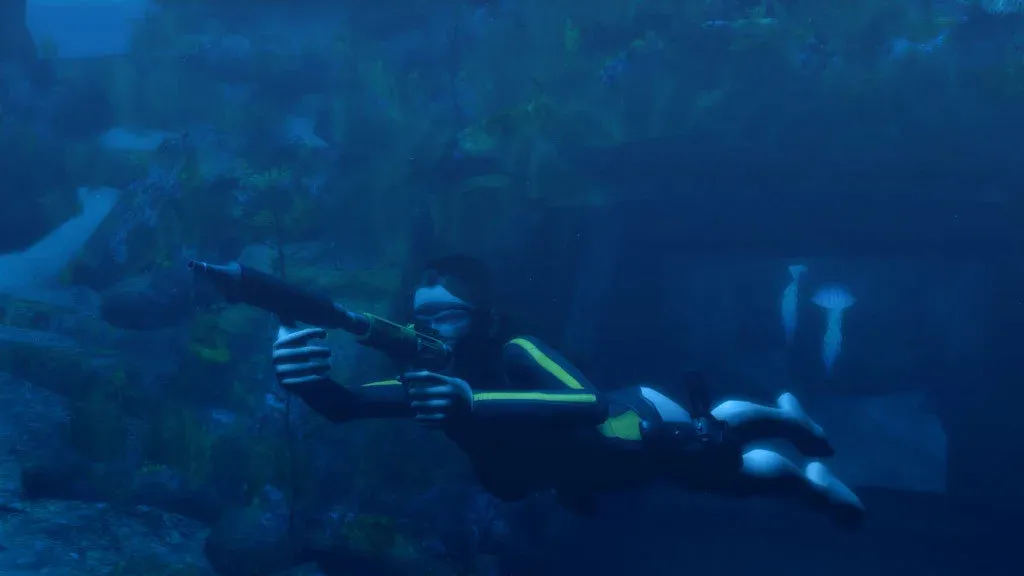
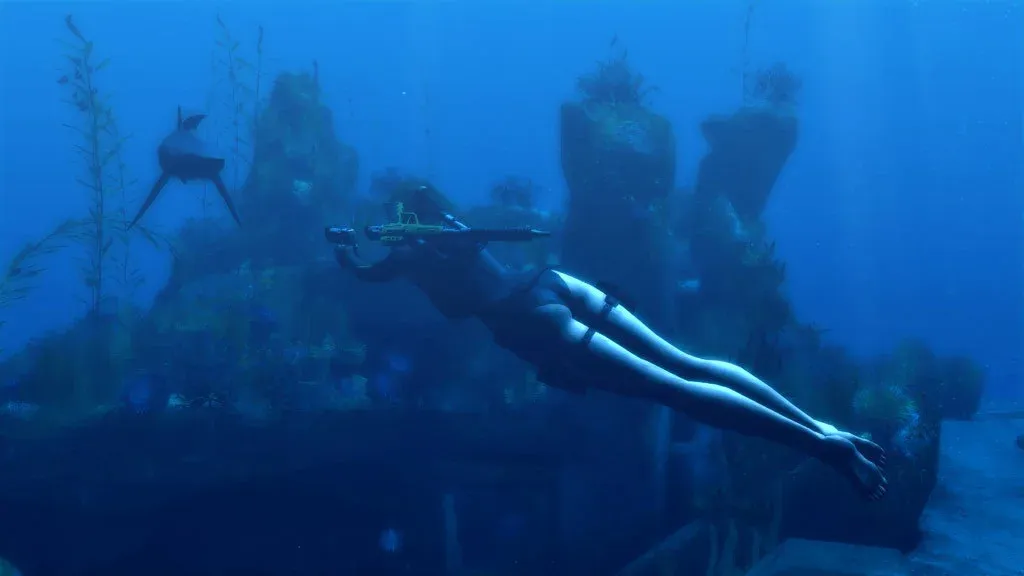
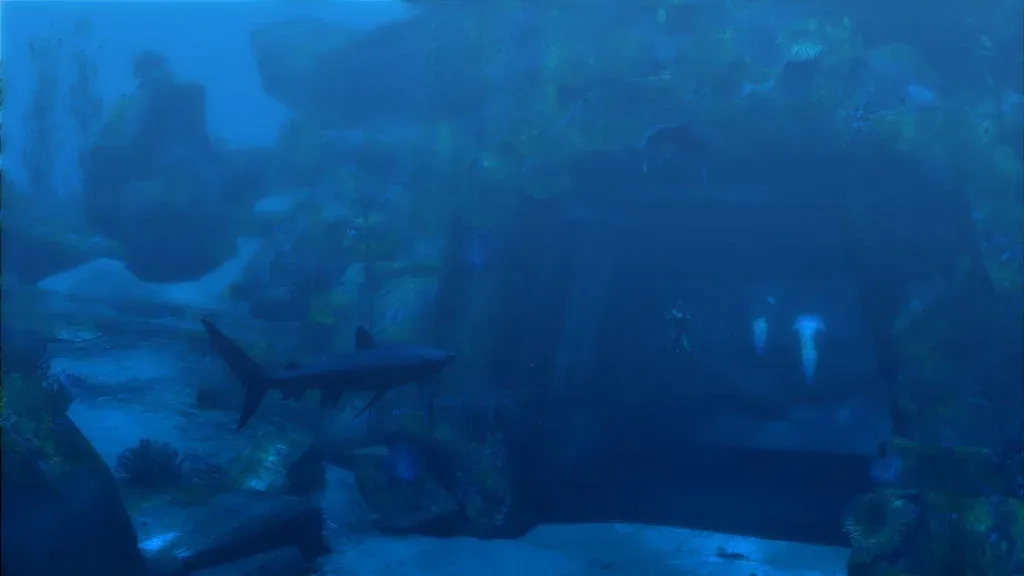
Each environment in Underworld serves the story's mythological framework. The Mediterranean opening drops Lara into underwater ruins, establishing the game's tone before the plot expands outward. Thailand's coastal temples, the frozen Nordic islands, and Mexico's jungle ruins each carry distinct visual identities while feeding into the Helheim narrative thread.
Tomb Raider: Underworld content image
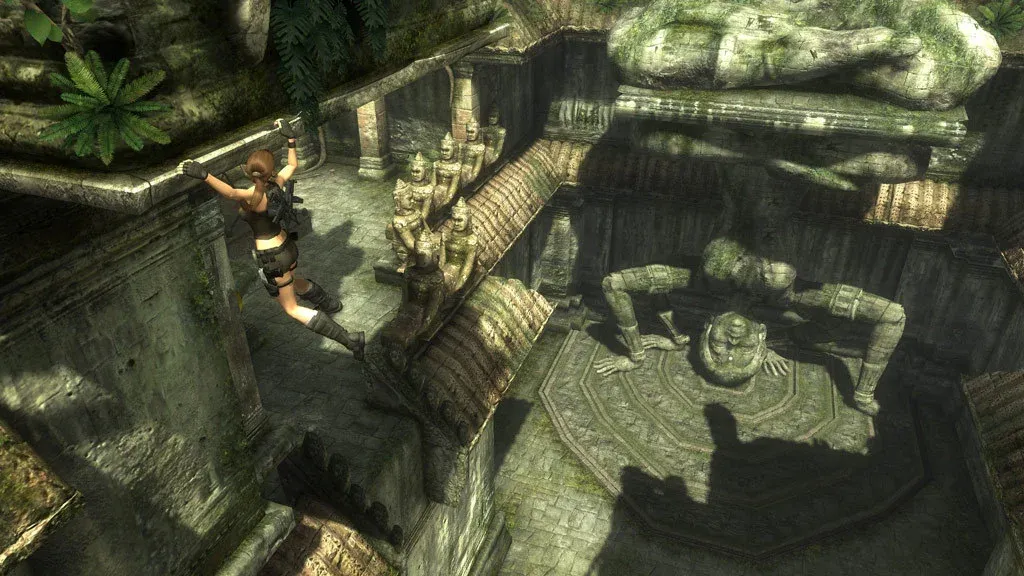
The attention to environmental detail goes beyond aesthetics. Puzzle design is tied directly to each location's architecture and mythology, so solutions feel grounded in the world rather than arbitrary. Multi-stage puzzles treat entire rooms as mechanisms, requiring Lara to understand the space before acting on it.
Innovation and unique features
The Active Sonar map stands out as the most original tool Crystal Dynamics added to the series. Rather than a flat overhead layout, it generates a real-time 3D image of the immediate area, surfacing hidden alcoves and collectibles that standard navigation would miss. It reframes exploration as an active investigative process.
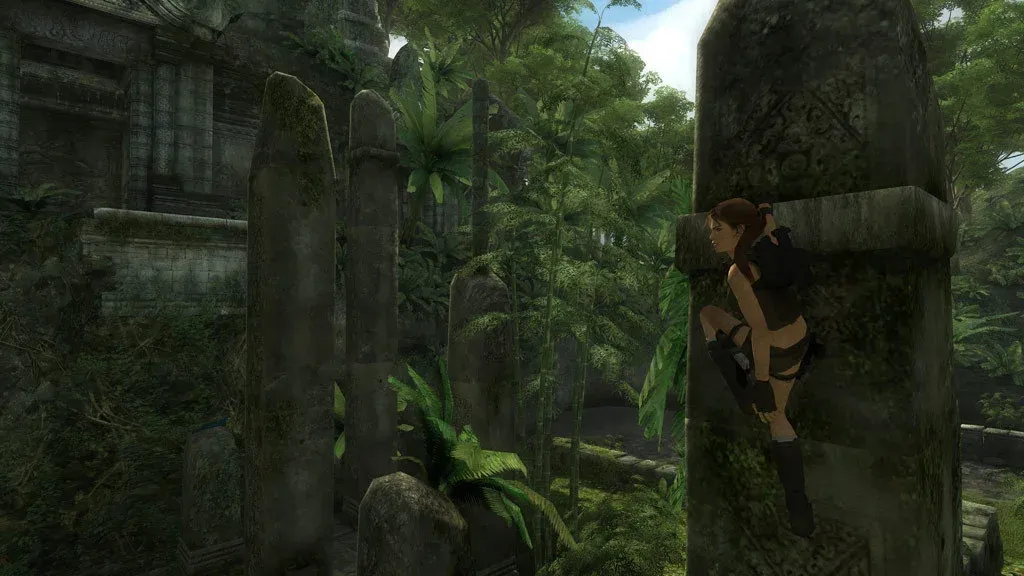
Physics-based interaction extends to combat and traversal in ways that were uncommon for action-adventure games in 2008. Lara's movement responds to surface conditions, and the grapple cable behaves with physical weight. These systems work together to make the world feel consistent rather than compartmentalized into separate gameplay modes.
Tomb Raider: Underworld content image
Impact and legacy
Underworld closed out the Legend continuity and represented Crystal Dynamics at a specific technical peak before the series was rebooted in 2013 with a harder survival focus. The game sits at a distinct point in Lara Croft's history: more grounded than the classic PS1 era, more mythologically ambitious than its direct predecessors. For players interested in exploration-heavy action-adventure games with puzzle-forward level design, Underworld remains one of the cleaner examples of that formula executed with genuine craft.