
Overview
Tomb Raider: Anniversary is Crystal Dynamics' 2007 remake of the original 1996 Tomb Raider, rebuilt using the same engine that powered Tomb Raider: Legend. The story follows Lara Croft after she's hired by the mysterious Natla to track down an artifact called the Scion, believed to originate from the lost continent of Atlantis. What starts as a straightforward retrieval job spirals into something far more personal, touching on the disappearance of Lara's mother and the dangerous history of the artifact itself.
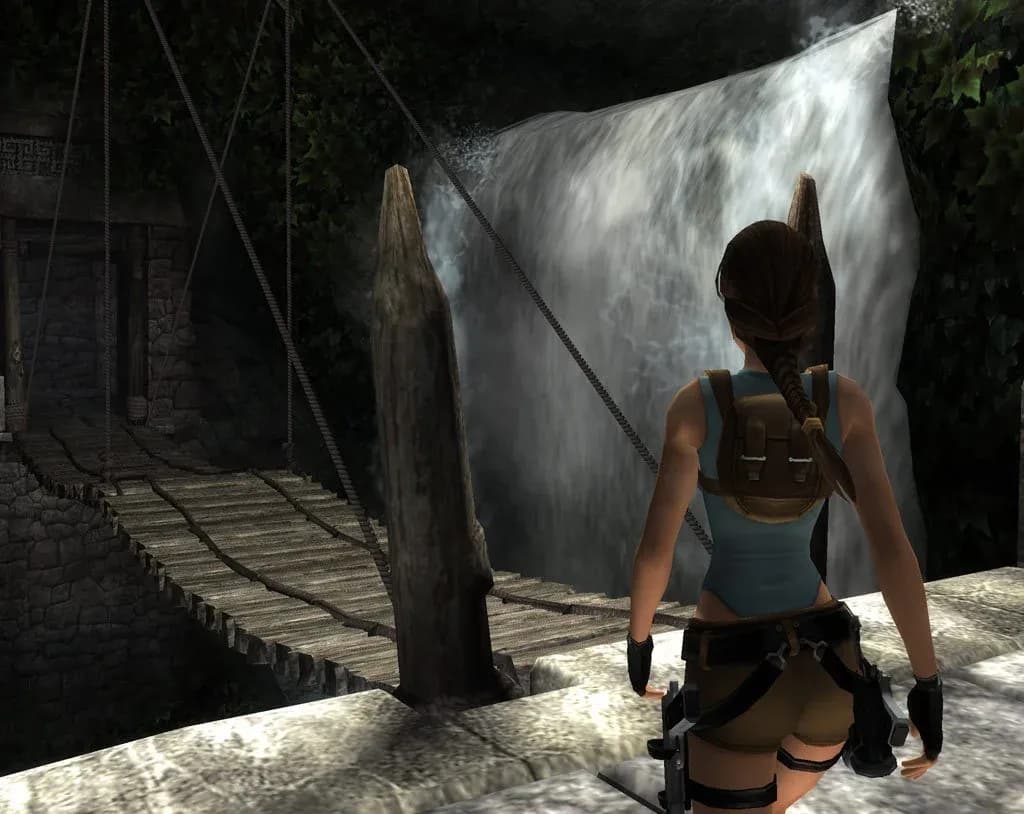
The locations follow the same order as the original game: Peru, Greece, Egypt, and Atlantis. Each area has been fully redesigned with new layouts and almost entirely new puzzles, built to take advantage of moves that simply didn't exist in 1996. Rope swinging and grappling hook mechanics open up traversal options that change how you approach each room, making the familiar feel genuinely different.
Tomb Raider: Anniversary content image
Gameplay and mechanics
The core gameplay loop blends platforming, puzzle-solving, and combat in a way that keeps each element from overstaying its welcome. Lara moves with the fluid, fast responsiveness of her Legend incarnation, making the acrobatics feel earned rather than mechanical.

Tomb Raider: Anniversary content image
Key mechanics include:
- Grappling hook traversal across large gaps
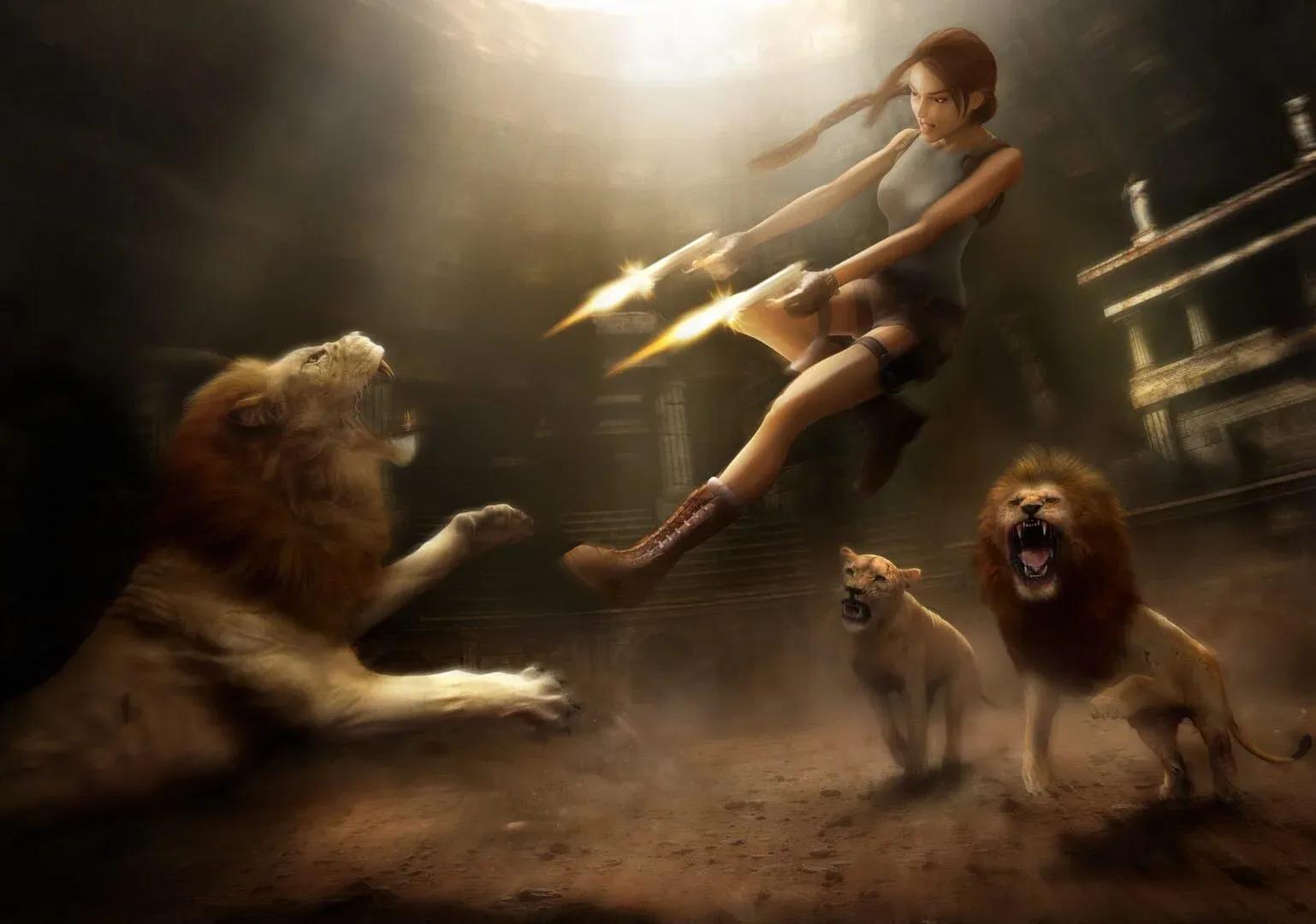
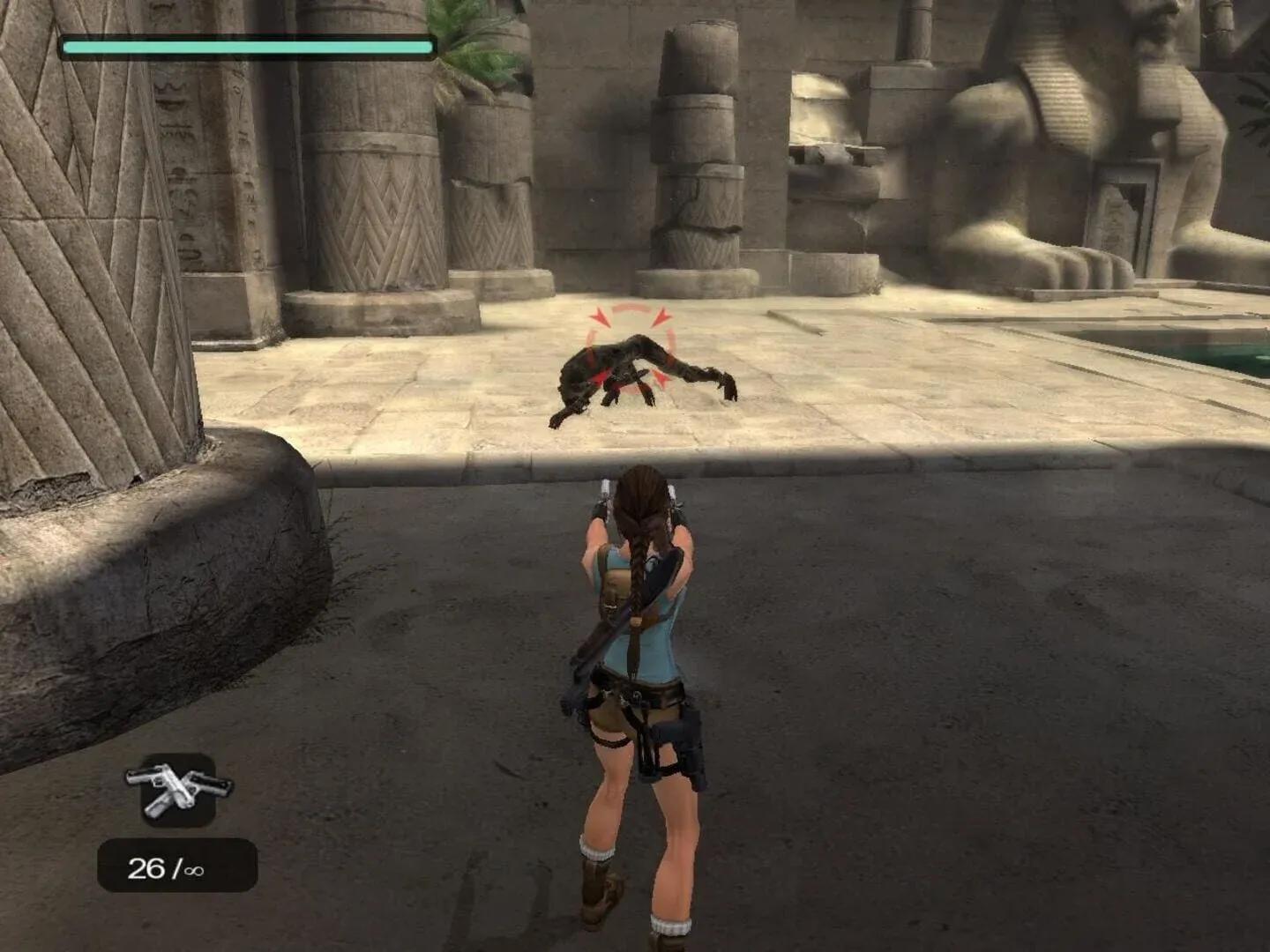
- Dual-pistol acrobatic combat with dodge mechanics
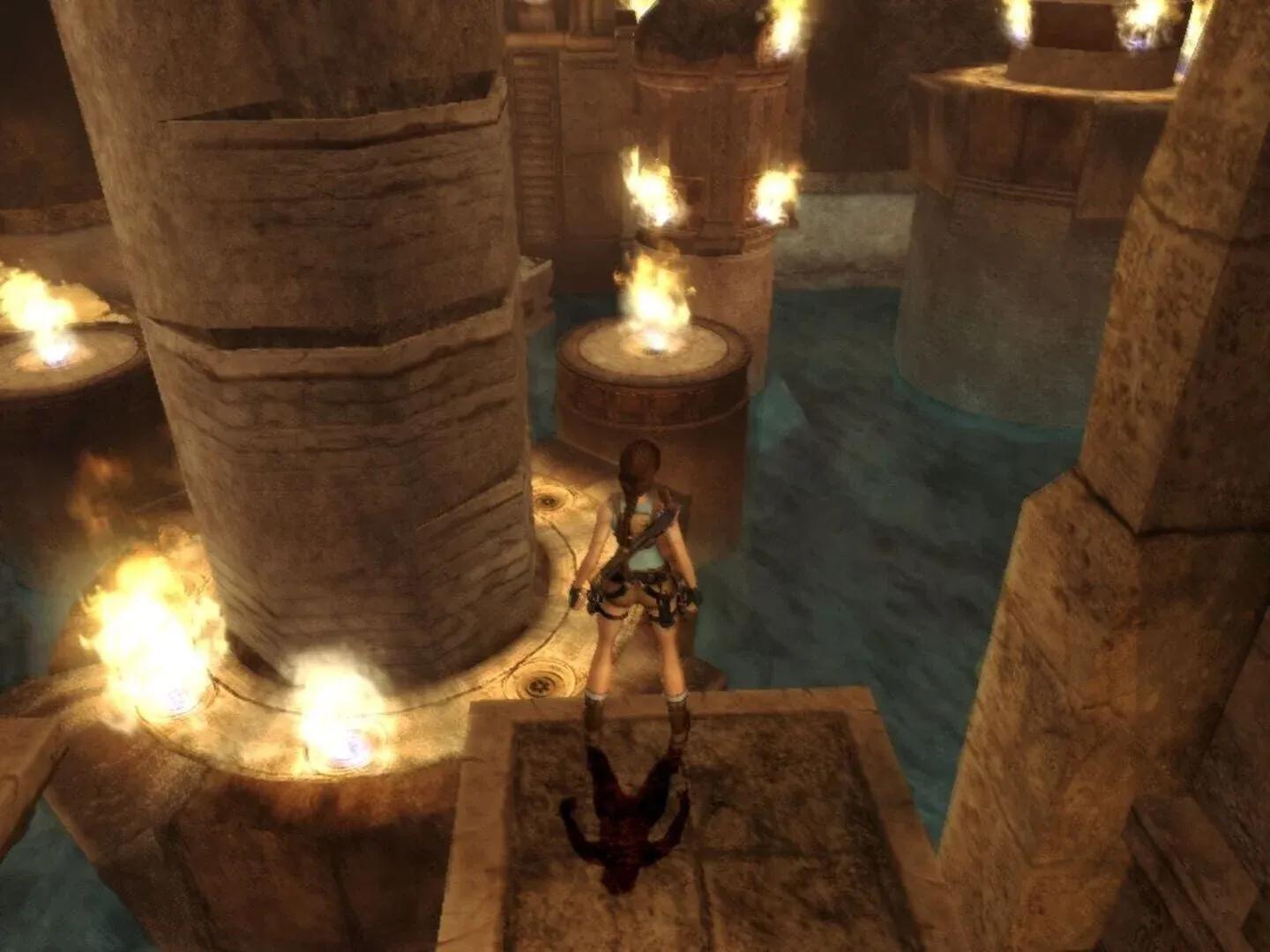
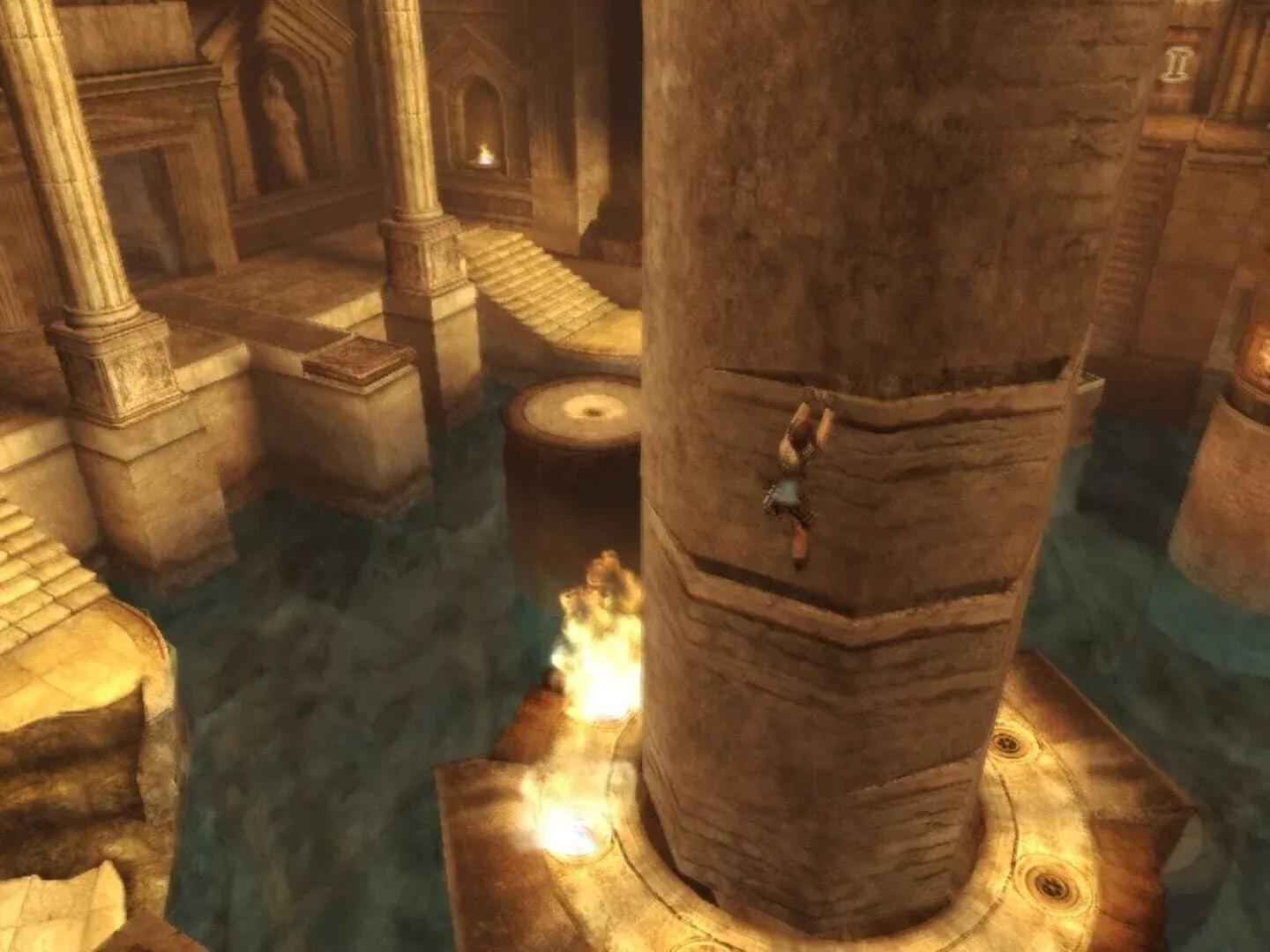
- Environmental puzzles tied to ancient traps
- Rope swinging for vertical and lateral movement
- Adrenaline dodge system for boss encounters
The adrenaline dodge mechanic deserves particular mention. When a large enemy charges, there's a brief window to trigger a slow-motion dodge and land a precise shot. It's used in boss fights and turns encounters with creatures like the T-Rex into something cinematic rather than just punishing.
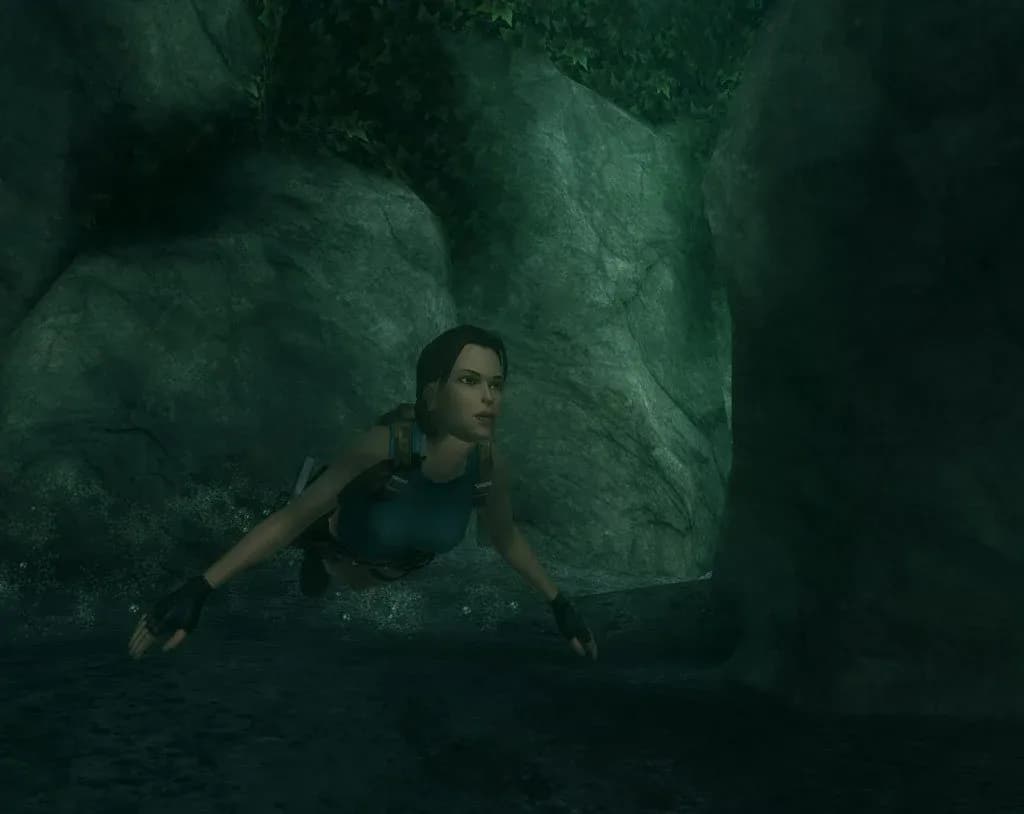
Tomb Raider: Anniversary content image
World and setting
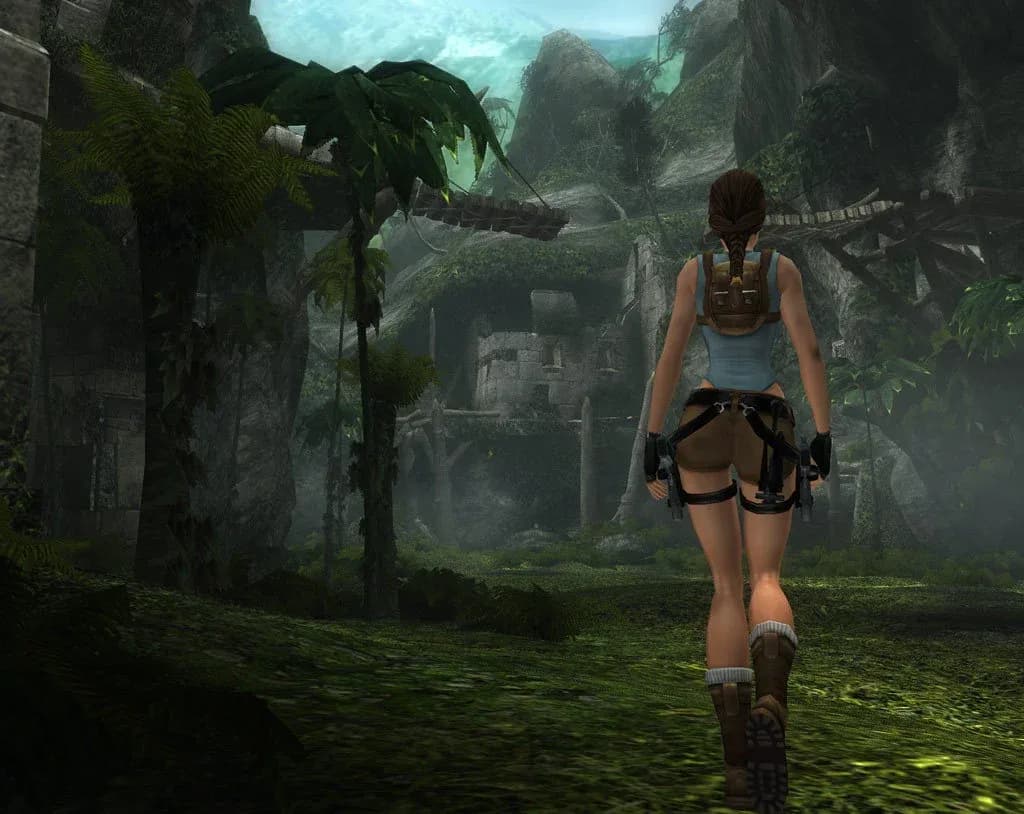
Anniversary's environments range from Peruvian ruins and Greek temples to Egyptian pyramids and the unsettling organic architecture of Atlantis. The supernatural elements stay restrained for most of the game, which makes the Atlantean sections hit harder when the tone shifts. Enemies include wolves, bears, bats, and gorillas in the early sections, with Atlantean centaurs and mutants appearing later. The AI was improved from the original, giving enemies more varied behavior and making encounters less predictable.
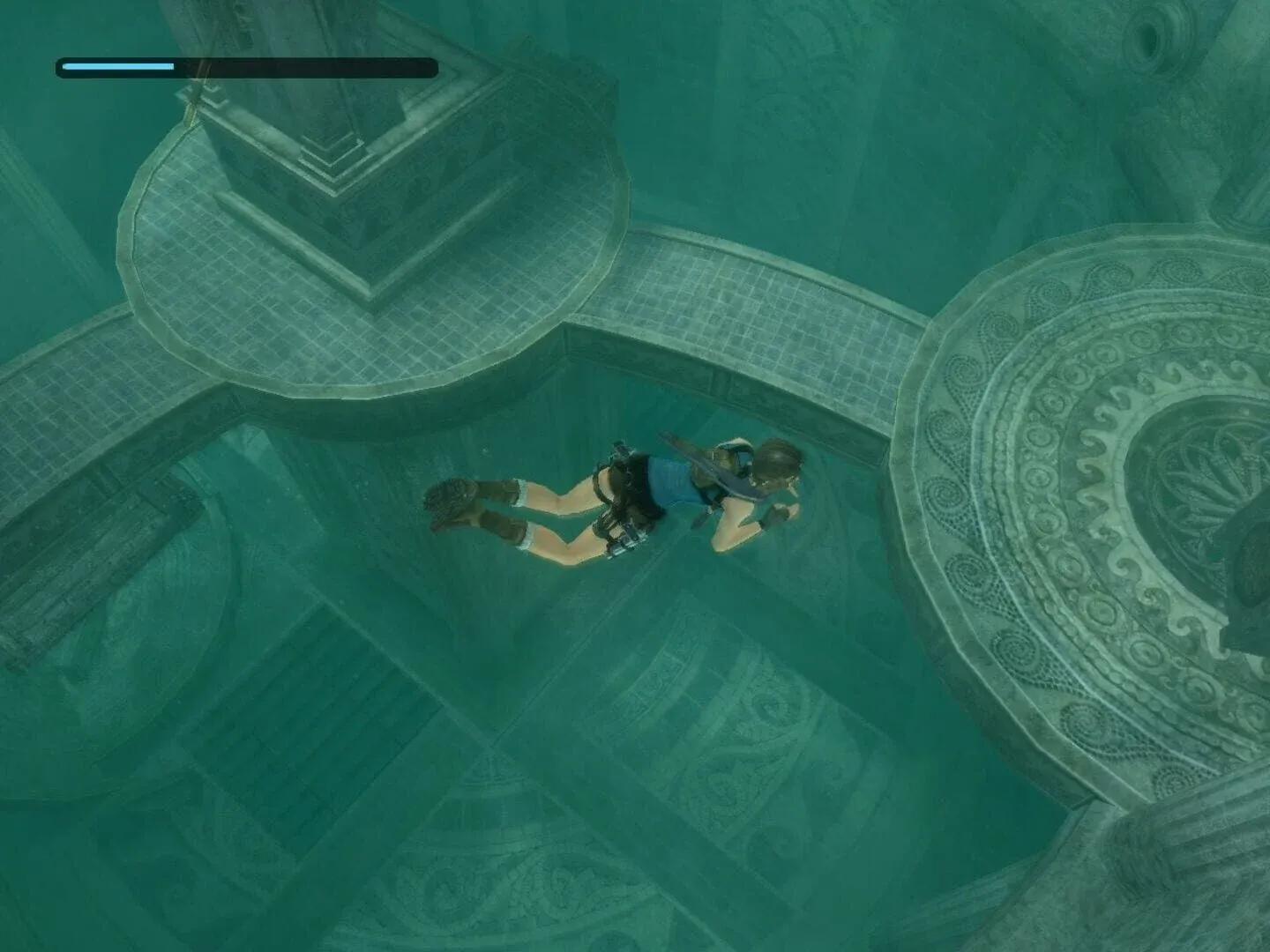
The Atlantis section in particular benefits from the modern engine. The original's pixelated corridors are replaced with sprawling organic chambers that feel genuinely alien, and the boss fights there carry real weight.
Does Anniversary hold up as a remake?
Yes, and it's one of the stronger examples of how to rebuild a classic without gutting what made it work. The original Tomb Raider's puzzles were famously obtuse and occasionally unfair. Anniversary keeps the difficulty but redesigns the logic so solutions feel discoverable rather than arbitrary. The expanded cutscenes and revised dialogue also give Natla more menace and Lara more dimension than the 1996 version allowed.
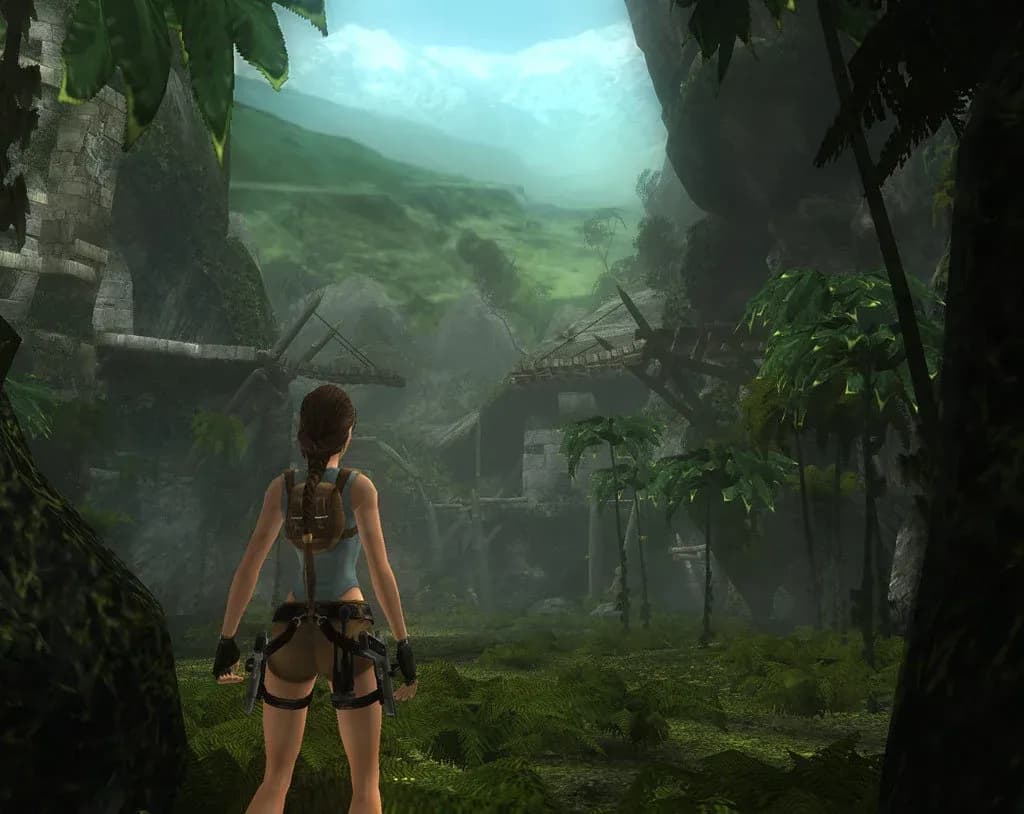
Tomb Raider: Anniversary content image
Impact and legacy
Released in 2007 to mark ten years of Lara Croft, Anniversary sits at the midpoint of Crystal Dynamics' Legend trilogy alongside Legend and Underworld. It carries an average PlayStation Store rating of 4.56 out of 5 from over 2,100 players, which reflects consistent appreciation rather than nostalgia-driven revisionism. The game is available on Windows, PlayStation, Xbox, and macOS. For a remake that still controls well and challenges the player without cheating, Anniversary remains worth the time.