


The best armor in Valheim, ranked from Meadows to Ashlands
Your total armor value is the single number that decides whether a Fuling two-shots you or barely scratches your health bar. Valheim ties every major gear upgrade to a new biome, so the question is never just "what's the best armor" — it's "what's the best armor right now, and what do I craft next?" This guide ranks every craftable set by biome, gives you the max fully-upgraded numbers, and settles the light-vs-heavy debate that gets more players killed than any boss fight.
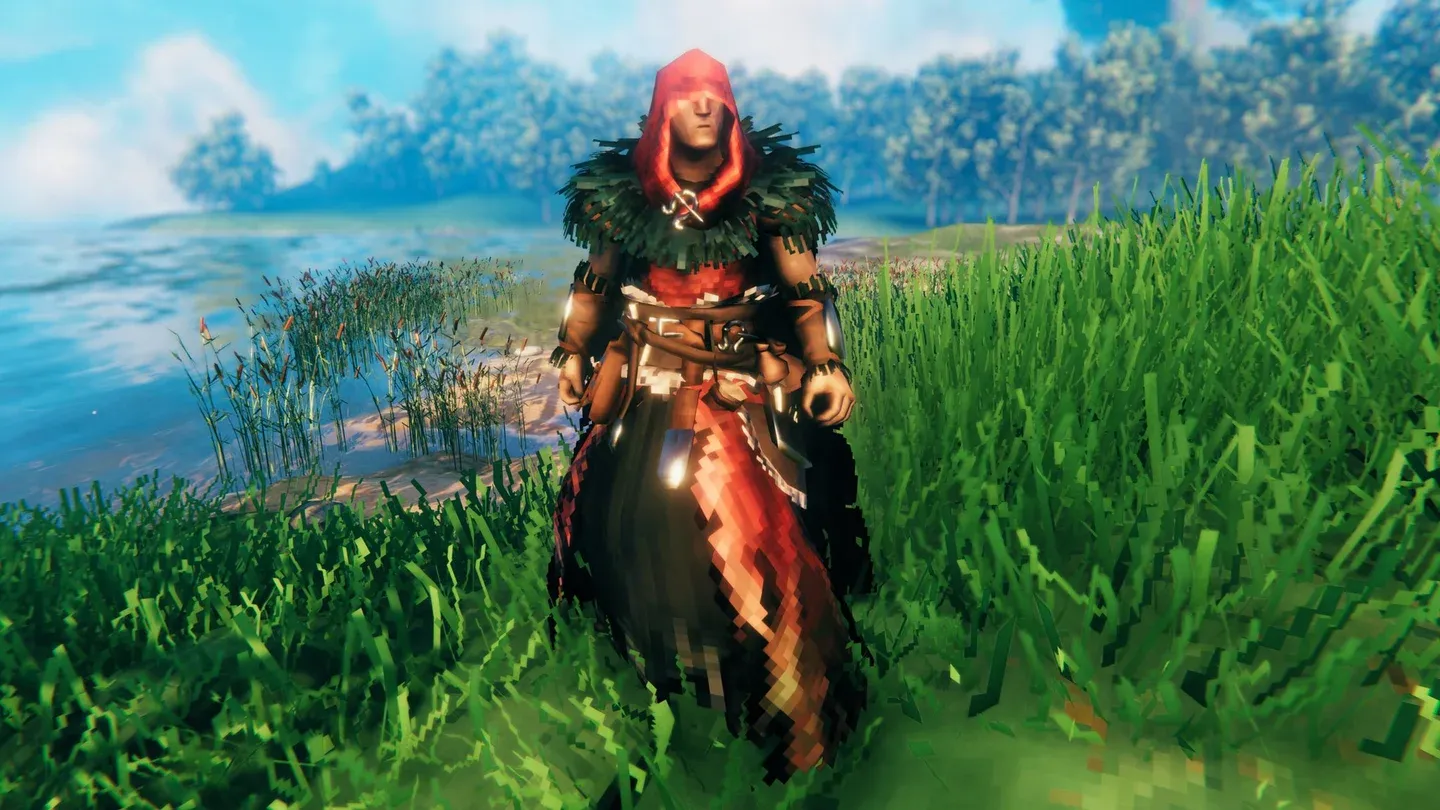
Flametal armor — best in game
How does Valheim armor actually work?
Three mechanics determine how much protection you actually get, and most guides skip two of them.
Armor is additive across three pieces. Every set consists of a helmet, chest, and legs. Each piece contributes its own armor value, so your total is the sum of all three. Capes add almost nothing to your armor number (1 point on most, a few more when fully upgraded) — you wear them for their elemental resistance or special effect, not raw defense.
Every craftable piece gains +2 armor per upgrade level. Taking a piece from quality 1 to quality 4 adds +6 armor to that piece, which means a full three-piece set gains roughly +18 armor through upgrading alone. This is why an under-upgraded set feels weak even after you've technically moved to the next tier. Your Workbench, Forge, or Black Forge must be leveled to reach quality 4 — that station upgrade is the most commonly skipped step when players complain about feeling squishy.
Damage type matters at the extremes. Armor reduces physical damage (blunt, slash, pierce), but elemental damage — fire, frost, poison, lightning — is handled by resistances from capes, set bonuses, and food. That's why 132 armor doesn't make you immortal in the Ashlands: the fire damage bypasses your armor number entirely and hits your resistance (or lack thereof). The Wolf fur cape's frost resistance keeps you alive in the Mountains just as much as the armor value does.
The practical rule: stack the highest armor set your biome allows, upgrade every piece to max, and cover the biome's primary damage type with the right cape or set bonus.
Full Valheim armor tier list
All "total armor" values below are fully upgraded quality-4 totals across the three body pieces.
S-tier: endgame best-in-slot
Flametal Armor (Ashlands, 132 armor) is the highest armor value in the game. Crafted from Flametal at the Black Forge, it also carries fire-damage resistance — which matters a lot in a biome designed to keep you burning. Every melee or shield build ends here. Nothing else is close on raw defense.
Carapace Armor (Mistlands, 114 armor) is the beetle-shell set built from Carapace and Scale hide. It's the defensive ceiling before you reach the Ashlands, and plenty of players push into the early Ashlands wearing it while they farm enough Flametal to upgrade. Pair it with the Feather cape to remove fall damage in the vertical Mistlands terrain.
A-tier: biome-defining sets you'll wear for a long time
Padded Armor (Plains, 96 armor) is the last "pure defense" heavy set before the game splits into heavy/light/mage paths. It requires Iron and Linen thread — you need a Windmill and Spinning Wheel for the thread, so factor that into your prep time. The chest and legs each apply a -5% movement penalty, which sounds worse than it plays. It carries you through the Plains and deep into the Mistlands without complaint.
Wolf Armor (Mountain, 78 armor) represents the biggest single defensive jump in the early-to-mid game, going from 60 Iron to 78 Wolf. The chest piece also provides frost resistance on its own, and stacking it with the Wolf fur cape means you can survive the Mountain's freezing weather without burning through frost-resist mead constantly.
Iron Armor (Swamp, 60 armor) is non-negotiable before Bonemass. Farm the Sunken Crypts for Scrap Iron and don't enter the Swamp under-geared. The difficulty spike between Black Forest and Swamp is real, and Iron Armor is the answer.
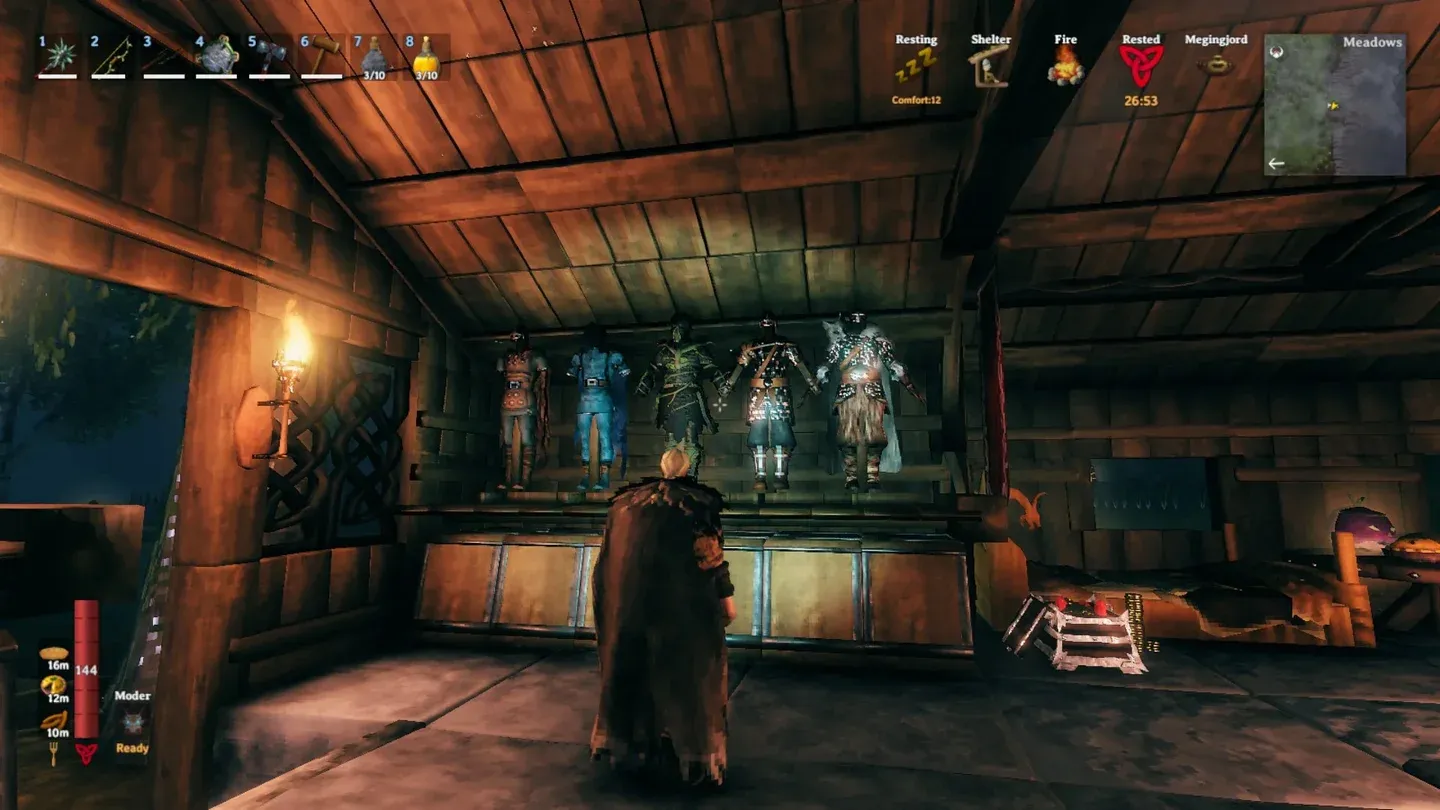
Padded Armor — Plains benchmark
B-tier: strong for a specific role
Eitr-weave Set (Mistlands, 66 armor) is the only armor that grants Eitr regeneration, which is what staffs and magic abilities run on. If you're playing a mage build, this is non-negotiable — the 48-point armor gap versus Carapace is the cost of using magic at all. The Feather cape crafted alongside this set removes fall damage, which saves runs in the Mistlands more often than you'd expect.
Ask Set (Ashlands, 102 armor) is a rare light set that reaches near-heavy armor numbers. Its set bonus reduces stamina cost for running, jumping, and attacking, plus adds +10% pierce damage. For a dodge-heavy spear build, Ask can outperform Flametal in practice despite sitting 30 armor lower. For most players, Flametal's raw defense is the safer call.
Embla Set (Ashlands, 75 armor) upgrades the Eitr-weave mage path with more Eitr regeneration for staff-heavy builds heading into late Ashlands content. It's squishier than any heavy set — the tradeoff is you fight from range and eat Eitr (blue) food to compensate.
C-tier: transitional or build-specific
Root Set (Swamp, 42 armor) has a genuinely good bow bonus (+15 Bow skill) and 50% poison resistance from the mask, which is excellent in the Swamp. It sits at C because its armor value is low for the biome — keep it if you're an archer, swap to Iron if you're fighting in melee.
Troll Set / Bronze Armor (Black Forest) — Troll (36 armor, +Sneak) is the classic stealth-archer choice; Bronze (42 armor) is the tankier melee option. Both are short-lived. You'll be in Iron within a biome or two regardless of which you choose.
D-tier: starter only
Leather Armor (Meadows, 24 armor) is your first real set. Craft it the moment you have Deer hide and Leather scraps — it's the difference between surviving a Greydwarf and not. Rag Armor (roughly 6 armor) is a starter tunic and nothing more. Skip it.
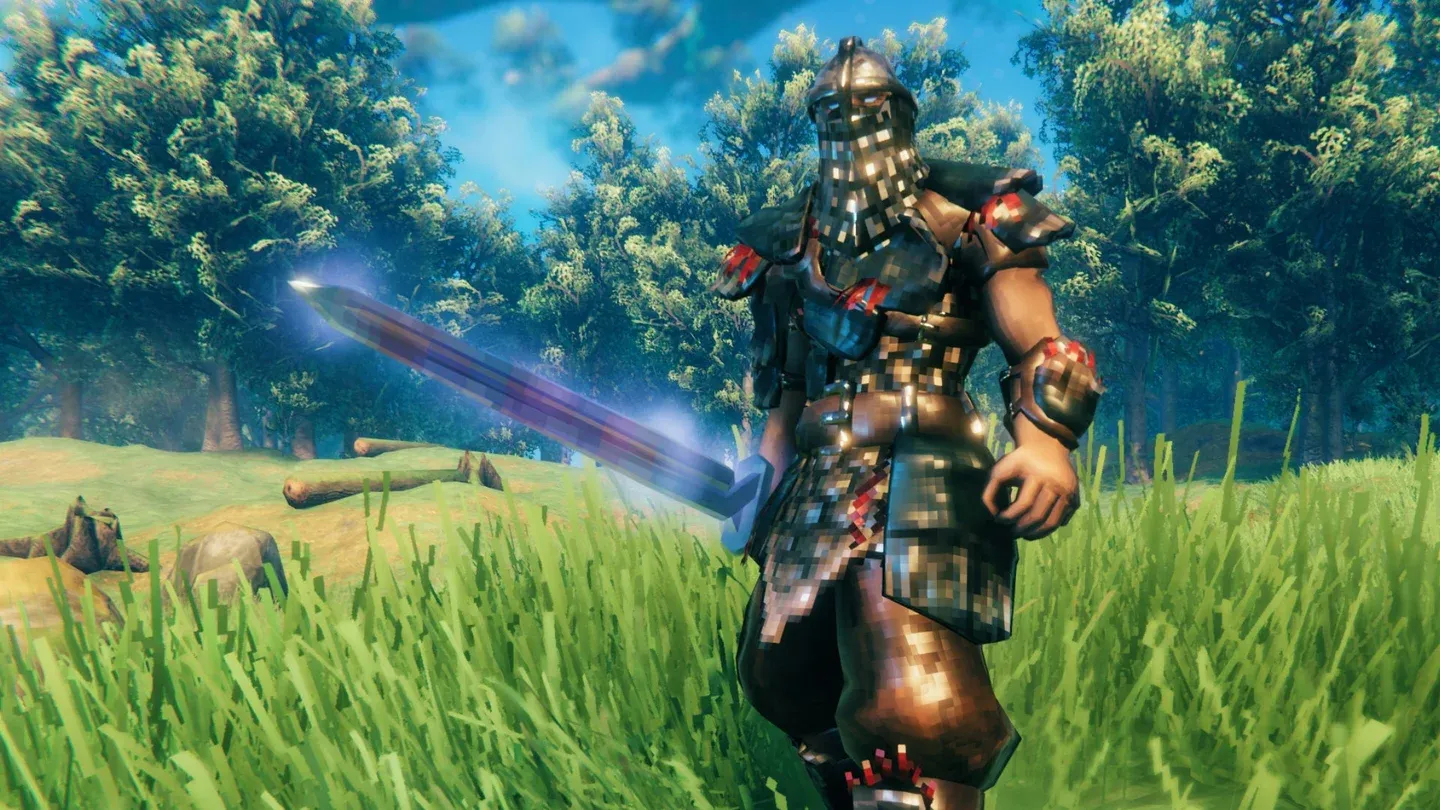
Carapace — Mistlands wall
Light vs heavy armor: which should you actually wear?
The honest answer: heavy wins for most players.
The movement penalty on heavy sets is smaller than the internet suggests. Padded Armor's chest and legs each apply -5% movement speed — that's it. You're not losing half your mobility. Valheim's damage mitigation rewards having more raw armor against the constant stream of small-to-medium hits you take while exploring and fighting. A light-armor dodge build works, but it demands near-perfect play to match what heavy armor gives you passively.
Here's the real reason to pick light armor: the set bonus, not the speed. Root's +15 Bow skill and poison resistance make it genuinely better than Iron for an archer. Ask's stamina discount is meaningful for a spear/dodge playstyle. Those are build-specific choices, not general mobility upgrades.
Mage armor is a separate category entirely. If you use staffs, you must wear Eitr-weave or Embla — they're the only sets that generate the Eitr your spells consume. That's not a light-vs-heavy decision; it's a different loadout that trades armor for magical output, and you compensate by fighting at range.
What's the fastest upgrade path?
You don't need to craft every set. You craft the ones that gate a biome and skip the rest.
- Leather (Meadows): Craft immediately, upgrade as scraps allow.
- Bronze or Troll (Black Forest): Bronze for melee, Troll for bow/stealth.
- Iron (Swamp): Hard requirement before Bonemass. Don't skip it.
- Wolf (Mountain): The big defensive jump. Grab the Wolf fur cape for frost resist.
- Padded (Plains): The mid-game benchmark at 96 armor. Requires Windmill + Spinning Wheel for Linen thread.
- Carapace (Mistlands): 114 armor. Add Eitr-weave if you're a mage.
- Flametal (Ashlands): 132 armor, the current ceiling.
Keep your Forge and Black Forge upgraded in lockstep with your gear. You can't hit quality 4 on top-tier sets without the right station level, and a station that's one upgrade behind quietly leaves your set performing below its potential. For everything that goes alongside this armor, our Valheim boss locations and rewards guide shows exactly which boss unlocks each material tier — knowing the order saves a lot of backtracking.
What about the Deep North sets?
Valheim 1.0 added the Deep North as the game's final biome, and the armor data from the game files confirms three new sets tied to the Frost Foundry crafting station: the Protector Set (heavy), the Vanguard Set (heavy), and the Caller Set (mage). Each piece of the Protector and Vanguard sets shows base armor values of 44 and 34 respectively per piece, with frost resistance built in. The Caller Set provides substantial Eitr regeneration for mage builds in the final biome.
These sets sit above Flametal on raw armor numbers for the Protector tier, making them the new ceiling for the Deep North content. Stats here reflect game file data and may shift with post-launch patches, so check back as the meta settles.
Frequently asked questions
What is the best armor in Valheim?
Flametal Armor from the Ashlands currently holds the highest confirmed armor value at 132 total armor fully upgraded, plus fire resistance. Before reaching the Ashlands, Carapace Armor at 114 armor is the strongest option. The Deep North's Protector Set appears to exceed Flametal, but those numbers are from game files and subject to balancing.
Does upgrading armor make a big difference?
Yes. Every craftable piece gains +2 armor per upgrade level, so going from quality 1 to quality 4 adds +6 per piece, or roughly +18 across a full set. Skipping upgrades is the most common reason players feel under-geared for a biome they've already unlocked.
Do capes add armor?
Hardly. Most capes provide 1 armor point at base, with a few more at max upgrade. You choose a cape for its effect — the Wolf fur cape's frost resistance in the Mountains, the Feather cape's fall-damage immunity in the Mistlands, or an elemental resistance cape for the biome you're in.
Does armor protect against fire and poison?
No. Your armor value only reduces physical damage (blunt, slash, pierce). Fire, frost, poison, and lightning are elemental and require resistances from capes, set bonuses, and food. A 132-armor Flametal set still needs fire resistance coverage in the Ashlands.
For a deeper look at everything Valheim 1.0 has to offer, including all 53 achievements tied to gear progression and boss kills, the Valheim achievements guide covers every unlock condition. You can also find every console command for testing builds or skipping the grind in the Valheim cheat list. For the full collection of Valheim guides in one place, head to the Valheim guides hub.