Search games, articles, guides...CtrlK
Sign InGet Started
Learn how Aniimo Potential works, what Common to Perfect ratings mean, and which creatures deserve your upgrade materials.

Written by Mostafa Salem
Head of Gaming Research
See more GAMES.GG guides on Google
Add us as a preferred source and our guides show up first in your results.

Aniimo Starcryst Essence Farming Guide: Get More Faster
Learn every method to farm Starcryst Essence in Aniimo, from the Star Stone craft loop to level rewards and shop purchases.
Aniimo Guide: How to Get Thornblade
Catch every Thornblade form in Aniimo: standard, Thunderstorm, Towerwood, and Prismana. Locations, evolution steps, and Morph Orb conversions covered.
Aniimo Guide: How to Get Prismana Glynsera
Catch Prismana Glynsera in Aniimo's Vein Abundance event with this step-by-step Beast Fang Ridge nurture and capture guide.
Aniimo floods you with creatures fast. After a few catching trips, your storage fills up with duplicates and you're left staring at a grid of the same creature wondering which one actually deserves your Star Dust. That's where Potential comes in. It measures the innate stats each creature was born with, and understanding it is the difference between building a team that clears late-game content and one that stalls out at a wall you can't punch through.
Every creature you catch is assigned an Innate Potential at the moment of capture. Think of it as the stat ceiling baked into that specific copy. Two copies of the same creature can look identical on the surface but have completely different stat floors underneath.
Potential splits into two categories worth knowing. Innate Potential is fixed at capture and reflects the creature's starting stats across its six attributes. Acquired Potential can be raised afterward through items and systems you unlock as you progress. The catch you have right now isn't necessarily stuck where it is, but its innate baseline still matters when you're comparing copies.
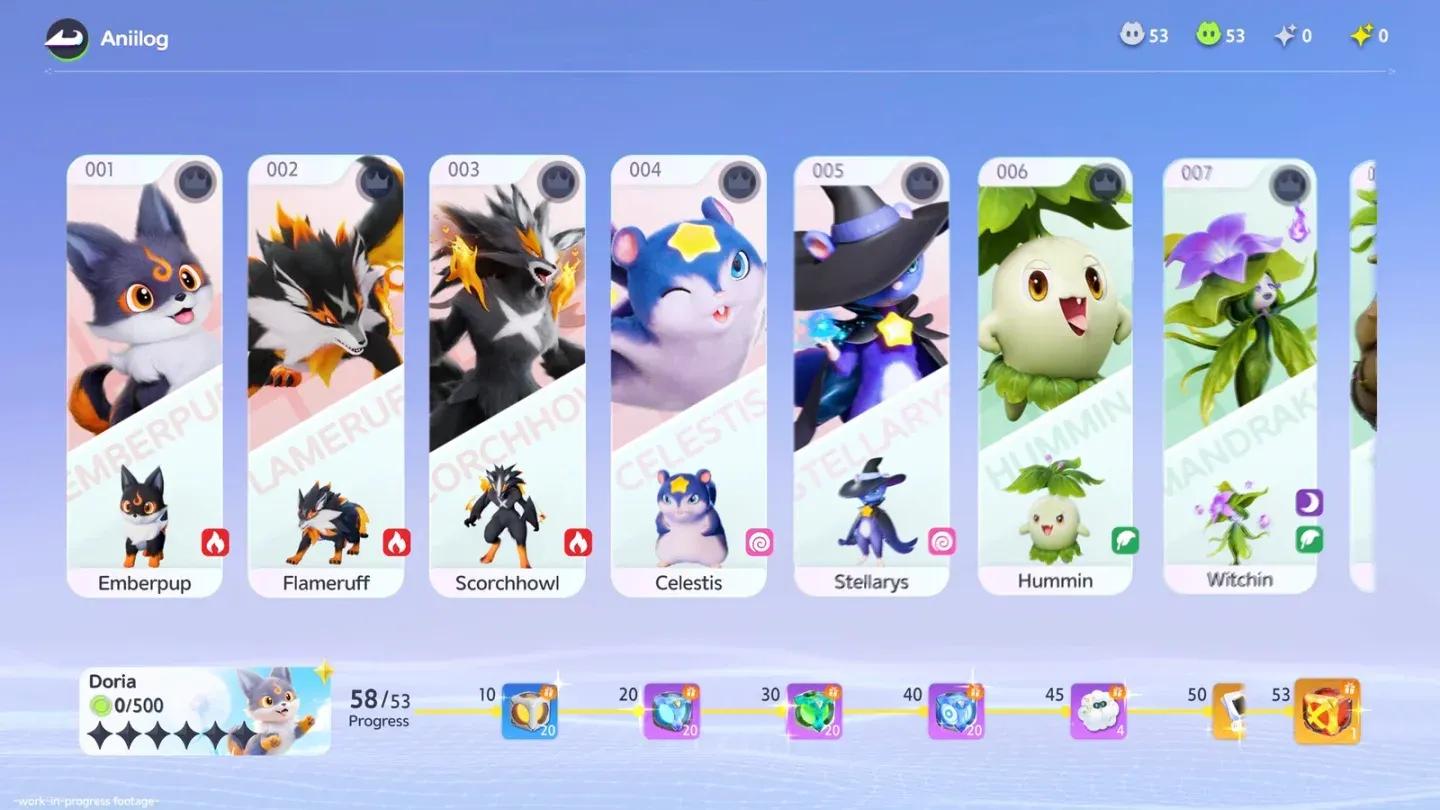
Checking Potential at the Console
You won't see Potential ratings automatically. After a catching session, you need to visit a camp outpost, find the Research Console, and upload your catch report. The system then assigns each creature one of four ratings.
Here's the exact process:
Make this part of your routine after every catching run. Checking a full batch at once makes it much easier to spot the standout copies before you accidentally dump upgrade materials into a weaker one.
The four tiers run from weakest to strongest: Common, Good, Elite, and Perfect. Here's how they stack up in practice.
| Rating | What it means | Should you train it? |
|---|---|---|
| Common | Lowest possible innate stats for that creature | Only if you need it right now |
| Good | Middling stats, below average for long-term use | Temporary filler, replace when possible |
| Elite | Second-best stat rolls, solid for active use | Yes, especially for roles you need filled |
| Perfect | Maximum innate stat potential for that creature | Priority candidate for long-term investment |
One thing that trips players up: Perfect doesn't mean the stat distribution is ideal for the creature's role. Two Perfect copies of the same creature can have wildly different distributions across their six attributes. A Perfect rating tells you the total stat ceiling is maxed out. It doesn't tell you those stats landed in the right places. Always check the breakdown before committing materials.
Common and Good copies are usually the first to go when you find a stronger version of the same creature. The bigger risk with these tiers isn't keeping them temporarily. It's spreading scarce upgrade materials across multiple low-potential copies because you couldn't decide.
If a Common or Good creature is actively helping you progress, keep it until you have a replacement ready. Just don't pour Star Dust into it. That resource is better saved.
Elite is genuinely good enough to build around. You don't need to sit on an underpowered team while hunting for Perfect. An Elite copy that fills a role you need beats a Perfect copy sitting in storage because you haven't found one yet.
The smart play is to train an Elite for the role it fills, then continue looking for a Perfect upgrade in the background. Leaving your team weak during that search costs you more progression than the stat difference between Elite and Perfect ever would.
Perfect is the end goal for any creature you plan to use seriously. Keep every Perfect catch, then decide which ones earn materials based on your actual team needs. You don't need to level every Perfect creature you own. Prioritise the ones filling roles your team is missing.
Innate Potential isn't completely fixed after capture. Three methods can raise it:
The upgrade system itself unlocks at Wayfarer 1, level 40. You start with 5 points to distribute across Innate Stats, and that number grows as you level the creature further. Materials used (Star Dust and Star Sand) can be reset for free at any time, so experimenting costs nothing except the time to reallocate.
Catching more copies is the most direct route to better Potential. Each catch is an independent roll, so the more you catch, the more chances you get at Elite or Perfect. A few methods tilt the odds in your favour:
Potential rating is one filter, not the only one. Two creatures with identical Potential ratings can perform differently because of personalities and element affinity traits.
Personalities appear as four-letter combinations (such as ENFJ or INFP) and apply additional stat effects. To review them, open Aniimo Management, select the creature, and check the personality panel on the right side of the screen. The breakdown shows exactly which stats the personality boosts. For a damage dealer, you want bonuses that feed its damage output. A personality that buffs the wrong stats is worth changing with the appropriate fruit item.
Element affinity traits add another layer, covering HP, damage, damage taken reduction, critical rate, critical damage, and Gusto across three tiers each. Check these alongside Potential when comparing two copies of the same creature. A slightly lower Potential copy with better affinity traits and a more fitting personality can outperform a Perfect catch with misaligned bonuses.
Don't release a trained creature the moment you catch a better copy. Progression can be transferred to a higher-Potential version, so earlier investment doesn't automatically mean starting from zero.
Before doing anything, check what the transfer process requires and what carries over. Keep both copies until you've confirmed the transfer works the way you expect. Not every resource or consumable can be recovered, so rushing the swap without checking first can cost you more than the Potential difference is worth.
For now, keep upgrading the team that's helping you progress. Chasing Perfect replacements is a long-term goal, not an immediate one. An Elite creature actively clearing content is worth more than a Perfect one you're still searching for.
For a full breakdown of which creatures are worth building toward regardless of Potential, check the Aniimo tier list to see which roles each creature fills and how they rank against the rest of the roster. If you're still figuring out your first team, the Aniimo beginner tips guide covers early progression decisions that feed directly into how you should prioritise Potential hunting. You can also browse the full Aniimo strategy guides collection for deeper dives into type matchups, Aniipods, and team building across every stage of the game.