



Overview
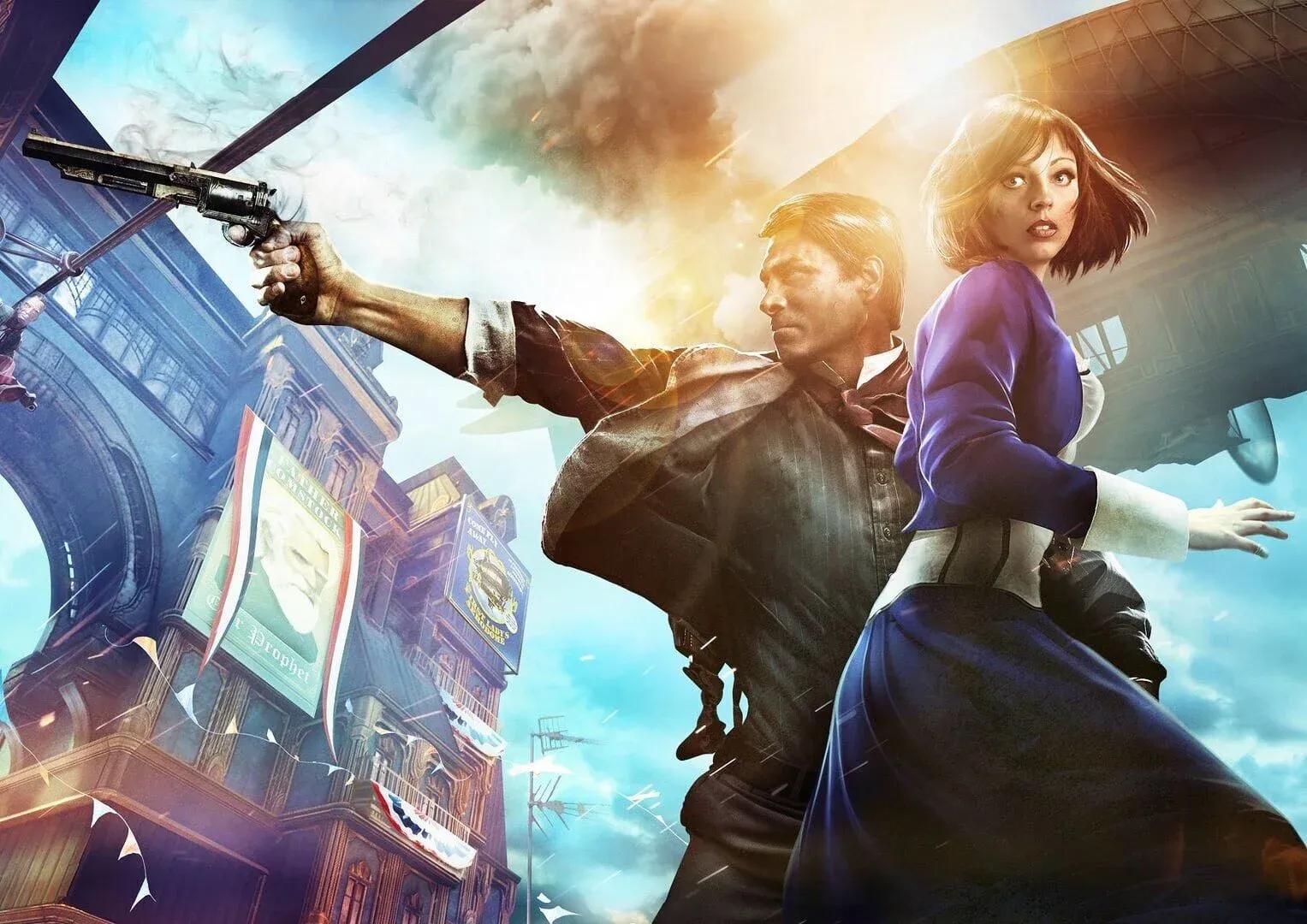
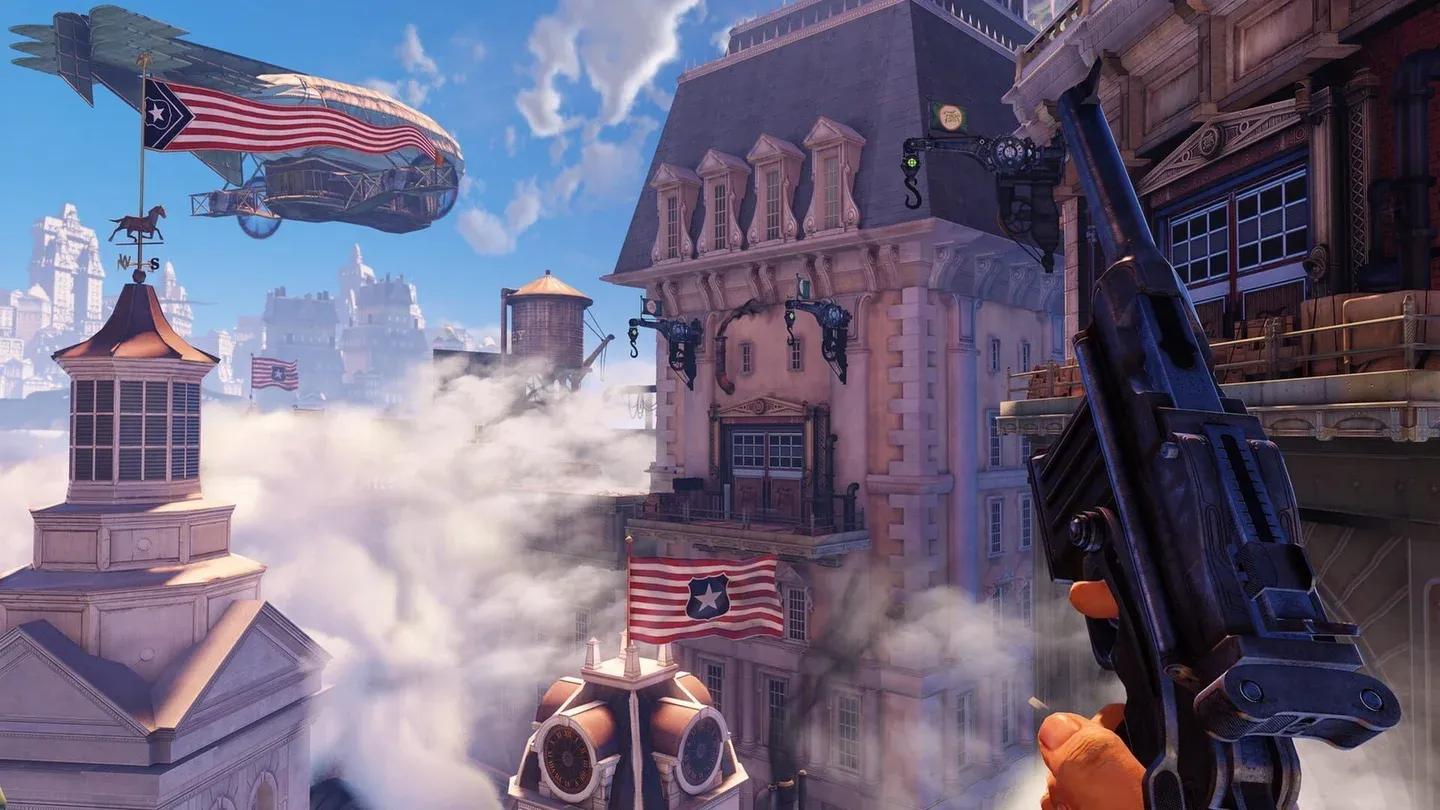
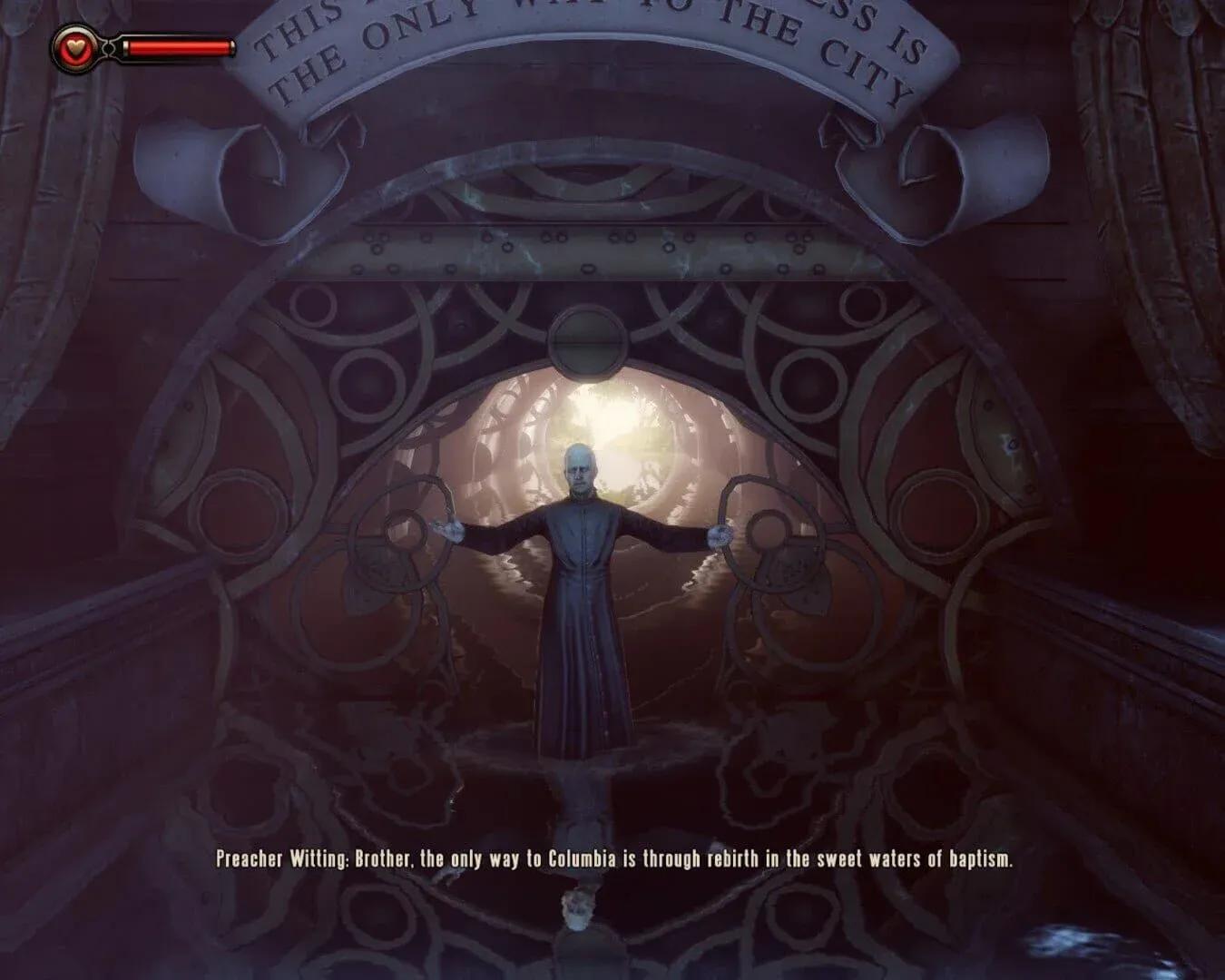
BioShock Infinite is the third entry in Irrational Games' BioShock series, though it shares no direct narrative connection to the underwater city of Rapture from the original games. Instead, it builds an entirely new world: Columbia, a city suspended in the sky and powered by American exceptionalism taken to its most brutal extreme. The year is 1912, and the city's founder, Father Comstock, has turned Columbia into a theocratic cult wrapped in patriotic pageantry.
Booker DeWitt arrives in Columbia with a simple job: find a woman named Elizabeth and bring her back to New York to clear a debt. What follows is anything but simple. Elizabeth has spent her entire life imprisoned in a tower, but she's developed the ability to open tears in space-time, pulling weapons, cover, and allies from parallel realities mid-combat. The story weaves together themes of American mythology, religious extremism, and quantum mechanics in ways that still feel ambitious over a decade after release.
Gameplay and mechanics
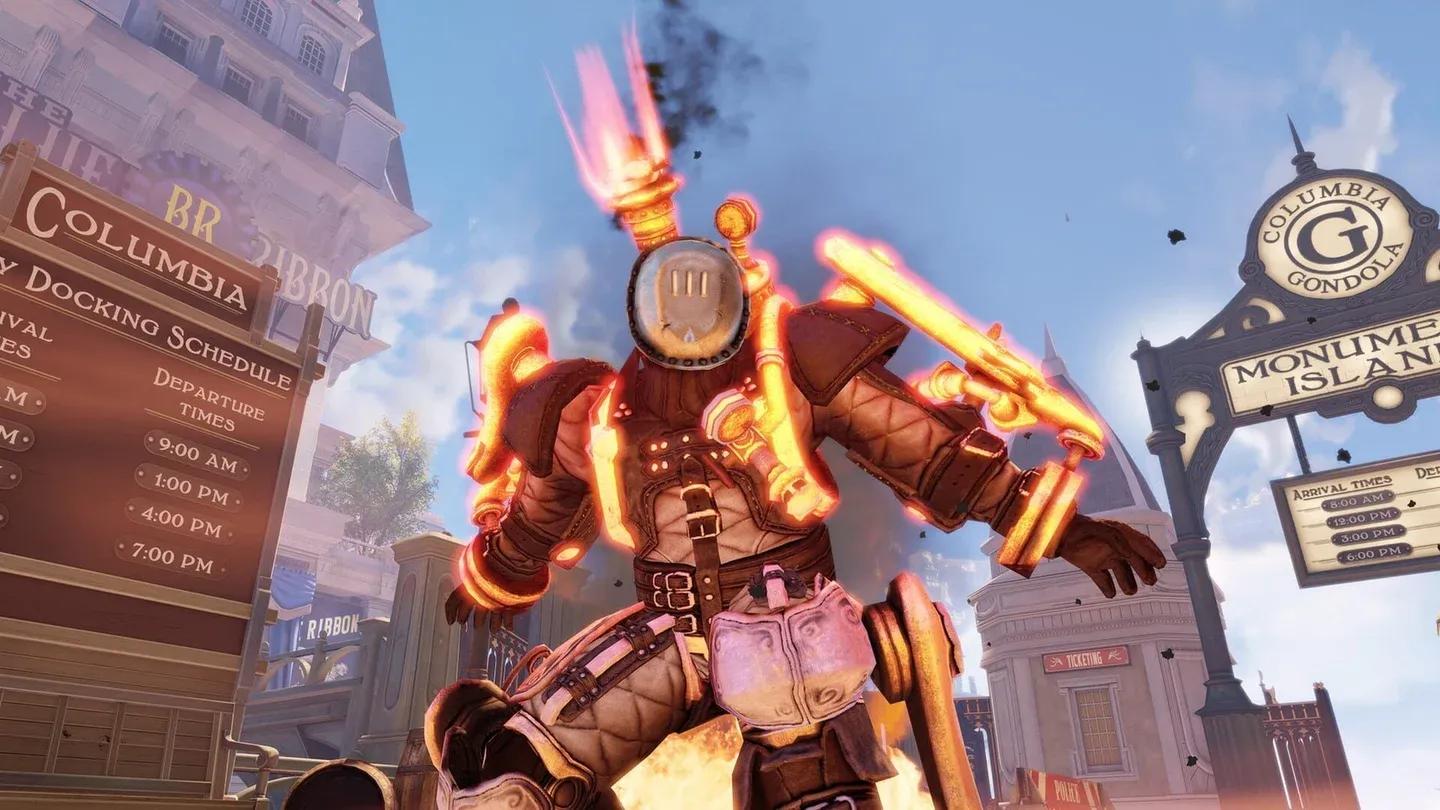
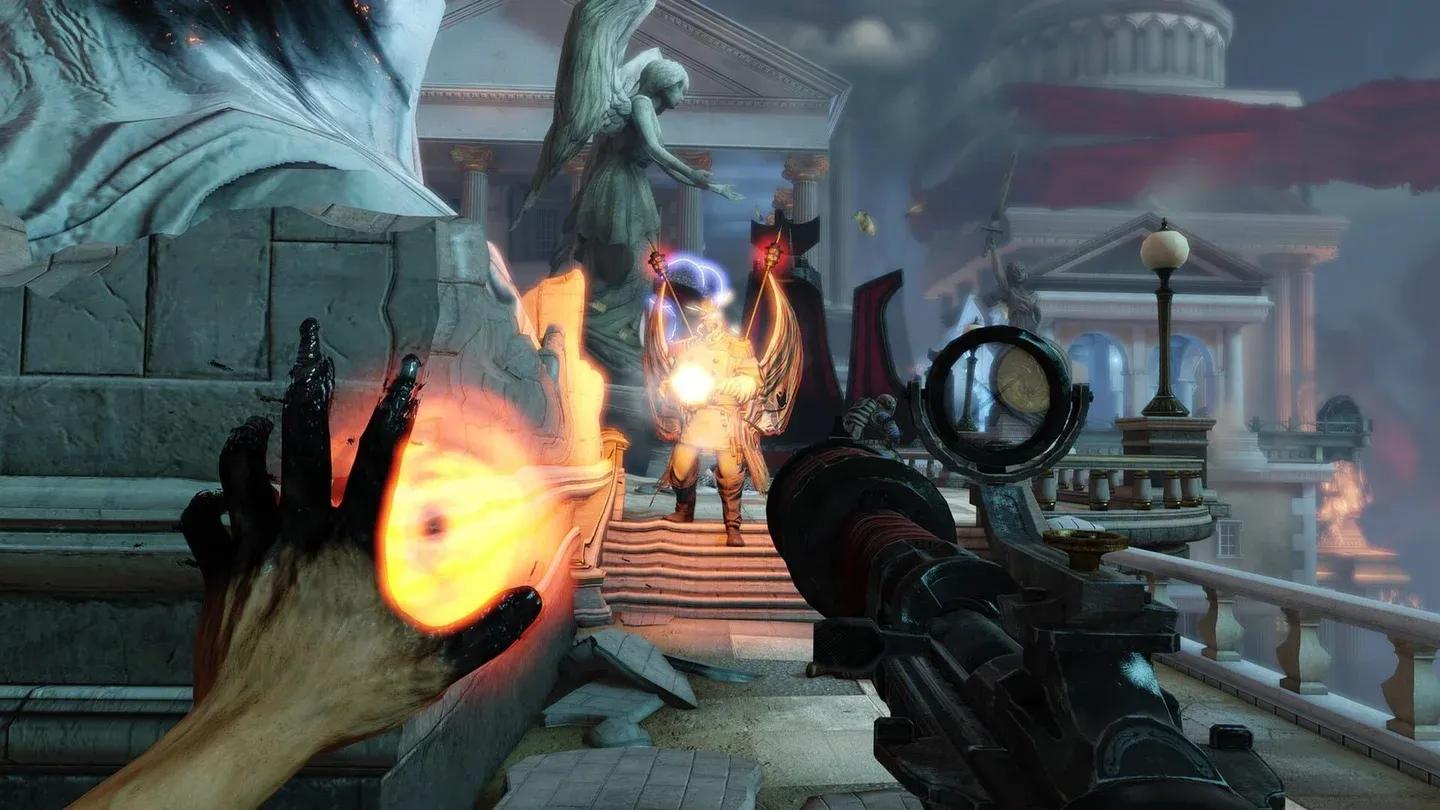
The combat in BioShock Infinite builds on the series' signature mix of conventional firearms and supernatural powers, this time called Vigors rather than Plasmids. Key mechanics include:
- Vigors like Bucking Bronco and Murder of Crows that crowd-control or stun enemies
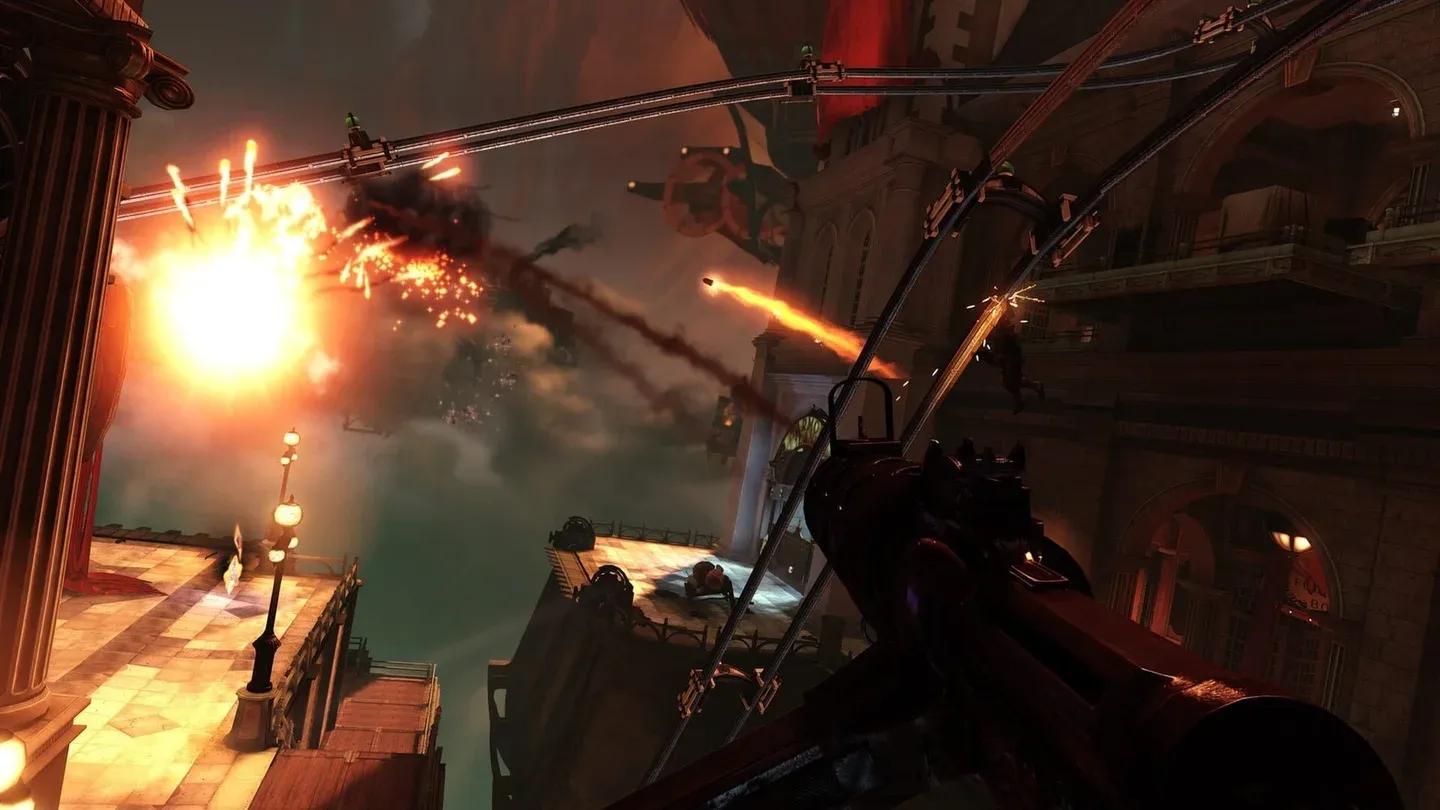
- Sky-Line rails that let Booker zip around open arenas and attack from above
- Elizabeth's tear ability, which summons turrets, cover, or ammo during fights
- Two-weapon carry limit that forces real-time loadout decisions
- Gear pickups that modify passive abilities
The open-air combat arenas are a genuine departure from the claustrophobic corridors of Rapture. Fights against fifteen or more enemies across vertical spaces, with Booker riding Sky-Lines and Elizabeth tossing supplies from across the map, create a kinetic energy that earlier BioShock games never attempted.

World and setting
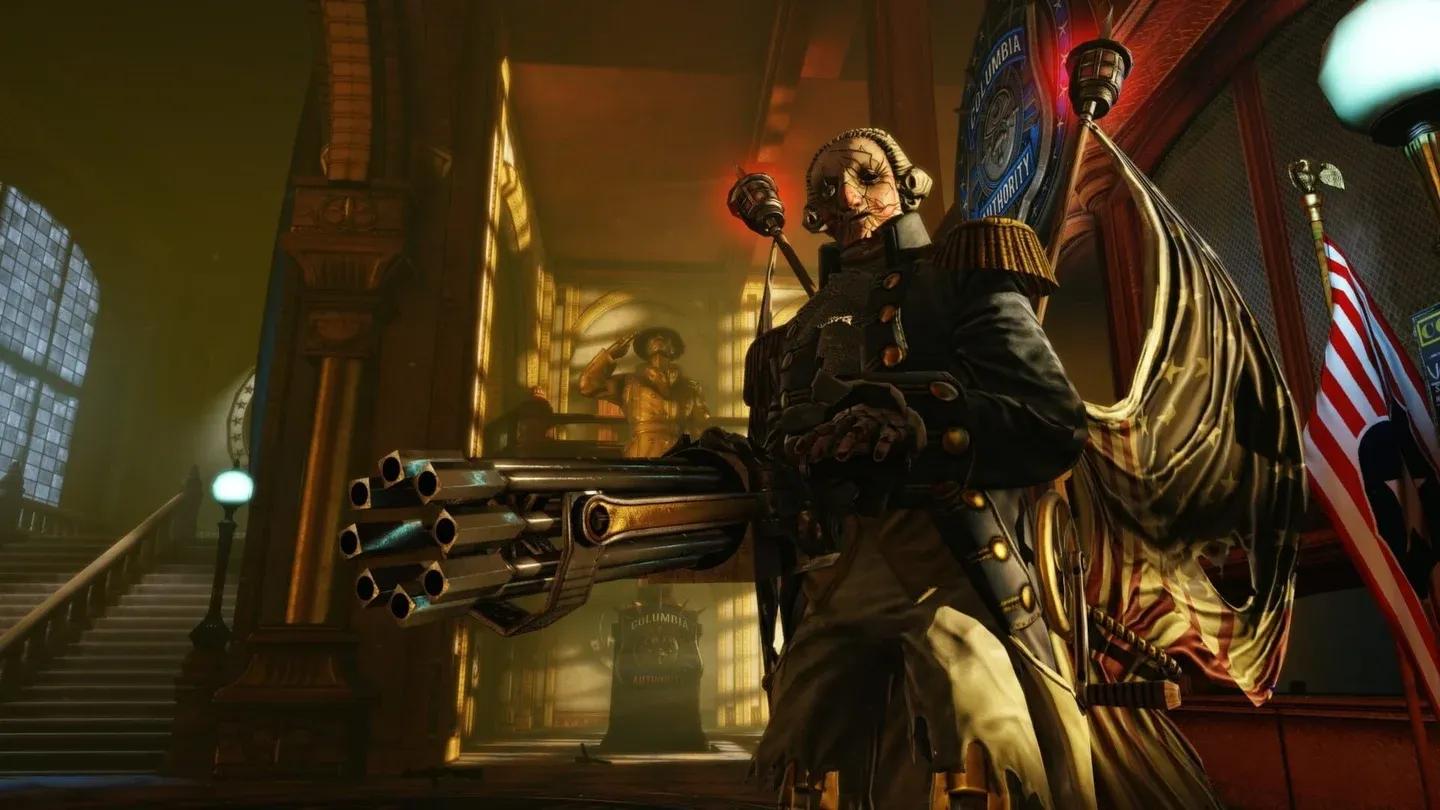
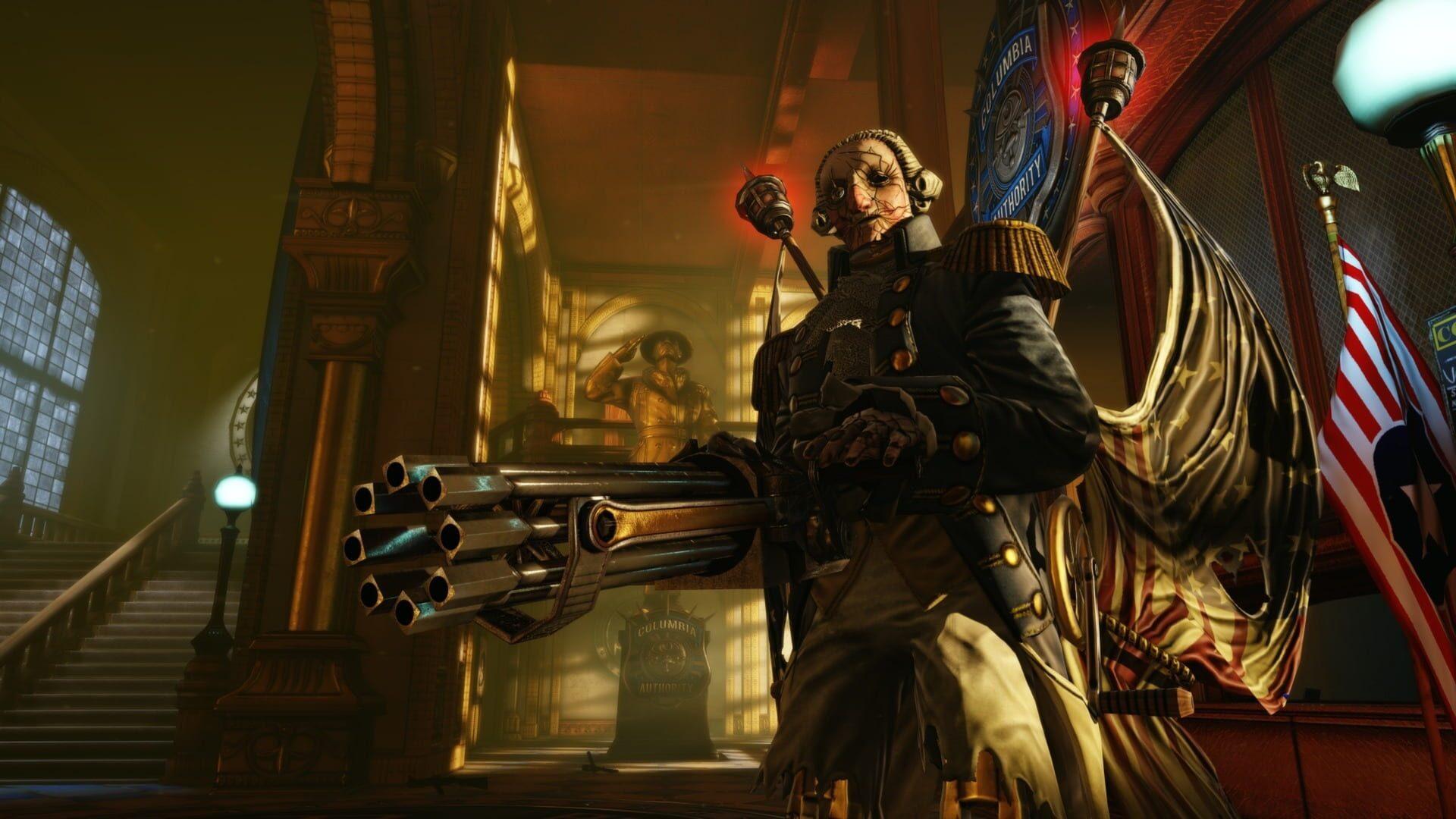
Columbia is the game's single greatest achievement. Every street, shop window, and propaganda poster tells you exactly what kind of place this is: a city that worships the Founding Fathers as divine figures while brutalizing anyone who doesn't fit its vision of American purity. The 1912 setting gives Irrational Games room to confront real historical ugliness, including racism and class warfare, without softening it.
Elizabeth functions as a genuine companion rather than a liability. She scavenges supplies, comments on the world around her, and reacts to Booker's choices in ways that make the relationship feel earned rather than scripted. By the time the story reaches its ending, that relationship carries serious emotional weight.

Impact and legacy
BioShock Infinite shipped with a Metacritic score of 94 on PC and won numerous Game of the Year awards for 2013. The Burial at Sea DLC episodes later connected Columbia and Rapture in ways that rewarded long-term fans of the series, adding hours of content while recontextualizing events from the original BioShock.
The game remains a benchmark for narrative ambition in the first-person shooter genre. Its willingness to build a setting around specific historical anxieties rather than generic dystopia gives it a specificity that holds up. Irrational Games closed in 2014, making BioShock Infinite the studio's final release and giving it a weight that purely mechanical games never carry.