


Biggest discounts, free games, and limited-time offers across every major gaming store.
Never pay full price again.
Overview
F.E.A.R. Extraction Point is a standalone expansion to Monolith Productions' original F.E.A.R., developed by TimeGate Studios and published by Vivendi Universal Games in October 2006. The story picks up directly after the base game's ending: the secret laboratory has exploded, and operatives Holiday, Jin, and the player character escape by helicopter, assuming the worst is over. It isn't. Alma boards the helicopter mid-flight, the craft goes down, and the player is left separated from teammates in a city that has gone very wrong.
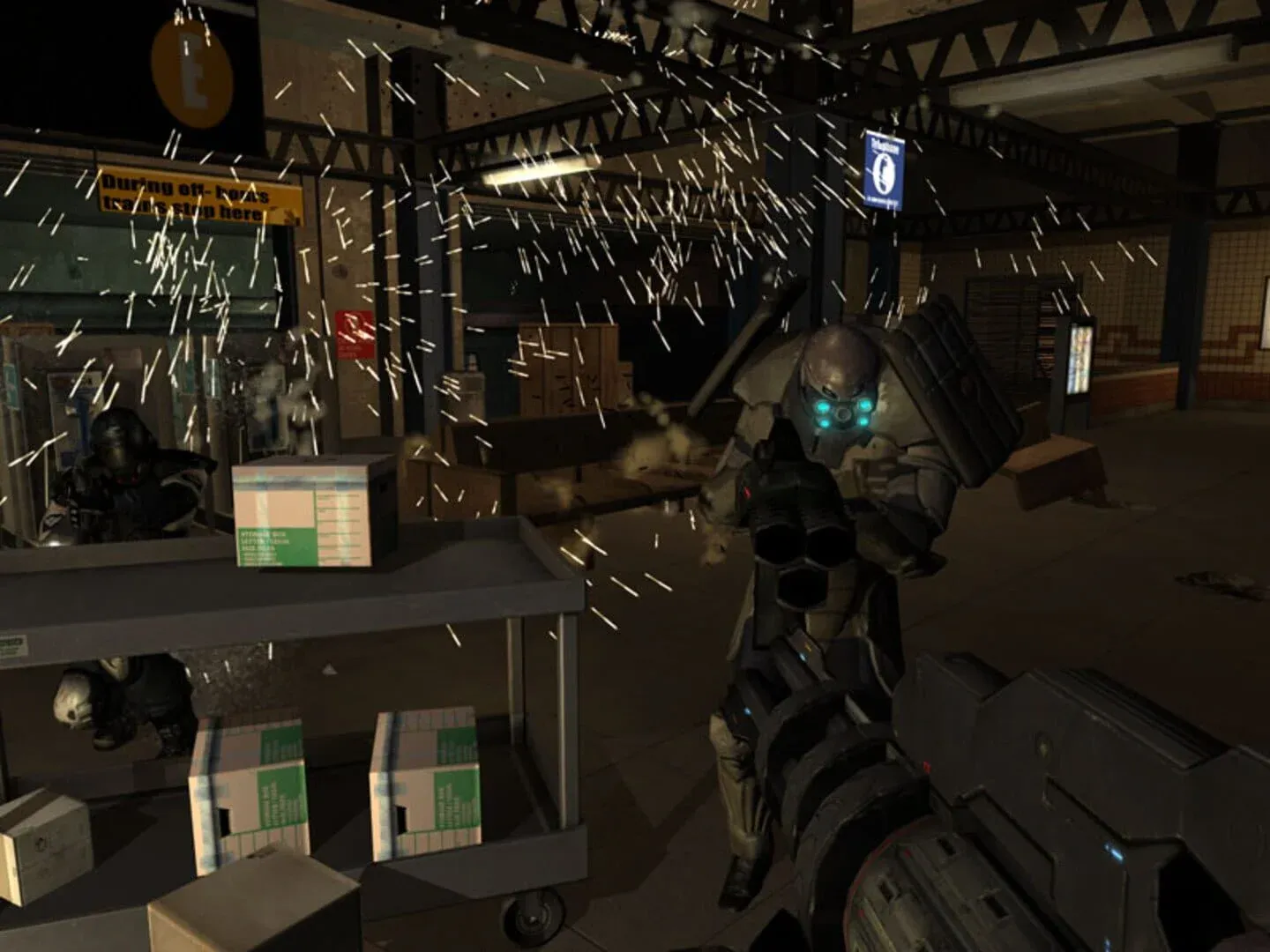
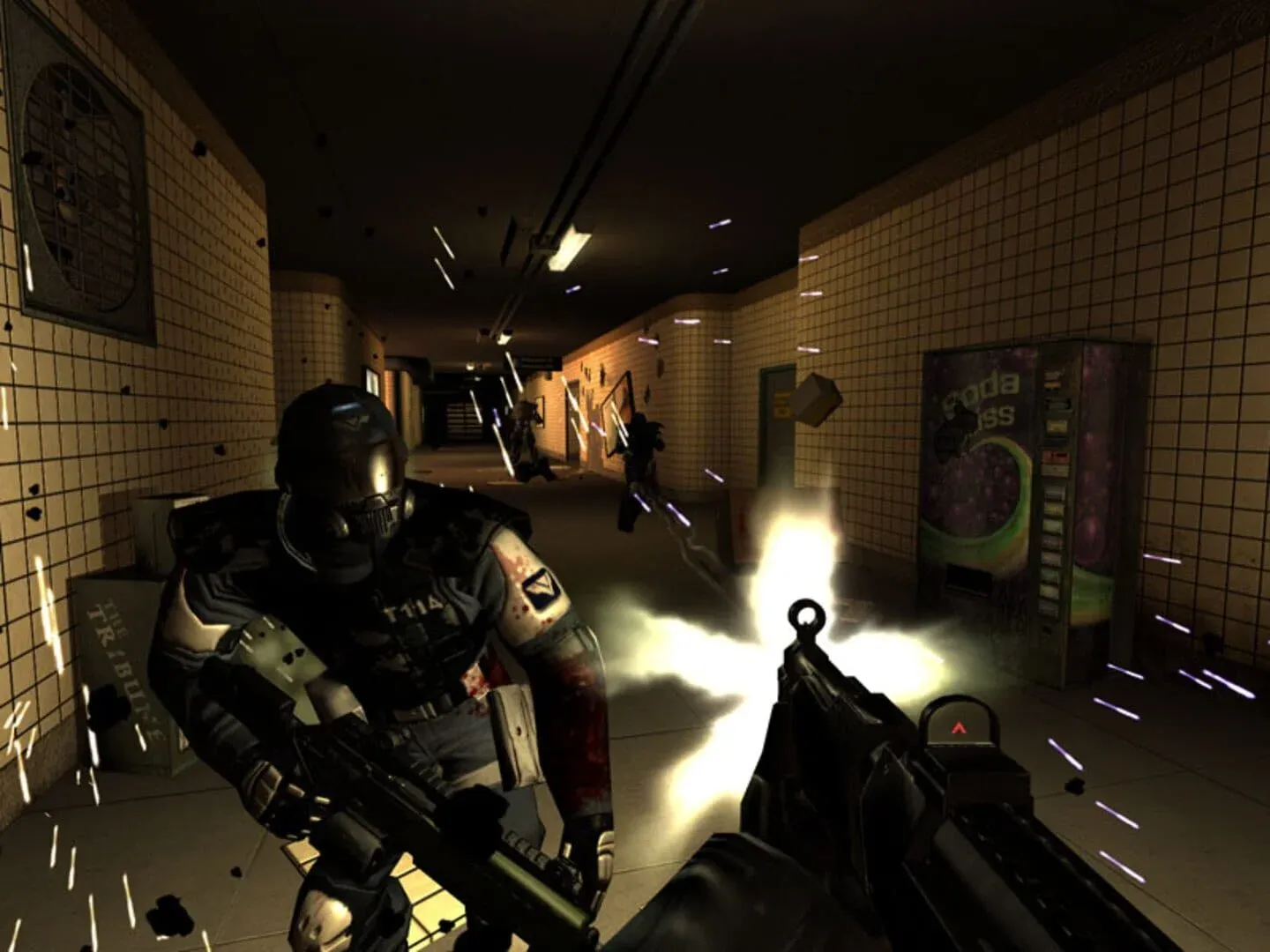
The expansion runs on the same engine and combat philosophy as the original, meaning the moment-to-moment gunplay still centers on reflex time, a mechanic that slows the world around the player while preserving normal aiming speed. The result is a first-person shooter that rewards patience and positioning over raw twitch speed. Soldiers flank, take cover, and communicate during engagements, so reflex time isn't a cheat so much as a way to process what's actually happening in a firefight.
Gameplay mechanics: what's new in Extraction Point?
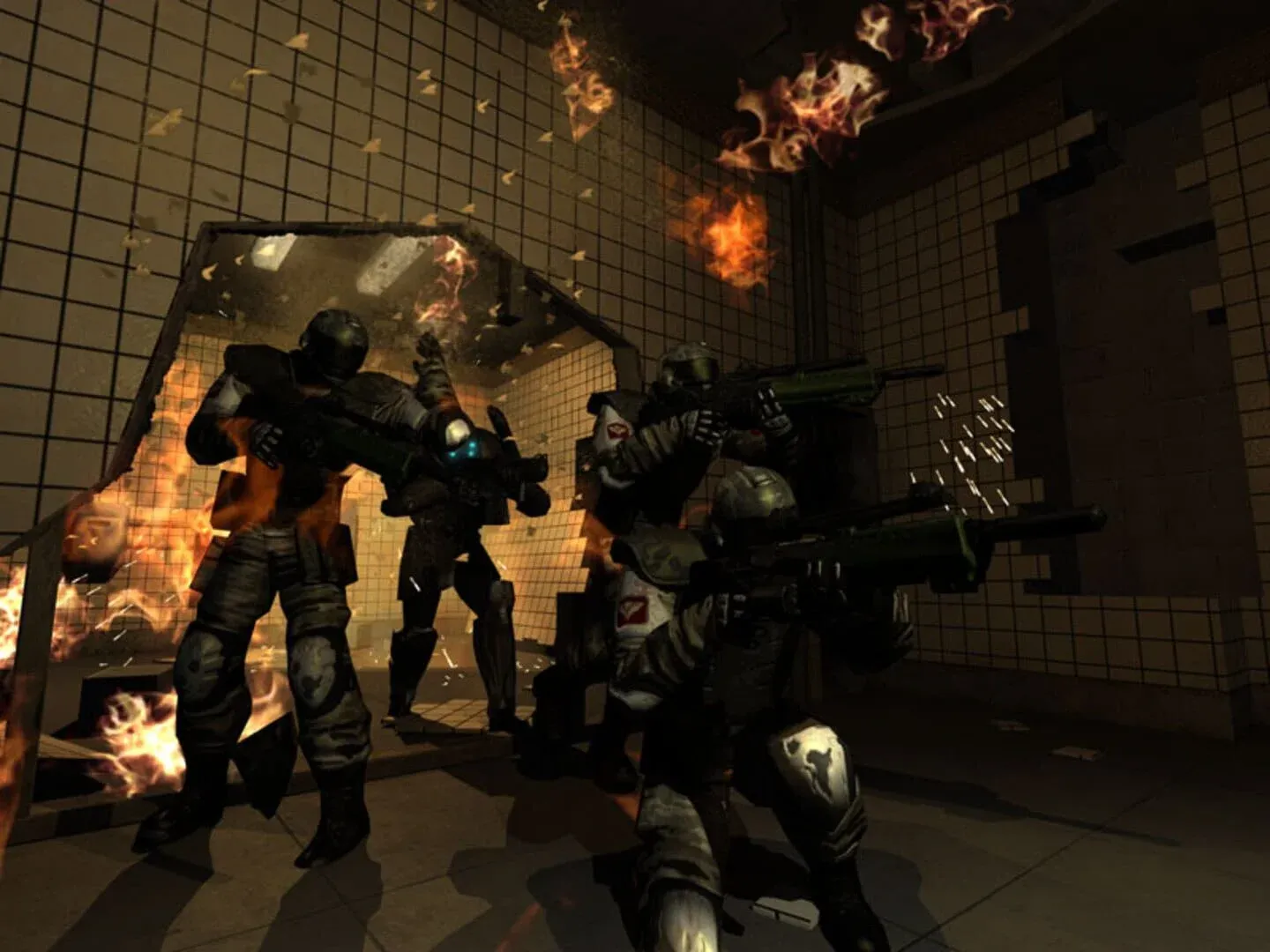
Extraction Point isn't just the original F.E.A.R. with new maps. TimeGate added several combat and environmental interactions that change how players move through spaces:
F.E.A.R. Extraction Point content image
- Bash doors open with melee attacks
- Blow doors off hinges with explosives
- Smash crates to find supplies
- Engage reflex time to slow enemy reactions
- Use environmental cover during firefights
These additions feel minor in isolation but add up during tense hallway encounters, where kicking a door open into an unsuspecting soldier before triggering reflex time becomes a repeatable, satisfying sequence. The melee-to-slowdown combo gives combat a rhythm that the base game hinted at but didn't fully develop.
F.E.A.R. Extraction Point content image
World and setting
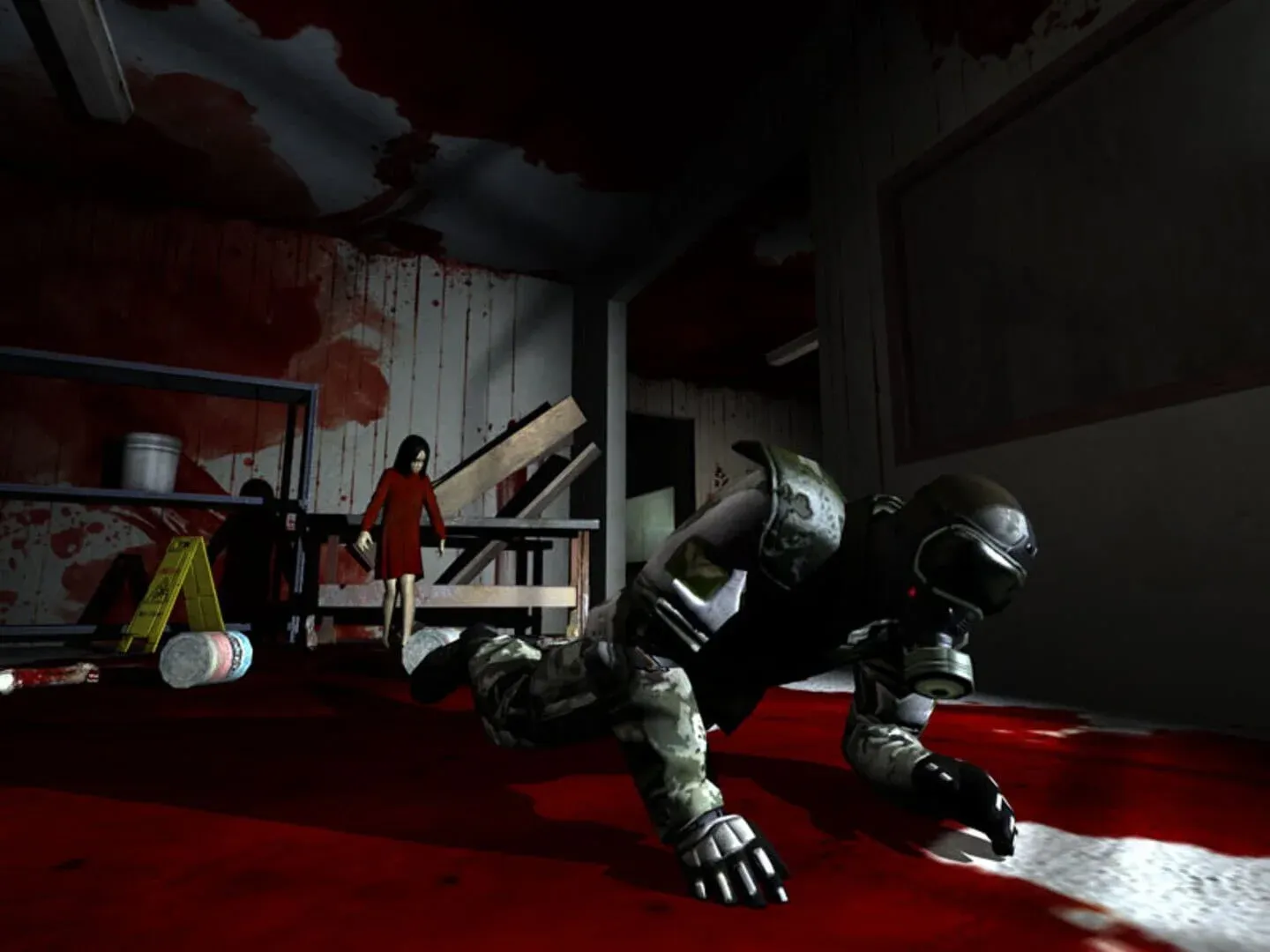
Extraction Point takes place across a ruined city in the hours immediately following F.E.A.R.'s finale. The environments shift between collapsed urban streets, flooded underground sections, and the kind of dimly lit corridors that the series made its signature. Paxton Fettel and Alma Wade remain central to the horror, and the expansion doesn't soften their presence. Alma in particular becomes more physically threatening here than in the original, appearing in moments that are designed to unsettle rather than just startle.
F.E.A.R. Extraction Point content image
The atmosphere leans hard into the idea that the supernatural threat didn't end with the laboratory explosion. Soldiers are still operating in the area, which means the player faces both organized human opposition and whatever Alma is doing to the city around them. That combination keeps the tension from settling into a single register.
F.E.A.R. Extraction Point content image
Does Extraction Point stand alone as a horror shooter?
As a standalone release, Extraction Point doesn't require ownership of the original F.E.A.R., which makes it accessible as an entry point into the series. The reflex-time mechanic is explained through play rather than tutorials, and the story's opening helicopter crash doubles as a competent setup for players unfamiliar with the previous game's events.
What the expansion does particularly well is maintain the original's balance between competent shooter mechanics and psychological horror. The AI-driven soldier encounters give combat weight, while the supernatural sequences use sound design and environmental storytelling to build dread rather than relying on scripted jump scares alone. For a 2006 expansion developed by a studio other than the original team, Extraction Point holds its own as a first-person horror shooter with a distinct identity built on slow-motion combat and relentless atmosphere.