Overview
Donkey Kong Country is a side-scrolling platformer developed by Rare and published by Nintendo, released on November 18, 1994, for the Super Nintendo Entertainment System. The premise is straightforward: King K. Rool and his Kremling army have stolen Donkey Kong's entire banana hoard, trapping Diddy Kong in a barrel in the process. What follows is a journey across Donkey Kong Island that takes the two primates through jungles, frozen tundras, underwater caverns, and industrial mines.
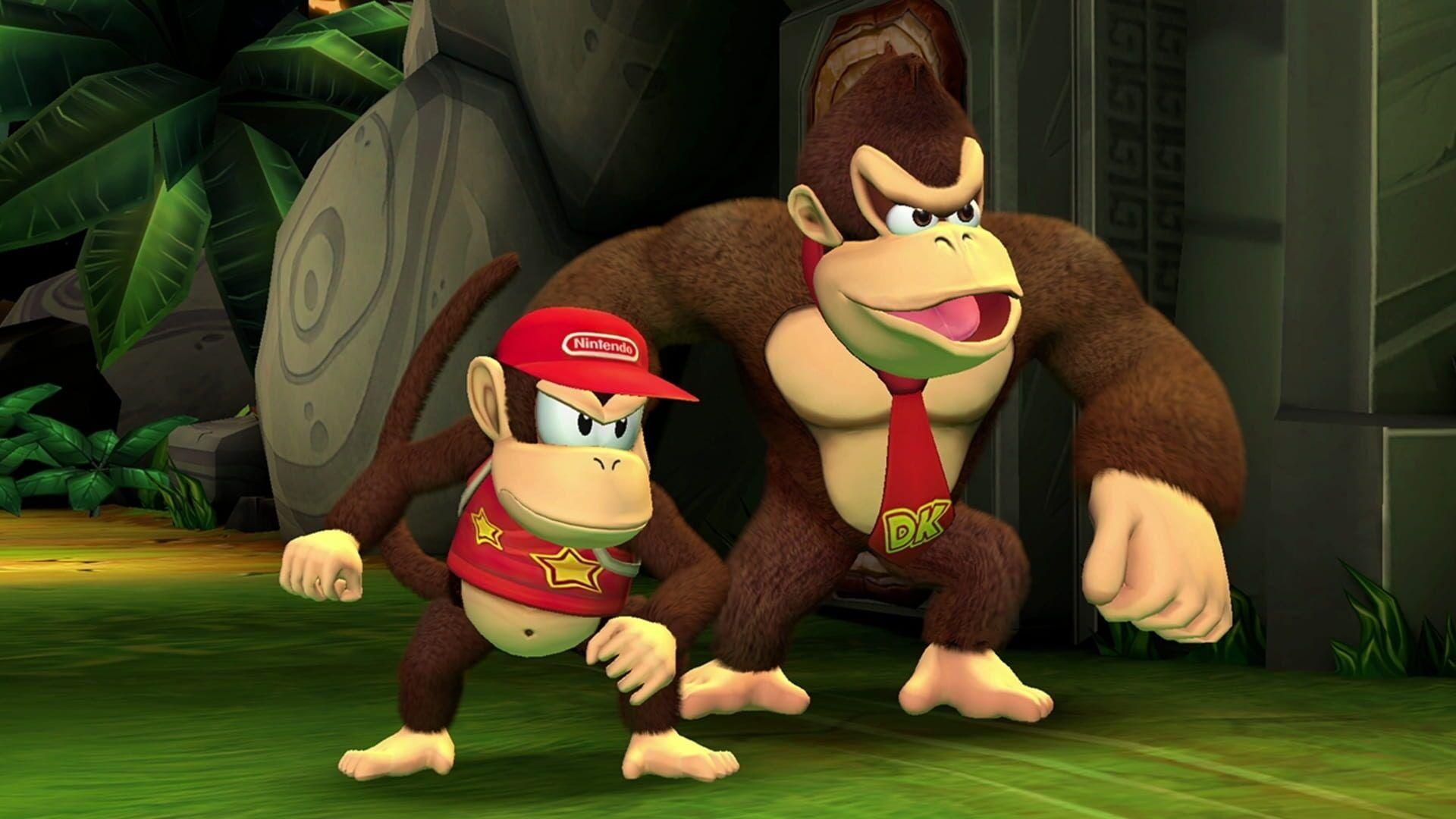
The game's core structure places Donkey Kong and Diddy Kong at the center of every decision. Donkey Kong hits harder and can defeat tougher enemies, while Diddy moves faster and jumps with more precision. Losing one character doesn't end the run immediately; the surviving Kong continues until taking another hit. It's a system that rewards careful play without punishing mistakes too harshly, making the game accessible while still demanding skill in later worlds.

Donkey Kong Country content image
Gameplay and mechanics
The two-character system is the engine that drives Donkey Kong Country's moment-to-moment gameplay. Key mechanics include:

Donkey Kong Country content image
- Barrel blasting to reach hidden areas
- Animal buddy rides across multiple level types
- Cartwheel and roll attacks for enemy clearing
- Swimming sections with distinct physics
- Bonus room exploration for collectibles
Animal buddies like Rambi the rhino, Enguarde the swordfish, and Squawks the parrot add variety across the game's 40-plus levels. Each buddy changes how a level plays entirely. Riding Rambi through an enemy-packed corridor feels completely different from navigating underwater stages on Enguarde's back.

Donkey Kong Country content image
What made Donkey Kong Country look so different?
The short answer: pre-rendered 3D graphics rendered on Silicon Graphics workstations, then converted into 2D sprites for the SNES. In 1994, nothing on console hardware looked remotely similar. Characters had smooth shading, environments had depth, and animations moved with a weight that flat sprite work couldn't replicate. Rare's technical approach gave the game a visual identity that still reads as distinctive rather than simply dated.

Donkey Kong Country content image
David Wise's soundtrack matches the visual ambition. Tracks like "Aquatic Ambiance" and "Jungle Groove" are not background music in any passive sense. They shape the mood of each environment so specifically that the sound design became as recognizable as the gameplay itself. The audio work here influenced how platformer soundtracks were approached for years afterward.
World and setting
Donkey Kong Island spans eight worlds, each with a distinct visual theme and environmental hazards. The Kremling army isn't a monolithic enemy type either. Different Kremlings appear throughout the game with varying behaviors, some requiring jump attacks to defeat, others needing rolls, and a few that can't be dispatched by standard means at all. Boss encounters at the end of each world put specific movement patterns to the test.
Hidden bonus rooms are scattered throughout nearly every level, accessible through specific barrel blasts or breakable walls. These rooms contain collectible items and contribute to completion percentage, giving players a reason to revisit stages after clearing them. The exploration layer sits on top of the main platforming challenge without ever interfering with it.
Impact and legacy
Donkey Kong Country sold over 9 million copies on the SNES, making it one of the best-selling games in the console's library. Two direct sequels followed within three years, both expanding on the original's mechanical foundation. The game demonstrated that arcade characters could anchor full-length franchise experiences with genuine depth, and Rare's production approach set a new benchmark for what 16-bit hardware could visually deliver. Decades later, the platforming design holds up in ways that many contemporaries don't, which is the clearest measure of how well it was built.