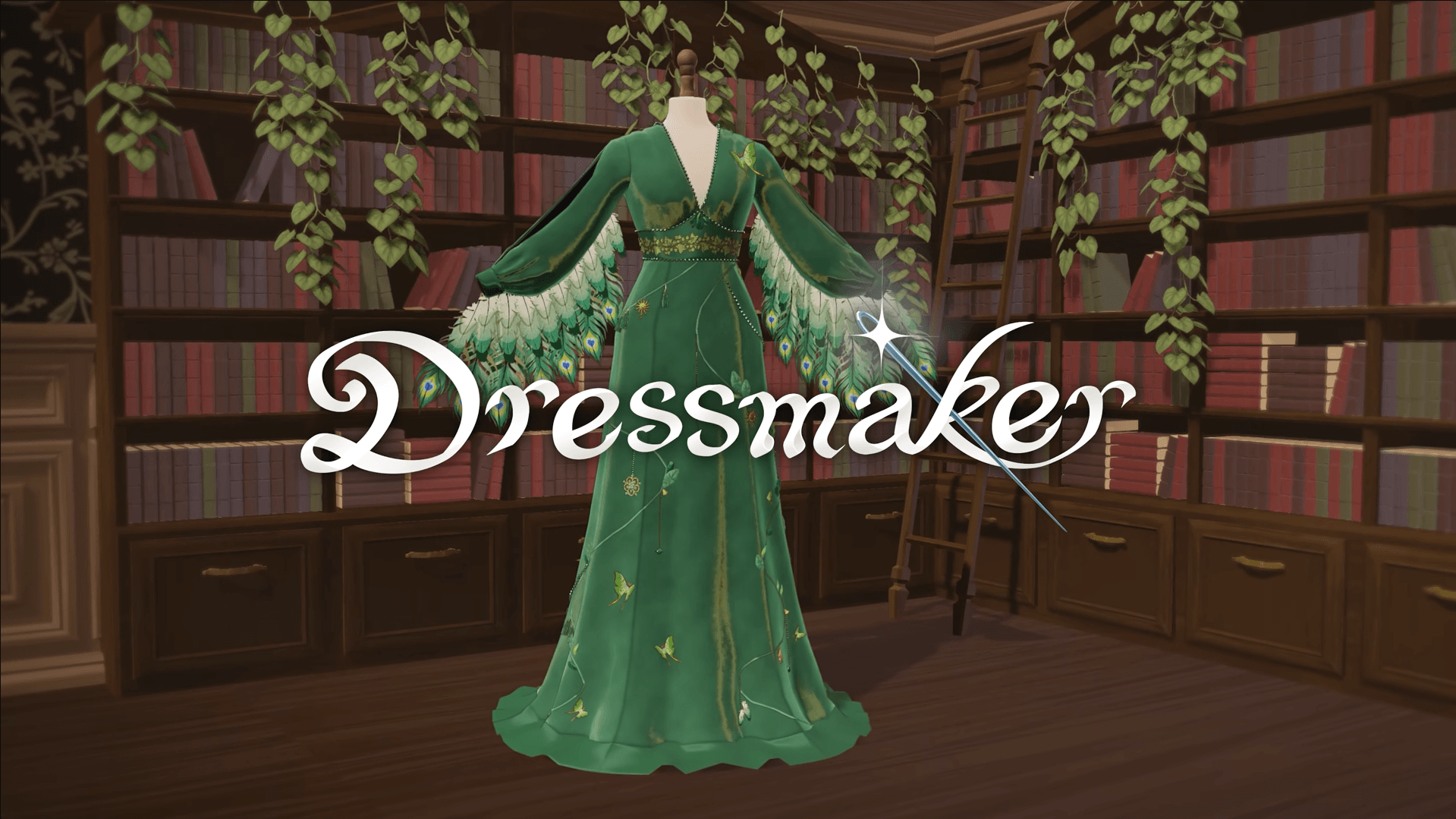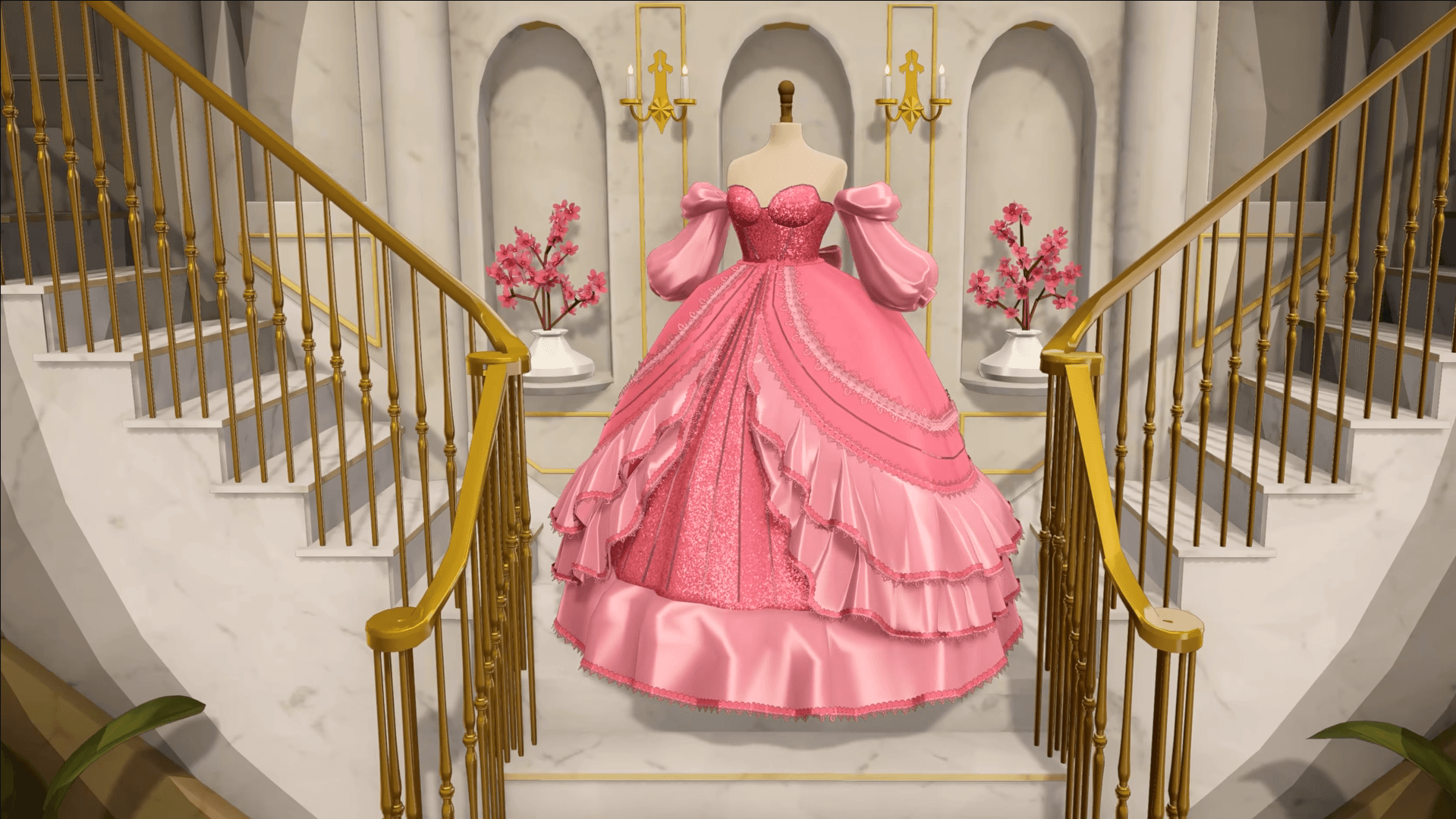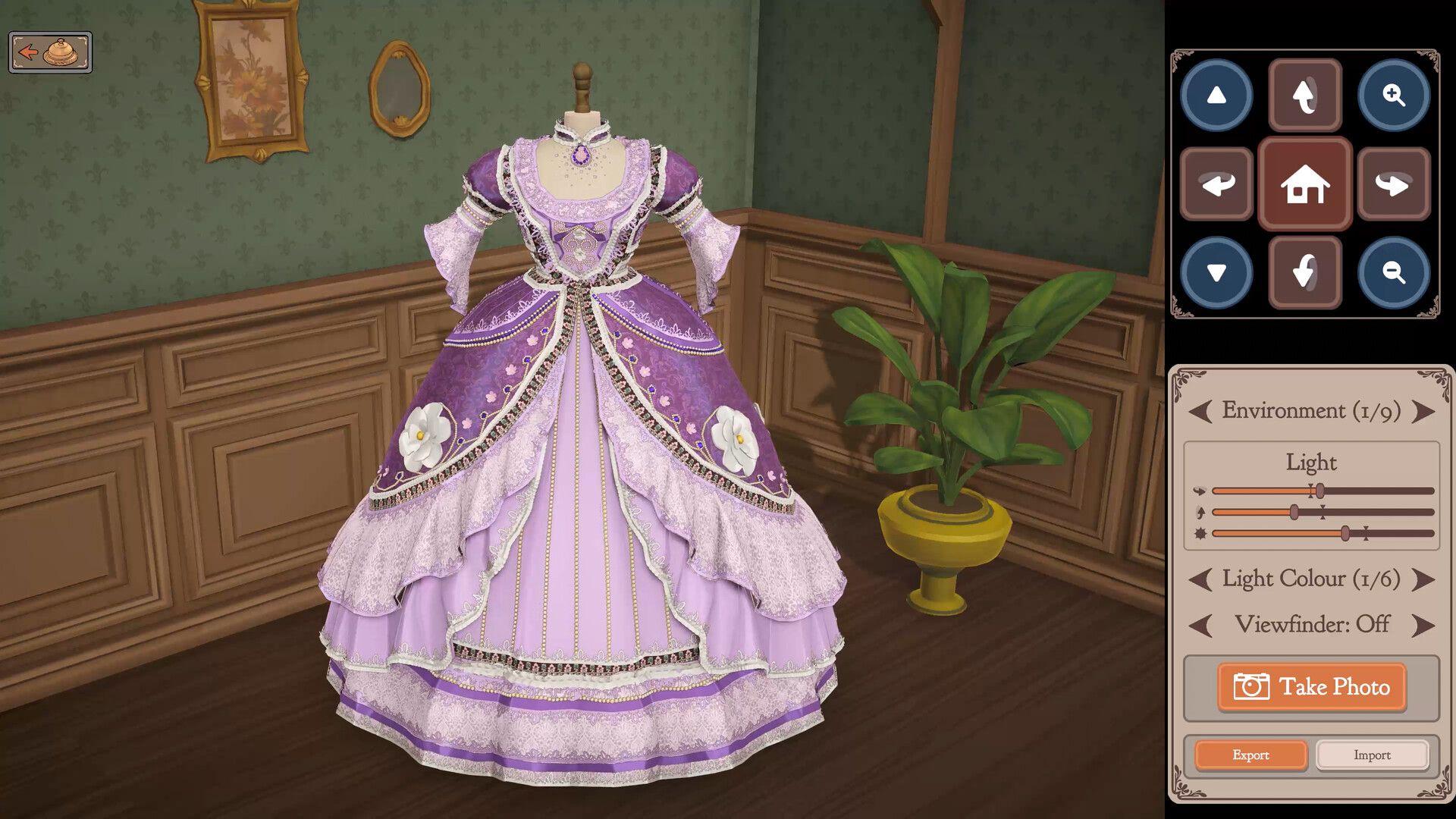

Dressmaker puts you in charge of a dress-making business where every commission lives or dies on one decision: which fabric you pick. The game launched on Steam on September 21, 2026 with a library of over 450 fabrics, and the sheer variety can make even simple commissions feel overwhelming. The good news is that the eight fabric families each have clear strengths, and once you understand which materials cover which style tags, you can walk into any commission knowing exactly what to grab.
How does the fabric and style tag system work?
Before getting into specific materials, it helps to understand what the game is actually measuring. Style tags are the attributes that determine whether a finished dress matches a client's request. Tags like Simple, Elegant, Formal, Glamour, and Eveningwear each correspond to specific fabric choices, and satisfying the right combination is what earns you a successful commission.
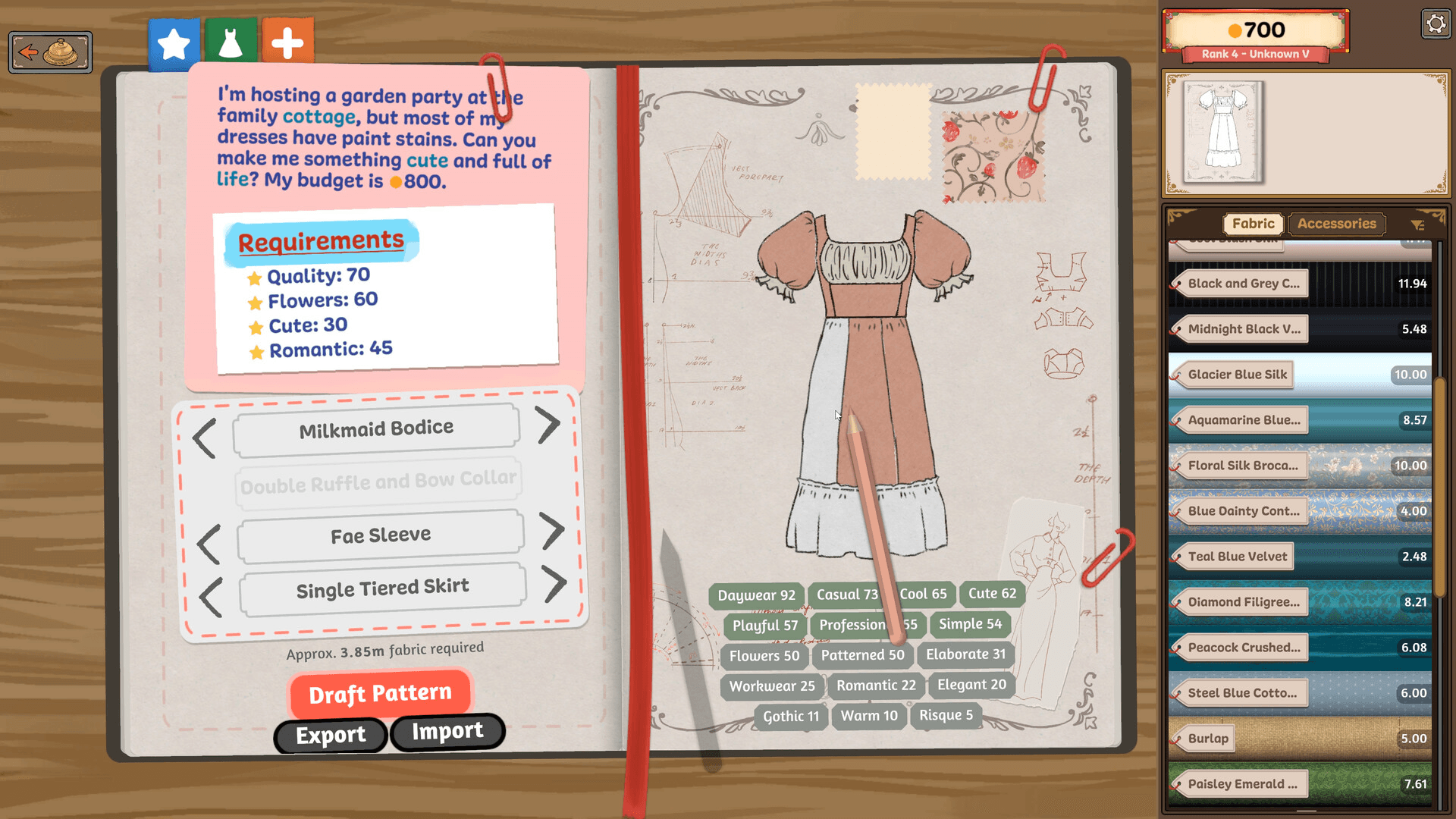
Here's the thing most players miss early on: the tags you see on a finished garment come from a combination of your fabric choice and your dress pattern, not from the fabric alone. That means two bolts of the same material can produce different results depending on the bodice, skirt, and sleeve pattern you pair them with. Always check the individual bolt's tag values before buying rather than assuming every piece of cotton or silk behaves identically.
Price is also worth factoring in. Expensive materials are not automatically better. If a budget-friendly cotton already satisfies the commission's requirements, spending coins on premium velvet just cuts into your profit without improving the outcome.
What are all the fabric types and when should you use them?
Burlap
Burlap sits at the bottom of the price range, which is the main reason to reach for it. It works well when you want to produce and sell garments without investing heavily in materials. There is also a narrow niche for burlap in commissions that specifically request uncomfortable clothing. Outside those two situations, every other fabric offers more useful tag coverage.
Cotton
Cotton is the safest starting point for straightforward commissions. Its primary strength is the Simple tag, and its relatively low cost means you keep more profit on easy orders. What surprises many players is that higher-end cotton variants can also contribute to Elegant requirements, so check each bolt individually rather than writing cotton off as a basic-only material.
Lace
Lace has a narrow focus but becomes extremely effective for the right job. Its specialty is satisfying both Formal and Elegant requirements at the same time, which makes it the obvious choice for wedding dresses and similarly sophisticated designs. For everyday commissions, there is rarely a reason to force lace into a design unless its tags directly match what the client wants.
Linen
Linen is the most versatile mid-range material in the game. Depending on the individual bolt, it can cover Elegant, Casual, Cool, and Workwear tags, and certain varieties also satisfy Patterned requests. That breadth makes linen a strong pick whenever a commission blends practicality with a more refined appearance. As always, read the bolt's card before committing.
Sequins
Sequin fabrics exist for one purpose: standing out. They are the primary source for less common tags like Risqué and Shimmering, and they also perform well when a commission demands Elaborate or Glamour. Save sequins for the projects where those distinctive properties are actually requested. On understated commissions, their strengths are wasted.
Silk
Silk costs more than most materials, but its flexibility justifies the price on complicated commissions. Depending on the exact variety and color, silk can contribute to Elegant, Formal, Simple, and Eveningwear requirements. That range makes it particularly useful when a client's order stacks several attributes at once. Still, inspect the tags on each bolt before buying.
Velvet
Velvet has the broadest tag coverage of any premium material. Suitable bolts can contribute to Elegant, Formal, Glamour, Simple, Romantic, Warm, Cute, and Eveningwear requirements. The downside is cost. Using velvet on a simple commission unnecessarily reduces your earnings, so reserve it for designs where its wide coverage solves multiple requirements simultaneously.
Wool
Wool is a reasonably affordable option when a commission calls for Patterned clothing. Compared to linen, silk, and velvet, its practical applications are narrower. Unless a client specifically needs what wool provides, there is usually a more flexible material that satisfies more of the commission's conditions.
Best fabric for every style tag
| Style Tag | Recommended Fabrics |
|---|---|
| Simple | Cotton, Silk, Velvet |
| Elegant | Cotton (premium), Lace, Linen, Silk, Velvet |
| Formal | Lace, Silk, Velvet |
| Casual | Linen |
| Cool | Linen |
| Workwear | Linen |
| Patterned | Linen (some), Wool |
| Risqué | Sequins |
| Shimmering | Sequins |
| Elaborate | Sequins |
| Glamour | Sequins, Velvet |
| Eveningwear | Silk, Velvet |
| Romantic | Velvet |
| Warm | Velvet |
| Cute | Velvet |
| Uncomfortable | Burlap |
How to shop efficiently for commissions
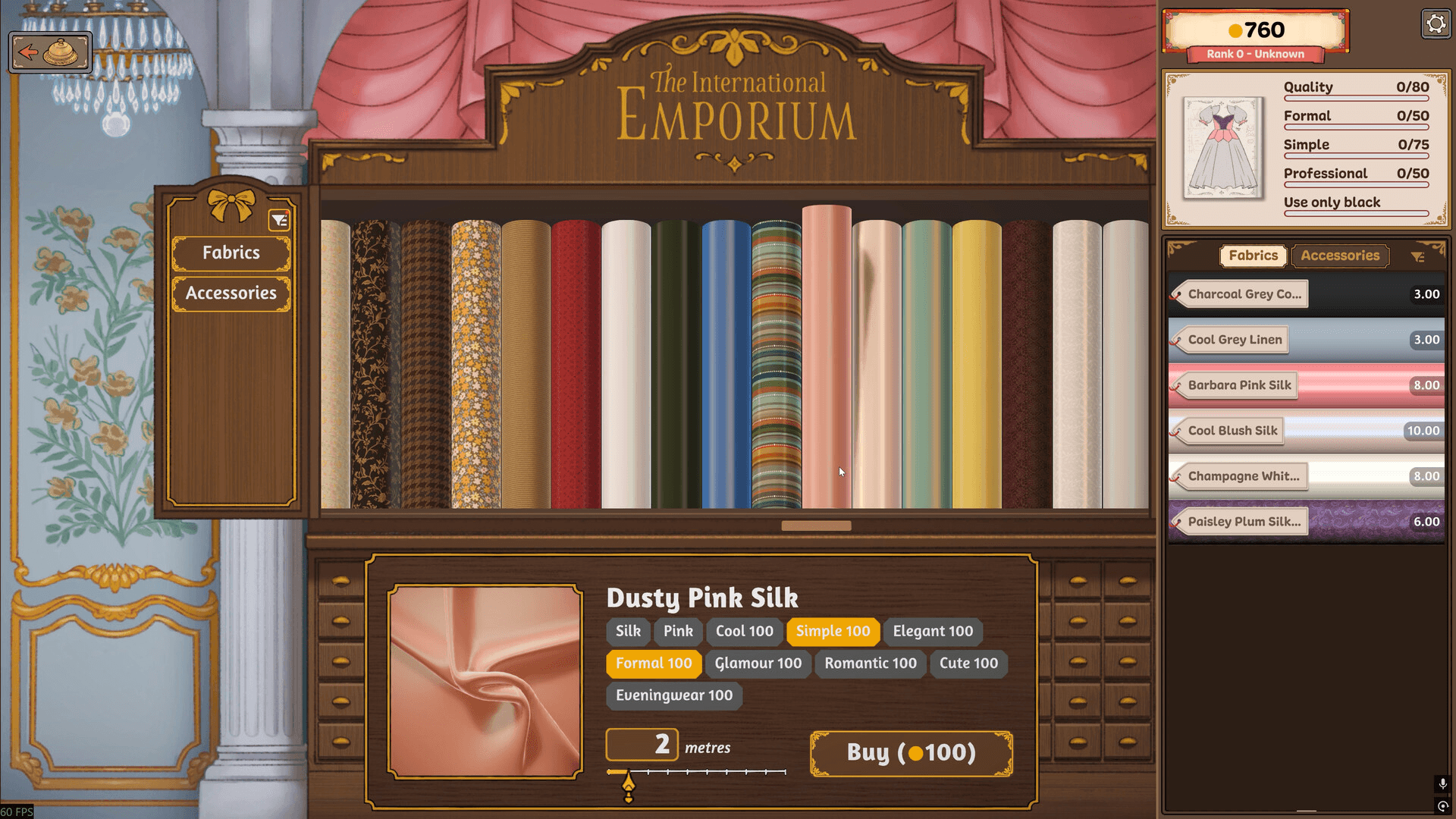
The game's Emporium groups bolts visually and displays each selected fabric's type, tag scores, quantity, and purchase cost. Here is the workflow that avoids wasted coins:
- Read the commission carefully. Note the occasion and any style descriptors the client mentions.
- Draft your dress pattern first. Because tags come from the fabric-plus-pattern combination, designing in the sketchbook before visiting the shop gives you a clearer picture of what tags you still need to satisfy.
- Use Emporium filters to narrow candidates for the missing attributes.
- Check the selected bolt's card. Confirm the fabric type, tag values, quantity, and total cost before pressing buy.
- Keep a budget reserve. Plan for accessories and potential corrections before spending everything on fabric.
For commissions that require several tags at once, prioritize a single fabric that satisfies multiple requirements rather than buying separate materials for each tag. Velvet and silk are the strongest candidates here because of how many tags they can cover in one bolt.
Dressmaker Guide: Best Fabrics for Every Style Tag
Mixing fabrics across garment sections
One underused strategy is applying different fabrics to different sections of the same garment. The bodice, skirt, and sleeves can each use a separate material, which lets you combine tag effects from multiple fabric types in a single dress. If a commission needs both Elegant and Shimmering, for example, pairing a linen bodice with sequin sleeves can cover both requirements without forcing you to find a single bolt that does everything.
This approach also helps with budget management. Using a premium fabric like velvet only on the most visible section and a cheaper material on less prominent pieces keeps costs down while still hitting the required tags.
For more strategies on completing commissions efficiently, browse the Dressmaker guides collection, which covers everything from pattern selection to client management.
Dressmaker sits firmly in the casual games space, but the fabric system has more depth than it first appears. Getting comfortable with which materials cover which tags is the single biggest skill improvement available to new players, and the table above gives you a reliable foundation to build from. Keep checking individual bolt cards, plan your patterns before shopping, and reserve premium materials like velvet and silk for commissions that actually need their full range.