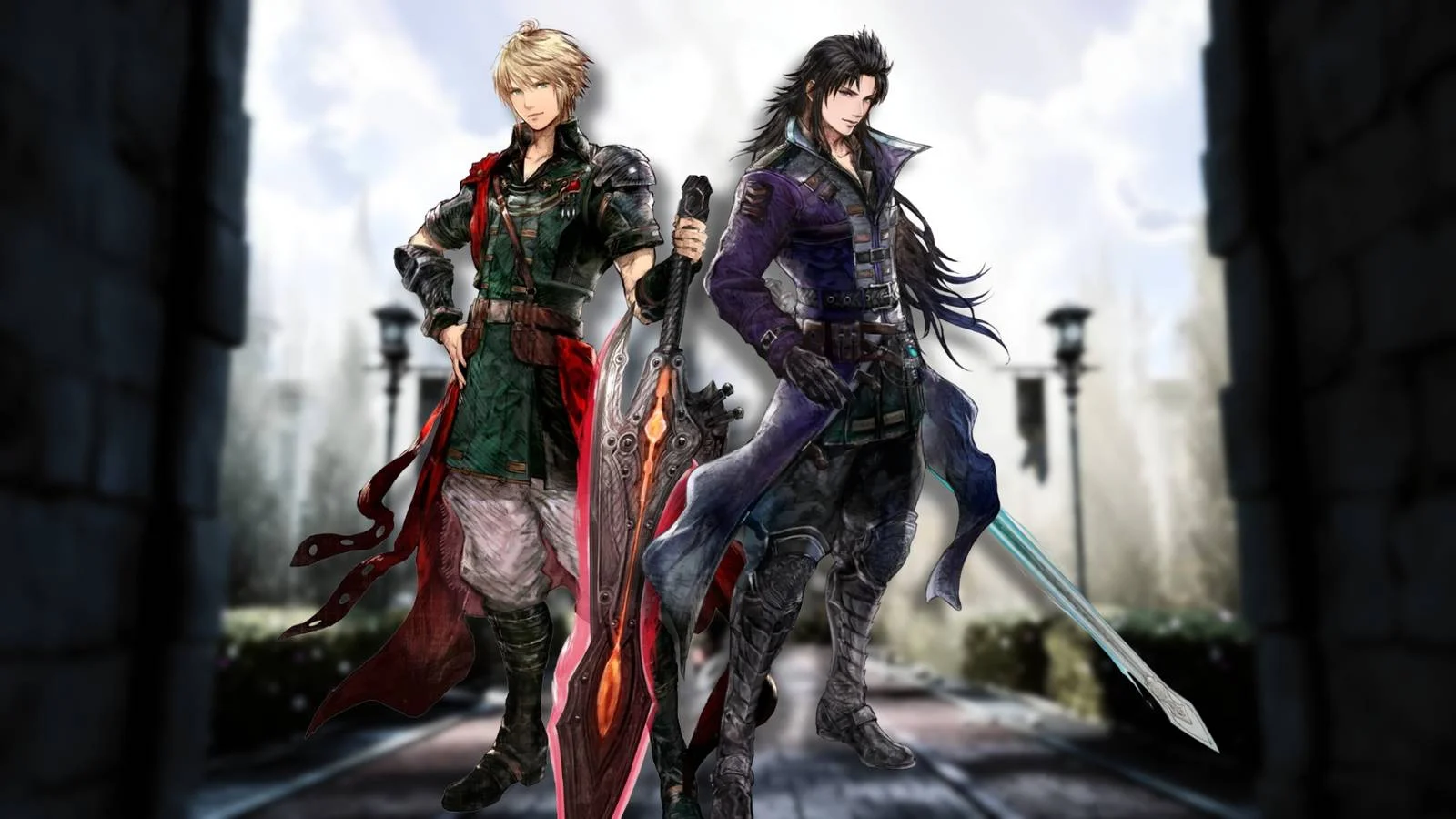

FINAL FANTASY RESONANCE gives you 8 party members but only 4 battle slots, which means every roster decision matters. The gap between the best and worst characters is smaller than most JRPG games in this style, but the difference between a well-built party and a thrown-together one becomes very obvious in the late game. This guide ranks every character across three tiers, breaks down their standout abilities, and tells you which party compositions actually hold up when the fights get difficult.

Rain's stat overview screen
Who are the best characters in Final Fantasy Resonance?
The short answer: Rain and Nichol sit at the top of every party composition, with Sakura close behind as the game's strongest magic attacker. The rest of the roster ranges from excellent in specific roles to situationally useful with the right investment.
Here is the full tier list at a glance:
| Character | Tier | Primary Role |
|---|---|---|
| Rain | S | All-rounder: physical damage, tank, party protection |
| Nichol | S | Support: Formations, buffs, extra actions |
| Sakura | S | Magic attacker: elemental damage, barrier Limit Burst |
| Fina | A | Healer: HP restore, revival, Esper summoning |
| Lasswell | A | Physical Breaker: Stagger buildup, Ice attacks |
| Archwitch Fina | A | Saboteur: Dark magic, debuffs, offensive pressure |
| Jake | B | Critical damage: Luck-based attacks, high physical attack |
| Lid | B | Flexible attacker: Earth abilities, Mechabo support |


S tier: the characters who improve every party
Rain: why is he the best overall character?
Rain leads the tier list because he does more things well than anyone else in the roster. His physical attack is the highest among the Sentinel-class characters, his HP and defensive stats are strong enough to absorb punishment, and his Fire-based kit gives him reliable elemental coverage from the start of Chapter 1.
The ability that separates him from Lasswell is The Power Within, unlocked during the later story chapters. It raises all his attributes by 25% permanently during battle, meaning his damage, defense, and speed all increase at once. No other character gets a buff that broad.
His Infinity Drive deals Fire physical damage and hits 50% harder against a Staggered enemy. Pair that with Lasswell breaking enemy Stagger gauges and Rain becomes a consistent finisher in almost every fight.
- Key abilities: The Power Within, Provoke, Protectga, Unity, Crimson Onslaught, Infinity Drive
- Best Visions: Warrior of Light for balanced offense and defense; Wilhelm if you need stronger party protection
- Joins: Chapter 1
Nichol: what makes him the best support?
Nichol's value comes from one skill that most players underestimate until they actually use it: Tactic: Fluid Warfare, learned at Level 19. For three turns, he gains an additional action after every Formation ability he uses. That means he can apply a Formation buff and still attack or apply another skill in the same turn.
His Formation abilities cover almost every situation: Formation: Assail raises Stagger Power, Formation: Charge boosts offensive stats, Formation: Bulwark strengthens physical defense, and Formation: Regroup handles emergency recovery. Cycling through them while getting extra actions makes Nichol far more efficient than any other support option.
At Level 30, his Mirroring Prism Limit Burst lets every party member perform their selected action twice. The applications are obvious: double damage, double healing, double Stagger buildup.
- Key abilities: Tactic: Fluid Warfare, Formation: Assail, Formation: Charge, Formation: Bulwark, Mirroring Prism
- Best Visions: Tronn for Stagger support and elemental coverage; Onion Knight for offensive magic options
- Joins: Chapter 3
Sakura: how good is her magic damage?
Sakura has the highest Magic stat among dedicated attackers and a kit that rewards aggressive play. Her default element is Lightning, but she gains access to Dark, Light, and non-elemental spells as she levels up, giving her the broadest elemental coverage of any single character.
Concentrate doubles her magic attack damage and Speed for three turns. Using it before Tonitus or Sakura's Ultima produces some of the highest single-target damage numbers in the game. She can also strip enemy buffs with Magicide, which has real value during boss phases that rely on self-buffing.
Her defensive Limit Burst, Eternal Veil, blocks the next instance of damage received by every party member. Timing it before a telegraphed boss attack effectively negates a full round of punishment.
The tradeoff is low survivability. Sakura needs Rain nearby to absorb hits on her behalf.
- Key abilities: Concentrate, Thundaga, Tonitus, Sage's Eye, Sakura's Ultima, Eternal Veil
- Best Visions: Terra for Fire, Ice, and Water coverage; Shantotto for additional offensive magic
- Joins: Chapter 5
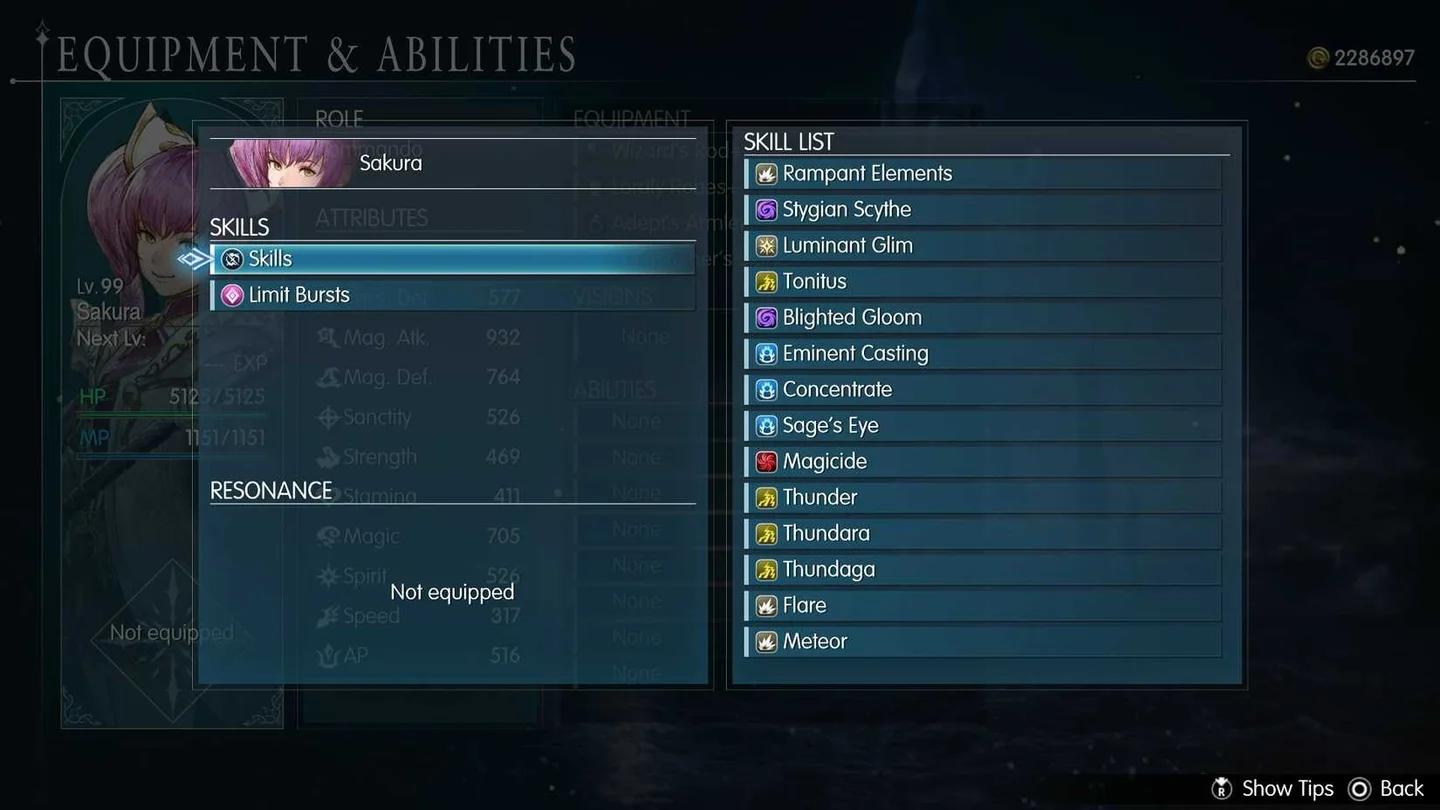
Sakura's Concentrate ability slot
A tier: strong picks with specific strengths
Fina: is she worth keeping in the party?
Fina is the safest fourth-party-slot pick for most of the story. She learns Curaga, Raise, Arise, and Reraise through leveling, and her Radiant Restoration Limit Burst revives all knocked-out allies and restores HP simultaneously. That last ability alone saves runs that would otherwise be over.
She is also one of two characters who can summon Espers, and she has the highest Sanctity stat in the roster, which amplifies her healing output. Her direct damage is low, but her utility during multi-phase boss fights with status effects and area attacks is hard to replace.
By the late game, Nichol outpaces her as a pure support unit, and Archwitch Fina surpasses her offensively. That does not make her bad. It just means her role narrows to healing and Esper summoning, which is still valuable.
- Key abilities: Curaga, Esuna, Raise, Arise, Reraise, Radiant Restoration
- Best Visions: Ayaka for advanced healing; Leah during early chapters
- Joins: Chapter 1
Lasswell: how does his Stagger kit work?
Lasswell is the dedicated Stagger specialist. His Null Moon Limit Burst deals damage and reduces the target's Stagger resistance for three turns, creating a window for Rain's Infinity Drive or Sakura's Concentrate combos to land maximum damage.
His Transient Rite Limit Burst hits all enemies with Ice physical damage and gains a 50% bonus against Staggered targets. Against grouped enemies, this is one of the strongest area attacks available before the late game.
The main limitation is lower survivability compared to Rain. He dies faster under pressure, so keeping Fina's healing available matters more when Lasswell is in the lineup.
- Key abilities: Null Moon, Ice Splitter, Transient Rite, Hastega, Tranquility in Tumult
- Best Visions: Firion for additional elements and Stagger Power; Cloud for strong physical damage early
- Joins: Chapter 1
For a deeper look at how to pair Lasswell with the right Visions, the best Visions for every character guide covers his strongest pairings in detail.
Archwitch Fina: when should you use her?
Archwitch Fina is the most offensive version of Fina and functions as a Saboteur rather than a healer. Her kit includes Deshell, Bio, Allure, and Distress for debuffing, and she deals Dark damage through Dystopia and other offensive spells. She can also summon Espers, which is a bonus most players forget about.
Her defining ability is Witching Hour, which raises all her attributes by 50%. The catch: she cannot receive White Magic healing while it is active. Use it when you are confident the party can survive without healing her, or when Rain's Provoke is drawing enough attacks away from her.
Her Queenly Whip skill applies both Debrave and Defaith simultaneously, making it one of the most efficient single debuff actions in the game.
- Key abilities: Witching Hour, Queenly Whip, Deshell, Distress, Dystopia, Shadow Unending
- Best Visions: Victoria for additional elemental magic; Tronn for Stagger and coverage
- Joins: Chapter 5

Archwitch Fina's debuff toolkit
B tier: situational characters worth understanding
Jake: is the Luck mechanic worth building around?
Jake has the highest raw physical attack stat in the roster and access to the Brave spell, which means even ignoring his Luck mechanic entirely he can deal strong damage when paired with a physical attacking Vision. The problem is consistency.
His Luck-based abilities like Coin Toss and Gamble Shot require building up Luck stacks before they hit full power. His Glücksschmied Limit Burst scales with accumulated Luck but resets it on use, so timing matters. Spend it too early and you waste the stacks; hold it too long and you miss the damage window.
Rain and Lasswell produce comparable or better physical damage without the resource management overhead. Jake is fun to play and genuinely strong in critical-hit focused builds, but he asks more of you for results that are roughly equivalent.
- Key abilities: Coin Toss, Gamble Shot, Bravery, Glücksschmied
- Best Vision: Aileen for additional physical attacks and Stagger Power
- Joins: Chapter 4
Lid: what does she actually bring to the party?
Lid is the definition of a generalist. Her physical and magic attack stats are roughly equal, her Earth-based kit is functional, and her Mechabo Escape skill provides a useful way to exit battles without taking damage. The issue is that none of these things are exceptional.
Her Mechabo companion requires additional upgrades through side quests before it contributes meaningfully in combat. Without that investment, she underperforms compared to the A-tier characters across the board.
She joins in Chapter 2, which makes her useful during the stretch before Nichol and Sakura arrive. Once the full roster is available, she becomes the easiest character to rotate out.
- Key abilities: Mechabo Kick, Stonega, Reflect, upgraded Mechabo abilities
- Best Visions: Tidus for physical damage and Stagger; Clive for Fire and Wind coverage
- Joins: Chapter 2
What is the best party composition?
The most reliable four-character lineup for the main story and optional content is Rain, Lasswell, Fina, and Nichol. Each character covers a distinct role with minimal overlap.
| Party Setup | Members | Best For |
|---|---|---|
| Balanced | Rain, Lasswell, Fina, Nichol | Story bosses, survivability, Stagger, consistent support |
| Magic-focused | Rain, Nichol, Sakura, Fina | Elemental damage, strong buffs, magic-heavy encounters |
| Aggressive | Rain, Lasswell, Nichol, Sakura | Faster clears, high Stagger output, maximum damage |
For the balanced setup, the turn order matters. Open with Nichol's Formation: Assail to raise Stagger Power across the party, then have Lasswell use Null Moon to soften the enemy's Stagger resistance. Rain attacks once the target is Staggered, and Fina holds healing in reserve rather than spending it reactively.
For magic-heavy encounters, swap Lasswell for Sakura and give Nichol a Breaker Vision like Tronn to maintain Stagger pressure. This keeps elemental coverage wide while preserving the party's defensive backbone.
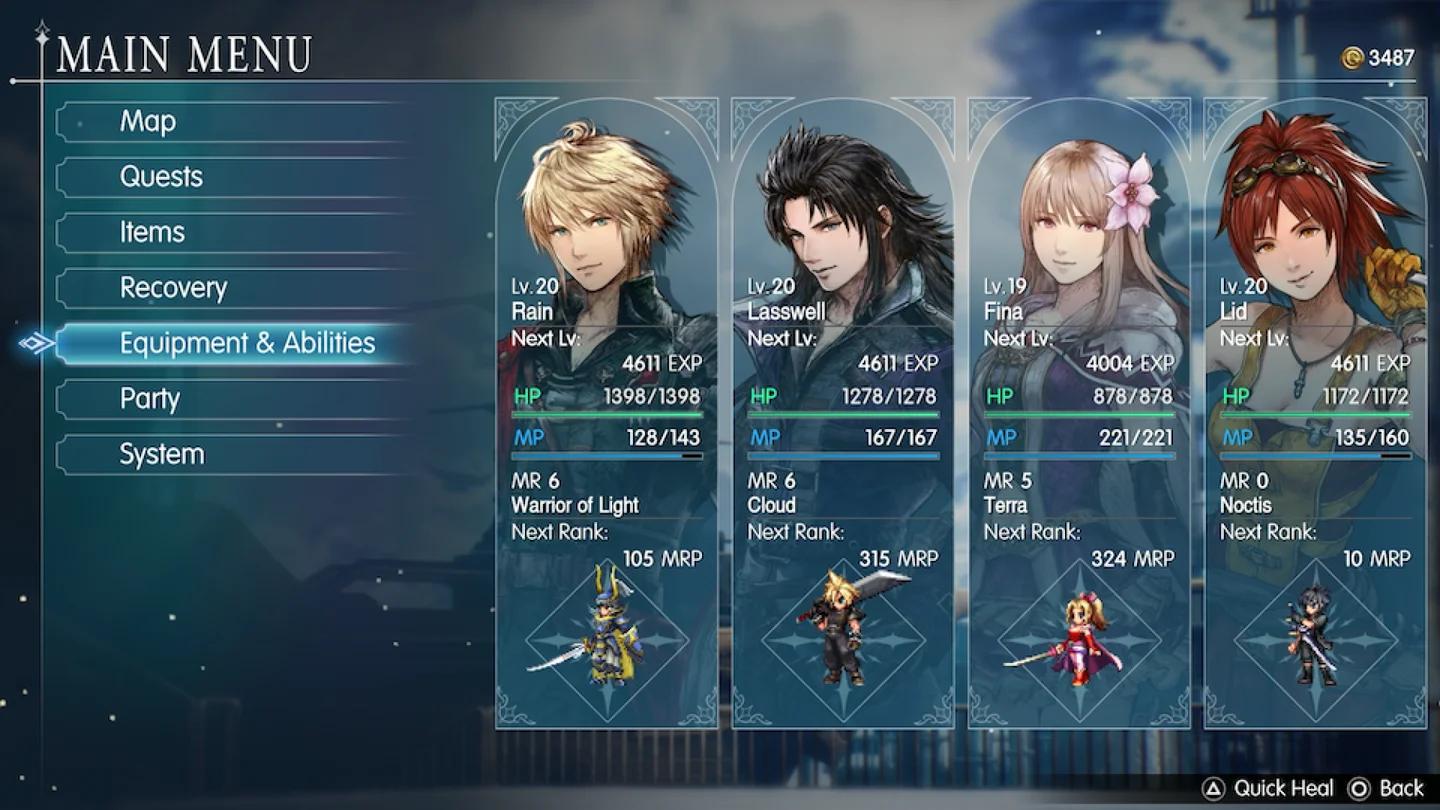
Party lineup selection screen
For more on how to build each character's loadout once you have settled on a party, the best skills and ability combos guide covers Rain, Lasswell, and Fina's strongest rotations in detail. The full Final Fantasy Resonance strategy guide collection has everything from early game weapons to boss-specific breakdowns.