

Efficient character progression in FINAL FANTASY RESONANCE means combining regular battles with equipment and abilities your active party actually uses. Clear quests and explore before settling into repeat fights, and leave lengthy Vision mastery grinds until later, when enemies award more MRP.
If Rain keeps falling to physical attacks, another offensive ability won't fix his defense. Character levels, Vision mastery, awakening, and equipment solve different problems. This guide focuses on strengthening your full-release party without spending hours chasing upgrades that barely help your next fight.
How does character progression work?

Separate character levels, mastery, and awakening
XP, MRP, and Magicite feed different progression systems. Raising a character's level does not replace Vision mastery, and awakening a Vision is a separate investment again.
| System | Resource or requirement | What it changes | Your immediate priority |
|---|---|---|---|
| Character leveling | XP | Raises character level and reaches level-based Limit Burst unlocks | Stay near the next dungeon's recommended level |
| Vision mastery | MRP earned with an equipped Vision | Unlocks mastery rewards, including active and passive abilities | Target a reward that supports the character's current role |
| Vision awakening | Magicite | Expands what a Vision offers | Check whether the next awakening benefit helps your current party |
| Equipment | Gear found through exploration, rewards, and shops | Changes combat stats and may add useful effects | Compare the stats your equipped abilities actually use |
| Learned ability loadout | Learned abilities and available AP | Determines which learned effects you can equip together | Equip useful rewards without exceeding your AP allowance |
Vision mastery is tracked per character. Rain making progress with a Vision does not give Lasswell the same mastery rank. Check the selected character's rank before deciding who should equip a Vision for training.
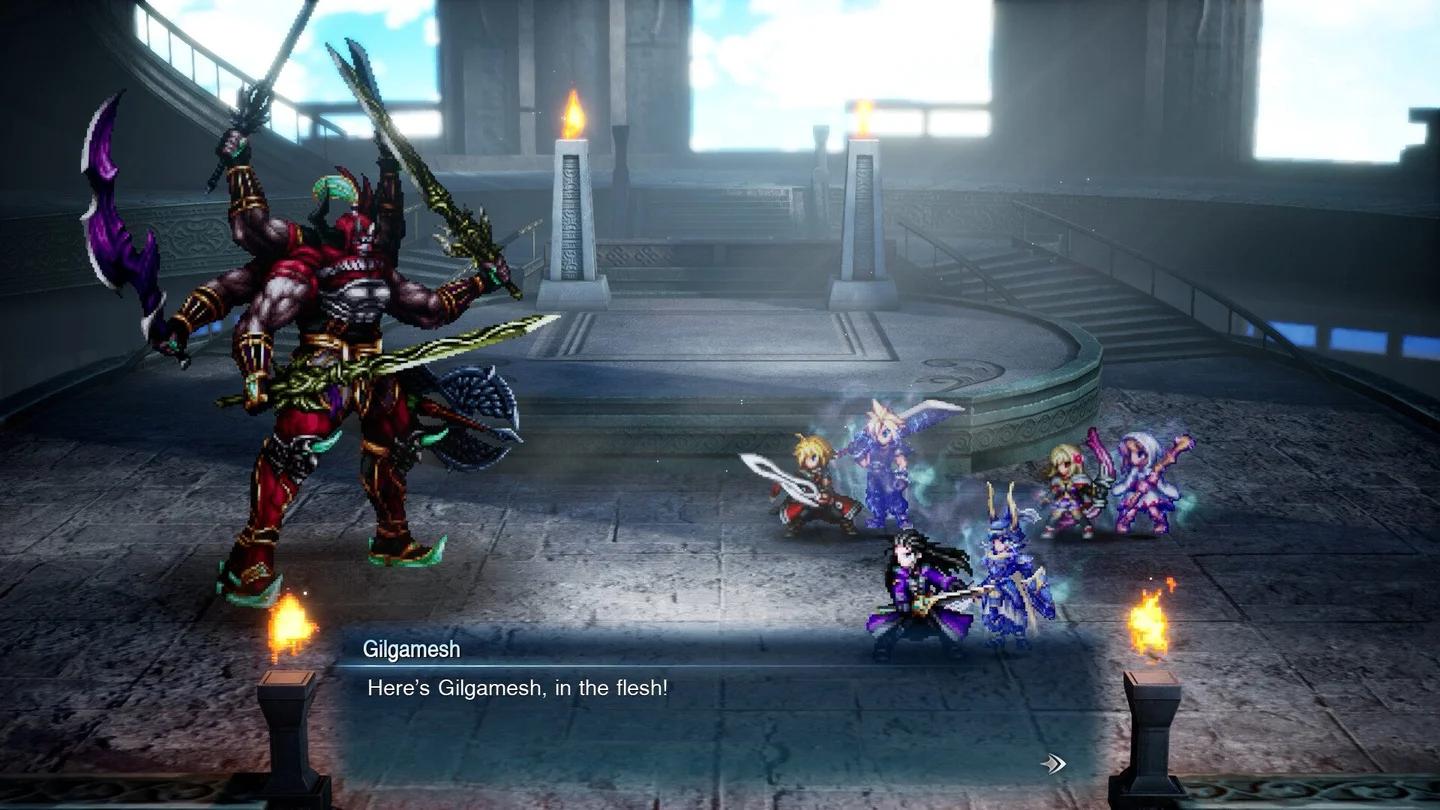
Track each character's Vision rank
AP is your allowance for equipped abilities, not a resource spent whenever you attack. Mastery can give you more options, but their AP costs still limit which combinations fit into your loadout.
Where does experience come from?
Battles provide character XP and Vision MRP. Story routes, side quests, and exploration give you opportunities to fight while also finding equipment, collectibles, and awakening materials.
Before repeating encounters purely for XP, check what useful activities remain:
- Continue the story if your party can handle the next area's recommended level. Later enemies award more MRP, making lengthy mastery grinds easier.
- Clear side quests to make progress alongside rewards. Some quests provide equipment or Magicite, which can improve your party without another character level.
- Explore for treasure before shopping. A useful piece of equipment from a chest may fill the same gap you were about to spend resources fixing.
- Approach optional bosses deliberately. Cave Masters offer rewards, but their recommended levels can be much higher than nearby story dungeons.
How should you use recommended levels?
New dungeons display a recommended level on the map. Treat that as your first progression check, especially before entering a cavern containing a Cave Master.
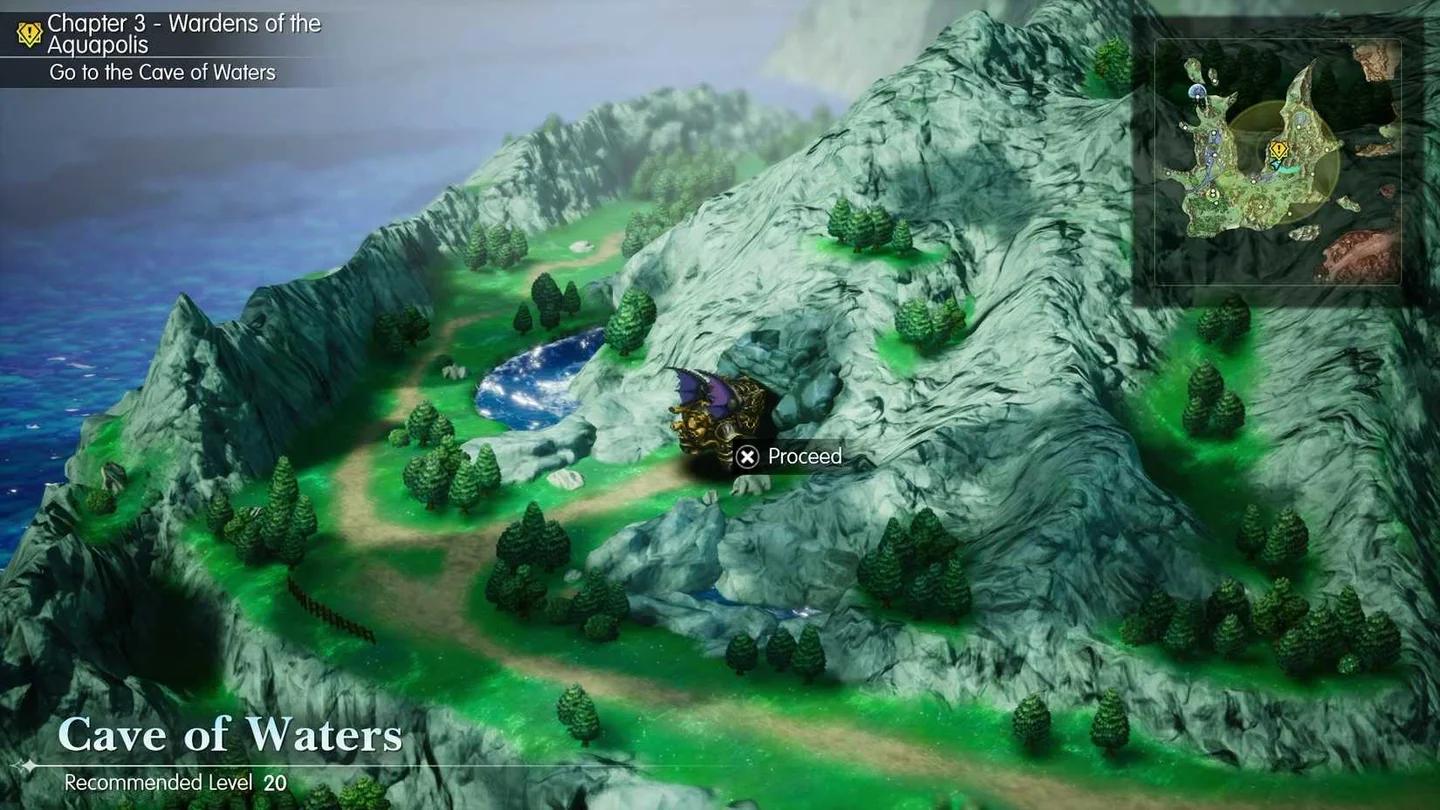
Read the dungeon's level target
An optional cavern being accessible does not make its boss the next sensible fight. If its recommended level is well above your party, continue exploring and return after strengthening your characters. This is best for players who want steady progression without repeatedly paying for recovery after failed attempts.
What should you upgrade first?
Fix equipment that does not support your abilities
Open Equipment and Abilities and compare gear for the character who will wear it. A weapon's largest number only matters if it supports the damage type you are using.
An elemental attack can still deal physical damage. Blizzard Blade, for example, deals Ice physical damage, so physical attack remains relevant even though the attack has an element.
| What you need | Stats to examine | Why they matter |
|---|---|---|
| Stronger physical attacks | Physical attack and Strength | Strength contributes to physical attack |
| Stronger magic attacks | Magic attack and Magic | Magic contributes to magic attack |
| Better healing or Light magic | Sanctity and Spirit | Sanctity affects these effects, while Spirit contributes to Sanctity |
| Better physical survival | Physical defense and Stamina | Stamina contributes to physical defense, not directly to HP |
| Better magic survival | Magic defense and Spirit | Spirit contributes to magic defense |
| A different place in turn order | Speed | Speed affects when the character acts |
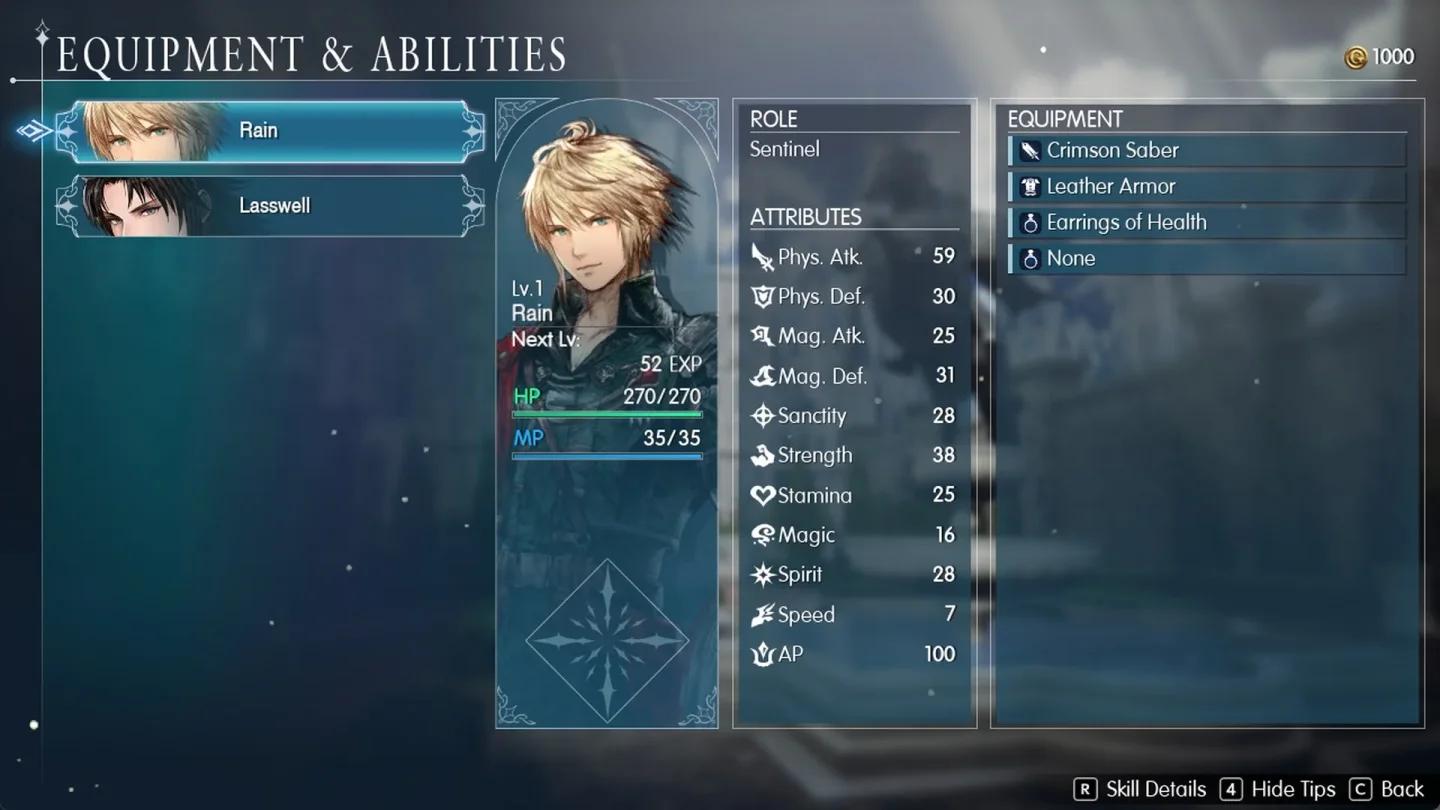
Match gear to your damage type
Check armor effects as well as defense. A useful bonus can justify keeping a piece with slightly lower defensive stats, provided that bonus supports your setup.
Collect useful gear along your route, equip it, and then shop for the remaining gaps. The early-game weapons and equipment guide covers specific pickups when you need a more targeted upgrade.
Choose a mastery reward before choosing a grind
Before equipping a Vision for training, identify the reward you want on that character. An ability that restores MP when you cause a stagger is most useful on someone who regularly causes staggers, rather than someone who spends most turns healing.
Early Vision ranks require relatively little MRP, while later ranks become more demanding. Collect useful early rewards across different Visions instead of locking a character into one Vision until it is fully mastered.
Mastery also does not make every Vision command permanently available. Check which abilities the character has learned and can equip, then review their AP costs. A learned ability sitting outside your loadout contributes nothing to the next fight.
Awaken a Vision you will actually use
Vision awakening becomes available in Grandport and uses Magicite. Inspect the next awakening benefit before spending it, then prioritize an upgrade that improves something your current party needs.
Magicite comes from treasure chests, side quests, and Cave Masters. Later, the Grandshelt Colosseum shop offers Magicite after you progress through its combat trials, so early allocations do not need to cover every Vision equally.
Awakening is best prioritized when the next benefit supports a Vision you already use. Skip an immediate upgrade if its benefits do not help your current setup, and put those materials toward something relevant instead.
How do you keep your active party battle-ready?
Preserve healing while you experiment
Keep Fina in your active party or equip a healing-oriented Vision. Healing options are limited among the Vision roster, and an entirely offensive setup can leave you depending on Potions during harder bosses.
You can experiment with roles without abandoning recovery. For detailed assignments rather than progression priorities, use the character and Vision pairing guide to choose which Visions support each party member.
Check your loadout before a difficult fight
Before a boss or optional Cave Master, review the party you are actually taking into battle:
- Check every active character's HP and MP.
- Equip newly acquired weapons and armor where they improve the intended role.
- Review learned abilities and their AP costs.
- Replace training Visions with a setup you understand.
- Confirm that someone can heal during combat.
- Make a manual save when the game allows it.
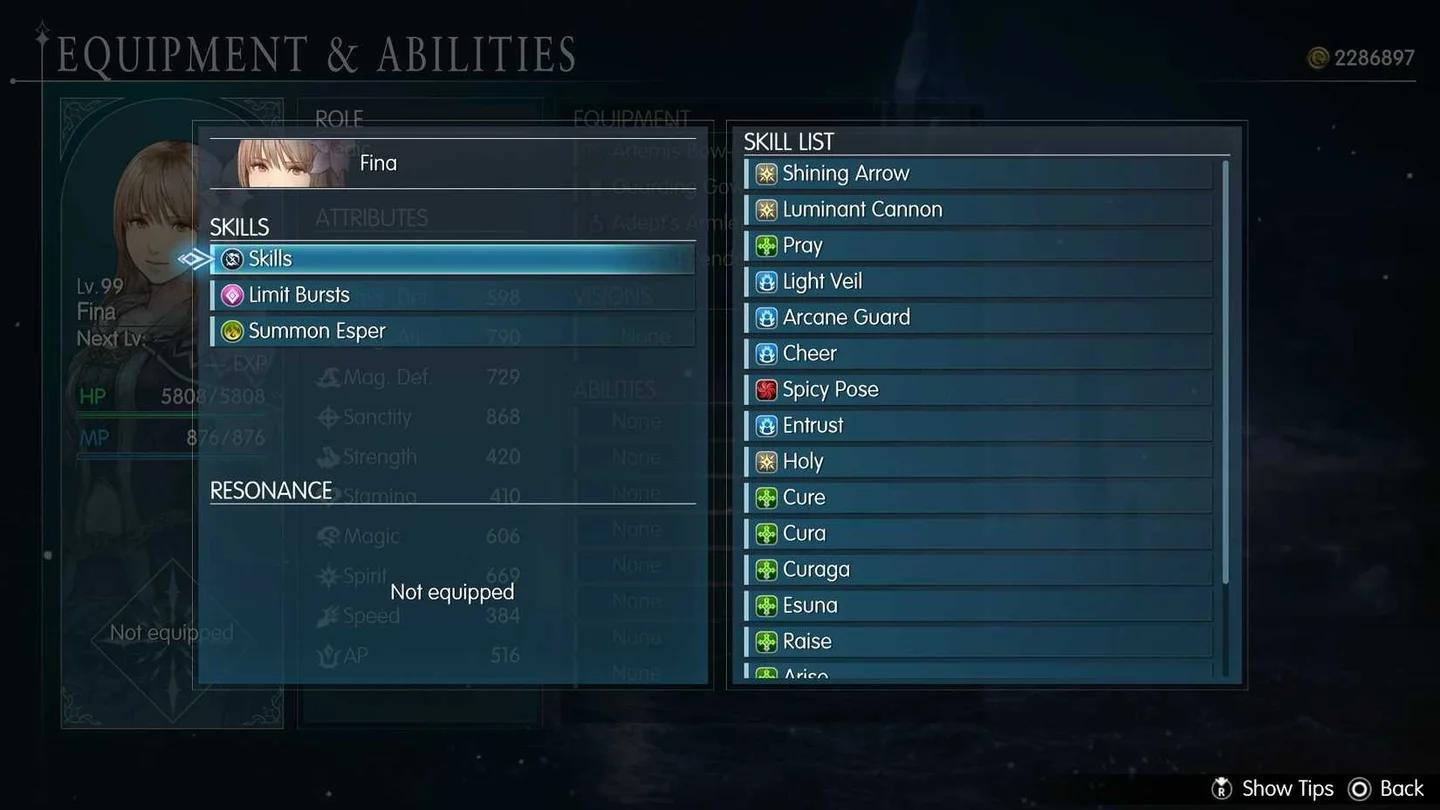
Fit learned abilities within AP
When travel is available, you can leave a dungeon and rest at a town inn before returning. Look for the bed icon rather than spending recovery items automatically.
Once combat begins, keep watching both turn-order bars. If an enemy acts before Fina, you may need to stagger it or use another defensive option rather than assuming her next heal will arrive in time.
When is grinding worthwhile?
Repeat battles are useful when you have a specific obstacle: your party is below a dungeon's recommended level, you need a particular mastery reward, or an optional encounter is beyond your current setup.
Grinding is less useful when the real problem is an unequipped ability, unsuitable equipment, or missing healing. Another level does not equip the Cure-capable Vision you left on the bench.
Pro tips for efficient grinding
- Set a stopping point. Aim for the recommended level or a particular mastery reward, then reassess. This keeps a short preparation session from becoming an unnecessary completion project.
- Choose fights you can clear consistently. A larger reward can be poor value if the encounter takes much longer or repeatedly forces you to recover.
- Train unfamiliar Visions in manageable encounters. This lets you earn mastery without taking an experimental setup straight into a difficult boss.
- Switch after reaching your target reward. Another Vision may offer a useful early ability more quickly than the next expensive rank on your current one.
Rare equipment steals and drops are also a weak default grinding target. Drop rates can make the hunt slow, and the item may be too specialized for your setup or replaced by later shop equipment. Chase one only if it solves a clear need for your party.
Common progression mistakes
- Confusing XP with MRP. Character levels and Vision mastery advance separately. Check which one you need before choosing your next activity.
- Assuming Vision mastery is shared. Rain's progress with a Vision does not establish Lasswell's rank with it.
- Mastering one Vision before trying anything else. Early rewards across several Visions can be more useful than a long grind toward one expensive rank.
- Buying gear before checking your inventory. Explore, inspect rewards, and equip useful finds before paying for a small improvement.
- Removing every source of healing. Keep Fina or a healing-oriented Vision available for difficult encounters.
- Leaving training setups equipped for bosses. Restore the Visions and abilities that support your battle plan before tackling a Cave Master.
Frequently asked questions
Do you need to grind early in FF Resonance?
Not automatically. Start with story progress, side quests, and exploration, then compare your party with the next dungeon's recommended level. Repeat battles when you need levels or a specific mastery reward, rather than grinding simply because another Vision rank exists.
Why has your character stopped leveling at 15?
The demo caps character levels at 15 and Vision mastery at MR5. Those are demo limits. Full-release progression continues beyond them; Rain, for example, learns Crimson Onslaught at level 25.
Does awakening a Vision replace mastery?
No. Magicite awakens the Vision, while MRP advances each character's mastery with it. Check the awakening benefit and the character's mastery rewards separately when deciding what to pursue.
What should you check after gaining levels or mastery ranks?
Review your equipment, newly learned abilities, and AP allowance before the next difficult encounter. Once your loadout is current, use the skills and ability combos guide to plan how Rain, Lasswell, and Fina spend their turns.