

Grand Theft Auto 6's full main-story mission order is not confirmed; the revealed sequences show mission approaches, not a complete campaign walkthrough. Those sequences include a tower-block police raid and a mission involving Raul Bautista that moves from guided shooting to a more flexible driving escape. Spoilers below stop at those setups and their mechanics. Use them to understand when to follow a scripted sequence, when to consider another route, and how Jason Duval and Lucia Caminos can share the work during a getaway.
Revealed story missions at a glance
The labels below describe the revealed scenarios. They are not official mission names, and their placement in this table does not indicate campaign order.
| Revealed scenario | What happens | Where you have a choice |
|---|---|---|
| Tower-block police raid | Jason and Lucia become caught in a police raid during what appears to be a drug deal | The building has multiple escape routes |
| Mission involving Raul Bautista | A guided shooting segment leads into an escape with Lucia driving | The driving section permits different routes to the objective |


Spoiler boundaries
These examples explain objective structure without assigning chapter numbers, unlock requirements, rewards, or ending outcomes. Neither sequence should be treated as the opening mission.
Rockstar's approach combines required story moments with opportunities to use open-world systems. A mission can guide one part of the action closely, then give you more room to solve the next objective. Judge your options by the current task, not by how restrictive the previous segment felt.
Tower-block raid: choosing an escape route
Jason and Lucia's tower-block sequence places them inside a building as police interrupt an apparent drug deal. The escape has multiple routes out of the tower block, so it is not built around one mandatory exit.

The tower-block police raid
How to approach the escape
Use this decision sequence when choosing how to leave:
- Identify the immediate objective. Separate reaching an exit from any further requirement to evade police or reach a destination.
- Look for another escape route if your current approach becomes difficult. Multiple exits are part of this scenario's design.
- Use the Focus Ability to identify escape routes and police locations. It can help you assess your surroundings before committing to a direction.
- Keep your next decision tied to the objective. An alternative route still needs to advance the escape.
A shorter-looking route is not automatically the best choice when police occupy it. Compare the route you can use with the opposition you would need to pass. The practical advantage of multiple exits is the option to change your approach, not a guarantee that every exit is equally safe.
Where mission freedom stops
Story missions still contain narrative moments that must happen. Rockstar has opened up mission approaches where possible, while keeping other sections more directed.
Use the raid as an example of flexible escape design, not permission to abandon every mission boundary. Freedom within an objective and freedom to ignore that objective are different things.
Raul Bautista mission: separate shooting from driving
The mission involving Raul Bautista begins with an on-rails shooting section. Its structure changes when you take control of Lucia behind the wheel: the escape then allows more ways to reach the objective while avoiding police.
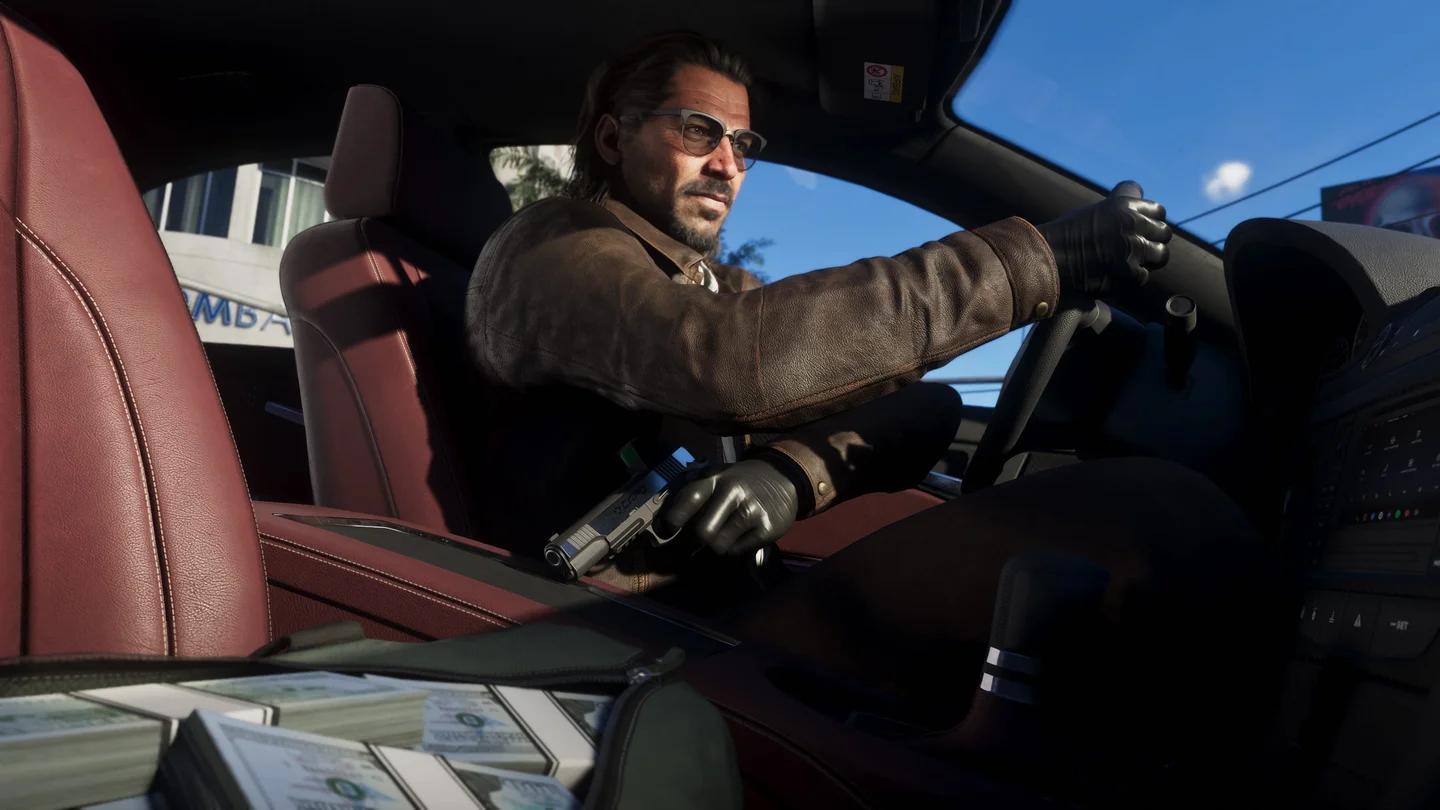
Raul Bautista in Leonida
Handle each phase on its own terms
During the guided shooting section, concentrate on the combat task the sequence presents. Route planning becomes relevant once Lucia is driving and you can choose how to reach the destination.
The driving section does not require one optimal route. If a particular approach is causing trouble, reconsider the roads you are taking instead of assuming that repeating the same line is mandatory.
This is the clearest lesson from the sequence: mission control can change between phases. A tightly directed opening does not mean the following escape has the same restrictions.
Avoid turning a getaway into a wreck
Vehicle handling is heavier than in Grand Theft Auto 5, and steering cannot flip an overturned car upright. Keep the vehicle on its wheels instead of relying on a recovery trick from the previous game.
Police can identify you through your appearance, clothing, and vehicle. Changing clothes or vehicles can help you evade law enforcement, but those systems do not replace a mission's destination or other required objectives. Read the escape as two connected problems: managing the pursuit and completing the task.
Prepare your carried weapons and items
You can carry 2 rifles and 2 pistols at once, with other weapons stored in vehicle trunks. Choose your carried guns for the ranges you expect to cover, using the Grand Theft Auto 6 weapons guide to compare revealed combat roles.
The weapon wheel separates weapons from items. Use R1 on PlayStation or RB on Xbox to switch between those views. Equipment includes body armor, flashlights, food and drink, duffel bags, and trauma kits.
Make preparation match the objective
A foot escape and a vehicle pursuit ask different things of your equipment. Before starting a job, review what you are carrying instead of assuming that a weapon stored in a trunk is already part of your personal loadout.
The Focus Ability also slows your surroundings to aid aiming. Its combat function can help when you need to place shots, while its route and police highlights support navigation. Use the function that answers your immediate problem.
Use the time between story missions
Jason and Lucia live rent-free in the Leonida Keys in exchange for helping Brian Heder with debt collection and local shakedowns. Keep that home region distinct from Vice City and the other areas covered in the Grand Theft Auto 6 locations guide when learning the setting.
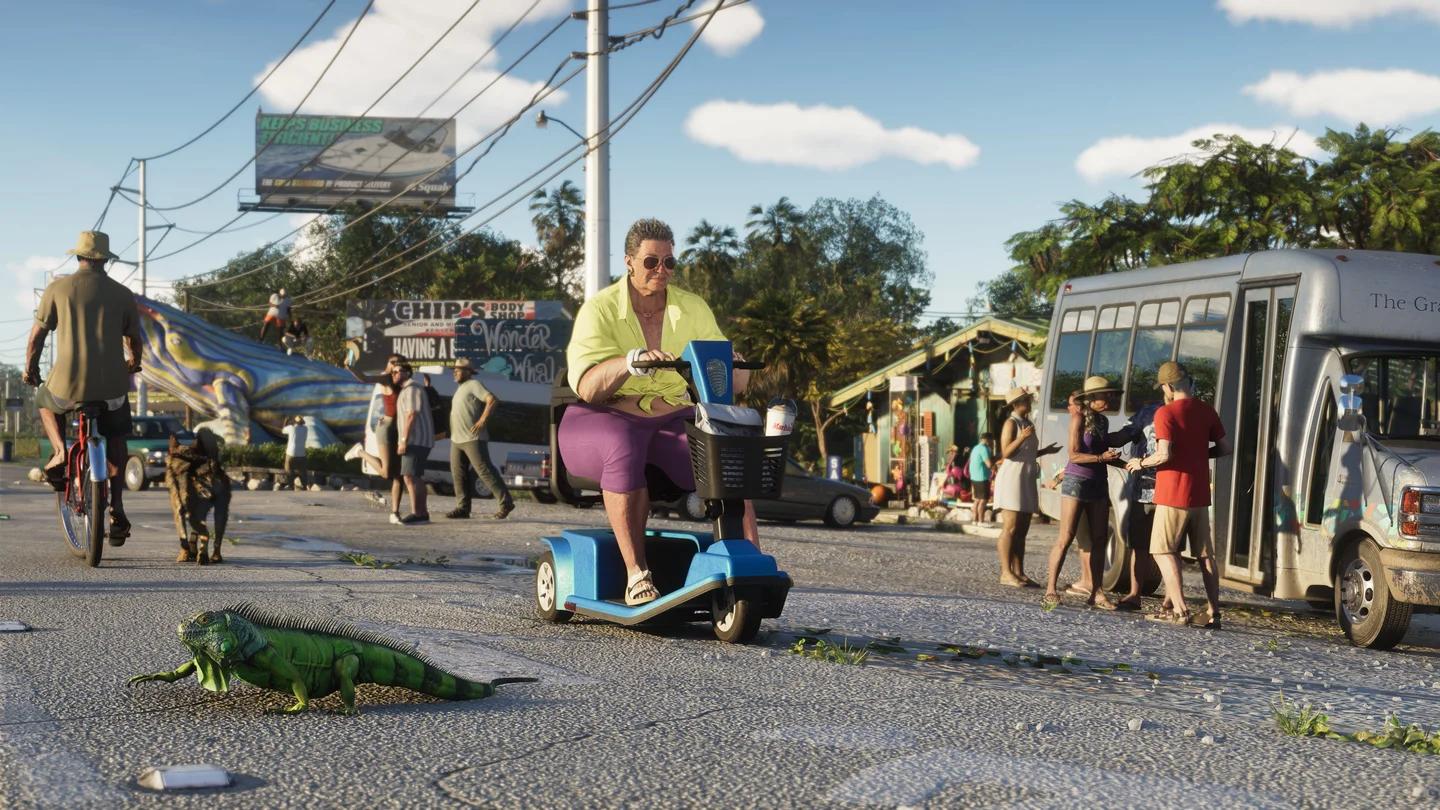
The Leonida Keys setting
Let your partner handle part of the getaway
Robberies form a substantial part of the activity between story missions. Your partner can often drive during an escape while you shoot at pursuing police, splitting two demanding tasks between the characters.
That arrangement lets you concentrate on the pursuit behind you. Shooting a pursuing vehicle's tires can disrupt the cars following it, although the resulting traffic and collisions remain situational. Treat those outcomes as opportunities, not guaranteed solutions for every chase.
Keep story progress separate from exploration
Open-world jobs can emerge while you travel. Jason can suggest a nearby robbery, creating a new activity without the formal setup of a story mission. A dramatic getaway is not, by itself, evidence that you have completed another main-story chapter.
Track exploration separately, too. The Grand Theft Auto 6 collectible locations guide addresses collectible-specific questions; do not turn an exploration checklist into an assumed prerequisite for a story objective.
For the revealed mission examples, the useful rule is simple: follow the required story task, then use the freedom that particular phase gives you. Look for alternate exits during the tower-block raid, reconsider your route once Lucia controls the car, and divide getaway duties with your partner when the activity allows it.