Overview
Halo 5: Guardians arrived on Xbox One in October 2015, and it arrived with a mission: rebuild confidence in the franchise after the technical problems that plagued The Master Chief Collection at launch. On the campaign side, 343 Industries splits the narrative between Master Chief's Blue Team and Spartan Locke's Fireteam Osiris, sending both squads across three distinct worlds as a mysterious force called the Guardians begins shutting down entire civilizations. The two-fireteam structure gives the story a cat-and-mouse tension that the series hadn't really tried before.
The campaign supports up to 4 players in online co-op, with each player controlling a different Spartan. Difficulty scales with the number of players, and the AI teammates hold their own when you play solo, though they lack the decision-making of human partners. Missions run long by Halo standards, and the set pieces on Sanghelios and Genesis rank among the most visually ambitious in the series.

Halo 5: Guardians content image
Gameplay and mechanics
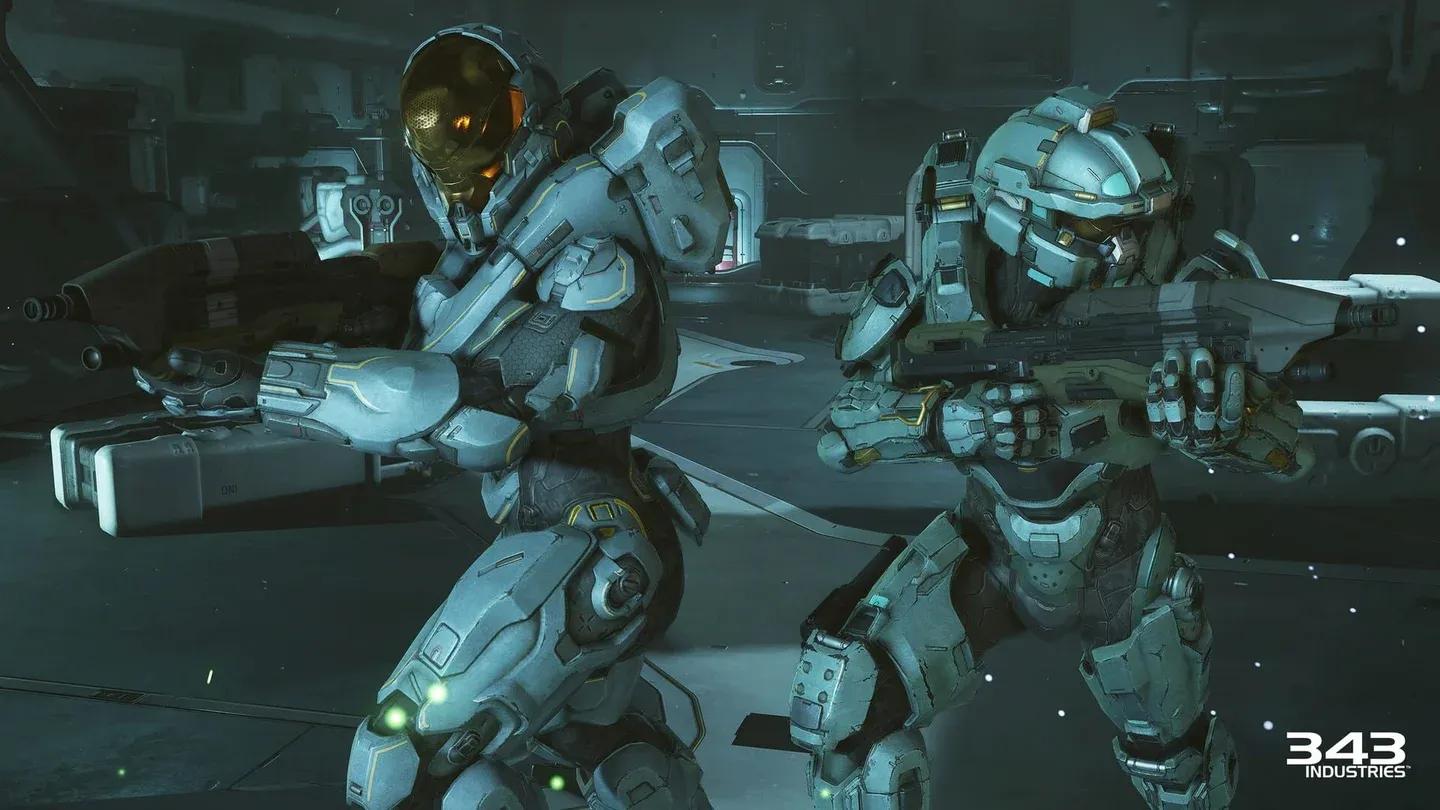
Halo 5 introduces several movement options that change how combat plays out at a fundamental level:
Halo 5: Guardians content image
- Boost dodge for lateral repositioning
- Ground pound aerial attack
- Spartan charge melee rush
- Clamber to pull up onto ledges
- Stabilize thrusters for mid-air aiming
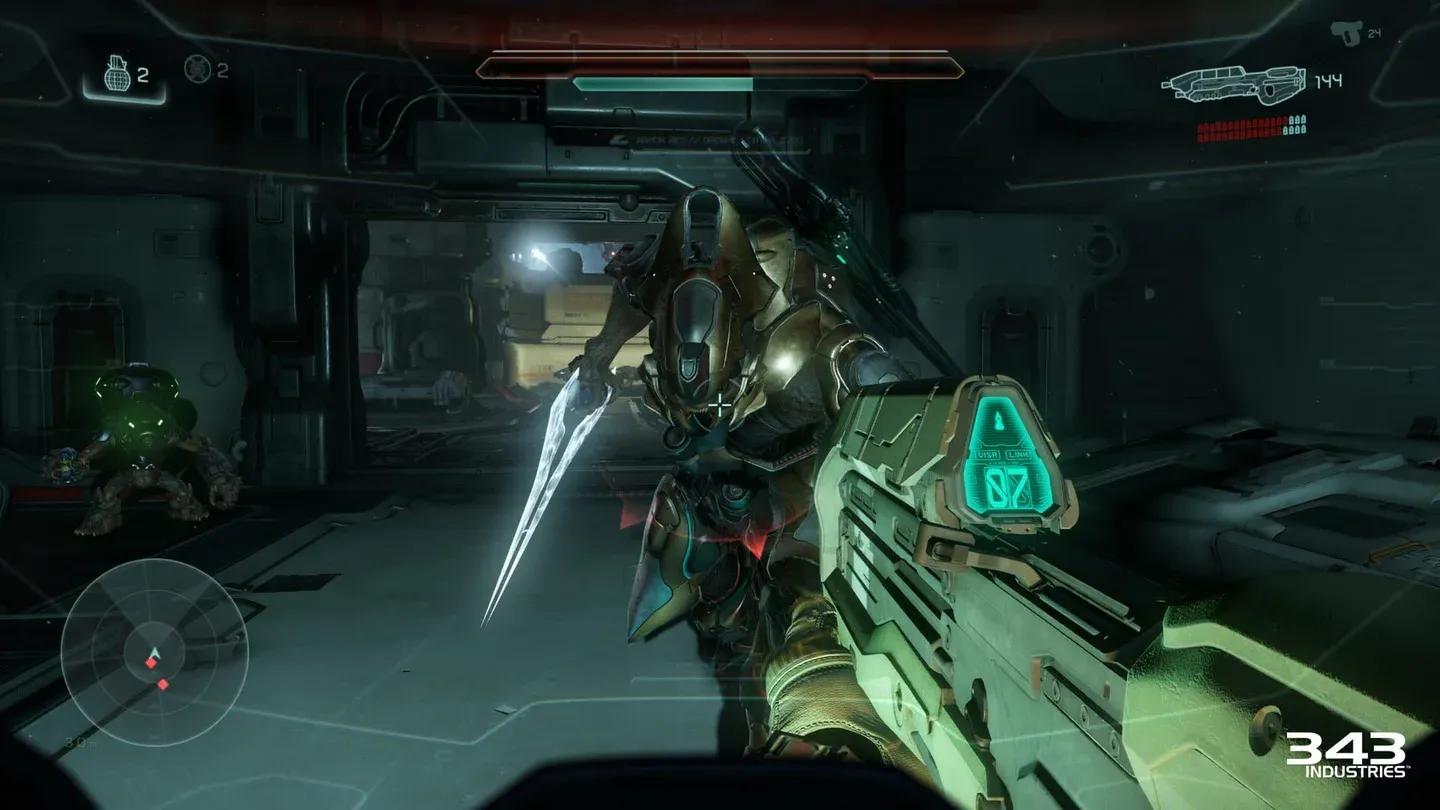
Aiming down sights applies to every weapon, including the Battle Rifle and Assault Rifle, which previously had no scoped option. This brings Halo closer to the conventions of modern shooters without fully abandoning the floaty, momentum-based movement the series built its identity on. The balance takes some adjustment, but the result is a game that feels faster and more vertical than its predecessors.
Halo 5: Guardians content image
Multiplayer and social
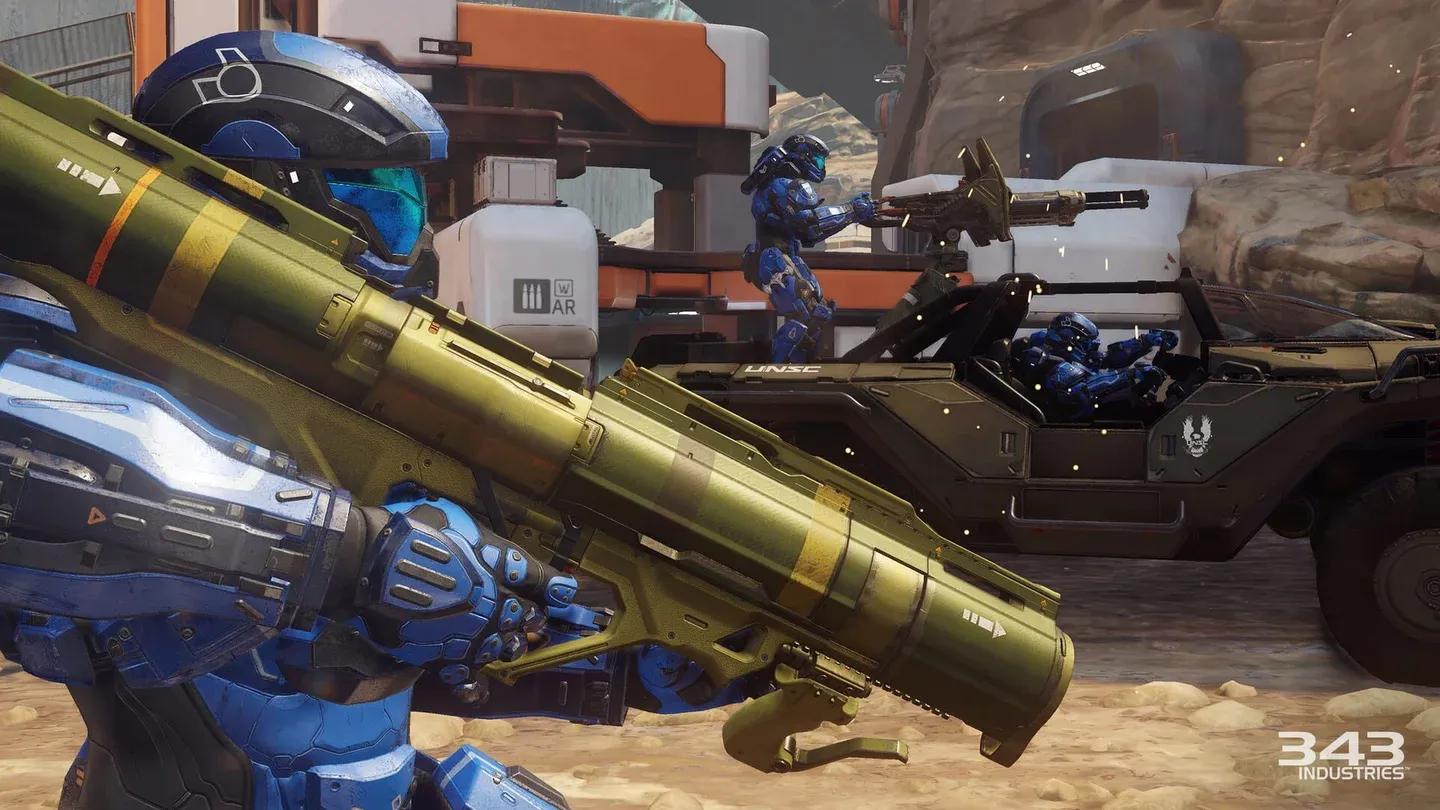
The multiplayer suite is where Halo 5 earns its reputation. Arena covers the classic competitive modes: Slayer, Breakout, Strongholds, and Capture the Flag, all running at a locked 60fps. Warzone is the bigger addition, a large-scale mode where two teams of 12 compete to capture bases and defeat AI bosses while spending REQ cards to call in vehicles and weapons mid-match. Warzone Assault strips the mode down to an attack-versus-defense format for a tighter experience.
Halo 5: Guardians content image
The REQ system ties into in-game purchases through card packs, but REQ cards only appear in Warzone, keeping Arena completely free of pay-to-win concerns. Competitive players can grind Arena without spending a dollar and never encounter a disadvantage from the card economy.
What does Forge add to Halo 5?
Forge in Halo 5 is the most capable version of the tool the series has shipped. The object budget is dramatically higher than in Halo 4, lighting controls are far more flexible, and scripting options let creators build custom game modes with logic triggers. The community has produced recreation maps of Counter-Strike levels, entirely new game types, and competitive arenas that 343 Industries eventually promoted into official matchmaking playlists. For players who want to create rather than compete, Forge alone justifies returning to the game.
Technical achievement
Halo 5 runs at a native 60fps across all modes, a commitment 343 Industries held even when it meant reducing resolution in split-screen scenarios. The Xbox One X update pushes the game to up to 4K resolution with improved texture detail and better draw distances, making it one of the cleaner-looking titles on that hardware. The multiplayer servers remain active, and matchmaking times in Arena stay short enough that the mode is still genuinely playable years after launch. For a first-person shooter built around precision gunplay, the performance stability matters as much as any feature on the list.