

Biggest discounts, free games, and limited-time offers across every major gaming store.
Never pay full price again.
Overview
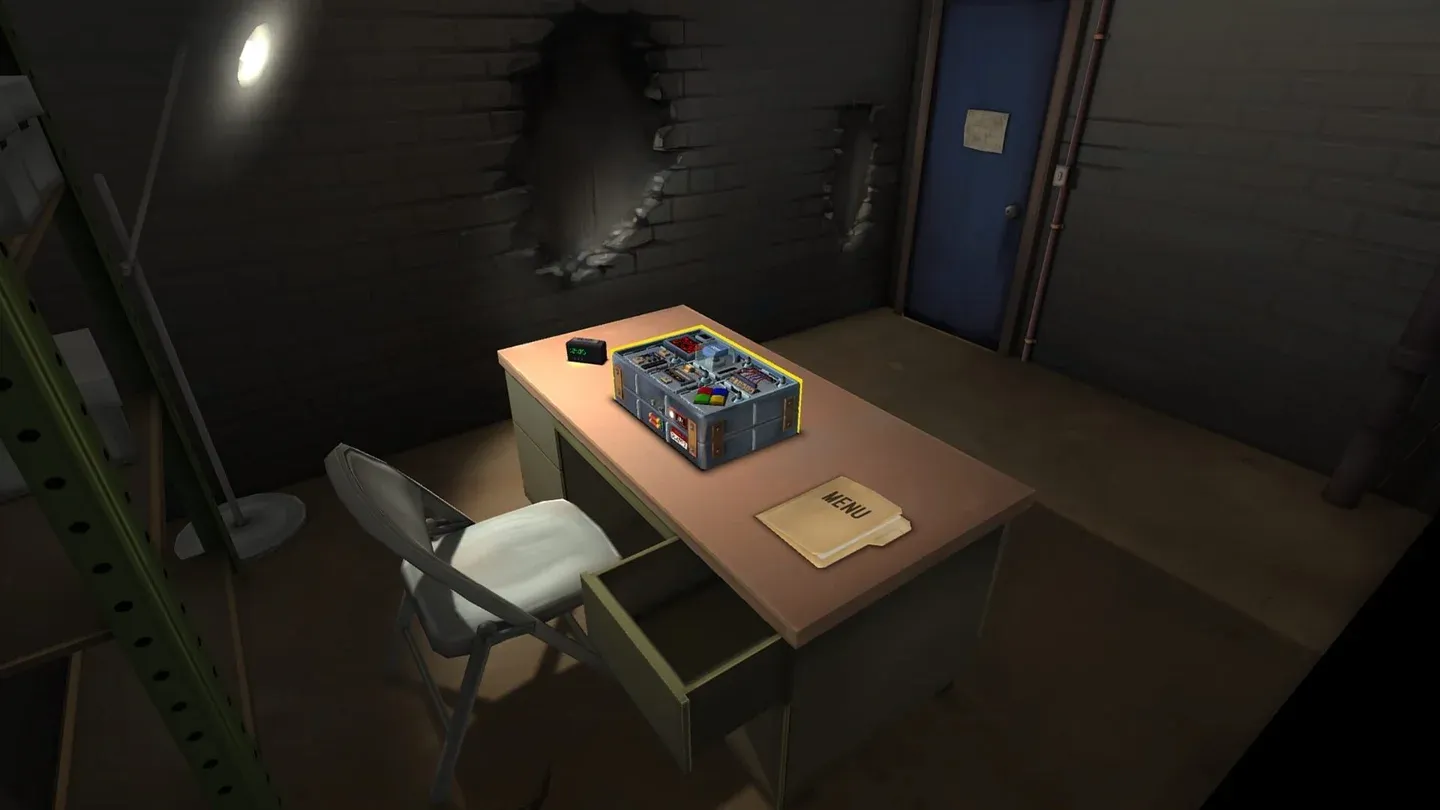
Keep Talking and Nobody Explodes, developed and published by Steel Crate Games and released in July 2015, is built on a concept so clean it barely needs explaining. One player faces a bomb filled with randomized modules. Everyone else holds a physical or digital defusal manual. The bomb defuser can't read the manual. The experts can't see the bomb. The only bridge between them is conversation, and the clock is always running.
The game launched with VR support as a core feature, making it one of the earliest examples of VR being used to create genuine social tension rather than just immersive visuals. The defuser's sense of isolation inside a headset, combined with the chaos of people shouting instructions from outside, produces something that flat-screen games rarely replicate. That said, the game works just as well on a standard monitor, and it's available across PC, PlayStation, Xbox, Nintendo Switch, iOS, and Android.
Keep Talking and Nobody Explodes content image
Gameplay and mechanics
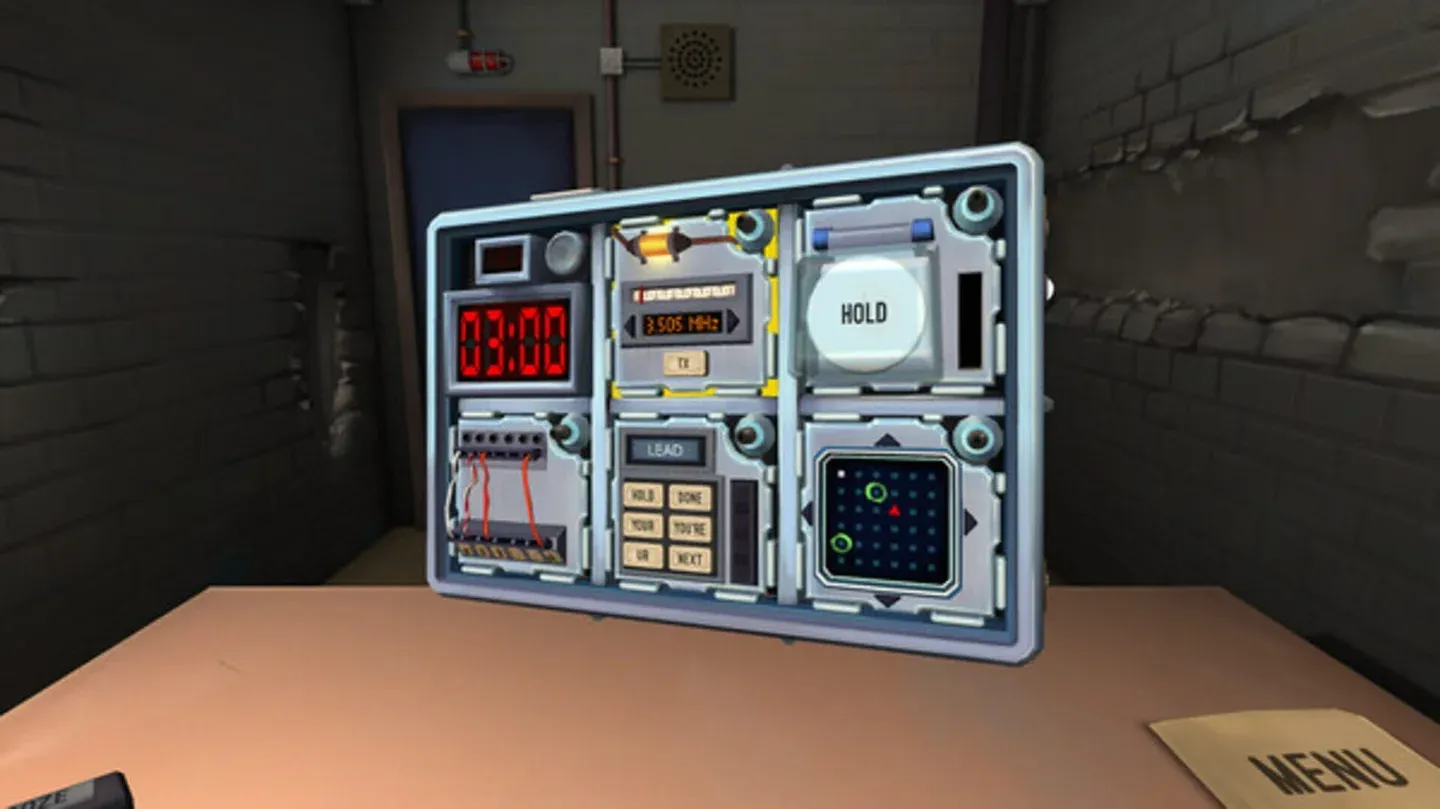
Every bomb is a collection of modules, and each module is its own self-contained puzzle. The key features that define the experience include:
Keep Talking and Nobody Explodes content image
- Randomized module placement per bomb
- Timed countdowns with error penalties
- Customizable difficulty and bomb complexity
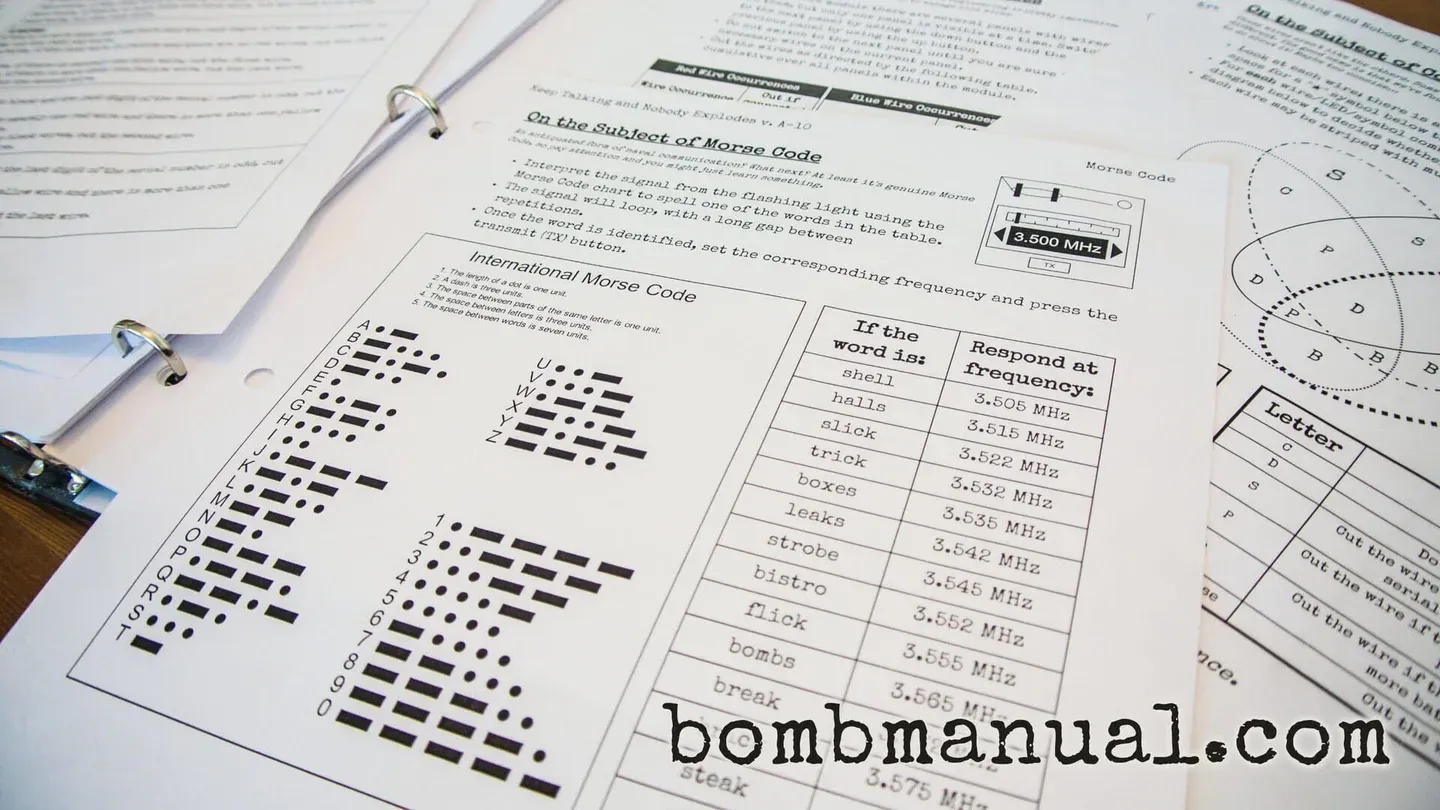
- Printable or digital manual for the experts
- Support for VR and traditional controls
Modules range from straightforward button-pressing sequences to dense logic puzzles involving wires, symbols, keypads, and Morse code. The defuser has to describe what they see with enough precision for the experts to locate the right section of the manual, interpret the instructions correctly, and relay the solution back before time runs out. Mistakes cost time. Too many mistakes end the round entirely.
What makes this different from other co-op games?
Most co-op games give every player the same information and ask them to coordinate actions. Keep Talking and Nobody Explodes deliberately withholds information from each side. The defuser knows what the bomb looks like but has no idea how to solve it. The experts know how to solve it but have no idea what they're looking at. That asymmetry is the entire game.
The result is a communication puzzle as much as a logic one. Two groups of people can have identical knowledge of the manual and still fail because one person says "the wire on the left" when they mean "the wire second from the left." Precision of language matters here in a way it almost never does in games.
Keep Talking and Nobody Explodes content image
Multiplayer and social experience
Keep Talking and Nobody Explodes holds up as a party game because the manual is freely available as a PDF, meaning the experts don't need to own the game. One copy is enough for a full group session. That decision alone explains much of its staying power at events, game nights, and conventions, where the game earned a PAX Best in Show award and a BAFTA nomination for Debut Game.
The game also scales naturally with group size. Two players is tense and focused. Four or five players becomes a shouting match where someone always has the relevant manual section open on their phone. Both versions are fun for completely different reasons. The randomized bomb generation means no two sessions play out the same way, and the increasing complexity of higher-difficulty bombs keeps experienced groups from coasting.
Content and replayability
Bomb composition is randomized each session, so the replayability comes from the combinatorial variety of modules rather than from new story content or unlocks. Players who master the standard module set can pursue community-created modules through the Steam Workshop, which has expanded the pool of puzzles well beyond the base game's original offering.
The mobile release brings the same experience to iOS and Android, making it possible to play with the defuser on a phone and experts gathered around a printed manual. That flexibility across platforms keeps the game accessible without requiring everyone to own dedicated hardware, and the $14.99 price point on PlayStation makes it one of the more straightforward value propositions in the co-op puzzle genre.