


Marvel's Wolverine puts a serious emphasis on progression, and Strands sit at the center of it. These are the currency you spend to unlock Adaptations, the upgrade system that defines how Logan fights, heals, and survives across the game's linear combat encounters. Knowing where Strands come from and how to spend them efficiently separates a Logan who feels unstoppable from one who struggles through every encounter.
What are Strands in Marvel's Wolverine?
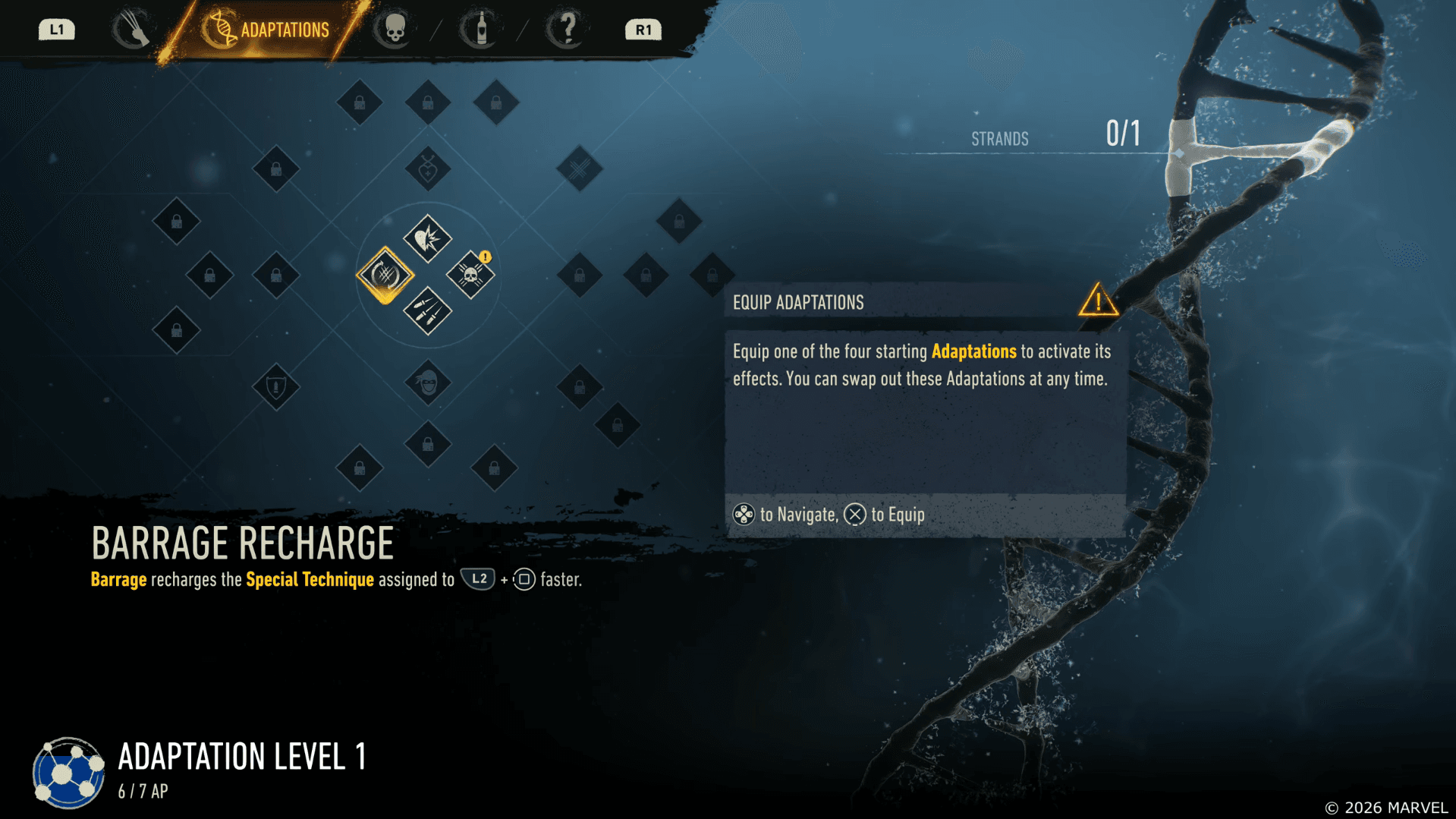
Strands are the primary upgrade resource in Marvel's Wolverine. You spend them on Adaptations, which are passive and active upgrades that improve Logan's combat performance. Think of them as skill points: every Strand you collect pushes you closer to a more powerful version of the character.
The number of Strands you can hold and spend at any given time is tied directly to your Adaptation Level. Raising that level increases your Strand capacity and opens new Adaptations to unlock.
Marvel's Wolverine Strands Guide: How to Get More & Spend Them
How to get more Strands
Strands are earned by raising your Adaptation Level. Each time your Adaptation Level increases, you receive additional Strands to spend on new upgrades. This means the fastest path to more Strands is the same as the path to a stronger Logan: push your Adaptation Level as high as possible.
How to increase your Adaptation Level
Your Adaptation Level climbs as you progress through the game, engage enemies, and explore. The more actively you engage with Marvel's Wolverine's combat and exploration systems, the quicker your level rises and the more Strands you accumulate.
For players curious about how much total content sits between them and a fully upgraded Logan, the main story runs 12 to 13 hours, with Platinum completion averaging around 14 to 15 hours. That timeline gives you a rough sense of how long the upgrade grind actually lasts.
Marvel's Wolverine Strands Guide: How to Get More & Spend Them
How to unlock new Adaptations
Once you have Strands, you spend them directly on Adaptations from the upgrade menu. New Adaptations become available as your Adaptation Level increases, so there's a natural progression gate: you can't buy every upgrade immediately. The system rewards continued play rather than early grinding.
Which Adaptations should you prioritize?
The answer depends on your playstyle, but a few general principles hold up across difficulty levels:
- Survivability first: Logan's healing is central to his identity, so upgrades that improve or accelerate regeneration tend to pay off in every fight.
- Damage multipliers second: Once you're surviving reliably, stacking damage output shortens encounters and reduces the window for mistakes.
- Utility last: Mobility and situational upgrades are useful, but they rarely change outcomes the way healing and damage upgrades do.
Does your suit affect Strands or Adaptations?
Your equipped suit can influence your stats, and some suits carry HP bonuses tied to how many you've collected. For the full breakdown of what each suit does and how unlocking more of them feeds into your character's power, the suits and claws unlock guide covers every option available.
What's the most efficient way to spend Strands?
Spend Strands on Adaptations that directly affect how you handle the game's hardest encounters. Healing upgrades keep you in fights longer. Damage upgrades end fights faster. Both outcomes reduce the total punishment you take per session, which matters more as difficulty scales up.
If you're aiming for full completion, check the full trophy list before finalizing your Adaptation path. Some trophies require specific playstyle approaches, and knowing that early means you can steer your Strand spending toward unlocking those conditions naturally rather than backtracking.
For everything else Logan-related, the full Marvel's Wolverine guide collection has you covered from first boot to Platinum.