

Six point guard builds, one for almost every playstyle. NBA 2K27 gives you real options at the position, from a 6'2" shooter hunting Hall of Fame badge thresholds to a 6'7" big guard who can defend, facilitate, and finish. The builds below cover all of them, with exact attribute targets, Cap Breaker priorities, and contact dunk requirements verified against the September 3 game build.
Best PG builds at a glance
Before committing VC, here is how each build stacks up.
Build 1: Scoring Point Guard
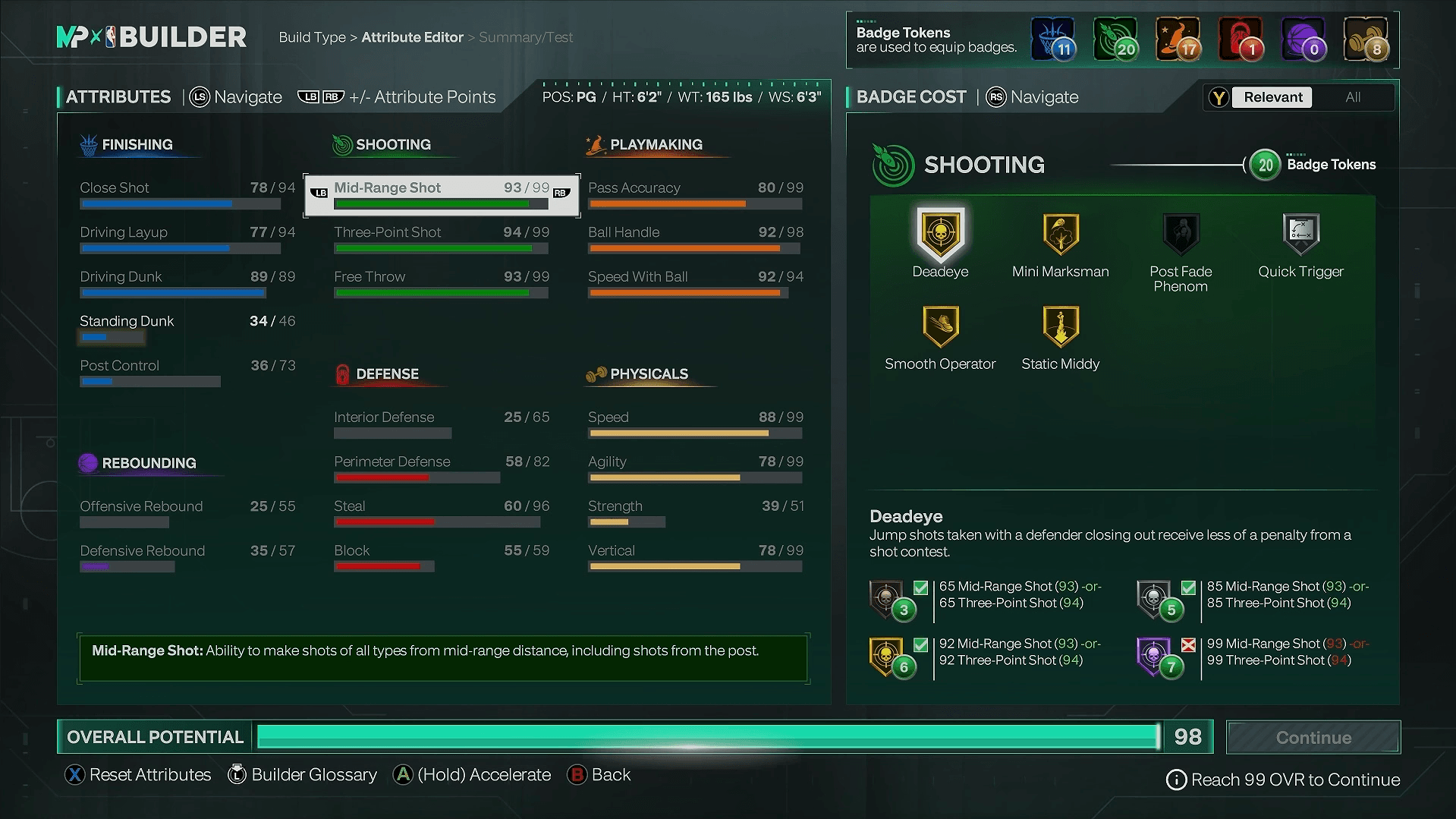
This setup pushes shooting and playmaking as far as the attribute system allows, with defense as a deliberate trade-off.
NBA 2K27 Guide: Best Point Guard Meta Builds
The long-term goal is raising Three-Point Shot from 94 to 99 through Cap Breakers. Hitting 99 unlocks Hall of Fame thresholds for Limitless Range, Deadeye, and Quick Trigger. One thing worth knowing: Legend badge levels do not come automatically from a 99 rating. Those require separate +1 or +2 badge boosts on top.
Reaching 93 Speed With Ball also clears the Hall of Fame Pace threshold, which matters for chain dribbling at full speed.
The 60 Steal is enough for Bronze Interceptor, but this build works best alongside a teammate who handles perimeter defense. Putting it on the opposing team's primary scorer is asking for trouble.
Best for: Skilled offensive players on organized teams.
Build 2: 6'4" All-Around Point Guard
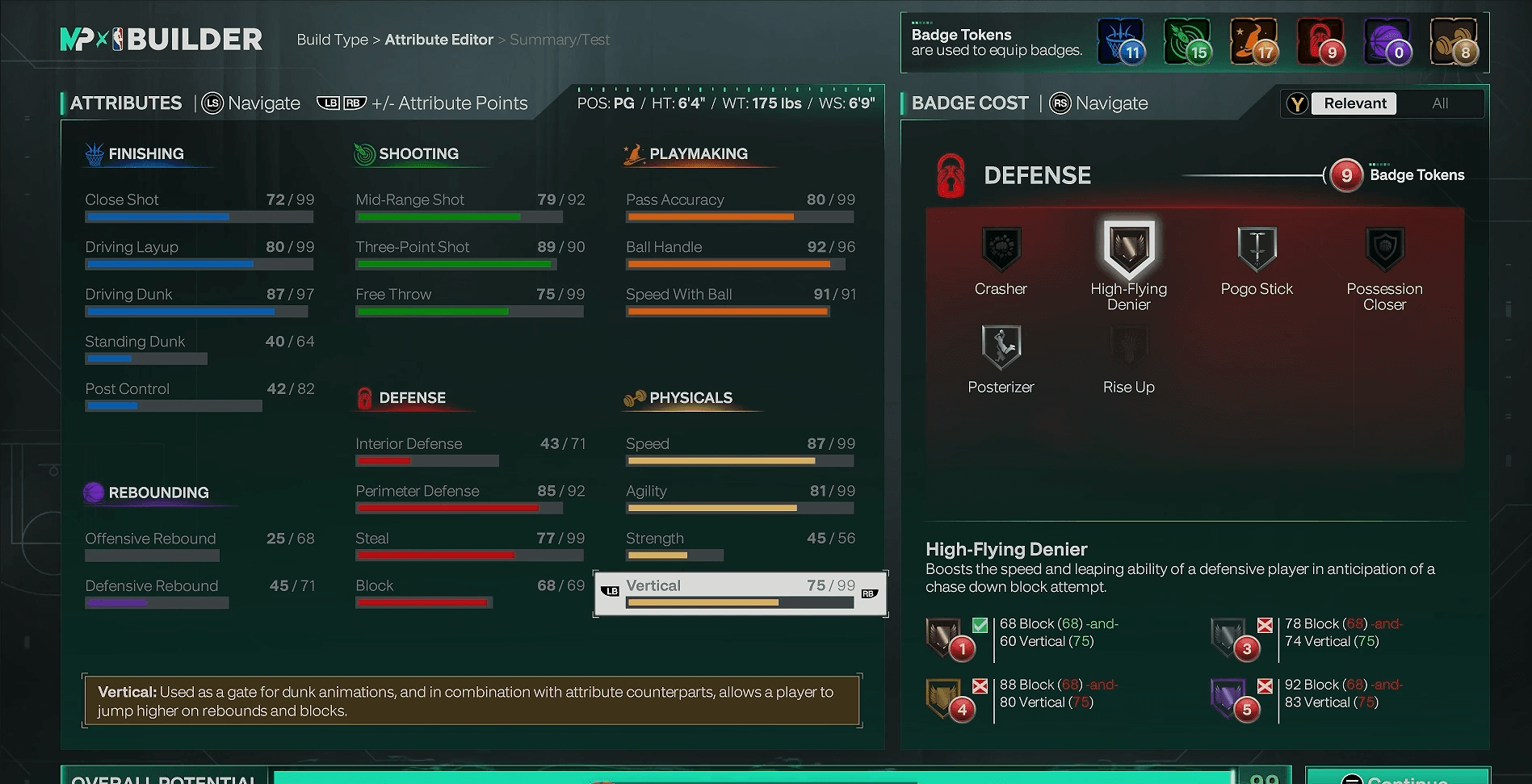
For most players starting their first MyPLAYER, this is the safest pick in the group. The 6'4" frame lets the build qualify for both Pro and Small Contact Dunk packages, and the defensive investment is high enough to hold up in Rec without being a liability.
NBA 2K27 Guide: Best Point Guard Meta Builds
A 77 Steal reaches Silver Interceptor, which is a meaningful jump over the Bronze access the other builds settle for. The 87 Driving Dunk paired with 75 Vertical clears Pro Contact Dunks Off Two and Silver Posterizer. Because this build sits at 6'4", those same ratings also qualify for Small Contact Dunks Off Two.
The real advantage here is that the build works immediately. Cap Breakers are useful down the line but not required to compete on day one.
Best for: Rec, Park, Theater, and players who want one PG that handles several modes.
Build 3: Finishing Point Guard
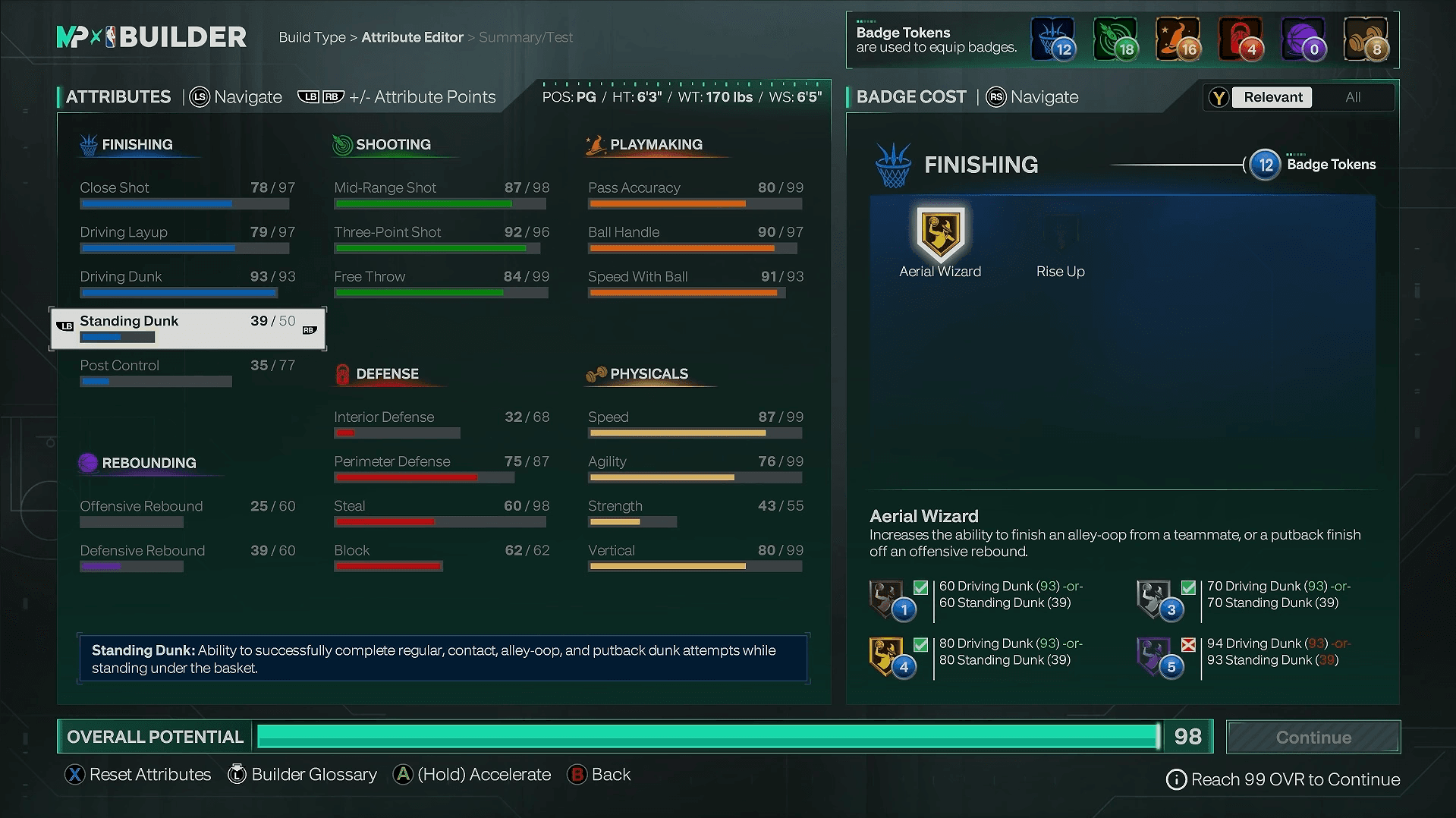
This build attacks the rim first and uses a strong three-point rating to keep defenses honest.
NBA 2K27 Guide: Best Point Guard Meta Builds
The 92 Ball Handle target reaches Gold Handles for Days, while 93 Speed With Ball again hits Hall of Fame Pace. Defenders who try to sag off and clog the lane will still give up open threes at 92 Three-Point, so neither option is safe.
The 75 Perimeter Defense gives this build noticeably more defensive value than the Scoring PG, without fully committing to the two-way investment of the All-Around version.
Best for: Players who attack the basket first but need reliable perimeter shooting.
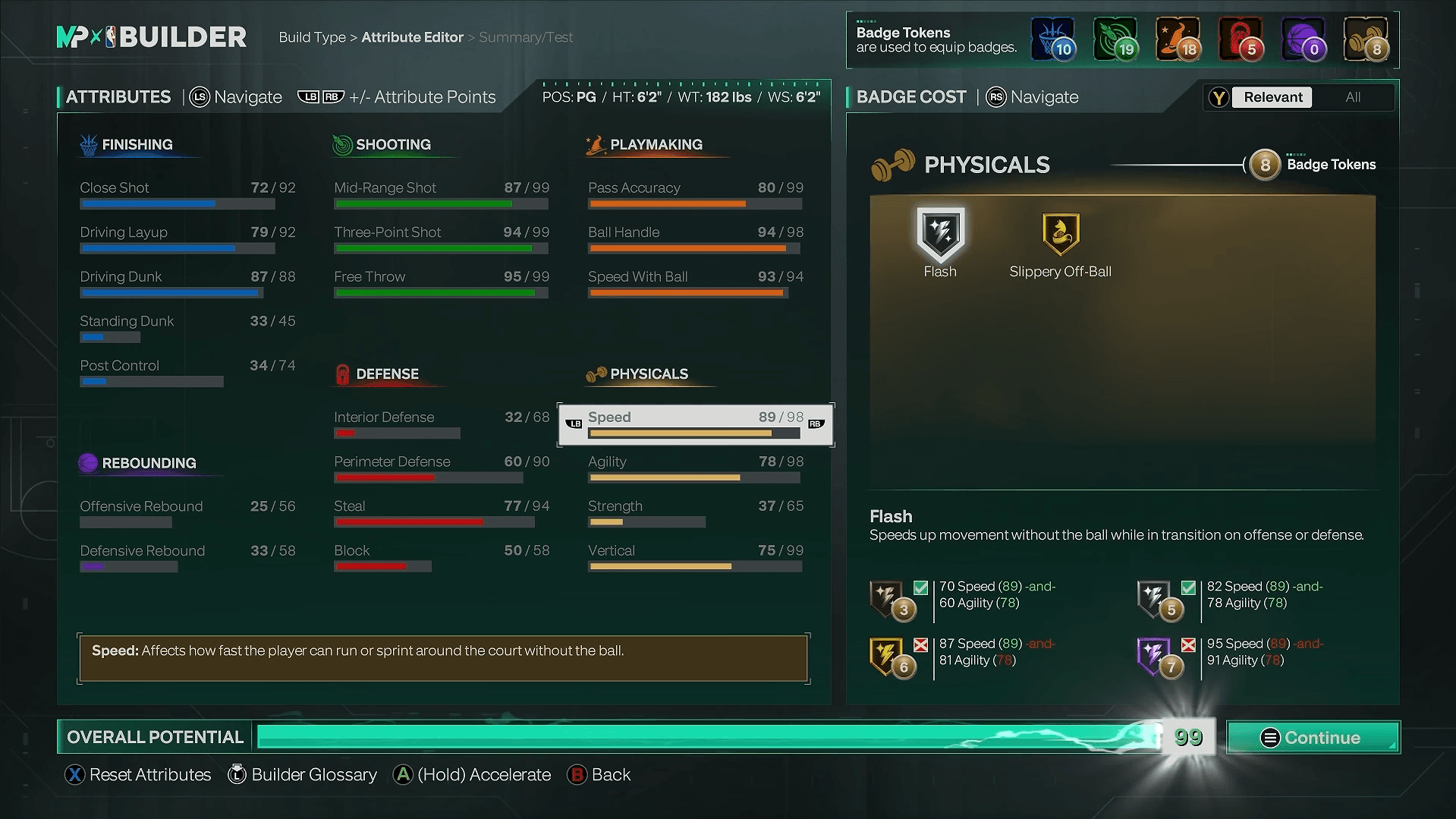
Build 4: 6'2" Shooting Point Guard
The smallest build in the group is also the most offense-focused. Less size, more shooting ceiling.
NBA 2K27 Guide: Best Point Guard Meta Builds
The 87 Driving Dunk and 75 Vertical already qualify for Pro Contact Dunks Off Two and Silver Posterizer at base, so finishing at the rim is viable before any Cap Breaker investment.
The long-term plan pushes Ball Handle toward 96, which clears the Hall of Fame Handles for Days threshold of 95. That extra room matters when chaining dribble moves without burning through energy.
Size and defense are the trade-offs. Against high-level lockdown defenders in competitive five-on-five, the 6'2" frame is a real disadvantage. This build suits players who want to generate most of their team's offense themselves.
Best for: Primary ball handlers and three-point-heavy guards.
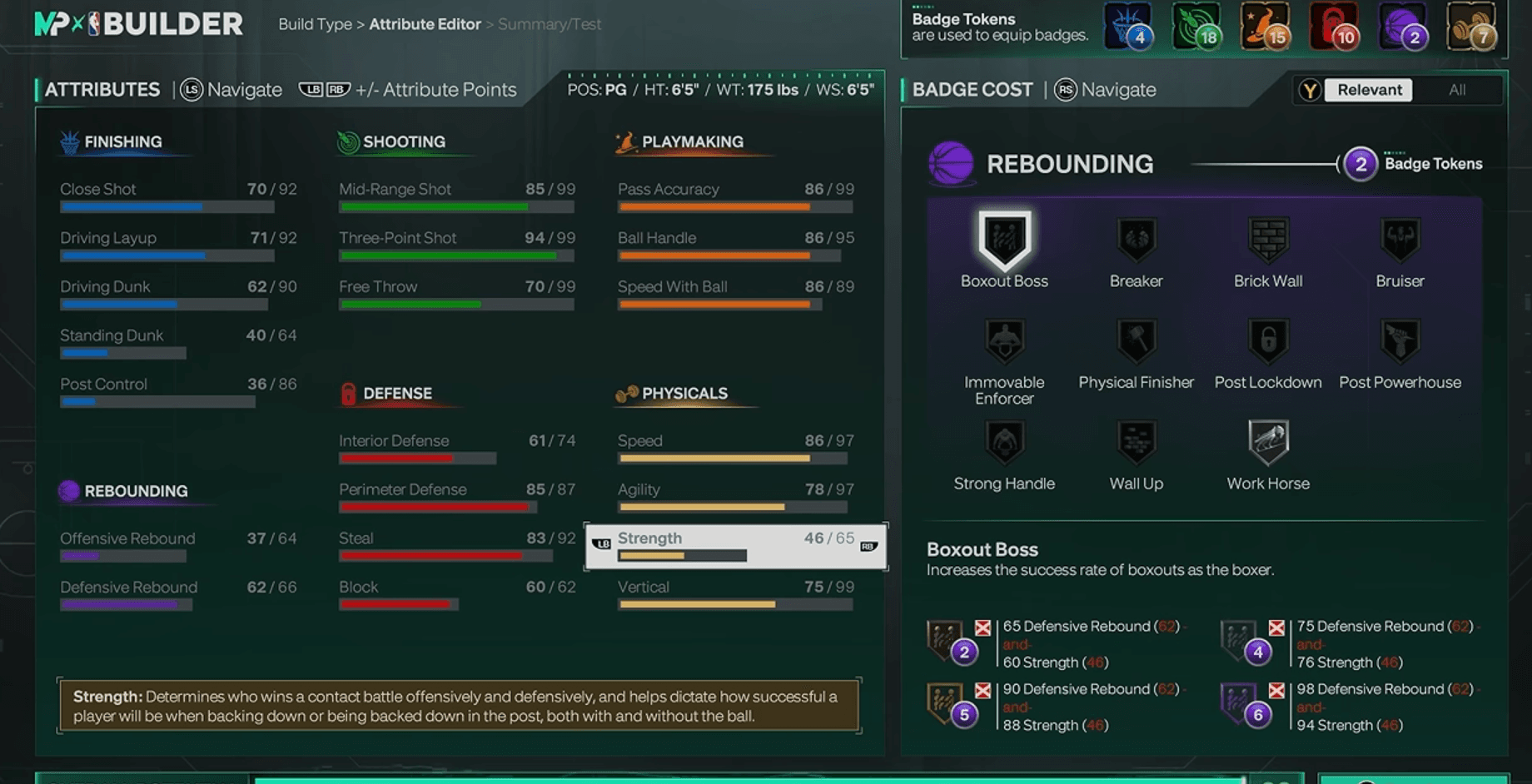
Build 5: 6'5" Two-Way Point Guard
Extra height creates more room for defensive investment without gutting the offensive tools.
NBA 2K27 Guide: Best Point Guard Meta Builds
The base 62 Driving Dunk is low, so Cap Breaker planning is essential here. The recommended path focuses on reaching 87 Driving Dunk and 99 Three-Point Shot rather than spending further on Ball Handle, which is already solid at 91.
Before creating this build, preview the exact Cap Breaker gains in the MyPLAYER Builder. The jump from 62 to 87 Driving Dunk is a significant investment, and because applied Cap Breakers cannot be undone, confirming the math before committing matters.
Best for: Players who need to score, facilitate, and defend across several game modes.
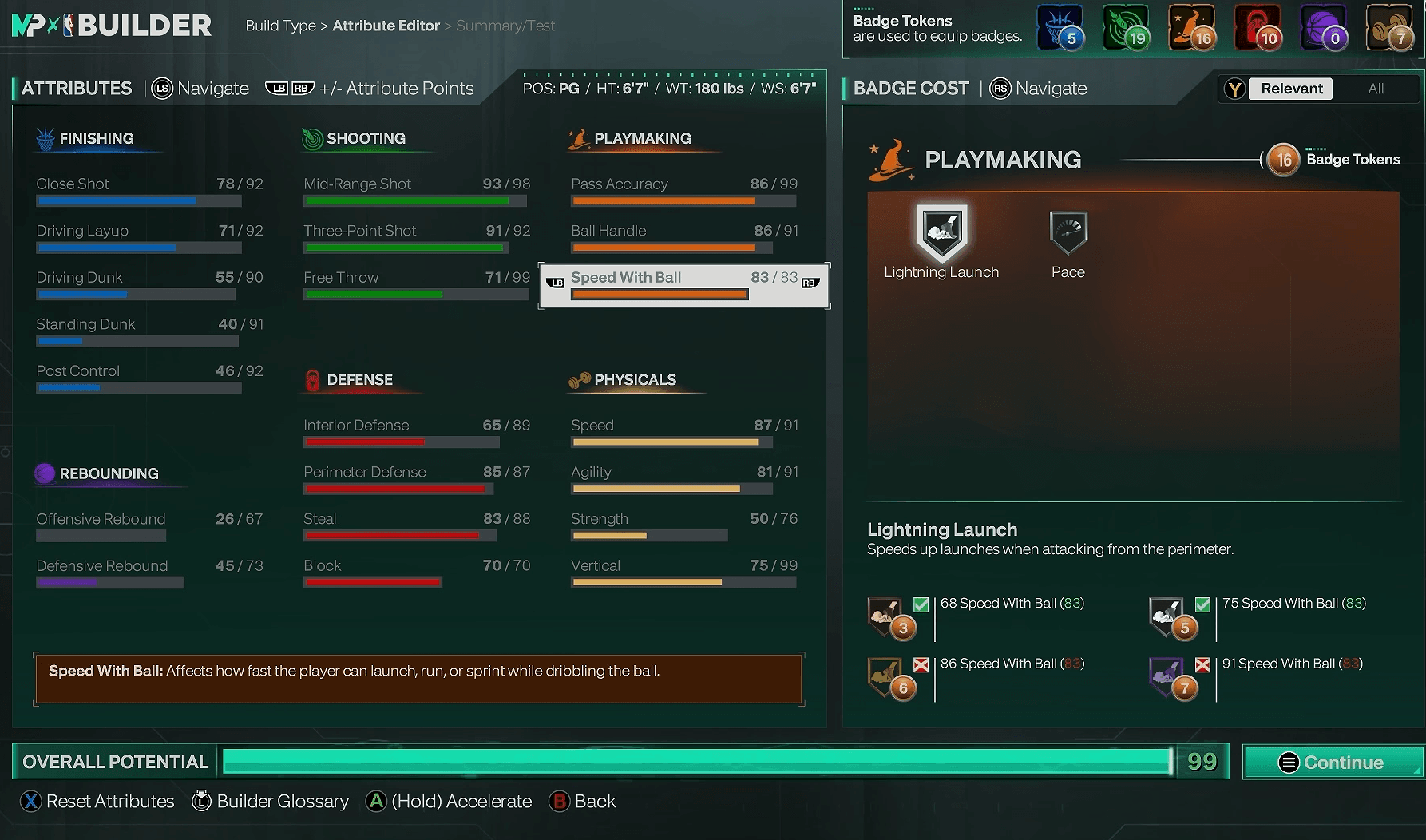
Build 6: 6'7" Big Guard
The largest point guard option trades guard speed for size, versatility, and the ability to play through contact at a different level.
NBA 2K27 Guide: Best Point Guard Meta Builds
The confirmed details on this build are the 6'7" height and the Cap Breaker plan to reach 87 Driving Dunk. The base version is described as playable before those upgrades land, but the full attribute screen was not available to verify, so no additional stats are assumed here.
As with the 6'5" build, physical dimensions and attribute caps determine how far Cap Breakers can push a rating. Preview the exact increase before spending.
The extra height helps in Rec and general play, though smaller guards with elite lateral quickness can still cause problems in competitive five-on-five settings.
Best for: Players who prefer size and versatility over maximum guard speed.
What are the contact dunk requirements for point guards?
Driving Dunk alone does not determine which contact animations a build can equip. Vertical and height both factor into the requirements.
One common misconception worth clearing up: 96 Driving Dunk and 81 Vertical do not unlock every contact dunk package. Elite Contact Dunks Off Two require 82 Vertical, and Elite Contact Dunks Off One require both 99 Driving Dunk and 90 Vertical. Check both columns before assuming a build qualifies.
Which point guard build should you pick?
For most players, the 6'4" All-Around Point Guard is the right starting point. It reaches Pro and Small Contact Dunk thresholds at base, keeps enough shooting to stay dangerous, and has Silver Interceptor access without needing Cap Breakers to function.
The 6'2" Shooting PG makes more sense if you want to run the offense and specialize in three-point creation. The Scoring PG pushes that ceiling even further for players on organized teams who have a dedicated defender covering their weak side.
For bigger guards, the 6'5" Two-Way PG offers the best balance between size and two-way play. The 6'7" Big Guard is the most versatile option, though it requires more Cap Breaker planning before it reaches its ceiling.
For badge planning across any of these builds, the full NBA 2K27 MyPLAYER badge list with all attribute requirements is worth checking before you finalize your setup. If you want to compare how these PG builds fit alongside other positions, the NBA 2K27 best builds guide covering every position breaks down the full roster. For more guides across all modes and positions, the complete NBA 2K27 strategy guide collection has everything you need.