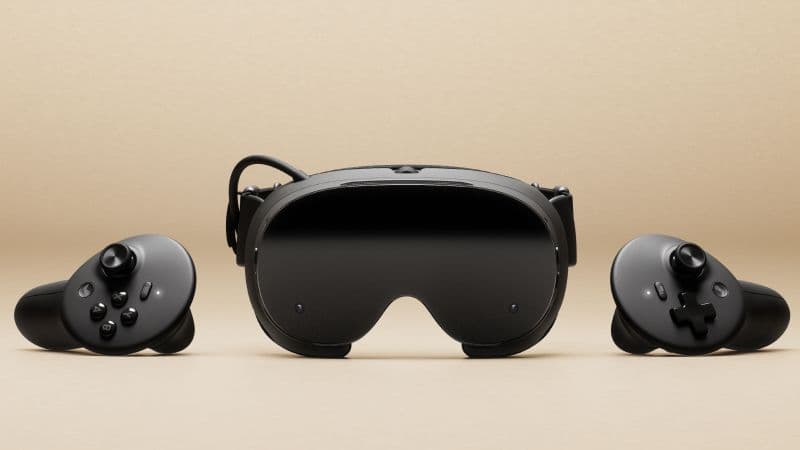


The Steam Frame is, by most technical measures, the best VR headset ever made. Better comfort, better visuals, better tracking. Valve has clearly done the homework. And yet, the conversation around it keeps circling back to the same uncomfortable question: does any of that actually matter if VR gaming itself is struggling to find its footing?
That tension, between hardware that finally gets it right and a software ecosystem that still hasn't, is what makes the Steam Frame one of the most interesting and most frustrating products Valve has ever shipped.

Use code TRYHARD33 at checkout to redeem this offer before code expires again.
Get 33% Off GAMES+ Subscription
What the Steam Frame actually gets right
Valve spent years watching the VR market stumble over the same friction points: uncomfortable headsets, finicky setup processes, and tracking that punished you for moving naturally. The Steam Frame addresses all of these. The fit is significantly improved over previous PC VR options, the display quality takes a real step forward, and the inside-out tracking holds up in ways that earlier attempts simply didn't.
Here's the thing: for anyone who tried PC VR a few years ago and bounced off the experience, the Steam Frame would feel like a different product category entirely. The hardware friction that used to define the medium is largely gone.
The library problem hasn't gone anywhere
Better hardware doesn't write better games. That's the wall the Steam Frame runs into almost immediately once you start looking past the spec sheet.
Steam's VR library has always been a mix of genuinely excellent experiences and a long tail of tech demos, ports, and games that treat VR as a gimmick rather than a medium. The ratio hasn't changed much. Half-Life: Alyx remains the gold standard years after its release, which says something both about how good that game is and about how few titles have matched it since.
Valve can build the best headset on the market. What it can't do is force third-party studios to invest seriously in VR development when the install base still doesn't justify the budget. That's a chicken-and-egg problem the Steam Frame doesn't solve on its own.
How it stacks up against the current competition
What most players miss when comparing these headsets is that the platform question matters as much as the hardware specs. The Steam Frame ties you to a gaming PC and the Steam ecosystem, which is either a feature or a limitation depending on your setup.
Valve's history with hardware bets
Valve has a complicated relationship with hardware launches. The Steam Deck genuinely changed the portable PC gaming space and found a real audience. The Steam Controller, for all its ambition, never clicked with mainstream players. The original Vive was a landmark product that still didn't push VR into the mainstream.
The Steam Frame looks more like the Deck than the Controller in terms of polish and intent. But VR isn't handheld gaming. The friction isn't just about the device; it's about dedicating physical space, time, and attention in a way that flat-screen gaming never demands. That's a harder sell regardless of how good the headset is.
For players who want to explore what's available right now, the gaming guides cover a range of titles across platforms worth checking out while the VR ecosystem develops.
The swan song framing and why it stings
Calling the Steam Frame a "swan song" for VR gaming feels dramatic, but the logic behind it is hard to dismiss. If the best possible version of a PC VR headset still can't generate meaningful mainstream momentum, the argument for VR as a gaming platform gets harder to make with each passing year.
That doesn't mean VR is finished. Niche audiences are real audiences, and there are players who will get enormous value from the Steam Frame. For sim racing, flight sims, and specific genre applications, nothing else comes close to what a high-end PC VR setup delivers. If you're looking at how other games are handling performance optimization for demanding experiences, the Paralives best graphics settings guide shows how much headroom modern hardware actually has.
But "the best headset for a committed niche" is a different proposition than "the device that finally makes VR mainstream." Valve may have built the former while hoping for the latter.
What comes next for PC VR
The Steam Frame launches into a market that has been waiting for exactly this kind of hardware. The people who will buy it know who they are, and they will almost certainly love it. The question is whether that audience grows after launch or stays roughly the same size it has been for the past several years.
Valve's real move here might be less about the headset itself and more about what it signals for SteamVR's long-term direction. If the Steam Frame is accompanied by meaningful software investment, either from Valve's own studios or from the third-party developers who now have a premium target platform to build for, the picture changes. If it ships and the library stays stagnant, the swan song framing starts to feel accurate.
For a sense of how developers are approaching ambitious, systems-heavy games right now, the The End of History first impressions piece is worth a read. The ambition in flat-screen development hasn't slowed down, which makes the gap between VR and traditional gaming feel wider by comparison.
The Steam Frame is the VR headset the medium deserved years ago. Whether it arrives in time to matter is a question Valve can't answer with better optics or improved tracking alone.