
Planet Zoo 2 gives you a sprawling roster of animals to work with, but not every species is worth building a breeding program around. Some animals churn out large litters every few months, while others take decades between pregnancies. If your goal is farming Conservation Credits, stocking Wildlife Reserves, or keeping the trade market supplied, picking the right species from the start saves a lot of time and money. Here are the animals that deliver the best breeding results.
What makes an animal good for breeding?
Three factors determine how productive a breeding setup will be: litter size, interbirth period (the gap between pregnancies), and time to maturity. A species with a litter of six means nothing if juveniles take 25 years to grow up. The best breeders balance all three. Social requirements also matter because you need to house enough animals to satisfy group needs before any breeding kicks in at all.
For a broader foundation before you start building out habitats, the Planet Zoo 2 beginner's guide covers finances, pathing, and habitat basics worth reading first.
Wild boar breed fast and often


The best animals for breeding in Planet Zoo 2
Wild Boar
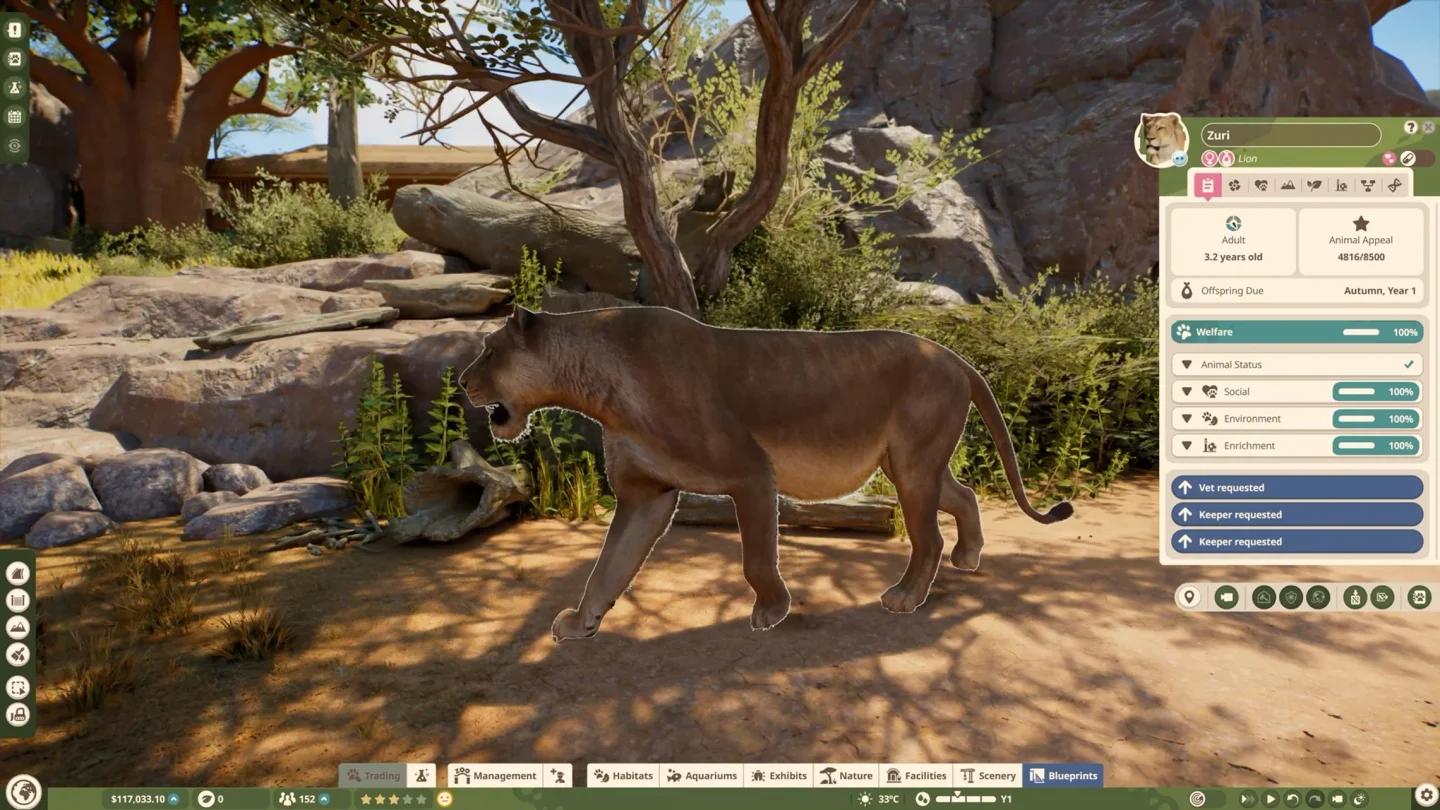
The Wild Boar is one of the most efficient breeders in the game. A minimum social group of three satisfies their needs, so placing one male with two females means two simultaneous pregnancies running at all times. Each litter produces between two and five offspring, and juveniles reach maturity in just one year. That turnaround is hard to beat at any stage of a zoo's development.
Common Warthog
The Common Warthog works on a similar principle. You only need a pair to meet social requirements, which keeps costs and habitat space lower than most species. Litters can reach up to five offspring, and while maturity takes two years, the females will likely be pregnant again before the first litter is fully grown. The pipeline stays active with minimal effort.
Long-Eared Owl
Avian species are a strong addition to any breeding-focused zoo, and the Long-Eared Owl stands out as one of the best. Requirements are straightforward, litters contain up to four young, maturity arrives in one year, and the species can be released to three separate Wildlife Reserves. That release flexibility gives you more options for earning Conservation Credits.
Long-Tailed Parakeet
The Long-Tailed Parakeet supports social groups of up to 12 individuals, which means housing multiple pairs in a single habitat is entirely viable. Keep in mind this species is monogamous, so each pair breeds independently. Litters hold up to four young, maturity takes two years, and juveniles can be released to the Sumatra Wildlife Reserve.
Owls mature in just one year
Common Ostrich
The Common Ostrich adds a practical advantage beyond raw breeding numbers: it can cohabit with several other species, which helps when you want to pack more value into a single habitat. Litters reach up to four young, and the three-year maturity window gives you a steady pipeline to feed Wildlife Reserves or the trade market without constant micromanagement.
African Wild Dog
Pack dynamics make the African Wild Dog one of the highest-output breeders available. A larger pack naturally produces more breeding pairs, and each litter can contain up to six individuals. Maturity takes just one year, so the output compounds quickly once a healthy pack is established. If you have space for a large enclosure, this species rewards the investment.
Red Deer
The Red Deer is polygynous, meaning one male can breed with up to eight females simultaneously. Litter size is only one offspring per pregnancy, but the interbirth period is just three months, which keeps production consistent. The main drawback is a four-year maturity period, so plan for a longer runway before juveniles are ready to sell or release.
Grey Wolf
The Grey Wolf is a strong early carnivore pick. Litters reach up to five young, gestation runs about two months, and the gap between pregnancies is nine months. Juveniles mature in two years, and with a larger pack you can run multiple breeding pairs at once. After testing carnivore options early in a zoo build, the Grey Wolf consistently delivers the fastest return among predator species.
Wolf packs scale output fast
Blue and Black Wildebeest
Both wildebeest species follow the same breeding pattern, so the choice comes down to personal preference or Conservation Credit targets. Social groups require a minimum of four individuals, and the polygynous structure allows one male to breed with up to 19 females. Each pregnancy yields one offspring, but the three-month interbirth period means production stays high across a large herd. Maturity takes two years.
Galapagos Giant Tortoise
The Galapagos Giant Tortoise earns a mention for litter size alone, with up to six offspring possible per pregnancy. The tradeoff is severe: the interbirth period is 22 years and juveniles take 25 years to reach maturity. This species is not a practical breeder for Conservation Credits or trade income, but it can work as a long-term exhibit animal if you are playing on an extended save.
Breeding comparison table
| Animal | Max Litter Size | Maturity Time | Social Minimum | Notes |
|---|---|---|---|---|
| Wild Boar | 5 | 1 year | 3 | Two simultaneous pregnancies with 1M/2F |
| Common Warthog | 5 | 2 years | 2 (pair) | Easiest social requirement |
| Long-Eared Owl | 4 | 1 year | Basic | Releases to 3 Wildlife Reserves |
| Long-Tailed Parakeet | 4 | 2 years | Up to 12 | Monogamous pairs only |
| Common Ostrich | 4 | 3 years | Standard | Multi-species cohabitation |
| African Wild Dog | 6 | 1 year | Pack | Highest output with large pack |
| Red Deer | 1 | 4 years | 3 | Polygynous, 3-month interbirth |
| Grey Wolf | 5 | 2 years | Pack | 9-month interbirth period |
| Blue/Black Wildebeest | 1 | 2 years | 4 | Up to 19 females per male |
| Galapagos Giant Tortoise | 6 | 25 years | Standard | 22-year interbirth period |
How do you maximize Conservation Credits from breeding?
The fastest approach is combining high-litter species with short maturity times. African Wild Dogs, Wild Boar, and Long-Eared Owls all mature within a year and produce large litters, making them the core of any Conservation Credit farm. Pair that with consistent releases to Wildlife Reserves and you have a reliable income stream running in the background while you develop the rest of your zoo.
For more on keeping your zoo financially healthy, the Planet Zoo 2 money guide covers five proven strategies for earning cash fast alongside your breeding operation.
Once you have a surplus of juveniles ready, check the full walkthrough on how to release animals in Planet Zoo 2 to move them into Wildlife Reserves efficiently. For everything else you need across Career, Franchise, and beyond, the full Planet Zoo 2 strategy guides collection has you covered.