
To profit from loot in Rob Run, bring valuables to the right buyer, collect your payment, and secure the cash before your next robbery. Your inventory can also contain items that help with future jobs, so selling everything is not always the right move.
Plan each trip around a purchase or equipment need. A short run that funds your next upgrade can be more useful than an ambitious heist that leaves you unable to replace your kit. The decisions below cover where to search, what to carry, and how to protect the proceeds.
Where to find loot in Looty Bay
Scout targets and escape routes as a Civilian. Putting on a mask makes you a Criminal, allowing you to commit heists while exposing you to police and other Criminals.


Choose a target you can finish
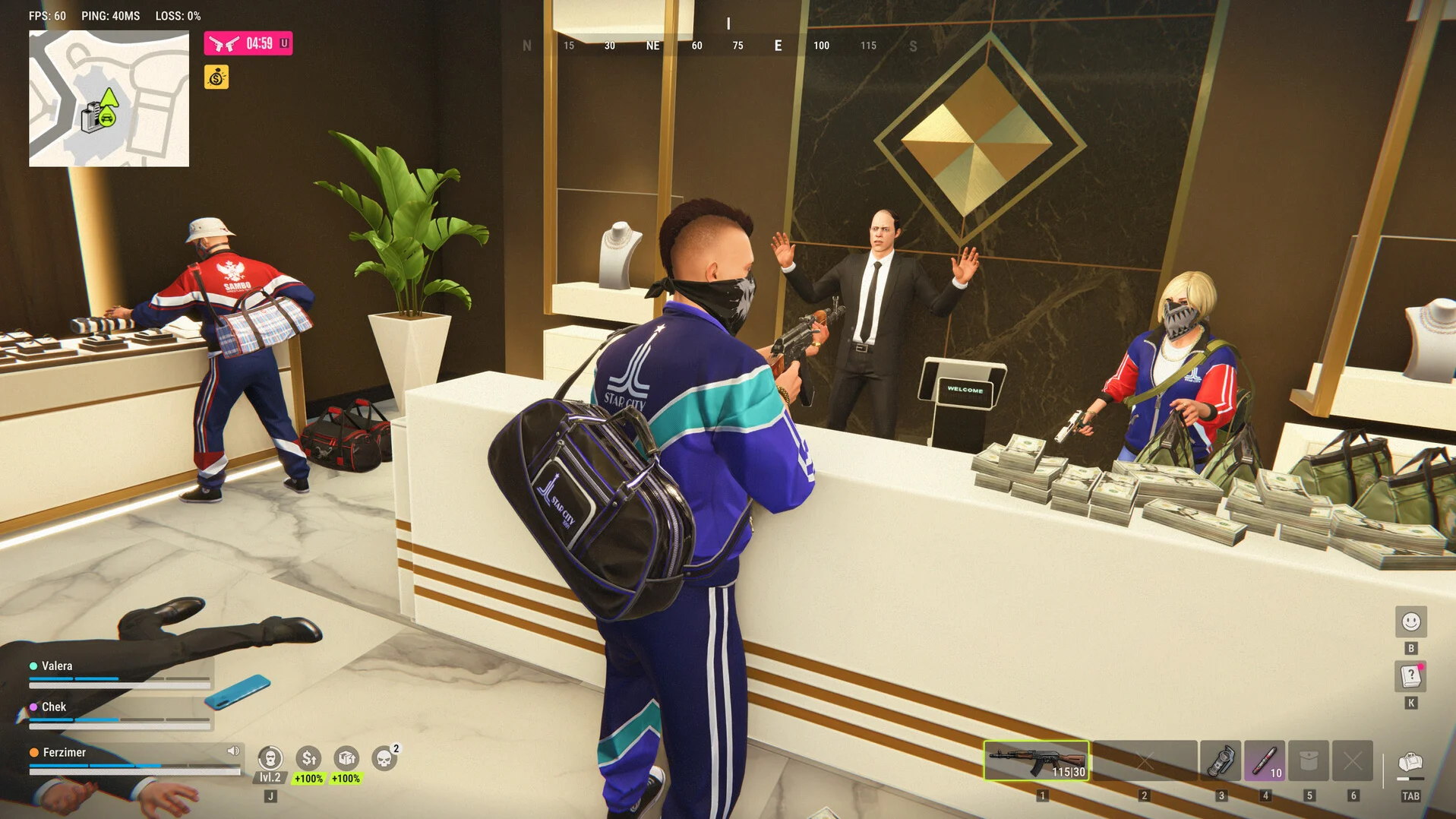
Convenience Stores are a practical first robbery because they fill a bag quickly and have a more manageable response than major targets. Larger locations need more preparation, carrying capacity, and transport.
| Target | What to look for | How to approach it |
|---|---|---|
| Convenience Store | Cash and low-tier cargo | Use it for a short first robbery |
| Electronics Store | Cargo and equipment | Check whether the equipment fills a gap in your kit |
| Residential buildings | Valuables in furniture | Control the alarm and residents before searching |
| Jewelry Store | High-value cargo | Prioritize a quick collection and exit |
| Art Gallery | Valuable, low-weight loot | Plan transport before committing |
| Looty Bay Bank | Cash and deposit boxes | Bring a group and arrange a getaway |
Stock is not guaranteed, so use location names to plan a route, not as promises of particular items. Start with a short store run and a planned exit, as covered in the Rob Run beginner tips, before committing to a bank job.
Control a house before searching
House robberies need attention to both security and witnesses:
- Inspect the exterior for an alarm panel and press E to disable it.
- Aim your weapon at residents to intimidate them, renewing the threat periodically while you search.
- Check tables, drawers, cabinets, and other furniture for valuables.
Intimidation reduces the chance of residents calling the police; it does not make the building safe from other players. In a crew, divide witness control, searching, and entrance cover or transportation between teammates.
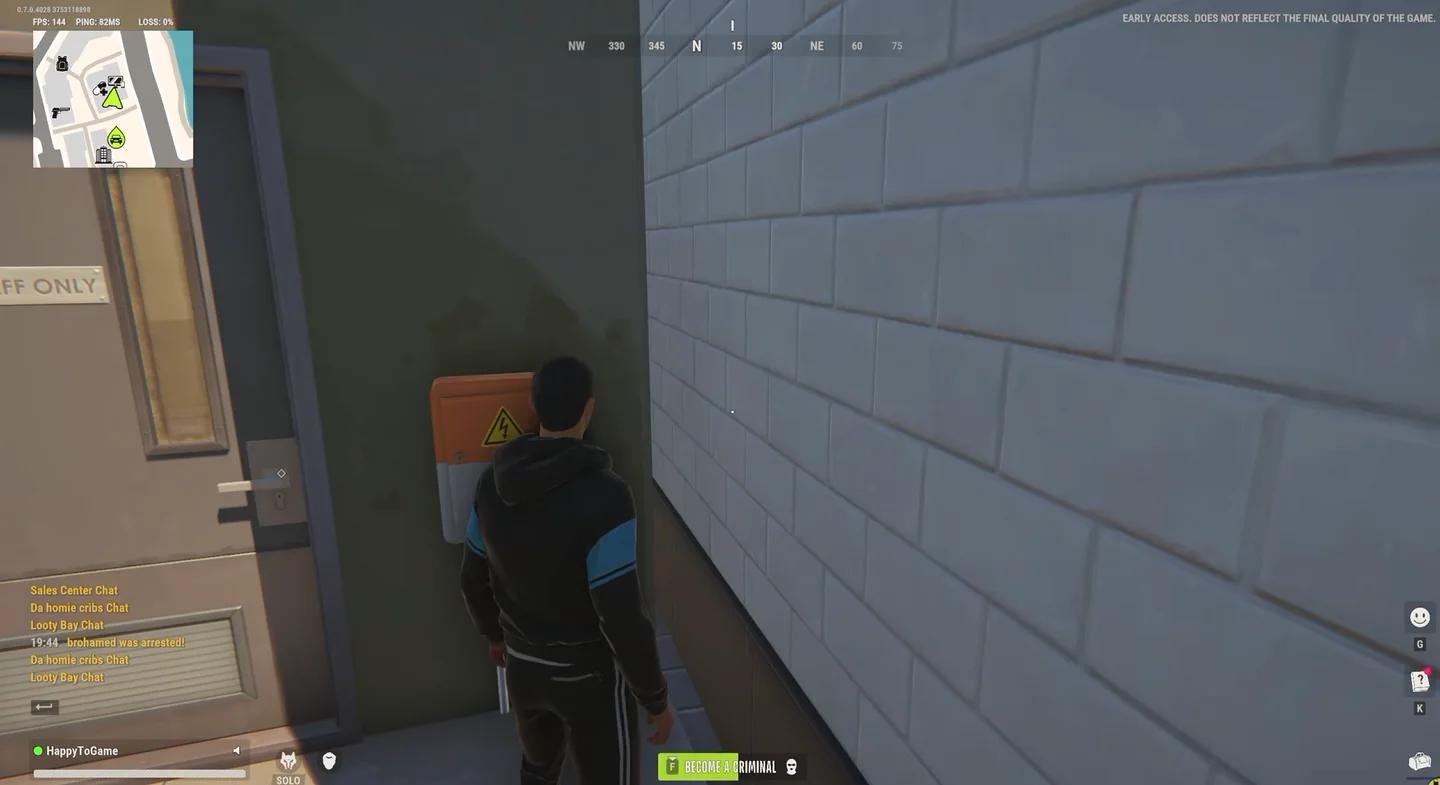
Disable the alarm before entry
Use dumpsters and trunks as alternatives
Dumpsters provide cash and are worth checking when you have little equipment or need to recover after a failed run. They let you gather starting funds without committing to a larger robbery.
Locked vehicle trunks are another loot source. Buy a Lockpick through the Black Market to open them, including trunks on police vehicles. Arrange your route before stopping to search vehicles in exposed streets.
Which loot should you keep or sell?
Loot includes weapons, attachments, vehicle keys, restricted-room keys, building blueprints, land documents, and resale valuables. Keep items that support a planned activity instead of treating the whole bag as merchandise.
Check whether a useful tool or spare item fills a gap in your Rob Run equipment setup before selling it. A quick payment may be poor value if you need to buy the same equipment for your next job.
Compare estimated cargo values
Use these estimated base values to compare cargo. They are planning figures, not guaranteed sale prices.
| Cargo | Estimated base value |
|---|---|
| Unique Collection Crate | $500,000 |
| Golden Statue | $250,000 |
| Expensive Safe | $200,000 |
| Valuable Cargo Crate | $150,000 |
| Rare Collection Crate | $150,000 |
| Portable Safe | $100,000 |
| Bank Money Bag | $60,000 |
| Pure Powder Bag | $40,000 |
| Blue Suitcase | $25,000 |
| Red Suitcase | $25,000 |
| White Suitcase | $25,000 |
The Unique Collection Crate has the highest estimated value in this list, but it is bulky. The Expensive Safe is heavy. Judge pickups by their value relative to the space and transport they need, not by price alone.
Leave room for better cargo when possible. Filling your remaining capacity with a suitcase is a poor trade if it prevents you from taking a more valuable item you can actually get to a buyer.
Sell shipments intact or open them?
Opening a stolen shipment requires a Cargo Workbench at your property. Its contents can be worth more or less than the sealed cargo, so opening it is a gamble, not a guaranteed upgrade.
Sell intact when you need predictable funds for a specific purchase. Open cargo only when a disappointing result will not stop you from replacing equipment or completing your next objective.
The Buletti cannot transport shipments. Arrange a suitable vehicle before committing to a cargo pickup.
How to sell loot and collect payment
Ordinary valuables and cargo do not always use the same buyer. Match the goods to the selling point before carrying them across the city.
Choose the right buyer
| Buyer | What to bring | Where or how to access it |
|---|---|---|
| Fence | Ordinary stolen valuables | Find the van marked with a dollar symbol on the Looty Bay map |
| Smuggler | Cargo | Use this buyer for cargo sales |
| Sales Center | Valuables | Rent property in the corresponding district to gain access |
District trading hubs can offer better prices than buyers in Looty Bay. Compare that possible gain with the danger of transporting your haul farther. Once you reach a suitable buyer, interact with them and sell the items you no longer need.
Decide whether another robbery is worth it
Successful consecutive heists during one visit raise your Notoriety, which can unlock perks and improve Fence offers. Solo players and two-person teams start with higher Notoriety than full crews.
Buyer location also affects prices. Check the actual offer instead of budgeting around an estimated cargo value.
End the run when your current haul already funds your objective, or when replacing your equipment would be difficult. Another robbery adds exposure to police and rival Criminals, even if the next sale could pay more.
How to escape without losing your equipment
Removing your mask does not clear Criminal status inside Looty Bay. You need to leave the city to end the run, so reaching the street outside your target is only part of the escape.
Keep a vehicle ready and choose your exit before the robbery. Your role and location determine what happens if someone intercepts you.
Compare death, surrender, and bribery
| Situation | What happens to your possessions |
|---|---|
| Criminal killed in Looty Bay | Carried inventory is lost, including bag contents and equipped gear |
| Criminal surrenders to police | Bag contents are confiscated, but equipped gear is retained |
| Police officer accepts a bribe | The Criminal keeps their possessions |
| Civilian killed in Looty Bay | Bag contents and equipped items are retained |
| Police officer killed | Department-issued equipment is lost, but personal possessions are retained |
| Any character killed in the desert | All carried loot is lost, regardless of role |
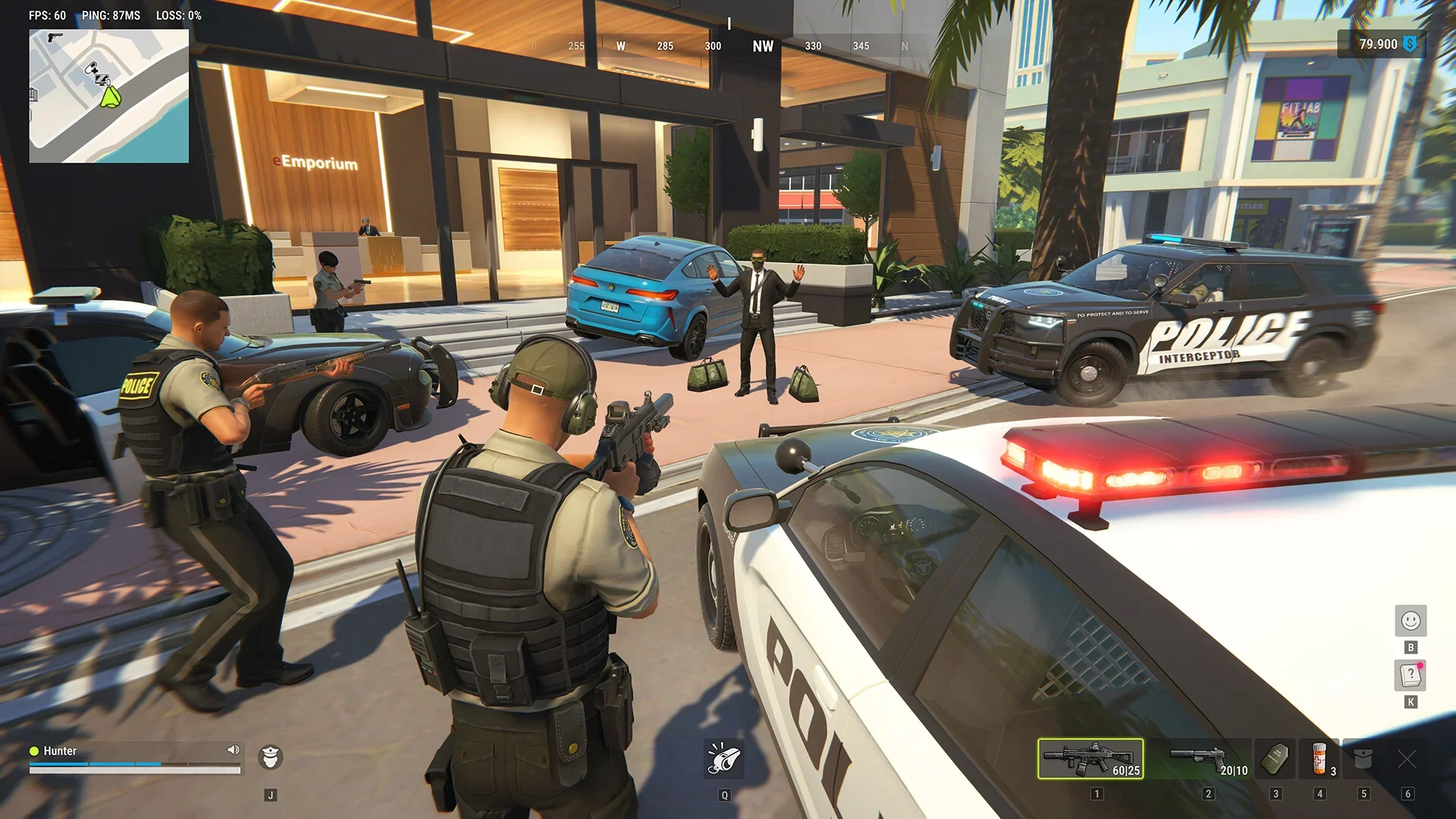
If you are surrounded, compare the value of the bag with the replacement cost of your equipped kit before choosing surrender. Bribery requires enough available funds, and an officer can refuse it, so it is not a dependable escape plan.

Weigh loot against equipped gear
Where to store valuables and cash
Cash storage and item storage serve different purposes. Choose storage based on what you need to protect and whether you plan to use it again during the current cycle.
Use Lenny for cash and your base for items
Lenny at Lenny's Motel can hold cash. His storage does not accept stolen goods, weapons, or other inventory items, making it an early cash-storage option rather than a substitute for a base.
A base can store equipment and stolen goods between trips. Leave items there when they do not serve the robbery you are about to attempt.
Base storage remains vulnerable to raids. Rivals can use a decoder against the Security System, and the owner can repair damaged security equipment. Do not treat stored valuables as untouchable.
Open a bank account and launder earnings
Visit Looty Bay Bank as a Civilian to open an account. Stolen cash needs laundering before it becomes clean money in that account.
Lenny can handle laundering early on, taking a portion of the proceeds. Once you own a plot and house, install a Laundering Desk at your base to process dirty cash yourself.
The desk gradually converts deposited dirty cash into clean funds transferred to your bank account, including while you are offline. Banknote Counters improve the efficiency of the setup as you process larger amounts.
Banked funds cannot be stolen during ordinary robberies. Withdraw money through ATMs or bank employees when you need cash for purchases.
Plan around the Federal Raid
The seven-day Federal Raid resets plots, bases, weapons, cash, and stored cargo, including money held in the bank. Losses convert into jail time and authority, which form part of Rob Run progression.
Cosmetics, your player name, completed tutorial progress, settings, and previously accumulated jail time carry over. Banking protects earnings from theft during a cycle, not from the reset.
Before the Federal Raid, sell valuables you can still put to use and finish purchases that support your remaining runs. Avoid building a stockpile you will neither use nor sell before the cycle ends.