

Raise captive-born animals with their needs met throughout childhood to improve Potential and earn better livestock sale rewards in this Rust Potential Guide for Rust.
Printed and Polished added Potential on November 5, 2026, as part of its livestock rework. Your care routine now affects more than an animal's immediate condition. Prepare the pen before breeding, and make room for the next birth before it happens. A larger herd needs more food, fresh water, and floor space, so expand those supplies alongside your animal count.
Which animals can have Potential?
Only animals born in captivity can have Potential. For a livestock farm, that means raising calves and lambs born to your owned animals. Capturing a wild animal does not change where it was born.
| Animal's origin | Eligible for Potential? | How to use it |
|---|---|---|
| Calf born in captivity | Yes | Raise it with its needs met throughout childhood |
| Lamb born in captivity | Yes | Maintain its care while it grows |
| Wild-born youngster brought into your pen | No | Use it as future breeding stock or a producer |
| Wild-born adult brought into your pen | No | Assess its genes and usefulness to your herd |
Buying animals is a way to establish your farm. The Livestock Vendor sells calves and lambs that already belong to you and arrive on a lead. Build a breeding herd, then focus your Potential-raising care on its captive-born offspring.
Budget food, fresh water, and pen space before expanding this part of Rust's survival game progression. Adding animals first leaves you fixing shortages while youngsters are already growing.

Read a calf's care stats


Establish ownership before breeding
You become a cow's owner by buying it or having it eat from your trough. Newborn livestock belong to their mother's owner. Cows without an owner do not reproduce.
Ownership no longer requires you to remain nearby to prevent a cow from forgetting you. Familiarity still matters when leading animals, but standing beside the herd is not a substitute for supplying its needs.
How does childhood happiness determine Potential?
Potential records how happy an animal was while growing up. Manage its living conditions throughout that period, not just immediately before you want to sell it.
Use the livestock needs panel to find problems. An animal's condition follows its worst need, so filling the food supply will not solve a water shortage or an overcrowded pen. Potential and condition are separate measures, but the needs panel gives you concrete care problems to address.
| Care requirement | What to provide | What to check |
|---|---|---|
| Food | Horse-compatible food in a Hitch & Trough within 25 m | Food supply and the youngster's hunger level |
| Fresh water | A supplied trough, suitable water container, or accessible fresh water | Hydration and the remaining water supply |
| Personal space | 8 m² of pen floor per animal for full space | Pen capacity after new births |
| Grass | An area of open grass inside the pen | Grazing access alongside trough food |
| Sun | Daylight reaching the pen, with 50% exposure counting as full | Whether your enclosure leaves animals short of sunlight |
Stock the trough before leaving
The trough interface now displays how long its food can sustain the group, similar to upkeep. Check that duration before leaving on a long trip, and inspect the water supply separately.
Cows can eat any food a horse can. Potatoes, corn, pumpkins, and bread are feeding options, so you can supply the farm from several food sources instead of relying on one crop.
Enough grass makes cows eat from the trough half as often. The old Grazed Bare overgrazing restriction is gone, but grass does not remove the need to maintain the rest of the farm's supplies.
Expand space as the herd grows
Personal space now measures the pen's area against the number of animals it contains. Moving cattle between different corners of the same enclosure does not create more floor space.
Leave capacity for offspring before pairing breeders. Indoor cows stop reproducing when their personal space need is not full, so crowding can interrupt your next generation as well as create a care problem for the current one.
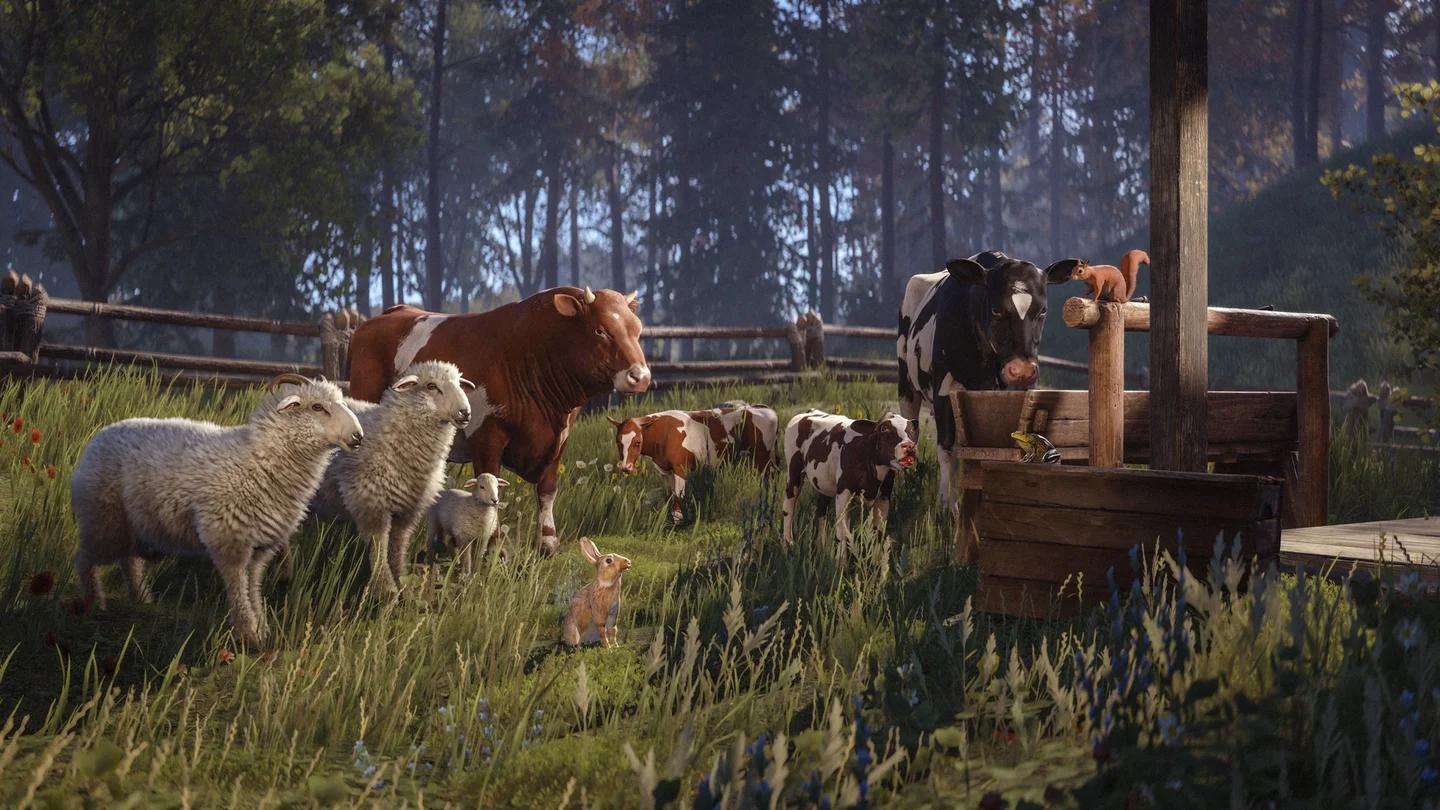
Leave room for new calves
When does an animal's Potential become locked in?
Potential locks when the animal becomes an adult. Better care afterward does not rewrite its childhood score. An adult with disappointing Potential needs a better-raised replacement if your goal is a stronger sale multiplier.
Cattle only grow while owned. Check that your newborn belongs to you, then keep its needs supplied as it develops. Do not treat a youngster standing inside your fence as proof that every part of its care is working.
Spend your improvement effort before adulthood. If several animals need attention, inspect the young ones while there is still time to improve their childhood conditions. Adult producers still need food, water, and room, but their Potential is no longer adjustable.
How does Potential affect animal rewards?
Potential multiplies what an animal sells for. Treat it as a sale-value stat, separate from the genes that govern production and breeding.
| Stat | What it affects | Decision it helps you make |
|---|---|---|
| Potential | Animal sale value, based on childhood happiness | Which captive-born youngsters need care before adulthood |
| Yield | Milk or wool amount and production cooldown | Which adults to keep as resource producers |
| Dung | Frequency of dung production | Which animals suit a dung-focused farm |
| Fertility | Breeding cooldown and litter size | Which animals to keep as breeders |
| Hardiness | How well animals cope with unmet needs | Which animals tolerate care shortages better |
A valuable sale animal and a useful producer are not automatically the same choice. Compare the animal's role in your farm before taking it to the vendor.
Keep productive adults when you need their resources
Only owned adult female cattle produce milk. With Good Yield, a cow produces 2 Milk per milking on a 3m 7s cooldown; with Ok Yield, it produces 1 Milk on a five-minute cooldown. Those production differences come from Yield.
For sheep, use Shears to collect wool. Shears produce more wool and cannot injure the sheep if you miss the fleece and hit its skin. They are a default blueprint that requires a Level 1 workbench to craft.

Harvest wool without injury
Wool can be traded to the livestock vendor or kept for crafting. If cold protection is your priority, the Rust Wool Armour Insert guide explains the insert that uses your sheep's wool.
Keep enough suitable breeders to continue producing offspring before selling surplus adults. A short-term sale removes that animal from your future production and breeding plans.
Take sale animals to the livestock vendor
Lead a grown animal to the Livestock Vendor at the Ranch or Large Barn. The vendor makes randomized offers, and gene quality also affects the reward. Compare the actual items offered instead of expecting every adult to receive the same payout.
If your farm supply route takes you onto the mainland ocean, the Rust roaming scientist boats guide covers the unmarked patrols that engage geared players.
You can reject an offer and receive another, up to three offers in total. Reject all three, and the vendor refuses that animal for 15 minutes. Accept an offer when its resources meet your needs, or plan for the wait before rejecting the final one.