

Hunter is the best class for solo leveling in World of Warcraft: Forever, with Mage, Druid, and Warlock the strongest alternatives.
Your route to level 60 should guide the choice. Independent questing rewards pets, mobility, and sustained damage. Dungeon groups put more value on tanking, healing, and party support. The rankings below cover leveling efficiency, not raid damage or a universal PvP hierarchy. All nine classes can reach the cap, but their strongest leveling conditions differ, and the November 10 hotfix changes several mechanics you should consider before committing.
Best classes for solo leveling
These tiers compare solo leveling speed with efficient quest routes and careful resource management. They do not rank ease of play or survivability separately. Classes share a tier when their strengths support a similarly competitive pace, without implying identical performance on every route.
| Solo tier | Classes | What to consider before choosing |
|---|---|---|
| S | Hunter | The leading recommendation for an independent questing run |
| A | Mage, Druid, Warlock | Strong alternatives with different demands for positioning, forms, or pet management |
| B | Warrior, Rogue, Paladin | Competitive melee options that reward gear upgrades and careful combat decisions |
| C | Priest, Shaman | Viable solo choices, but less suited to chasing the fastest leveling pace |
Choose a class whose main leveling tools you want to manage repeatedly. Mage's group pulls, Druid's shapeshifting, and Warlock's damage-over-time effects create different routines even when they sit in the same tier.

Which top solo class should you choose?
Hunter for pet-led questing
Hunter's pet holds enemy attention while you deal ranged damage. That helps you finish difficult quests without waiting for another player, including some elite objectives. Experienced pet control and split-pulling can turn a dangerous group into manageable fights.
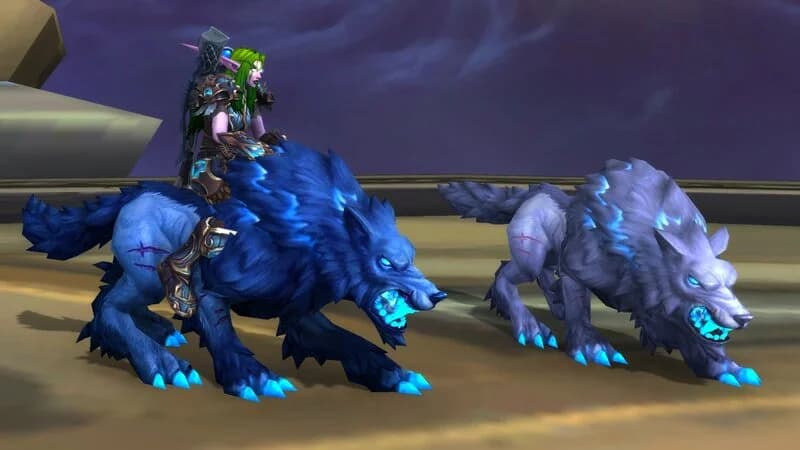
Hunter and animal companion
Forever makes pets scale with their Hunter's gear. Aimed Shot becomes baseline at level 20, and traps work during combat. Fire and Frost traps have separate cooldowns, giving you more options when a pull stops going to plan.
The November 10 hotfix corrected pet health from an unintended 150% of normal to 115%. Beast Mastery's summoned Hawk also received an approximately 80% increase to melee damage. Do not plan difficult pulls around the earlier, inflated pet health.
Pet families offer different tools. World of Warcraft Forever Scorpid pets use Scorpid Poison for stacking damage over time, while other families provide effects such as movement control or damage reduction. Pick the utility you need without treating every pet as interchangeable.
Mage for controlled group pulls
Mage suits a route that combines quest objectives with area damage. Gather enemies you can control, kill them together, and collect quest progress from the same fights. This keeps AoE useful without building the whole run around repeated dungeon farms.

Mage Blizzard spell effect
Frost's control is weaker than in Classic Era. Improved Blizzard now reaches a maximum 40% movement slow instead of 65%, and Cone of Cold has a shorter duration. Dungeon restrictions also make large pathing-based pulls harder. Familiarity with an old farm does not make its original pull size appropriate in Forever.
Mage still offers crowd control and ranged damage, but close-range mistakes are costly. Choose it if you enjoy positioning enemies and judging pull sizes. At level 40, Frostfire Bolt adds a spell that benefits from many Fire and Frost talents, opening another direction for hybrid builds.
Druid for movement and role flexibility
Feral Druid combines efficient melee combat with fast movement between objectives. Ferocious Bite arrives at level 24 instead of level 32 in Classic Era, bringing an important damage tool into the earlier stretch of leveling. Feral Swiftness also works indoors in Cat Form.

Feral Druid in Cat Form
Weapon upgrades deserve attention. In Forever, Cat, Bear, and Dire Bear auto-attack DPS uses the equipped weapon's DPS, with attack speed set by the form. Weapon enchantments and procs also function while shapeshifted.
Druid can fill damage, tanking, or healing roles as needed, although each role still needs suitable talents and gear. Dual Specialization becomes available at level 40. The World of Warcraft Forever Druid leveling guide covers the early Feral talent and rotation decisions if you choose this route.
Warlock for damage over time and demon support
Warlock offers two particularly useful leveling approaches. Affliction spreads damage-over-time effects across enemies, while Demonology puts more emphasis on the demon and steady fights against one or two targets. Both support a self-sufficient questing routine.
Demonic Brand needs the right pet to provide extra threat. Its Shadow-damage interaction supports tanking-oriented demons such as the Voidwalker; a non-tanking Imp does not receive the same extra-threat benefit. Choose your demon around the job you expect it to perform.
The November 10 hotfix increased the base health of the Imp, Voidwalker, Incubus, and Succubus by approximately 15%. It also changed Affliction's Wrack: while channeled, Siphon Life, Corruption, and Bane of Agony deal periodic damage 100% faster without shortening their duration. Apply those effects before channeling if you want to benefit from that interaction.
Are Warrior, Rogue, and Paladin worth choosing?
These melee classes are reasonable picks if their combat style appeals to you. Their solo tier reflects the full climb, so strong damage later in the journey does not erase slower stretches earlier on.
Warrior rewards a planned weapon path
Warrior's damage depends heavily on weapon quality. Identify useful quest rewards and upgrades along your route instead of waiting until enemies start taking too long to kill. Its damage becomes particularly strong in the 50s, but late-level potential is not the same as the fastest complete run.
Victory Rush improves recovery from level 20. After killing a non-trivial enemy, you have 20 seconds to use the attack, which heals for 10% of maximum health and has a 30-second cooldown. That gives Warrior a concrete sustain tool between successive fights.
Rogue rewards selective fights
Rogue works well when you use control to choose manageable engagements. Sap no longer breaks Stealth, helping you separate a dangerous pack before combat. Distract also reduces affected enemies' Stealth detection for 10 seconds.
Forever expands weapon options by allowing Rogues to learn one-handed axes. Poisons have more charges and can coexist with temporary weapon enchantments. Keep those systems maintained as you upgrade gear, and avoid treating every nearby pack as something you need to fight.
Paladin has a more active early toolkit
Paladin learns Holy Strike at level 6, and Judgement no longer consumes the active Seal. Retribution also gains better access to weapon upgrades during leveling, reducing a bottleneck that previously interrupted its damage progression.
Pursuit of Justice now offers up to 15% movement speed, compared with 8% in Classic Era. That helps with travel between objectives, although weapon quality still shapes how quickly you finish the fights themselves.
Deep Retribution offers Twist of Light for a revised form of Seal Twisting. A Holy Shock hybrid provides an alternative if you do not want to build around swapping Seals. Choose based on the combat routine you want, not the assumption that every Paladin must use the same approach.
Why are Priest and Shaman lower for solo leveling?
Priest trades speed for sustained progress
Priest's main solo limitations are mobility and limited burst damage. Shadow provides consistent damage and sustain, but it cannot always finish a target and move on as quickly as the higher-tier choices.
Several useful spells are available across the class. Every Priest receives Fear Ward and Devouring Plague at level 20. Shadow Word: Death arrives at level 32, providing instant damage with a risk: if it does not kill the target, the Priest takes damage equal to 10% of maximum health.
Pick Priest because you want its spell kit or healing options. Its lower solo placement does not make it incapable of questing independently.
Shaman needs careful mana management
Shaman gains travel help from Ghost Wolf, but mana use and recovery interrupt its solo pace. Resisted spells can also make a fight take longer while consuming resources you expected to spend on the next enemy.
Enhancement's November 10 changes are important when comparing builds. Stormstrike now deals 100% weapon damage with an eight-second cooldown, and Mental Dexterity converts less Intellect into Attack Power. Maelstrom Weapon now reduces cast time and mana cost by 20% per application at every rank, with its activation frequency increasing by talent rank. You can track it in the Cooldown Manager.
Weapon imbues and weapon totems can now work together, including Windfury Weapon and Windfury Totem. Shaman also makes a useful partner for Warrior, supporting its melee damage with Windfury. A solo ranking should not decide whether that duo is worth playing.
Best classes for dungeon-group leveling
Group rankings are provisional. These placements reflect level 30 beta play and estimates for progression to level 60, and they predate the November 10 hotfix. Shaman's older placement deserves particular caution after the Enhancement changes.
| Provisional group tier | Classes |
|---|---|
| S | Paladin, Mage, Shaman |
| A | Warrior, Druid |
| B | Hunter, Warlock |
| C | Priest, Rogue |
Paladin has practical dungeon tools beyond its solo damage. Seal of Fury's Judgement taunts at a 10-yard range. Consecration becomes baseline at level 20, but deals moderate damage only to the first four enemies entering it, with very low damage to additional targets. Do not treat it as unrestricted threat for enormous pulls.
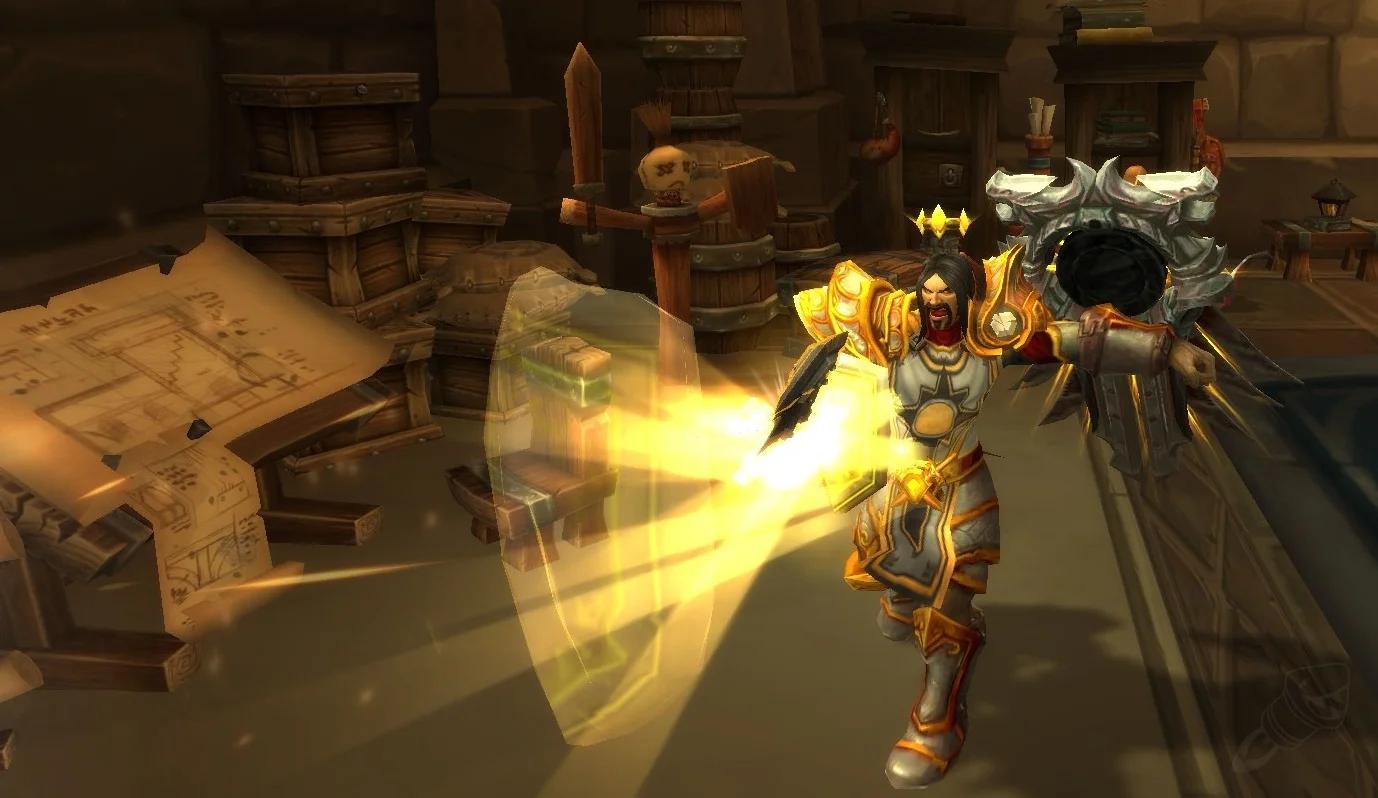
Paladin with weapon and shield
For dungeon tanking, compare World of Warcraft Forever tank classes by their threat tools and defensive cooldowns, not their solo tier. Warrior, Paladin, and Druid offer different ways to handle that responsibility.
A planned group also changes which weaknesses you need to cover yourself. Agree on tanking, healing, and damage roles before choosing classes, and consider how often everyone will actually be online together. A class selected for constant dungeon runs needs a workable questing plan when the group is absent.
How to turn your class choice into a leveling route
Quest density is higher in Forever, so build around nearby objectives and the enemies needed to complete them. Include dungeon quests while they are still appropriate for your level, and weigh the time needed to assemble a group against continuing your route.
Use this sequence before starting a long leveling session:
- Set the session's route. Group nearby quests so travel serves several objectives.
- Check your class's immediate needs, such as a weapon upgrade, pet management, or mana recovery.
- Arrange a dungeon run around its quests. A planned first clear is a useful starting point; repeated runs depend on group speed and waiting time.
- Reassess dangerous pulls after gear or ability changes. An old strategy may rely on stronger slows, different pet health, or mechanics that Forever has changed.
Choose Hunter for the strongest solo recommendation, then build a route that uses its independence. If another class's combat tools appeal more, use its strengths deliberately: controlled pulls for Mage, travel efficiency for Druid, demon support for Warlock, or coordinated roles for a regular group.