Overview
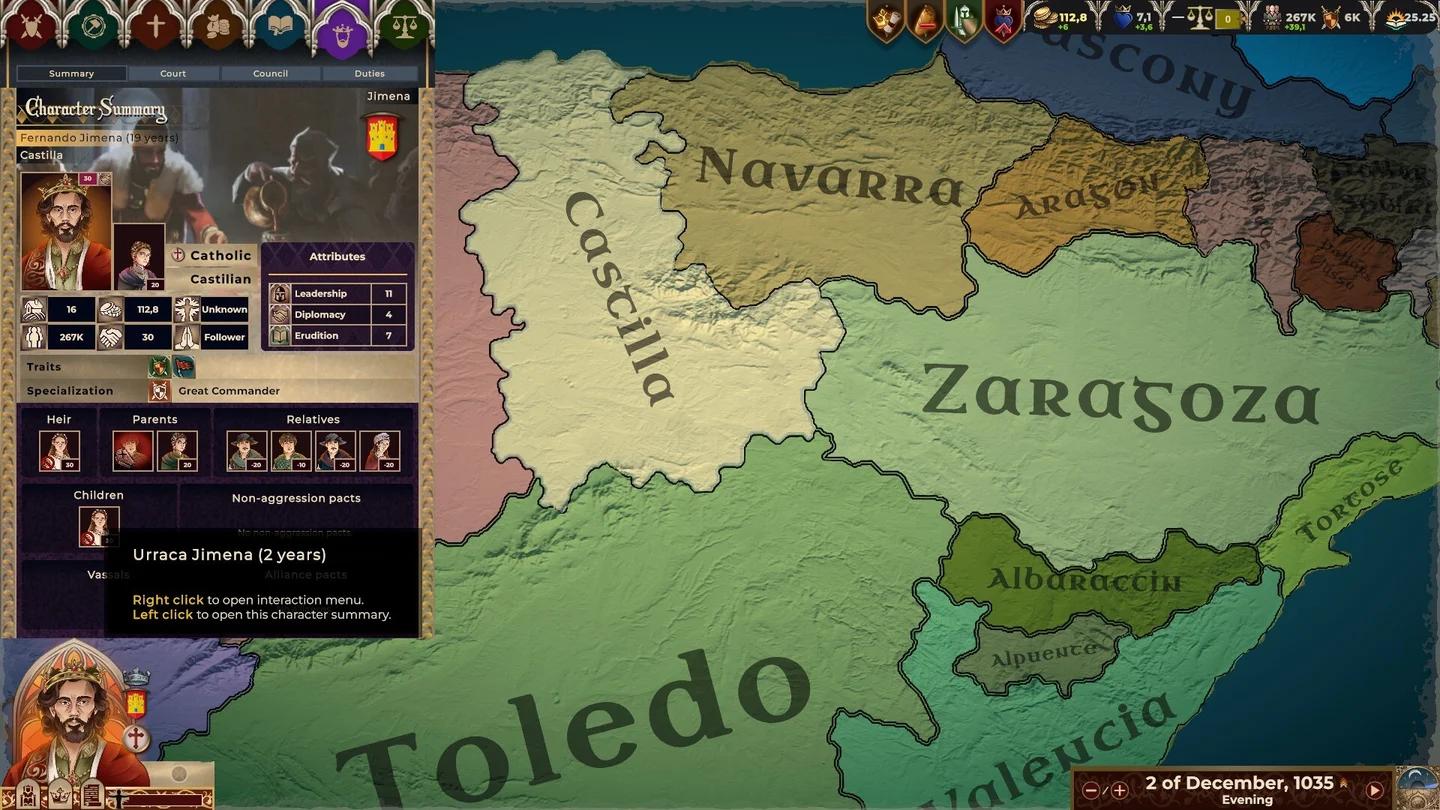
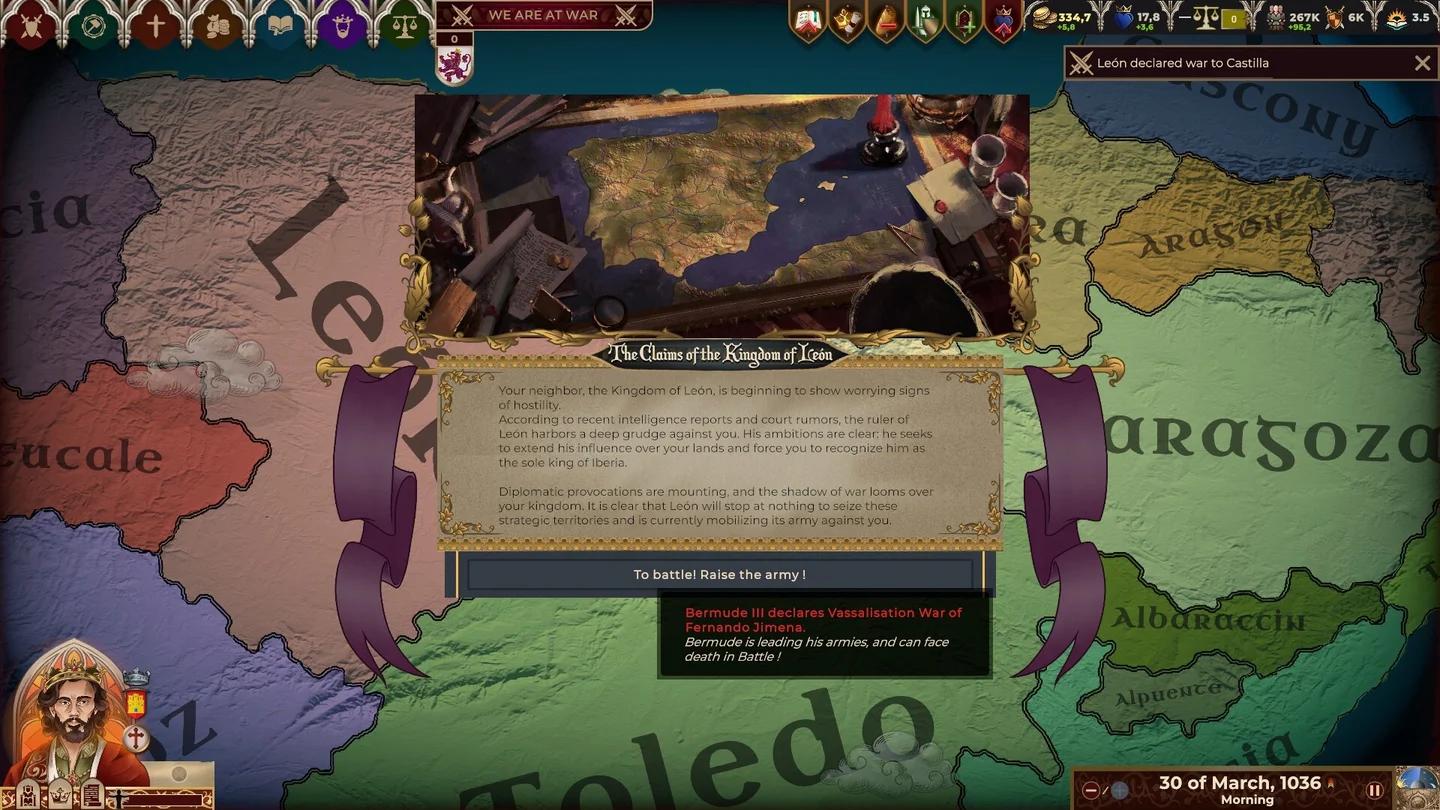
Crown of Hispania is a medieval grand strategy game set in 1035, following the death of Sancho III of Navarre. His lands are divided among his sons, while the collapse of the Caliphate of Córdoba leaves competing taifas across southern Iberia. Players lead a noble dynasty through this fragmented political order.
Developed by Regalis Studio and published by indie.io, the Windows game draws inspiration from Crusader Kings II and Europa Universalis IV. Its particular emphasis falls on a simulated population and armies that move independently of provincial boundaries, connecting domestic government with territorial conflict.
How does ruling a realm work?
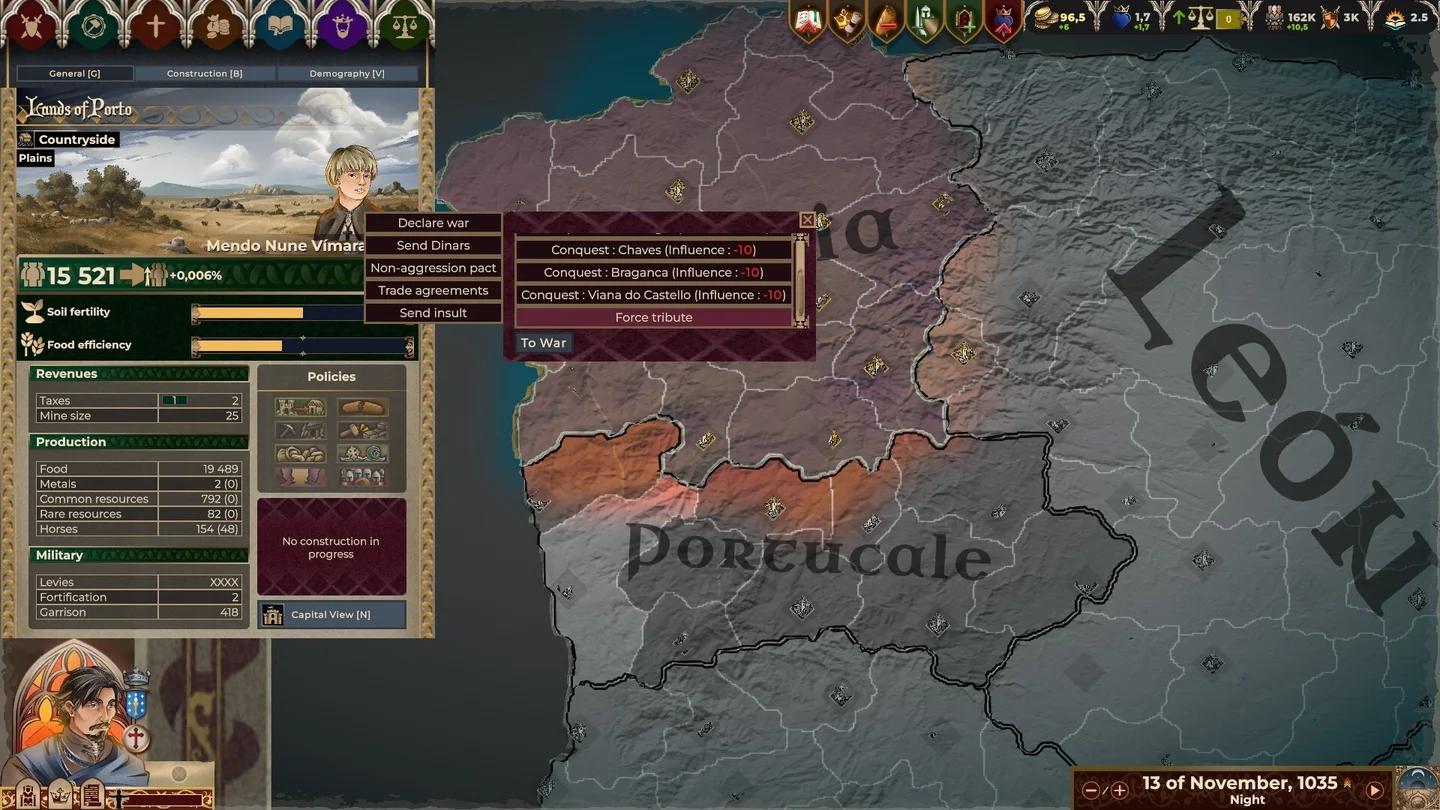
Ruling a realm combines territorial expansion with the personal politics of a dynasty. Military conquest is one route to greater power; negotiated relationships provide another.
- Dynastic diplomacy
- Court management
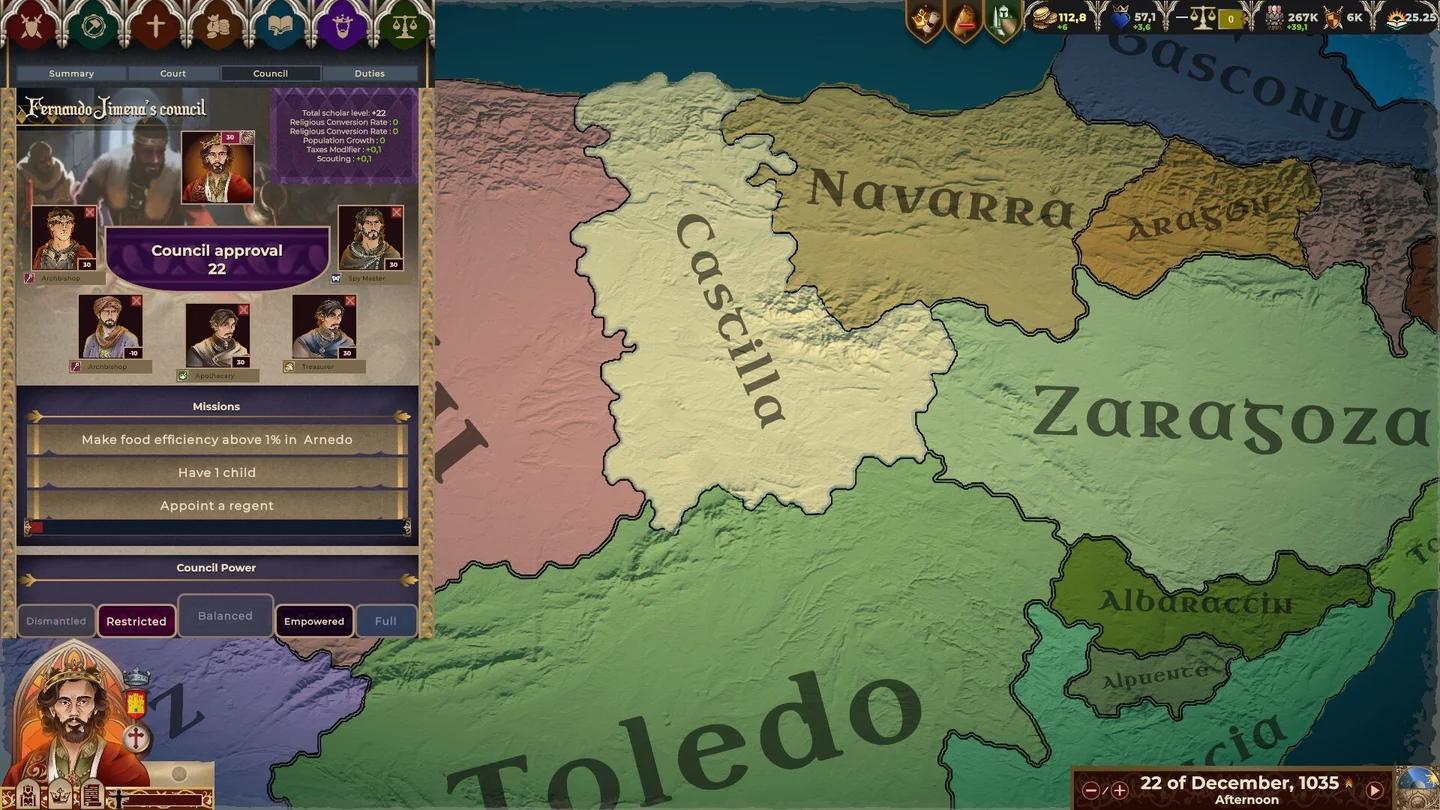
- Council missions
- Vassal politics
- Decision-driven events
Alliances and marriages support expansion without requiring every dispute to become a war. Within the realm, competing vassals create a separate struggle over authority, forcing rulers to balance external ambitions against the strength of their own position.
The Council assigns missions that help build political influence. Court management places these objectives alongside internal rivalries, while dynamic events respond to decisions made during the campaign. Historical circumstances establish the opening situation without prescribing every subsequent political development.
Population and the medieval economy
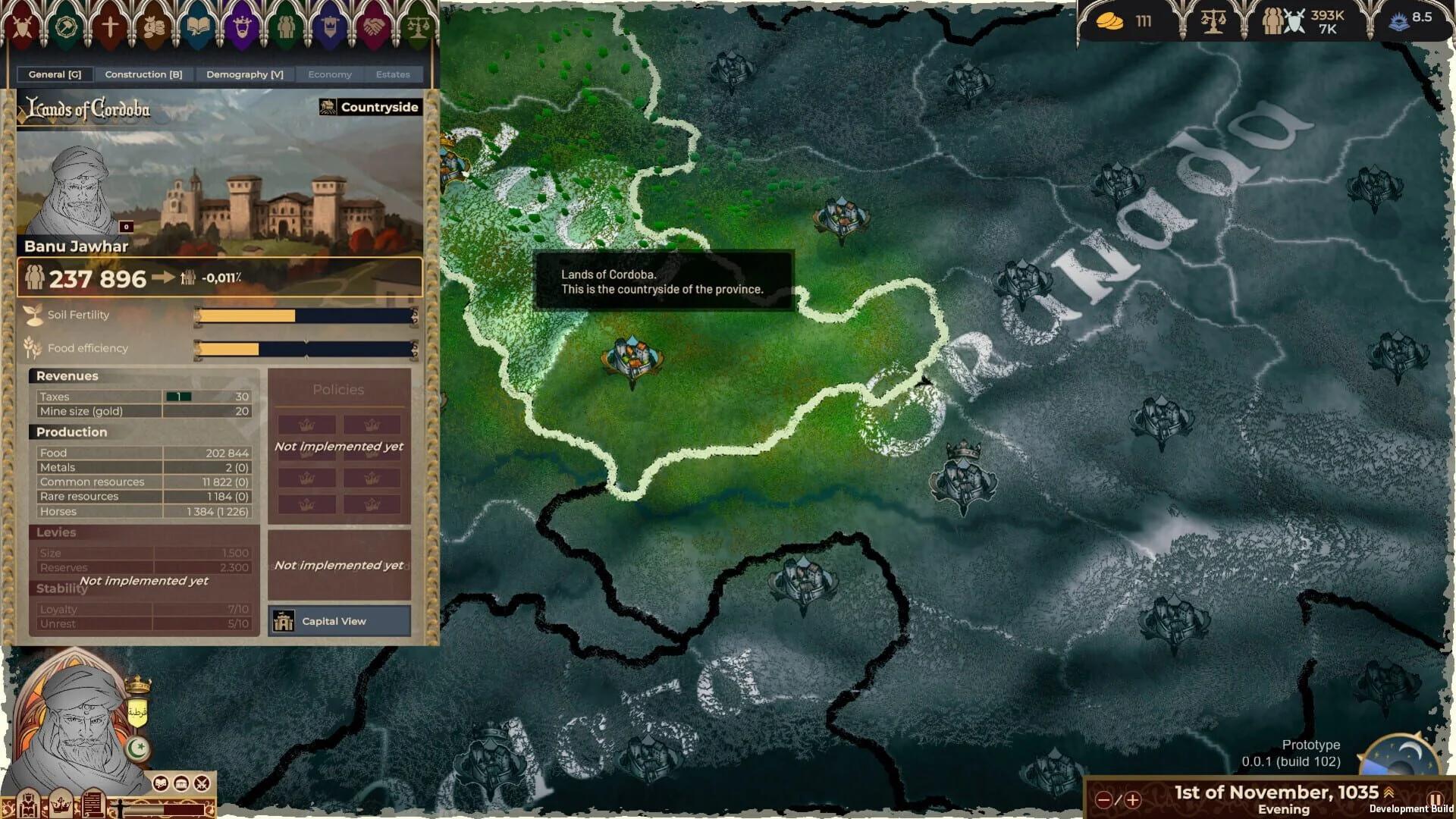
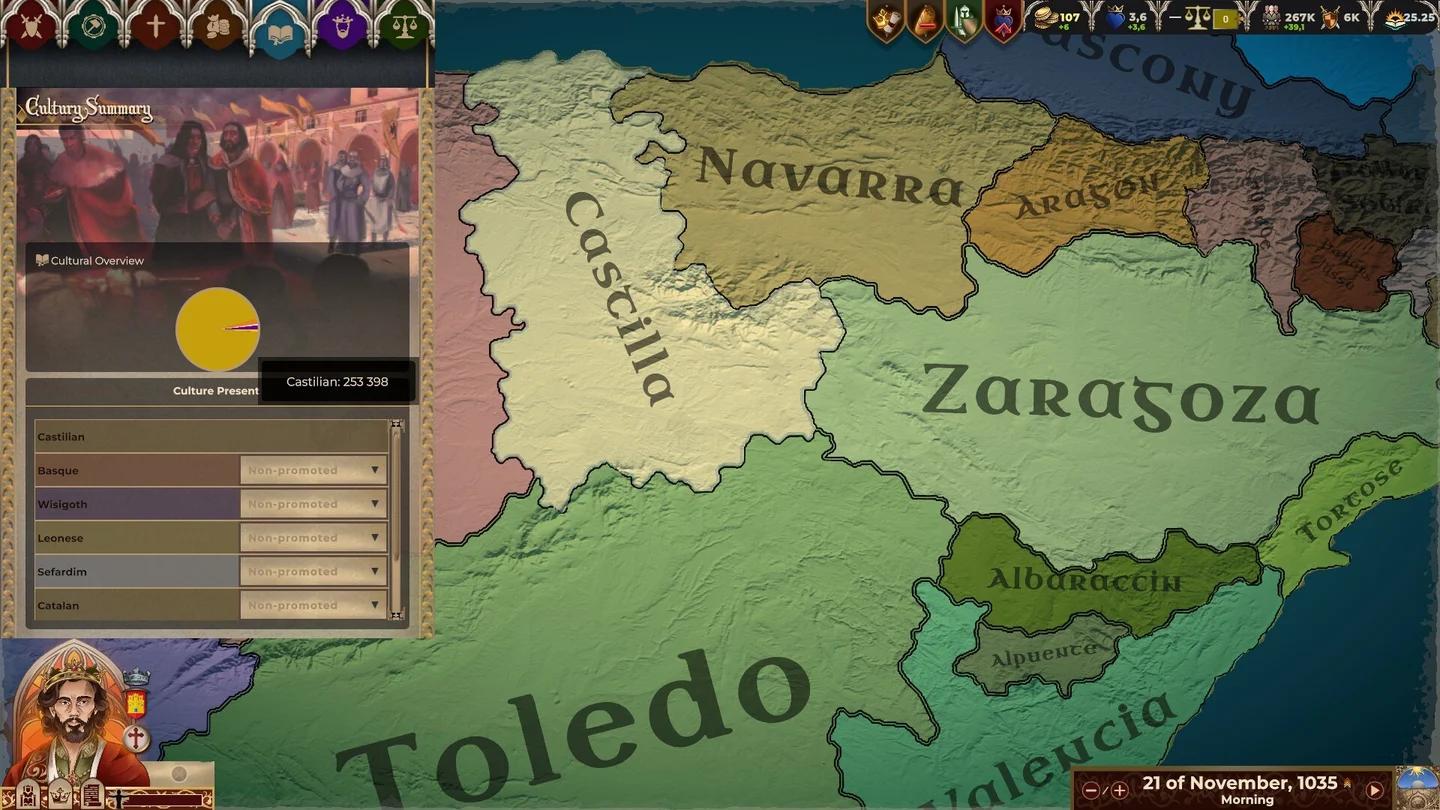
Population simulation makes inhabitants part of realm management. Communities grow, migrate, and react to their ruler's decisions, so a province's population does not remain a fixed backdrop to changes in ownership.
Religious conversion changes the faiths represented within the realm. Cultural and religious tensions complicate stability, creating domestic problems that territorial expansion alone does not resolve. Governing involves managing relationships among inhabitants as well as relations with neighboring rulers.
Economic development centres on construction, trade value, and decrees. These tools strengthen existing lands and help sustain expansion, giving domestic investment a role alongside acquiring territory. The economic layer connects the development of a realm with its capacity to pursue broader ambitions.
Warfare across a detailed regional map
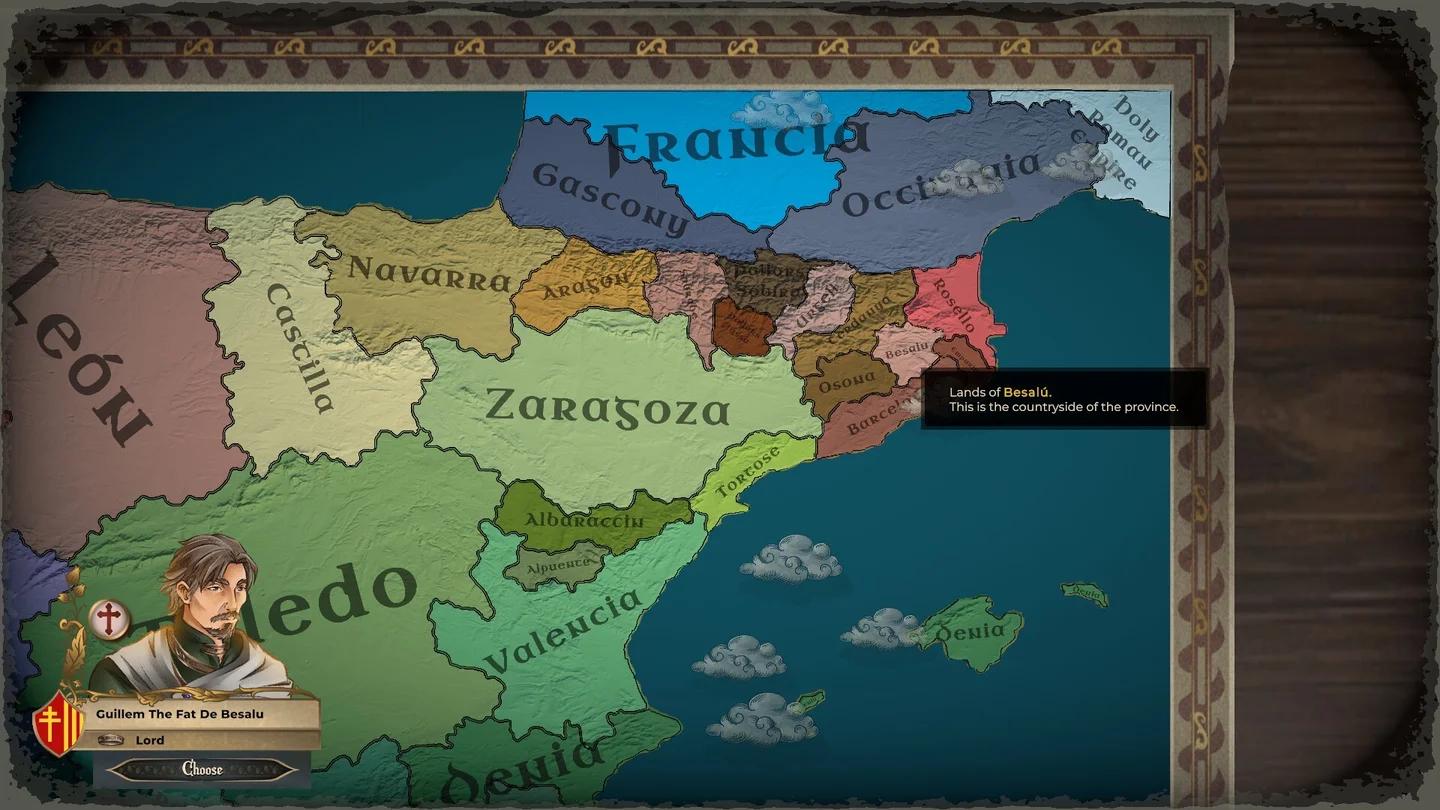
More than 300 hand-built provinces cover Iberia and neighboring regions. The topographical map follows real terrain, concentrating the campaign's geographical detail on a defined region instead of spreading it across a global setting.
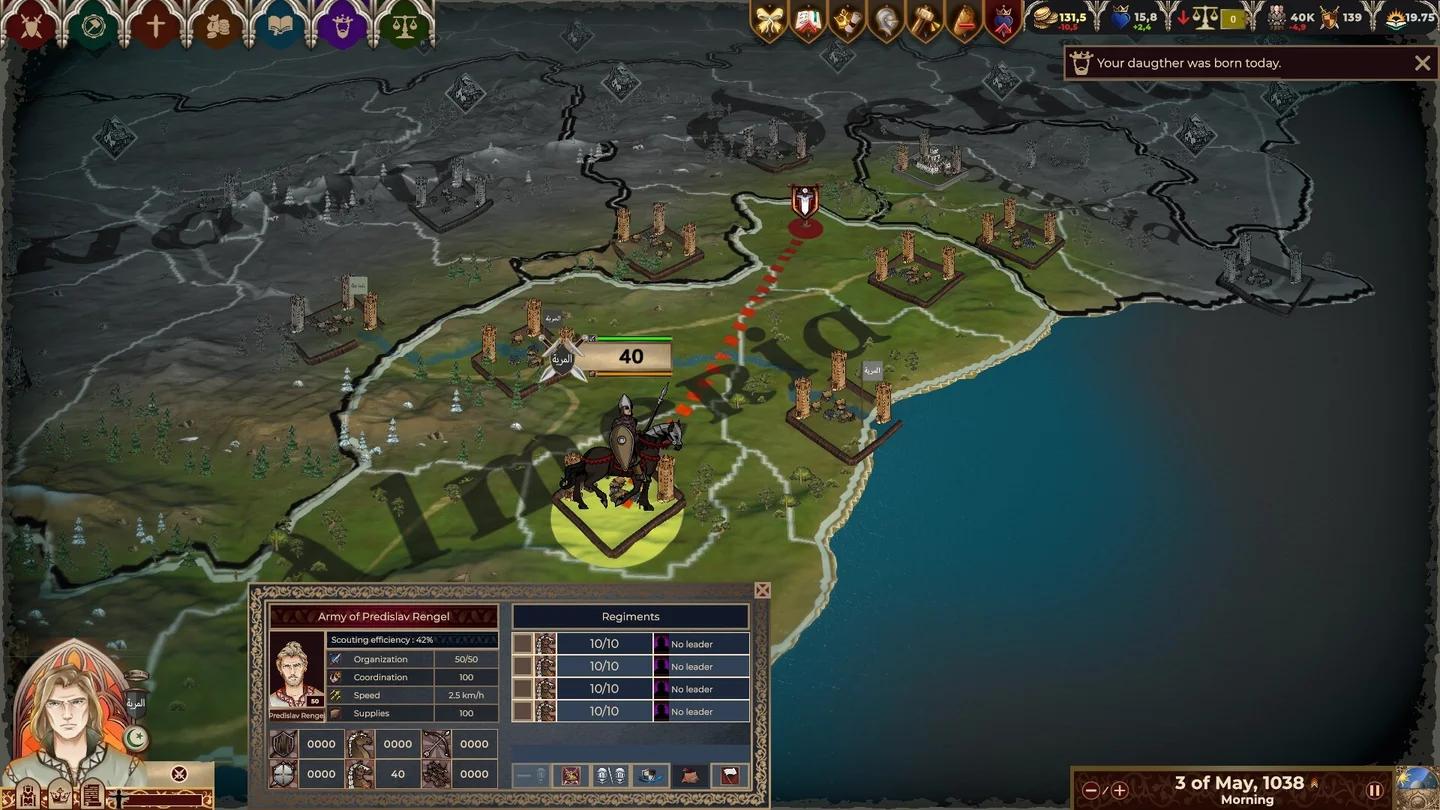
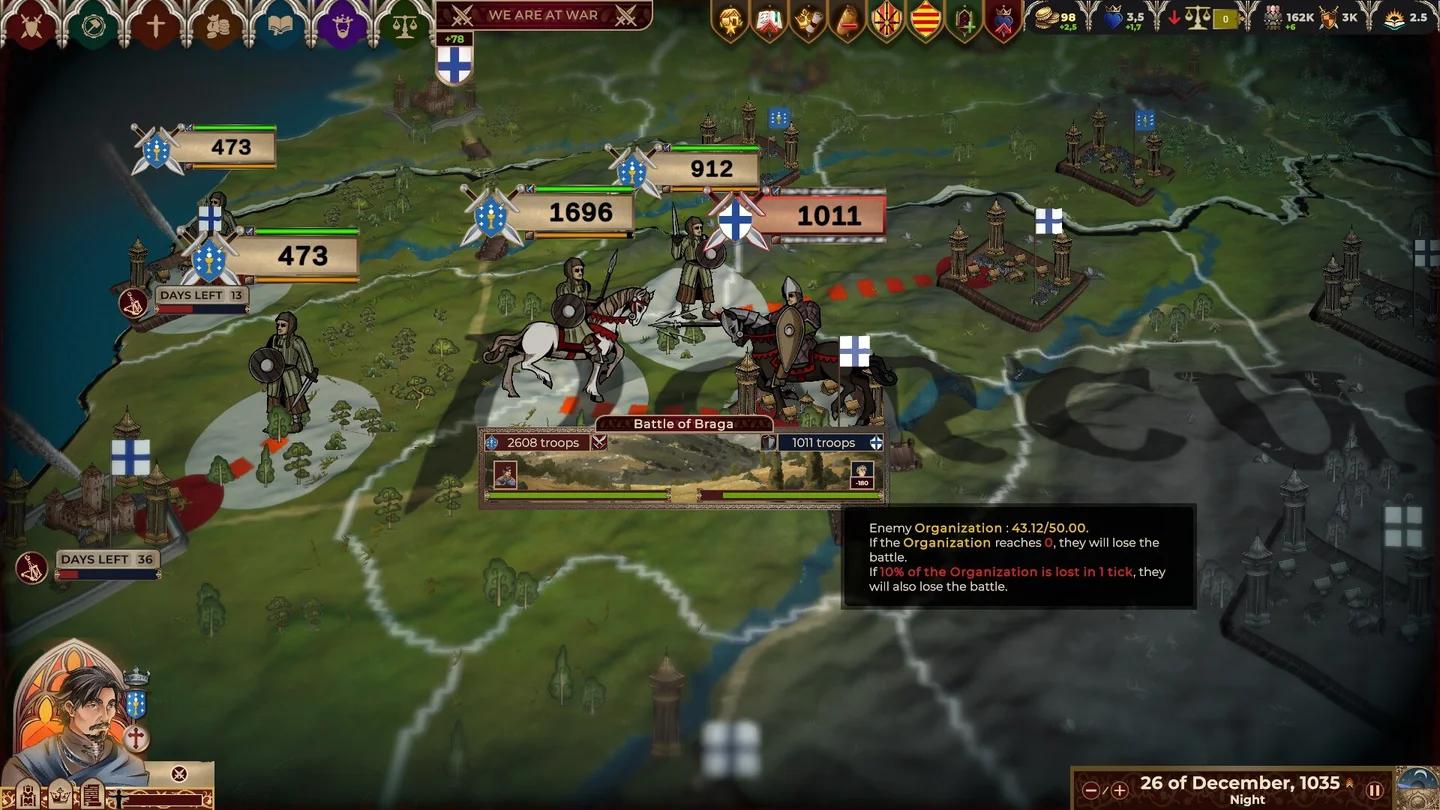
Armies move freely across that map without province-based movement restrictions. Political divisions still organize the territory, but they do not dictate each force's route. Commanders can choose positions beyond a fixed sequence of provincial destinations.
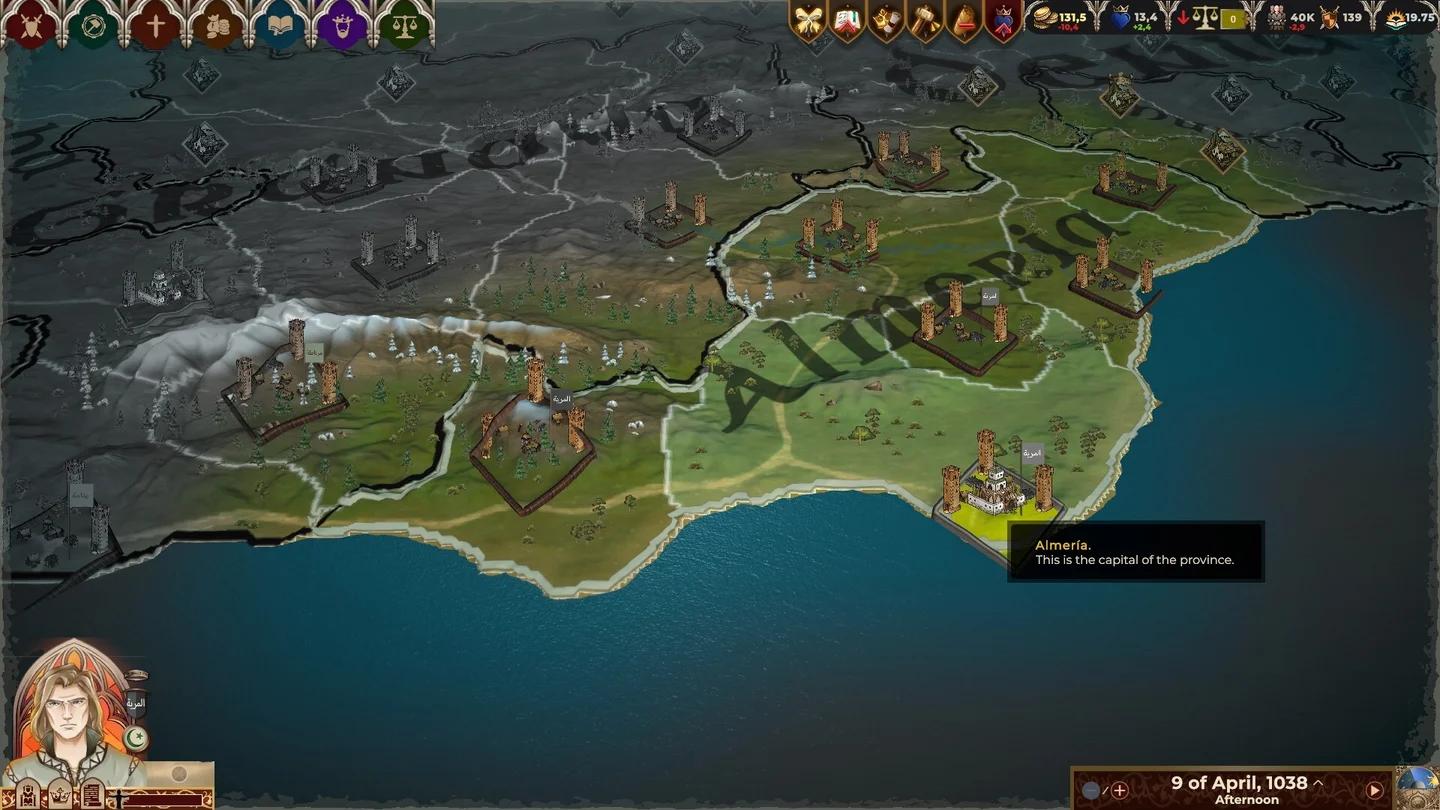
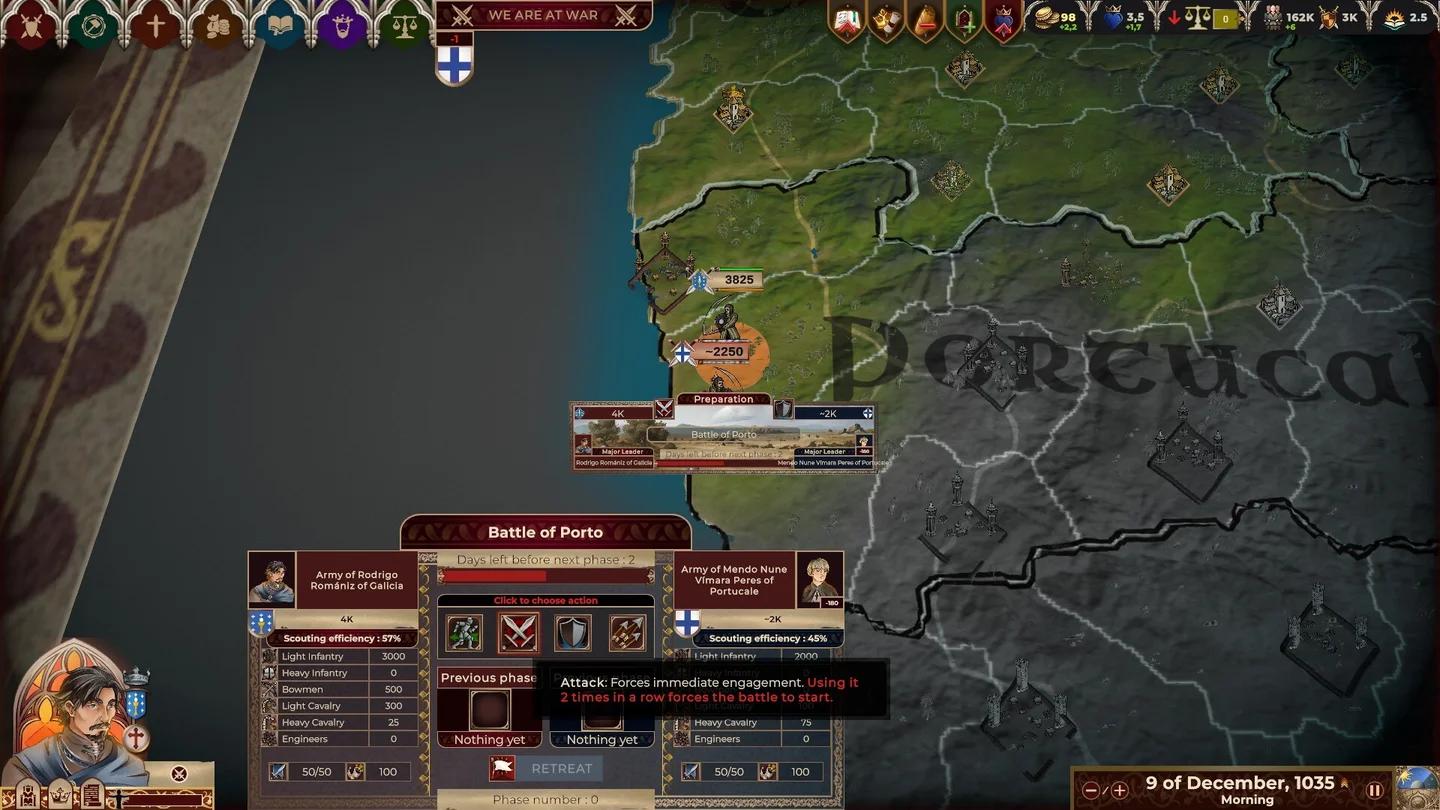
Battles use a dynamic engagement system, and the AI is designed to create difficult strategic situations. Flanking gives the movement system a concrete military purpose: an army's approach matters alongside the land it contests. This regional grand strategy campaign makes positioning part of warfare, alongside the diplomatic and domestic work of ruling a dynasty.