
Biggest discounts, free games, and limited-time offers across every major gaming store.
Never pay full price again.
Overview
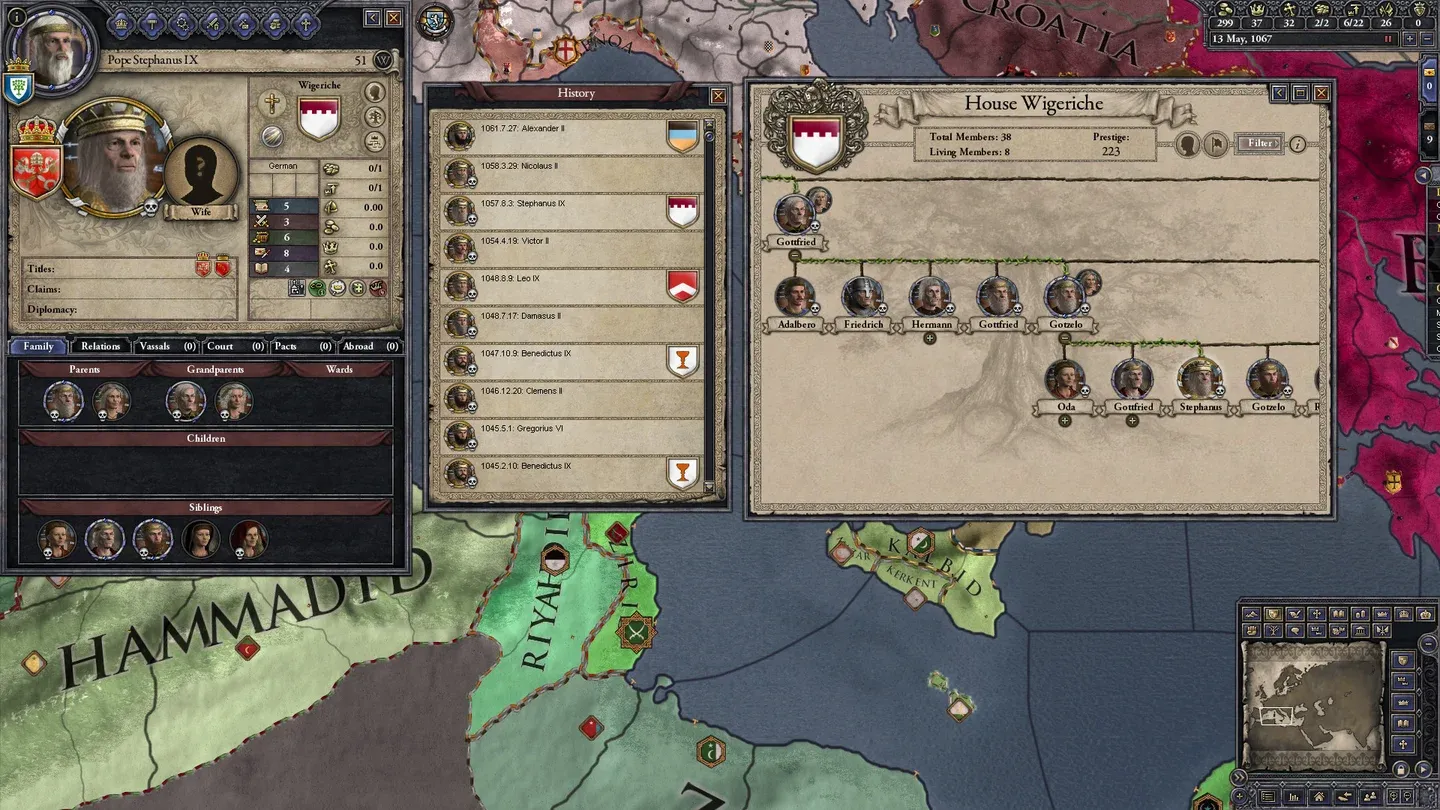
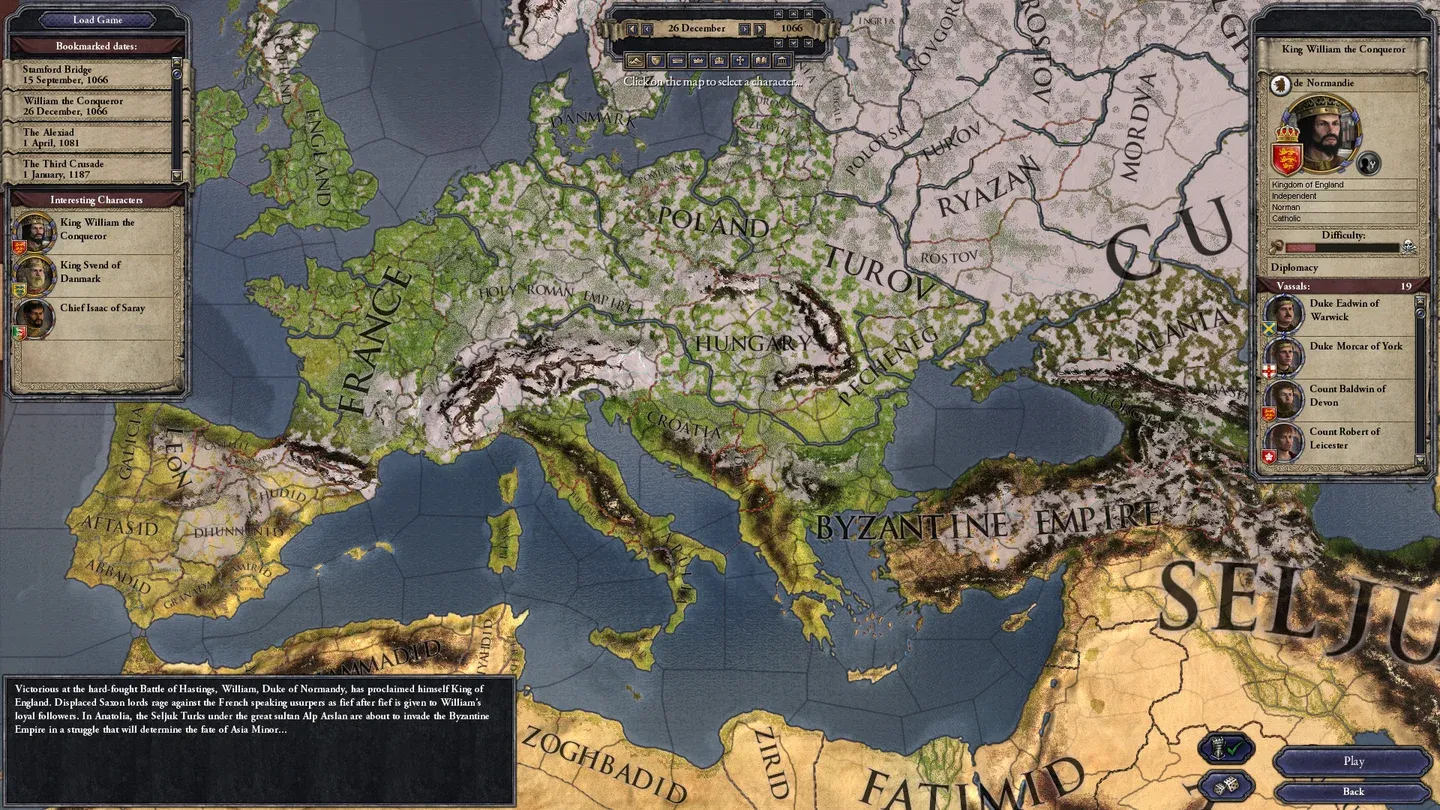
Crusader Kings II is a grand strategy RPG developed by Paradox Development Studio, released on February 14, 2012, and available free to play on Windows and macOS. The game spans the medieval period from 1066 to 1453, placing you in control of a Christian lord whose dynasty must survive wars, plagues, rebellions, and papal politics across multiple generations. The core hook is that you never just play a single ruler. When your king dies, you inherit his heir, carrying forward the prestige and sins of everyone who came before.
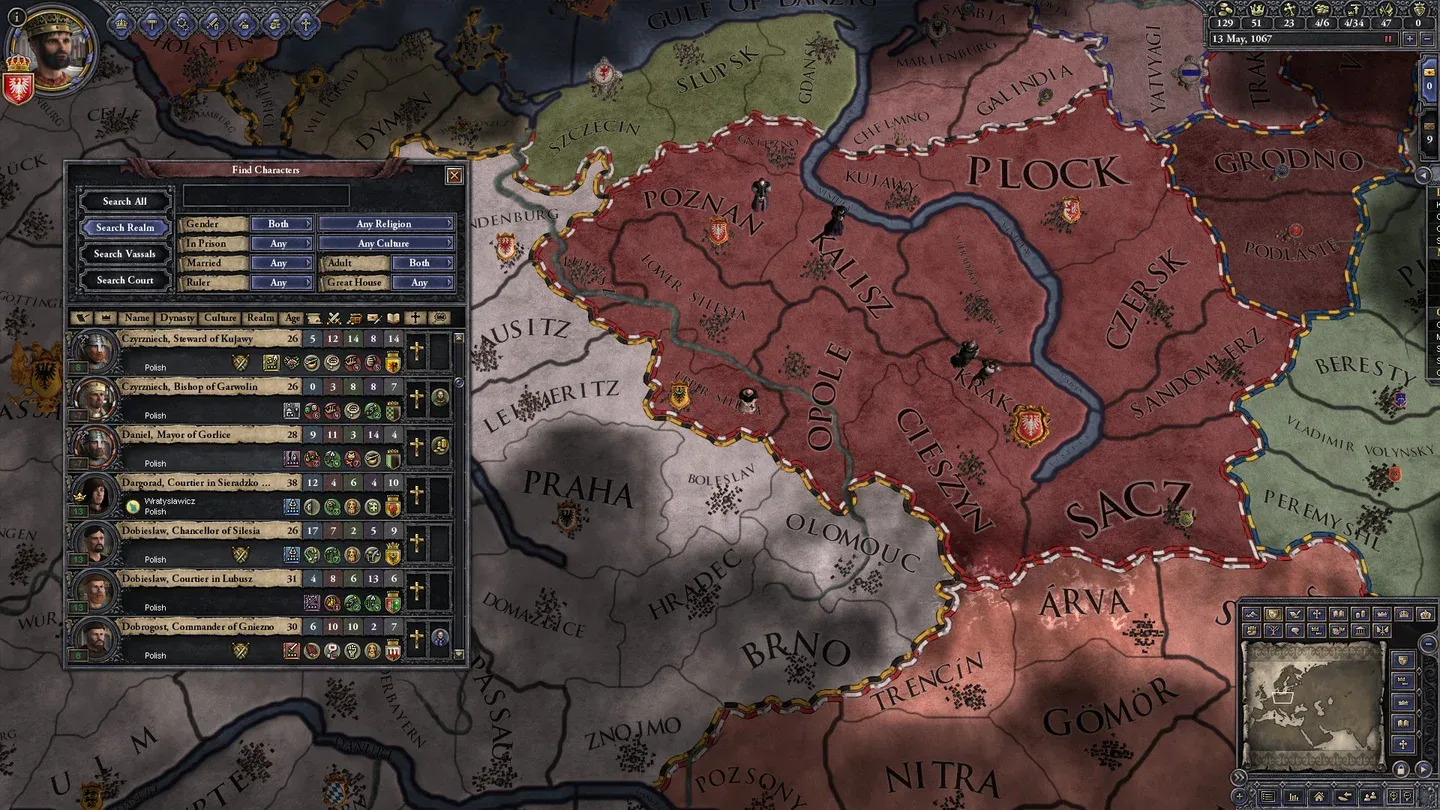
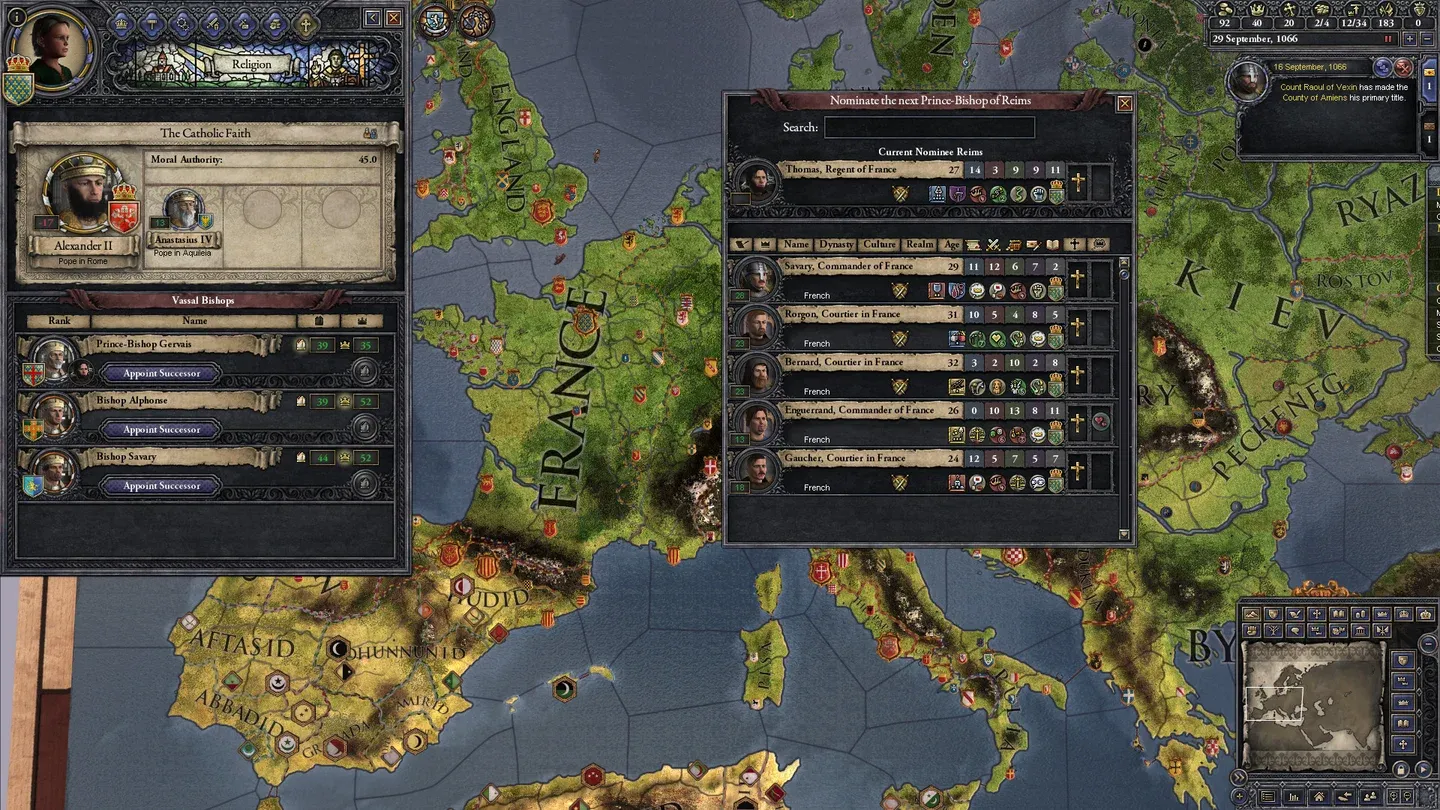
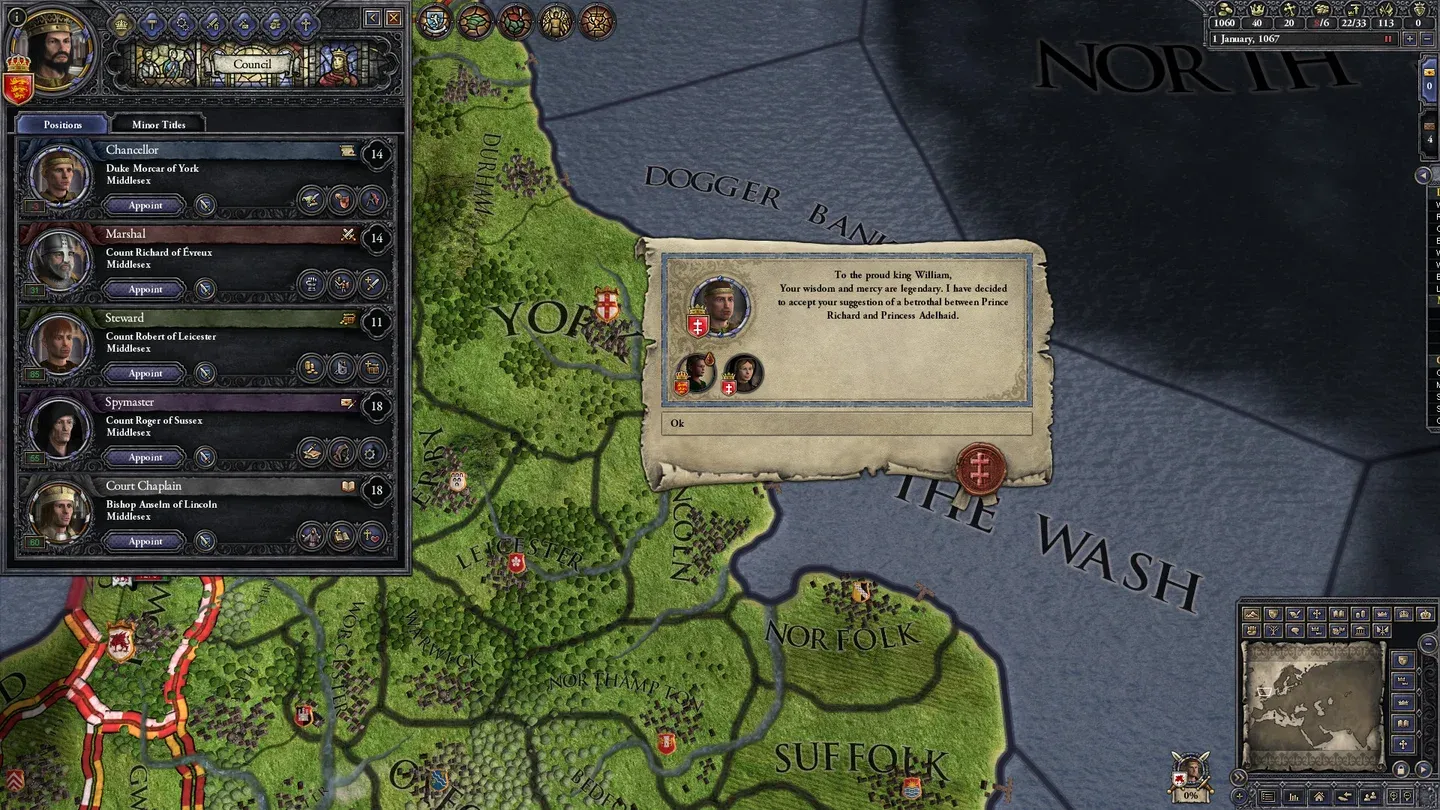
What separates Crusader Kings II from other strategy games is the character layer underneath every military and political decision. Every duke, count, and bishop on the map has a set of traits, ambitions, and opinions that shape how they interact with your dynasty. A chancellor with the "ambitious" trait might serve loyally for decades and then fabricate a claim on your throne the moment you show weakness. These systems create stories that no designer scripted.
Crusader Kings II content image
Gameplay and mechanics
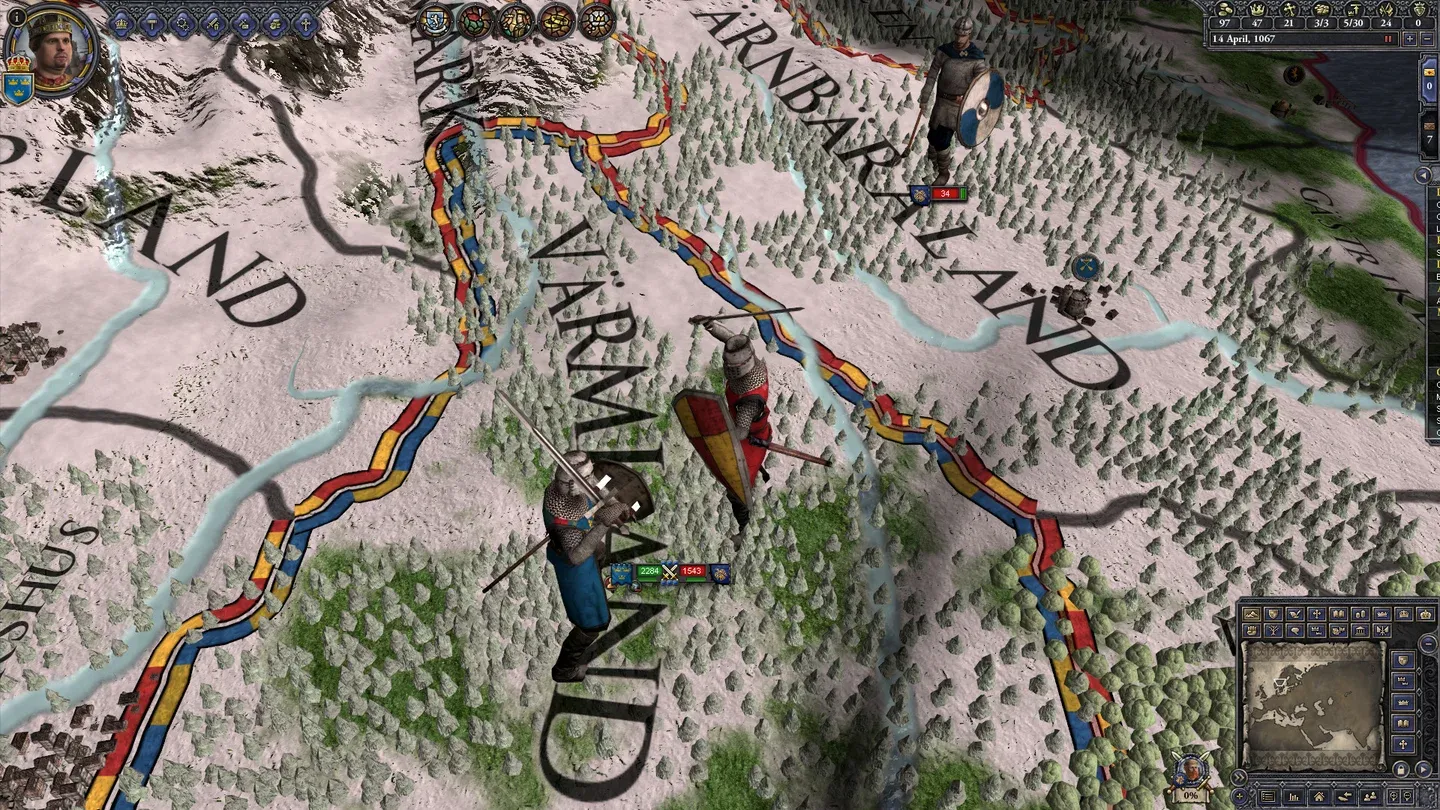
The moment-to-moment experience in Crusader Kings II revolves around managing relationships as much as armies. Key mechanics include:
Crusader Kings II content image
- Dynasty succession planning across generations
- Vassal opinion and loyalty management
- Plotting and counter-plotting against courtiers
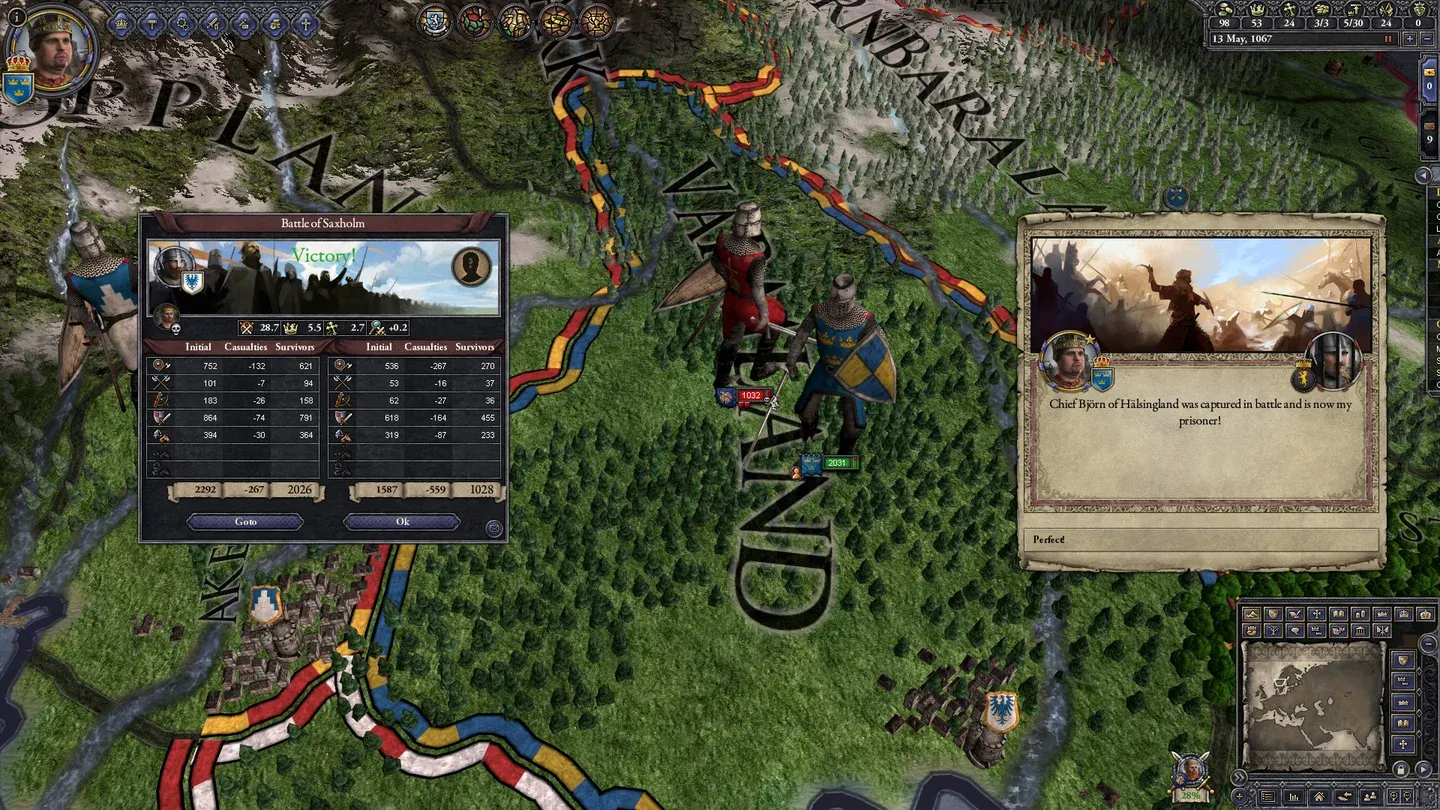
- Military campaigns and siege warfare
- Crusades and religious conflicts
Starting dates range from 1066 to 1337, and each entry point offers a different political situation. Beginning at the Norman Conquest of 1066 throws you into a fractured Europe at its most volatile. Starting in 1337 puts you closer to the Hundred Years War with established power blocs already in motion. The game ends in 1453, but the real endpoint is whenever your dynasty collapses or your last legitimate heir dies without a successor.
What makes the dynasty system so compelling?
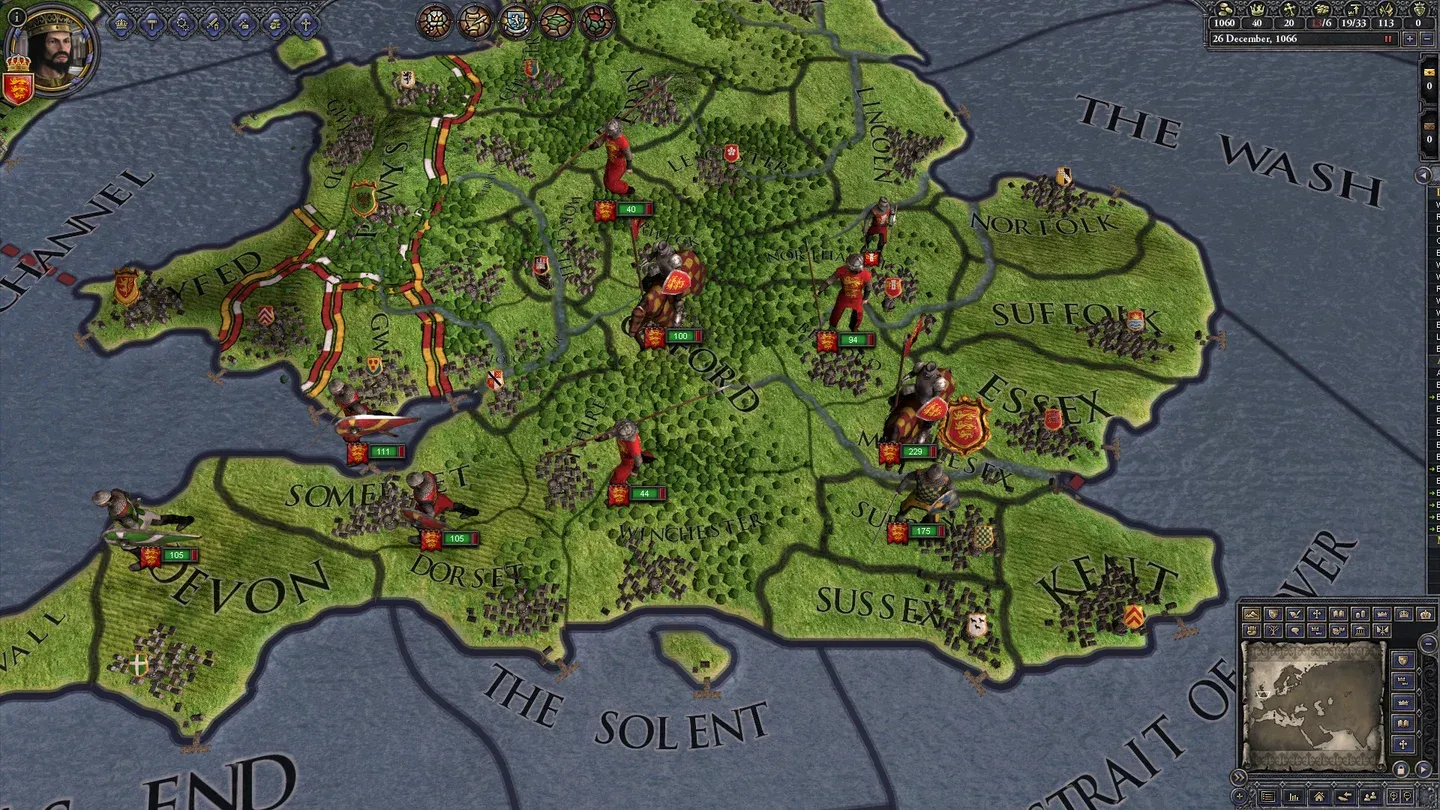
Paradox built Crusader Kings II around the idea that history is driven by people, not nations. You accumulate Prestige across every ruler you play, building a legacy that persists through the centuries. A dynasty that starts as a minor count in Ireland can, through careful marriages, opportunistic wars, and a few well-timed assassinations, rise to control half of Europe by the 13th century.
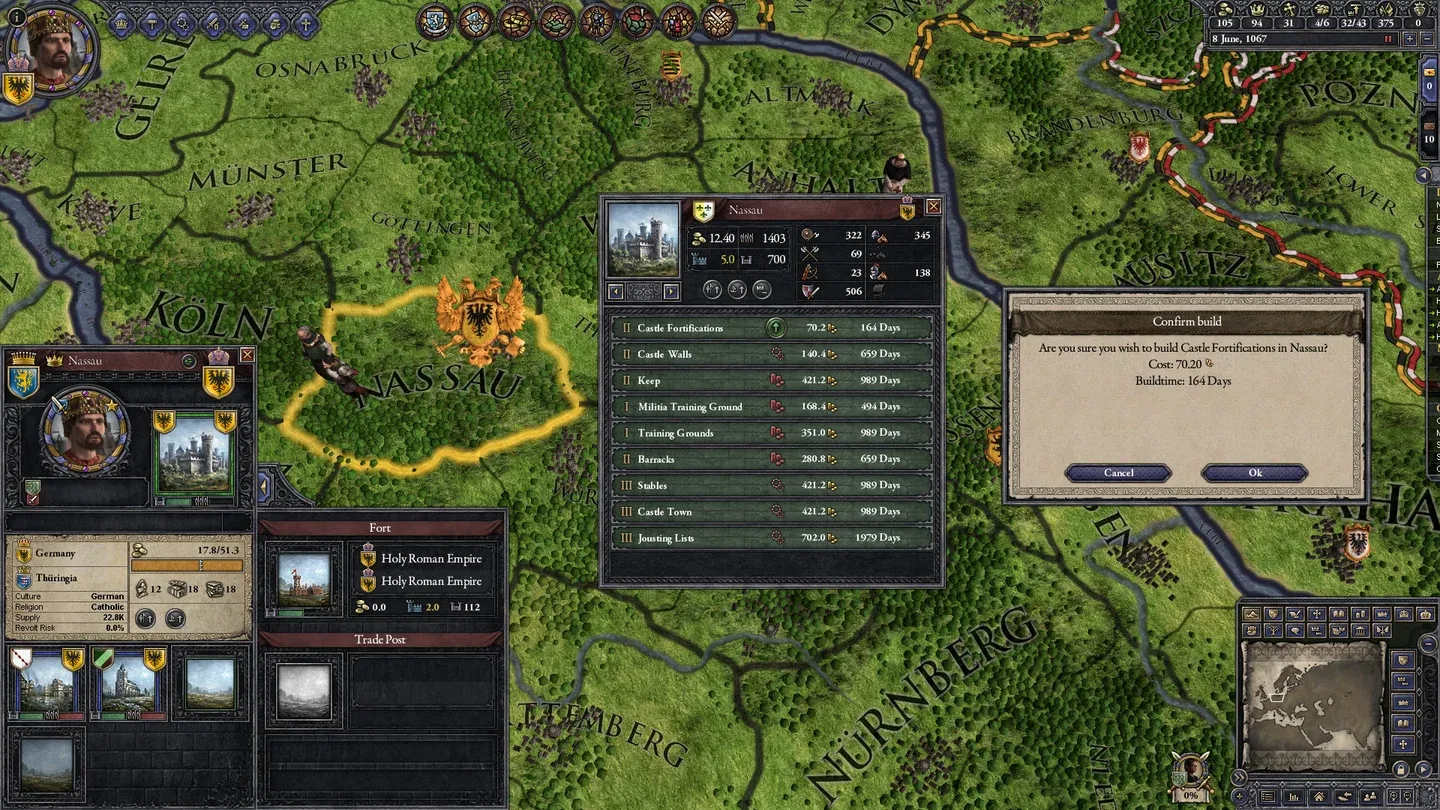
The succession laws you set early in a campaign have consequences that ripple forward for generations. Gavelkind succession splits your territory among all male heirs, which sounds fair until your great-great-grandson inherits a quarter of what his ancestor built. Switching to primogeniture requires enough crown authority to force it through over vassal objections. These are not abstract policy choices. They are decisions that reshape the entire trajectory of your game.
Crusader Kings II content image
Multiplayer and replayability
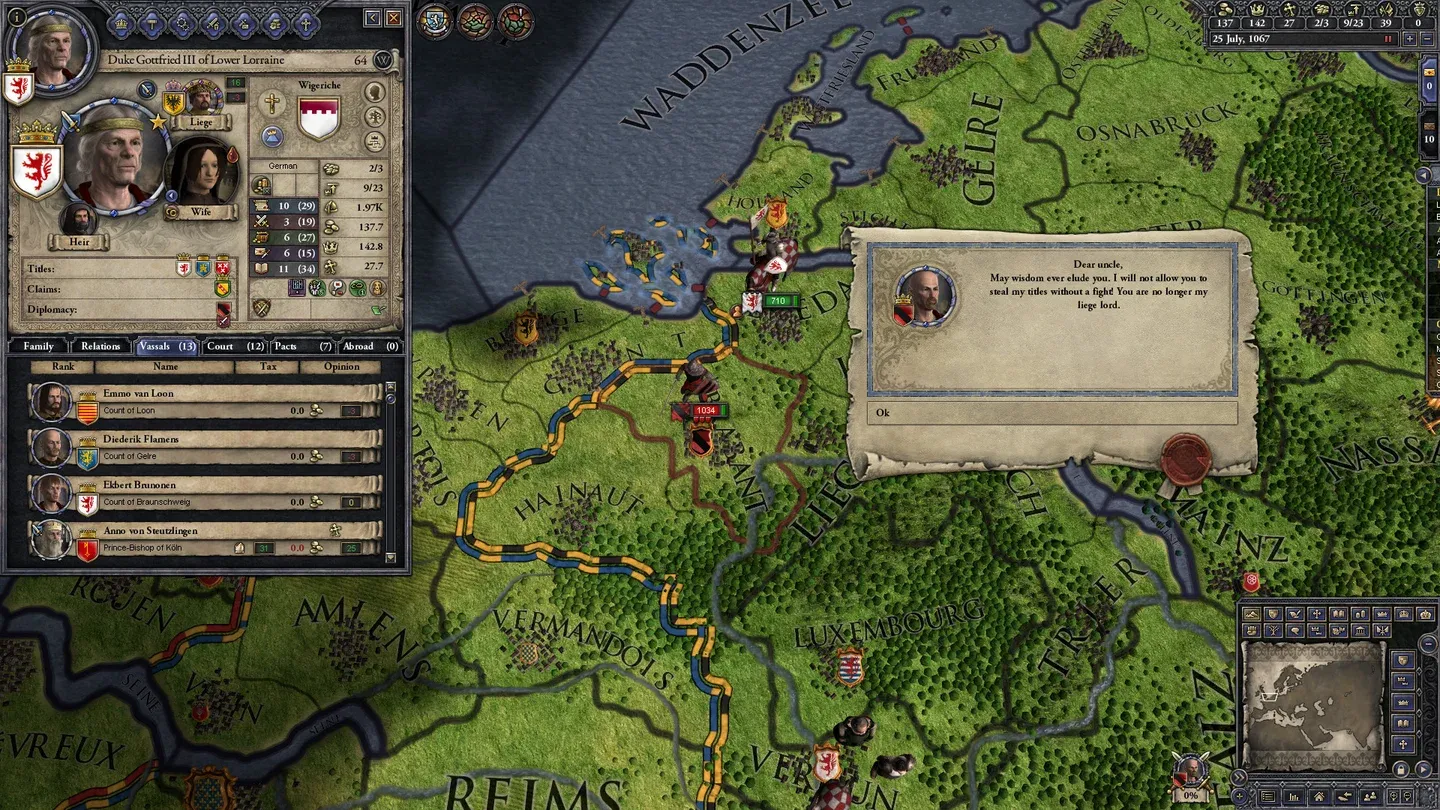
Crusader Kings II supports up to 32 players in competitive multiplayer, which transforms the already chaotic medieval political simulation into something genuinely unpredictable. Human players forming alliances, breaking them, and engineering succession crises in real time creates sessions that bear no resemblance to any previous game.
The single-player replayability is substantial on its own. Every starting position plays differently, every random event chain produces unique outcomes, and the sheer volume of official DLC released over the game's lifespan adds new religions, cultures, playable pagan factions, and expanded mechanics. The base game is free to play, making it one of the most accessible entry points in the grand strategy genre.
Crusader Kings II content image