Search games, articles, guides...CtrlK
Sign InGet Started
Best offensive and defensive playbooks in CFB 27, plus settings adjustments after the running game and blocking updates.

Written by Abdalla
Content Writer
See more GAMES.GG guides on Google
Add us as a preferred source and our guides show up first in your results.
College Football 27 Dynasty Point Hoarding Guide
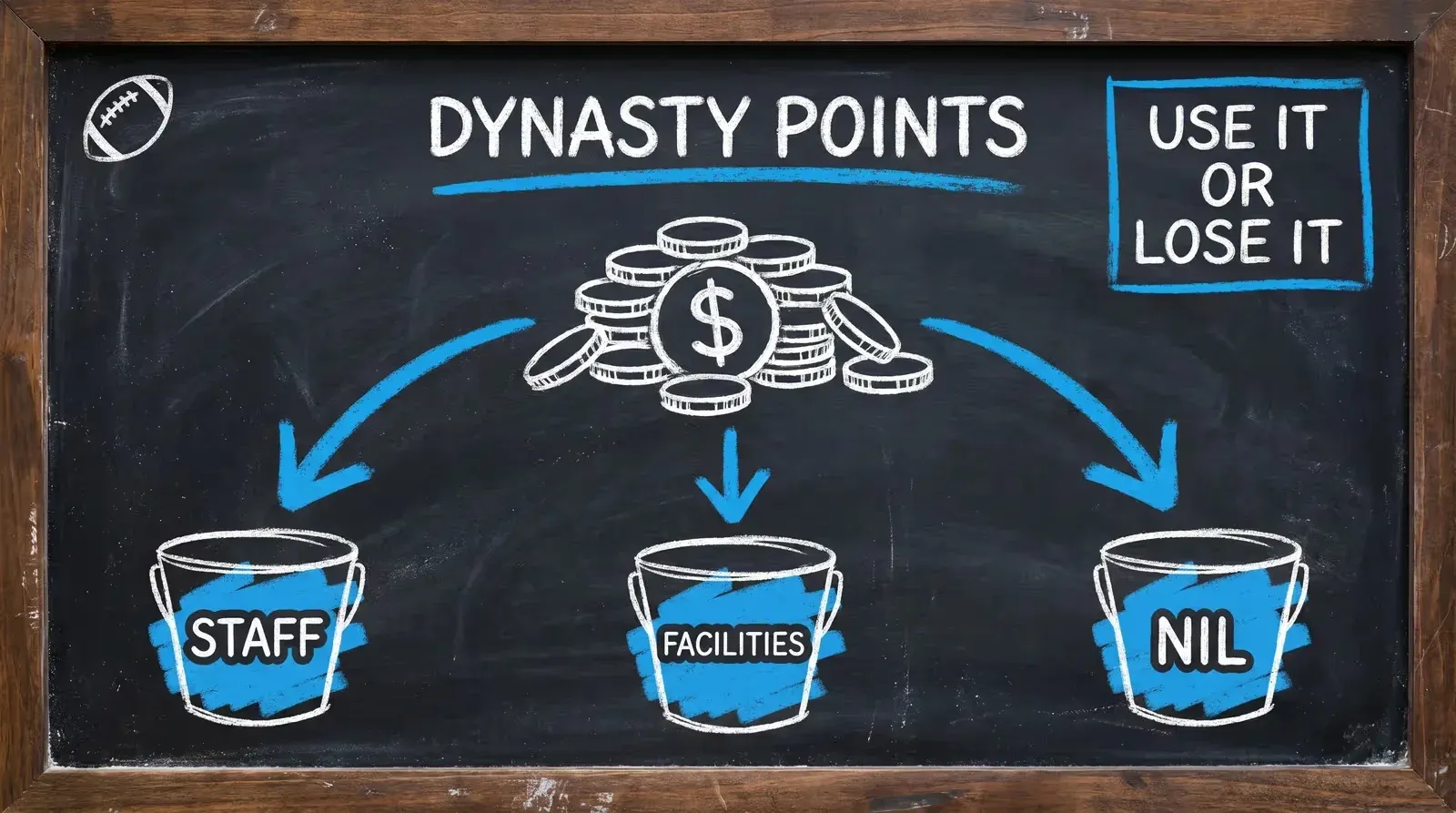
Master skill point hoarding in CFB 27 Dynasty to cut NIL costs, stop unwanted transfers, and control exactly when players hit their peak.

CFB 27 Best Offensive Playbooks and Settings Guide
Master the post-update meta in CFB 27 with the best offensive playbooks and settings for Oregon State and Colorado.
College Football 27 Dynasty Recruiting Guide: Find Hidden Gems Every Class
Master CFB 27 Dynasty recruiting with NIL strategy, the Playing Time filter method, and position-specific archetype hunting to build elite rosters.
EA Sports College Football 27 received post-launch updates that fundamentally changed how the running game works, how blocking behaves, and how defensive pressure gets generated. Speed boosting is gone. Aggressive blocking now draws holding penalties at a noticeably higher rate. Contain defense got cleaned up, giving offensive tackles better recognition of edge rushers. The result is a meta that rewards balance over brute force, and playbooks that were already good before the patch are now even more important to get right.
The running game is still effective after the updates, but the tactics that made it feel unstoppable at launch are mostly gone. Speed boosting removal is the headline change, but the blocking adjustments matter just as much. Leaving blocking set to Aggressive now produces holding flags consistently enough that it becomes a liability over a full game. Balanced blocking is the safer setting and still lets you establish the run without gifting your opponent free yardage.
Blocking adjustments also gave defenders more opportunities to shed blocks, so pure power runs that relied on holding blocks for extended periods are less reliable. The good news is that strong rushing concepts still exist. Pistol Hulk Stretch from the UTSA playbook remains one of the better run plays in the game despite the changes.
On the defensive side, offensive tackles now do a better job recognizing contain defenders, which means contains are no longer an automatic pressure source. Expect more defensive stunt packages as a result, which is why having passing options ready from your base formation matters more than it did at launch.
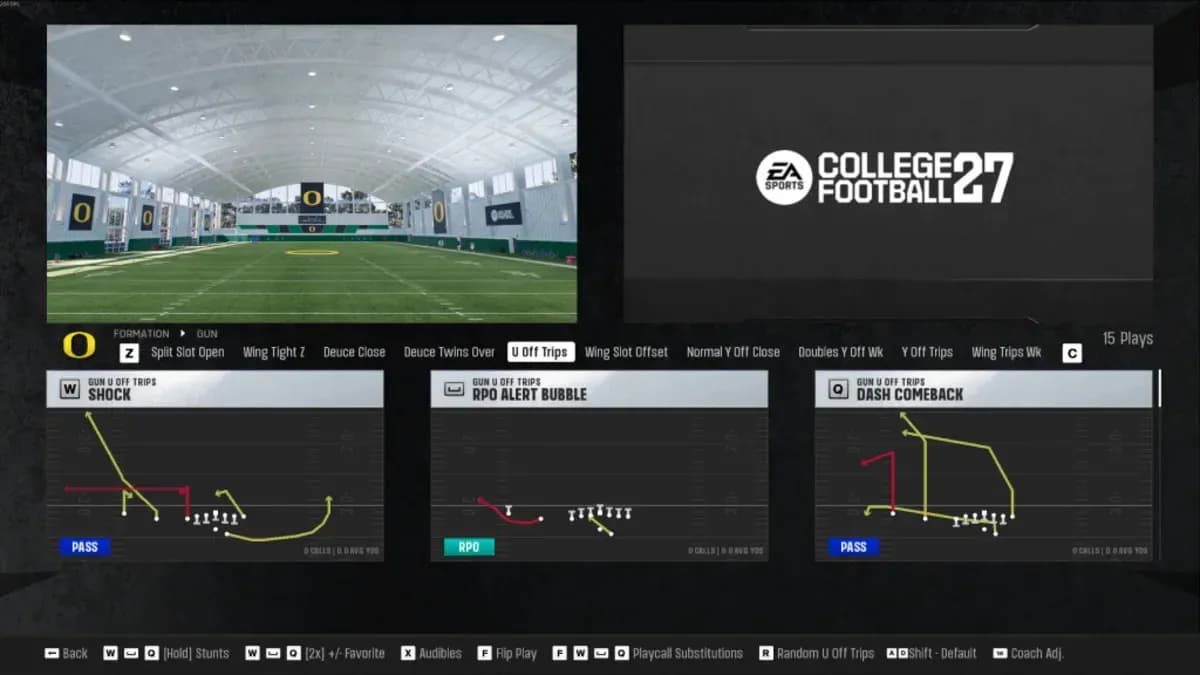
Playbook selection screen
If running the ball is your priority, West Virginia is the answer. The Mountaineers playbook features Gun Power I Tight, a formation new to CFB 27 that stacks one side of the ball with blockers and creates natural running lanes. Multiple handoff options and designed QB runs come out of this package, and the sheer number of blocks it presents can overwhelm a defense that is not specifically prepared for it. Outside of Gun Power I Tight, the rest of the WVU book offers enough additional rushing formations to keep defenses honest.
Washington State is the most complete offensive playbook in CFB 27 for players who want a single book to handle everything. The foundation is Gun Bunch X Nasty, which can attack man coverage, zone coverage, and everything in between without requiring a personnel change. The run game shifts into Pistol Trips and Pistol U Off Trips from the same personnel grouping, so you are never telegraphing a run by subbing in a different package. Red zone work comes out of Singleback Deuce Close.
The reason Washington State tops the balanced-offense category is how completely it answers coverage. Bunch formations work in CFB 27 because tight receiver splits create traffic, and traffic breaks man coverage. The bunch release rules also give free separation that zone defenders cannot pass off cleanly. Three of the four most-used competitive offensive playbooks in the current meta are built on Bunch or Bunch X Nasty, which is not a coincidence.
Oregon State combines Pistol rushing concepts with a variety of passing formations, making it a strong choice specifically in the post-update meta where you want to run but cannot rely on the ground game exclusively. Key formations include:
The variety means you can establish the run while having legitimate passing answers ready from the same personnel grouping.
Colorado is worth considering for players who want more unconventional looks. The playbook includes Pistol Strong, Pistol Bunch, Full House, Split Backs, Go-Go formations, Cluster, and Gun Tight. The Gun Tight formation in particular stands out as one of the better Gun Tight packages available in the game. The RPO concepts here also fit the current meta well given the changes to contain defense.
For a pass-first approach, Florida International offers the most creative passing options in the game. The playbook features heavy pre-snap motion and play designs built to confuse coverage before the snap. Play-action passes pair well with the inside zone runs in the book, and the overall design rewards players who are willing to put in the time to learn it. This one has a learning curve, but the ceiling is high.
The 4-2-5 Man Pressure playbook is the consensus top defensive option in CFB 27. It carries the 3-3 Cub formation, which is the single most agreed-upon defensive formation in the game right now. Three down linemen and three linebackers creates a light box that still generates pressure, and because the look can drop into coverage, the offense cannot tell whether a blitz is coming before the snap.
One important note: defensive playbooks in CFB 27 are named by scheme, not by school. You will not find a playbook labeled "UCLA" on the defensive side. UCLA is assigned the 4-2-5 Man Pressure scheme, so that is what you select in the menu. This trips up a lot of players searching for school names on the defensive side.
The base 4-2-5 is the other strong defensive option and is what most mainstream recommendations point toward. The argument for it is formation count: it comes with multiple 4-2-5 packages, several Nickel options, and a couple of 3-3-5 formations. If you are building a defensive scheme from scratch and want the most options to work with, the base 4-2-5 is a reasonable starting point.
The 4-2-5 Man Pressure builds on this foundation by adding Dime and Nickel packages plus man-coverage blitzes. Those additions are what separate it from the base book in competitive play, because mixing man blitzes with zone coverage is what creates the confusion that forces bad decisions.
The Dollar package deserves a separate mention because it travels across playbooks. Dollar puts extra defensive backs on the field by default, which makes it naturally suited to defending four and five wide receiver sets. The DB Fire blitz out of Dollar generates pressure before the throw is possible, and the formation is not locked to one specific defensive playbook. Any CFB 27 defensive book carrying Dollar can run this concept. If you use a Custom Playbook, you can pull the Dollar block in from any source book.
| Playbook | Type | Key Formation | Best For |
|---|---|---|---|
| West Virginia | Offense | Gun Power I Tight | Run-first offense |
| Washington State | Offense | Gun Bunch X Nasty | Balanced / complete attack |
| Oregon State | Offense | Pistol Bunch TE | Post-update balanced run/pass |
| Colorado | Offense | Gun Tight | Creative / unconventional looks |
| Florida International | Offense | Pre-snap motion sets | Pass-first offense |
| 4-2-5 Man Pressure | Defense | 3-3 Cub | Overall best defensive option |
| 4-2-5 Base | Defense | Multiple Nickel / 4-2-5 | Formation variety / beginners |
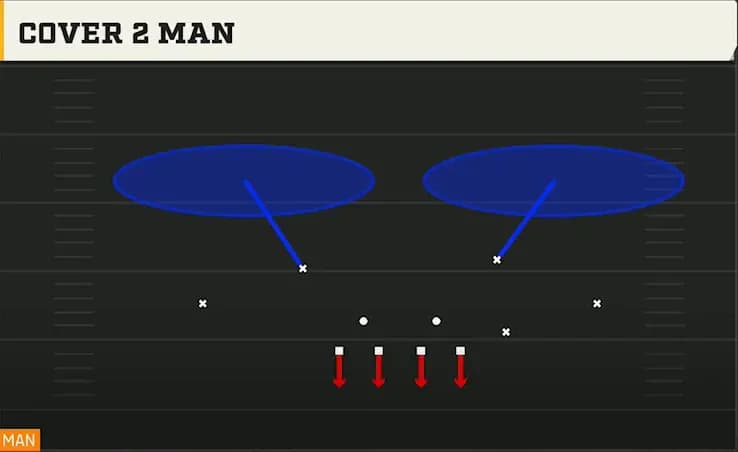
4-2-5 Man Pressure defense
Beyond choosing the right playbook, setting up a coverage macro gives you a repeatable defensive answer to the sideline flood combinations and corner routes that dominate online play. The concept is a Mable-style coverage that combines flat, intermediate sideline, and deep responsibilities to funnel throws back toward the middle, where your user-controlled defender can make a play.
Recommended zone drop values:
The 25-yard flat zones defend intermediate sideline throws, corner routes, and crossing patterns. The 5-yard curl flats take away quick outs and table routes underneath. Once you save these as a macro, assign your defenders as follows:
With the macro saved, the entire coverage adjustment activates with a single button press before the snap instead of manually moving each defender.
Along with picking the right playbook, several in-game settings are worth adjusting to match the current meta:
The Empty auto base protection setting is particularly relevant now that defensive stunts are becoming more common following the contain defense changes. Balanced blocking avoids the penalty risk that comes with Aggressive while still supporting an effective ground game. Check out the best playbooks and settings guide for a deeper breakdown of how these settings interact with specific formations.
Three questions narrow the choice quickly:
For players building out a full roster to support these schemes, the fastest players ranked guide helps identify which athletes actually fit the personnel requirements of spread and Pistol concepts. For everything else related to CFB 27 strategy, the full EA Sports College Football 27 strategy guides collection covers Dynasty mode, PC performance settings, coach archetypes, and more.